REVIEW · VICENZA
Cittadella Card
Book on Viator →Operated by Mura di Cittadella by Historia Travel · Bookable on Viator
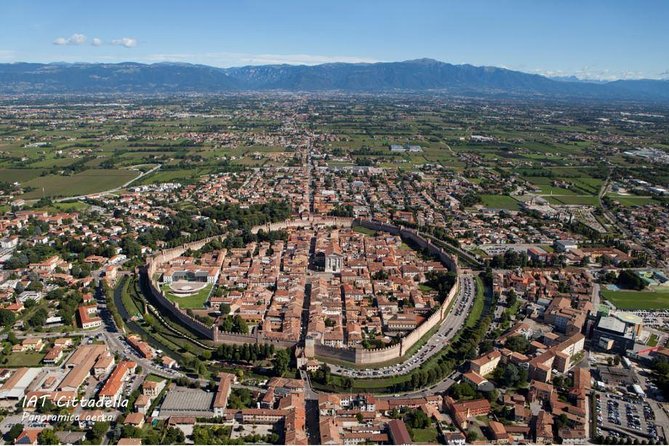
Medieval walls and unreal views. This ticket gets you onto the Camminamento di Ronda parapet walkway—15 meters above the walls—plus a smart mini-circuit of museums and historic rooms. I especially love how the route runs almost two kilometers along defensive walls that have been safely renovated for today’s visitors.
You’ll also get a solid dose of art and interior splendor without spending half a day: Bassano’s Supper at Emmaus in the Duomo museum, then frescoed spaces like Palazzo Pretorio and a neoclassical theater. One possible drawback: the whole experience moves at a quick pace. The walkway is timed at about an hour, and the other stops are brief, so if you want long museum wandering, you may feel slightly rushed.
In This Review
- Key highlights you’ll actually feel
- What you’re really paying for (and why it’s good value)
- La Cinta Muraria: Camminamento di Ronda, 15 meters up
- Museo del Duomo: Bassano’s Supper at Emmaus and why short stays still work
- Palazzo Pretorio: frescoed power from the Venetian Republic
- Teatro sociale: neoclassical architecture and Francesco Bagnara frescoes
- Villa Ca’ Nave and the Oratorio del Salvatore: Baroque art in a small doorway
- Timing: how this 1–2 hour format fits real travel days
- Practical value: does $15.52 add up?
- Who will love this most?
- Should you book the Cittadella Card?
- FAQ
- What is included in the Cittadella Card?
- How long does the experience take?
- Is the experience offered in English?
- How much does it cost?
- What is the Camminamento di Ronda walkway?
- What can I see from the Torre di Malta?
- Are there art stops besides the wall walk?
- What time do I need to enter the parapet walkway?
- Is food included?
- Are children allowed?
Key highlights you’ll actually feel
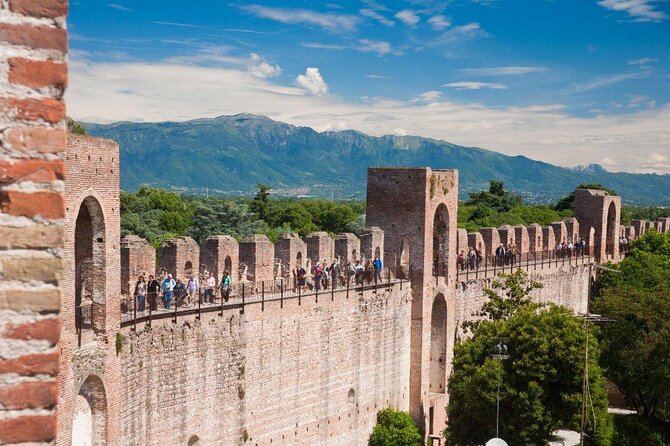
- A parapet walk 15 meters up: the classic defensive walkway that was built to protect the town from above.
- Almost 2 km on the walls: a real walking experience, not just a short balcony stroll.
- Torre di Malta stops inside: expect a Belvedere view point and museum areas connected to the route.
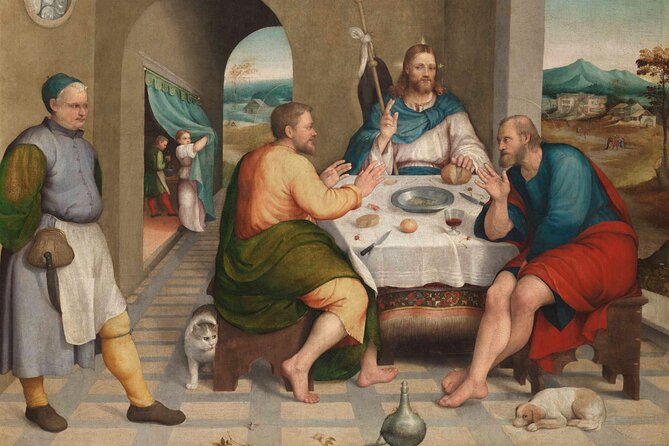
- Bassano’s major work: Jacopo Bassano’s Renaissance Supper at Emmaus in the Duomo museum.
- Frescoes tied to big names: Palazzo Pretorio’s painted rooms, plus the Teatro Sociale with work by Francesco Bagnara.
- A Baroque oratory visit: entry to the Oratorio del Salvatore inside Villa Ca’ Nave (the villa itself is not open to the public).
What you’re really paying for (and why it’s good value)
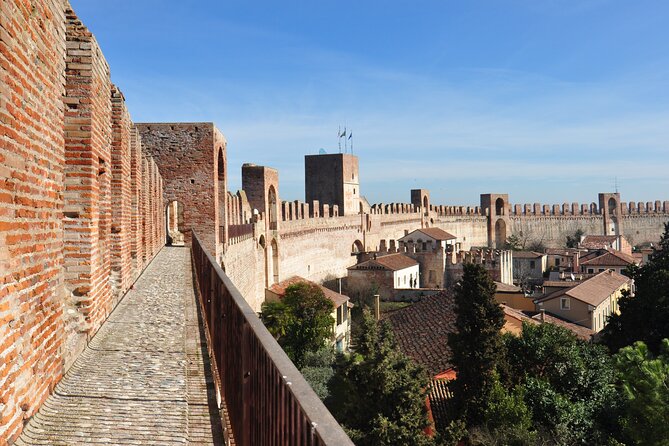
The Cittadella Card costs $15.52 per person and is built around one star attraction: an entry ticket to the parapet walkway, La Cinta Muraria, also called Camminamento di Ronda. That matters, because you’re not just buying “admission.” You’re buying access to a very physical, very scenic route that gives you a new angle on the whole town.
On top of that, the card bundles several free or included entries to other stops—museum rooms and frescoed buildings—so the price doesn’t feel like a one-ride-only deal. It’s designed for about 1–2 hours, which is perfect if you want a focused outing instead of a long schedule.
One more practical detail: your timing can affect the experience. The last entrance to the parapet walkway is one hour before closing because the visit lasts around an hour. Plan to arrive with enough daylight in the daytime window (open daily 9:00 AM–4:00 PM), or you might be stuck watching others head up while you wait.
La Cinta Muraria: Camminamento di Ronda, 15 meters up
This is the part that makes the whole card worth it. The Camminamento di Ronda is the historic defensive walkway, about 15 meters above the walls. The idea back then was simple: if an enemy came close, defenders could work from above. Today, the same structure gives you a slow, steady walk with views that don’t feel like postcards. They feel like you’re standing inside the town’s military past.
The route is almost two kilometers, and it’s laid out as a visitor pathway, not just a rough perimeter. Renovation work has made it safe and workable for the public, so you get the drama without the worry.
Along the way, you can stop into connected spaces. The route passes medieval museum and reenactment rooms located in the Captain’s house. The experience also includes the Torre di Malta, where you can visit:
- a Belvedere viewpoint that’s almost 30 meters high
- the Siege Museum
- the Civic Archaeological Museum
And then there’s the view. From up there, you look over Cittadella’s historic center and out across the countryside. You can spot features including the Euganean Hills, Berici mountains, Alpine foothills with walled towns like Marostica and Asolo, and you can even see Mt. Grappa. It’s an unusually wide view for a small fortified town, which is why this walk feels like more than a single attraction.
How to enjoy it: take your time at the Torre di Malta section. That’s where the viewpoint payoff tends to be strongest, and it breaks up the walking rhythm.
Museo del Duomo: Bassano’s Supper at Emmaus and why short stays still work
After the wall walk, you shift from outside views to inside art. The Museo del Duomo di Cittadella is a museum stop with an art gallery that includes a major Renaissance work: Jacopo Bassano’s Supper at Emmaus. If you’ve ever seen Bassano’s paintings and wished you could find them in a calmer setting, this is that kind of stop—focused, meaningful, and not time-wasting.
What I like here is that the museum isn’t presented as a giant, all-day warehouse. It gives you standout works and then lets you connect the pieces across periods, with collections that start from the fourteenth century. You’ll find various types of objects too—paintings, sculptures, and applied arts—so you don’t only look at framed canvases.
Practical note: this stop is short. Think “quick but satisfying.” If you rush, you’ll miss the impact of the main pieces, especially Supper at Emmaus. If you slow down slightly, you’ll leave feeling like you saw something real.
Palazzo Pretorio: frescoed power from the Venetian Republic
Next up is Palazzo Pretorio, which served as the seat of the Podestà during the time of the Venetian Republic—Serenissima. This is one of those places where you can feel the function behind the walls. It’s not just a pretty facade or an isolated room; it’s tied to governance and justice.
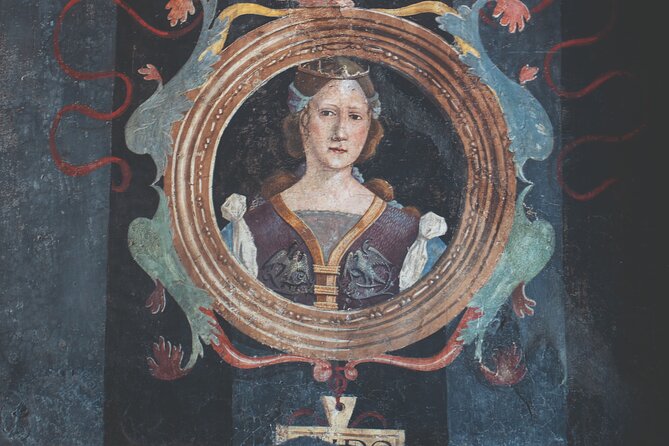
Inside, the frescoes are the highlight. You’ll see fake tapestry effects with vertical bands, polychrome friezes, circles and medallions featuring portraits of important figures from the past. It’s the kind of decorating that tells you this room was meant to impress people when they entered.
And then there’s the darker side: ancient prisons connected to the Magistrates’ Court. That contrast—political display plus punishment rooms—helps the building make sense as you walk through it. It’s a good match to the earlier wall walk because both tell stories about defense and control, just in different forms.
This stop is brief, so your best strategy is simple: pick two fresco areas to really look at. If you try to photograph everything, you’ll forget to actually see it.
Teatro sociale: neoclassical architecture and Francesco Bagnara frescoes
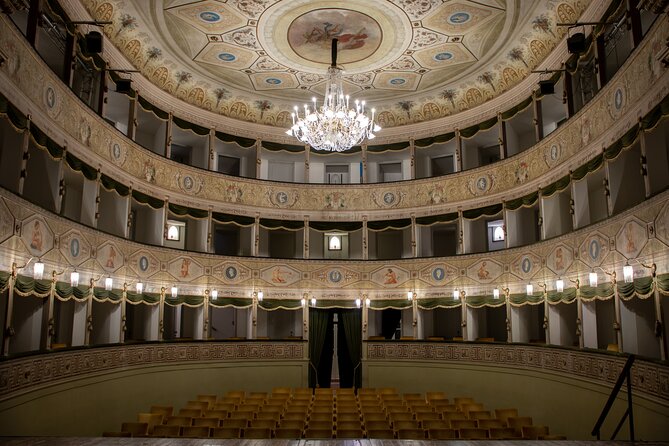
Cittadella’s Teatro Sociale is the sort of building you might walk past fast unless something makes you slow down. Its neoclassical facade is attributed to Giuseppe Jappelli, the same person behind the famous Pedrocchi Café in Padua. That connection is useful because it anchors the theater in a wider Italian design story.
Inside, the room’s frescoes are by Francesco Bagnara, who also decorated La Fenice theatre in Venice. That’s the big-name link, and it makes the theater feel less like a local bonus stop and more like a serious art interior.
This stop works best if you like architecture details and interior art, not just views. If you want quiet and visual reward in a short time, it’s a great fit. The downside is obvious: it’s time-limited, so don’t expect a long theater tour. Treat it as a “look closely and move on” stop.
Villa Ca’ Nave and the Oratorio del Salvatore: Baroque art in a small doorway
The card also includes entry to the Oratorio del Salvatore, part of Villa Ca’ Nave. Here’s the key detail: the villa itself isn’t open to the public, but you can enter the Savior Oratory. That means you’re not paying to see a whole property—you’re paying to see a specific Baroque space.
The Oratory is described as Baroque, and it houses artworks attributed to Louis Dorigny and Giusto Le Court. Even without long explanations, Baroque interiors tend to hit you quickly: strong shapes, dramatic feel, and a sense that the room was designed to move your eye around.
This stop is also short, so think of it as a concentrated dose. You’ll get the mood and the main artworks, then you’ll be back outside with that fortified-town atmosphere still in your head.
Timing: how this 1–2 hour format fits real travel days
The card is scheduled for 1 to 2 hours on average. That’s not an accident. It’s built for people who want to sample Cittadella’s best features without turning the day into a checklist marathon.
Here’s how to think about the timing:
- The parapet walkway visit is about 1 hour, and you must enter no later than one hour before closure.
- The museums and interior stops are short blocks of time each, so you can see a lot of variety without heavy downtime.
If your day already includes another sightseeing area near Vicenza, this card is a smart way to add something very different: instead of another street-level church or viewpoint, you’re walking historic defenses. If you’re traveling with limited time, the short format is a plus.
Practical value: does $15.52 add up?
Yes, it usually does—because the included entry to the parapet walkway is the engine of the value. Even if you’re only interested in one thing, that’s the thing you’ll feel most.
Then you also get multiple interior stops, including:
- the Duomo museum with Bassano’s Supper at Emmaus
- Palazzo Pretorio with Venetian Republic context and frescoes
- the Teatro Sociale with neoclassical design tied to Giuseppe Jappelli and frescoes by Francesco Bagnara
- the Oratorio del Salvatore linked to Baroque artists
The card is also designed for small group experience, with a maximum of 15 travelers. That matters more than people think. Smaller groups typically mean less bottlenecking at stair points and fewer “wait in a line of elbows” moments.
One more thing: you’re dealing with a daytime schedule (opening 9:00 AM–4:00 PM). If you’re the type who likes sunrise wandering, you might want to plan ahead so you don’t arrive too late.
Who will love this most?
This card is ideal if you like three things:
- Views from historic walls (not just lookout points)
- Art and fresco interiors without a half-day commitment
- A compact plan that still feels like you touched multiple eras
It’s also a good option for a calm break from heavier tourist circuits. Reviews note that Cittadella can feel pleasantly away from mass crowds—especially on days when the town stays less busy.
If you’re traveling with children, the requirement is straightforward: children must be accompanied by an adult. And if you bring a service animal, service animals are allowed.
Should you book the Cittadella Card?
I’d book it if you want a high-payoff walking-and-art combo in about 1–2 hours. The value is strongest for the wall walk itself, and the extra stops make the ticket feel like a complete afternoon mini-adventure, not just a single highlight.
Skip it only if you need long museum time, or if you dislike timed experiences where one part (the walkway) controls your schedule. Otherwise, this is the kind of ticket that makes a small town feel big—because you’re literally walking on the structure that once made it strong.
If you’re deciding at the last minute, I’d prioritize your time around the parapet walkway entry window. Do that right, and the rest of the card tends to fall into place.
FAQ
What is included in the Cittadella Card?
It includes an entrance ticket to the Cittadella parapet walkway (La Cinta Muraria / Camminamento di Ronda), plus access to the included monument/museum stops listed on the itinerary.
How long does the experience take?
Expect about 1 to 2 hours on average.
Is the experience offered in English?
Yes, it is offered in English.
How much does it cost?
The price is $15.52 per person (GST included).
What is the Camminamento di Ronda walkway?
It’s a historic defensive parapet walkway on the medieval walls, about 15 meters above the walls, with a visitor route that is almost two kilometers long.
What can I see from the Torre di Malta?
You can visit the Belvedere (almost 30 meters high) and also access the Siege Museum and the Civic Archaeological Museum.
Are there art stops besides the wall walk?
Yes. The card includes Museo del Duomo di Cittadella with Jacopo Bassano’s Renaissance painting Supper at Emmaus, plus Palazzo Pretorio frescoes, Teatro sociale frescoes, and entry to the Oratorio del Salvatore.
What time do I need to enter the parapet walkway?
The last entrance to the walkway is one hour before closure, because the walkway visit lasts about 1 hour.
Is food included?
No. Food and drinks are not included.
Are children allowed?
Children must be accompanied by an adult.