REVIEW · FERRARA
Ferrara: City Highlights Walking Tour with Local Guide
Book on GetYourGuide →Operated by Consorzio Visit Ferrara · Bookable on GetYourGuide
Ferrara feels custom-made for a walking tour. I love how this route anchors you at Estense Castle first, then threads you through the city’s Middle Ages and Renaissance sides without dragging on. The second standout for me is the chance to see the Palazzo dei Diamanti in its proper setting, the Addizione Erculea, so it’s not just a pretty façade.
Two hours is the sweet spot here: you get clear stops with names you can actually remember afterward, plus stories about the Estense family and the urban design ideas behind the Renaissance expansion. The tour also has a strong guide focus, with praised explanations that feel attentive and well organized.
The main thing to keep in mind is practical: entrance tickets aren’t included, so if any stop requires a ticket on the day, you’ll need to budget a bit extra. Also, it’s an Italian-language experience, so plan on following along in Italian (an audio guide is included, though, to help).
In This Review
- Key points to know before you go
- Ferrara highlights on foot: why the Middle Ages-to-Renaissance story clicks
- Estense Castle and Corso Ercole I d’Este: the walk’s power start
- Renaissance additions and Estense legends: how the guide turns streets into stories
- Palazzo dei Diamanti and the Addizione Erculea: why the palace matters
- Massari Park and the University Botanical Garden area: a breather with meaning
- S.Cristoforo alla Certosa: Monumental Cemetery atmosphere and a Renaissance church interior
- Piazza Ariostea: ending with the poet’s place and the loggia edges
- Price and what you really get for $17 per person
- Who this tour suits best (and who might want a different plan)
- Should you book this Ferrara highlights walking tour?
- FAQ
- Where does the tour meet?
- How long is the Ferrara highlights walking tour?
- How much does the tour cost?
- What’s included in the price?
- Are entrance tickets included?
- What language is the tour offered in?
- Is the tour wheelchair accessible?
- What should I bring for the walk?
- Can I reserve without paying right away, and cancel if needed?
Key points to know before you go
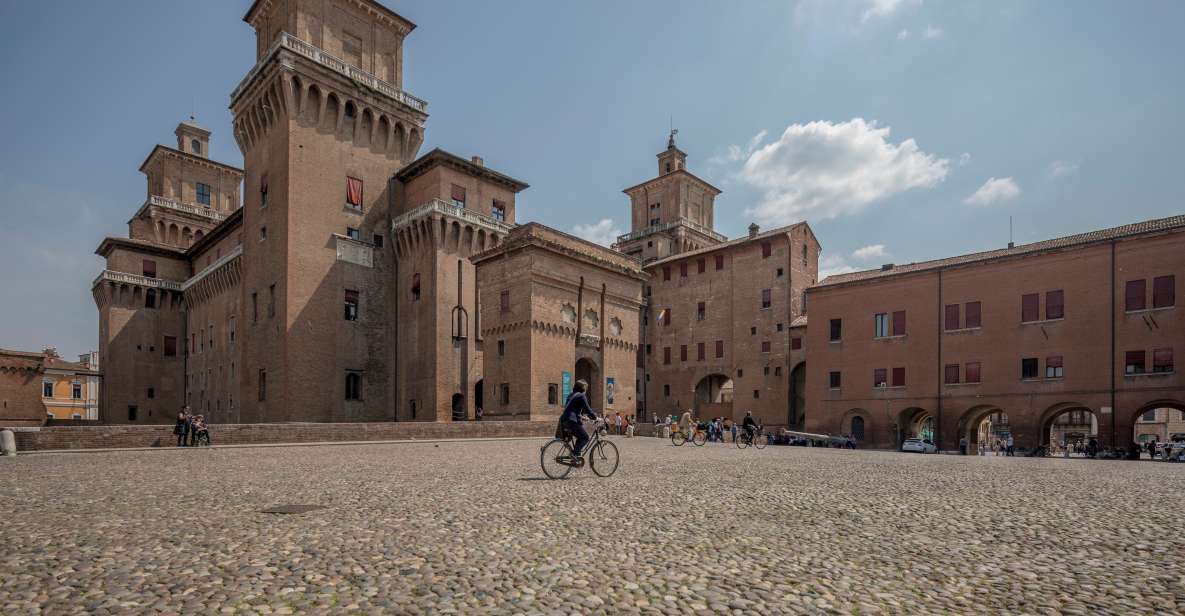
- Estense Castle as the anchor: you start at the symbol of Ferrara and quickly get the layout of the city.
- Corso Ercole I d’Este + Biagio Rossetti: you’ll connect the dots between medieval power and Renaissance planning.
- Palazzo dei Diamanti in the Addizione Erculea: the building makes more sense when you see the master plan it belongs to.
- Massari Park and the cedars of Lebanon: a calm green pause, not just another photo stop.
- S.Cristoforo alla Certosa (Monumental Cemetery) + church visit: a rare mix of architecture and atmosphere, including an interior church visit.
- Piazza Ariostea and the Ariosto monument: the ending ties the walk back to culture and poetry.
Ferrara highlights on foot: why the Middle Ages-to-Renaissance story clicks
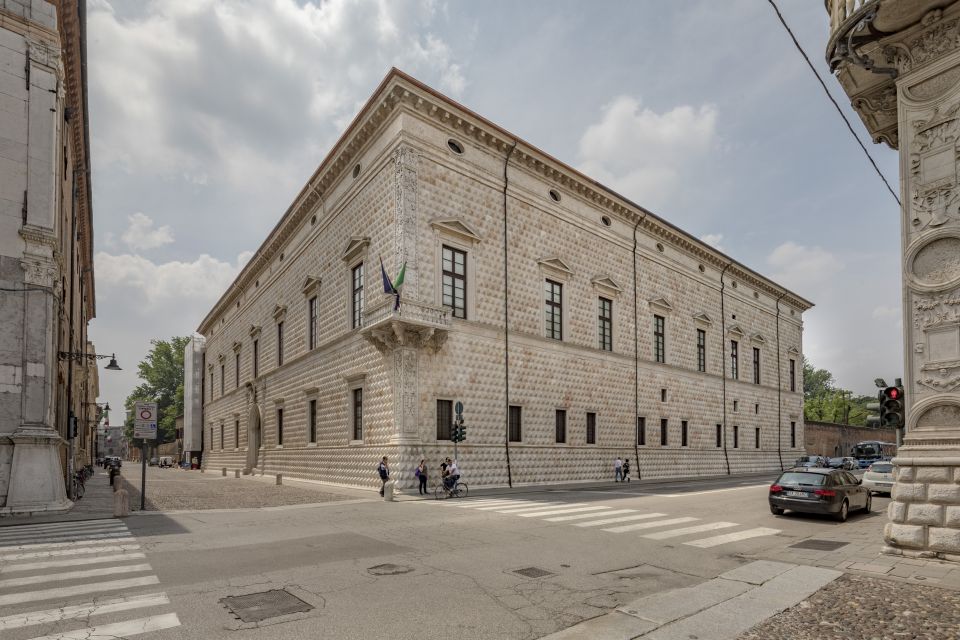
Ferrara works in a way that’s hard to replicate by car. It’s compact enough that walking feels natural, and the city design lets you see how eras overlap instead of feeling like separate “zones.” This tour leans into that. You’re not just ticking off sights; you’re learning how the Estense influence shaped the city’s look and priorities.
In two hours, the goal is pacing with purpose. You start with the power center, move into Renaissance street planning, then shift into palaces, churches, gardens, and a major square. That sequence matters because it mirrors how people historically moved: from authority, to culture and display, to quiet reflection.
If you like context—why a building exists, not only what it looks like—this is the kind of walk that rewards you. You’ll also get the names of key places and creators (including architect Biagio Rossetti), which helps you keep Ferrara straight after you leave.
You can also read our reviews of more tours and experiences in Ferrara.
Estense Castle and Corso Ercole I d’Este: the walk’s power start
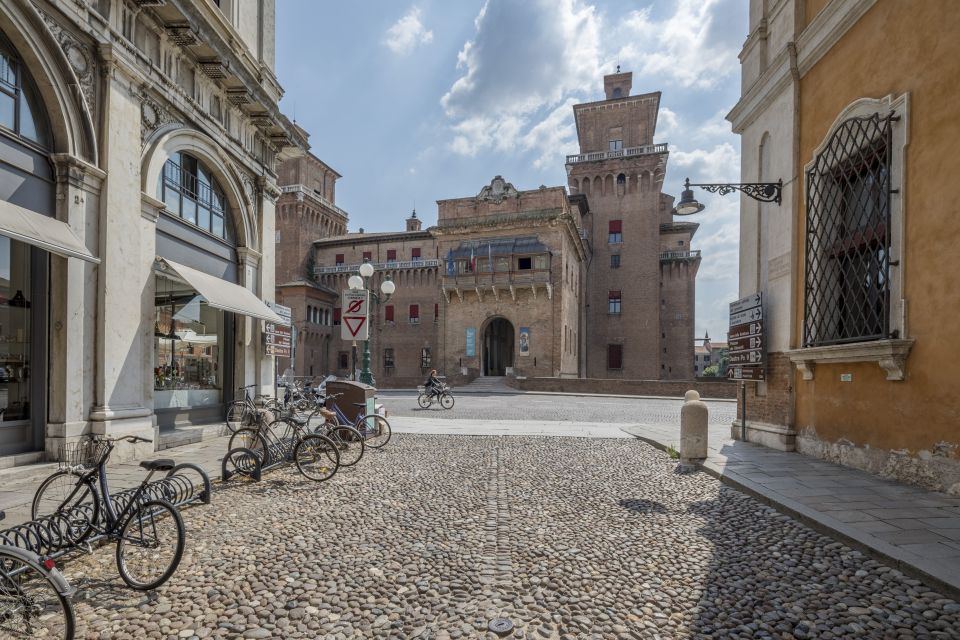
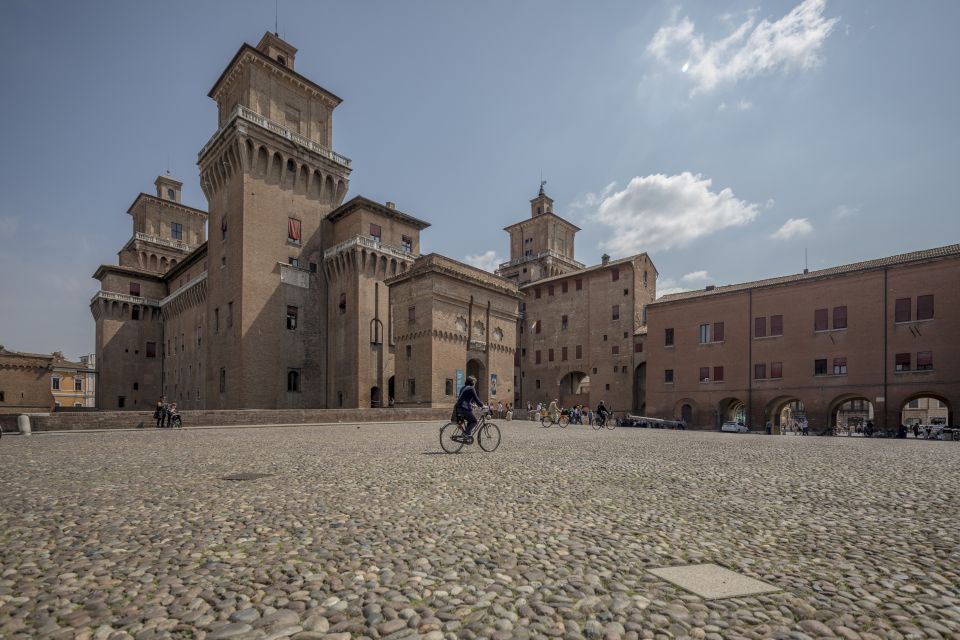
Meeting point is the courtyard of Estense Castle, near the loggia. That’s a smart start because the castle immediately gives you scale. From there, you can visually understand how the castle relates to the streets and walls, instead of treating it like a distant monument.
From the castle, the route follows Corso Ercole I d’Este, a main connection between the castle area and the north gate of the city walls. The tour uses this stretch to explain the Renaissance “addition” commissioned by Ercole I d’Este and carried out through work by Biagio Rossetti. This is one of the best parts of the walk if you enjoy city planning. You’re not memorizing trivia; you’re seeing how design choices create long sightlines and organized movement.
One practical detail: you’ll be walking outdoors for portions of the route, so bring an umbrella if rain is possible. Ferrara can do that “light drizzle” thing, and you don’t want to cut your photos short because you’re rushing to stay dry.
Renaissance additions and Estense legends: how the guide turns streets into stories
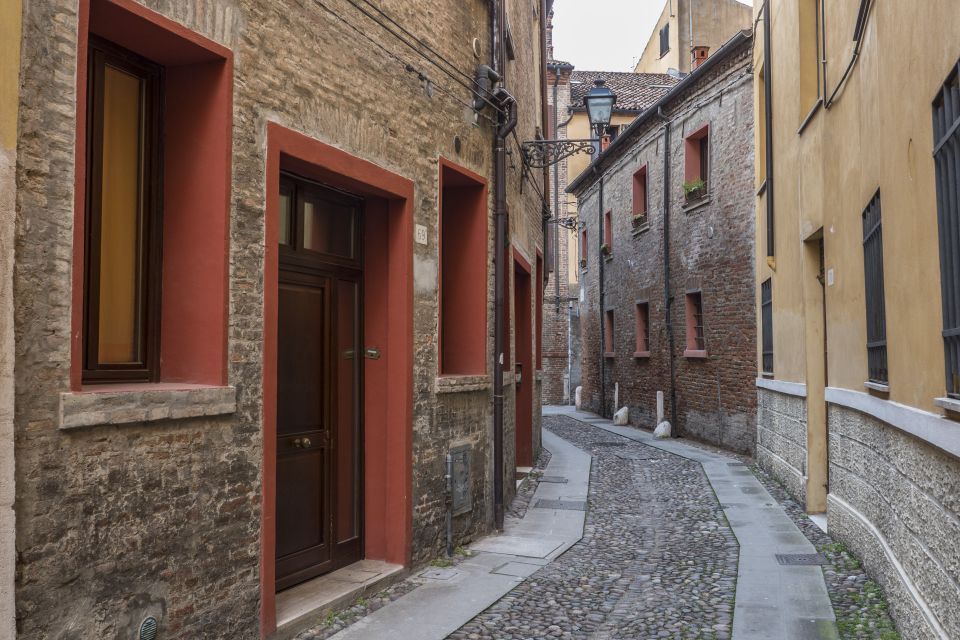
At this point, the tour becomes more than sightseeing. The explanations focus on the Estense family—especially the idea that their rule wasn’t only political. It was also architectural and urban. You’ll hear about the “secrets and legends” tied to the Estense line, and you’ll connect them to what you’re seeing.
I like this approach because it keeps the walk human-sized. Ferrara can sound grand on paper—Middle Ages, Renaissance courts, major architects—but the storytelling makes it feel close. The route moves from big concepts to tangible features: streets, alignments, and the way the city expands.
Also, language matters here. Since the guide and audio are in Italian, you’ll get the most if you can follow at least the main threads. If you can’t, the pace still works for sightseeing, but you’ll rely more on your own observations and the audio.
Palazzo dei Diamanti and the Addizione Erculea: why the palace matters
Next comes Palazzo dei Diamanti, in the heart of the Addizione Erculea. This is where the tour really earns its name. The palace isn’t presented as an isolated artifact. You’re shown it as part of an urban expansion planned at the end of the 15th century—an intentional Renaissance project.
Why this matters for you: once you understand the Addizione Erculea as a planned expansion, the palace’s impact makes more sense. The building starts to feel like a statement within a system: a work of architecture designed for visibility, status, and identity.
You’ll also hear about the “historic crossroads” feel of this area—meaning the city’s older fabric and its Renaissance changes overlap in a way you can still perceive while walking. That’s the kind of thing you don’t fully get from a single museum visit.
If you’re the type who likes to take a few minutes on each stop to look closely, Palazzo dei Diamanti gives you a lot to work with: geometry, surface rhythm, and the way the building catches light. Even if you only spend a short time there, the tour’s framing helps you see details as intentional, not decorative.
Massari Park and the University Botanical Garden area: a breather with meaning
After palaces, the route shifts into green space with Massari Park. The tone changes quickly in a good way. You get centuries-old cedars of Lebanon and a view toward the University Botanical Garden area.
This section is valuable because it slows you down. You’re not just “passing through scenery.” The tour uses the park setting to keep Ferrara from turning into a nonstop photo sprint. It also highlights how nature and design sit side by side in the city’s identity.
For you, this is the moment to pause and reset. Take a quiet minute under the trees, then step back to look at how the park fits the wider urban expansion. In many cities, parks feel like an afterthought. Here, the tour helps you see them as part of the same long design conversation.
S.Cristoforo alla Certosa: Monumental Cemetery atmosphere and a Renaissance church interior
A few steps away you reach S.Cristoforo alla Certosa, a monumental complex that has transformed over time into a Monumental Cemetery. The tour then brings you to the square in front, where the elegant arcades create a strong sense of recollection—think quiet structure, measured space, and a setting that feels like it has a long memory.
What I especially appreciate is that the stop isn’t only exterior. There’s an internal visit to the Renaissance church. This is called an ancient temple of the Carthusian monks, and you’ll learn that Duke Borso d’Este called the Carthusian monks to Ferrara in the mid-15th century.
That historical connection matters. It turns the building from “a church you see on a map” into a place with a clear reason for being here. And the interior visit is the kind of payoff you want on a short walk: you get a full moment inside, not just a glance from outside.
Two reality checks for your day:
- Interior church time can affect pacing, so don’t plan to rush straight to something else right after the tour.
- Entrance requirements can vary by site, and since entrance tickets aren’t included, you may need to cover any required entry costs yourself.
Piazza Ariostea: ending with the poet’s place and the loggia edges
The route closes in Piazza Ariostea, which directly connects Ferrara to Ludovico Ariosto. The tour highlights the statue towering over the central column and then finishes under the loggia flanking the green area.
This ending works because it ties culture to place. Earlier, you’re dealing with rulers, architects, and expansion plans. Here, the tour points you back to poetry and public identity—how a city projects its values in shared space.
I like that it’s not an awkward last-minute sprint. The loggia setting gives you a natural wrap-up point where you can look around and let the route sink in: castle power, Renaissance streets, palace display, garden calm, monastery-era reflection, and finally a public square built for cultural memory.
Price and what you really get for $17 per person
At $17 per person for a 2-hour walk, this is one of those deals where value comes from structure. You’re paying for an organized path, context at each stop, and a guide (Italian-speaking) plus an Italian audio guide.
Here’s how I’d judge value for you:
- If you arrive in Ferrara and want a coherent overview fast, the price is easy to justify.
- If you already know Ferrara’s Renaissance planning well, you may feel like you could DIY—but the guided explanations are what turn the buildings into a story.
The one cost factor to remember is that entrance tickets aren’t included, so plan for possible additional fees at whichever sites require them on the day. Even with that, the core experience is still built around walking, looking, and learning—so you’re not paying mainly for access to big-ticket venues.
You’ll also get the tour from Consorzio Visit Ferrara, and that matters because it’s a local coordinating body tied to how the city gets presented. It tends to correlate with practical routes and sensible stop choices.
Who this tour suits best (and who might want a different plan)
This tour is a great fit if you:
- want a fast, organized introduction to Ferrara’s Renaissance side without a long itinerary
- enjoy architecture and urban design explanations (especially the Estense + Rossetti connection)
- like a balanced mix of big monuments and quieter atmosphere like Massari Park and the Certosa complex
You might consider a different plan if you:
- need a tour in a language other than Italian (this one is Italian, with Italian audio)
- strongly prefer fully ticketed, museum-style access everywhere (because entrances aren’t included and the day includes church interior time rather than lots of museum hours)
Also, if you’re traveling with limited tolerance for walking outdoors, remember it’s still a city walk. Comfortable shoes help, and rain gear is genuinely worth it.
Should you book this Ferrara highlights walking tour?
Yes, if you want Ferrara to make sense quickly. This is the kind of walk where the route design does part of the work: you start at Estense Castle, learn the logic behind the Addizione Erculea, and end in Piazza Ariostea with culture ringing in the background.
Book it with extra confidence if you value guide-led storytelling and clear stop explanations. The guide quality appears to be a main strength, including praise for being passionate and prepared, with specific credit for Maria Chiara. Just go in knowing two things: the tour is Italian-language, and entrance tickets aren’t included—so keep a little flexibility for any extra site costs.
FAQ
Where does the tour meet?
Meet in the courtyard of Estense Castle, near the loggia.
How long is the Ferrara highlights walking tour?
The tour lasts about 2 hours.
How much does the tour cost?
It costs $17 per person.
What’s included in the price?
The price includes an Italian-speaking guide and an Italian audio guide.
Are entrance tickets included?
No. Entrance tickets are not included.
What language is the tour offered in?
The live guide and the audio guide are in Italian.
Is the tour wheelchair accessible?
Yes, the tour is wheelchair accessible.
What should I bring for the walk?
It’s advisable to bring an umbrella in case of rain.
Can I reserve without paying right away, and cancel if needed?
Yes. You can reserve now and pay later, and you can cancel up to 24 hours in advance for a full refund.