REVIEW · ACCADEMIA GALLERY
Florence: Accademia Gallery Skip-the-Line Guided Tour
Book on GetYourGuide →Operated by Ciaoflorence Tours & Travel · Bookable on GetYourGuide
Skip-the-line to David changes everything. You’ll head straight into the Accademia Gallery with an expert local guide, so Michelangelo’s work lands with context, not just crowds.
I like the focus on the key sculptures—especially David—and I like that the visit is paced like a real tour, with short explanations that make the stone feel alive. For bigger groups, you’ll also get earphones, which keeps the guide easy to hear without craning your neck.
One consideration: the meeting point can vary by option, and it may be a short walk from the museum, so double-check where you’re told to meet before you show up.
In This Review
- Key Highlights You’ll Feel Immediately
- Entering the Accademia Faster With Skip-the-Line Access
- Meeting Up in Florence: Don’t Trust Just the Big Sign
- The David Moment: Why This Tour Makes Michelangelo Hit Harder
- Beyond the Headline: I Prigioni and San Mateo Explained
- Renaissance Paintings and the Pace That Helps You Actually Retain Things
- Earphones and Group Size: Hear the Guide Clearly Without Losing the View
- Value at $55: What You’re Really Paying For
- What to Bring (and What to Plan For Inside the Gallery)
- Choosing Your Moment: When This Tour Works Best for You
- Should You Book the Accademia Gallery Skip-the-Line Guided Tour?
- FAQ
- How long is the Florence Accademia Gallery skip-the-line guided tour?
- What’s included with the tour price?
- Where do we meet for the tour?
- What languages are the tours offered in?
- Is the skip-the-line entrance guaranteed?
- Are there any requirements about group size?
- Is the museum free on the first Sunday of the month?
Key Highlights You’ll Feel Immediately
- Skip-the-line entry through a separate entrance, so you start the experience faster
- A guide who explains Michelangelo’s intent, not just dates and names
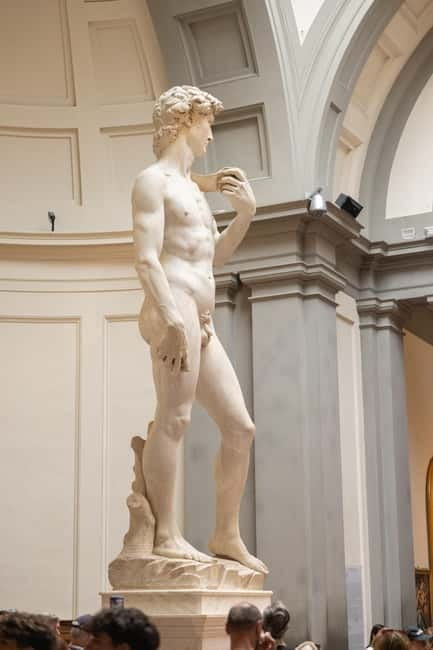
- Standing in front of David, with attention to scale and emotion
- Coverage beyond the headline works, including I Prigioni and San Mateo
- Earphones for larger groups to keep the commentary clear
- Time to stay after the tour and explore at your own pace
Entering the Accademia Faster With Skip-the-Line Access
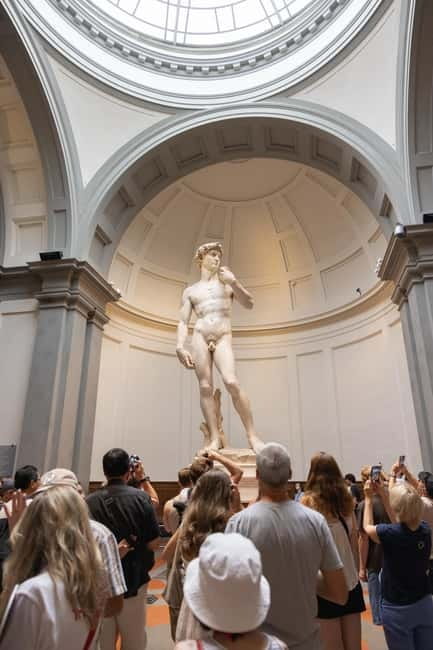
The Accademia Gallery is one of those Florence stops where waiting in line can drain the whole morning. This tour is built to get you inside quickly using a separate entrance, which matters more than it sounds. When you save that time, you also get a calmer start, and you’re more likely to enjoy the experience instead of racing it.
Once you’re in, you’re not met with a wall of information signs. You’re met with a person—your guide—who can point out what to look for right away. That’s where skip-the-line becomes more valuable than just convenience. It buys you time to actually see.
The tour runs about 75 minutes to 2 hours, which is a sweet spot for a museum like this. Long enough to cover the important works with real explanations. Short enough that you still have energy for additional wandering afterward.
You can also read our reviews of more tours and experiences in Accademia Gallery.
Meeting Up in Florence: Don’t Trust Just the Big Sign
The meeting point for this experience can vary depending on the option you book. That flexibility is useful, but it also means you should plan to do one extra thing: confirm the exact location in advance.
In practice, the meeting spot may be near the gallery, sometimes at an agency office that’s just a few minutes’ walk away. So if you arrive and immediately park yourself at the museum entrance, you might end up waiting for the group to find you—or worse, missing the start while you’re standing in the wrong place.
My advice is simple:
- Check the exact meeting point address before you leave your hotel.
- Arrive a little early so you can locate your group without stress.
- If you’re unsure, walk to the meeting point area first, then head toward the gallery with the group.
It’s a small step that prevents a lot of last-minute frustration.
The David Moment: Why This Tour Makes Michelangelo Hit Harder
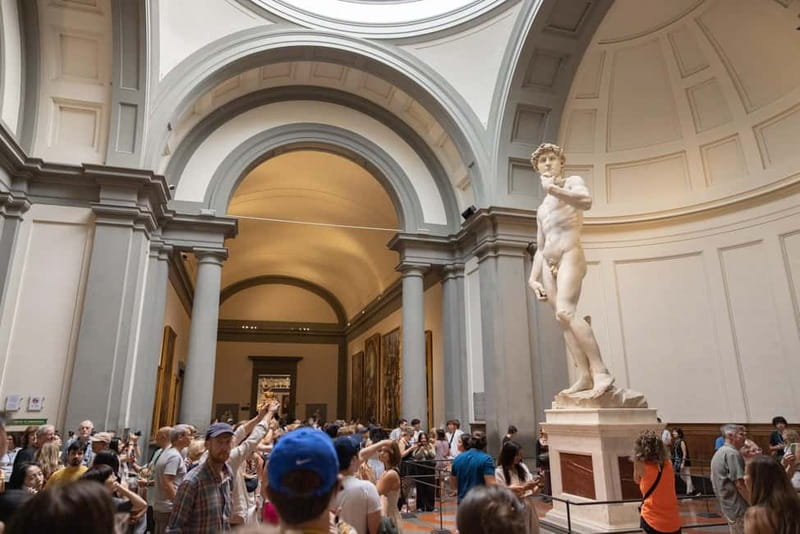
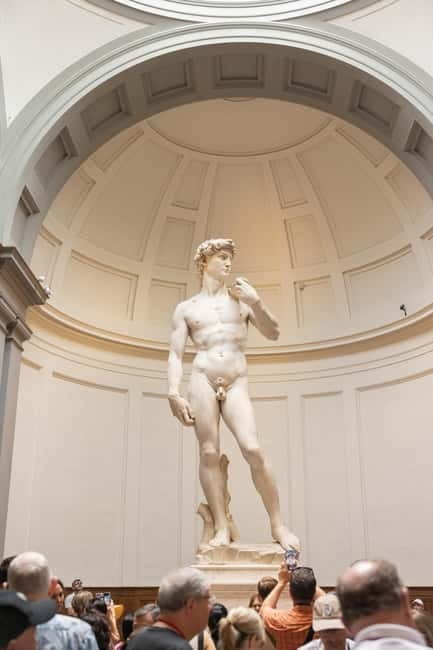
The headline is Michelangelo’s David. Even if you’ve seen photos, seeing it in person is different. The figure’s presence is physical. Up close, your brain starts measuring proportions and emotional expression at the same time.
What the guided format adds is the “why.” A good guide doesn’t just say this is important. They connect the statue to Michelangelo’s approach—how the body is carved to communicate tension and controlled power. You also learn where to look while you’re standing there, so you notice details you’d likely miss on your own.
One of the strongest parts of this tour is how it treats David like a real moment, not a quick photo stop. People consistently describe the experience as intense and memorable, which makes sense: when you know what you’re seeing, the statue becomes more than a famous object. It becomes a message.
If you want the most impact from the David stop, do this during the tour: look first, listen second, then look again. The guide’s explanation lands better when you’ve already “met” the sculpture visually.
Beyond the Headline: I Prigioni and San Mateo Explained
A lot of museum tours stop after the big name. This one keeps going, and that’s where the value builds.
You’ll learn about the powerful statues of I Prigioni (the Prisoners/Slaves). These works are often less photographed than David, but they deserve the spotlight. The concept is emotional as much as it is technical: the figures feel like they’re emerging from stone, with strain and release in the same space. A guide helps you understand what Michelangelo is showing—movement trapped inside marble, and the idea that form is already there before the carving begins.
You’ll also see the marble statue of San Mateo (St. Matthew). This is the kind of piece that benefits from commentary because religious art can look “symbolic” until someone explains the cues. When you know what the pose and expression are doing, the sculpture reads more clearly, and you stop treating it like just another room stop.
The result: by the time you’ve seen all the major works your guide covers, you understand Michelangelo’s range. Not only the one superstar statue, but the bigger artistic language behind it.
Renaissance Paintings and the Pace That Helps You Actually Retain Things
After the sculpture highlights, you’ll move on to other parts of the museum, including Renaissance paintings in the collection. The point here isn’t to turn you into an art historian in under two hours. It’s to give you enough framing that what you’re looking at feels connected, instead of random.
The pacing is practical. You’re not rushed out of rooms, and the tour isn’t the kind of sprint where you’re always five steps behind the group. You get time to stand and absorb. And because the guided portion is relatively short, it leaves you open to continue exploring after the tour ends.
Also, the commentary tends to connect art to social and aesthetic choices—why these works were made and how they fit into their time. That helps you read the museum with your brain switched on, not on autopilot.
Earphones and Group Size: Hear the Guide Clearly Without Losing the View
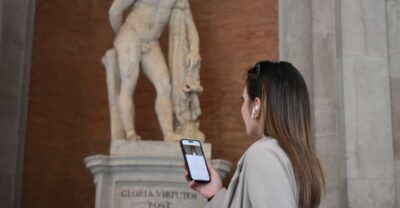
Tours like this can vary a lot depending on how many people show up. When the group is larger, earphones are provided. That’s a big deal in a museum setting where voices bounce off walls and people constantly pass in front of you.
With earphones, you can actually focus on the sculpture while still catching the story. Without that, you end up half-listening and half-trying to see what the guide is pointing at.
Group types are listed as private or small groups available, and some departures may run with around 20 people. In either case, the best tours manage movement well—staying organized enough that you don’t feel herded, but focused enough that you see the key pieces in the right order.
If you’re the type who gets restless in long lines or crowded spaces, earphones plus a structured route is one of the simplest ways to make the museum feel manageable.
Value at $55: What You’re Really Paying For
Yes, $55 per person is not “cheap.” But for Florence in peak season, the question isn’t whether it’s affordable—it’s whether it replaces a worse alternative.
Here’s what you’re buying for that price:
- Skip-the-line entry, saving waiting time and reducing morning stress
- A professional guide who explains what you’re looking at, while you’re looking at it
- Time efficiency, since you can cover the key Michelangelo highlights without piecing together your own route
- Better audio control via earphones in larger groups
- The ability to stay after the guided portion, so you’re not forced into a rushed exit
If you do Accademia on your own, you can still enjoy it. But you’ll likely spend extra time figuring out what to prioritize and reading labels while trying to stand in the right spot for photos or sightlines. This tour compresses that decision-making for you.
So the value works best if you want Michelangelo’s sculptures to mean something, not just look famous.
What to Bring (and What to Plan For Inside the Gallery)
This is an easy museum day—no special gear. The practical checklist is:
- Comfortable shoes (you’ll be standing and walking)
- Plan to move with a group through rooms and viewing areas
Some things are not allowed:
- No pets
- No smoking
- No luggage or large bags
If you’re traveling with a backpack, keep it reasonable. If you’re carrying a bigger item, you might need to handle storage before your tour, because the museum doesn’t allow large bags.
Also pay attention to the “when” behind the experience:
- Tours require a minimum of 2 participants to operate.
- On the first Sunday of each month, entrance is free of charge. However, tickets can’t be reserved ahead, so entry isn’t guaranteed. If you’re traveling during that window, build in flexibility.
Finally, English and Spanish-speaking tours are listed as always guaranteed. Italian is available too, but you should check what’s offered for your exact date and time so you’re not surprised by language availability.
Choosing Your Moment: When This Tour Works Best for You
This tour is especially good if:
- You want David to feel meaningful, not just iconic
- You’d rather spend your energy watching and listening than planning
- You appreciate clear explanations you can apply immediately in front of the artwork
- You prefer a guided route that keeps things from turning into a random shuffle through rooms
It can also be a good choice if you’ve visited Florence before and want a concentrated “Michelangelo hour” without losing a full day.
If you’re the kind of person who wants to wander slowly with no structure at all, you might still enjoy the museum afterward. The nice part is that the guided tour ends, and you’re free to stay longer to explore on your own.
That combination—guided clarity first, independent time after—is a strong match for many travel styles.
Should You Book the Accademia Gallery Skip-the-Line Guided Tour?
In most cases, I’d say yes—especially if David is a top priority for your Florence list. Skip-the-line access plus a guide-led walkthrough makes the museum feel organized, not chaotic. And the fact that the tour doesn’t stop at David is a real plus: you also get attention on I Prigioni and San Mateo, which rounds out the visit.
Book it if you want a smart, time-efficient way to understand Michelangelo without turning your trip into label-reading homework. Think twice only if you’re highly flexible about timing on very specific dates like the first Sunday of the month, since free entry is not guaranteed.
FAQ
How long is the Florence Accademia Gallery skip-the-line guided tour?
The tour duration is listed as 75 minutes to 2 hours, depending on the starting time and how the visit runs.
What’s included with the tour price?
You get a professional guide, a skip-the-line entrance ticket to the Accademia Gallery, and earphones for larger groups.
Where do we meet for the tour?
The meeting point may vary depending on the option booked, so you should confirm the exact location for your specific choice.
What languages are the tours offered in?
The guide languages are English, Italian, and Spanish.
Is the skip-the-line entrance guaranteed?
The tour includes skip-the-line entrance through a separate entrance, so you avoid waiting in the main queue.
Are there any requirements about group size?
Yes. The tours require a minimum of 2 participants to operate.
Is the museum free on the first Sunday of the month?
Yes, entrance is free on the first Sunday of each month, but tickets can’t be reserved ahead, so entry is not guaranteed.