REVIEW · BARD ITALY
Fortress: Prisons, Museum of Fortifications and Alps Museum
Book on GetYourGuide →Operated by Forte di Bard · Bookable on GetYourGuide
Defence history with big Alpine views. Fort Bard in the Aosta Valley turns an Alpine fortress into a working museum route, with panoramic lifts and multiple exhibition spaces that connect battlefield tech to real terrain. What I like most is how practical the layout feels, so you’re not wandering—you’re moving through a story about Alpine defence.
I also love the contrast between the museum displays and the Prisons section: 24 extremely small cells that make the whole idea of punishment feel physical. One possible drawback: go in expecting military history and mountain culture first—if you’re hunting for a Marvel-style exhibit connected to Avengers filming, that kind of pop-culture moment isn’t part of what this visit is designed to deliver.
In This Review
- Key Highlights You Should Care About
- Fort Bard’s Fortress Layout: where the Aosta Valley turns into a defence lesson
- Museum of Fortifications and Frontiers: weapons, models, and the question of boundaries
- What to watch for while you walk
- Prisons at Fort Bard: 24 tiny cells that change how you understand the word confinement
- The Museum of the Alps: forests to high altitude, and what modernity did to the mountains
- A practical pacing tip
- Chapel, parade grounds, courtyards, and walkways: reading the fortress with your own eyes
- Panoramic lifts: a clever way to save energy and maximize views
- Audio guide and the Museon app: turning museum stops into a connected story
- Price and value: what $17 really buys you at Fort Bard
- Who this Fort Bard experience fits best
- Should you book: Fortress, Prisons, Museum of Fortifications and Alps Museum?
- FAQ
- Where is Fortress: Prisons, Museum of Fortifications and Alps Museum located?
- How much does it cost?
- How long is it valid?
- What’s included in the ticket?
- Do you get a live guided tour?
- Where do you exchange your voucher?
- Do I need the Museon app for the included audio guide?
Key Highlights You Should Care About
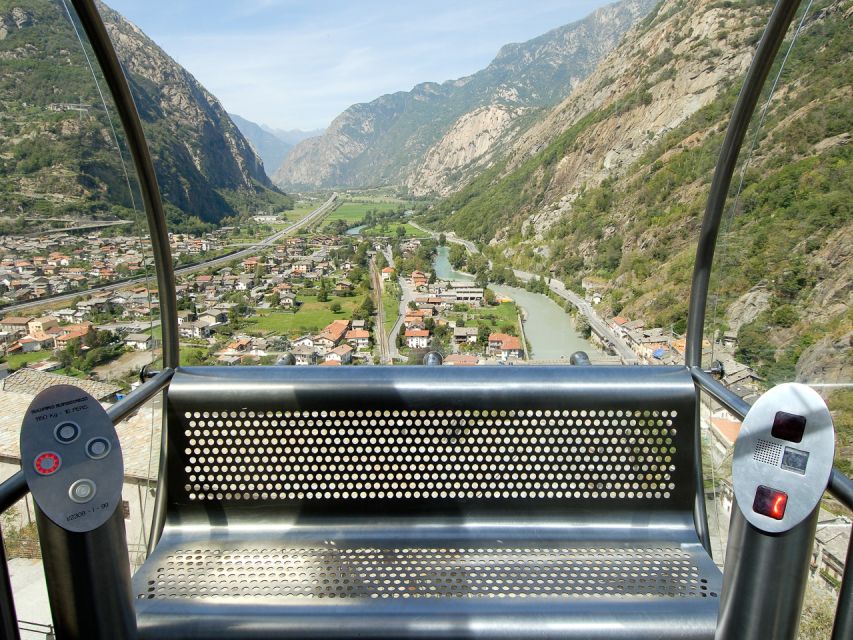
- Panoramic lifts that set the pace: you gain height fast, then explore the fort on foot.
- Fortifications museum timeline: from early fort strategy to late 19th/early 20th-century transformations.
- Prisons with 1.3 x 2 metre cells: small enough that you understand the scale immediately.
- Three-part Alps museum: natural + human environment, then Alpine civilization, then modern changes.
- Original fortress spaces included: chapel, parade grounds, courtyards, and walkways aren’t just scenery.
- Audio guide support via Museon app: adds context for history and architecture as you move.
Fort Bard’s Fortress Layout: where the Aosta Valley turns into a defence lesson
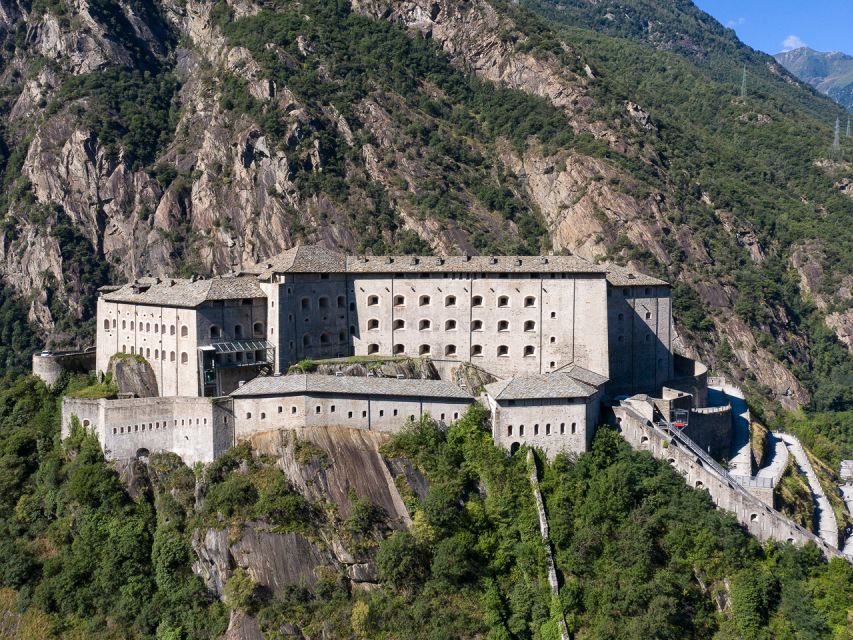
Fort Bard sits in Italy’s Aosta Valley, built for one big job: controlling movement through the Alps. Here’s the smart part for your visit: you’re not only viewing artifacts in glass cases. You’re walking through a real structure with imposing walls, courtyards, and walkways that make the defence logic feel obvious.
Plan on swapping your voucher at the ticket counters before you start. There are two options: one counter is at the start of the first panoramic lift, and the second is up at the top of the medieval village, behind the church of Bard. If you’re aiming to begin high and work down (or save your legs), choose the counter that matches your start point.
Value-wise, this experience is priced like an easy add-on day and still includes a lot of ground. With a rating of 4.5 out of 5 from 125 reviews, the strongest theme is that the visit feels well organized and genuinely interesting rather than chaotic.
Museum of Fortifications and Frontiers: weapons, models, and the question of boundaries
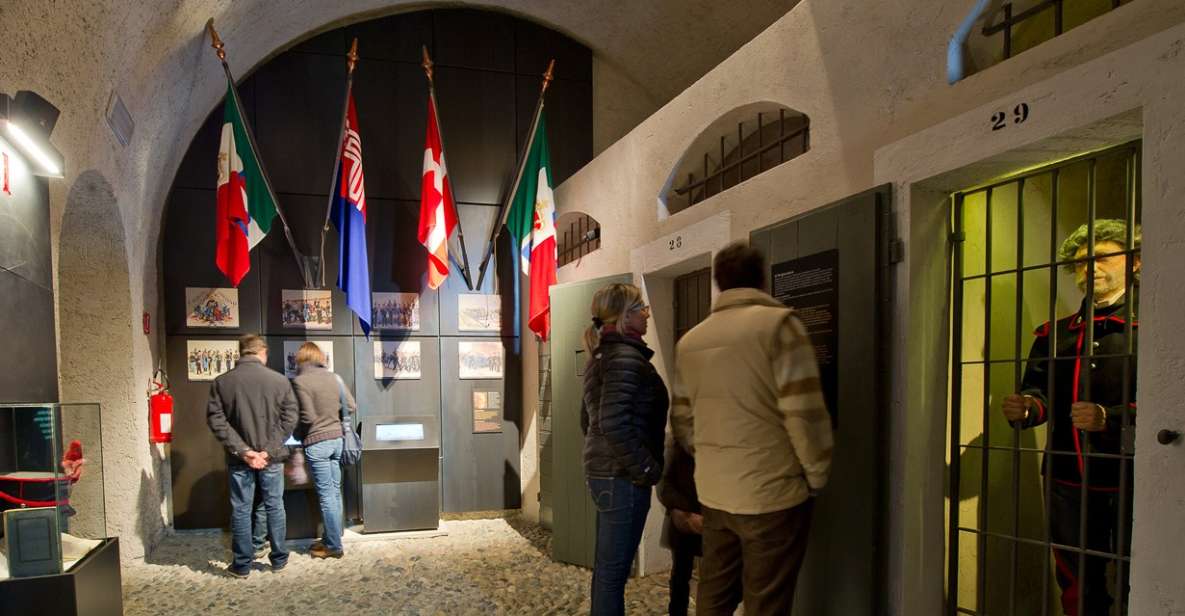
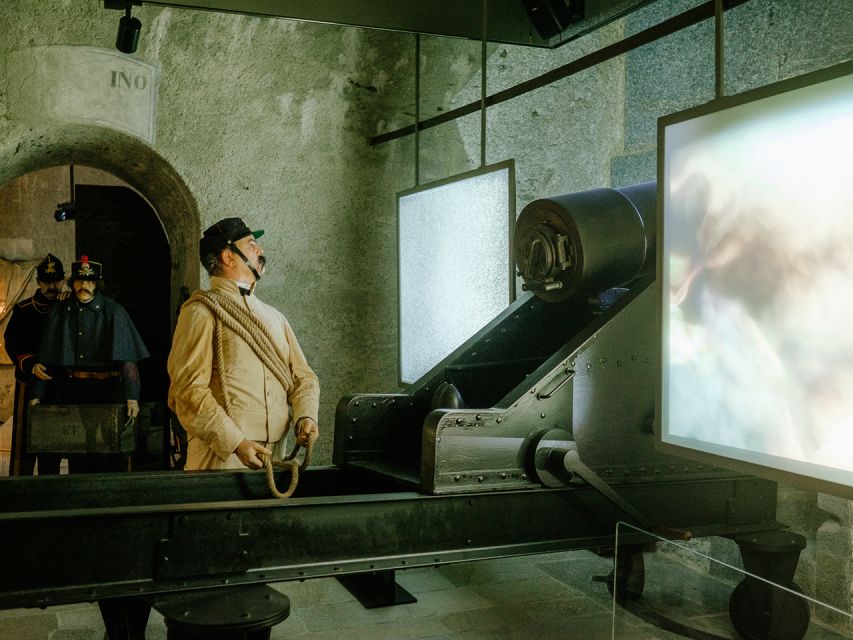
This is the part that helps your brain connect tactics to geography. The museum’s first section uses historical settings with models, film footage, and authentic weapons to track how fortresses evolved in the Western Alps as weapons and military thinking changed.
The second section moves into the late 1800s and early 1900s, when fortifications adapted again. You’ll see scale models and large reconstructions tied to the system of 19th-century fortresses, so you can compare how earlier designs handled threat versus how later designs tried to manage stronger artillery and shifting strategies.
Then comes the final section, built around a big idea: The Alps, a boundary? Instead of only telling you what a fortress was, it asks what the Alps have meant—border or barrier, obstacle or line of union. For many people, that’s the most memorable shift: you start the visit thinking “defence,” then you leave thinking “how humans draw lines on maps.”
What to watch for while you walk
- Look for the museum’s “progression” from weapons to strategy; it’s the key thread.
- Spend time with the reconstructions. They’re often more helpful than text for understanding how a system functioned.
- If you enjoy interpretation, don’t rush the boundary-themed ending.
Prisons at Fort Bard: 24 tiny cells that change how you understand the word confinement
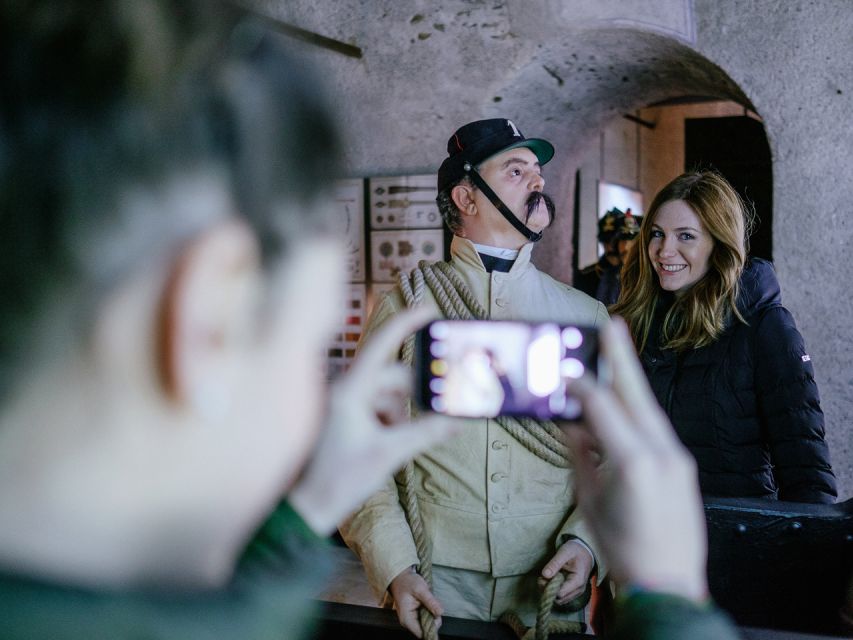
The prisons are reached as part of the route up to the Bard Fort, using a panoramic route that also gives you a chance to absorb the mountain setting. Then you step into a space that feels deliberately small and controlled.
You’ll visit 24 cells, each about 1.3 x 2 metres, arranged along four sections. The scale is the shock: it’s hard to pretend these spaces were anything but restrictive. Before the cells, there’s an entrance gallery dedicated to iconographic representation of the fortress, which sets the tone and gives context before you move into the actual cell area.
This part doesn’t need theatrics. The physical reality does the work. If you’re sensitive to stories involving detention or harsh conditions, just know that this is the most emotionally direct stop in the overall experience.
The Museum of the Alps: forests to high altitude, and what modernity did to the mountains
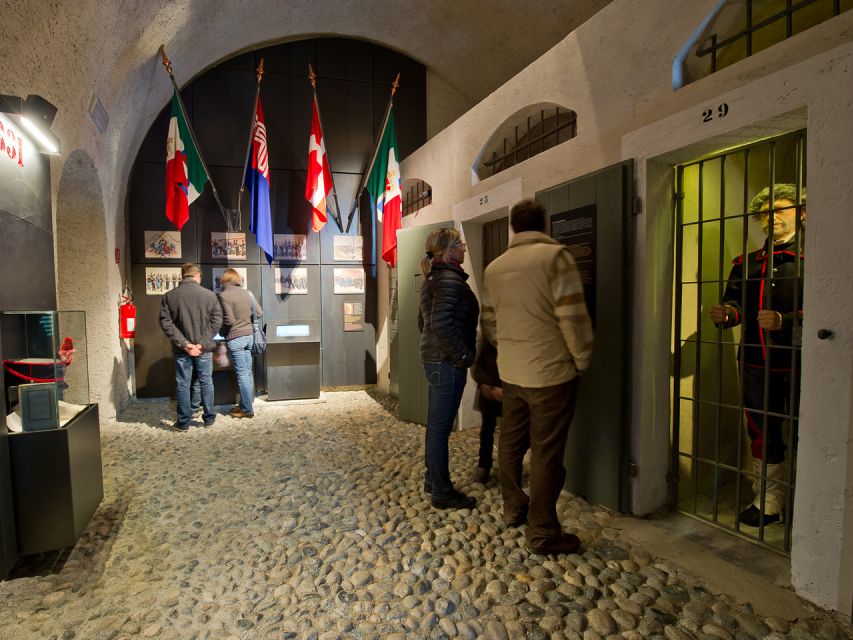
After the prisons, the route shifts outward again, moving you through the mountain environment. The Museum of Alps focuses on how mountains are shaped by both nature and people, then how modernity changed what those mountains mean and how they’re used.
The exhibition is organized into three parts. First is the natural and human components of the mountain environment, which helps you understand the Alps as a system rather than a backdrop. Second comes Alpine civilization, where you learn how communities lived with the challenges—and opportunities—of altitude and weather. The third part covers transformation in the era of modernity, showing how the mountains and human activity started evolving together.
If you like museums that connect people to place, you’ll probably find this one more reflective than the fortifications section. It’s still structured and informative, but the tone is less about tactics and more about adaptation.
A practical pacing tip
Give yourself breathing room between the prisons and the Alps museum. The shift from confinement themes to environment themes works best when you’re not trying to “speedrun” the whole fortress.
Chapel, parade grounds, courtyards, and walkways: reading the fortress with your own eyes
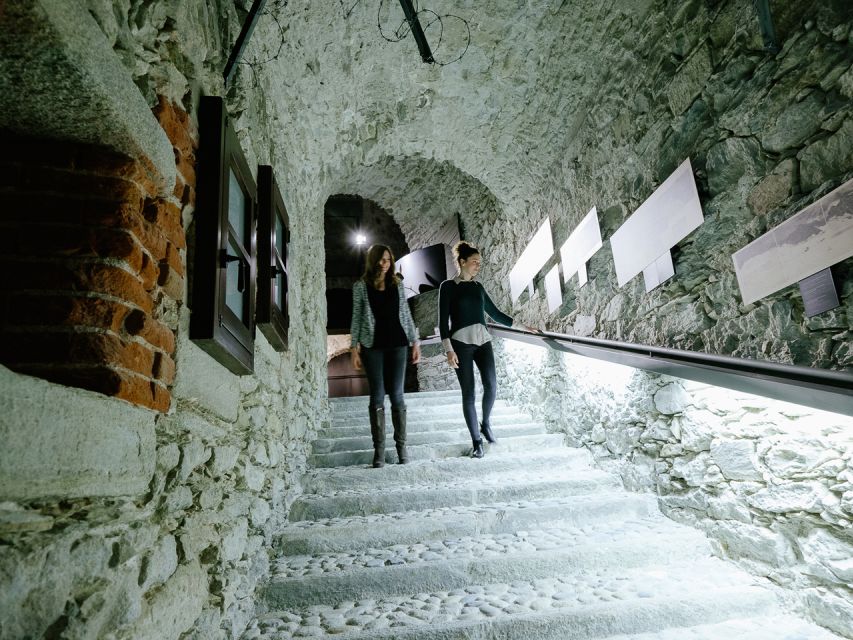
What makes Fort Bard feel different from a typical museum is that the route includes fortress architecture you can actually stand inside and look out from. Your ticket includes access to the chapel, the parade grounds, courtyards, and walkways, not just the exhibition rooms.
This matters because fortifications were designed to be used. Parade grounds connect to how movement and control worked inside the walls. Courtyards help you visualize internal layout and sightlines. Walkways let you see the fortress as an operating system tied to the surrounding terrain.
And the chapel adds a human layer. You’re reminded that military architecture still involved everyday life and belief, even in places built to manage threats.
Panoramic lifts: a clever way to save energy and maximize views
You get access to the panoramic lifts, which is a big plus in mountain settings. They do two things for you: they conserve energy and they set your mental map quickly. Once you’re higher, you understand why these forts were placed where they were.
You’ll also see that the lift locations tie into how the ticket counters work. If you want to minimize backtracking, start where the lift begins. If you want an easier stroll from the medieval village side, use the counter near the church area at the top.
Even if you’re a strong walker, the lifts help keep the day from turning into a long trudge before the exhibitions.
Audio guide and the Museon app: turning museum stops into a connected story
Included with your ticket is an audio guide to discover the history and architecture of the fortress. There’s also a key detail: you’ll need to download the Museon app on your smartphone, then use a QR code provided at the ticket office.
Why this is worth caring about: the fortress has layers—different sections, different museum themes, and architectural features that can be easy to overlook when you’re moving fast. The audio guide gives you context while you’re in the right spot, so you’re not left guessing what you’re looking at.
If you prefer not to rely on your phone, plan how you’ll manage battery life. Mountain days can be long, and you’ll use the app more than you expect because the route covers multiple exhibition areas.
Price and value: what $17 really buys you at Fort Bard
At about $17 per person, this is one of those experiences that works on “value per hour,” not just “value per ticket.” Your included entry gets you:
- Access to the fortress
- Access to three exhibition spaces of your choice from the permanent museums and exhibitions open during your visit (including the Museum of the Alps, Prisons, and Museum of Fortifications and Frontiers)
- Access to panoramic lifts
- Access to the chapel, parade grounds, courtyards, and walkways
- An audio guide, delivered through the Museon app
- A 10% discount at the Fort bookshop
The “choose three exhibition spaces” part is a big deal. If you want every highlight, pick Fortifications first, then Prisons, then the Museum of the Alps. If you’re short on time or energy, you can simplify while still getting the fortress experience.
Also, note that the experience does not include a live guided tour with a live guide. That’s not a dealbreaker. In fact, the self-paced format paired with the audio guide tends to fit people who want control over pacing.
Who this Fort Bard experience fits best
This visit is great for you if you like:
- Museums that use real structures and scale models, not just panels
- The Alps as more than scenery—especially the link between defence, technology, and geography
- A mix of human story (Prisons) and place story (Museum of the Alps)
It may be less satisfying if you’re primarily a pop-culture visitor. One review noted disappointment about the absence of a Marvel exhibit despite the fact that part of Avengers: Age of Ultron was filmed at Fort Bard. If that’s your main reason for coming, confirm what temporary or themed exhibitions are actually on during your visit.
Should you book: Fortress, Prisons, Museum of Fortifications and Alps Museum?
Yes, you should book this if you want a strong “three-in-one” mountain day: fortifications, tiny prisons, and a museum that explains how Alpine life and modernity shaped the mountains. For the price point, the included lifts and access to multiple exhibition areas make it feel efficient without rushing you.
Book it with a realistic mindset. This isn’t a themed entertainment park. It’s a fortress turned interpretive experience, built around strategy, architecture, and the meaning of a boundary in the Alps.
If you tell me what month you’re going and whether you care more about the prisons or the Alps museum, I can suggest the best order to plan your three exhibition spaces.
FAQ
Where is Fortress: Prisons, Museum of Fortifications and Alps Museum located?
It’s located in Italy’s Aosta Valley at Fort Bard.
How much does it cost?
The price is listed as $17 per person.
How long is it valid?
The ticket is valid for 90 days, so you can choose a starting time within that window based on availability.
What’s included in the ticket?
Included are the fortress entrance, access to panoramic lifts, access to the chapel, parade grounds, courtyards, and walkways, and access to three exhibition spaces of your choice among the permanent museums and any art exhibitions open at the time. You also get an audio guide via the Museon app and a 10% discount at the Fort bookshop.
Do you get a live guided tour?
No. A live guided tour is not included.
Where do you exchange your voucher?
You exchange your voucher at one of two ticket counters: at the start of the first panoramic lift, or at the top of the medieval village behind the Church of Bard.
Do I need the Museon app for the included audio guide?
Yes. You’ll need to download the Museon app and use the QR code provided at the ticket office to access the included service.