REVIEW · ALBA
Langhe: Truffle Hunting Experience
Book on GetYourGuide →Operated by Albaway · Bookable on GetYourGuide
Truffles turn a walk into a hunt. I like that you get to see a professional Trifolao and his trained truffle dog work the scent on real Langhe ground, not just listen to a lecture in a classroom.
I also like the practical focus: where truffles grow, how black and white differ, and what the hunting is actually like underfoot. One thing to plan for is that the paths can be muddy and steep, and you’ll need your own car to follow the guide to the secret spots.
In This Review
- Key things to know before you go
- Truffle Hunting in the Langhe: What This Experience Really Feels Like
- Meeting Points, Your Car, and the Quick Follow to the Secret Spots
- The Trifolao and the Dog: How the Search Works in Real Life
- Black vs White Truffles: The Differences You’ll Actually Notice
- Langhe Walk Break and a 10-Minute Self-Guided Moment
- What the Winery Stop Adds (And How the Wine Tasting Works)
- Mud, Weather, and What to Wear So You Don’t Hate the Day
- Price and Value: Why $94 Can Feel Fair—or Not
- Who Should Book This Truffle Hunt, and Who Might Want to Skip It
- Should You Book Langhe Truffle Hunting?
- FAQ
- How long is the Langhe truffle hunting experience?
- Is wine tasting included, and do I get Barolo or Barbaresco?
- Do I get truffles included in the price?
- Do I need a car to get to the hunting area?
- What should I wear and will I have the right equipment?
- Can I cancel, and do I have to pay right away?
Key things to know before you go
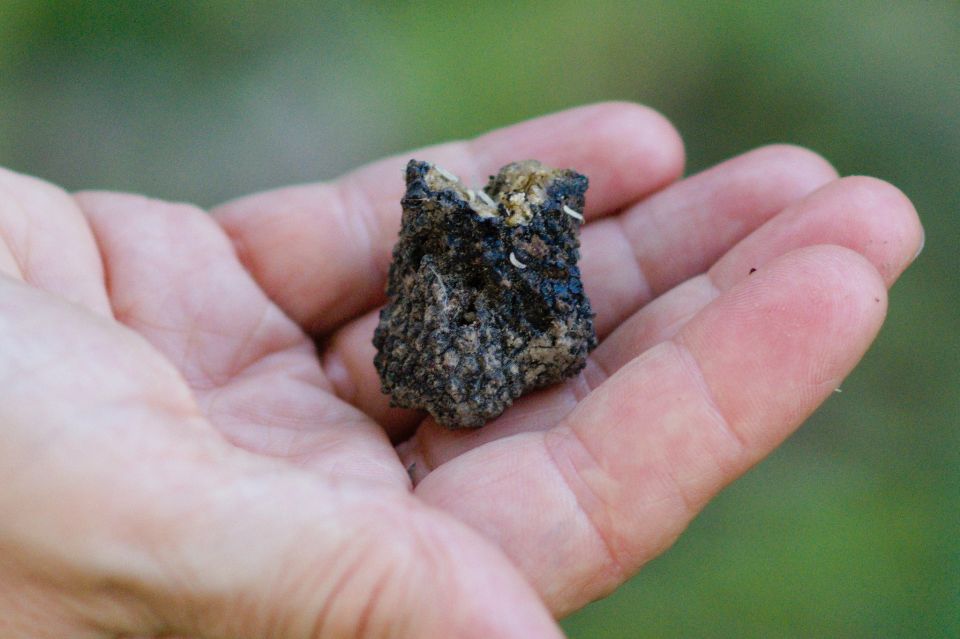
- Small group (up to 10) keeps the experience personal and easier to hear your guide.
- Trifolao + working dog is the main event, and the hunt is what you’ll remember.
- Rubber boots and rain poncho are provided, so you can show up without overpacking gear.
- Real education on black vs white truffles plus seasonal timing tied to what you’re searching for.
- Winery visit and wine tasting are included, with Barolo or Barbaresco on the 3.5-hour option.
- No transfer included: you’ll follow the guide by car for a short drive.
Truffle Hunting in the Langhe: What This Experience Really Feels Like
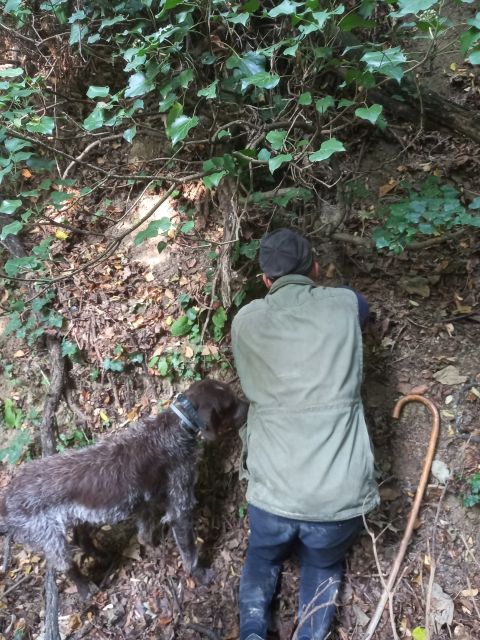
If you like food that has a story behind it, this is a smart way to spend a morning or afternoon in Piedmont. You’re not just buying truffle at the end. You’re watching people farm knowledge into the ground—then using scent, training, and patience to find something that’s literally underground.
The experience runs as a small group (limited to 10 participants), which matters here. In a place where you’re crouching, walking slowly, and looking for tiny clues, large crowds would ruin the vibe fast. Instead, you get enough space to focus on what the dog is doing.
And yes, it’s intense. The smell around truffle hunting is unlike anything else: sharp, earthy, and strangely fascinating. It’s part science lesson, part nature watch, part field adventure.
Meeting Points, Your Car, and the Quick Follow to the Secret Spots
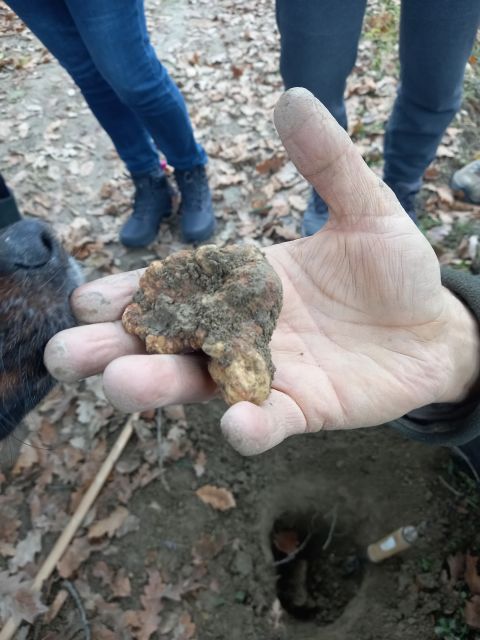
Here’s the logistics reality: the transfer to the hunting area isn’t included. You’ll need your own car to follow the guide, with only a short drive (about 5 to 10 minutes).
You meet at one of two starting options, depending on what you booked:
- Cimitero
- Cimitero di Alba
One extra wrinkle: the meeting point can change based on the Trifolao’s availability. It’s not a big deal, but it does mean you should stay flexible and arrive with a little buffer time.
Also, pack light. Oversize luggage isn’t allowed, so bring what you need for a muddy walk and a winery visit—then leave the rest behind.
The Trifolao and the Dog: How the Search Works in Real Life
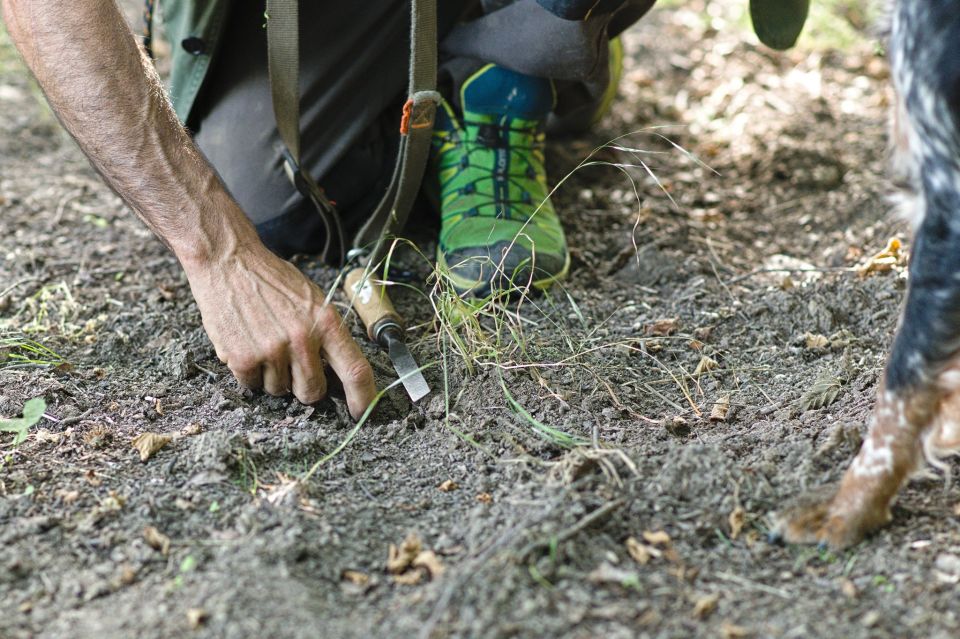
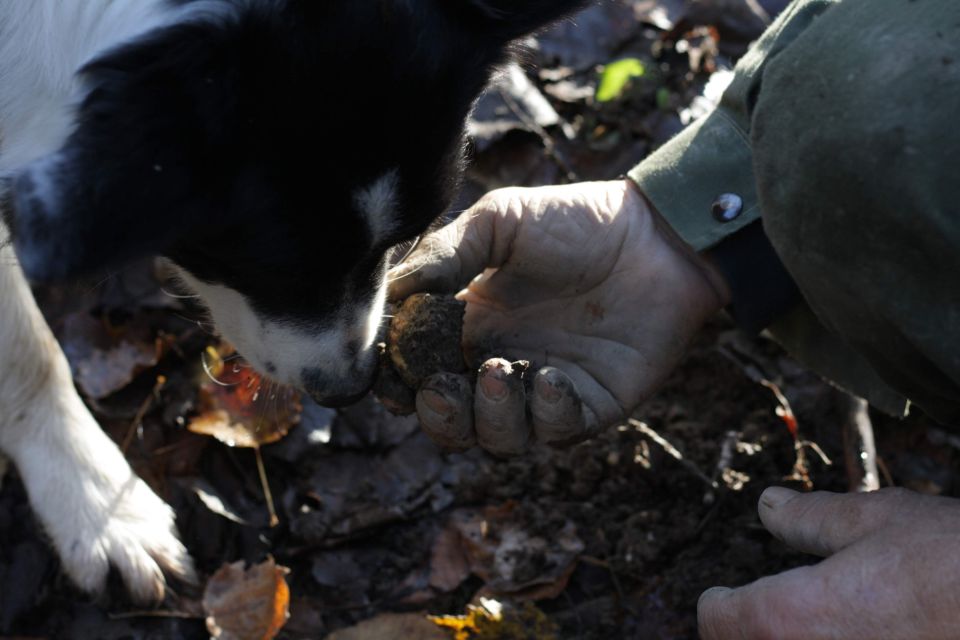
This tour is built around a working system. The Trifolao is the professional who knows the area and the technique. The dog is the instrument that turns training into results.
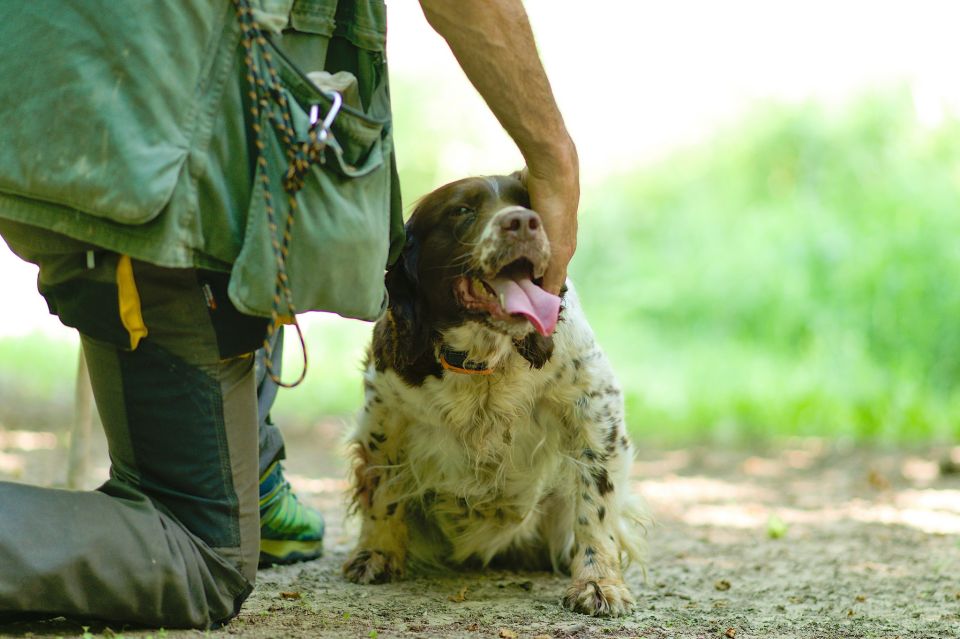
What I love about this setup is that you don’t get the story secondhand. You see it in motion—watching the dog respond to scent, and seeing how the hunter and guide work together in the field. On some departures you may meet names like Giovanni as the Trifolao and a guide named Margarita or Margherita, while the dog might be Turbo (or another hunting dog). The names vary, but the format stays the same: expertise, focus, and the dog doing the searching.
You’ll also learn how the dog is trained. That piece matters because it explains why truffle hunting isn’t magic. It’s conditioned behavior, practiced routine, and the right conditions. When you understand that, every alert from the dog feels earned, not accidental.
One more thing: the guide helps you connect the dots between the “where” and the “why.” They explain how and why truffles grow in this area. That transforms the walk from random woods exploring into purposeful searching.
Black vs White Truffles: The Differences You’ll Actually Notice
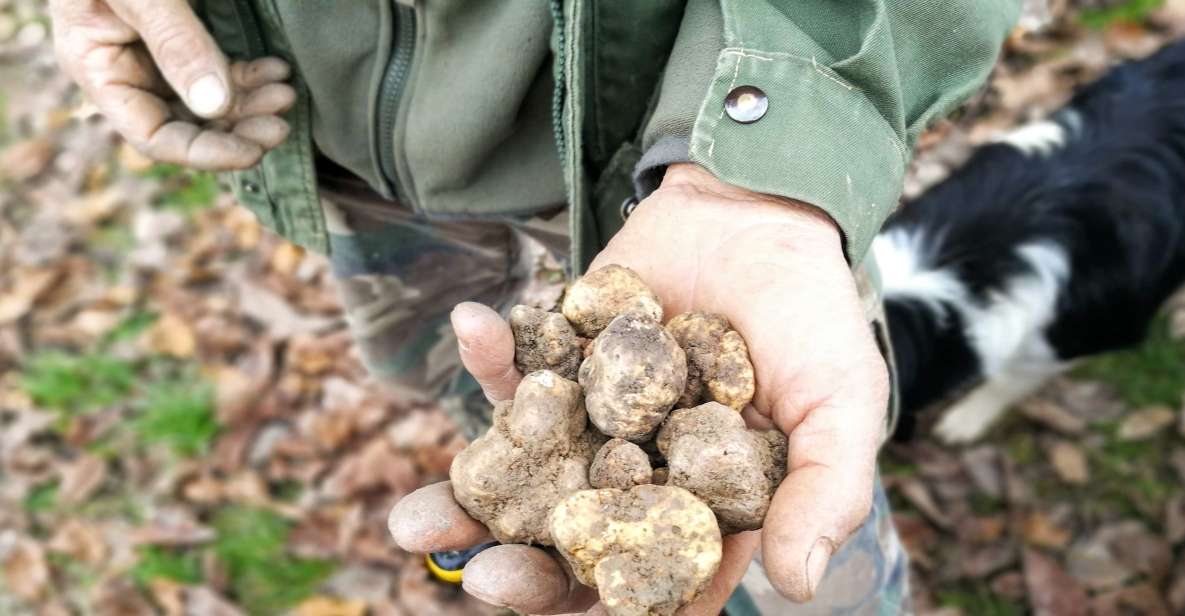
The tour is designed to teach you how black and white truffles differ—both in the field and in timing.
White truffles are seasonal in a clear window: from October 1 to January 31. Black truffles have different types at different times of the year, so your experience depends on when you go and what’s currently in season.
In the hunt itself, you’ll learn the technique used and what to look for. You also get context on where truffles are likely to grow and what conditions influence them. That’s valuable because truffle hunting isn’t just about finding anything that smells good. You’re looking for the right kind, in the right environment, at the right time.
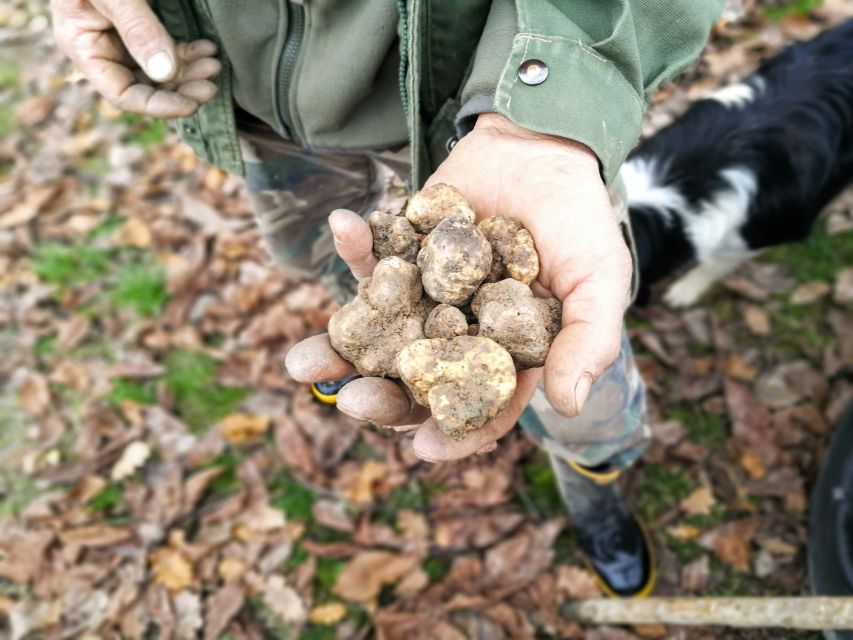
Some groups get exciting finds—both black and white. Even when you don’t find every type you hoped for, the learning is still the point: you’ll come away with a mental map of truffle seasons and what field clues mean.
Langhe Walk Break and a 10-Minute Self-Guided Moment
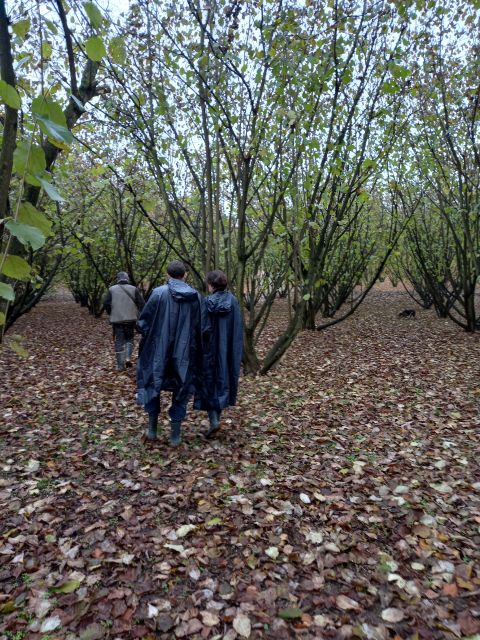
Between meeting and the deeper hunting or winery portion, you get a short break in the Langhe area, including a 10-minute self-guided moment.
This might not sound dramatic, but it’s the kind of time you’ll appreciate. In truffle season, you’re often dressing for weather, stepping onto uneven ground, and trying to stay ready for the hunting part. Those few minutes help you reset your body and focus your attention before the field work starts.
If it’s cool or rainy, use this break to do the practical stuff: settle your layers, adjust your boots, and make sure you’re actually comfortable before the real walking begins.
What the Winery Stop Adds (And How the Wine Tasting Works)
After the hunting segment, you’ll visit a winery. The winery visit runs about 1.5 hours in the itinerary structure.
Wine is included: you’ll taste different wines, with Barolo or Barbaresco included on the 3.5-hour option. That’s a meaningful upgrade if you’re serious about Piedmontese wine, because Barolo and Barbaresco aren’t casual sips. They’re identity.
This winery portion also gives you a nice contrast. The hunt is all about earth, scent, and patience. The winery is where those same ingredients show up—usually in a more polished form. Even if you’re not a wine expert, tasting wine after learning about truffle culture makes the whole day feel connected.
Just remember: food isn’t included. If you have a sensitive stomach or you know you’ll get hungry after walking muddy trails, eat something before you go or plan to grab food afterward.
Mud, Weather, and What to Wear So You Don’t Hate the Day
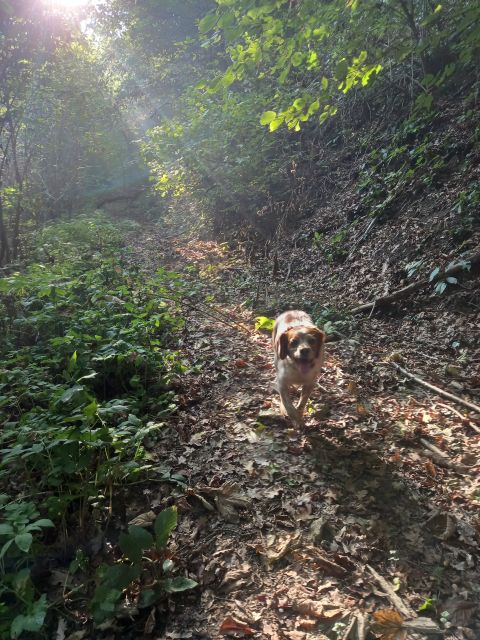
Truffle hunting season runs through colder months for white truffles, and weather can be unpredictable. In autumn conditions, the tour recommends warm, comfortable clothing, and rain gear is relevant.
Good news: you get practical support:
- Rubber boots (socks are suggested)
- Rain poncho is provided
Still, shoes and clothes matter. The paths can be steep and muddy. From what people describe, this isn’t a stroll for weak knees. It’s also not wheelchair-friendly.
If you’re going in colder months, dress in layers so you can adjust as the walk warms you up. If it’s rainy, keep your hands and pockets organized—wet ground can make everything feel slightly more slippery than you expect.
And bring the mindset that this is an active nature experience. You’ll be moving, bending, and watching the ground. Wear something that won’t distract you.
Price and Value: Why $94 Can Feel Fair—or Not
The price is $94 per person, and the value depends on what you care about.
What you do get:
- A local guide and the Trifolao (hunter) with the dog
- Boots and poncho
- The truffle hunting tour
- Winery visit and wine tasting (with Barolo or Barbaresco on the 3.5-hour option)
- A small group setting (up to 10)
What costs extra:
- Truffles found are not included in the price. You can purchase them from the hunter.
- Food isn’t included
- Transfer isn’t included (you need your own car to follow)
So here’s the balancing act. If you’re chasing an experience with real people, real skills, and real culture—this price can make sense. You’re paying for time with specialists and the gear that keeps you comfortable in the field.
If your goal is mainly truffles on a plate, this might feel expensive at first, because you’re not guaranteed the truffles you’ll want—and the truffles themselves are an added cost.
My advice: treat the hunt as the product. If you buy truffles, do it because you’re excited by what you learned, not because you feel obligated to “get your money’s worth.”
Who Should Book This Truffle Hunt, and Who Might Want to Skip It
This is best for:
- Foodies who love seeing how ingredients connect to place
- People curious about Piedmont traditions beyond wine tours
- Couples and small groups who prefer hands-on experiences
- Families who can handle muddy paths (some groups have taken kids and had a good time, as long as everyone can walk comfortably)
It may not be for you if:
- You want an easy, flat walk
- You need wheelchair accessibility (it’s not suitable)
- You’re allergic to the idea that truffles are a seasonal, not always predictable, search
The biggest decision factor is your comfort with uneven ground. The rubber boots help, but the terrain can still be challenging.
Should You Book Langhe Truffle Hunting?
I’d book it if you want an experience that’s more than a tasting. The real payoff is watching the Trifolao and dog work, then learning what makes black and white truffles grow and how timing changes everything.
I’d think twice if you hate mud, steep steps, or you’re traveling without a car and don’t want to handle the short drive yourself. Also consider your appetite for extra costs: truffles and food can add up.
If you’re coming during truffle season—especially the white truffle window—you’ll get the most satisfying version of the day. And even when finds vary, the field education and winery finish still make it a strong Langhe activity.
FAQ
How long is the Langhe truffle hunting experience?
It runs for 1.5 to 3.5 hours. The exact flow depends on the option you choose, including whether you’re on the longer route that includes Barolo or Barbaresco in the wine tasting.
Is wine tasting included, and do I get Barolo or Barbaresco?
Yes, wine tasting is included with the winery visit. Barolo or Barbaresco is included on the 3.5-hour option.
Do I get truffles included in the price?
No. Truffles found during the hunt are not included in the price. You can purchase truffles from the hunter if you want.
Do I need a car to get to the hunting area?
Yes. Transfer isn’t included, so you’ll need your own car to follow the guide to the hunting spot (about 5 to 10 minutes driving). The meeting point can vary based on availability.
What should I wear and will I have the right equipment?
Bring comfortable clothes and shoes. The tour provides rubber boots (socks are suggested) and a rain poncho, which is helpful in autumn conditions and wet weather.
Can I cancel, and do I have to pay right away?
You have free cancellation up to 24 hours in advance for a full refund. You can also use the reserve now & pay later option to keep plans flexible.
If you tell me your travel month and whether you’re doing the 1.5-hour or 3.5-hour option, I can help you pick the version that best matches your priorities.