REVIEW · CORTE PAVONE WINERY
Montalcino: Guided Winery Tour and Wine Tasting
Book on GetYourGuide →Operated by Loacker Wine Estates · Bookable on GetYourGuide
A great Brunello lesson starts with the vines. I love the vineyard walk and the hands-on feel for how Tuscany’s wines take shape, plus the 6-wine tasting that turns names like Brunello and Cru into real flavors. One thing to consider: food isn’t part of the basic tour experience as described, so plan to eat beforehand if you get hungry easily.
This is a tight, satisfying tour built around Corte Pavone’s approach to biodynamic viticulture, guided in English or Italian by people who clearly enjoy teaching. If you’re lucky, you’ll hear from guides like Andrea or Emma, and the whole flow is designed so you can ask questions while you’re there rather than guessing later.
In This Review
- Key things that make this tour worth your time
- Arriving at Corte Pavone: cypress drive energy and a clear start
- Walking the vines: biodynamic viticulture, explained where it happens
- Grapes to wine in real spaces: processing and the cross-vaulted cellar
- The tasting setup: 3 flights, 6 wines, and how to compare them
- Choosing your tasting option: Brunello Cru, Corte Pavone range, or Maremma contrast
- Dynamic Brunello Cru tasting (Brunello focus with vineyard distinctions)
- Signature Corte Pavone tasting (Sangiovese range overview)
- Maremma & Montalcino tasting (only 70 km apart, different personalities)
- Signature Valdifalco tasting (Maremma deep in one flight set)
- My practical advice on picking
- Timing and what 105 minutes feels like in real life
- The guides and the vibe: teaching that stays practical
- Value check: why the $53 price can make sense
- Who should book this Montalcino wine tour (and who might not)
- Should you book the Montalcino guided winery tour?
- FAQ
- How long is the Montalcino guided winery tour and wine tasting?
- What is included in the tour?
- How many wines are tasted?
- What language is the tour guide available in?
- Where is the meeting point?
- Is free cancellation offered?
- Can I reserve without paying right away?
- Is the tour suitable for everyone?
Key things that make this tour worth your time
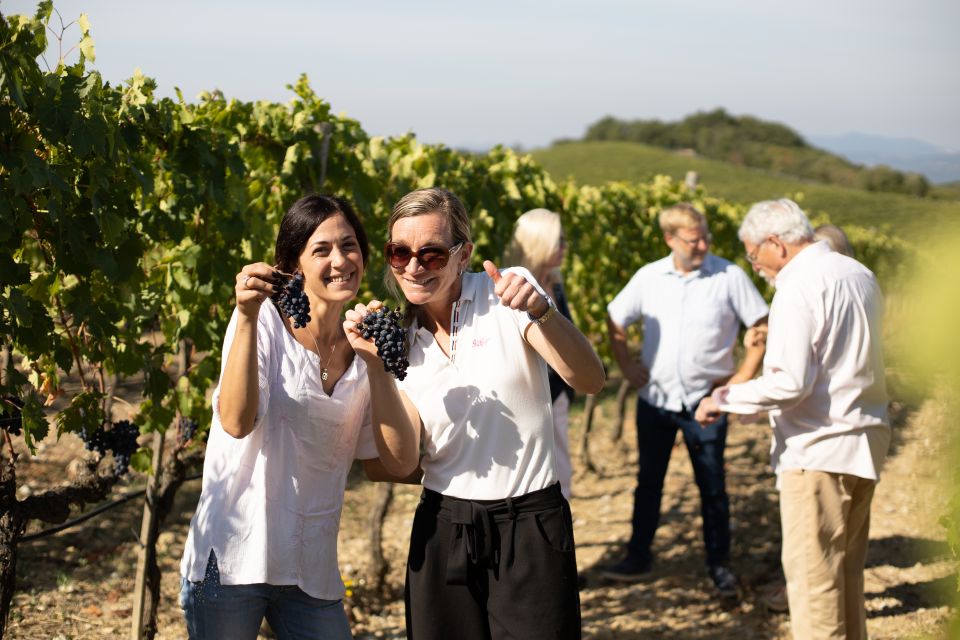
- A walking vineyard start at Corte Pavone gives you context before you taste
- Biodynamic viticulture lessons explain how environment affects the glass
- Cross-vaulted cellar + grape processing area makes production real, not abstract
- 6 wines served in 3 flights helps you compare styles without rushing
- You can choose your tasting focus: Brunello Cru, Corte Pavone range, Maremma vs Montalcino, or Valdifalco
- Water is included, which makes the tasting more comfortable
Arriving at Corte Pavone: cypress drive energy and a clear start
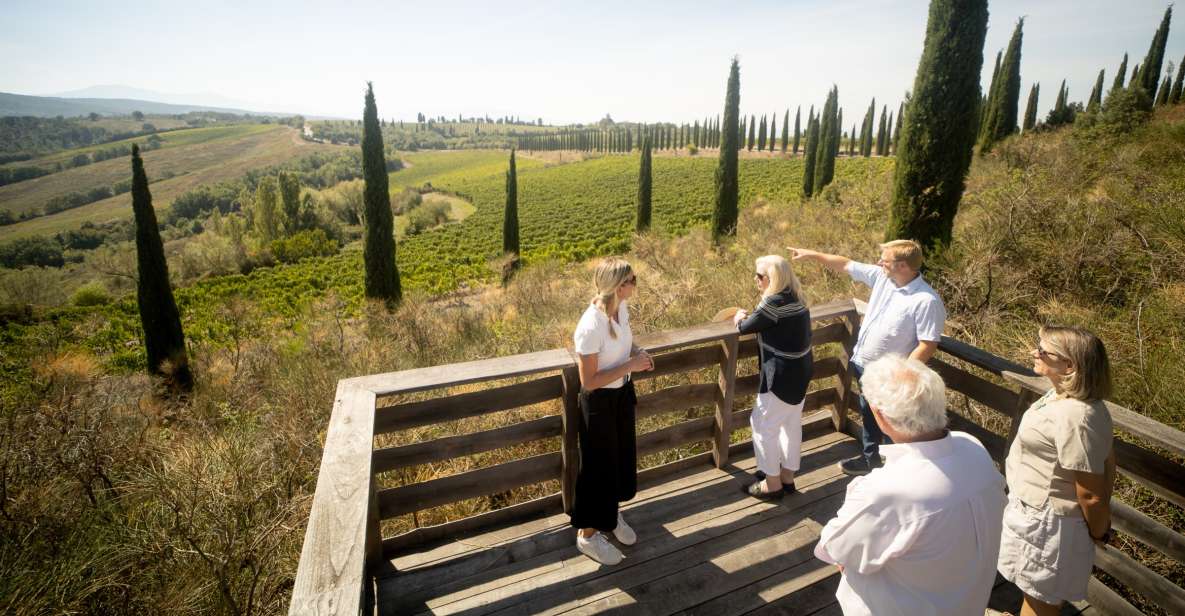
The experience begins at Corte Pavone Winery in Montalcino, and even if you’re not a wine nerd, the place sets the mood. You drive in along a broad avenue lined with cypress trees, which basically tells your brain it’s time to slow down. It’s an easy visual cue for what comes next: vineyards, production spaces, then a sit-down tasting.
If you’re driving from Montalcino, you’ll head toward Grosseto and S. Angelo in Colle, turn right at a crossroads after about 1 km, then follow the road for about 3 km toward Castiglion del Bosco. The entrance is reached via that cypress-lined avenue. If you’d rather not drive, make sure your plans line up with that meeting point early enough to avoid a rushed arrival.
This kind of start matters because it frames everything. You’re not dropped into a room first and told what to think. Instead, you get oriented on-site, then you learn.
You can also read our reviews of more tours and experiences in Corte Pavone Winery.
Walking the vines: biodynamic viticulture, explained where it happens
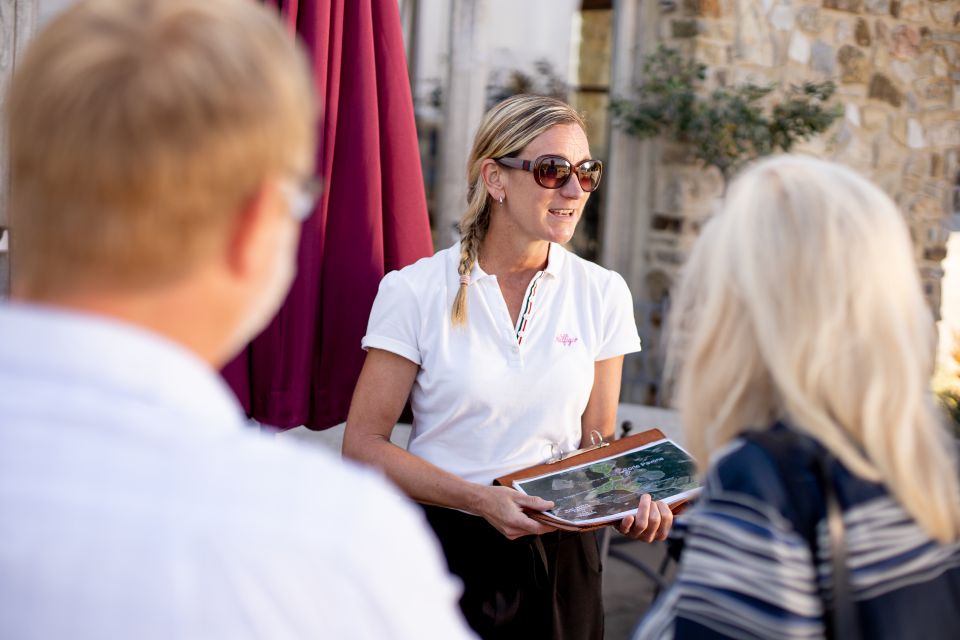
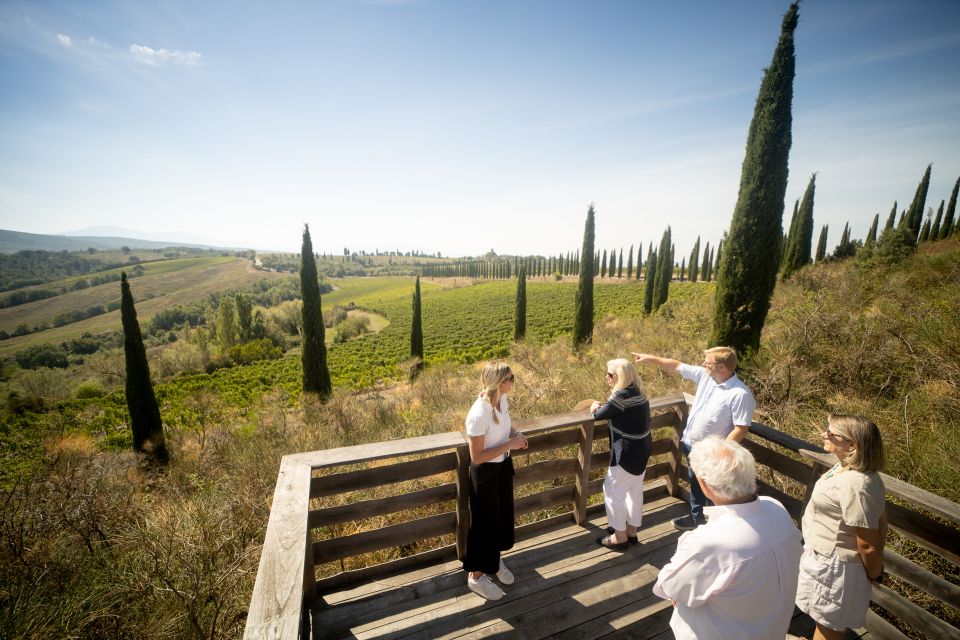
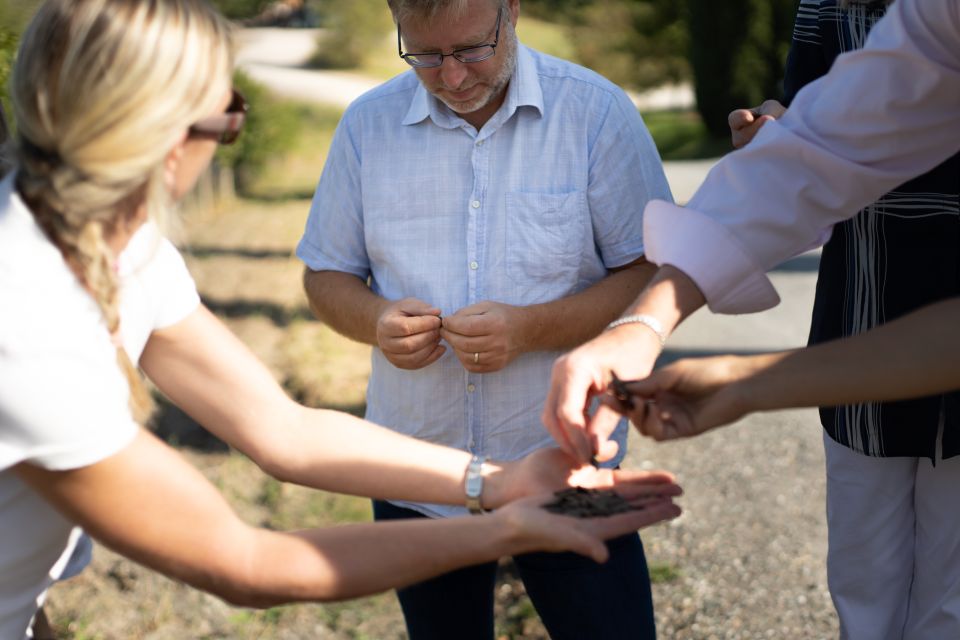
The first big block of time is the guided vineyard walk—about an hour—and it’s designed for sensory learning, not just listening. You get to see, smell, and touch the setting and connect the site to what eventually lands in your glass.
The tour’s theme is biodynamic viticulture. That’s not just a buzzword here. Your guide focuses on how working methods and the natural environment influence wine quality and character. As you move through the vineyards, you can ask questions in the moment—things like why certain grapes are grown the way they are, or what the season and surroundings do to the plant.
One practical benefit of this format: you’ll catch the logic behind the tasting later. When you understand where the grapes come from and how the winery approaches the land, it’s easier to taste differences between wines and not just pronounce fancy names.
And yes, the views help. But don’t treat them like a distraction. Use them as part of the lesson—your guide will point out what makes the area and its natural conditions meaningful.
Grapes to wine in real spaces: processing and the cross-vaulted cellar
After the vineyard portion, you move from outdoors to production. You’ll see the grape processing area, which helps you connect the earlier lessons with what happens right after harvest. You’ll learn why wine ages differently depending on how it’s handled—especially around wood barrels versus amphora-style aging.
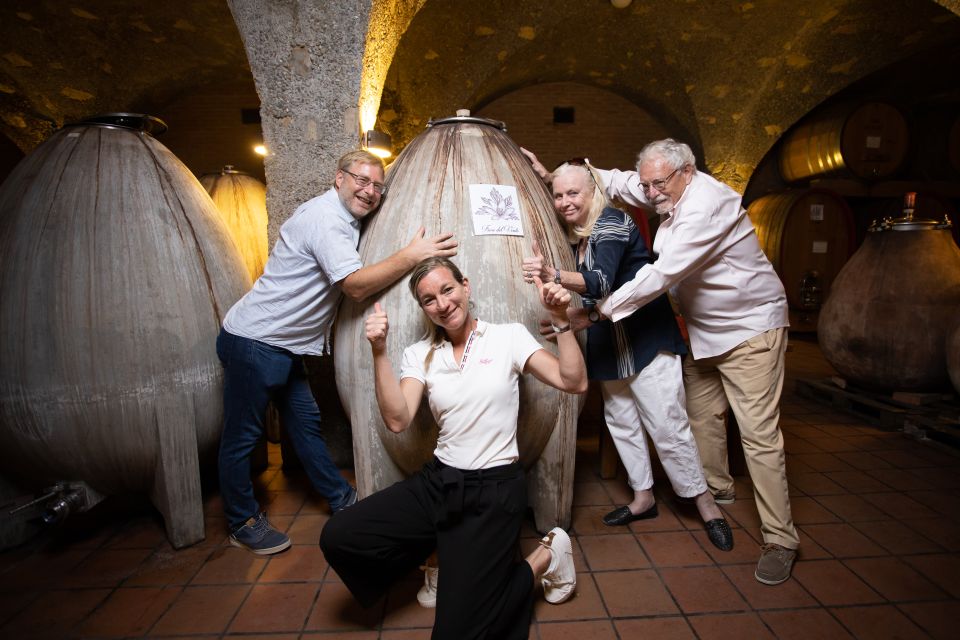
Then comes the cellar visit: a cross-vaulted space where wine aging is part of the architecture. Walking into a real cellar changes how you think about time. Wine doesn’t just taste like something that happened in a lab. It tastes like decisions made over months or years—how tanks are used, how aging vessels change texture, and how careful handling preserves what the grapes brought in the first place.
What I like about this segment is that it’s structured. You’re not just looking at barrels while someone says, trust me. You’re getting the “why” alongside the “what.” That makes the later tasting feel like a guided comparison instead of a random flight of sips.
Also, the tour is described as giving you the basis to taste the wines and ask questions during the experience. That matters, because once you understand fermentation and aging basics, you stop tasting passively and start tasting intentionally.
The tasting setup: 3 flights, 6 wines, and how to compare them
The tasting happens after the cellar and processing tour, and you’ll sit at a table in the tasting space or possibly on the terrace, depending on how things are set up during your visit. The tasting portion is about 45 minutes and is served as 3 flights.
Here’s the structure that makes this worth your money: each flight includes a short introduction, then you taste on your own. That rhythm is ideal. You get enough guidance to know what to pay attention to (aroma, structure, acidity, aging influence), but you’re still doing the tasting yourself instead of following along like a lecture.
Across the full tasting, you’ll sample 6 different wines. The specific lineup varies based on the tasting option you select (more on that next). Either way, you’re learning to recognize how differences in vineyards and production approaches show up in flavor and style.
If you like tasting where you can actually make mental notes, this setup works. And since water is included, you can pace yourself through the 45 minutes.
Choosing your tasting option: Brunello Cru, Corte Pavone range, or Maremma contrast
One of the best values in this tour is that you don’t have to accept a one-size-fits-all tasting. You can choose between several guided tasting focuses, which means you can match the experience to what you’re curious about.
Dynamic Brunello Cru tasting (Brunello focus with vineyard distinctions)
This option concentrates on Brunelli and how single vineyards express themselves. The description includes:
- 6 Brunelli total
- 1 vintage Brunello
- 3 Brunello Cru
- 2 Brunello Cru Riserva
If your trip is primarily about Brunello, this is the straightest path. You’ll spend your time comparing related wines that share a core identity but vary through cru and reservas—exactly the kind of comparison that helps you understand what changes in the glass.
Signature Corte Pavone tasting (Sangiovese range overview)
This one is about taking one grape variety and showing how many different wines can come from it. The lineup includes:
- Le Perle di Pavone Spumante
- Rosso di Montalcino
- Levante
- Brunello di Montalcino
- Brunello Cru
- Brunello Cru Riserva
This is great if you’re not only hunting for Brunello. It gives you a broader sense of how the winery’s choices shift style—from sparkling to Rosso and up into Brunello.
Maremma & Montalcino tasting (only 70 km apart, different personalities)
This option compares two regions—Maremma and Montalcino—using wines from different wineries within the same experience:
- wines from Valdifalco (Maremma)
- wines from Corte Pavone (Montalcino)
It’s built as a terroir lesson: how two places close together can taste noticeably different. The description calls it a way to discover how the two regions compare with only about 70 kilometers of distance between them. If you love the idea of tasting geography, this is a smart pick.
Signature Valdifalco tasting (Maremma deep in one flight set)
This option is designed to fully experience Maremma through Valdifalco’s wines:
- 6 wines that reflect the terroir and uniqueness of the Maremma region
If you’ve already tasted enough Brunello to feel “Brunello fatigue,” this gives you a new angle without leaving Tuscany behind.
My practical advice on picking
If you’re new to Tuscan wine and want to build a foundation fast, Signature Corte Pavone is the safest choice because it shows range. If you came for Brunello specifically, go Dynamic Brunello Cru. If you want terroir comparisons (and you’re the type to enjoy contrasts), pick the Maremma & Montalcino tasting.
Timing and what 105 minutes feels like in real life
The total duration is listed as 105 minutes, which is nicely efficient. You’re getting:
- a guided vineyard walk (about 1 hour)
- a cellar + processing segment
- then a 45-minute tasting
In practice, that means you’ll be outdoors briefly, then move into production spaces, then settle in to taste. It’s not an all-day wine crawl, so it works well if you want to do this and still have time for other stops in Val d’Orcia or around Montalcino.
Two simple tips help you enjoy it more:
- Wear comfortable shoes for walking vineyard paths.
- Take your time during the tasting introductions. The tasting is short, so that first guidance is what helps you taste with intention.
The guides and the vibe: teaching that stays practical
The tour is led by a live guide in English or Italian, and the tone is strongly teaching-focused. Different guide names come up in recent experiences—Andrea and Emma are both mentioned—so you can expect a human approach, not prerecorded audio.
What I look for in a winery tour is whether the guide makes production understandable. Here, the focus on origins (where grapes come from), environmental influence, and aging differences is exactly what turns a tasting into learning. Instead of just saying a wine is smooth or complex, the guide helps you understand what created those traits.
This is also the kind of tour where questions make sense. You’re tasting after you’ve seen the vineyards and cellar, so it’s easy to ask, for example, how aging method changes texture, or what biodynamic practices mean in day-to-day work.
Value check: why the $53 price can make sense
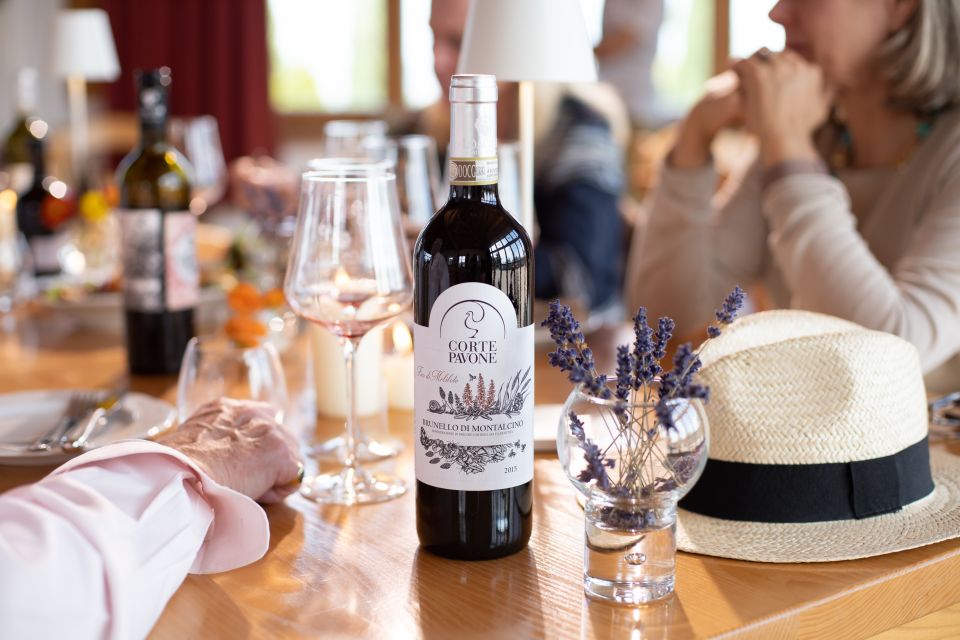
At $53 per person, you’re paying for a guided vineyard visit plus access to production spaces and a structured tasting of six wines (served in 3 flights). You’re not just buying a few glasses at a counter—you’re getting context before you taste.
The value is strongest if:
- you want a fast but meaningful Brunello and Tuscany primer
- you enjoy wine tasting with comparisons
- you appreciate understanding aging methods and terroir, not only sipping
If your plan is mostly to drink casually without caring why wines taste different, you might feel it’s more structured than you need. But if you like learning while you’re tasting, the format is built for that.
Who should book this Montalcino wine tour (and who might not)
This fits best for people who want a well-organized introduction to Tuscany wine rooted in real place and real production. It’s especially suitable if you like:
- biodynamic or sustainable viticulture explanations
- Brunello-focused comparisons
- cellar-and-processing learning that connects to tasting
One note from the activity details: it’s not suitable for pregnant women. If that applies to you, it’s worth choosing another kind of experience with safer pacing or different access.
Should you book the Montalcino guided winery tour?
If you’re visiting Montalcino and you want more than a quick sip, I think you should book it. The combination of vineyard walk, production access, and a guided tasting of six wines in a short 105-minute format is a smart use of limited time. You’ll leave with a clearer sense of how origins, environment, and aging methods show up in the glass—and you’ll be able to choose wines later with more confidence.
If you’re short on time but still want an authentic winery experience that explains the why behind the taste, this one checks the boxes. Just go in hungry for learning, not for food—eat beforehand if you need a full meal, since the tour experience as described is built around tasting and education.
FAQ
How long is the Montalcino guided winery tour and wine tasting?
The experience lasts about 105 minutes total.
What is included in the tour?
You get a winery visit, a tour of the vaulted wine cellar, a guided wine tasting, and water.
How many wines are tasted?
You’ll taste 6 different wines, served in 3 flights.
What language is the tour guide available in?
The live guide is available in English and Italian.
Where is the meeting point?
The meeting point is at Corte Pavone Winery. If you’re driving from Montalcino, you head toward Grosseto and S. Angelo in Colle, turn right after about 1 km at the crossroads, continue about 3 km toward Castiglion del Bosco, and follow signs to the cypress-lined entrance.
Is free cancellation offered?
Yes. You can cancel up to 24 hours in advance for a full refund.
Can I reserve without paying right away?
Yes. There is a reserve now & pay later option, letting you book and pay nothing today.
Is the tour suitable for everyone?
It’s not suitable for pregnant women.