REVIEW · PERUGIA
Perugia: Entry Ticket and Guided Tour of Perugia Underground
Book on GetYourGuide →Operated by Secret Umbria · Bookable on GetYourGuide
Perugia’s history is under your feet. At Perugia Underground, you go about 15 meters below the Cathedral of Saint Lawrence and walk among Etruscan, Roman, and medieval remains, then finish with a VR experience.
I love that it’s short and focused: it starts in the cathedral cloisters and you get a guided route through the archaeological area, with a tablet translation if you need it.
One catch: the live tour is Italian, so if you’re not comfortable following along, you’ll rely on the tablet a lot.
Key Things to Know Before You Go
- 15-meter descent from the Cathedral of Saint Lawrence down into the hill’s archaeological levels
- Etruscan, Roman, medieval layers all along one walk you can only do with a guide
- Cathedral cloisters as the start point, then you move through the Saint Lawrence Island complex
- VR headset finale to help you picture how earlier Perugia looked and felt
- About 50 minutes means it fits neatly between other sights in Perugia
- Tablet translation included, which helps non-Italian speakers keep up
In This Review
- Where the Tour Starts: Saint Lawrence Cathedral Cloisters, Piazza IV Novembre
- The 15-Meter Descent: Walking into the Hill Under Perugia
- Saint Lawrence Island Complex: Why This Site Feels Different
- Etruscan + Roman Remains You Can Actually See
- The Medieval Layer: How Later Perugia Reused the Same Space
- The Cloisters-to-Cells Route: A Guided Walk With Clear Storytelling
- Tablet Translation and the Italian-Led Format
- VR Headset Finale: Seeing the Past as a Physical Place
- Timing and Group Energy: About 50 Minutes Down There
- Practical Comfort Tips: Temperature Shift, No Food, and No Strollers
- Price and Value: $14 for Ticket + Guide + Translation + VR
- Who Should Book This Tour (and Who Might Skip It)
- Should You Book Perugia Underground?
- FAQ
- How long is the Perugia Underground guided tour?
- Where do I meet for the tour?
- What languages are available?
- What is included in the ticket price?
- Is it worth it if I am not comfortable with Italian?
- Is Perugia Underground wheelchair accessible?
- What restrictions should I know about?
Where the Tour Starts: Saint Lawrence Cathedral Cloisters, Piazza IV Novembre
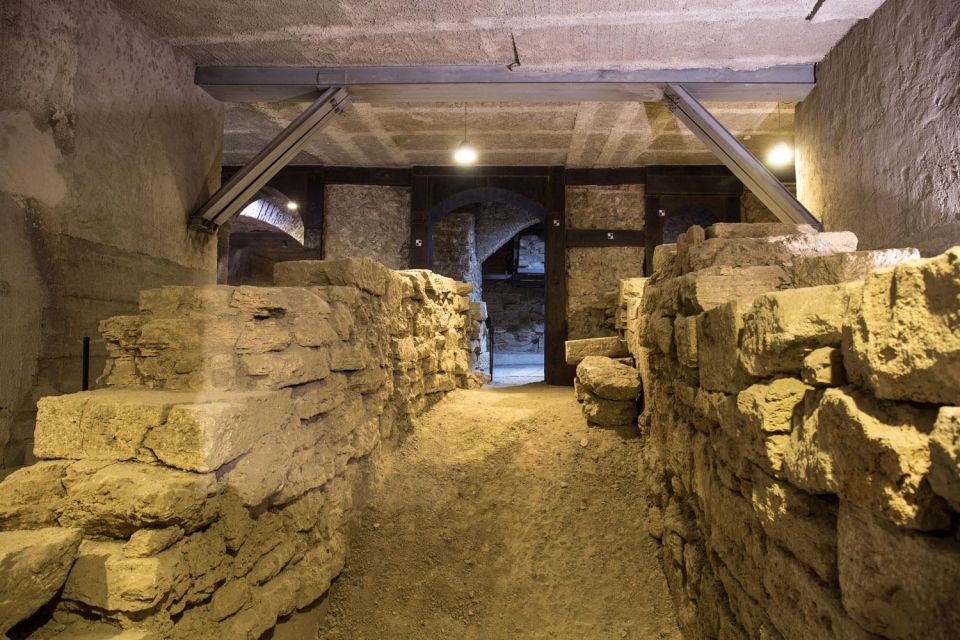
The experience begins at the ticket office in the cloister of St. Lawrence Cathedral. To find it, go to Piazza IV Novembre, then enter through the large portal near the bookstore Libreria delle Volte.
This matters because it sets your expectations right away. You’re not meeting at a random street corner; you’re starting inside the religious complex that sits right above the archaeological area.
The 15-Meter Descent: Walking into the Hill Under Perugia
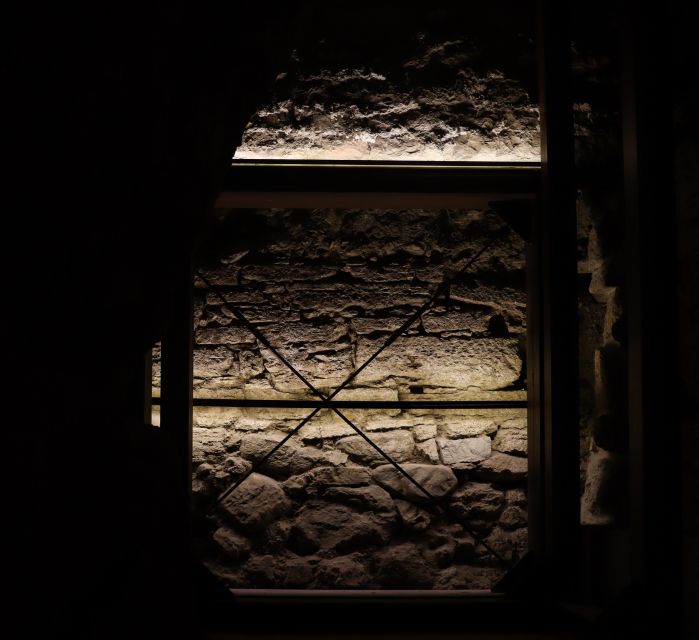
You’ll “drop” into the past fairly quickly. From the cloisters, the guided route takes you into the Saint Lawrence Island complex, reaching about 15 meters below the current level of the Cathedral of Saint Lawrence.
That vertical shift is part of what makes the visit click. Aboveground Perugia can feel like a classic Umbrian hill town. Under the cathedral, the city becomes something else entirely: a stack of eras, with stonework and remains that survived right where they were built.
You should also expect some stairs along the way. The route isn’t set up for wheelchair users or people with significant mobility difficulties, so plan around that from the start.
You can also read our reviews of more tours and experiences in Perugia.


Saint Lawrence Island Complex: Why This Site Feels Different
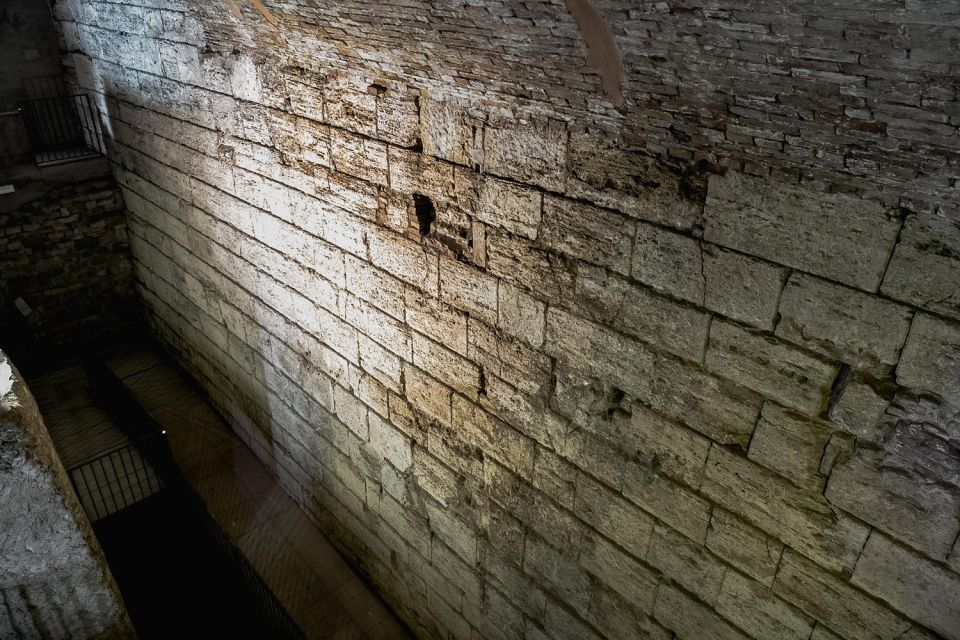
The highlight isn’t just that you’re underground. It’s that you’re in a monumental complex tied to the identity of the city.
The Saint Lawrence Island area is framed as a long-running location where Perugia’s story keeps layering over itself. As you move through the path your guide leads, you’re essentially tracing how the same spot in the city changed across time—Etruscan, Roman, and medieval.
This “same place, different centuries” approach is what makes the tour memorable. You’re not rushing through a museum case full of objects. You’re seeing evidence in the setting where it once mattered.
Etruscan + Roman Remains You Can Actually See
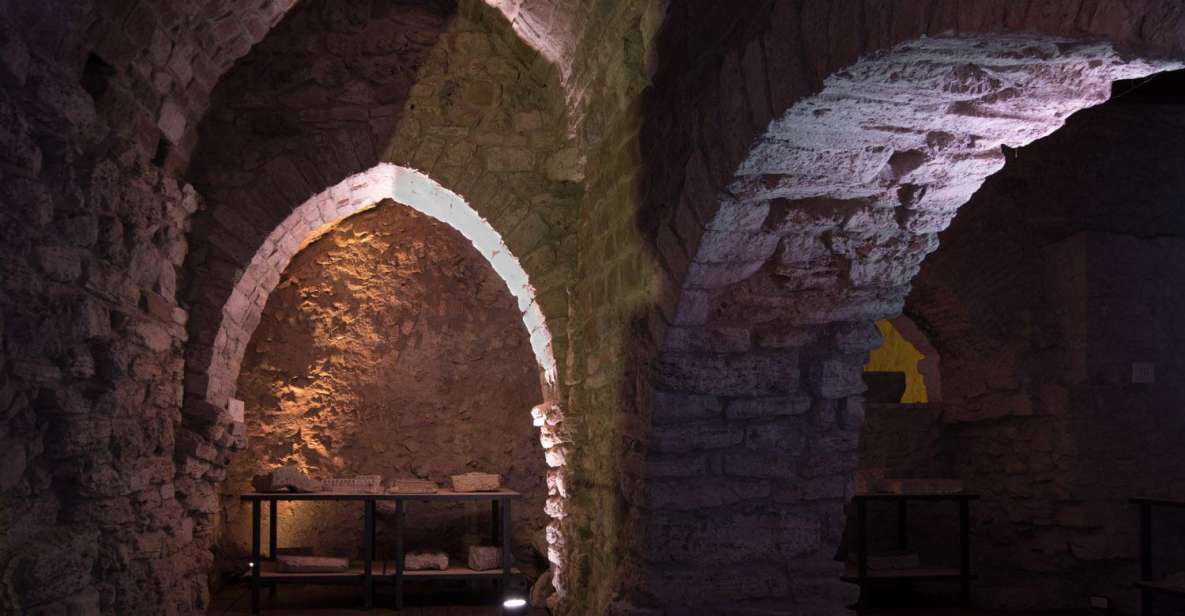
The tour is built around three eras: Etruscan, Roman, and medieval remains. You’ll see traces connected to how Perugia was structured and how power, construction, and everyday life evolved.
In practical terms, this is the kind of underground visit that helps your brain connect big historical names to real physical spaces. People often study Etruscan and Roman Italy from postcards or surface ruins. Here, you get the “close-up” version: the remains are in front of you, and the guide helps you read the clues as you go.
If you’re a history nerd, you may also hear references that can include major Roman figures and key moments connected to Perugia’s past. The point isn’t memorizing dates. The point is understanding that these weren’t just isolated structures; they were part of a living city.
The Medieval Layer: How Later Perugia Reused the Same Space
A lot of “ancient site” tours stop at the earliest era they can prove. Perugia Underground keeps going. After the Roman material, you continue onward into the medieval side of the complex.
That’s useful because medieval Perugia wasn’t a separate universe. It grew out of older foundations and adapted existing spaces. Seeing multiple phases on one route helps you understand why hill towns in Italy often feel like they’re built on top of history instead of beside it.
If you like continuity—how one era hands off to the next—this section is where the tour earns its time.
The Cloisters-to-Cells Route: A Guided Walk With Clear Storytelling
This tour is guided, and you’re expected to follow the path in order. The route can be visited exclusively with guides, which keeps the pace controlled and helps you avoid wandering into areas that aren’t part of the interpretation.
The structure also helps when you’re underground. There’s less visual “orientation” down there than you’d have in a normal street-level walk. A good guide turns that into a story you can follow—how the complex is laid out, what era you’re standing near, and what to watch for in the remains.
You’ll notice that guides can be very passionate about the layers under the cathedral. Names like Beatrice and Lorenzo show up often in people’s experiences, usually tied to clear explanations and an engaging style.

Tablet Translation and the Italian-Led Format
Here’s the main logistical reality: the live tour guide speaks Italian. For non-Italian speakers, the tour provides a tablet with translation (and you’ll also have the VR element at the end).
The tablet is a big help, but it comes with trade-offs. Some visitors find that reading and following the guide can feel a bit like multitasking. If the guide moves fast, the translation can feel less smooth than you’d want, especially if you want to take photos while listening and reading.
My advice: treat the tablet as a support, not the main event. Listen first when you can, then use the tablet to fill gaps. That way you don’t end up stuck playing catch-up.
VR Headset Finale: Seeing the Past as a Physical Place
The tour ends with a VR experience, and this is one of the most consistently praised parts of the visit. The VR is designed to help you picture how earlier Perugia might have looked and how the underground spaces fit together.
This is especially valuable because underground remains can be hard to “place” without visual context. Stone fragments tell part of the story. VR helps connect them into something your mind can understand as a lived environment.
I like that the VR comes at the end. By then, you’ve walked the route, you’ve seen the remains, and you have something real to compare the VR with.
One pacing note to expect: if you want the big picture at the start, you won’t get it until the finale. The tour is more about learning the site in person first, then getting the context.
Timing and Group Energy: About 50 Minutes Down There
Plan for 50 minutes total. That length is part of the value: you’re getting a meaningful history lesson and a guided underground walk without turning your day in Perugia into a half-day commitment.
Also remember that the site is underground with stairs and tight movement in parts. The group rhythm matters. If you tend to feel rushed in structured tours, you might want to arrive a little early so you can settle before the countdown starts.
Practical Comfort Tips: Temperature Shift, No Food, and No Strollers
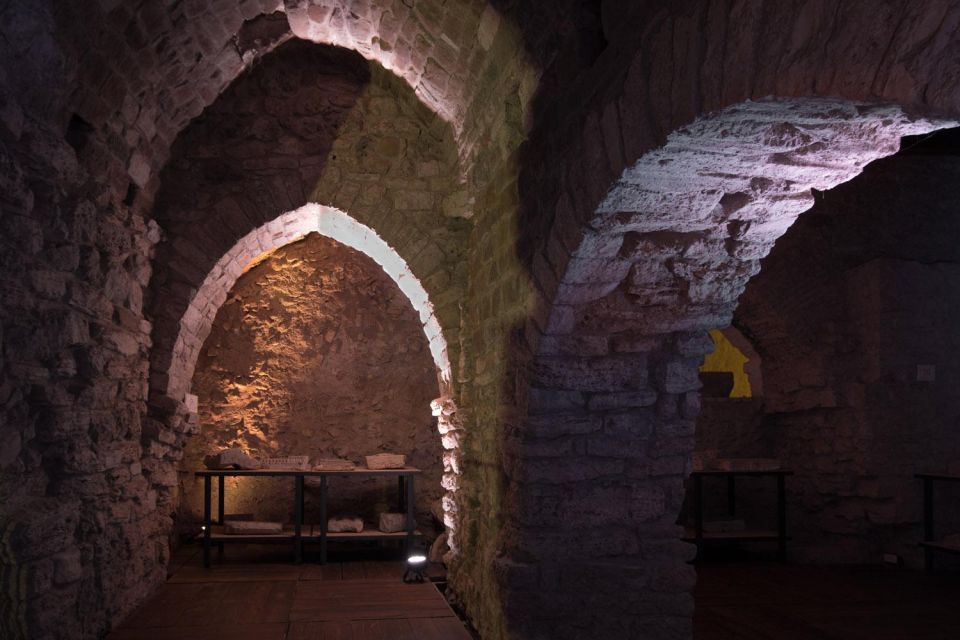
Underground spaces can feel cooler than the street. It’s recommended that you bring a garment to protect yourself from the slight temperature change.
On-site rules are simple and strict:
- No pets
- No baby strollers
- No food and drinks
These restrictions make sense for preservation and for how the route is managed, but they can affect families and anyone traveling with kids. If you’re with little ones, skip this one unless you’re sure everyone can manage stairs and close quarters.
Price and Value: $14 for Ticket + Guide + Translation + VR
At $14 per person, this isn’t just an entry ticket. You’re paying for four things bundled together:
- the entrance to the underground archaeological area
- a guided tour
- a tablet with translation when needed
- a VR experience as the finale
That mix is why the price works for a lot of visitors. You’re not paying to wander. You’re paying to understand what you’re seeing, and you’re getting a technology-assisted ending that turns ruins into a more complete picture.
If you enjoy guided history over self-paced reading, this is strong value. If you only want a quick look and prefer freedom to roam, you might consider other options—but the “with a guide only” format is the point here.
Who Should Book This Tour (and Who Might Skip It)
You’ll likely love Perugia Underground if you:
- want a fast, guided way to understand Perugia’s layered past
- like Roman and Etruscan Italy but want more than surface ruins
- enjoy the idea of a VR finale that ties together what you just walked through
- plan to see more Perugia afterward and want a head start (people often use this as a primer for other fortresses and museum stops)
You might skip it if you:
- need a step-free route (the route isn’t suitable for wheelchairs)
- strongly prefer English-only guiding and don’t want to rely on the tablet much
- are traveling with a stroller or planning to bring food and drinks
Should You Book Perugia Underground?
If you want a smart, time-efficient history hit, I think this is an easy yes. For $14 you get a guided descent into the hill under the Cathedral of Saint Lawrence, a route through Etruscan, Roman, and medieval remains, plus a VR finale that helps your brain connect the physical evidence to a bigger story.
Just go in knowing two things: it’s Italian-led, and there are stairs. If you can handle those, you’ll walk away with a much clearer sense of how Perugia grew—layer by layer—beneath your feet.
FAQ
How long is the Perugia Underground guided tour?
The tour lasts about 50 minutes.
Where do I meet for the tour?
You meet at the ticket office and starting point in the cloister of St. Lawrence Cathedral. The cloister is accessed through a large portal in Piazza IV Novembre next to Libreria delle Volte.
What languages are available?
The live tour guide is Italian. A tablet with translation is provided if necessary.
What is included in the ticket price?
The included items are the entrance ticket, a guided tour, a tablet with translation (if needed), and a VR experience.
Is it worth it if I am not comfortable with Italian?
The tour is guided in Italian, but the provided tablet translation is there to help you follow along. If you dislike reading while walking, you may find the pace a bit demanding.
Is Perugia Underground wheelchair accessible?
No. It isn’t suitable for people with mobility impairments or wheelchair users due to stairs on the route.
What restrictions should I know about?
Pets, baby strollers, and food and drinks are not allowed.