REVIEW · PISA
Pisa: Beyond the Tower (1h round-trip tour)
Book on Viator →Operated by Eco Friendly City Tour · Bookable on Viator
Pisa has more angles than the Tower alone. This 1-hour, small-group tour mixes observatory science, Medici power, and modern street art on the Arno in a super efficient loop. I like that you get several short, real stops instead of one giant photo line, and the guide time seems to fit the whole city mood. One thing to keep in mind: because it’s quick and packed with moments, it can be a bit hard to hear in spots if you’re not close to the guide.
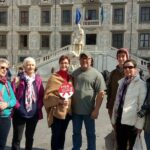
If you want Pisa without the marathon walk, you’ll appreciate the rhythm. Expect a golf-cart style ride through town streets, plus frequent photo breaks, with English interpretation throughout. In the small-group format (max 6 travelers), you’re more likely to catch the story behind the stone, not just the stone itself.
The biggest drawback isn’t the route. It’s that you’re only there for about an hour, so you’ll see a lot of highlights fast, but you won’t get deep time inside every building.
In This Review
- Key things you’ll notice on this Beyond-the-Tower route
- Why Pisa feels bigger than you expect on this 1-hour loop
- Meeting point at Piazza Arcivescovado and how the ride helps
- Stop 1: Domus Galilaeana—Tuscany’s first public observatory
- Stops 2–4: Palazzo Reale, Palazzo Blu, and the leaning-story twist
- Stop 5: Ponte di Mezzo—Pisa’s old bridge and why it matters
- Stop 6–7: Palazzo de’ Medici and Palazzo Chiesa ruins
- Stops 8–9: Keith Haring’s Tuttomondo and Eduardo Kobra’s Galileo mural
- Stop 10–11: Santa Maria della Spina and Piazza dei Cavalieri
- Price and value: why $36.30 can be a smart move
- The guide experience: small-group storytelling that keeps the hour moving
- What this tour is best for (and what it won’t replace)
- Practical tips to get the most out of the hour
- Should you book this Pisa Beyond-the-Tower tour?
- FAQ
- How long is the Pisa Beyond the Tower tour?
- What is the price per person?
- Is the tour offered in English?
- What’s the meeting point for the tour?
- How big is the group?
- Do I get a mobile ticket?
- Which stops have admission tickets included?
- Which stops are free?
- How far in advance is it usually booked?
- What if the weather is poor?
Key things you’ll notice on this Beyond-the-Tower route
- Small group (up to 6) means less waiting and more chance to hear the guide
- A stack of brief stops keeps energy up and helps you cover both sides of the Arno
- Domus Galilaeana + murals turn Pisa into a science-and-art story, not just architecture
- Medici and Shelley connections add surprise layers you’d miss on your own
- Ticket strategy: some admissions are included, and several stops are free to enter or view
- Ponte di Mezzo and Piazza dei Cavalieri give you classic Pisa landmarks with meaning attached
Why Pisa feels bigger than you expect on this 1-hour loop
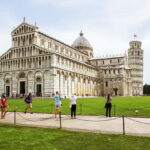
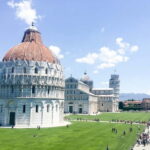
Most people come to Pisa for one thing. The Leaning Tower is the headline, sure, but Pisa also moves on a different page—science, politics, and art all running in parallel.
That’s what I like about this tour format: it’s built for quick understanding. You don’t just point at sights; you learn what connects them—why the buildings sit where they sit, why the city’s famous slopes are explained the way they are, and why the Arno river shaped daily life.
Also, the pace makes sense. If your feet are already tired from Pisa sidewalks or if you’re visiting with kids or anyone who prefers not to walk nonstop, this keeps you moving without turning the trip into a slog.
You can also read our reviews of more tours and experiences in Pisa.
Meeting point at Piazza Arcivescovado and how the ride helps
You’ll start at Piazza Arcivescovado (the address is 56126 Pisa PI, Italy). From there, the tour loops back to the same meeting point, so you don’t have to worry about ending up far away from where you started.
The small group size matters more than you’d think. With a max of 6 travelers, you’re less likely to get stuck behind other people every time you stop for photos or to listen.
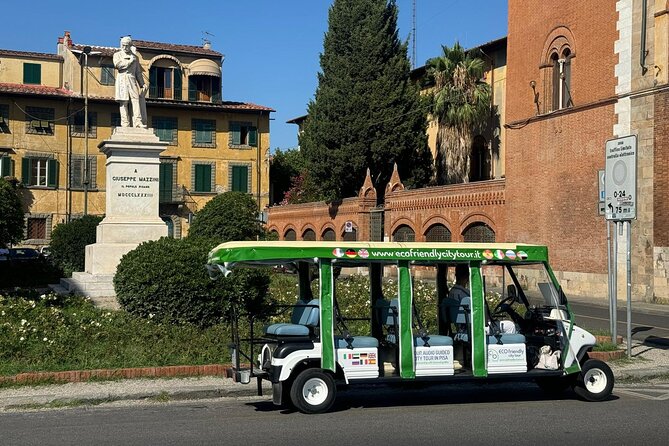
And the vehicle choice helps too. One of the recurring positives is the golf-cart style ride through town streets, which makes it easier to hop between viewpoints without losing time to long walks or crowded streets.
Stop 1: Domus Galilaeana—Tuscany’s first public observatory
Your first major “wait, Pisa is about science too?” moment is Domus Galilaeana. It’s presented as Tuscany’s first public observatory, and the ticket is included, so you can treat this as a real mini-visit rather than just a curbside stop.
What this adds to your Pisa day is perspective. Instead of thinking only about the city’s famous tilt, you’re reminded that Galileo and astronomy were part of Pisa’s identity long before selfie sticks existed.
This stop is short—about 5 minutes—so think of it as a guided orientation. You’re there to understand what it is and why it belongs in the wider Pisa story, not to spend hours.
Stops 2–4: Palazzo Reale, Palazzo Blu, and the leaning-story twist
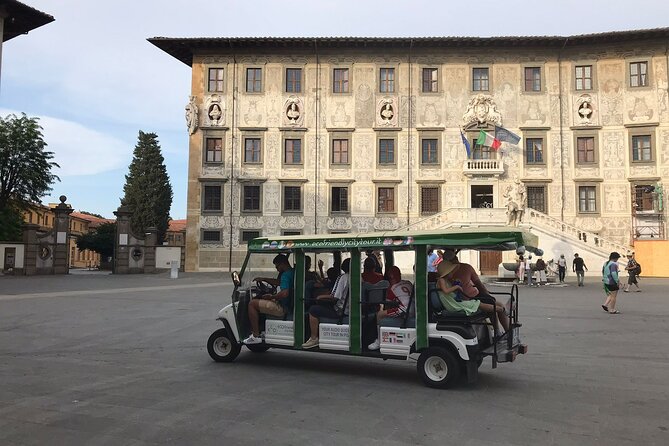
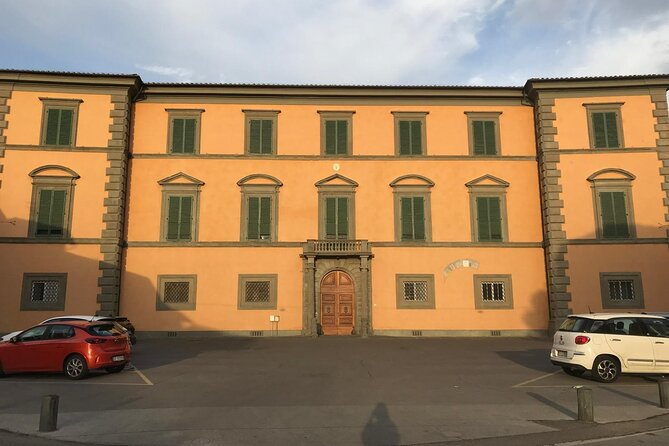
Next up is Museo Nazionale di Palazzo Reale, the residence linked to Tuscany’s grand dukes. Admission here is free, which makes it a low-friction stop if you want to keep costs under control.
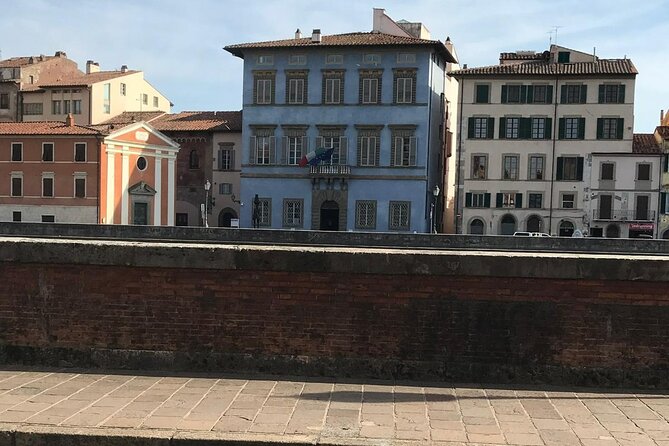
Then comes Palazzo Blu, an art museum named for the color of its façade. The admission ticket is included, and this stop is where the tour’s tone shifts a bit—from power and architecture to art and visuals you can actually recognize and photograph.
Right after that, Palazzo Agostini gives you a fun reminder: Pisa isn’t just famous for one leaning structure. The idea here is practical—why the city’s soil and conditions make slopes happen—so you walk away with a more complete mental model.
The tradeoff with these “fast inside” museum moments is obvious. You won’t become a specialist in each palace in an hour. But you will leave with a clearer map of what to target later if you want deeper visits.
Stop 5: Ponte di Mezzo—Pisa’s old bridge and why it matters
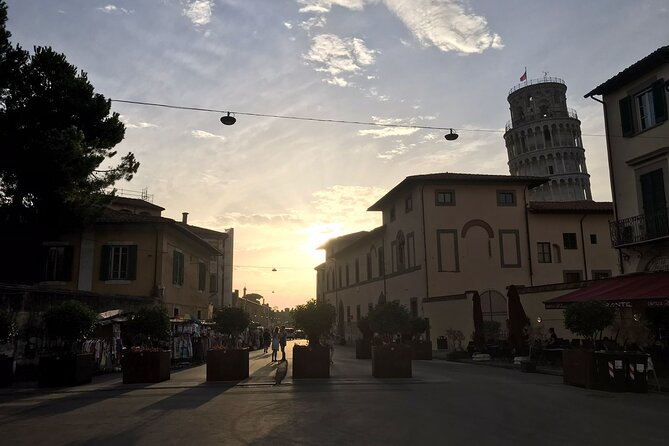
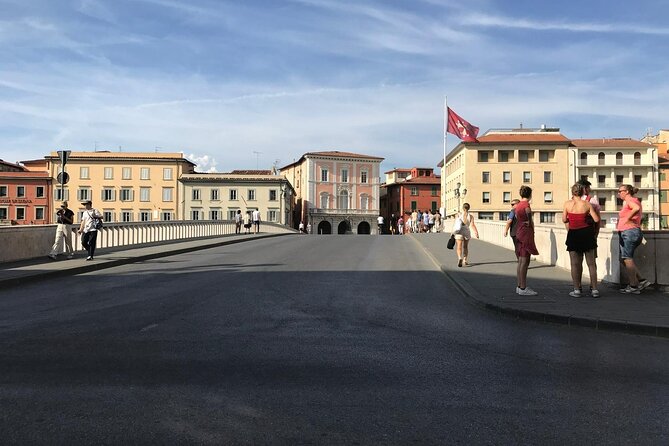
Ponte di Mezzo is an old bridge over the Arno, nicknamed in the Middle. It gets its name from being the historical and geographical center of the city, so it’s not just a scenic crossing.
Admission is included here, which signals that this stop is meant to be more than a look-see. In practice, you’ll get a guided explanation for how this bridge anchored movement and daily life along the river.
Why this stop is valuable: it’s where the tour makes the city feel like one system. The Arno isn’t just scenery—it’s the organizing line for history, trade, and where people chose to build.
Stop 6–7: Palazzo de’ Medici and Palazzo Chiesa ruins
Crossing the story to the Medici side of the Arno, Palazzo Vecchio de’ Medici helps you understand how political power worked in Pisa. Admission is included, and it’s framed as the Medici’s territory across the river from other famous literary ties.
And then—Percy and Mary Shelley. Palazzo Chiesa (ruins) is tied to their former residence, later destroyed during World War II, with a plaque that marks their connection. Admission is free, but emotionally it hits harder than a typical quick photo stop.
This pairing is smart tour design. Medici power shows civic structure, while the Shelley ruins add human scale and cultural reach. Together they help you feel Pisa as both a political place and an ideas place.
Stops 8–9: Keith Haring’s Tuttomondo and Eduardo Kobra’s Galileo mural
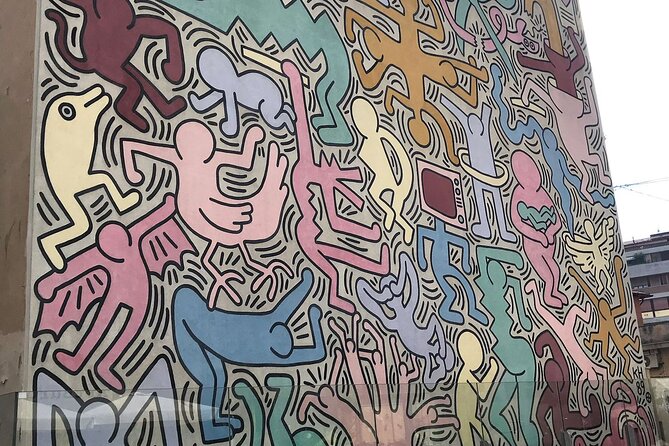
One of the most praised parts of the route is the modern art. It’s a break from “old stone, same story” and it gives you a different Pisa lens you can’t easily fake with guidebooks alone.
First: Murale Tuttomondo di Keith Haring. Tuttomondo is one of the few Keith Haring outdoors works meant for permanent public display, and it’s described as representing peace and harmony. It’s a free stop, and it’s visually punchy in a way that makes an hour feel fresh, not rushed.
Second: the Galileo Galilei mural by Eduardo Kobra. It’s recently inaugurated and shows Galileo looking through a telescope shaped like the Leaning Tower. Admission is free, and this is where the tour’s themes connect—science links back to Pisa’s identity, now shown in modern pop-art language.
If you care about street art, these two stops are the kind that make the tour feel like it’s happening in the present, not just the past.
Stop 10–11: Santa Maria della Spina and Piazza dei Cavalieri
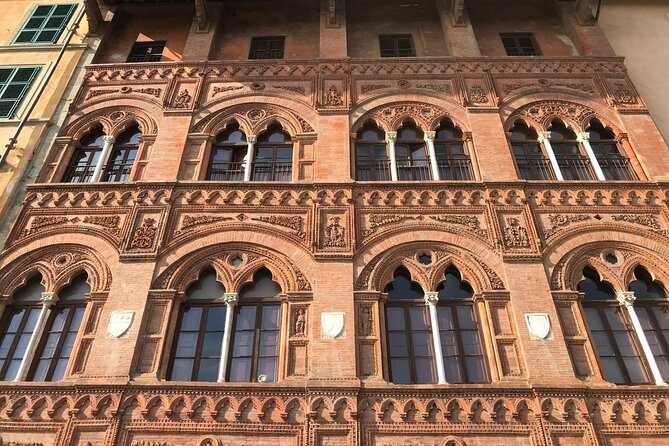
Chiesa di Santa Maria della Spina is a small Gothic church located by the Arno river. Admission is free, and the short stop works well here because the building’s charm is in its fine details and riverside setting.
Then you end at Piazza dei Cavalieri, the heart of political life in Pisa. Today it’s home to the Scuola Normale Superiore di Pisa (higher education), and it also connects to Dante’s Inferno through Count Ugolino della Gherardesca’s death in 1289.
Admission is included for this last major stop, which tells you the guide wants you to finish with meaning, not just a final photo.
Price and value: why $36.30 can be a smart move
At $36.30 per person for about an hour, this isn’t an all-day “see everything” ticket. It’s a high-efficiency overview with included admissions sprinkled in.
Here’s the value logic I’d use if you’re deciding:
- You’re paying for a guide who strings the city together. That saves you time trying to figure out which sights actually connect.
- You get a practical route that covers multiple key areas on both sides of the Arno.
- Several stops are free to enter or view, while others include admission tickets—so you’re not paying for every single entrance along the way.
Is it expensive compared to self-guiding? Sure, you could walk and read signs on your own. But if your time in Pisa is limited, or if you’d rather spend energy learning than navigating, the price starts to feel fair.
And the group size helps that value. A small group can make the hour feel more like a guided conversation than a moving lecture.
The guide experience: small-group storytelling that keeps the hour moving
English is offered, and one standout name that comes up is Aloisa. People specifically praise her for clear English, lots of Pisa love, and stories that make the city feel human—plus the way she handles practical requests like photo stops.
There’s also a repeat point about comfort and smooth driving. One comment notes safety-first street handling, which matters in a city where traffic and tight lanes can turn “just get there” into a minor stress test.
One drawback to plan around: a smaller number of participants found it hard to hear the guide. So if you’re the type who struggles to catch every word in outdoor audio, position yourself closer to the guide at stops, especially when people cluster for photos.
What this tour is best for (and what it won’t replace)
This is a great match if you:
- want to see more than the Tower in a short window
- prefer a smaller group and easier transit
- like stories that connect science, art, and politics
- want photo opportunities without spending your whole day walking
It’s not ideal if you:
- want long museum time inside one place
- need quiet, slow pacing
- plan to study each stop like a dedicated day trip
Think of it as your Pisa “orientation plus highlights” ticket. Then, if something grabs you—say, the murals or the observatory—you can plan a second visit on your own terms.
Practical tips to get the most out of the hour
- Bring a phone camera habit. The route is built around short photo moments, especially at the art murals and riverside spots.
- Wear comfortable shoes anyway. Even with the ride, you’ll still walk a bit between stops.
- Try to stand close at listening points. If you find outdoor hearing tricky, being nearer makes a huge difference.
- If your schedule is tight, use this tour as your first or mid-day anchor. It helps you decide what to revisit later.
Should you book this Pisa Beyond-the-Tower tour?
If you want Pisa beyond the obvious and you’ve only got about an hour, I’d book it. The price makes sense for the guided storytelling, the small group size, and the mix of science, power, Gothic detail, and modern murals.
Skip it only if you’re hoping for deep, long museum time. This is fast, focused, and built to get you oriented fast—then send you back into the city with a smarter sense of where to go next.
FAQ
How long is the Pisa Beyond the Tower tour?
The tour is approximately 1 hour round-trip.
What is the price per person?
It costs $36.30 per person.
Is the tour offered in English?
Yes, the tour is offered in English.
What’s the meeting point for the tour?
The meeting point is Piazza Arcivescovado, 56126 Pisa PI, Italy.
How big is the group?
The tour has a maximum of 6 travelers.
Do I get a mobile ticket?
Yes, the tour uses a mobile ticket.
Which stops have admission tickets included?
Admission tickets are included for Domus Galilaeana, Palazzo Blu, Ponte di Mezzo, Palazzo Vecchio de’ Medici, and Piazza dei Cavalieri.
Which stops are free?
The tour lists these as free: Museo Nazionale di Palazzo Reale, Palazzo Agostini, Palazzo Chiesa (ruins), Murale Tuttomondo di Keith Haring, Galileo Galilei mural by Eduardo Kobra, and Chiesa di Santa Maria della Spina.
How far in advance is it usually booked?
On average, it’s booked 20 days in advance.
What if the weather is poor?
The tour requires good weather. If it’s canceled due to poor weather, you’ll be offered a different date or a full refund.