REVIEW · SORRENTO
Pompeii, Herculaneum and Winery on Vesuvius with an Archaeologist
Book on Viator →Operated by Fabrizio Belleni - Leisure Italy Private Guide · Bookable on Viator
Pompeii feels real when the guide reads the stones. This private day trip from Naples or Sorrento pairs Pompeii and Herculaneum with an archaeologist-led walkthrough by Fabrizio Bellini, then breaks for lunch and wine at Cantina del Vesuvio inside Vesuvius National Park.
I especially love the way the tour keeps moving without rushing, with an itinerary that flexes to your pace. I also like the exact details you get at major stops, from major public spaces in Pompeii to the preserved everyday life in Herculaneum. The biggest consideration: it’s a full day on foot in heat, and the plan focuses on the vineyards and viewpoints—not the Mt Vesuvius summit.
In This Review
- Key Highlights You’ll Actually Feel
- Pompeii and Herculaneum Make Sense With Fabrizio Bellini
- Entering Pompeii Through Porta Marina and the Forum’s Heart
- Pompeii’s Frescoes, Theaters, and Reopened Walkways
- Cantina del Vesuvio Winery Lunch: Views, Vineyards, and Wine Pairing
- Herculaneum’s Antiquarium and the Carbonized Evidence That Hits Hard
- Herculaneum Villas, Mosaics, and the Luxury of Everyday Life
- Herculaneum Baths and the Palestra’s Roman Workout Culture
- Price, Tickets, and Timing: What You’re Really Paying For
- Who Should Book This Private Pompeii and Herculaneum + Winery Day
- Should You Book This Tour?
- FAQ
- Do I need to buy admission tickets for Pompeii and Herculaneum?
- Is pickup available from Naples or Sorrento?
- How long is the tour?
- What language is the tour offered in?
- Is lunch and wine included, and how much does it cost?
- Does the tour go to the top of Mount Vesuvius?
Key Highlights You’ll Actually Feel
- Private archaeologist-led pacing with lots of time at key spots and room to adjust
- Pompeii’s big-picture Roman life, from the Forum and temples to restored house frescoes
- Pompeii’s modern viewing features such as elevated walkways at the reopened block site
- Herculaneum’s preservation you can’t fake, including carbonized objects and the ancient shoreline
- Cantina del Vesuvio winery lunch with wine pairing plus a guided vineyard walk
- Family-friendly focus, with age-appropriate questions and attention to comfort on uneven ground
Pompeii and Herculaneum Make Sense With Fabrizio Bellini
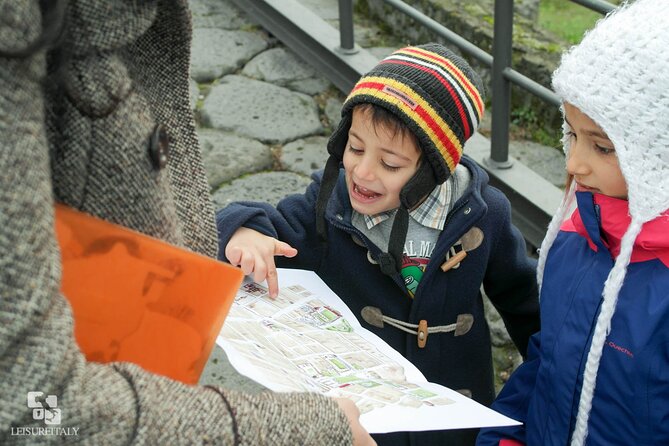
If you’ve ever wandered Pompeii with a map, you know the problem: you see ruins, but you don’t always get the story. Fabrizio’s approach is different. He connects what you’re looking at—public baths, homes, theaters, shops—to how Romans lived day to day, so the site stops feeling like a checklist.
This is also a private format, so you’re not stuck at the speed of the slowest group. He’s got the practiced rhythm of a long-time Pompeii guide, and he’ll steer you around crowds when possible. You get water and onboard Wi‑Fi in a comfortable, air-conditioned vehicle, which matters when you’re doing Pompeii plus Herculaneum in one stretch.
The other thing I like: you can ask questions. Fabrizio answers in plain language and then points at the evidence in front of you, whether it’s a mosaic detail or a layout clue in a villa.
You can also read our reviews of more tours and experiences in Sorrento.
- Sorrento Farm and Food Experience including Olive Oil, Limoncello, Wine tasting
★ 5.0 · 2,524 reviews


Entering Pompeii Through Porta Marina and the Forum’s Heart
Most Pompeii tours start at the big-ticket buildings, but this one uses a smart opening. You begin at Piazza Porta Marina, the modern gateway that lines up with the ancient Porta Marina. From there, you transition from street-level today into Pompeii’s world of stone streets, gate towers, and the feel of an actual city you can walk.
Next comes the Temple of Apollo at the edge of the Forum. This stop works because it shows religion as civic space. You’ll see what’s left of the temple colonnade, and you’ll get context for how religious practice shifted between Greek roots and Roman life.
Then you hit the Forum itself, the political and commercial “center of gravity” in Pompeii. Walking across original travertine paving stones makes the scale click fast. You’ll stand in the space where people would have gathered for speeches and ceremonies, and you’ll see architectural anchors like the Temple of Jupiter and the Basilica framing the square.
If you like history that explains how people moved, shopped, and negotiated daily life, the Forum section is the payoff. It also helps you understand why later house stops feel so personal: once you see the public world, you notice what elite homes did differently.
Pompeii’s Frescoes, Theaters, and Reopened Walkways
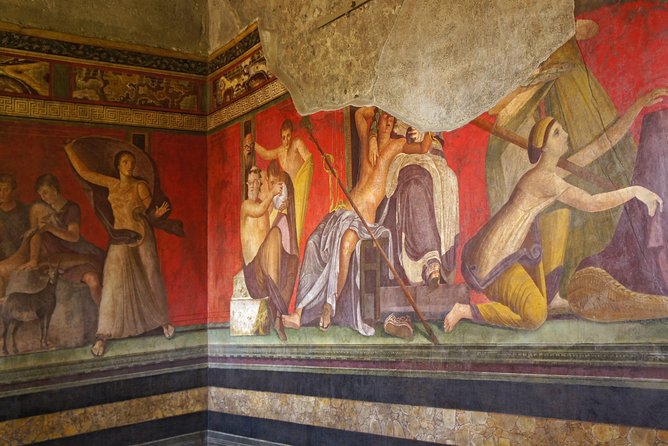
After you get the public-life foundation, Pompeii turns into the visual feast most people hope for. One of the first “wow” targets is Casa dei Vettii, with its famous fresco program and the feeling that you’re stepping into a curated Roman living room. The house belonged to two wealthy former slaves, and the walls show it through their Fourth Style painted detail.
A big reason this stop lands is the restoration and how cleanly the frescoes read today. You’ll see the entrance area with its protective painting of Priapus, plus vivid rooms decorated with myth and domestic scenes. Even if you’re not a museum person, you’ll probably find yourself slowing down here, because the color and sharpness make the past feel close.
Then there’s a more modern kind of Pompeii experience at Insula dei Casti Amanti. This block was reopened with elevated walkways, which means you don’t just look at ruins—you can look down into an excavation area and see how archaeological work is currently happening. That “view from above” gives you a rare sense of the whole city block at once, including the contrast between grand homes and a working bakery space.
If your kids get restless, this stop often helps because it feels like watching activity inside the site. In the same area, you can encounter childlike charcoal sketches connected to gladiators, which is one of those details that makes Pompeii feel surprisingly human.
Next up is Teatro Grande, Pompeii’s major stone theater. It’s not just the architecture that’s cool—it’s how you can imagine Roman social order on stone tiers. The theater is famous for acoustics too, and it’s the kind of place where you can almost hear an ancient performance. With Mount Vesuvius in the background, the setting adds a sharp layer of drama to the day.
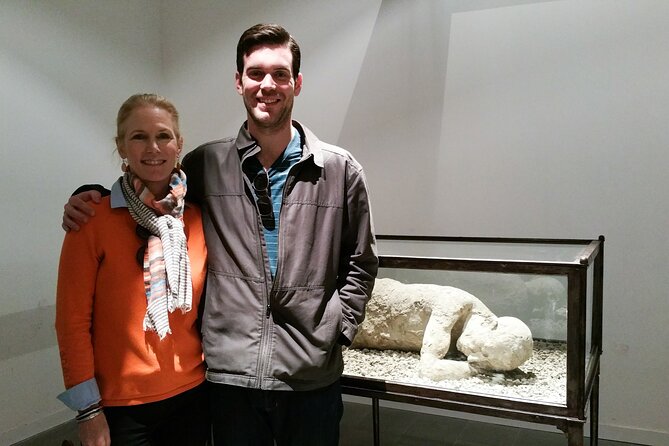
You’ll also want time for the Antiquarium di Pompei at Porta Marina. The museum is where you get emotional context before you go too far into the ruins. The plaster casts of victims provide a direct reminder of what happened in 79 AD. It’s not a long stop, but it changes how you look at everything outside afterward.
Cantina del Vesuvio Winery Lunch: Views, Vineyards, and Wine Pairing
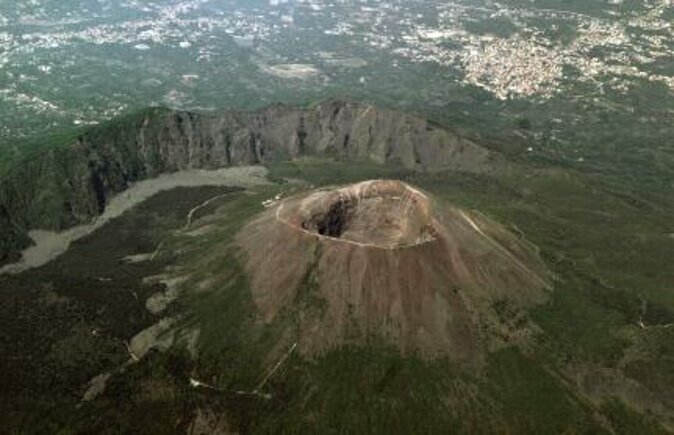
Between ruins, you need a reset. That’s where Cantina del Vesuvio comes in, inside Vesuvius National Park. The drive and the setting do matter: you’ll get views over the Bay and toward the volcano’s crater.
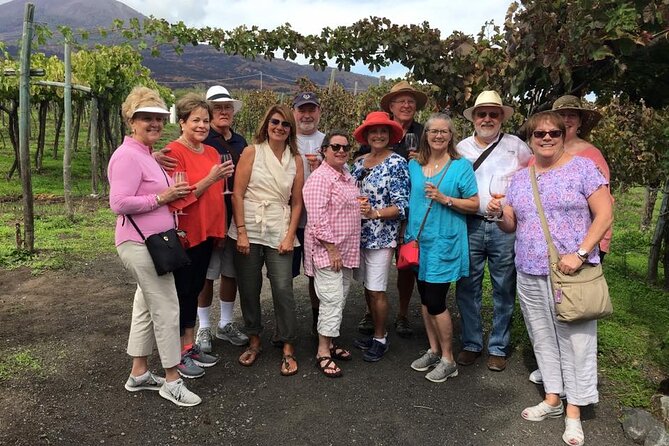
Your winery time starts with a guided 15-minute walk through the vineyards, so the wine doesn’t feel random. You’ll learn about the region’s famous Lacryma Christi wines, then settle in for lunch paired with local wines.
The lunch is an all-inclusive set menu, and the pairing is part of the experience: a selection of five local wines. The meal includes appetizers such as bruschetta, cheeses, and cured meats, followed by spaghetti with Vesuvius cherry tomatoes and meatballs. Dessert is traditional Neapolitan Pastiera, with vegetarian and gluten-free options available.
A detail I like for planning: the visit can include shipping wines and olive oils home. If you’re the type who forgets to pack gifts, this is a useful backup.
Price-wise, the winery portion is separate from the core tour fee: about €50 per person, with a €60 option for a superior wine upgrade. You pay on-site by card or cash, and Fabrizio handles the booking.
One more reality check: this winery stop is about the Vesuvius area and views, not a climb to the summit. If you’re dreaming of the very top, you’ll need a different plan.
Herculaneum’s Antiquarium and the Carbonized Evidence That Hits Hard
Herculaneum is often described as quieter than Pompeii, but the real difference is how preserved it feels. You’ll move into Herculaneum through a route that focuses on key highlights without wasting time.
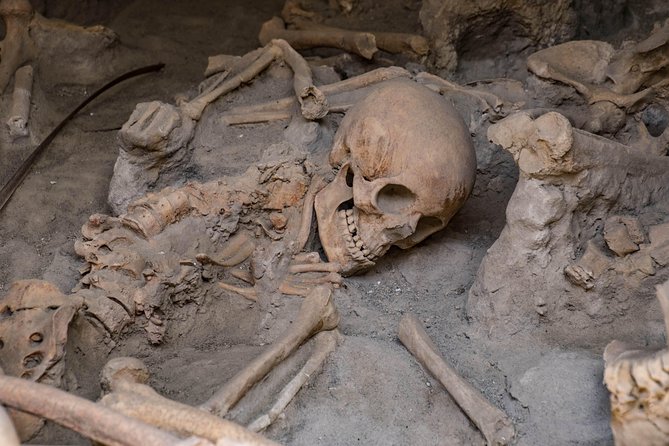
At the Antiquarium di Ercolano, you get context in a modern setting that complements the ruins outside. What really makes it work is the display of delicate treasures that Pompeii doesn’t usually show: remarkably preserved organic materials such as carbonized wooden furniture and textiles. You’ll also see the Herculaneum Treasure, a shimmering collection found with victims at the ancient shoreline.
Then come the objects that make the tragedy feel concrete instead of abstract. The Boat Pavilion shows a carbonized keel from a large boat—about 9 meters—found near the shoreline. Along with smaller fishing-related artifacts and a carbonized rope, it turns the eruption story into something physical: evacuation attempts, daily work, and the way volcanic mud can lock materials in time.
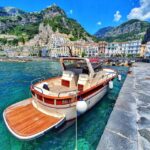
The Ancient Beach (antica spiaggia) reopened in 2024 after restoration, and it’s one of the most haunting stops in the day. You can walk along the shoreline where events reached a climax, including the fornici boat sheds above where remains were discovered. Because the beach sits below modern ground level, you get a literal sense of how the landscape was reshaped.


Herculaneum Villas, Mosaics, and the Luxury of Everyday Life
Herculaneum’s houses can feel like they’re made for slow looking. House of the Cervi (House of the Stags) is a good example. It’s known for its inverted layout, including a panoramic terrace and gardens designed to catch sea breezes and views across the Gulf of Naples. The stags statues in the garden—attacked by hounds—are the naming feature and a strong visual anchor.
Then there’s Casa di Nettuno e Anfitrite, home to a standout wall mosaic showing Neptune and Amphitrite. The details are what pull you in: shimmering glass paste effects and strong color contrast. The outdoor summer triclinium is also a major highlight, decorated with shells and lava stone.
Right next door is one of the most practical-feeling surprises in the entire eruption story: the attached shop. It’s considered one of the best-preserved grocery store examples from antiquity, with original wooden shelves and carbonized storage bins. Seeing those spaces makes the city’s daily rhythm feel immediate.
At this point, you’ll probably notice the same theme across stops: Herculaneum preserves not just architecture, but the habits around architecture. Even a “shop” becomes a window into how goods moved and how people planned meals.
Herculaneum Baths and the Palestra’s Roman Workout Culture
Roman social life shows up in Herculaneum in a big way at the Women’s Baths (Terme Femminili). This stop reads like a complete scene rather than scattered ruins. You’ll enter through an original vaulted doorway and see a black-and-white mosaic in the apodyterium showing Triton surrounded by dolphins.
You’ll also see preserved organic details, including wooden shelves women used to store clothing. The warm tepidarium and then the caldarium show the layout of bathing spaces, including a hollow-wall heating system. It’s a strong reminder that “bathhouse” wasn’t just about washing—it was about privacy, routine, and social structure.
If you want civic pride and Roman fitness culture, go to the Palestra. This gymnasium complex is anchored by a cross-shaped swimming pool (natatio) and a hydra-shaped fountain. The size of the courtyard and the empty-feeling space lets you picture the building in action, even without a performance happening.
The Palestra also includes the discovery of a carbonized wooden statue of a local benefactor, giving you a human signature inside the stone. It’s the kind of stop that feels less like a ruin and more like a place that’s waiting for people.
If time and energy are okay, the day also includes a brief look at an ancient wine advertisement, Ad Cucumas, which adds a quick wink at how Romans marketed and sold everyday pleasures.
Price, Tickets, and Timing: What You’re Really Paying For
The headline price is $861.07 per group, up to 7 people. That private arrangement matters because you’re not paying per head for transportation and guidance across two sites.
Here’s how the math often feels in real life. If you fill all 7 spots, the guide-and-transport portion works out to roughly $123 per person (before admissions and wine lunch). Admission fees are about €40 per adult for both sites, while the winery lunch adds about €50 per person, with an optional €60 superior wine upgrade. So for many people, the “all-in” cost ends up being more about adding those fixed extras than about the core fee.
Two other timing notes:
- The tour is listed at about 8 to 9 hours, so plan a simple day before and after.
- It includes walking over uneven stones, and you should have moderate physical fitness for the day’s rhythm.
If you’re traveling with kids, this can still work well because Fabrizio adjusts pace and questions to keep them engaged. If you’re the group type that hates heat, start early and wear good shoes.
Finally, admissions aren’t included, but the tour is set up for you with a mobile ticket format. That cuts down on hassle once you’re on-site.
Who Should Book This Private Pompeii and Herculaneum + Winery Day
Book this if you want two things at once: expert explanation and a comfortable, time-managed plan. You’ll be led through major Pompeii sights like the Temple of Apollo and the Forum, plus major house stops with restored frescoes. Then you’ll shift to Herculaneum’s preserved organic finds, where the story gets more personal fast.
It’s also a smart fit for families who want their kids learning without turning it into a lecture. Fabrizio’s style includes checking in about energy and tailoring what you see based on the group’s needs.
Skip it if you want a lightweight stroll with no planning. This is a full day that stacks Pompeii plus Herculaneum plus winery lunch. Also, if your must-do is traveling all the way to the summit of Mt Vesuvius, this itinerary won’t get you there.
Should You Book This Tour?
Yes, if you want the ruins explained by an archaeologist who can point to details and keep your day moving. The private format is the real value: you get transport, guided stops in both Pompeii and Herculaneum, and a wine-country lunch break in Vesuvius National Park.
No, if you only want a short visit, or you’re set on topping out at Vesuvius itself. Also, if uneven stone and long museum-style walking are a problem for you, this day may feel like a grind.
If you’re on the fence, think about this: Pompeii and Herculaneum are huge. A guide like Fabrizio turns the chaos into a story you can actually follow.
FAQ
Do I need to buy admission tickets for Pompeii and Herculaneum?
Yes. Admission fees are not included and are listed at about €40 per adult for both sites. Under 18s can be free with valid ID.
Is pickup available from Naples or Sorrento?
Yes. Pickup is available anywhere in the Naples or Sorrento area. If you’re staying on the Amalfi Coast, you should contact the provider.
How long is the tour?
It runs about 8 to 9 hours.
What language is the tour offered in?
The tour is offered in English.
Is lunch and wine included, and how much does it cost?
Lunch and wine tasting are included in a separate winery experience at Cantina del Vesuvio. The listed price is about €50 per person all-inclusive, with about €60 for a superior wine upgrade.
Does the tour go to the top of Mount Vesuvius?
No. The tour does not reach the top of Mt Vesuvius. It focuses on the Vesuvius wine area and views during the winery visit.
You Might Also Enjoy


More Tour Reviews in Sorrento
- Sorrento Farm and Food Experience including Olive Oil, Limoncello, Wine tasting
★ 5.0 · 2,524 reviews