REVIEW · TARANTO
Private Tour of Taranto aboard an Ape Calessino
Book on Viator →Operated by Taranto in Calessino · Bookable on Viator
Taranto feels like two cities in one ride. You zip past key views fast, then stop just long enough to learn what you’re looking at, from the Doric Tempio di Poseidon to the quiet drama of Mare Piccolo.
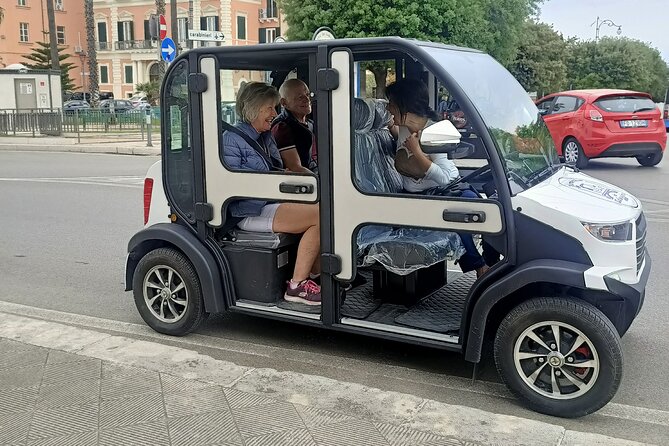
I especially like how this tour keeps things practical: most stops are quick, with free-entry sights and clear explanations while you’re moving. I also like the Ape Calessino style of transport—small, fun, and built for Taranto’s tight streets and traffic.
One possible drawback: the timing is tight, and some rides can run a bit under the advertised hour, so you’ll want to sit where you can hear the guide (people sitting behind the driver have mentioned it can be harder). A separate note too: there are occasional comments about vehicle comfort and seat belts, so it’s smart to check yours before you roll.
In This Review
- Key highlights you’ll feel right away
- A tuk tuk pace that fits Taranto’s size
- Starting at Piazza Castello and spotting the city’s big stories
- Palazzo del Governo to Piazza Ebalia: what you’re seeing (and why it matters)
- MarTa area, navigable canal, and the swing bridge moment
- Mare Piccolo: the stop that gives Taranto its heartbeat
- Piazza Fontana and the clock tower: small stops, crisp details
- San Domenico Maggiore Church: a stop with local rhythm
- Duomo di San Cataldo: the oldest cathedral in Puglia
- Tempio di Poseidon at Piazza Municipio: Magna Graecia in one view
- Ape Calessino practicalities: timing, hearing, and comfort checks
- Is it worth $24.20 per person?
- Should you book this Ape Calessino tour of Taranto?
- FAQ
- How long is the Private Tour of Taranto aboard an Ape Calessino?
- What is the meeting point for the tour?
- Is the tour offered in English?
- Is this a private tour?
- Do you visit the castle, or just see it?
- Are there admission tickets needed for the stops?
- Are service animals allowed?
- What happens if the tour is canceled due to poor weather, or if I cancel?
- What if the minimum number of travelers isn’t met?
Key highlights you’ll feel right away

- Ape Calessino access for narrow lanes and quick photo stops without long walks
- Mare Piccolo viewpoints with details on the Citri fresh-water springs and mussel/fishing zones
- Old town + seaside mix: promenade notes, bridges, fountains, and churches in one loop
- Stop-by-stop explanations in English, including fascist-era palaces and major city landmarks
- Tempio di Poseidon finish at Piazza Municipio, tying the ancient and modern parts together
A tuk tuk pace that fits Taranto’s size
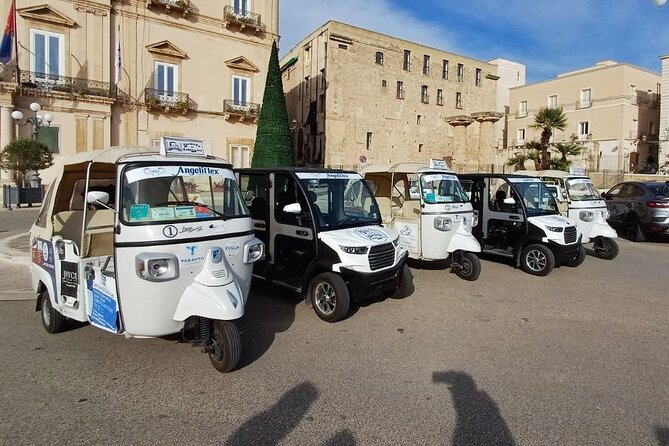
Taranto isn’t huge, but it’s spread out in a way that can waste your day if you rely only on walking. This Ape Calessino tour solves that problem with a simple formula: move efficiently, then pause for the exact spots that make the city make sense.
The ride itself is part of the charm. The vehicle’s size helps it thread through the streets where normal cars and buses struggle. Even better, when you want to photograph something on the move, you usually get that chance without needing to fight for position on foot.
And because it’s private, you don’t feel rushed by a big group. Your guide can set a pace that works for your questions and your comfort level.
You can also read our reviews of more tours and experiences in Taranto.


Starting at Piazza Castello and spotting the city’s big stories
You meet at Piazza Castello (the tour ends back there). From the jump, you’re in the right mental zone: Taranto’s highlights are scattered, and the city’s identity is built around water, old neighborhoods, and layers of history.
Early on, the tour includes a castle reference. You get a description that covers what you’d see if you visited, plus the option to admire it from the outside rather than doing a full inside visit. That’s a smart move if you only have about an hour, because an actual castle visit would eat most of your time.
Then the route shifts toward the promenade area, where your guide points out landmarks as you go. It’s a good pattern here: you’re not only collecting names—you’re learning how different districts relate to each other.
Palazzo del Governo to Piazza Ebalia: what you’re seeing (and why it matters)
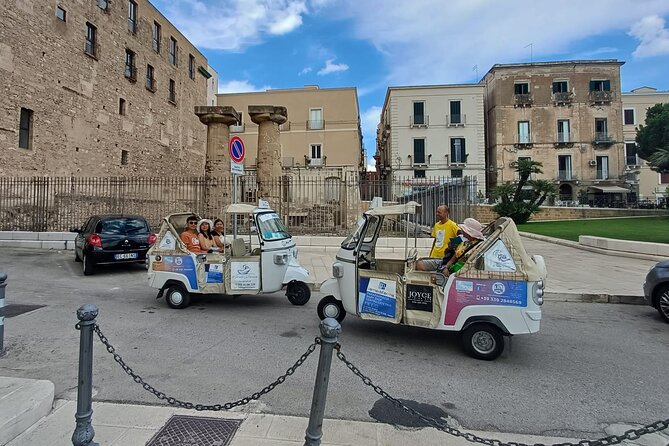
One of the tour’s strengths is how it turns quick stops into meaning. Near the Rotonda del Lungomare, you’ll pause for a few minutes around Palazzo del Governo and the Government Palace area, plus the Central Post Office. The focus is on palaces from the fascist period—so you’ll understand the architecture as a chapter of Taranto, not just a backdrop for photos.
Next comes Piazza Ebalia, where you learn about the fountain of the Compass Rose and the Bank of Italy building. Even if you don’t care about banking architecture, this stop helps because your guide ties the square to the city’s civic identity—this is where Taranto shows its public face.
These pauses are short, but they’re built for comprehension. If you’ve ever walked past a building and thought, What am I looking at?, this is the antidote: you get the context in real time.
MarTa area, navigable canal, and the swing bridge moment

When you return toward the old city, you pass in front of the National Archaeological Museum (MarTa). You don’t need to commit to a museum ticket to benefit from the stop; the tour uses the museum as a landmark so you understand where big heritage fits into your route.
Then you go over to the swing bridge area, again with narration. You’ll learn how the bridge connects with the navigable canal and the transformations that happened at the end of the 1800s. This is one of those Taranto details that makes the city feel less random. You start noticing how the water systems shape the streets and neighborhoods you see.
Practical tip: if you want photos, bring your phone camera settings ready. These moments move quickly, and you’ll likely have only a few minutes to frame the canal, bridge, and surrounding architecture.
Mare Piccolo: the stop that gives Taranto its heartbeat
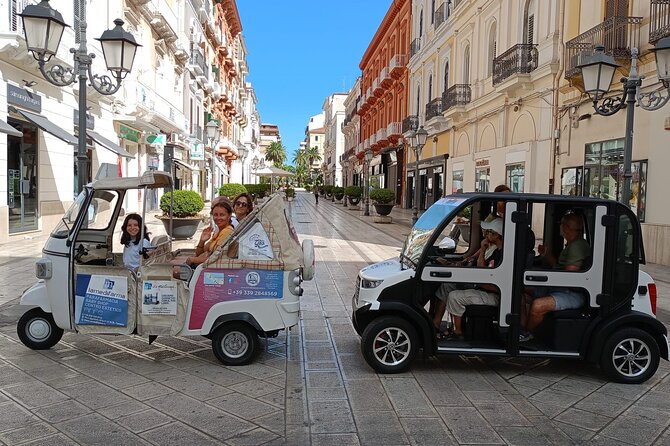
The tour’s biggest scenery payoff is Mare Piccolo. At the end of the descent of the Vasto, you stop to admire the bay and get a guided walkthrough of what’s in front of you.
You’ll start from the right near the military Arsenal, then work across to the Punta Penna Pizzone bridge. The guide also points out the “breasts” of Mare Piccolo (the second breast and first breast), plus the fresh-water springs called Citri. It’s not just trivia. These details explain why Mare Piccolo looks the way it does and why so much local life revolves around it.
Then the narration shifts toward food and work: fishing and mussel cultivation. When you connect those industries to the geography you’re seeing, the bay stops being a pretty view and becomes part of Taranto’s daily rhythm.
This is also a great stop for travelers who like atmosphere. You can take in the water, the structures along the shore, and the mix of naval, agricultural, and everyday elements without needing to pack in long activities.
Piazza Fontana and the clock tower: small stops, crisp details
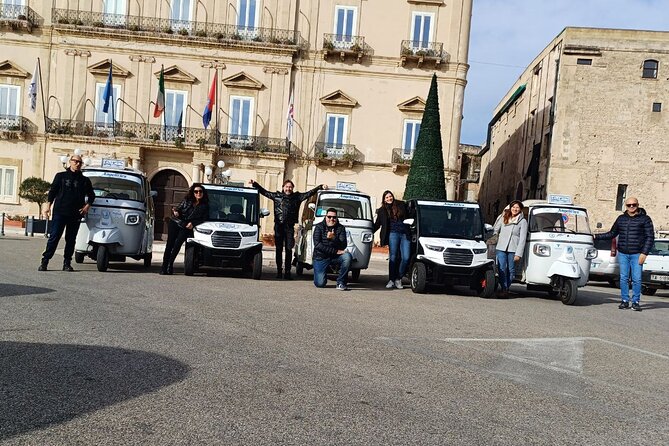
After Mare Piccolo and back through the marina streets (including via Garibaldi and via Cariati), you reach Piazza Fontana. Here you get a brief stop to describe the fountain restored in the 1980s by Carrino and the 18th-century clock tower.
This is the kind of stop that feels simple until you realize what it’s doing for you. It’s giving you orientation in the old-city network—little squares like this are where Taranto’s neighborhoods “click” into place.
If you enjoy street-level history and still like to keep your day moving, this pause is a good balance. You get enough information to notice things later on your own.
San Domenico Maggiore Church: a stop with local rhythm
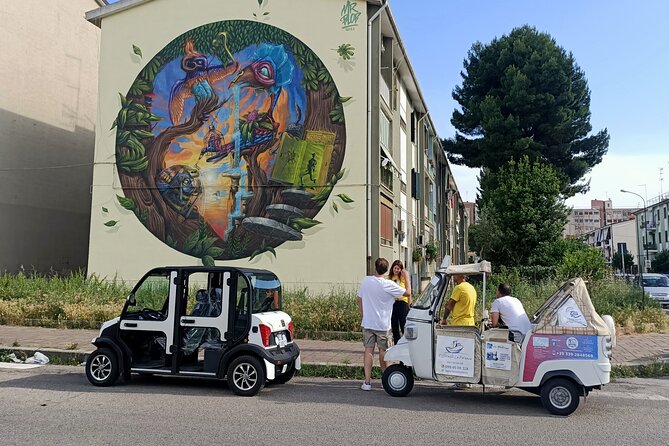
Next is San Domenico Maggiore Church on the San Domenico slope. You’ll arrive at a church associated with the 1300s era, and the narration includes the role it plays in the procession of the sacred mysteries that happens before Easter.
That’s one of the tour’s clever touches: it links architecture to lived tradition. Instead of treating churches as static monuments, the guide frames them as part of how Taranto marks important moments of the year.
This stop is also a natural break in the route. After water views and civic landmarks, a church stop gives you a calmer pace, and it helps you reset before the biggest ancient marker in the tour.
Duomo di San Cataldo: the oldest cathedral in Puglia
From San Domenico, you walk along via Duomo to Cattedrale Duomo di San Cataldo. This is presented as the oldest cathedral in Puglia, and the stop focuses on the patron saint, San Cataldo, with an emphasis on his Irish origins and his role as bishop of Taranto.
Even if you’re not a church-history person, this stop tends to land because it gives you a clear reason to care. You’ll hear how the city’s identity ties into a specific saint and leadership tradition, which makes the cathedral feel like a centerpiece rather than a quick photo stop.
The walk is part of the experience too. It connects the slope scene to the cathedral square area, so you understand how the old city steps upward and how the buildings hold the streets in place.
Tempio di Poseidon at Piazza Municipio: Magna Graecia in one view
The tour ends at Tempio di Poseidon, the Doric temple dating back to the 6th century BC. You’ll learn that it’s presented as the only testimony of the Magna Graecia era—so this is where your “Taranto timeline” gets anchored in ancient Greece.
You’re also positioned at Piazza Municipio, right in front of the point from which another Falanto tour starts. That detail matters because it helps you imagine what to do next if you want to keep exploring after the ride.
This final stop is usually a good way to judge the whole tour. If the route up to this point has given you context, the temple feels more than dramatic—it feels legible.
Ape Calessino practicalities: timing, hearing, and comfort checks
The tour runs about 50 minutes, and each stop is structured for quick understanding rather than long lingering. That can be ideal if you’re port-bound, on a tight schedule, or trying to get your bearings quickly.
Booking tends to be popular; on average it’s booked around 30 days in advance, which tells you it’s a go-to introduction for first-timers.
Language is English, and many guests highlight the guide’s clear explanations. Still, I’d plan for one reality: seating can affect sound. If you’re behind the guide, you might struggle to catch everything. When you can choose, position yourself so you can hear without craning.
Also, do a quick comfort check when you step in. There have been comments about the vehicle needing some maintenance and attention to seat belts. That doesn’t mean you should skip the tour, but it does mean you should be practical: buckle in, test the fit, and settle in before you roll.
Is it worth $24.20 per person?
At $24.20 per person, this tour falls into the category of tours that try to maximize value by compressing a lot of key sights into one short outing. That works in Taranto because the highlights are visually distinct and spread across the old city and the seafront.
You’re paying for three things: access (Ape Calessino can cover ground efficiently), interpretation (the guide turns landmarks into a story), and convenience (quick stops and a private setup). When you get all three, the price feels fair.
If your expectation is a super-long museum day, you’ll feel the limits. But if your goal is a smart intro to Taranto’s main points—water, old streets, and major landmarks—it’s a strong use of time.
Should you book this Ape Calessino tour of Taranto?
Yes, if you want an hour-long overview that helps Taranto click. This is especially good for first-time visitors, people who don’t want to stress about transportation in tight streets, and anyone who likes explanations tied to what they’re seeing right now.
Skip or adjust your expectations if you want long stops, deep time inside major sites, or a slower pace. The ride is designed to be quick, and a couple of notes point to sessions sometimes running shorter than the advertised time.
FAQ
How long is the Private Tour of Taranto aboard an Ape Calessino?
It lasts about 50 minutes.
What is the meeting point for the tour?
The tour starts at Piazza Castello, 74123 Taranto TA, Italy, and it ends back at the meeting point.
Is the tour offered in English?
Yes. The tour is offered in English.
Is this a private tour?
Yes. It is private, and only your group participates.
Do you visit the castle, or just see it?
The castle stop includes a description, with the possibility of admiring it from the outside rather than doing a full visit.
Are there admission tickets needed for the stops?
The stops listed are marked as free admission.
Are service animals allowed?
Yes, service animals are allowed.
What happens if the tour is canceled due to poor weather, or if I cancel?
It requires good weather. If it’s canceled due to poor weather, you’ll be offered a different date or a full refund. You can cancel up to 24 hours in advance for a full refund.
What if the minimum number of travelers isn’t met?
If it’s canceled because the minimum isn’t met, you’ll be offered a different date/experience or a full refund.