REVIEW · WELCOME TO ROME HERITAGE MUSEUM
Rome: Welcome To Rome Immersive Multimedia Show
Book on GetYourGuide →Operated by Welcome To Rome - Multimedia Show · Bookable on GetYourGuide
Rome clicks differently after a show like this. Welcome To Rome is a multimedia history lesson where walls, ceilings, and a glowing city model do the storytelling. In about 27 minutes, you watch the Eternal City evolve through its major eras, then you finish with large interactive models of Rome’s most famous places.
What I really like is how the show gives you a visual timeline, not just dates. The experience uses multi-projection to make monuments, palaces, churches, and squares feel connected as Rome grows and changes. I also love the hands-on stop at the end: four big interactive models let you “inspect” the Imperial Forum, Augustus Forum, Mausoleum of Adrian, and San Peter Basilica.
The main thing to consider is value versus expectations. At $21 per person, it’s not a bargain, and if you’re the type who needs lots of breaks or seating throughout, you may want to plan for that (one review specifically wished for more chairs).
In This Review
- Key things that make Welcome To Rome worth your hour
- Inside ex-Cinema Augustus: where the show happens
- The main timeline show: Rome’s 2700 years in motion
- Multi-projection realism: how to watch without getting lost
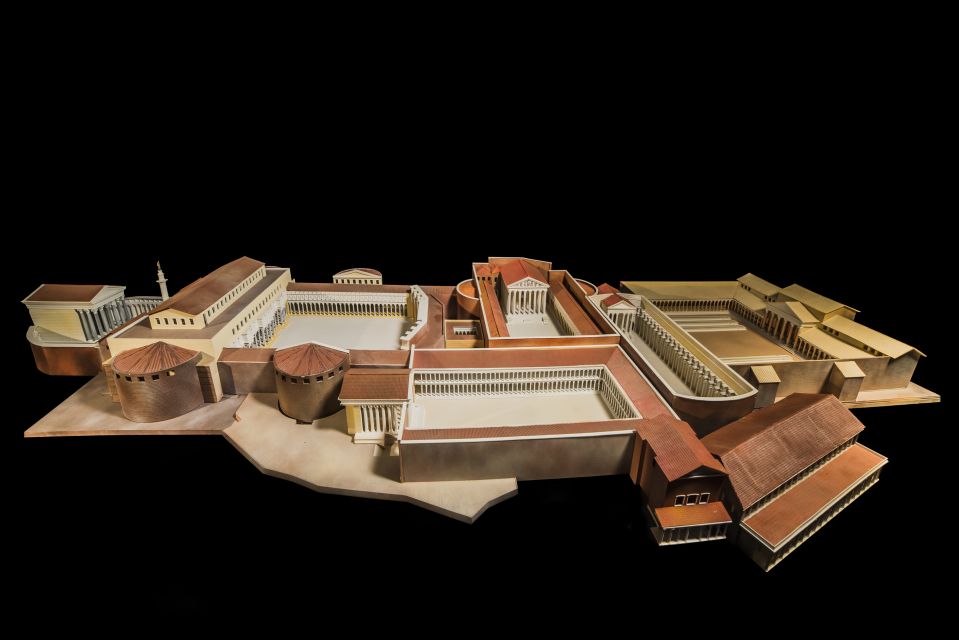
- The interactive models: four monuments you can study up close
- Why this is such a strong first-day stop
- Who will enjoy it most (and who might feel it’s just okay)
- Price and value: is $21 per person fair?
- Practical timing and comfort tips before you go
- Should you book Welcome To Rome?
- FAQ
- How long is the Rome multimedia show?
- Where is Welcome To Rome located?
- Is an audio guide included, and what languages are available?
- Can I start the visit at any time during opening hours?
- What interactive models are included?
- Is the show accessible for wheelchair users?
- Can I get a refund if I cancel?
Key things that make Welcome To Rome worth your hour
- 2700 years in about 27 minutes with a clear, chronological pace you can actually keep up with
- Multi-projection on walls and ceilings plus a large city model that lights up as eras shift
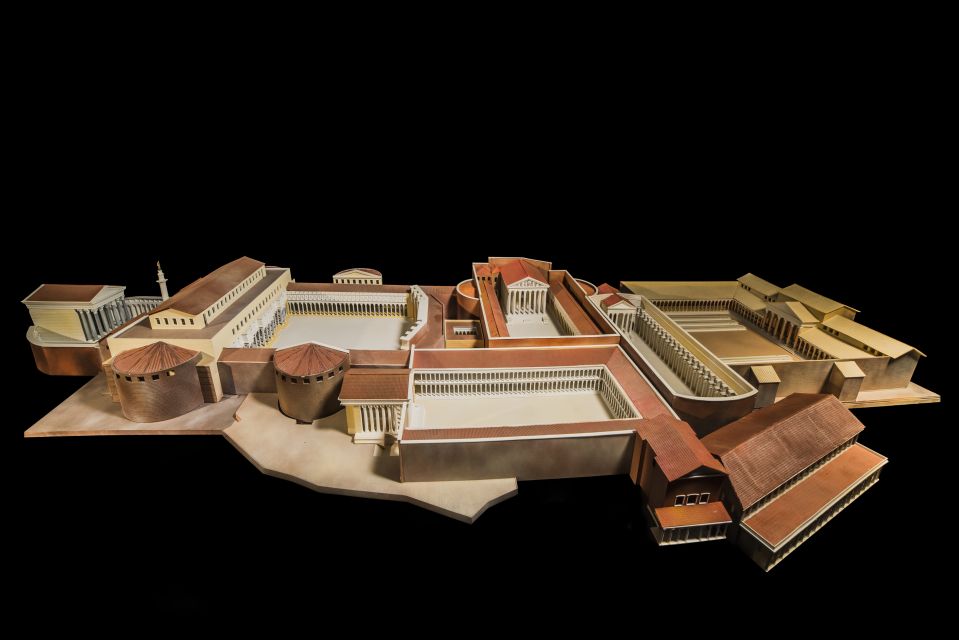
- Four interactive monument models: Imperial Forum, Augustus Forum, Mausoleum of Adrian, and San Peter Basilica
- Audio guide in 9 languages (including Spanish, English, French, German, Italian, Japanese, Russian, Chinese, Croatian)
- Flexible start times during opening hours with the last show starting 1 hour before closing
- Wheelchair accessible inside the ex-Cinema Augustus, with skip-the-ticket-line entry
Inside ex-Cinema Augustus: where the show happens
Welcome To Rome takes place inside the ex-Cinema Augustus on Corso Vittorio Emanuele II, 203. It’s only a short walk from Piazza Navona (just a few hundred meters), which makes it easy to tack onto a Rome day without adding a big commute.
One practical perk: the show runs continuously during opening hours, so you can start at various times rather than hunting down a single fixed slot. Just keep in mind that the last show begins 1 hour before closing, so don’t leave it for too late in the day.
If you like planning your Rome days in a simple way, this location helps. It’s close to a central “walking base,” so you can come in for an hour-plus, then head back out to sites with a clearer sense of where you are in the timeline.
The main timeline show: Rome’s 2700 years in motion
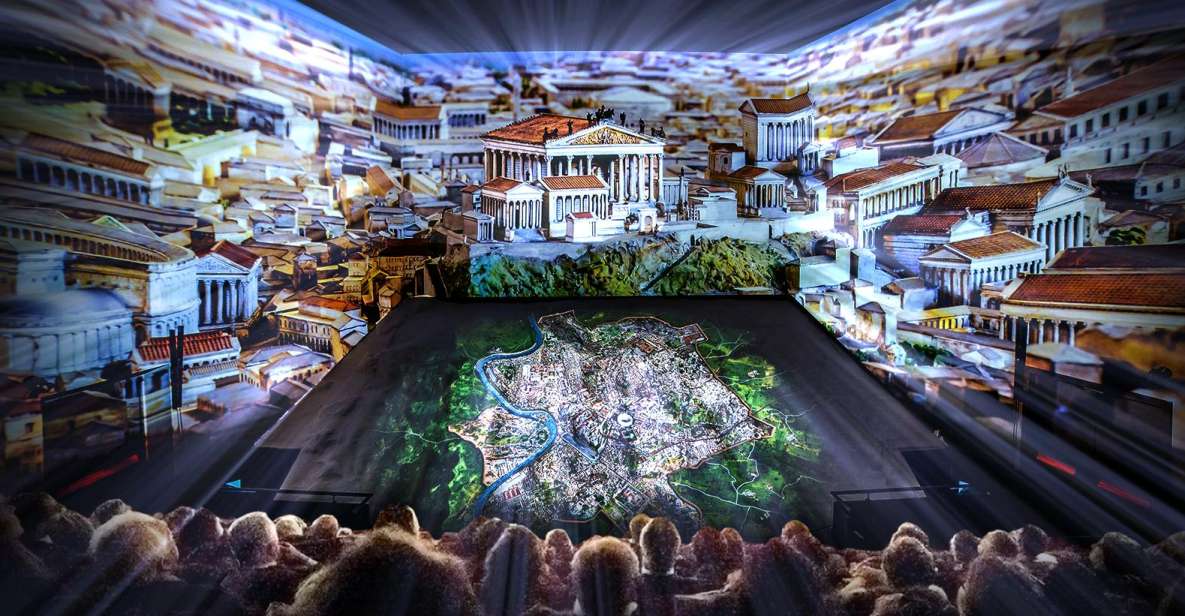
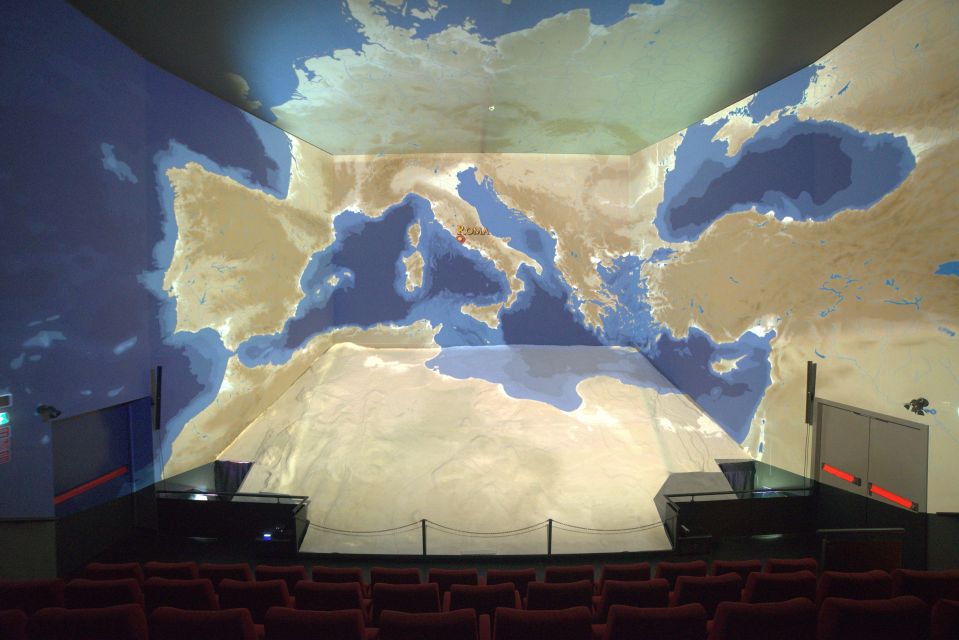
The heart of Welcome To Rome is the projection show. You sit in a cinema-style space while the visuals play out around you. The big idea is to show you Rome’s development across centuries—and to help you picture how ancient structures relate to the modern city you’re walking through.
Here’s what you’re seeing:
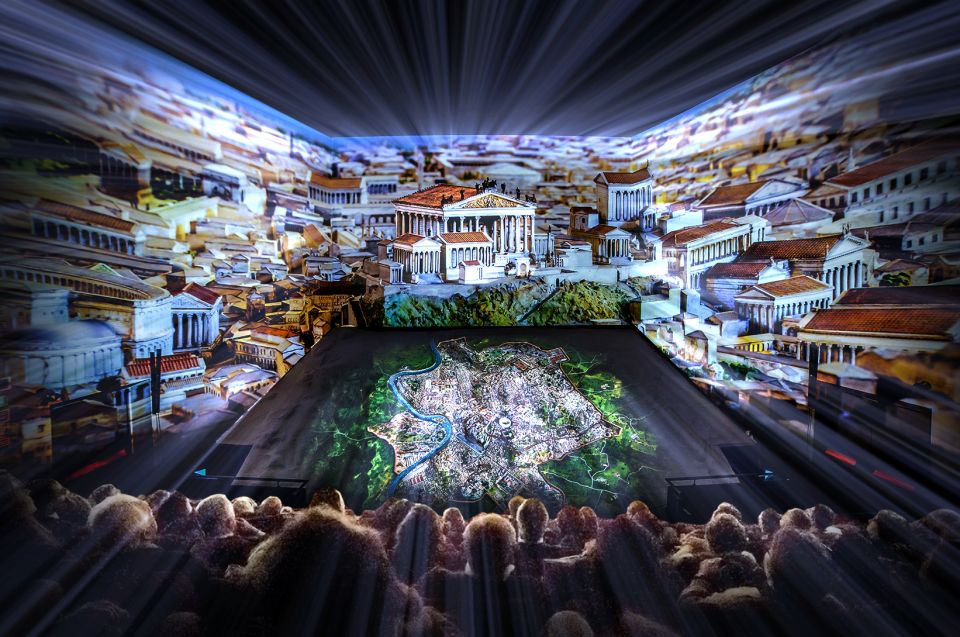
- Multi-projection that animates walls and ceilings
- A large model of the city on the ground that lights up to show how Rome evolves over time
- An illusion of moving through Rome, including monuments, palaces, churches, and squares
- A complete arc covering about 2700 years in roughly 27 minutes
That 27-minute length matters more than it sounds. Rome can be overwhelming: you look at a wall, a ruin, a church, a street, and you’re not always sure what period you’re seeing. This show gives you a common reference point. It’s the kind of mental “map” that makes later walks feel less like museum hopping and more like following one long story.
Multi-projection realism: how to watch without getting lost
This show isn’t trying to drown you in details. It uses strong visuals, sound, and narration to move between eras. The most useful part is the way the story keeps returning you to the same geographic idea: Rome isn’t a set of separate stops—it’s layers.
When you’re watching, try to do one thing: connect what you see to places you’ll visit outside. For many people, Rome outside is confusing because ruins sit beside later buildings. This show trains your eye to notice those overlaps.
Also, pick the audio guide language at the start. You’re offered narration in Spanish, Chinese, English, French, German, Italian, Japanese, Russian, and Croatian. If you’re traveling with mixed-language groups, having a built-in audio option makes it easier to enjoy together rather than splitting up for translations.
The interactive models: four monuments you can study up close
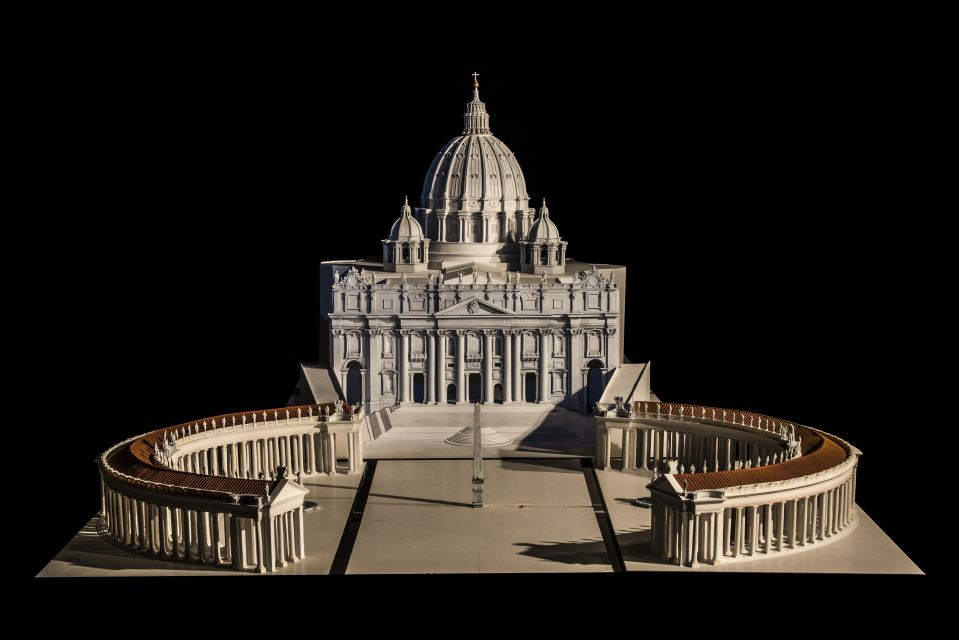
After the main projection, the experience shifts from “watching” to “looking closely.” You can view four large interactive models that focus on specific masterpieces:
- Imperial Forum
- Augustus Forum
- Mausoleum of Adrian
- San Peter Basilica
These models are valuable because they slow you down. Outside, you might only see fragments—columns here, arches there, a partial layout. A model gives you the bigger picture: how a complex space fit together, how it likely looked in its active time, and how later Rome changed the setting.
The payoff is real when you return to ruins and churches later. With the models fresh in your mind, you start noticing alignments, building relationships, and how different zones connect. It’s easier to remember “where you are in the story.”
Why this is such a strong first-day stop
A lot of Rome is a blur on day one. Even if you’ve studied a guidebook, it’s hard to connect what you read to what you see. Welcome To Rome helps solve that.
If you do it early, you’ll get:
- A timeline you can mentally place each ruin into
- A clearer sense of how imperial Rome differs from later layers
- A better ability to “decode” what you’re looking at while walking
This makes the show especially good when your itinerary is packed. If you only have a few days, you don’t want to spend them guessing what period you’re standing in. I love that this show gives you context fast, then lets you spend your remaining time on the real thing.
One small but helpful detail: some people suggest there’s a lot to move through, so follow any floor guidance or clear signage. If you’re visiting with older family members, consider pacing yourself and choosing a time when you can take it slow.
Who will enjoy it most (and who might feel it’s just okay)
Welcome To Rome works best for three types of visitors:
First-timers
If you’re seeing Rome for the first time, this is an efficient way to build a base understanding. It turns later sights into something more than “cool stones.”
Families
Kids who enjoy visuals and stories usually do well here. The show is short enough to hold attention, and the interactive models give a more active ending.
History fans who want order
Some people love Rome because it’s layered. Others struggle because it’s layered. If you’re in the second group, this helps put the layers in a clear sequence.
Who might not love it as much?
If you already have a strong grasp of Roman history and you prefer spending every minute outdoors, you might treat this as a “nice-to-have.” It’s a well-produced overview, but it’s still a show, not a replacement for walking ruins and churches.
Price and value: is $21 per person fair?
$21 per person feels like a “tour add-on” price, not a casual freebie. And yes, some people think it’s on the high side for the time you spend inside.
So how do you judge value without overthinking it?
Ask yourself what you’re paying for:
- A structured 27-minute overview of 2700 years of Rome
- Four interactive monument models that help you interpret what you’ll see later
- Audio guide support in 9 languages
- A break from heat or crowds in a seated setting
If Rome is your main priority and you’ll visit major sites over the next days, this can pay off quickly because it makes your walking time more meaningful. If Rome is a secondary stop and you’re just sampling a few big sights, you might not benefit as much.
My practical advice: if you’re spending multiple days touring Rome, this is a smarter first stop than many people assume.
Practical timing and comfort tips before you go
A few details can make your visit smoother:
- Start when you want, but remember the last show starts 1 hour before closing.
- Expect a seated projection plus time for the interactive models. Plan on roughly an hour to take it in.
- If you need frequent seating, look for places to sit in the exhibition areas. Some visitors have suggested that more seating would help certain guests.
- Wear comfortable shoes. You’ll be moving through different parts of the experience.
And here’s a tiny “pro move”: decide what you want to prioritize outside first. Even if your plan is flexible, having a short list (forums, a basilica, a monument zone) helps you watch the show with purpose.
Should you book Welcome To Rome?
Book it if:
- You want a fast, clear orientation to Rome’s timeline before your big site days
- You like high-quality visuals that help you picture what ruins once were
- You’re traveling with kids or anyone who benefits from a shorter, structured history lesson
- You’ll visit major Roman sites and want less guesswork while you walk
Skip it if:
- You already know Roman history deeply and don’t need an overview
- You’d rather spend that hour outdoors no matter what
- You’re very budget-driven and you’d rather invest in a paid guided walking experience instead
If you’re on the fence, I’d lean yes—especially if this is your first time in Rome. It’s one of those rare paid activities that can make the rest of your trip feel easier to understand.
FAQ
How long is the Rome multimedia show?
The main projection runs about 27 minutes, followed by time to view the interactive models.
Where is Welcome To Rome located?
It’s inside the ex-Cinema Augustus at Corso Vittorio Emanuele II, 203, a few hundred meters from Piazza Navona.
Is an audio guide included, and what languages are available?
Yes. The audio guide is included and available in 9 languages: Italian, English, Spanish, French, German, Russian, Chinese, Croatian, and Japanese.
Can I start the visit at any time during opening hours?
Yes. The show runs continuously, so you can start at any time during opening hours. The last show starts 1 hour before closing.
What interactive models are included?
You can view four large interactive models of the Imperial Forum, Augustus Forum, the Mausoleum of Adrian, and San Peter Basilica.
Is the show accessible for wheelchair users?
Yes. The venue and experience are wheelchair accessible.
Can I get a refund if I cancel?
Yes. Free cancellation is available up to 24 hours in advance for a full refund.