REVIEW · STROMBOLI
Stromboli: Sunset Trekking at Sciara del Fuoco
Book on GetYourGuide →Operated by Ashàra Etna & Stromboli Guides · Bookable on GetYourGuide
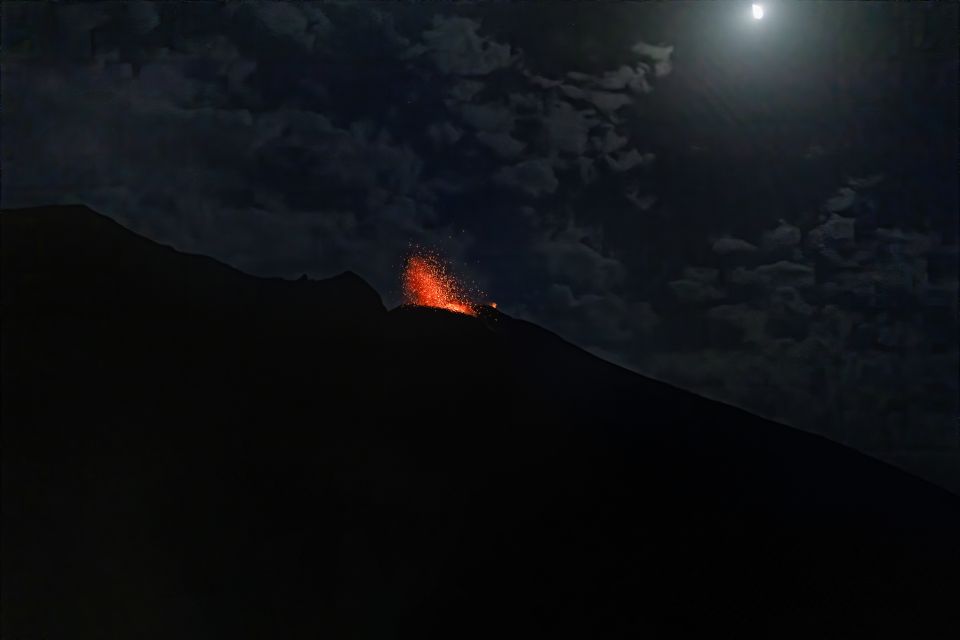
Volcano fire shows up after dark. I love two things here: the Sciara del Fuoco guides, often led by people like Giuseppe and Federico, who explain Stromboli in plain language, and the way lava explosions light up the dark as the Aeolian Islands turn color.
Do note the hike tops out at the 400-meter limit and you come back downhill after sunset with torches, so you need sure footing and basic fitness.
In This Review
- Key things that make this Stromboli trek worth planning
- Sciara del Fuoco at sunset: what makes it feel so unreal
- Meeting on Stromboli: timing your hike for golden hour
- The climb to the 400-meter limit: views, stops, and real effort
- Sciara del Fuoco after the climb: sunset color and eruption spotting
- Coming down in the dark: headlamps, torches, and careful footing
- Guides like Giuseppe and Giovanni: why the explanation improves the viewing
- What to pack for Stromboli’s 5-hour sunset trek
- Price and value: is $35 a smart spend on Stromboli?
- Should you book this sunset trek to Sciara del Fuoco?
- FAQ
- Where is the meeting point for the Stromboli sunset trek?
- When does the tour start, and how long is it?
- How high do we go on the hike?
- What gear is included?
- Do food and drinks come with the tour?
- Can I rent trekking shoes on Stromboli?
- Will I definitely see lava explosions?
- Does the tour end late enough that I need an overnight stay?
- What if the weather or volcanic risk changes?
- How do I know if this tour is right for my health or mobility?
Key things that make this Stromboli trek worth planning
- 400-meter limit by design: you reach a safe viewing zone while summit craters stay off-limits.
- Helmet + headlamp included: you’re not scrambling for gear when the light fades.
- Sciara del Fuoco at sunset: the main goal is timing the sky and the volcanic bursts together.
- Old island cemetery stop: you get a rare human-history moment on the trail.
- Torches for the downhill return: it’s manageable, but you’ll want grip and patience.
- Volcanology guides in multiple languages: English, French, and Italian, with a safety-first approach.
Sciara del Fuoco at sunset: what makes it feel so unreal
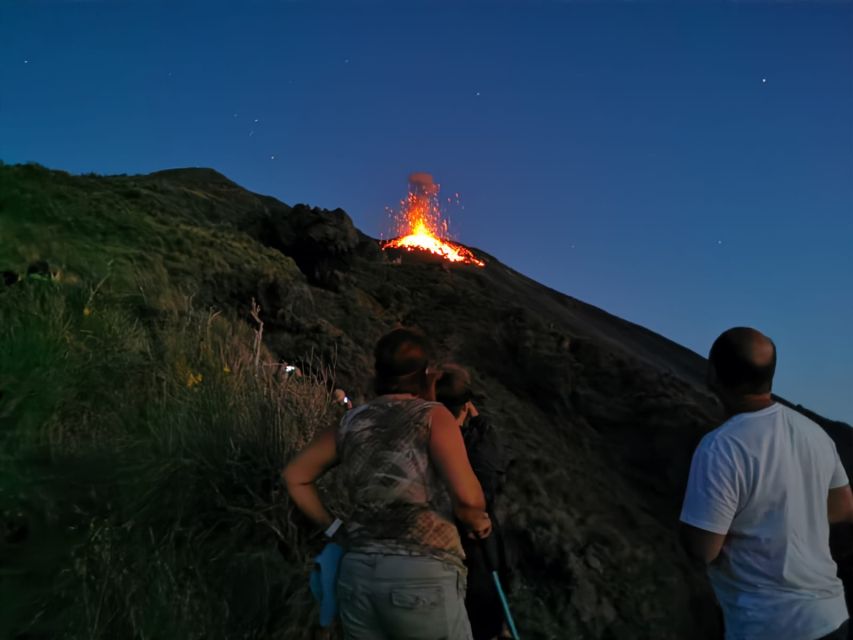
Stromboli’s Sciara del Fuoco is famous for a simple reason: it makes volcanic activity visible from a human scale. You’re not watching from a distant road. You’re hiking up far enough to see the volcano’s behavior light up the evening sky over the surrounding sea.
I also like that the experience is guided by volcanological people, not just general sightseeing staff. Guides such as Giuseppe and Giovanni focus on what you’re actually looking at, plus the local context that turns the eruptions from a spectacle into something you understand. When the bursts start, you’ll catch yourself watching the sky first, then the guide’s explanations will click into place.
And yes, sunset is a big part of it. The color change in the Aeolian Islands is dramatic, and that golden-to-blue shift makes the eruptions look sharper and more frequent. If you like astronomy-style star watching, you’ll probably appreciate the dark sky after sunset too.
You can also read our reviews of more tours and experiences in Stromboli.
Meeting on Stromboli: timing your hike for golden hour
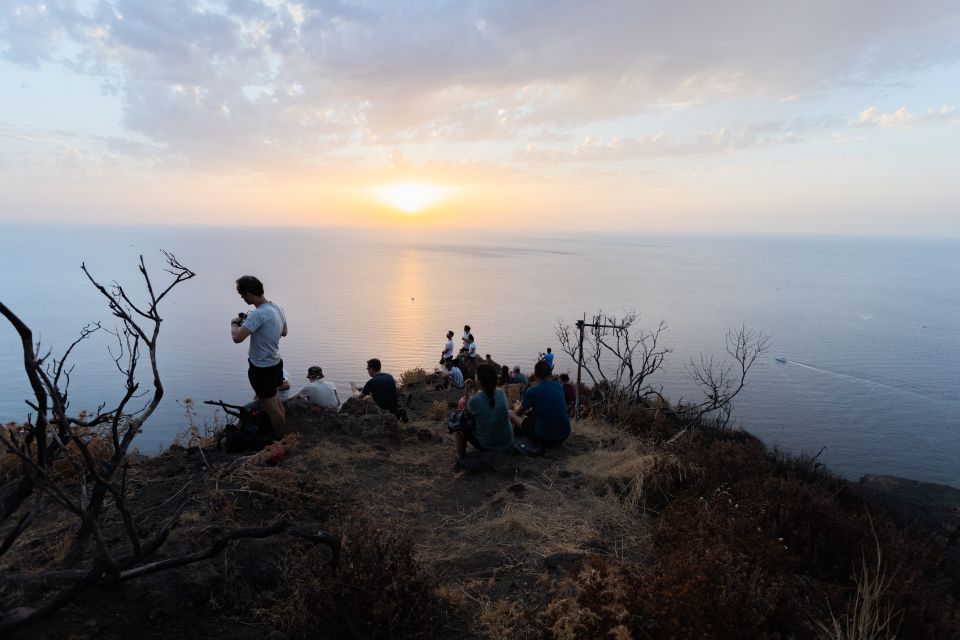
The tour meets at Ashara’s Info Point near Piazza San Vincenzo, behind the church (Via Vittorio Emanuele / Piazza San Vincenzo). You start about two hours before sunset, which matters because the climb and the viewing time are planned around low light.
Right after you gather, there’s a safety briefing. Then you head out along a nature trail that leads toward the approved high point. The included rock helmet and headlamp help set the tone: this is treated like a proper volcano hike, not a casual walk.
If you’re the type who likes being ready early, this is a good fit. You can get your water, snacks, and jacket on before the group moves. From there it’s steady hiking, breaks, and frequent view stops until you reach Sciara del Fuoco.
The climb to the 400-meter limit: views, stops, and real effort
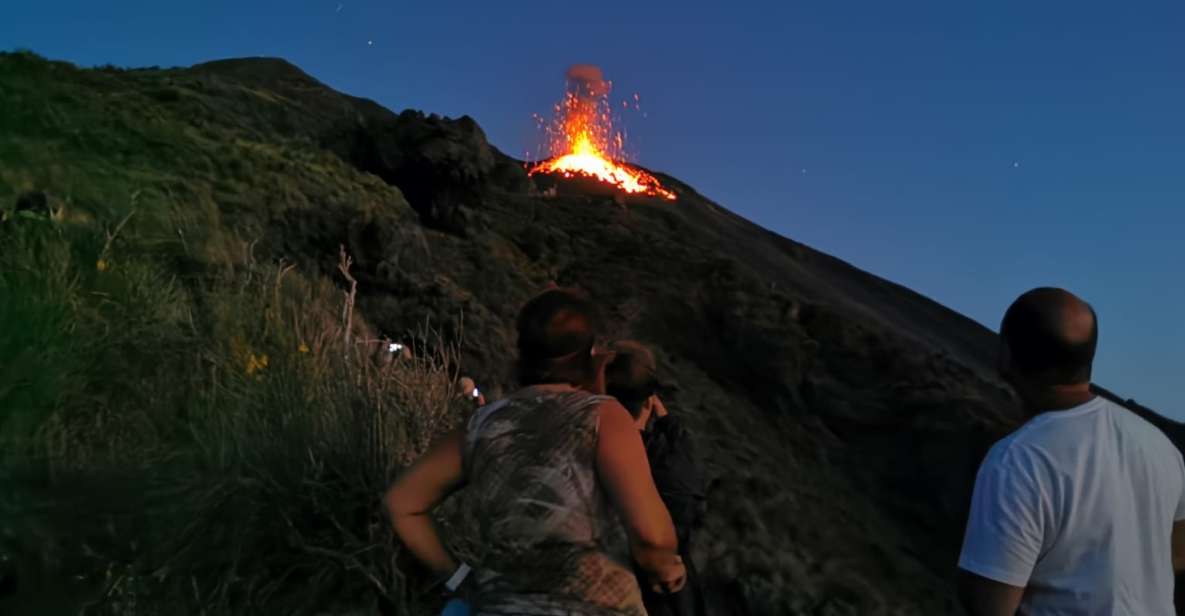
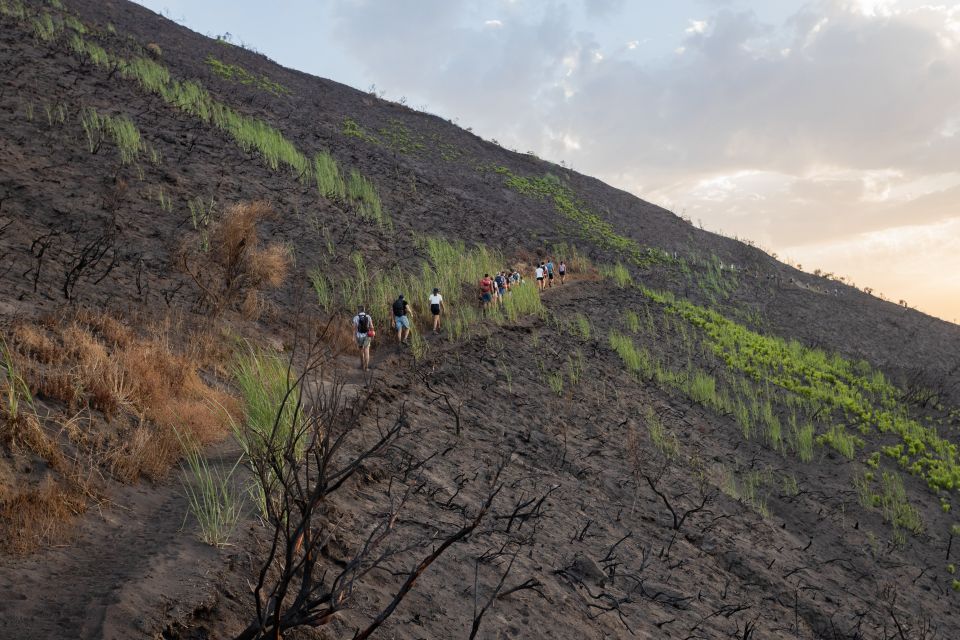
You hike to about 400 meters, which is the maximum altitude allowed with a volcanological guide. This is one of those details that might sound limiting, but it actually makes the whole thing safer and more consistent. You’re still close enough to experience the volcano’s “show,” while staying on routes that are permitted for the group.
The trail isn’t described as a straight, easy path. The route climbs, includes careful sections, and you’ll likely find yourself dusty by the time you’re near the upper areas. One thing that comes up in the field: the last stretch can feel tougher than the early parts, so don’t burn matches too fast.
On the way up, the guide builds in short breaks for water, breath, and explanations. You may also visit the old island cemetery, which adds a surprising layer of place: this island lives with volcano risk, and you feel that in a quiet, human way.
As you climb, you’ll keep a constant view of Strombolicchio while crossing Mediterranean shrubs. Those in-between vista moments are part of why people remember this trek beyond the eruptions at the top.
Sciara del Fuoco after the climb: sunset color and eruption spotting
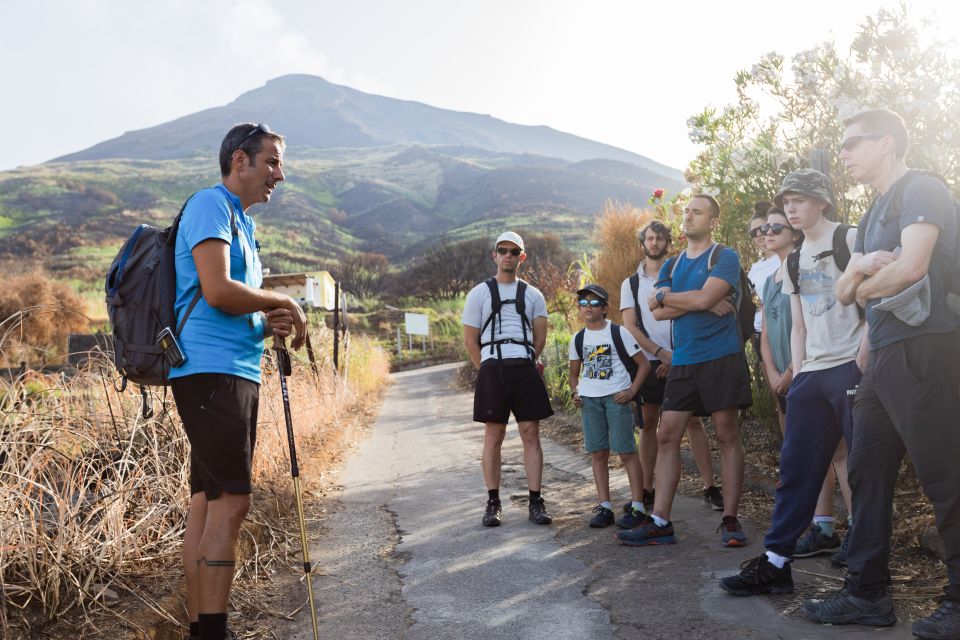
Reaching Sciara del Fuoco is when the tour becomes the main event. You arrive in time to watch the sunset color the Aeolian archipelago red, and then you stay on the viewing side as the sky darkens.
This is the point where Stromboli’s activity does the talking. The tour is designed for you to witness the active volcano light up the night sky. The eruptions you see are typically short bursts rather than a constant glow, and depending on volcanic conditions you might catch several displays during your time there.
In practice, this is why the guides matter so much. They’re watching, positioning, and managing the group so you can see clearly without crowding into unsafe areas. People often mention how rewarding it is to get multiple eruption moments instead of just one quick glance.
You’ll also be in a dark-sky setting. Once the main bursts start and the guide gives you a moment to look up, you can appreciate how much the stars show up once the light is fully gone.
Coming down in the dark: headlamps, torches, and careful footing
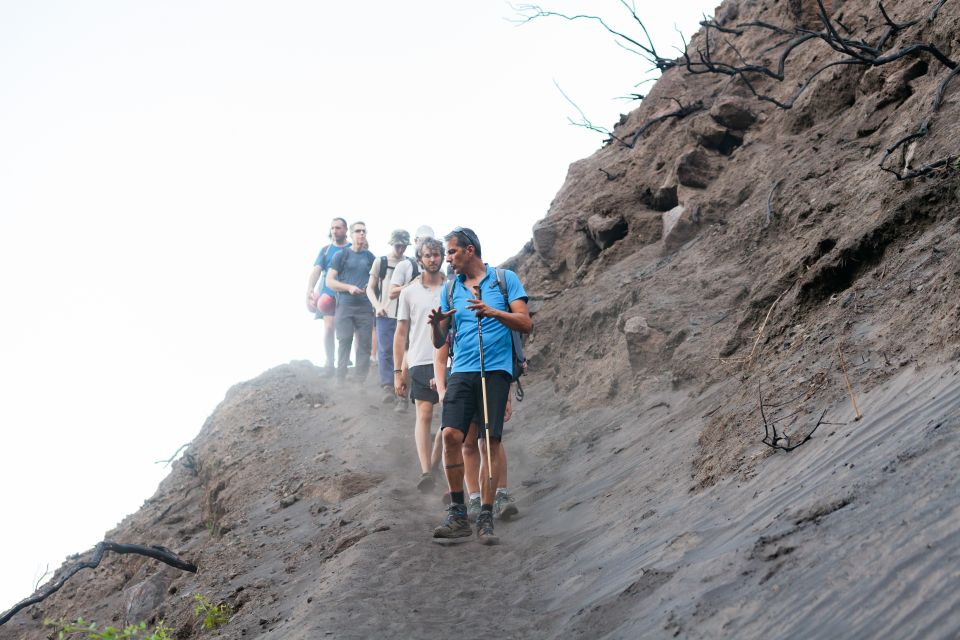
The descent happens after sunset, and that’s a real shift in the feel of the hike. You’ll be equipped with torches/headlamps, but you’ll still be walking on uneven ground with reduced visibility.
The downhill is described as steep in parts, and at least some of the return route involves cobbled or stone sections. That means your biggest enemy is not the mountain. It’s losing traction or stepping without paying attention.
Your best strategy is simple: slow down on the tricky sections and keep a steady rhythm. The guides keep the group together, and they’ll watch for anyone who needs extra time. If you’re prone to rushing when you’re tired, this is where the tour quietly trains you to do the opposite.
Also plan for the practical reality: going downhill in darkness can make your legs feel heavy even if the climb felt manageable. Bring focus to your feet, not your phone.
Guides like Giuseppe and Giovanni: why the explanation improves the viewing
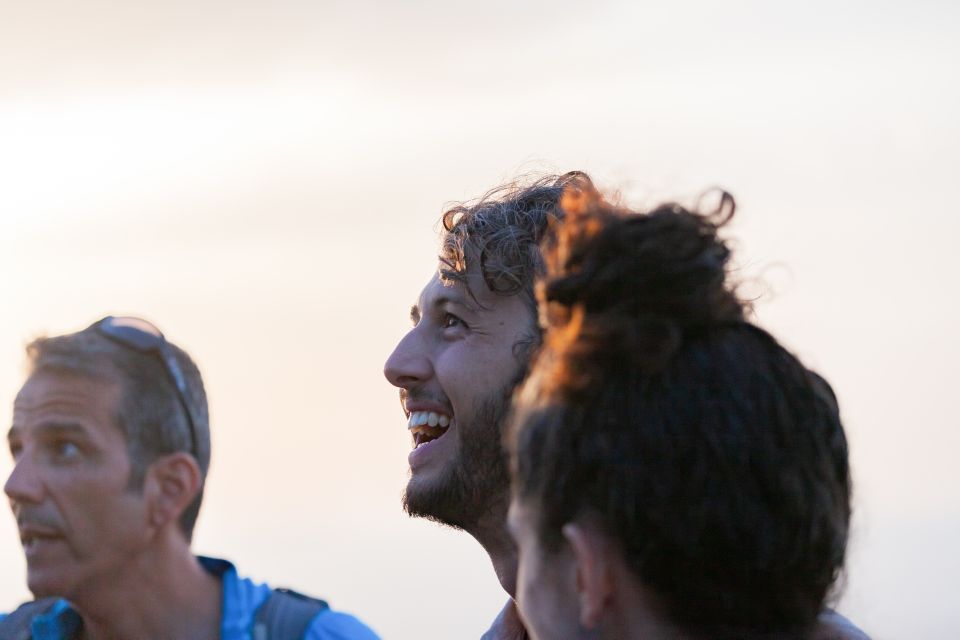
One of the most praised parts of this hike is the guiding style. People repeatedly highlight that the guides are patient, attentive, and skilled at leading a group safely while still making the experience feel personal.
Guides such as Giuseppe and Giovanni are praised for sharing clear volcanic facts, plus island history, and for keeping a pace that doesn’t leave people behind. That matters because you’re hiking uphill in low light and then returning downhill after dark. A group that moves together stays safer.
Another detail that shows up often: guides seem to adjust to the needs of individuals. If you get nervous on steep sections, you’ll likely find they have practical ways to help you continue. That doesn’t change the mountain, but it can change how doable the hike feels.
Finally, guides can modify the plan for safety. At their discretion, excursions may vary or be interrupted if weather, environmental factors, or volcanic risk could create danger. That’s not a “maybe.” It’s part of how this kind of activity stays responsible.
What to pack for Stromboli’s 5-hour sunset trek
You’re on the trail for around 5 hours, and you start before sunset and finish late. So pack like you’ll be out there for a while, not like you’re doing a quick stroll.
Bring:
- Snacks (something you can eat on a break)
- Water
- Jacket (it can cool off as the light drops)
- A daypack
- T-shirt, shorts, socks, sportswear
- Hiking shoes (with grip)
Food and drink are not included, so your snack strategy matters. Even if you feel fine at the start, the climbing effort plus the cooler evening can make you want calories at the viewing point.
Hiking shoes can be rented on the spot if you don’t have yours. Still, I’d strongly recommend using the best grip you can. Several people mention the importance of footwear for the steep and dark sections.
One extra practical thought: volcanic dust can get airborne on the trail. If you’re sensitive, a face covering might help you stay comfortable.
What’s not allowed:
- oversize luggage
- baby strollers
- open-toed shoes
Price and value: is $35 a smart spend on Stromboli?
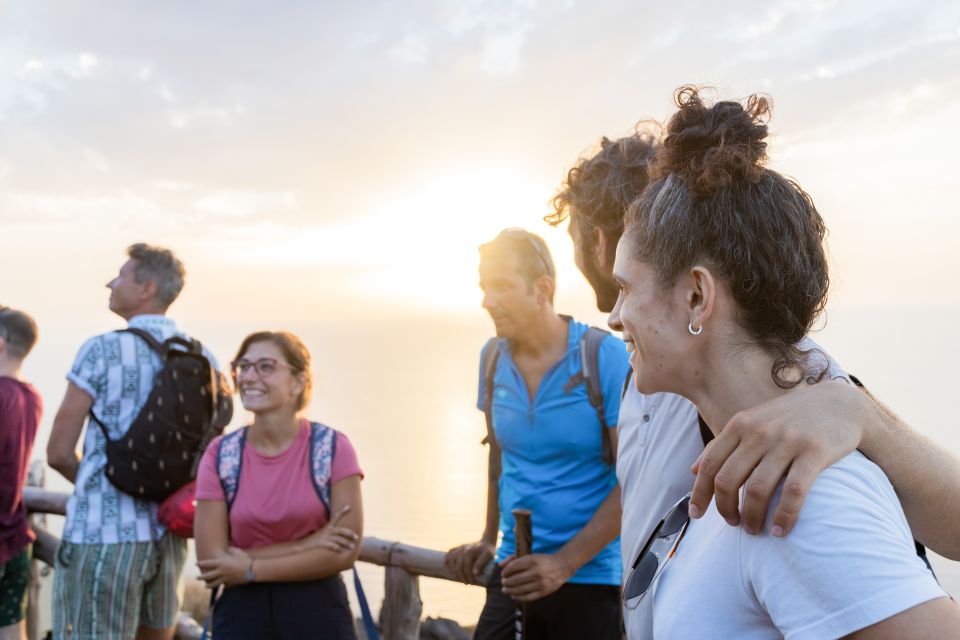
At $35 per person for about 5 hours with a volcanology guide, helmet, and headlamp, this is good value for a very specific reason: it’s timed and safety-dependent. Sunset viewing isn’t flexible, and volcano hikes require training, decision-making, and equipment.
You also get structure. You’re not trying to coordinate routes, watching points, and safe distances on your own. Instead, you follow a guided climb to an approved high point, spend time at Sciara del Fuoco during sunset and night, then return with lights.
The overall rating is strong: 4.6 out of 5 from 1,372 reviews. That number won’t tell you everything, but it does suggest consistent execution: pacing, safety management, and the quality of the eruption viewing.
Who gets the most out of this:
- People who like volcanoes and want explanations, not just photos
- Walkers who can handle a steep, dusty climb
- Anyone who enjoys watching science happen in real time
Who should think twice:
- Pregnant women
- People with back problems
- People with mobility impairments or wheelchair users
- People with heart problems
- People with vertigo
- People with respiratory issues
Should you book this sunset trek to Sciara del Fuoco?
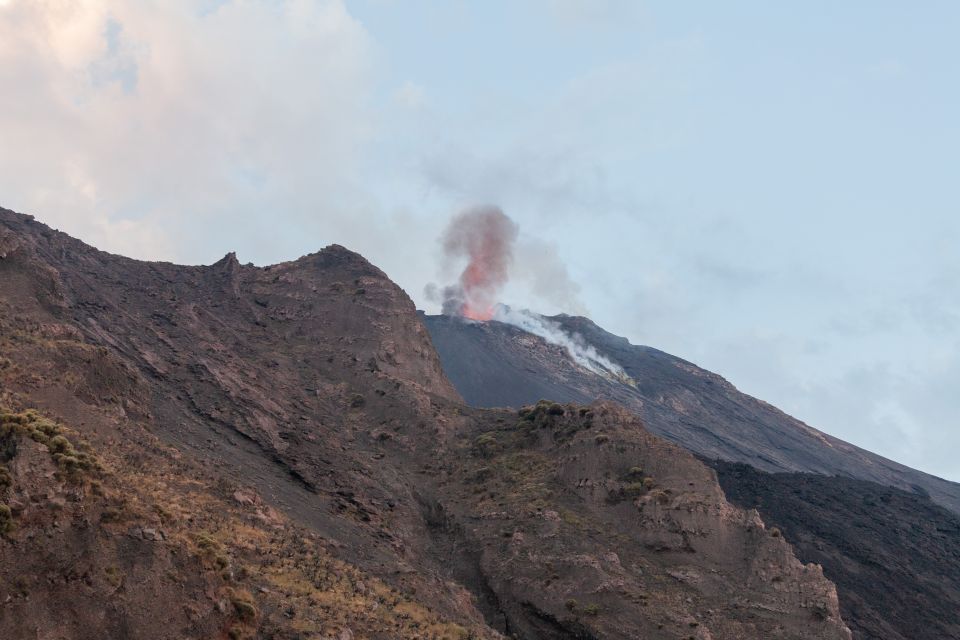
If you’re staying on Stromboli overnight already, I think this is one of the easiest yes-decisions you can make. A big practical catch is that the tour finishes late, and there are no return ferry boats late in the evening, so you need to plan your night on the island.
Book it if you want:
- a timed sunset volcano experience
- guided explanations with actual volcanology focus
- helmeted, headlamp-supported hiking with a controlled route
Skip it if you’re not comfortable with darkness on the way back, steep sections, or long periods on your feet. Also skip it if you know your health limitations fall into the tour’s not-suitable categories.
FAQ
Where is the meeting point for the Stromboli sunset trek?
Meet at Ashara’s Info Point in Via Vittorio Emanuele / Piazza San Vincenzo, behind the church.
When does the tour start, and how long is it?
You meet about two hours before sunset, and the tour lasts about 5 hours.
How high do we go on the hike?
The route stops at 400 meters, due to the closure of the summit craters.
What gear is included?
The tour includes a headlamp flashlight, a rock helmet, and a volcano guide.
Do food and drinks come with the tour?
No. Food and drink are not included, so bring snacks and water.
Can I rent trekking shoes on Stromboli?
Yes. Trekking shoes are available for rent on the spot.
Will I definitely see lava explosions?
The tour is set up to reach Sciara del Fuoco at sunset so you can witness the active volcano lighting up the sky. Volcanic activity and visibility can vary, and the guide may adjust if conditions change.
Does the tour end late enough that I need an overnight stay?
Yes. The trek finishes late in the evening, and you’ll need to stay overnight on Stromboli, since there are no late return ferries.
What if the weather or volcanic risk changes?
At the guide’s discretion, the excursion may undergo variations or be interrupted if weather, environmental causes, or possible volcanic risk creates danger.
How do I know if this tour is right for my health or mobility?
This hike is not suitable for pregnant women, people with back problems, mobility impairments, heart problems, wheelchair users, vertigo, or respiratory issues.
If you tell me your hiking comfort level (and whether you have Stromboli lodging booked), I can help you decide if this is the right fit for your trip.