REVIEW · VENICE
Venice: Carnival Mask Workshop
Book on GetYourGuide →Operated by CITY TOURS CO LTD · Bookable on GetYourGuide
Venice really shows up on your fingertips. In this Carnival mask workshop, I like that you paint a paper-mâché design by hand, guided by a Venetian artisan like Giorgio or Niccolò. You’ll leave with an actual mask you made, not something that came pre-finished from a shop window.
Two things I’d point you to right away: you get clear hands-on instruction (including pencil color-blocking on your chosen mask shape), and you also hear story time about why masks mattered in Venice. One practical consideration: this class is not wheelchair accessible and can be tough for anyone with walking or mobility issues.
In This Review
- Key Things To Know Before You Go
- Painting a Venice Carnival Mask Feels Better Than Shopping
- Where the Workshop Happens: Inside an Atelier (Sometimes Museum-Like)
- Step-by-Step: What You Actually Do in the 1-Hour Class
- Choosing Your Mask and Designing a Look That Looks Venetian
- The Carnival Traditions Part: What the Instructor Brings to the Table
- Time, Pace, and Group Size: Getting Attention Without Rushing
- Supplies Included: What You Don’t Have to Pack
- Price and Value: Is $91 a Fair Deal?
- Who This Workshop Suits Best (And Who Might Skip It)
- Small Practical Tips That Make Your Mask Look Better
- Should You Book This Venetian Mask Workshop?
- FAQ
- How long is the Venice Carnival Mask Workshop?
- How much does the workshop cost?
- Where does the workshop start (meeting point)?
- What does the class include?
- Can I choose what mask I paint?
- Are there multiple languages for the instructor?
- Is this workshop suitable for wheelchair users or people with mobility impairments?
- Are pets allowed?
- What’s the cancellation policy?
- What happens if Venice has exceptional high tide?
- Can I reserve now and pay later?
Key Things To Know Before You Go
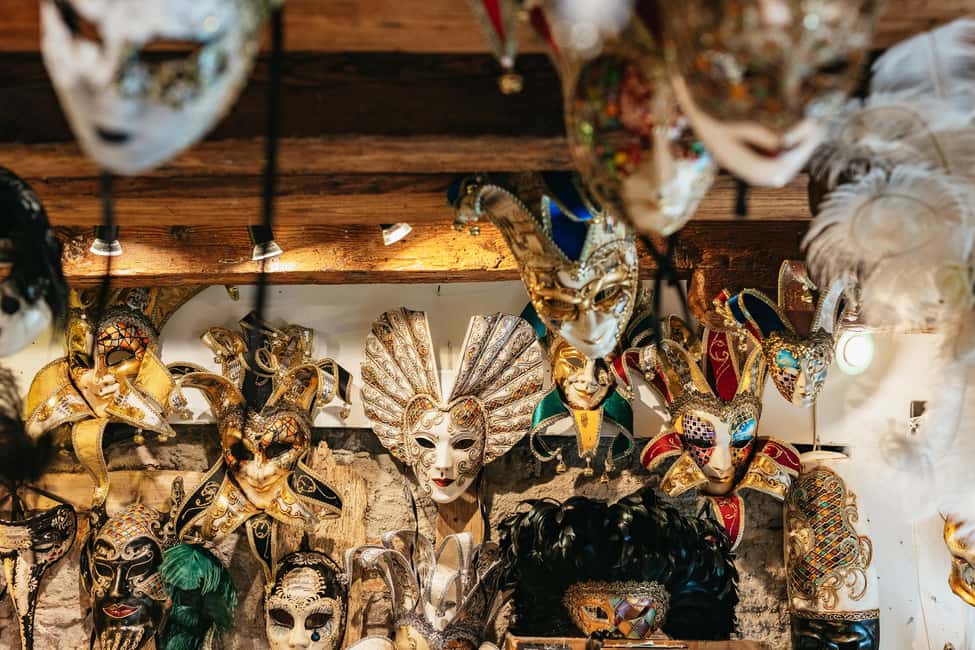
- You choose the mask shape before you paint, then build your look from there.
- Paper-mâché painting is the core skill, with drying time and finishing details.
- You’ll get Carnival context from the artisan, not just craft instructions.
- Supplies are included, including paints and an apron, so you arrive ready.
- The setting can feel museum-like or prison-adjacent, so show up with your ticket if needed.
Painting a Venice Carnival Mask Feels Better Than Shopping
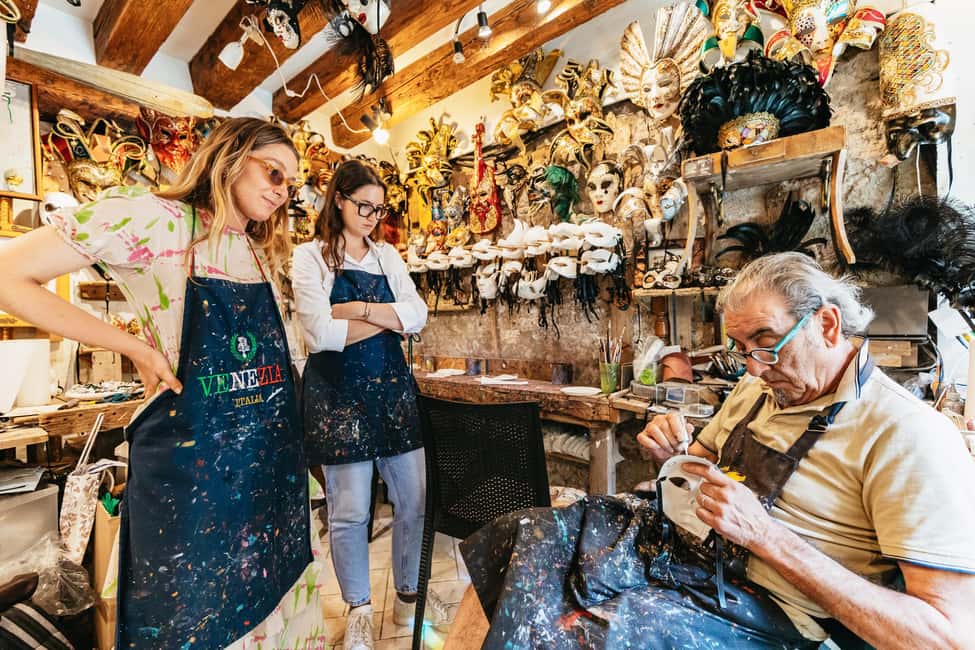
A Venetian Carnival mask is easy to buy. A mask you painted yourself is different. You’ll notice it the moment you start: your hands slow down, your choices get more intentional, and the whole experience turns into a small, satisfying project instead of a quick stop.
That’s why I like this format. You’re not just copying a design; you’re learning how a traditional-looking mask gets built up with layers, color planning, and final decorative touches. Even if your painting skills are basic, the instructor’s approach makes it doable in the time you have.
You can also read our reviews of more tours and experiences in Venice.
Where the Workshop Happens: Inside an Atelier (Sometimes Museum-Like)
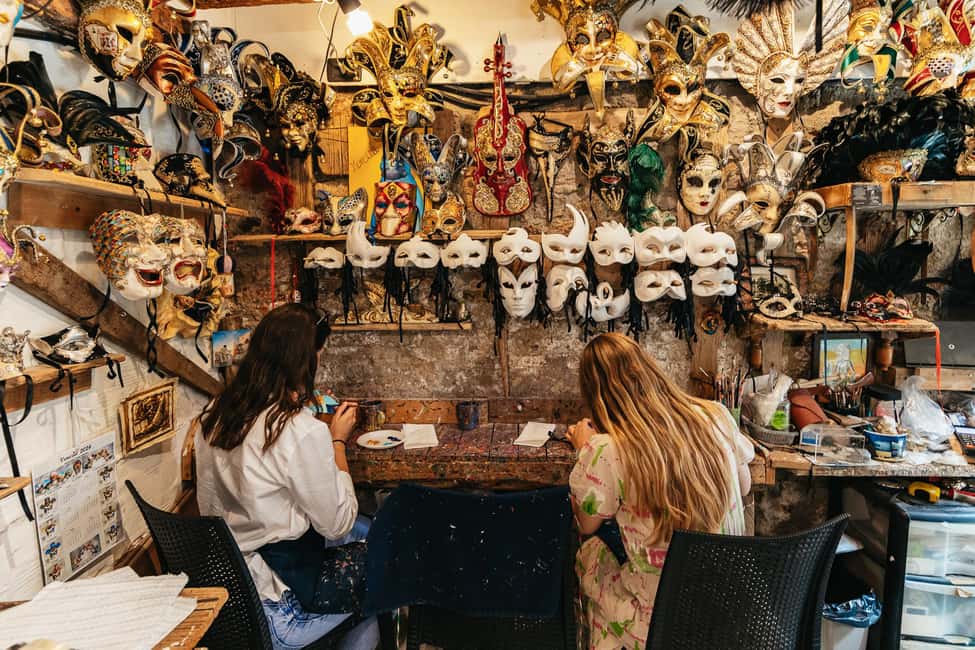
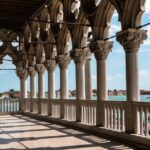
Most workshops like this run out of a small artisan space near central Venice. In practice, you might be stepping into a shop that feels like an atelier, and in some cases it can be inside a museum or a space connected to a prison setting near San Marco and the Doge’s Palace.
What this means for you is simple: plan for an indoor start, and don’t be surprised if the entrance process is a little formal. One key tip that matters in real life—if your session is inside a museum/prison space, you may need to show your ticket at the door.
Also, the meeting point can vary depending on what you booked. If you’re tight on time that morning, double-check your specific confirmation instructions the day before.
Step-by-Step: What You Actually Do in the 1-Hour Class
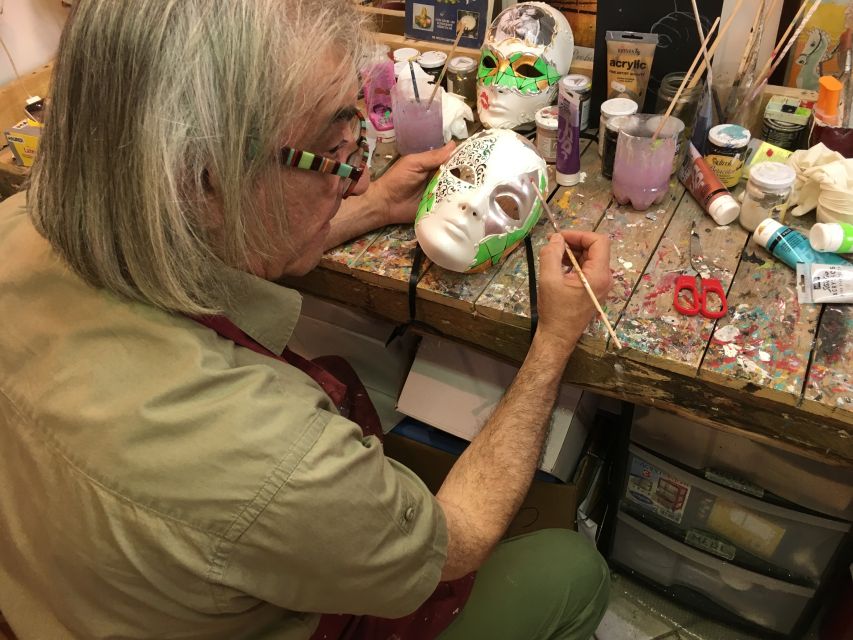
This is built as a true workshop, not a lecture with a craft tacked on. You’ll spend your time painting a mask on-site with an instructor guiding you through the process.
Here’s how the session typically plays out:
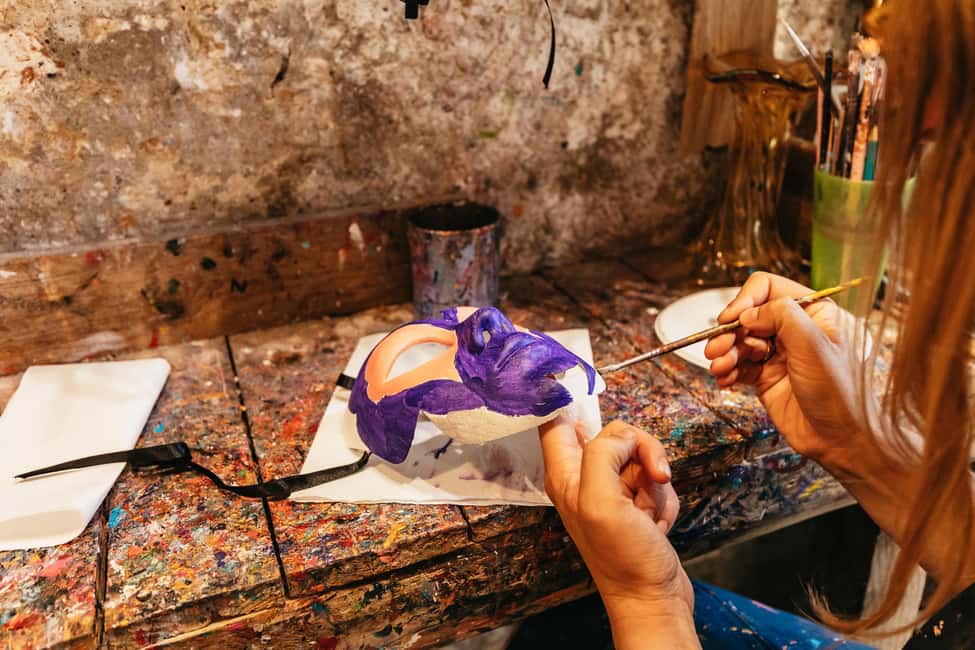
You start by choosing a mask to decorate. Then the instructor helps you get organized, often with pencil guidance that maps out different color sections. That part helps a lot. It keeps first-timers from getting overwhelmed and stops you from repainting the same areas twice.
Next comes the fun part: you paint your design using the supplies provided. Expect multiple materials—regular paints, plus options like glitter and 3-D effects depending on what the studio has out that day. Many people get pleasantly surprised by how many decorative choices are available.
Then there’s drying time. You might see your instructor dry the mask with a heater before moving to the next stage. This step is part of how you avoid smudging and keep the final details looking crisp.
Finally, the instructor adds (or helps you add) the fine finishing work. In a good workshop, you leave with those extra details that make it look like a real Venetian mask rather than a flat painted souvenir.
Choosing Your Mask and Designing a Look That Looks Venetian
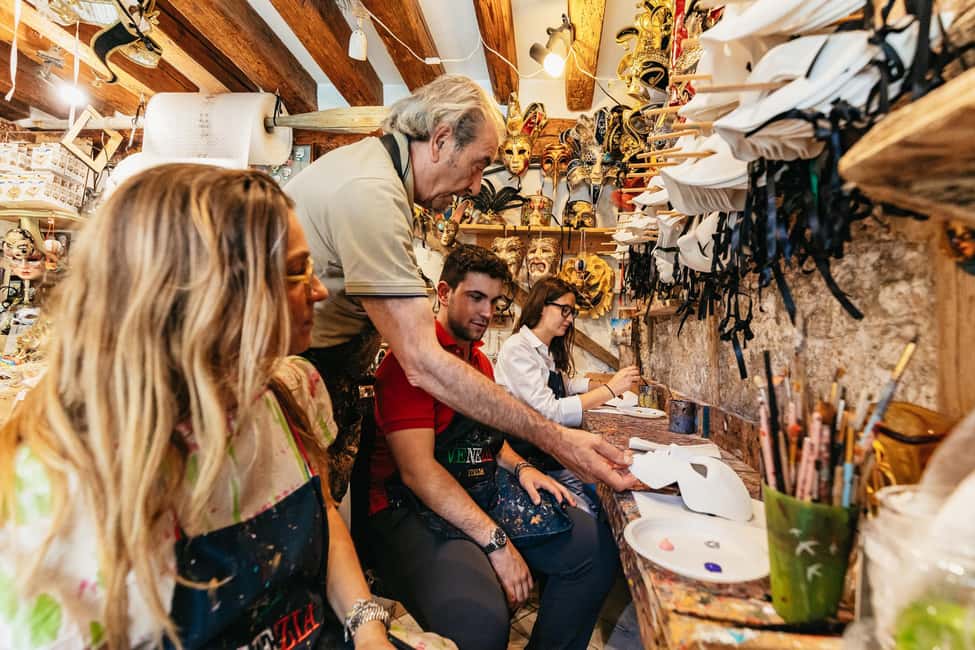
The best souvenir purchases are the ones you could never recreate by accident. Here, the mask shape and your color choices drive everything.
Most studios offer several traditional mask types to pick from. People have mentioned variety like classic Venetian styles, and you’ll likely see options that feel meant for Carnival—not the generic shapes you find in everyday tourist stalls.
A practical strategy for you: pick a mask style first, then keep your design simple. The pencil sections the instructor gives you are there for a reason. If you try to paint something too complicated, you’ll spend the whole hour fixing mistakes instead of enjoying the process.
And if you want a helpful “look,” don’t aim for perfect realism. Aim for strong color blocks and confident lines. The final effect comes from contrast and decorative detail, not from trying to replicate a Renaissance painting.
The Carnival Traditions Part: What the Instructor Brings to the Table
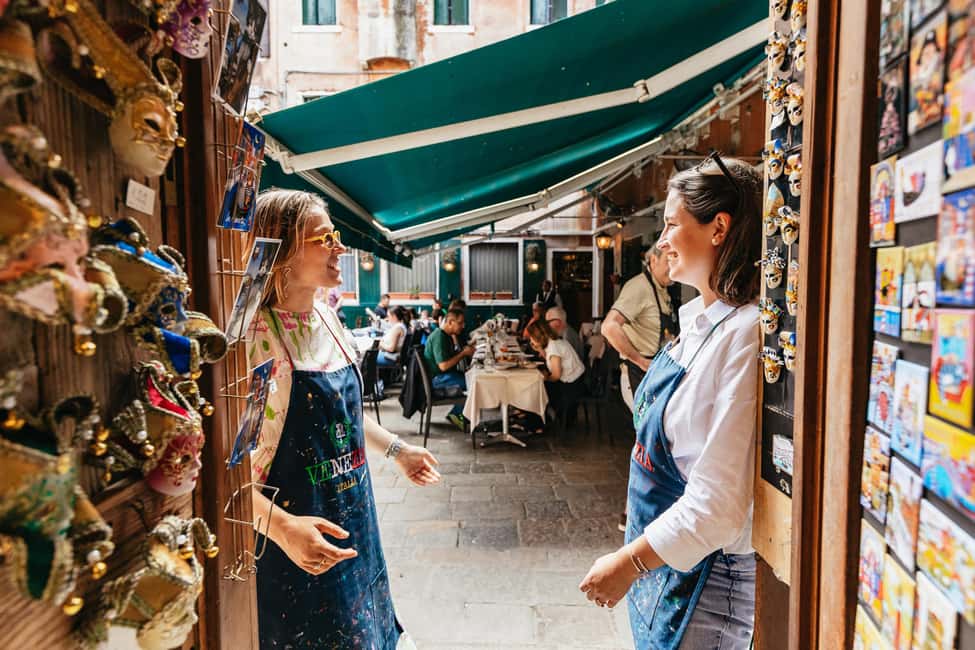
The painting is the obvious draw. What makes the class memorable is that you’re learning alongside why masks mattered in Venice.
Instructors weave in facts about Carnival and the use of masks in earlier centuries—how anonymity worked socially, why certain mask traditions gained traction, and what that meant for the city’s culture. Names like Giorgio, Niccolò, Petra, Francesco, and others pop up in the kind of stories people report hearing, and the common thread is the same: the history is delivered while you work, not after you’re done.
This matters because it turns a craft into context. You’re not just decorating something; you’re participating in a tradition that Venetian families kept alive through art and performance culture.
Some classes also feel extra personal because the host shares family connections—learning the craft from a father, passing it to sons, or building orders for distant places. That kind of detail makes the workshop feel connected to real working artisans, not just a one-off tourist activity.



Time, Pace, and Group Size: Getting Attention Without Rushing
This activity runs about 1 hour, and that short duration is both the charm and the tradeoff. It’s long enough to finish something you’re proud of, but it’s not long enough to turn it into a full-day art project.
The pace is usually friendly and structured:
- You get guidance at the start for placement and color planning.
- You paint while the instructor checks in and helps with technique.
- You move through drying and finishing steps without feeling abandoned.
Group size is typically small, which is a big deal in a craft class. With fewer people, you’re more likely to get help with blending, line control, or getting the decorative parts to look intentional.
One more thing that’s worth knowing: a few sessions may run slightly longer than the scheduled hour, especially if the host adds time for extra explanations or a quick look at nearby exhibits in a museum/prison setting. Don’t count on that, but it can happen.
Supplies Included: What You Don’t Have to Pack
For $91 per person, you’re paying for more than “an hour of painting.” You’re paying for the studio setup and the instructor time—and for the materials that make your mask look finished.
What’s included:
- A class focused on decorating a paper-mâché mask
- Paints and supplies
- A mask to take home
- An apron
That “supplies included” detail is not trivial. Venice is not the easiest place to shop for craft materials at the last minute, and a workshop that provides everything lets you show up lighter and spend your time creating.
Price and Value: Is $91 a Fair Deal?
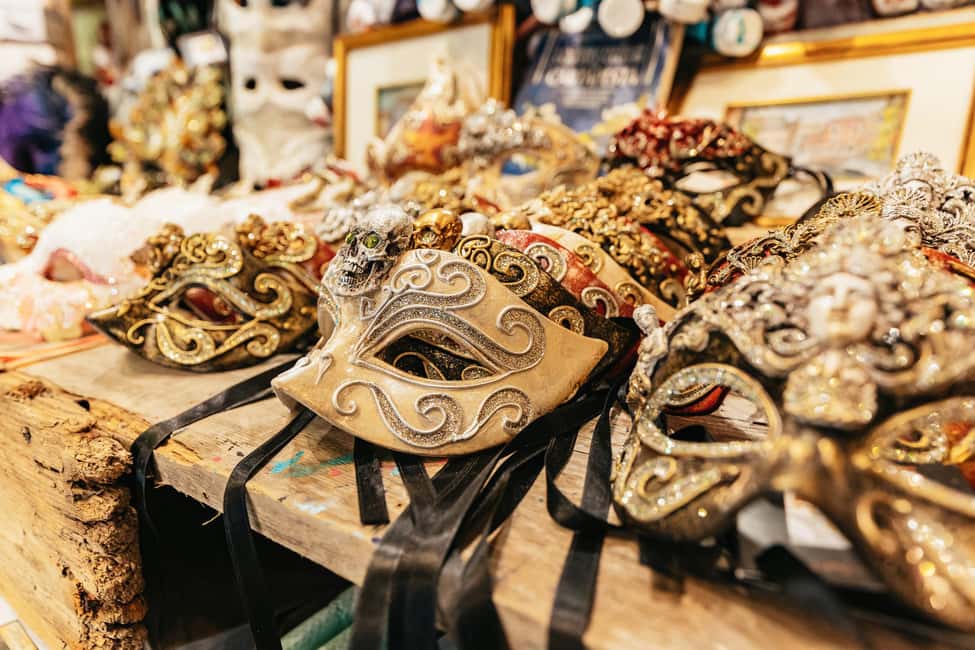
At $91 per person for about an hour, you’re not buying a discount souvenir. You’re buying:
1) an artisan-led class,
2) hands-on guidance,
3) studio time (with drying/finishing), and
4) a finished take-home mask.
Here’s the value logic I use when I see a price like this: you’re paying for the parts you can’t easily DIY on your own. If you tried to recreate it yourself, you’d still need the base mask, paint, tools, cleanup space, and someone to teach you the trickier finishing steps that make it look right.
Also, your mask is personal. People often plan these workshops on a day when they want something hands-on rather than another museum ticket. If you enjoy making things, $91 can feel very reasonable. If you only want a quick photo-op, you might feel it’s more money than you expected for a short session.
Who This Workshop Suits Best (And Who Might Skip It)
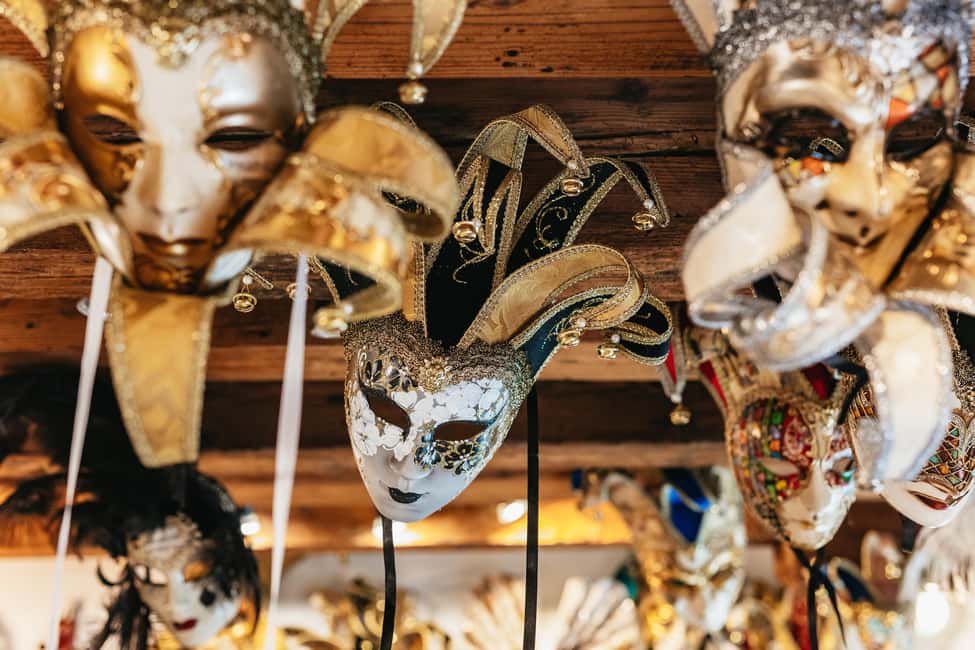
This works especially well if you’re:
- traveling with kids or teens who like hands-on activities (many people mention younger painters enjoying it)
- an adult who wants a break from lines and tickets
- a couple who wants something different to do together
- the kind of person who likes keeping a memory you can hang on a wall
You might want to skip—or at least think carefully—if you have mobility impairments or find it difficult to move around. The tour is not fully accessible for wheelchair users or those with walking difficulties.
Small Practical Tips That Make Your Mask Look Better
If you want your final mask to impress, a few habits help:
- Wear clothing you don’t mind getting paint on, even with the apron.
- Start with strong color blocks. The pencil guidance is your roadmap.
- Don’t overthink tiny details early. Finish details come after drying and structure are set.
- If your schedule is tight, arrive a few minutes early. Workshop locations can be easy to miss in Venice, especially if you’re also scanning for museums or ticket entrances.
One last tip: bring a plan for how you’ll transport your mask home. The experience gives you the finished souvenir, but your job is keeping it safe on the way back.
Should You Book This Venetian Mask Workshop?
If you want a Venetian souvenir with real effort behind it, I’d book this. The combination of hands-on painting, a personal instructor approach, and the Carnival context is what makes the hour feel like more than a craft class.
I’d hold off only if your priority is speed and low cost. This isn’t a bargain. It’s also not built for mobility needs, and the short duration means you won’t learn every technique in depth.
If your schedule allows one creative slot in Venice, this is a strong pick—especially for anyone who likes the idea of leaving with something you made with your own hands.
FAQ
How long is the Venice Carnival Mask Workshop?
The workshop lasts 1 hour.
How much does the workshop cost?
The price is $91 per person.
Where does the workshop start (meeting point)?
The meeting point may vary depending on the option you book.
What does the class include?
You’ll get a class in decorating a paper-mâché mask, plus all necessary paints and supplies, an apron, and a mask to take home.
Can I choose what mask I paint?
Yes, you choose a mask to be decorated during the course.
Are there multiple languages for the instructor?
The instructor may speak Spanish, Italian, English, and French.
Is this workshop suitable for wheelchair users or people with mobility impairments?
No. It is unfortunately not fully accessible for wheelchair users or those with walking difficulties, and it is not suitable for people with mobility impairments.
Are pets allowed?
No, pets are not allowed.
What’s the cancellation policy?
You can cancel up to 24 hours in advance for a full refund.
What happens if Venice has exceptional high tide?
The tour does not operate in case of exceptional high tide. It can be postponed to the days after, otherwise it will be refunded.
Can I reserve now and pay later?
Yes, you can reserve now and pay later to keep your travel plans flexible.