REVIEW · VENICE
Venice: St. Mark’s City Pass with Doge’s Palace Entry
Book on GetYourGuide →Operated by Venezia Unica by Vela Spa · Bookable on GetYourGuide
Two tickets, zero wasted time. The St. Mark’s City Pass pairs skip-the-line Doge’s Palace entry with top museums around St. Mark’s Square, making it an easy way to see Venice’s highlights without playing ticket roulette. I also like that you can start at whichever included site makes the most sense for your day. One thing to plan for: your Doge’s Palace entry time may not match what you hoped for, so build in buffer.
This is a self-guided setup (no guided tour included), with entry tickets bundled for Doge’s Palace, the Correr Museum, the National Archaeological Museum, and the Biblioteca Marciana on St. Mark’s Square, plus the Querini Stampalia Foundation and the Scuola Grande dei Carmini. The pass is priced from $52 per person and gives you up to 6 months to use it, so you can line this up around weather and crowds.
In This Review
- Key highlights in plain terms
- St. Mark’s City Pass: what you’re really buying in Venice
- Using the barcode queue at Doge’s Palace (and why timing matters)
- St. Mark’s Square museums: Correr, Archaeological, and Biblioteca Marciana
- Querini Stampalia Foundation: a house museum stop with real atmosphere
- Scuola Grande dei Carmini: one more Venice icon, no extra ticket
- Don’t miss the Bridge of Sighs area during your Doge’s Palace day
- If your pass includes public transport: water-bus tips that save stress
- How to pace your day: opening hours, last entry, and the 3-month rule
- What you’ll like most (and what you might wish was included)
- Who should book the St. Mark’s City Pass?
- Should you book it? My practical recommendation
- FAQ
- What attractions are included in the St. Mark’s City Pass?
- Do I need to take a guided tour?
- Where do I start? Do I have to go to one place first?
- How do I enter Doge’s Palace with the pass?
- What are Doge’s Palace opening hours during summer?
- What are opening hours for the St. Mark’s Square museums?
- Is it free for children or disabled visitors?
Key highlights in plain terms
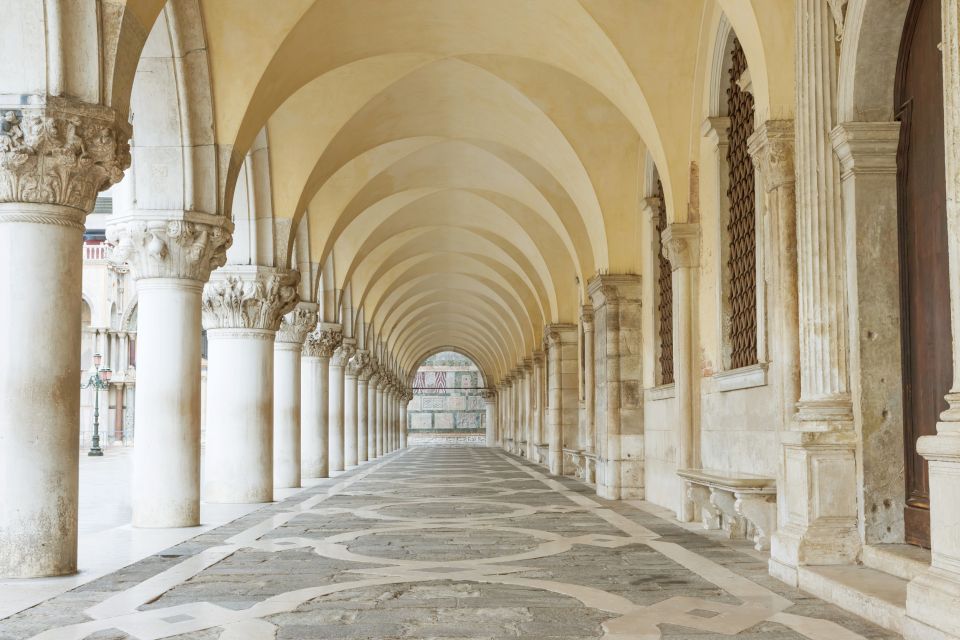
- Fast entry lane at Doge’s Palace using your barcode so you don’t lose an hour to slow queues
- One-ticket access to the three big stops on St. Mark’s Square: Correr Museum, Biblioteca Marciana, and the Archaeological Museum
- Querini Stampalia Foundation as a house-museum style visit, great if you like collections in real spaces
- Scuola Grande dei Carmini included, adding another major Venice site beyond the square
- If you add public transport options, keep extra time for possible water-bus delays and dock-ticket quirks
St. Mark’s City Pass: what you’re really buying in Venice

This pass is for people who want structure without a group tour. You’re not just paying for one famous site. You’re buying a bundle that clusters Venice’s most central, high-demand stops into one ticket.
At its heart, the value comes from two places:
First, Doge’s Palace. It’s one of those Venice landmarks where the line can feel endless, even when you’re visiting in the off-season. Getting directed to a prepaid queue with your barcode changes your day.
Second, you get a tight set of museums and cultural stops that mostly sit in the same general area—especially around St. Mark’s Square. That matters in Venice because walking is easy… until you’re walking uphill, across bridges, then turning around to double-back for a ticket office detail.
You also have flexibility. You can begin at any included attraction, not just the first one listed. That’s useful if you plan to start early near your hotel or if one stop looks too crowded when you arrive.
Just don’t expect the pass to replace a guided storyteller. It’s an entry-ticket bundle. If you want expert commentary or a tour-style narrative, you’ll need to add that separately.
You can also read our reviews of more tours and experiences in Venice.



Using the barcode queue at Doge’s Palace (and why timing matters)
Getting into Doge’s Palace is the main reason most people buy this pass. The process is simple: you head to the prepaid entry ticket queue for Doge’s Palace and show the barcode on your voucher to staff.
That sounds basic, but in Venice “basic” is a gift. You’re not relying on chance timing with standard tickets. You’re using the prebooked lane, which helps you get moving into the palace faster.
Here’s the planning reality to respect: the Doge’s Palace entry time you see when you book might not be the time you end up walking through the door. Some entry rules have shifted, and you should assume there can be delays. Build extra time in your schedule, even if the pass description promises skip-the-line speed.
Also, keep an eye on seasonal hours because last entry is earlier than you might guess. From April 1 to October 31, Doge’s Palace runs 09:00–19:00 with last entry at 18:00. From November 1 to March 31, it runs 09:00–18:00 with last entry at 17:00. If you arrive after the last-entry cutoff, even a prebooked plan can stall.
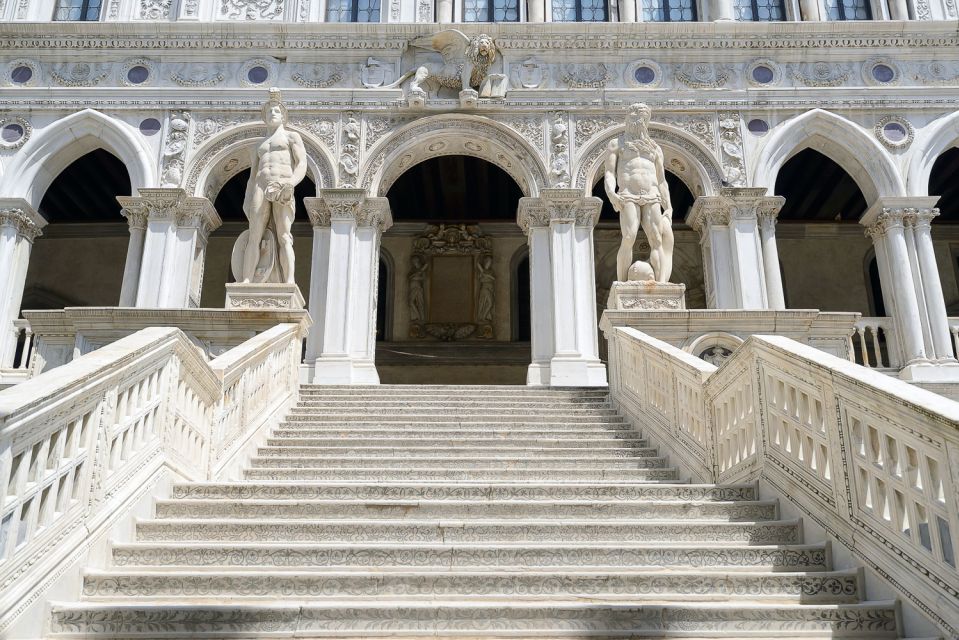
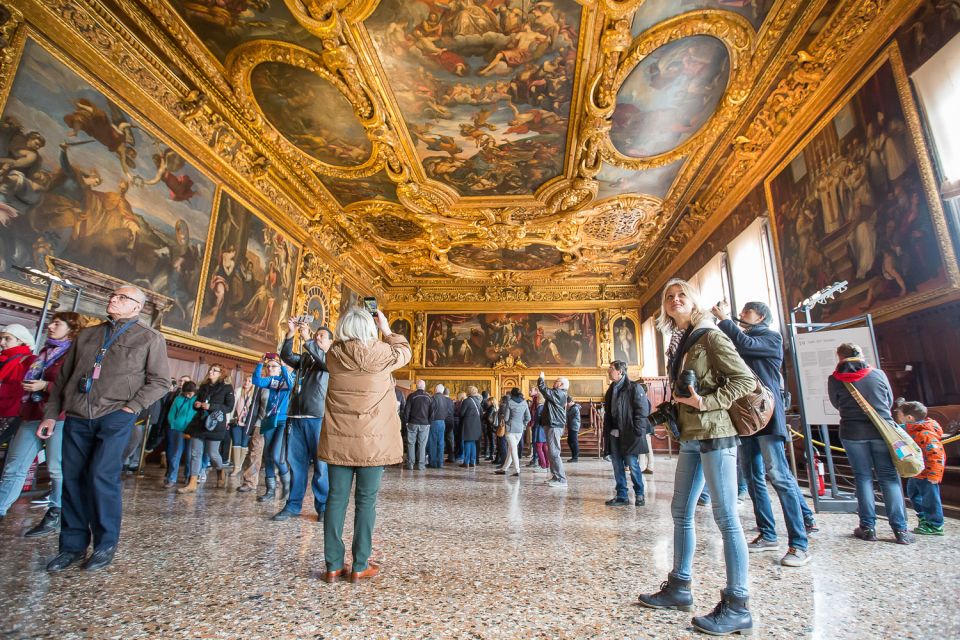
Once you’re inside, Doge’s Palace gives you that Venice “power room” feeling—government space, artwork, and decorative rooms all tied to the city’s old political image. It’s also near one of the best quick photo walks in central Venice.
St. Mark’s Square museums: Correr, Archaeological, and Biblioteca Marciana
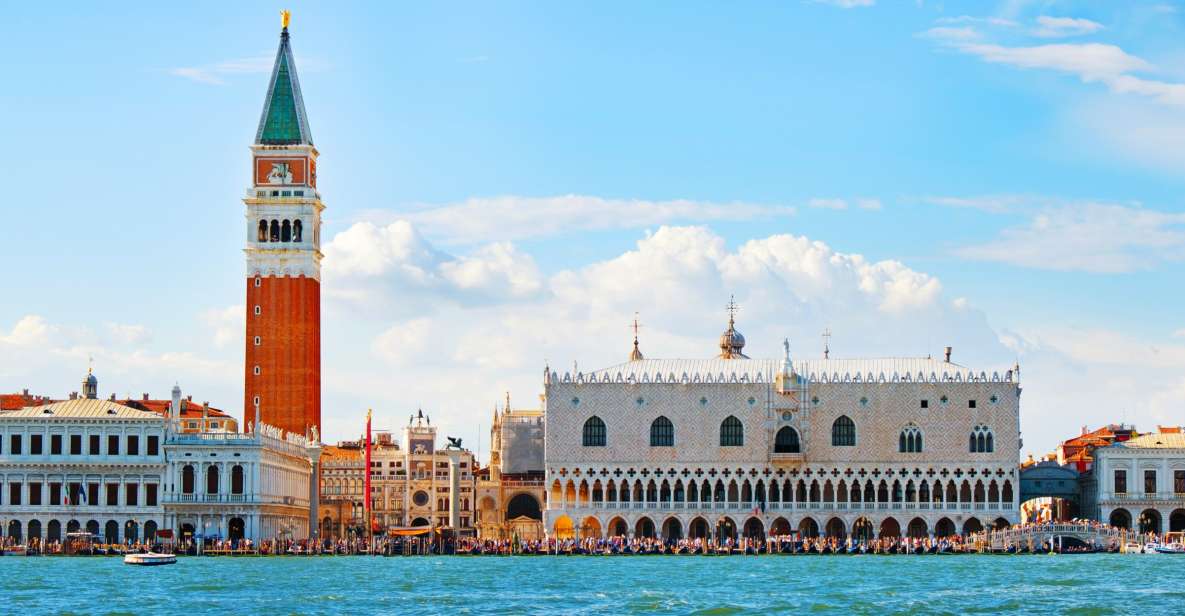
If you only did Doge’s Palace, you’d still have a great Venice day. But the bigger win here is what you can add around St. Mark’s Square without paying for separate entry tickets.
Your pass includes free entry to three major museum stops in this area:
- Correr Museum
- National Archaeological Museum
- Biblioteca Marciana
All three are timed similarly, so you can group your visit without constantly checking whether you’ll miss closing.
During April 1–October 31, these sites are open 10:00–18:00, last entry 17:00. During November 1–March 31, open 10:00–17:00, last entry 16:00.
What I like about doing these as a set is how they balance each other. Correr Museum gives you a sense of Venice’s civic identity. The National Archaeological Museum adds a wider past—stuff that helps you see the city as part of a bigger Mediterranean world. Biblioteca Marciana is a different kind of experience: book culture and the prestige of a major library, which feels more “Venice intellectual” than “Venice scenic.”
You don’t need to sprint. The danger with museum clusters is overstuffing your day until everything blurs. Pick what you care about most:
- If you love city museums and local identity, start with Correr.
- If you want contrast, put the Archaeological Museum second.
- If you like quiet, detailed spaces, save Biblioteca Marciana for a calmer moment.
And if you’re the type who likes to read room-by-room, give yourself more time than you think. These sites are popular, and you’ll feel it in how crowded hallways get during peak hours.
Querini Stampalia Foundation: a house museum stop with real atmosphere
Not all Venice attractions feel the same once you get indoors. The Querini Stampalia Foundation is included here, and that matters because it isn’t just a big-ticket palace.
This is a house-museum style visit—built around a family residence that’s now set up for public view. That format can be more satisfying than a purely institutional museum, because you get a sense of how collections live in a space.
Practically, it’s a smart add-on when you’re trying to break up the day. After Doge’s Palace and the museum cluster on St. Mark’s Square, Querini Stampalia can feel like a breather: still cultural, but less “tour-group crush” and more “walk through someone’s lived world,” at least in spirit.
You also get a time advantage from how this pass works with your schedule. You’re not forced to do everything in a single sitting. Your pass includes entry to these stops, and you can plan them across your visit window.
Scuola Grande dei Carmini: one more Venice icon, no extra ticket
Your pass also includes Scuola Grande dei Carmini entry. That’s a worthwhile inclusion because it adds variety beyond the palace and the museum-heavy St. Mark’s Square area.
Venice is full of ornate civic and religious buildings, and Scuole grandi (big confraternity buildings) are part of what made the city’s culture so visually distinctive. This site gives you another angle on how Venice organized community life and art patronage.
The practical benefit is straightforward: you don’t have to hunt for a standalone ticket. You simply plug it into your day and keep moving.
One more scheduling tip: if you’re doing Scuola Grande and other indoor stops back-to-back, watch your stamina. Venice can look flat until you start crossing bridges with bags, then discover stairs. Build time for short pauses so the last museum of the day doesn’t turn into a blur.






Don’t miss the Bridge of Sighs area during your Doge’s Palace day
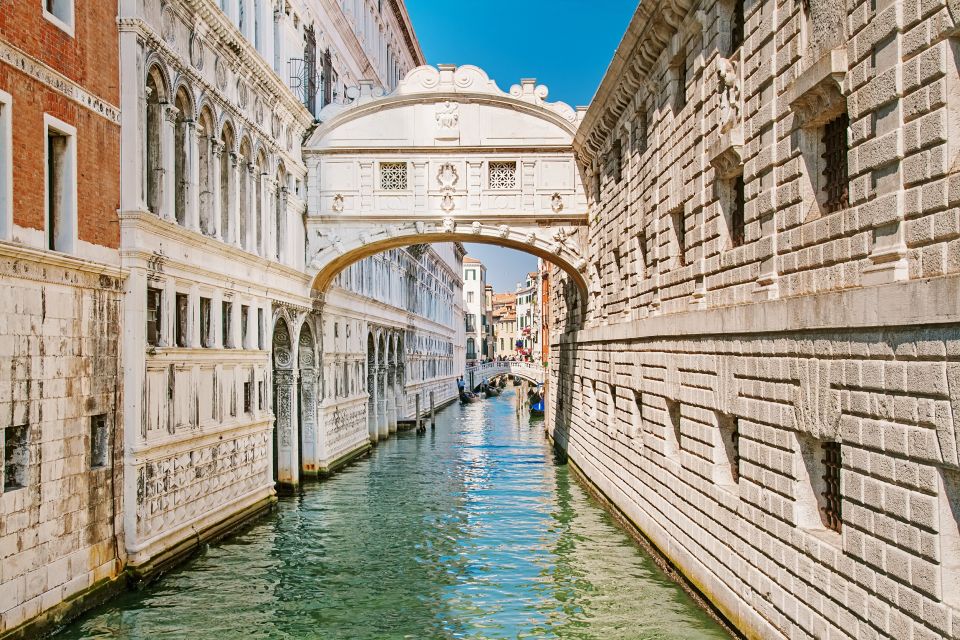
The Bridge of Sighs is part of what makes the Doge’s Palace zone so iconic. Even if your main focus is inside the palace, you’ll want to plan for a quick walk in the surrounding area.
Why? Because the Bridge of Sighs is one of those Venice sights that changes your mental picture of the city. From “wow, buildings” you shift to “wow, stories and architecture built for drama.” The palace setting makes the bridge feel more meaningful than a random photo stop.
Keep it simple: after you enter and settle into your visit, look up directions to the bridge and give yourself time for a couple of photos and a short look around. If your Doge’s Palace entry is delayed, don’t panic. A bridge-side pause can still fit, as long as you didn’t stack every other stop too tightly.
If your pass includes public transport: water-bus tips that save stress
The pass can be booked with options that include public transport. When that’s included in your setup, you’ll likely be using Venice transit systems such as water buses. That can be a real convenience, especially if you’re staying farther from St. Mark’s.
But there’s a practical warning I’d give you: don’t assume every water-bus plan will run smoothly once you reach the dock. One big issue that can happen is long waits where the line doesn’t move as expected. When that happens, people end up walking because time matters more than comfort.
Also, be careful with ticket validity. If your transport ticket gets scanned as used or marked in a way you can’t reverse for a return trip, you might end up buying one-way tickets on the spot. That’s the kind of cost that wipes out any savings you were expecting.
So here’s my advice:
- If you add transport, plan your day so you have a fallback option on foot.
- Give yourself extra time buffers around docks.
- On your return ride attempt, double-check that your ticket is still valid before you commit to the ride.
Venice rewards people who travel with a little flexibility.
How to pace your day: opening hours, last entry, and the 3-month rule

Your pass comes with two time layers:
- It’s valid for 6 months.
- After you use your Doge’s Palace entry, you can visit the other included museums within 3 months.
That’s useful because it means you can spread your St. Mark’s Square and nearby museum visits across more than one trip. Maybe you do Doge’s Palace on Day 1, then come back to the library or Querini Stampalia when crowds feel more manageable.
If you only have a weekend, you can still do it all in a single go. Just respect opening hours:
- Doge’s Palace last entry is 18:00 in summer and 17:00 in winter
- The St. Mark’s Square museums last entry is 17:00 in summer and 16:00 in winter
That last-entry timing is what forces the schedule. You might arrive during open hours but still miss the final slot if you spend too long reading museum labels.
My approach:
Start with Doge’s Palace because it’s the most time-sensitive. Then do 1–2 St. Mark’s Square museums before you hit the last-entry wall. If you still have energy, add Querini Stampalia or Scuola Grande next, or save them for another day to keep the experience enjoyable instead of rushed.
What you’ll like most (and what you might wish was included)
This pass is best if you want efficiency. You’re buying access to multiple major sites in one central area, and that’s especially helpful if you don’t want to spend your vacation time navigating ticket desks and waiting in lines.
The biggest praised aspects from real-world use are the value for money and the time savings at Doge’s Palace. People also like how the pass covers several top stops, which makes it feel like a complete mini-plan for a short Venice trip.
Now the honest trade-offs:
- It’s not a guided tour. You’ll rely on your own curiosity in rooms, so if you love expert storytelling, you may feel like you’re missing context.
- You might also miss major nearby sights not included in this pass. For example, some people wish St. Mark’s Basilica (the church) was included. That’s not part of what’s listed here, so plan on buying that separately if you want it.
- If you’re expecting audio guidance, know that it isn’t listed as included in your pass details here. If your trip planning depends on audio commentary, verify what’s offered on-site before you rely on it.
Bottom line: it’s a strong entry-ticket bundle for independent visitors who like choosing their own pace.
Who should book the St. Mark’s City Pass?
You’ll probably be happy with this pass if:
- You have limited time in Venice and want to prioritize Doge’s Palace plus nearby museums
- You prefer self-guided visits over joining a group
- You like bundling so you don’t spend every morning figuring out tickets
You might rethink it if:
- You want a full-service guided experience with structured explanations throughout
- You care primarily about one single site and don’t want to add museums
- Your plan is heavy on later-day sightseeing where the last-entry times could corner you
Should you book it? My practical recommendation
For most first-timers doing a short Venice stop, I think this pass is a smart buy. At $52 per person, you’re getting bundled access to Doge’s Palace and several major sites clustered around St. Mark’s Square, plus Querini Stampalia Foundation and Scuola Grande dei Carmini. The value comes from saving both money and time—especially at Doge’s Palace, where prebooked entry can stop your day from getting swallowed by lines.
Just book with eyes open. Expect that your Doge’s Palace entry time might not be exactly what you planned for, and if you selected a public transport option, keep buffer for possible dock delays and ticket-validity surprises.
If your goal is a focused Venice highlight day—without hiring a guide—this pass makes it easy to see a lot and still feel like you chose your own route.
FAQ
What attractions are included in the St. Mark’s City Pass?
Your pass includes entry to Doge’s Palace, the Correr Museum, Biblioteca Marciana, and the National Archaeological Museum on St. Mark’s Square, plus Querini Stampalia Foundation and Scuola Grande dei Carmini.
Do I need to take a guided tour?
No. A guided tour is not included.
Where do I start? Do I have to go to one place first?
You can go directly to whichever included attraction you prefer to visit first.
How do I enter Doge’s Palace with the pass?
For Doge’s Palace, head to the prepaid entry ticket queue and show the barcode on your voucher to staff.
What are Doge’s Palace opening hours during summer?
From April 1 to October 31, Doge’s Palace is open 09:00–19:00, with last entry at 18:00.
What are opening hours for the St. Mark’s Square museums?
From April 1 to October 31, Correr Museum, Biblioteca Marciana, and the National Archaeological Museum are open 10:00–18:00, with last entry at 17:00. From November 1 to March 31, they are open 10:00–17:00, with last entry at 16:00.
Is it free for children or disabled visitors?
Yes. Entry is free for children under 6 and for disabled visitors. You’ll need to pick up a free entry ticket from the ticket office upon arrival.
If you want, tell me your travel month and whether you chose the transport option. I can suggest a simple order for your day that fits the opening hours and last-entry times.