REVIEW · AGRIGENTO
Agrigento: Valley of the Temples Skip-the-Line Sunset Tour
Book on GetYourGuide →Operated by Empeeria · Bookable on GetYourGuide
Golden hour makes the stones feel alive.
This Valley of the Temples sunset tour hits the UNESCO site at the moment the temples go from warm sand to glowing icons, and you get skip-the-line entry with a local guide. I like that you see five Doric temples in about two hours, and I also like how the guide keeps the story grounded in what you’re actually standing in front of. One thing to watch: the tour involves more walking than it sounds like on paper, so wear shoes you trust.
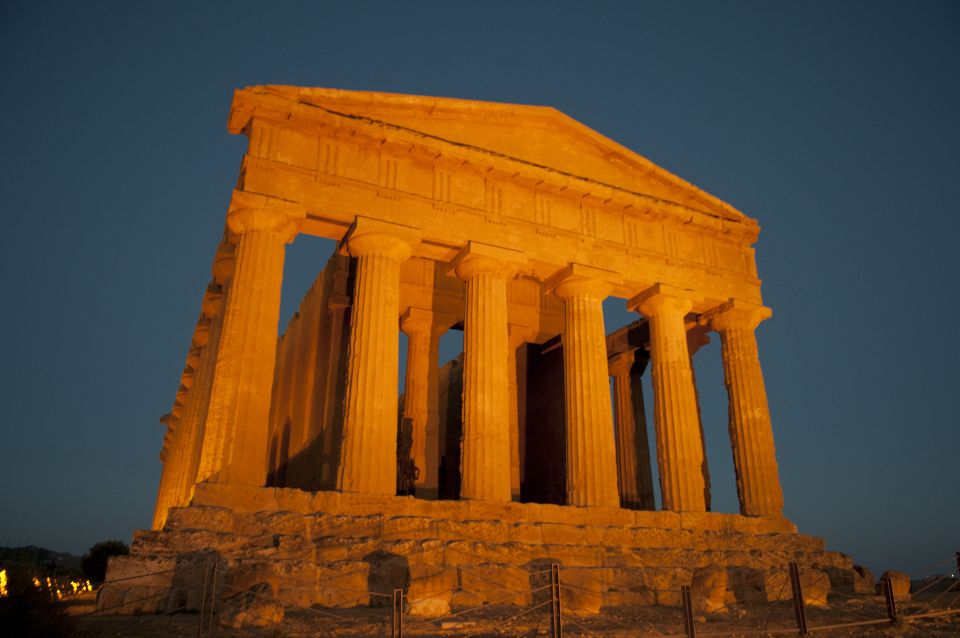
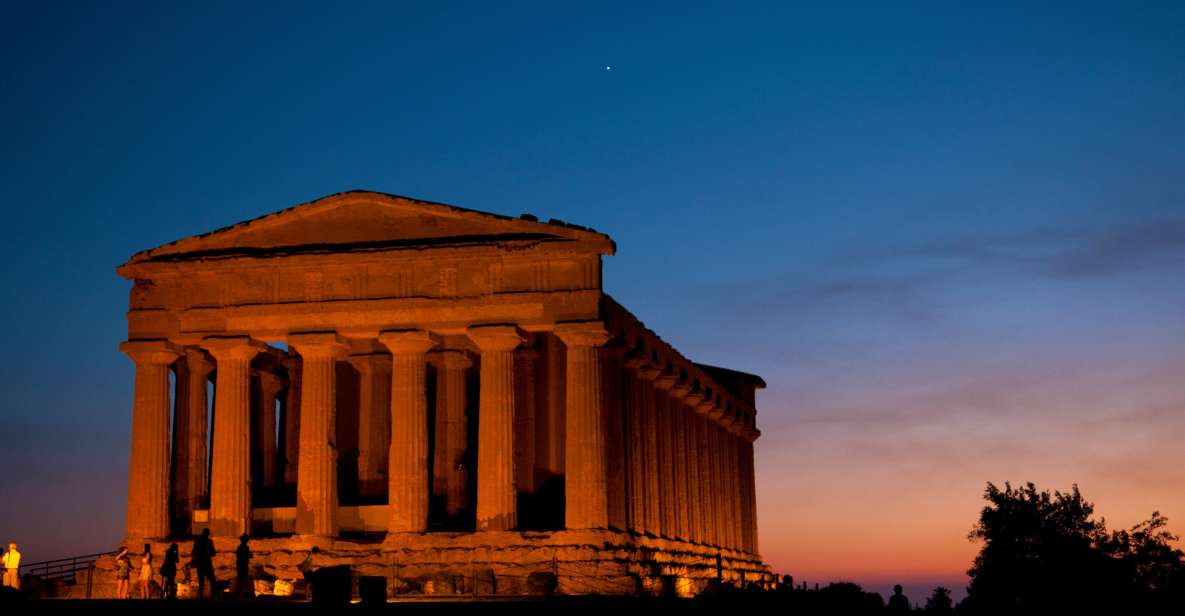
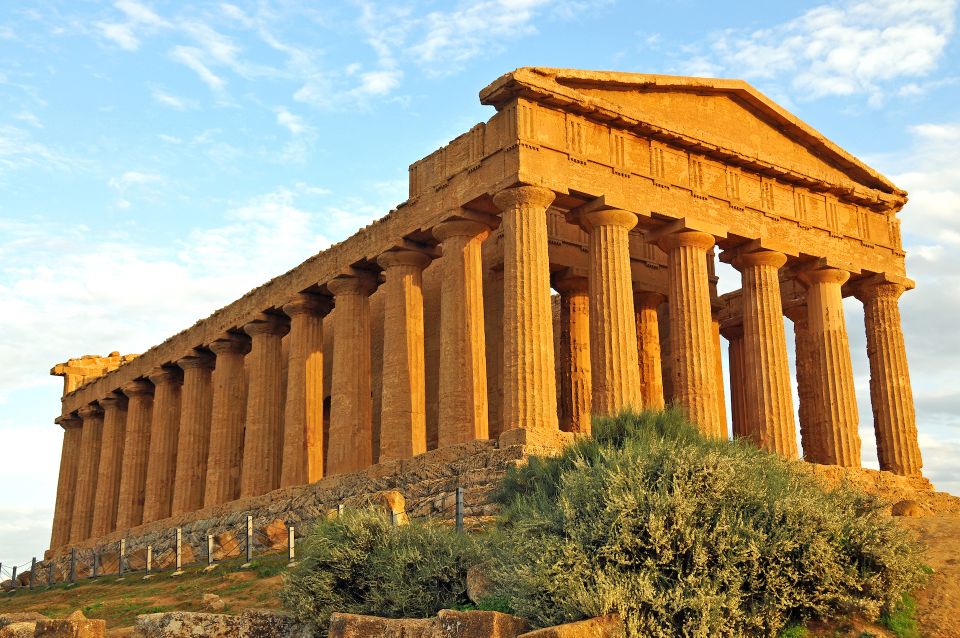
What really sells me on this experience is Temple of Concordia. It’s one of Sicily’s best-preserved Doric temples, dating back to the fifth century, and at sunset it looks almost unreal—straight lines, sharp details, and that famous golden light doing the work for you. Guides can make a difference too; on different departures you may hear from people like Sara or Rosanna, who turn ruins into a clear picture of how the valley worked.
The main drawback is physical. You’re moving between stops on a big archaeological area, and there’s no promise of frequent breaks or shuttling in the info you get. If you’re sensitive to walking time, go in with realistic expectations, bring water, and plan to take it slow when the ground gets uneven.
In This Review
- Quick hits you should know
- Sunset at Agrigento’s temples: why this tour works
- Getting in fast at the Juno Temple entrance
- First stop: the Valley of the Temples as the sun drops
- Temple of Hera Lacinia: the high-spur moment
- Temple of Concordia: the fifth-century star
- Temple of Heracles: Greek myth made physical
- Temple of Olympian Zeus ruins: a self-guided breather
- How much time you truly need: the walking reality
- Price and value: what $51 buys you
- Who should book this sunset tour (and who should skip it)
- Practical tips to get better photos and a calmer visit
- Should you book this sunset tour?
- FAQ
- Where do I meet the guide?
- What’s included in the tour price?
- How long is the tour?
- Do I need to bring anything?
- Is there skip-the-line entry?
- What language will the guide speak?
- Is it wheelchair accessible?
- Can I cancel or book without paying right away?
Quick hits you should know
- Skip-the-line security and entry so you start exploring with less waiting
- Sunset timing means you see the temples in natural light and later with illumination
- Temple of Concordia gets the spotlight as one of the best-preserved Doric temples in Sicily
- Hera Lacinia viewpoint sits on a high spur, giving you one of the valley’s strongest visual angles
- A mix of guided stops and a short self-guided window near the Temple of Olympian Zeus
- You’ll get live narration in Italian and English, switching during the tour
Sunset at Agrigento’s temples: why this tour works
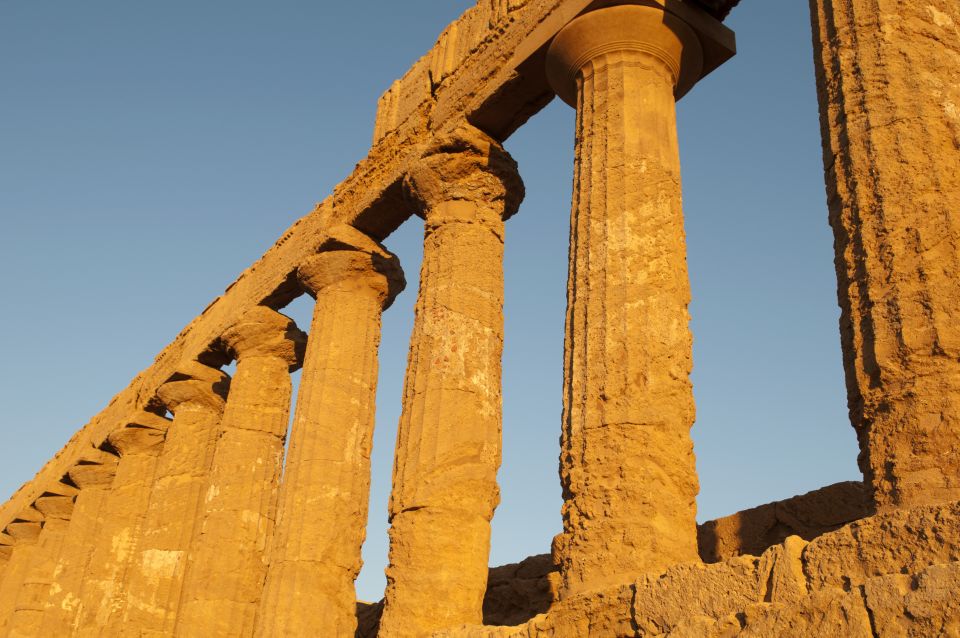
Agrigento’s Valley of the Temples is spectacular in daylight, sure. But sunset is when it gets personal. The temples are built to be seen from long distances, and in late light the stone changes color, texture, and drama all at once. The air feels cooler, and the whole site slows down.
This tour is built around that timing. You meet at the Juno Temple entrance area and start before the sun drops. Then you keep moving temple to temple as light shifts. By the time the sky darkens, you’re watching the valley turn luminous—temples outlined by artificial lighting, with the night sky filling in where the day normally is.
That combination matters because self-guided visiting can be great, but you risk turning everything into background scenery. Here, the guide points out what to look for and why it’s important, and that changes how you remember the place.
You can also read our reviews of more tours and experiences in Agrigento.
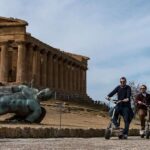
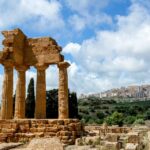
Getting in fast at the Juno Temple entrance
Your starting point is very specific: you meet under an olive tree in front of the Lemonade stand located before the main gate of the Juno Temple entrance. The ticket office reference is Valle dei Templi – Tempio di Giunone. In other words, don’t wander into the wrong gate and hope you can fix it later.
The tour also includes entry ticketing provided by the guide at the meeting point. That’s helpful because it removes one common hassle, but it also means timing matters. You’re told to arrive 30 minutes before the start. If you show up late, you won’t be able to join the guided portion because the ticket is valid only at the start time.
Plan for security too. Everyone passes airport-style security, and in high season the wait at security may reach up to 30 minutes. If you’re the type who likes to arrive and linger before an event, this is one place where early beats calm.
First stop: the Valley of the Temples as the sun drops
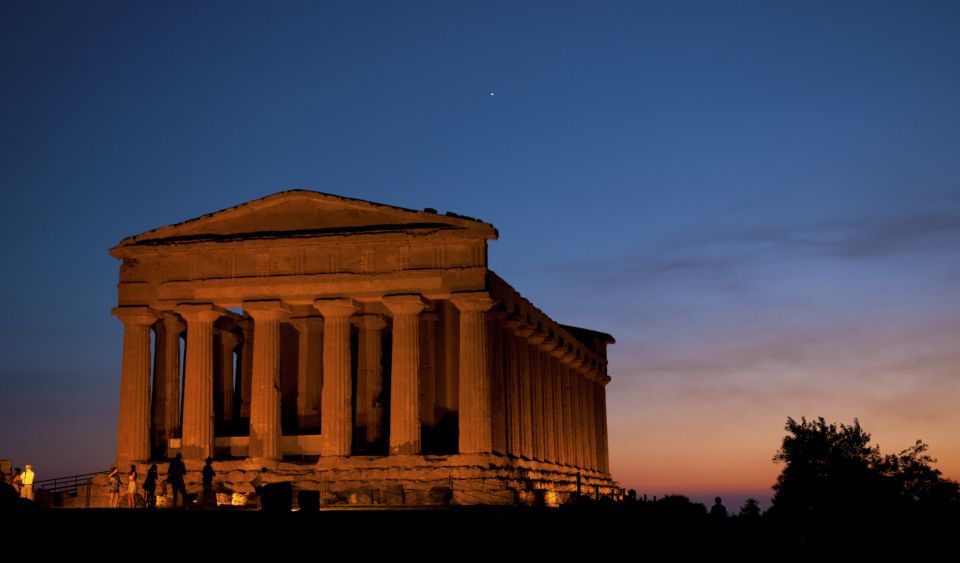
The tour kicks off with a guided walk through the valley area, described as about 30 minutes of sightseeing on the plateau. This early segment is where you get your bearings fast: where the temples sit, how the sightlines work, and what the site’s layout means.
It also sets your expectations for what comes next. The valley is a UNESCO World Heritage Site, and the temples you’re about to see are largely Doric and connected to the Hellenic period. That’s not just academic. When you understand the design logic, you stop seeing isolated columns and start seeing a whole plan.
During this opening time, you’ll follow the guide and start picking out standout structures. One key moment comes next: you’ll go toward Hera Lacinia.
Temple of Hera Lacinia: the high-spur moment
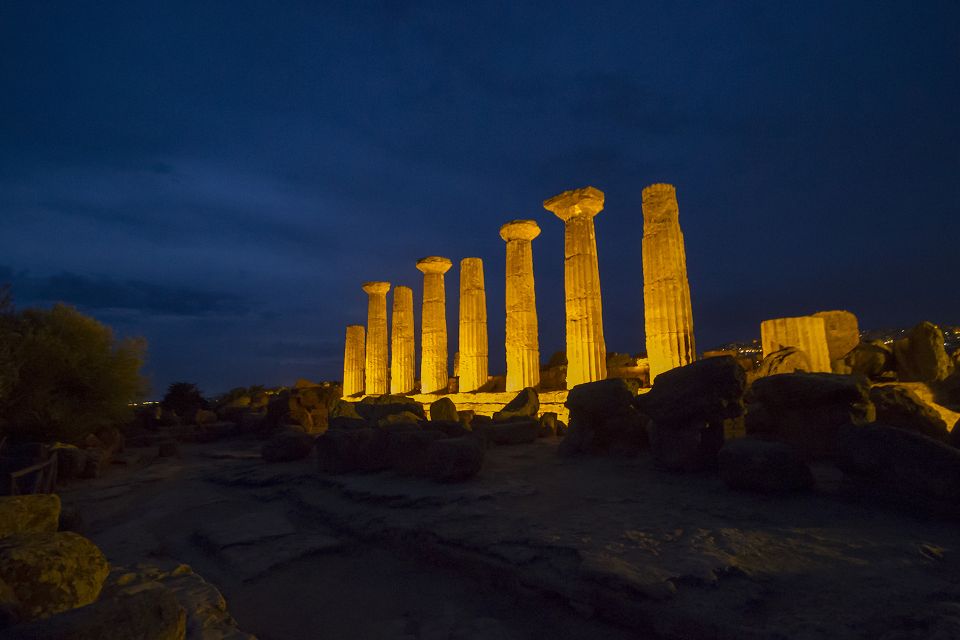
After you start exploring, the tour takes you to Temple of Hera Lacinia, perched on a high spur at the most easterly point of the valley. This is a big reason sunset tours feel better than daytime tours: from that elevated angle, the light is more dramatic and the valley feels more layered.
You’ll likely notice how the valley opens up behind you and how the temple’s position makes it act like a marker in the landscape. If you care about composition—lines, spacing, viewpoints—this stop delivers.
And it’s also a good place to slow down. The light changes quickly, and this is the sort of view where a minute of patience can mean a better photo and a clearer mental snapshot.
Temple of Concordia: the fifth-century star
Then you move on to the stop that tends to make people smile: Temple of Concordia. The tour gives it about 30 minutes, including guided explanation, sightseeing, and time to look around.
This is one of the best-preserved Doric temples in Sicily, and the building dates back to the fifth century. In practical terms, that means you don’t feel like you’re squinting at guesswork. You can see structure and detail. You can trace how the temple was designed to communicate order and power.
Sunset makes the difference. The temple’s pale stone takes on a warmer tone, and the shadows in the column spaces get longer. It’s easier to understand why the ancients chose these materials and these proportions.
A useful tip: let the guide talk first, then look again. Early on, people tend to watch the guide and miss small architectural details. Do both. The guide’s context helps you see what you might otherwise overlook.
If you’re lucky with your guide, you’ll get strong storytelling here. Different departures may have different voices—names you might see on bookings include Sara, Rosanna, Liz, and Alessio—but the goal stays the same: turn the temple from a photo into a place with meaning.

Temple of Heracles: Greek myth made physical
Next is Temple of Heracles, also scheduled for about 30 minutes. This stop continues the story while adding variety. You’re no longer looking at the most perfectly preserved building; you’re dealing with a temple space that helps show how the valley functioned as a religious and civic area across time.
Even when parts are in ruins, the site still communicates. The guide can point out what survives, what’s missing, and what that tells you. It’s one of those moments where you realize history isn’t just dates—it’s physical evidence you can stand next to.
If your group likes questions, this is a good moment to ask. The questions tend to focus on how the Greeks thought about gods, architecture, and community life—and the guide has plenty of material to connect those dots.
Temple of Olympian Zeus ruins: a self-guided breather
Finally, you reach Temple of Olympian Zeus, which gets about 30 minutes with guided content plus a self-guided window. That blend matters. You get the framing from the guide, then you get time to look without having to keep pace.
This is where you see ruins more than a fully intact temple. The tour info specifically points to the ruins of Zeus here, so don’t expect the same kind of crisp preservation as Concordia. Instead, treat this stop as an exercise in reading the site: what’s left, what the shape suggests, and how the temple’s scale would have dominated the valley in its original form.
If you want photos, this is also one of the most practical times to slow down. The guide has already set the stage, so you can spend your self-guided time framing your shots and lingering a bit.
How much time you truly need: the walking reality
This is a 2-hour tour, but it’s not a sit-and-watch experience. The pace is timed for multiple temple stops, and you’ll do real walking between them.
That can feel totally fine if you travel light and move regularly. It can be annoying if you’re used to slow museum tempos or if heat and sun have already drained you earlier in the day.
Here’s how to make it easier:
- Bring comfortable shoes. The ground can be uneven and the walk is part of the deal.
- Bring water and use it. The tour is shorter than a full day, but you’re still out in open air.
- Dress for sun even though it’s a sunset tour. Start time is before full darkness, and the info calls out bringing sun hat and sunscreen.
One small planning note: the security wait can eat into your early margin, so don’t show up with zero cushion.
Price and value: what $51 buys you
At $51 per person for a two-hour guided sunset visit, this tour is priced like a convenience plus interpretation combo. You’re paying for two things:
1) Skip-the-line entry through express security and ticketing at the meeting point.
2) A live guide who helps you connect what you see to what it meant.
If you try to do it alone, you can absolutely visit the valley. But you might spend a lot of time figuring out what you’re looking at. Here, you get five temples, guided context, and the best light window without needing to build a game plan.
The fact that you also get a bit of self-guided time near Olympian Zeus makes it feel fair. You get explanation, then you get breathing room.
In plain terms: if you care about understanding the site, the price feels reasonable. If you only want photos and don’t care about interpretation, you might decide you’d rather save money and go unguided.
Who should book this sunset tour (and who should skip it)
I think this tour suits you best if you:
- Want the Valley of the Temples without the stress of figuring out the story on your own
- Like golden-hour photography and don’t want to fight the hardest midday heat
- Enjoy guides who connect architecture to daily life and religion, not just dates on a board
You might want to reconsider if:
- Walking is a problem for you, since the tour can feel more demanding than expected for a 2-hour format
- You need strict single-language narration the entire time. The tour is carried out with live guide narration in Italian and English, and the info notes the switch between languages during the experience. Some people find that tiring.
There’s also a wording conflict in the materials: the activity lists wheelchair accessibility, but it also says it is not suitable for wheelchair users. If mobility is a concern, you’ll want to clarify directly with the provider before booking.
Practical tips to get better photos and a calmer visit
Sunset tours are popular for a reason, so crowding is part of the reality at any UNESCO site. You can still make it smoother with a few habits:
- Arrive early and stick to the meeting instructions. You’re told not to arrive late because the guided entry time is strict.
- Take one guided moment, then reset. Let the guide explain at each major stop, then do a quick solo walk-around for photos and angles.
- Use the light shift. When you reach Concordia, plan to shoot from a couple distances: one set showing the temple’s scale and another set focusing on column rhythm.
- After the sun drops, expect twilight walking. If you’re driving, one practical suggestion you’ll see from previous visitors is leaving your car near the meeting point parking to make the walk back easier.
Should you book this sunset tour?
Yes, I’d book it if you want the Valley of the Temples to feel like a living place rather than a pile of ancient columns. The sunset timing, skip-the-line entry, and the structured route through five Doric temples make it a strong way to see the highlights without wasting time.
Skip (or reconsider) if you strongly dislike walking or you know you’ll struggle with the Italian/English switching during narration. And if accessibility is a factor for you, double-check the wheelchair suitability because the provided details conflict.
FAQ
Where do I meet the guide?
Meet under the olive tree in front of the Lemonade stand located before the main gate of the Juno Temple entrance (the ticket office area is Valle dei Templi – Tempio di Giunone).
What’s included in the tour price?
Your ticket entry and a live guided tour are included.
How long is the tour?
The tour runs for 2 hours.
Do I need to bring anything?
Bring comfortable shoes, a sun hat, sunscreen, and water. Also dress for the weather.
Is there skip-the-line entry?
Yes. The tour includes express security and skip-the-line entry.
What language will the guide speak?
The live guide provides narration in Italian and English.
Is it wheelchair accessible?
The activity information includes wheelchair accessibility, but it also lists that it is not suitable for wheelchair users. You should confirm suitability directly before booking.
Can I cancel or book without paying right away?
You can cancel up to 24 hours in advance for a full refund, and there is a reserve now & pay later option.