REVIEW · CATANIA
Benedictine Monastery of Catania – English Guided Tour
Book on GetYourGuide →Operated by Officine Culturali · Bookable on GetYourGuide
Catania hides 2,000 years under one roof. This English-guided walk through the Benedictine Monastery of San Nicolò l’Arena is a fast way to see cloisters, kitchens, Roman remains, and a working university library. I particularly love the late baroque scale—it hits you before you even understand the full timeline.
The other reason I’d put this tour on your Catania list is the guide energy. People running these tours (like Carmen, Giovanni, and Nicola) tend to keep the story clear and funny while answering questions without rushing. You’ll also get access to areas that are usually off-limits, but one possible catch is that you might not reach every viewpoint (like a viewing platform) on every time slot.
In This Review
- Key points to know before you go
- First impressions at San Nicolò l’Arena (and how to start without stress)
- The baroque heart: cloisters, corridors, and the monumental staircase
- What you see under the monastery: Roman houses and continuity in one view
- The novice’s garden: a quieter pause inside big power
- The kitchen and dining rooms: where wealth becomes everyday life
- The lava cellar and the 16th-century basement story
- The library connection: UNICT’s Department of Humanities in a former monastery
- Restoration and the architects you’ll hear about (Vaccarini and De Carlo)
- Price and value: what $11 buys in real-world access
- Who should book this tour (and who might want to skip)
- Quick tips to make your 75 minutes count
- Should you book the English Guided Tour at the Benedictine Monastery?
- FAQ
- How long is the Benedictine Monastery of Catania English guided tour?
- What language is the tour in?
- What areas of the monastery will I visit?
- Where is the meeting point?
- Is the tour wheelchair accessible, and what’s included?
- Can I cancel or pay later?
Key points to know before you go
- Two cloisters with a real sense of how monastic life worked
- Roman houses visible under a modern mezzanine used by students
- One of Sicily’s standout libraries in the monastery complex
- A 16th-century cellar connected to a cellar system built on lava
- 18th-century kitchens and cellars, plus dining rooms you can actually picture yourself in
- The tour rhythm stays lively, helped by guides such as Carmen, Giovanni, and Nicola
First impressions at San Nicolò l’Arena (and how to start without stress)
The Benedictine Monastery of Catania, tied to San Nicolò l’Arena, can feel like one of those places you’d otherwise miss because it doesn’t scream from the street. With an English guided tour, you get the fast orientation most people need. You start by finding the info point just after the main gate on Piazza Dante—easy to spot if you walk in with a little structure.
Once inside, the atmosphere is part history, part campus. That mix matters: this isn’t a sealed museum stage. It’s a huge complex that has been adapted over time, including for university use. So as you walk, you’re not only looking at architecture—you’re watching different eras borrow the same spaces.
A big part of the appeal is that the tour is designed to move you through the monastery’s key zones in about 75 minutes. Short enough to fit into a day in Catania, but long enough that you’re not just skimming the highlights.
You can also read our reviews of more tours and experiences in Catania.



The baroque heart: cloisters, corridors, and the monumental staircase
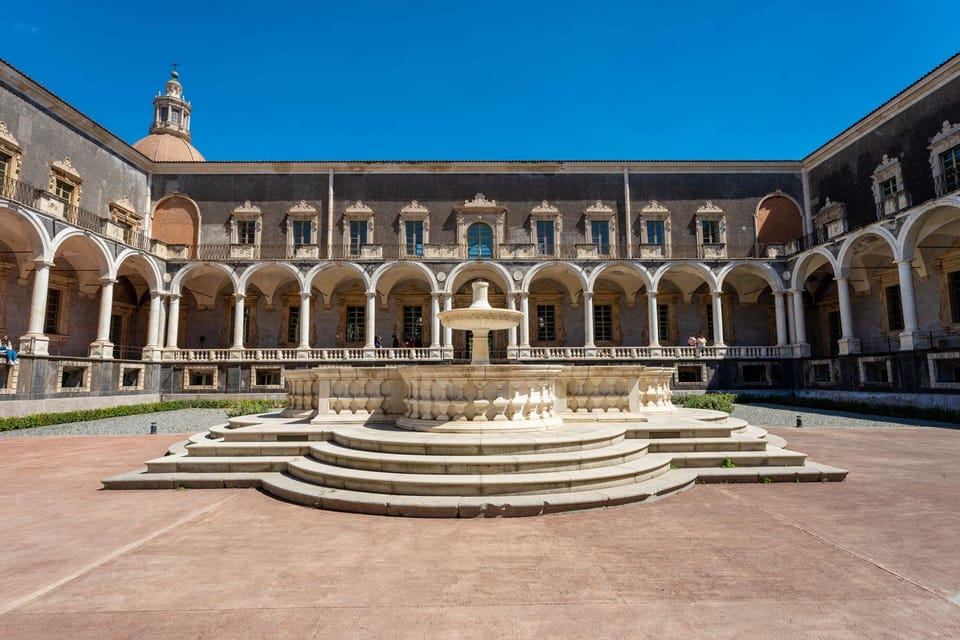
If you’re drawn to churches and monasteries for their layout—how power, routine, and beauty were arranged—this section is your payoff. The tour focuses on the complex’s cloisters and the connective spaces that make the monastery feel like a maze (in a good way). You’ll see two cloisters, which is crucial because they help you understand how the monastery organized movement and daily life around enclosed open-air courtyards.
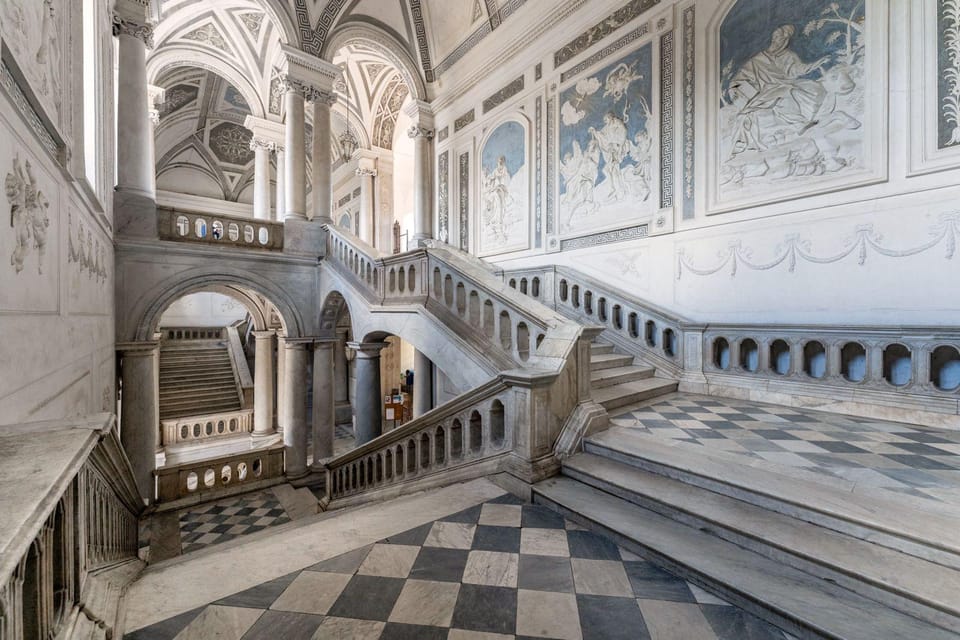
Then comes the monumental staircase and the sense of height and scale you’d expect from a major monastery. This is where late baroque design does its job: it makes plain vertical space feel theatrical. Even if baroque details aren’t your main interest, the size helps you grasp why the Benedictines held real influence here.
Practical note: wear comfortable shoes. Even though the walk is not described as long, you’re moving through corridors and changing levels. The experience works best when your body keeps up with your eyes.
What you see under the monastery: Roman houses and continuity in one view
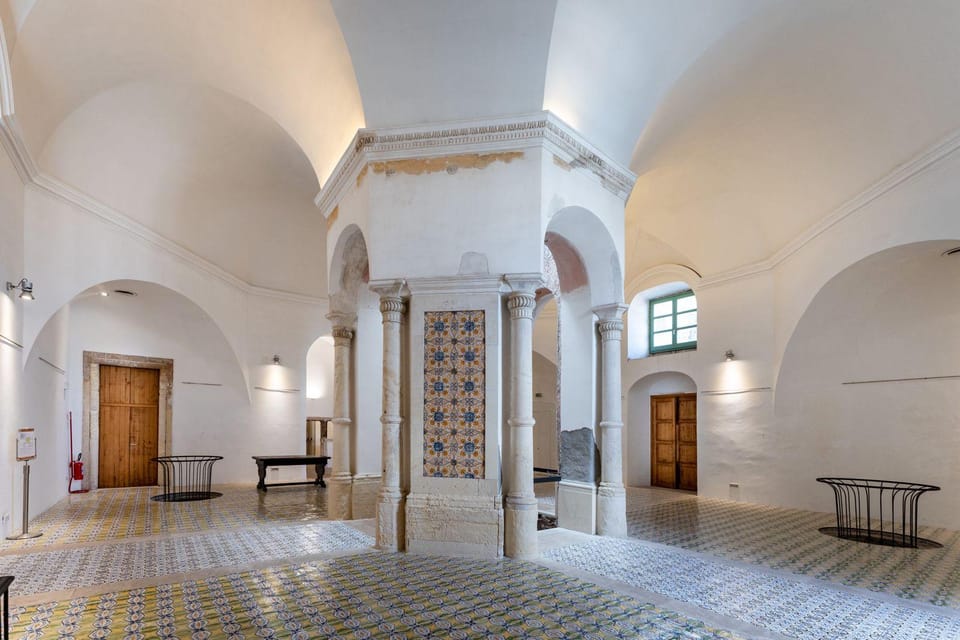
One of the smartest parts of this tour is that it doesn’t treat the monastery as the first chapter. You’ll pass by Roman houses that are visible right under a modern mezzanine—currently used by students as part of the monastery’s library setup. That layering is the point.
It’s a great example of how Catania’s built environment keeps recycling space. You’re not only learning what lived here; you’re learning how later builders reused what was already under their feet. That makes the story stick in your head, because the building itself acts like an archive.
If you like archaeology but don’t want a long, separate excavation visit, this is a very efficient way to get that feeling of time stacking up. And because you’re under and around the monastery structure, it can also feel cooler than street level in warmer months.
The novice’s garden: a quieter pause inside big power
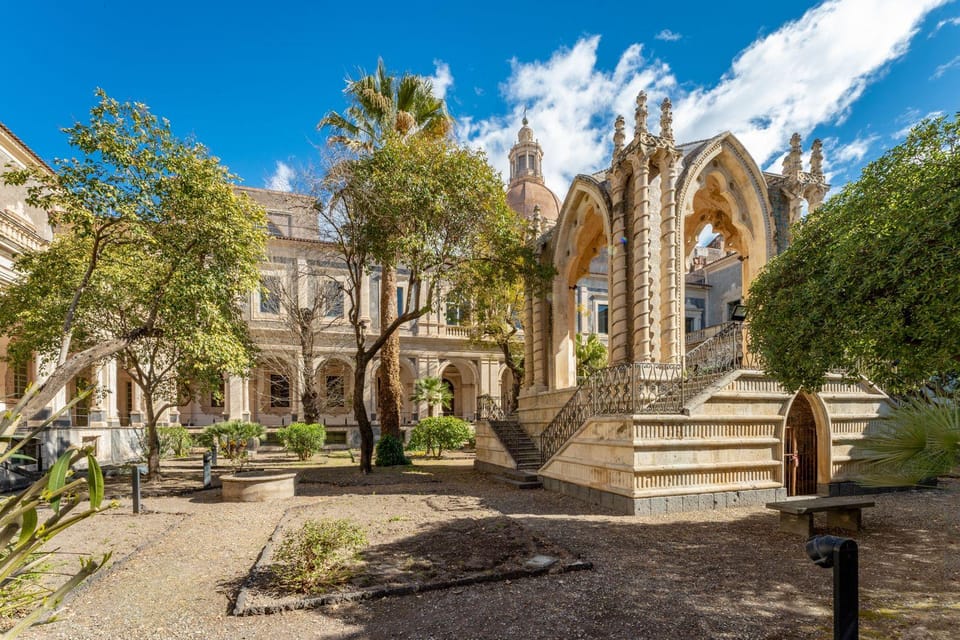
Not everything in a monastery complex is about grand spaces. The tour includes the Garden of the Novices, and this stop gives you a different kind of perspective. It’s a change of pace from staircases and formal rooms. Instead of being impressed by scale, you start thinking about training, routine, and the early stages of monastic life.
Even if the garden itself is not enormous, it helps you read the monastery as a place of formation—not just a place that stored wealth and architecture. That shift is why I think this tour feels more meaningful than a simple exterior-and-facts visit.
The kitchen and dining rooms: where wealth becomes everyday life
The Benedictines were not only prayer and study. They were also managers of resources. That’s why the 18th-century kitchens and related spaces matter. You’ll be guided through areas that let you visualize how meals were handled and how daily operations worked inside a large religious community.
This section is especially valuable if you like material culture: tools, service flow, and how function gets built into rooms. It’s also one of the best parts of the tour for “I can picture it” thinking. Even without living in the monastery, you can imagine the movement: cooking, serving, and dining in a setting designed for a big institutional life.
And because this is a guided tour with curated access, you’re not guessing what you’re looking at. The guide helps connect the rooms to the order of monastery life.






The lava cellar and the 16th-century basement story
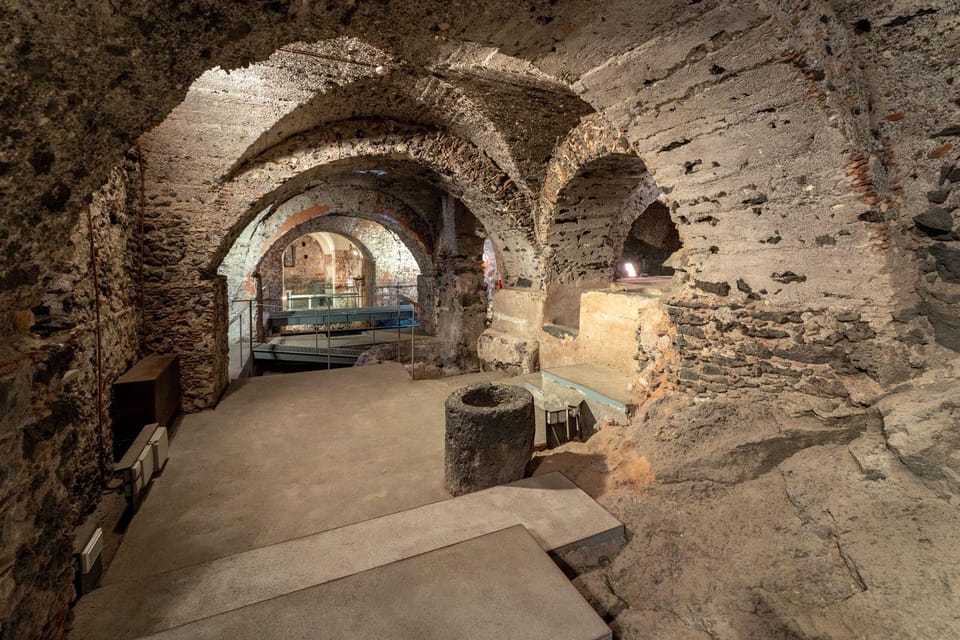
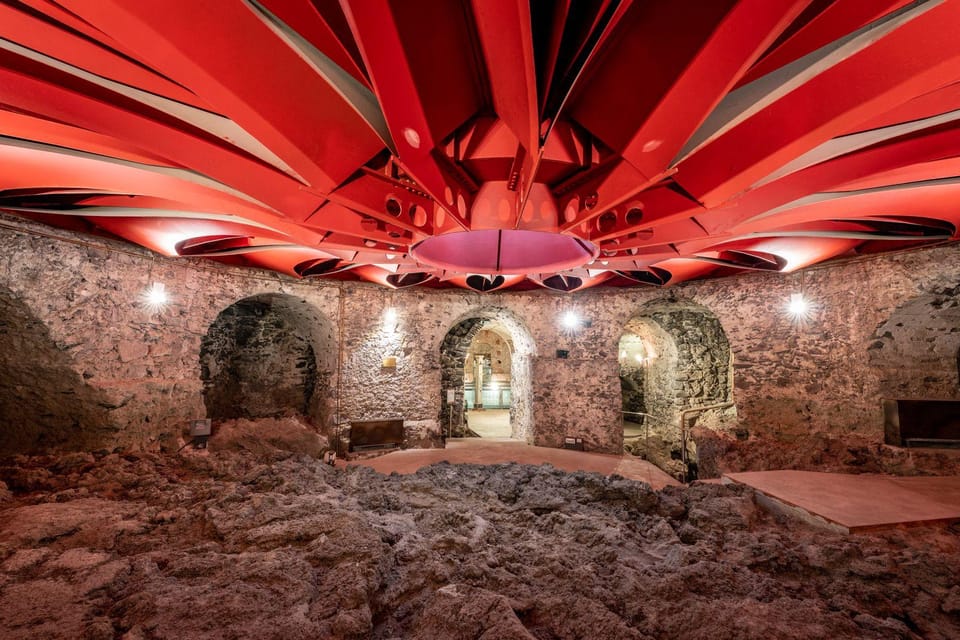
Sicily has lava. Catania has lava everywhere—including under places people didn’t plan to build into volcanic history. This tour leads you to a cellar built on the lava, alongside the 16th-century cellar now used for library functions.
What makes this stop stand out is the contrast. You’re in an environment shaped by geology and past rebuilding, but today it has a new job: learning. The tour’s emphasis on the cellar system helps you connect restoration and adaptation to something physical, not theoretical.
If you’re visiting in warmer weather, underground spaces can feel like a relief. One visitor even described the bottom floor as refreshing—so if you tend to overheat on walking days, this portion can be a smart pacing strategy.
The library connection: UNICT’s Department of Humanities in a former monastery
A major reason this tour earns repeat interest is what’s happening in the monastery today. You’ll see a key library space associated with the Department of Humanities (UNICT)—one of Sicily’s important libraries.
This is where the experience becomes more than sightseeing. Seeing modern students using spaces created for centuries-old rhythms changes how you read the architecture. You’re not only admiring restoration efforts; you’re watching the building earn its upkeep through real use.
Also, the tour doesn’t just toss you into a single room. You get the context of how different levels relate: Roman remains beneath, study spaces in between, and older cellar areas woven into the overall monastery layout. That vertical storytelling is a big part of why the time feels well spent.
Restoration and the architects you’ll hear about (Vaccarini and De Carlo)
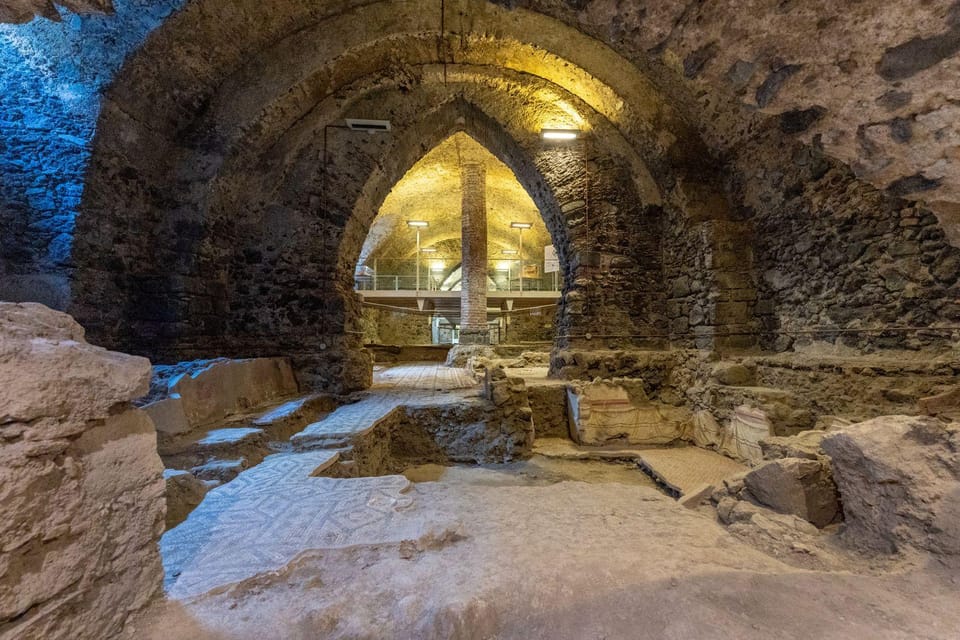
The monastery hasn’t simply survived. It’s been restored, and the guide story matters here. You’ll hear that restoration took more than 30 years, which gives you a sense of scale and patience. Big restoration projects don’t happen quickly, and that’s visible in the way spaces have been stabilized and adapted.
You’ll also hear about major architectural contributions. The tour references the architect Vaccarini—linked to the monastery’s great decorative and structural elements—and it highlights a contemporary refurbishment tied to Giancarlo De Carlo. The result is that you’re not looking at baroque ornament in isolation. You’re seeing an ongoing conversation between centuries: what to preserve, what to reinforce, and what to repurpose so the complex can keep functioning.
This is a good stop for anyone who dislikes overly romantic history. It’s practical restoration history, expressed through spaces you can walk through.
Price and value: what $11 buys in real-world access
At about $11 per person for a 75-minute guided visit, this tour offers strong value in a very specific way: access. You get access to the monastery including parts not normally accessible, plus a live English guide, plus baggage storage at the meeting point.
That combination matters more than you might think. A monastery like this is too big to read alone. The price isn’t only paying for facts; it’s paying for interpretation and for entry into the less-obvious rooms—like the library-related cellar spaces and the Roman-house visibility beneath modern structures.
If you’re on a tight Catania schedule, this is also a good “high signal” option. You can see multiple eras—Roman, medieval-era monastic life, baroque grandeur, and today’s UNICT use—without spending half your day on travel between separate attractions.
Who should book this tour (and who might want to skip)
This experience is ideal if you:
- Like architecture and want to understand layout, not just decoration
- Enjoy cultural sites that are still in use, not fully sealed off
- Want a short guided hit that connects archaeology, baroque design, and modern education
- Feel more comfortable learning with an English guide in a complex site
You might reconsider if you:
- Only care about exterior views (because the main payoff is interior access and guided context)
- Are looking for a long, independent wander without structure
- Need guaranteed access to every viewpoint, since some extra viewing areas may vary by time slot
Quick tips to make your 75 minutes count
- Expect stairs and corridors. Comfortable shoes are a must.
- Bring a curious mindset. The tour’s story is built on how rooms connect to each other.
- If you’re sensitive to heat, prioritize the underground cellar portions during warmer hours.
- If you want souvenir shopping, allow a few minutes near the end; there’s a shop on-site that’s often appreciated for its design.
Should you book the English Guided Tour at the Benedictine Monastery?
I’d book it for most first-time visitors to Catania. For a modest price, you get exactly what you want from a guided visit in a big, layered site: context, access to spaces that are usually closed, and a clear link between the monastery’s Roman foundations, baroque grandeur, and today’s university life.
If you’re the type who likes to understand how a place works—physically and historically—this tour gives you that in a tight window. And if you like humor and easy conversation, guides such as Carmen, Giovanni, and Nicola are the reason people walk out feeling they didn’t just see rooms; they understood them.
FAQ
How long is the Benedictine Monastery of Catania English guided tour?
The tour lasts 75 minutes.
What language is the tour in?
The live tour guide speaks English. If English is not your main language, written translations in French or Spanish can be provided.
What areas of the monastery will I visit?
You’ll visit highlights such as the two cloisters, the novices’ garden, the kitchen and dining rooms, the 18th-century kitchens and cellars, the monumental staircase, Roman houses visible under a modern mezzanine, and an important library connected to the Department of Humanities (UNICT). The tour also includes the 16th-century cellar now used as a library space.
Where is the meeting point?
Meet at the info point in the courtyard on the right, as soon as you pass the main gate on Piazza Dante.
Is the tour wheelchair accessible, and what’s included?
Yes, it’s wheelchair accessible. The tour includes access to the monastery (including parts not normally accessible), a guide, and baggage storage at the meeting point.
Can I cancel or pay later?
Yes. Free cancellation is available up to 24 hours in advance for a full refund, and there is also a reserve now & pay later option.