REVIEW · VENICE
Doge’s Palace Skip-the-Line Guided Tour
Book on GetYourGuide →Operated by Venetoinside - Insidecom · Bookable on GetYourGuide
A palace with real bite—and real politics. This guided, skip-the-line visit to Doge’s Palace (Palazzo Ducale) is one of the fastest ways to understand how Venice ran itself. You’ll move through the most famous rooms and symbols of power, with the guide connecting art, architecture, and courtroom drama into one clear story.
I especially like two things: the skip-the-line entry, which matters in peak Venice crowds, and the way the tour points out the art and details most people miss on their own. You’ll get the story behind the Doge’s residence, including standout stops tied to famous works and the palace’s iconic layout.
One thing to consider: sound can be tricky. Even with provided audio equipment, crowd noise and headset setup have made it harder for some people to catch every word, so keep your expectations realistic in busy moments.
In This Review
- Key highlights worth showing up for
- Why Doge’s Palace feels different with a guide
- Your start point: Calle larga de l’Ascension (and how to find it fast)
- The fast-track ticket: what you gain (and what you should still expect)
- Inside Palazzo Ducale: what your guided hour really covers
- Venetian Gothic power: Doge’s residence and the state behind the walls
- Courtyards and staircases: Giants’ Staircase to the Golden Staircase
- Statues and waiting rooms: where authority was felt
- The Opera Museum: the palace’s carved message in stone
- Bridge of Sighs (from the inside) and the prison connection
- The optional add-on: Museo Correr (ticket included)
- Who this tour is best for (and who should skip it)
- Price and value: is $79 worth it?
- Practical tips that make the visit smoother
- Should you book this Doge’s Palace skip-the-line guided tour?
- FAQ
- How long is the Doge’s Palace guided tour?
- Where do I meet the guide or staff?
- What’s included with the ticket?
- Are hotel pickup and drop-off included?
- What languages are the live guides available in?
- Do I need to bring a voucher?
- Is there free cancellation?
- Can I pay later?
- Is the tour accessible for wheelchairs or limited mobility?
Key highlights worth showing up for
- Fast-track entry to Palazzo Ducale so you’re not stuck in the long ticket queue
- Guided walkthrough of the Doge’s power space, not a random wander through rooms
- Art and symbolism you can actually place by the names you hear most often in Venice: Titian, Veronese, Tintoretto
- Big-picture stops like the Golden Staircase, statues of Atlas and Hercules, and the Bridge of Sighs
- Opera Museum viewing with 14th-century capitals mixing sacred and profane themes
- Optional Museo Correr ticket included, handy if you want more context after the palace
Why Doge’s Palace feels different with a guide
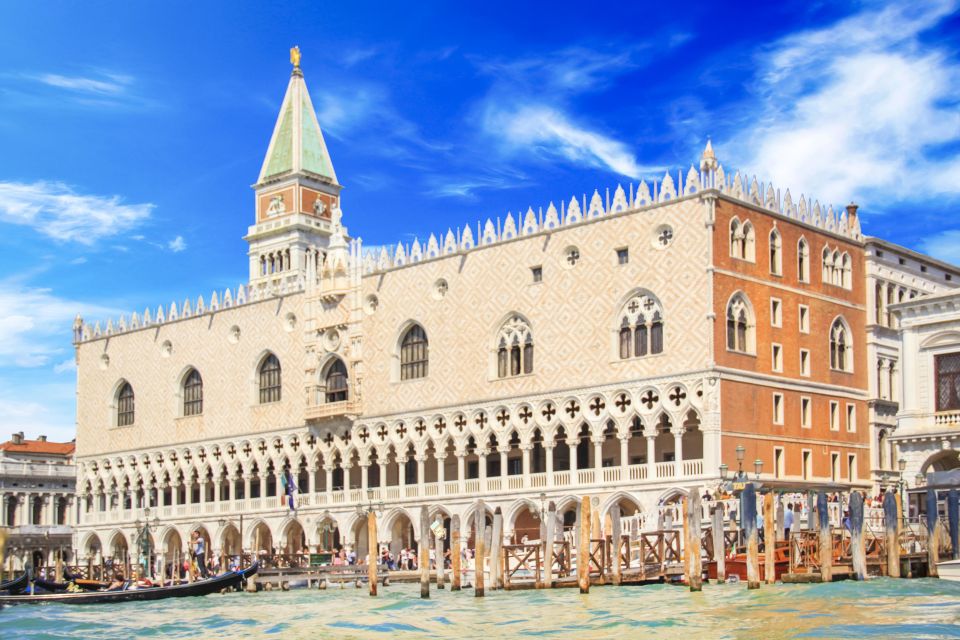
Doge’s Palace is one of those Venice sights where the building is spectacular, but the meaning can be slippery. The guide turns it into a timeline you can follow: who the Doges were, what Venice valued, and how the state used art and architecture to project authority. You don’t need to be a history buff—you just need someone to point out what you’re looking at.
The palace also helps you “read” Venice in a new way. Venice wasn’t just romance and canals. It was courts, councils, punishment, propaganda, and spectacle—packed into one Gothic complex right by St. Mark’s. When the guide explains how spaces connect, the palace stops feeling like a museum and starts feeling like a machine that ran the Republic.
You can also read our reviews of more tours and experiences in Venice.



Your start point: Calle larga de l’Ascension (and how to find it fast)
The meeting point is Calle larga de l’Ascension, near the post office and behind Museo Correr. A staff member checks your voucher there, so you want to be early enough to find the right corner without stress.
Venice directions can be weird because pins and maps sometimes don’t match what’s on the street. So I’d treat the address words as the truth: Calle larga de l’Ascension, by the post office, behind Museo Correr. If you have your phone map open, match it to the street name first, not just the marker.
Also note the voucher requirement: you’re expected to download the voucher issued at the end of online reservation and bring it with you. That’s not a nice-to-have step; it’s compulsory for entry.
The fast-track ticket: what you gain (and what you should still expect)
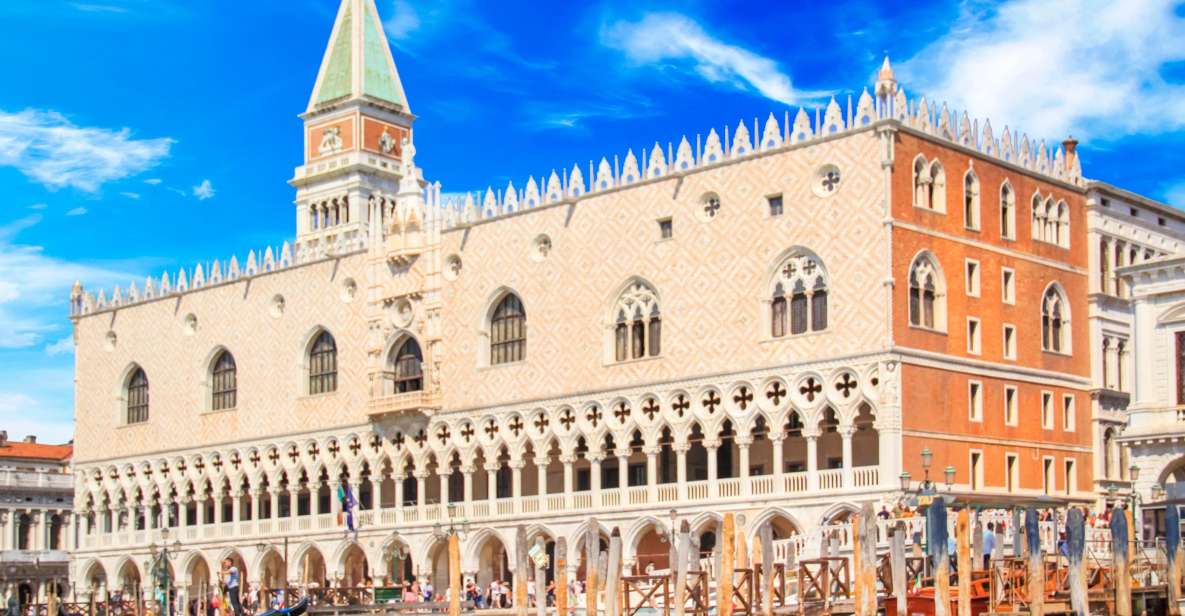
The tour includes skip-the-line entry to Doge’s Palace. Translation: you should bypass most of the ticket chaos and get into the building line faster than you would without a reservation.
That said, Venice still runs on security checks and crowd flow. Even with a fast-track ticket, you may still spend some time waiting at entry points, especially on high-volume days. The real win is that you’re much less likely to lose a big chunk of your day to the main ticket queue.
If your schedule is tight, build in a buffer. One of the common complaints in these kinds of palace tours is that they can run longer than expected, and you don’t want to be sprinting between landmarks.
Inside Palazzo Ducale: what your guided hour really covers
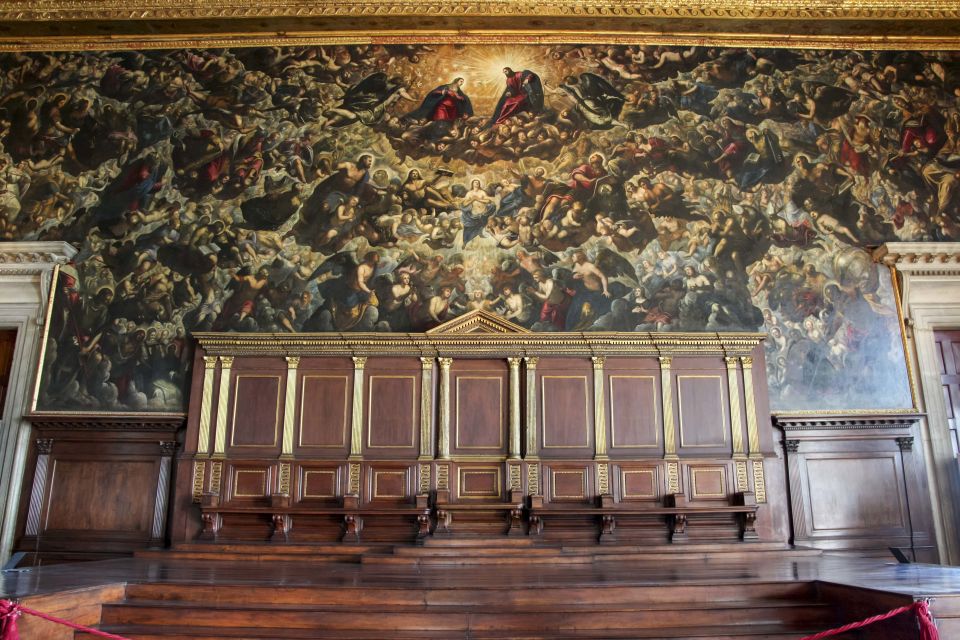
This isn’t a “quick look, then leave” style visit. Your guided time is built around the palace’s most important features, so you leave with a clear understanding of how Venice’s government space worked.
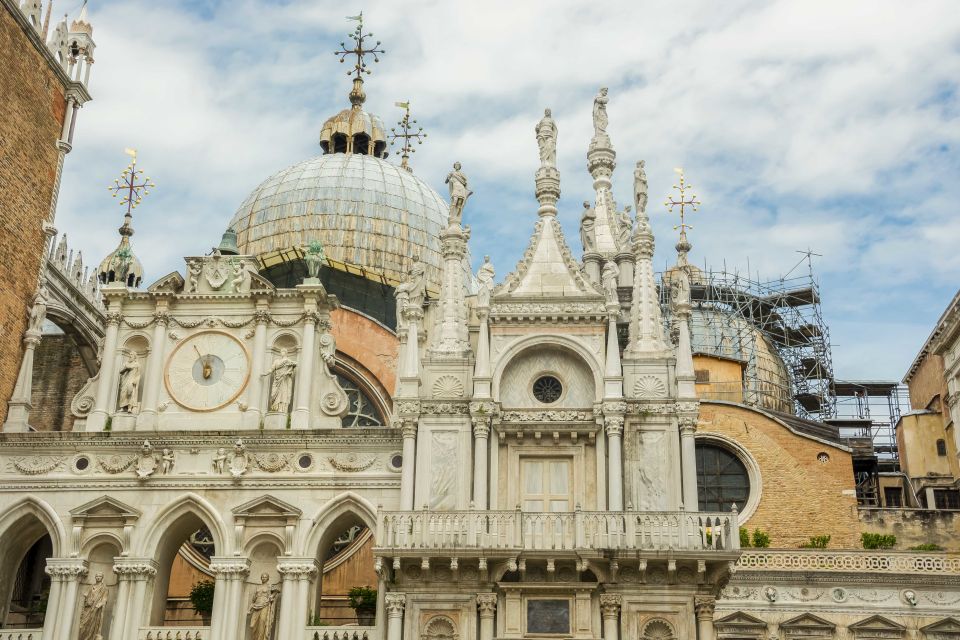
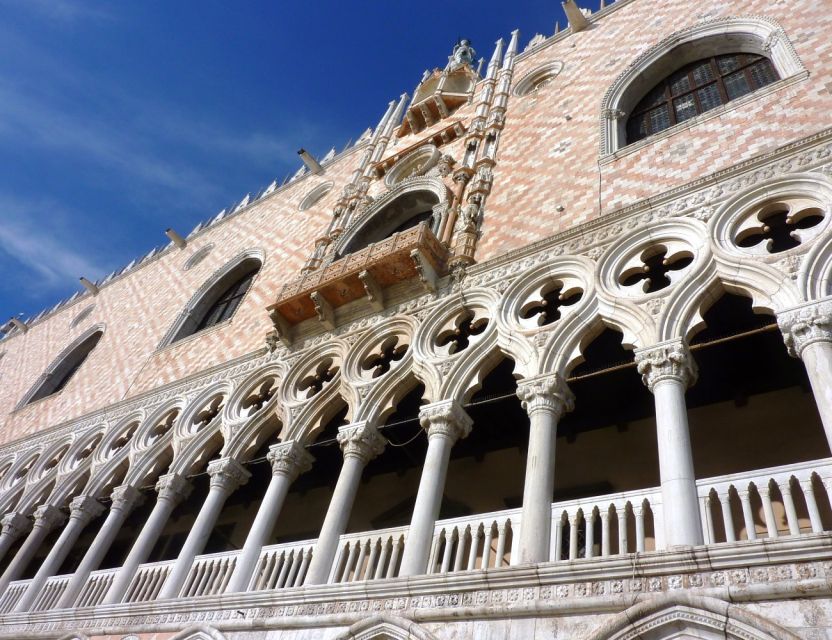
Expect a route that mixes grand rooms with meaningful in-between stops. You’ll walk through the Venetian Gothic design, then the parts that communicate status: enclosed courtyards, ceremonial stairs, and the places where visitors and officials moved through their roles. The guide also highlights major artworks and the stories behind them—so you’re not just staring at paintings, you’re learning how the building used culture as political power.
Venetian Gothic power: Doge’s residence and the state behind the walls
Once you’re inside, the guide frames the palace as the official residence of the Doge of Venice, the supreme authority of the Republic of Venice. That matters because it shifts your focus. You’ll start spotting how architecture and ceremony support a governing system, not just how pretty the place looks.
A big part of the value here is that you’ll see the palace’s “routes” and “stages.” You’ll learn where people waited, where decisions were made, and how the building organized movement. When you understand the flow, the palace stops feeling like random rooms and starts making sense.
You also get specific artistic names tied to what you see. The tour description calls out masterpieces by Titian, Veronese, and Tintoretto, and those are the kind of anchors that help you process what’s in front of you rather than walking through with only vague impressions.






Courtyards and staircases: Giants’ Staircase to the Golden Staircase
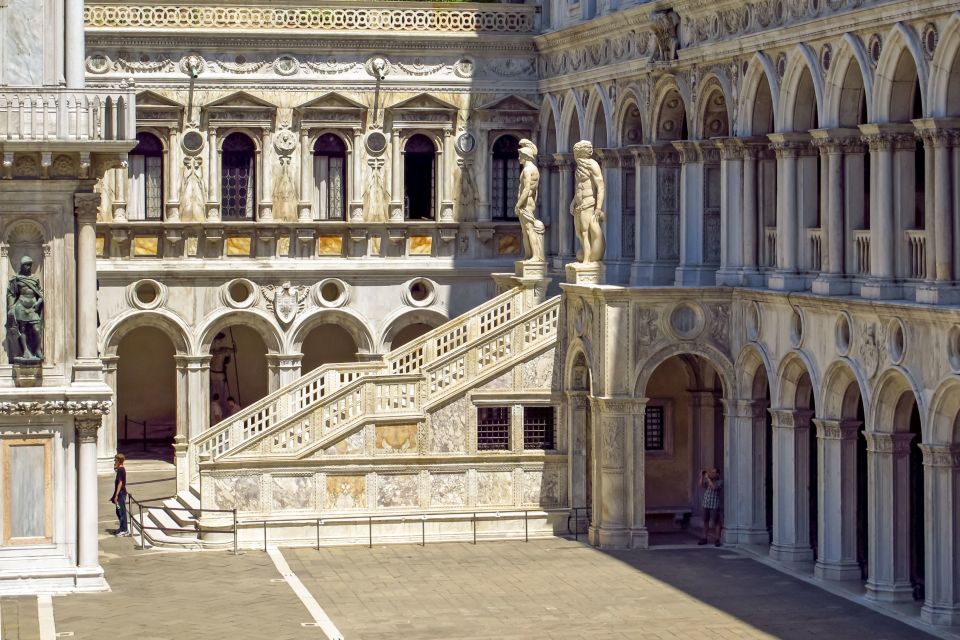
Two of the most memorable style-to-story connections are the staircases and courtyards.
- Giants’ Staircase: You’ll discover this from within the internal courtyard. The name alone signals drama, but the guide’s explanation gives it context within the palace’s ceremonial layout.
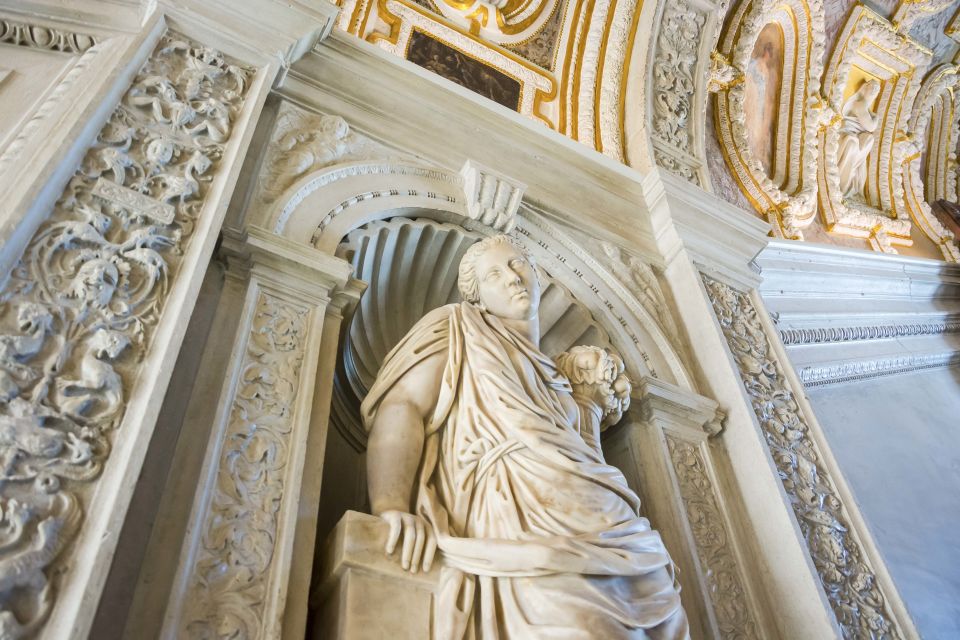
- Golden Staircase: This is where the palace leans hard into symbolism—marble statues of Atlas and Hercules are part of the experience. The guide helps you connect what you’re seeing to the Republic’s self-image: strength, knowledge, myth, and legitimacy.
If stairs and crowds make you tired, pace yourself. You may want a moment to look back down the space after the guide finishes a point, because palace ceilings and sculptural placement can be easier to understand from a single steady position.
Statues and waiting rooms: where authority was felt
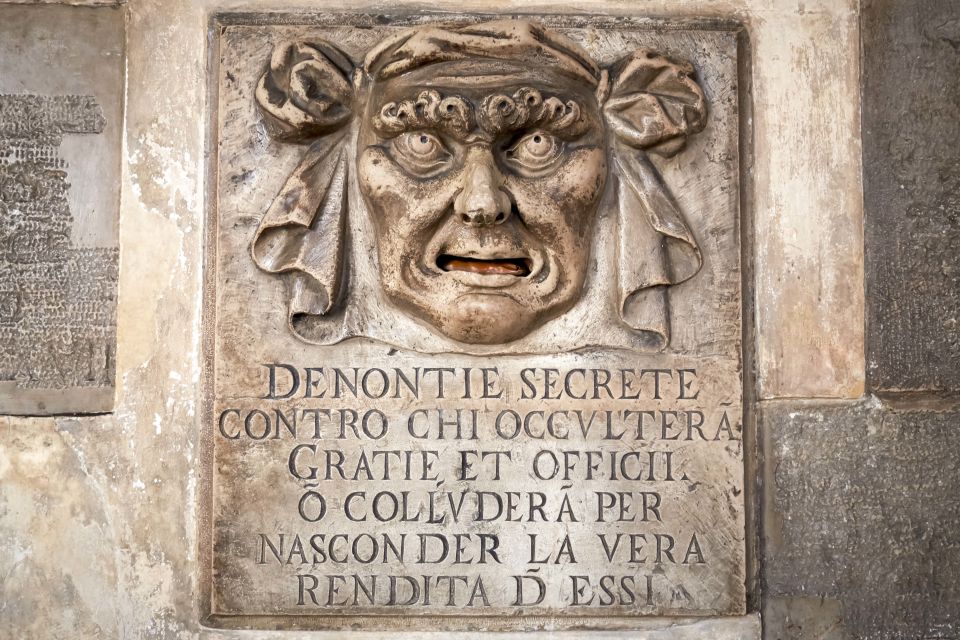
The tour includes stops that focus on symbolic figures and transitional spaces, including statues of Mars and Neptune. That’s not random decoration—it’s the Republic projecting control over war and the sea, two themes that mattered deeply to Venice.
You’ll also be shown the Atrium, which served as a waiting room. This sounds minor until you realize how much government is about timing and staging. Waiting spaces turn into power spaces, and the guide makes that click.
The Opera Museum: the palace’s carved message in stone
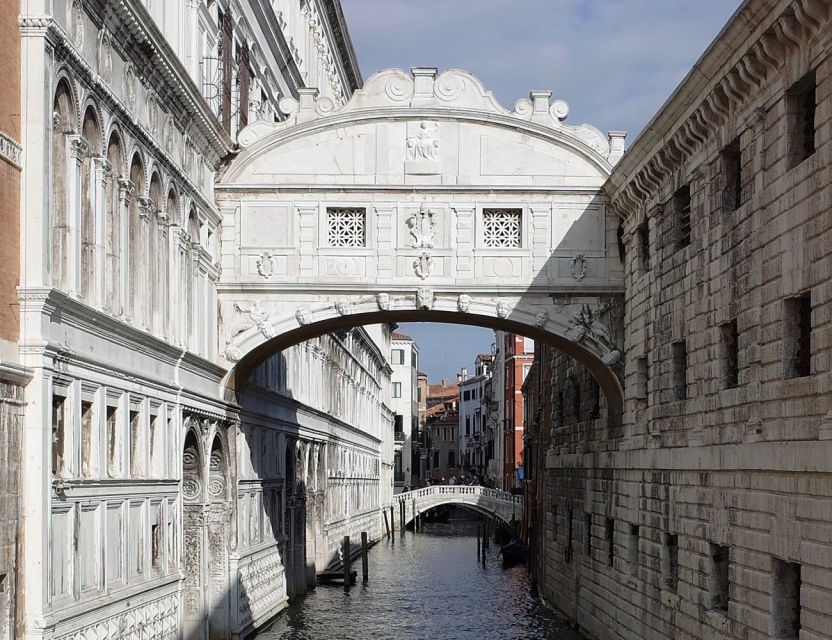
One of the standout segments is the Opera Museum. Here, the palace’s carved details take center stage.
You’ll see many of the 14th-century capitals now displayed with allegorical engravings that mix sacred and profane themes—pairing ideas like history and legend, and even astronomy with astrology. In plain terms: it’s where the palace becomes a visual lecture.
If you like art history but don’t want to get stuck reading in isolation, this part is worth leaning into. The guide helps you connect the carvings to the building’s broader message.
Bridge of Sighs (from the inside) and the prison connection
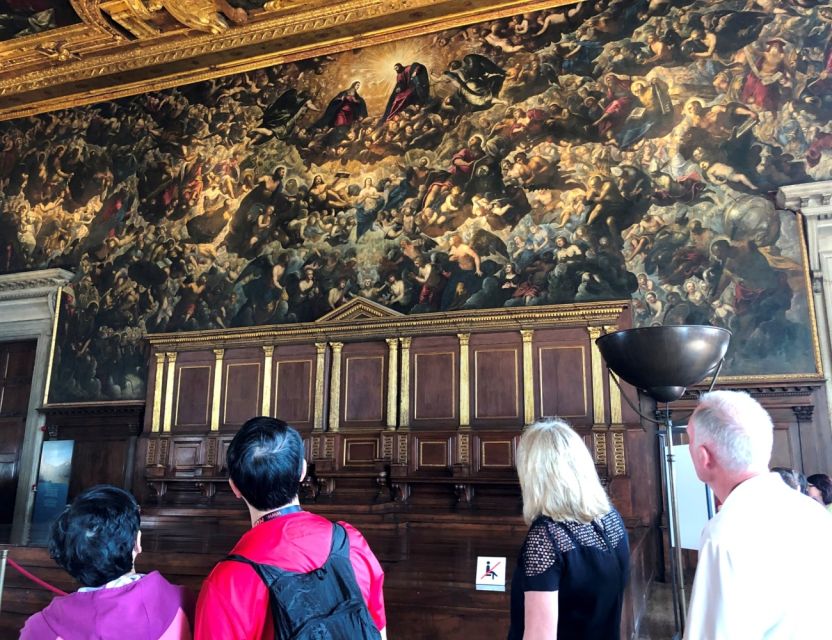
This is the “cinematic Venice” moment, but you get it in a way that’s more meaningful than a photo stop.
You’ll cross the Bridge of Sighs from the inside, and the guide explains how Doge’s Palace was connected to the prisons. The description even points out that former inmates included Casanova—and once you hear the connection, the Bridge becomes less about romance and more about the system behind the drama.
This segment can be emotionally heavier than the ceremonial rooms. If you want a balanced visit, treat it as the palace’s second storyline: not only power and pageantry, but punishment and control.
The optional add-on: Museo Correr (ticket included)
If you choose the add-on, you can visit Museo Correr, the Museum of Venetian History. The ticket is included, and the total visit time range (up to 135 minutes) suggests this option takes extra time beyond the palace guide.
Museo Correr is a good match after Doge’s Palace because it gives you wider context. After you’ve seen Venice’s government in marble and paint, you’ll be better at understanding why Venice looked the way it did and what shaped its cultural choices.
Practical tip: if you’re short on time, you might treat Museo Correr as a “targeted visit,” focusing on rooms that build the story you just heard in the palace.
Who this tour is best for (and who should skip it)
This is a strong choice if:
- You’re visiting Venice for the first time and want the palace’s meaning, not just the postcard.
- You’re short on time and want the main palace highlights with a structured route.
- You want an informed guide to tie together art, architecture, and government.
It’s less ideal if:
- You hate guided tours and prefer to wander.
- You’re extremely sensitive to sound issues or rely on crisp audio while crowds are loud.
- You need full wheelchair-style accessibility. The tour data notes it cannot guarantee the whole tour is accessible to people with limited mobility or wheelchairs due to Venice’s physical structure.
Price and value: is $79 worth it?
At $79 per person, the value comes from two things: access and interpretation.
Access: Doge’s Palace is one of the most in-demand sites in Venice. Paying for skip-the-line entry is often how you buy back hours you can spend walking the city instead of queueing.
Interpretation: the palace is packed with symbols, stairs, and art that can feel overwhelming if you go in cold. A guided route through the key spaces helps you actually understand what you’re seeing. The included option for Museo Correr also adds value if you were already planning a museum stop nearby.
Is it cheap? No. But if you price your day realistically—one iconic building, one structured explanation, and optional extra museum entry—the cost starts making sense.
Practical tips that make the visit smoother
A few small moves can improve the day a lot:
- Bring your downloaded voucher. The tour data says it’s compulsory.
- Plan for crowd noise inside the palace. If you’ve ever struggled with headsets in loud places, consider your comfort level.
- Keep bags minimal. One review notes that backpacks are not allowed inside and may be taken for storage.
- Dress for entry rules. Another review mentions that scantily clad men and women may not be permitted entry, and that photography restrictions can apply.
- Use the street-name meeting point, not just a map pin. The meeting point is behind Museo Correr near the post office, on Calle larga de l’Ascension.
Should you book this Doge’s Palace skip-the-line guided tour?
Book it if you want the most efficient way to experience Palazzo Ducale with context. The skip-the-line benefit plus the guided focus on the palace’s symbolism—staircases, statues, the Opera Museum, and the Bridge of Sighs—turns an impressive building into something you can explain afterward.
Skip or reconsider if you’re traveling with strong mobility limitations, dislike structured tours, or need crystal-clear audio in noisy environments. In those cases, you might spend your money elsewhere—or aim for a more flexible plan.
If you’re in the sweet spot (first time in Venice, limited time, and you want meaning fast), this is a smart booking.
FAQ
How long is the Doge’s Palace guided tour?
The duration ranges from 1 hour to 135 minutes, depending on whether you add the optional Museo Correr visit.
Where do I meet the guide or staff?
You meet at Calle larga de l’Ascension, near the post office and behind Museo Correr. A TURIVE staff member checks your voucher.
What’s included with the ticket?
You get skip-the-line entry to Doge’s Palace plus a guided tour. An optional visit to the Venetian History Museum, Museo Correr, also comes with tickets included.
Are hotel pickup and drop-off included?
No. Hotel pickup and drop-off are not included.
What languages are the live guides available in?
The live tour guide is available in French, Spanish, English, and German.
Do I need to bring a voucher?
Yes. It is compulsory to download the voucher issued at the end of the online reservation and bring it with you.
Is there free cancellation?
Yes. You can cancel up to 24 hours in advance for a full refund.
Can I pay later?
Yes. The option Reserve now & pay later is available.
Is the tour accessible for wheelchairs or limited mobility?
The tour cannot guarantee full accessibility to people with limited mobility or wheelchairs due to Venice’s structure and logistical problems.