REVIEW · CATANIA
Etna: Winter excursion to 3.000mt
Book on Viator →Operated by Ashàra Etna & Stromboli Guides · Bookable on Viator
Snow on Etna turns up the intensity. This winter excursion takes you from the Sapienza area up toward 3,000m, with snowy volcanic terrain, tight group sizes, and alpine plus volcanologist guidance to keep you steady and informed. Two things I really like: the small-group feel (safer, more personal pacing) and the chance to see Etna’s features in winter, not just in summer photos. One drawback to consider: the trek is pitched for expert hikers, and the day can be weather-driven, plus the return cable car ticket (€52 per person) isn’t included.
You start at 9:00am near public transport, and the tour runs about 5 hours. The good news is you don’t have to guess the essentials: you get a rock helmet, trekking poles, and high-neck hiking shoes, and you’re insured. Still, you’ll want to plan for cold and bring at least 1.5 L of water and your own snacks or packed lunch.
In This Review
- Key highlights worth knowing before you go
- Winter Etna to 3,000m: why this feels different
- Starting at Piazzale Rifugio Sapienza: your 9:00am reality check
- Funivia dell’Etna to 2,500m: getting above the cold grind
- The main trek near 3,000m: snow, volcanic grit, and smart pacing
- What you’ll see on the climb and traverse
- Valle del Bove and the Barbagallo craters: big volcano views with restraint
- Summit crater views and the possible lava-flow channel detour
- Return to the cable car: staying warm after you stop moving
- Price and value: what $108.84 buys you (and what costs extra)
- Weather and wind: why your Etna day can change
- Who this tour suits best (and who should pass)
- Tips to pack and train for winter Etna
- Should you book the Etna winter excursion to 3,000m?
Key highlights worth knowing before you go
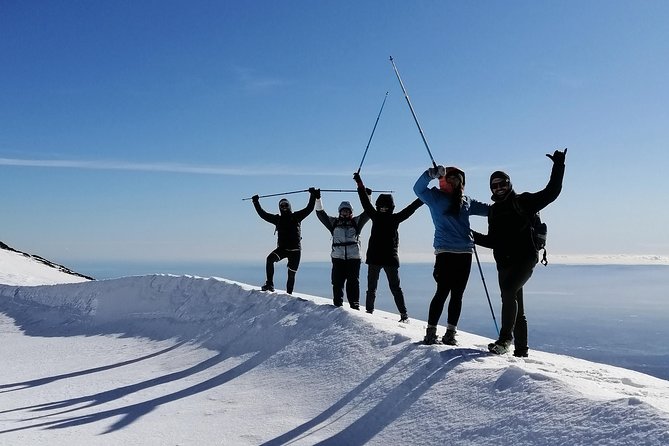
- Small groups up to 15 people: easier pacing on slippery snow and more time with your guide.
- Cable car to 2,500m, then trek near 3,000m: you spend less time just slogging uphill to altitude.
- Authorized alpine and volcanology guidance: you’ll get practical safety talk and real volcanic context.
- Specific stops on Etna’s winter route: the 2001 eruption cone, Valle del Bove, and Barbagallo craters.
- Summit craters from a safe distance: you get the drama without taking dumb risks.
- Possible lava-flow channel detour when snow and conditions allow it.
Winter Etna to 3,000m: why this feels different
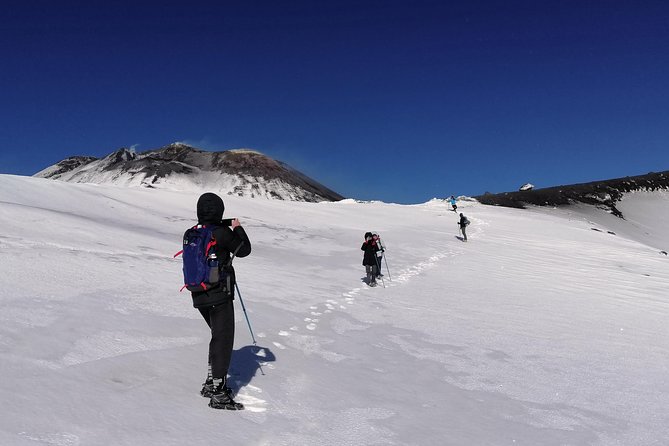
Etna in winter is a mood shift. The volcano isn’t “just a mountain” anymore. It turns into cold, wind, and texture: sharp volcanic grit under snow, plus real attention to footing.
This is the kind of hike where you’re glad you’re not doing it solo. You’re traveling with authorized alpine and volcanologist guides, and that matters because conditions on Etna can change fast. In reviews, I saw guides named Simone, Max, and Giuseppe, and they consistently came across as people who manage the group and the pace with safety first.
You should also know what kind of effort you’re signing up for. Even with the cable car doing the heavy lift, this is still an uphill trek in winter snow and ice, and it can feel demanding. One hiker described it as about 7.5 km and around 2.5 hours to reach around 3,000m. Plan to move steadily, not quickly.
You can also read our reviews of more tours and experiences in Catania.
Starting at Piazzale Rifugio Sapienza: your 9:00am reality check
The meeting point is at the Ashàra info point in Piazzale Rifugio Sapienza (Nicolosi, Catania area). The start time is 9:00am, and the area is near public transportation, which helps if you’re not driving.
From here, the day flows in two stages. First comes the cable car to about 2,500 metres, then you start trekking from roughly 3,000 metres. That setup is a big part of the value: you get altitude and drama, without spending the whole morning climbing just to get started.
Practical note: winter mornings on Etna can mean cold hands fast. Even if you’re provided with key gear, bring your own mindset for layers and wind protection. If you run warm easily, you might also find yourself working hard enough to get hot, especially once you’re moving.
Funivia dell’Etna to 2,500m: getting above the cold grind
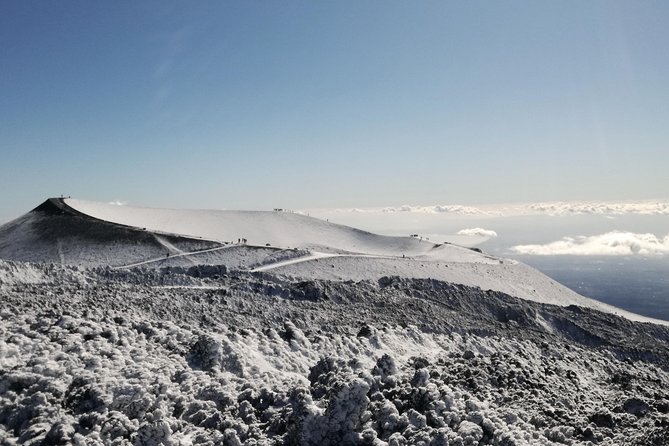
The cable car ride is more than transportation. It gets you up to the high zone quickly, so the time you pay for becomes hiking time.
Once you step out at altitude, the real Etna feeling hits: ice, snow, and a terrain that looks simple until you walk on it. That’s where the included gear helps. You get a rock helmet, high-neck hiking shoes, and trekking poles, which is a smart trio for winter volcanic terrain. It’s less about comfort and more about stability.
In at least a couple of accounts, the team also offered extra gear options on site, like gloves and jackets. That’s not listed in the standard inclusions, but it’s a real-world comfort boost if you arrive under-prepared.
The main trek near 3,000m: snow, volcanic grit, and smart pacing
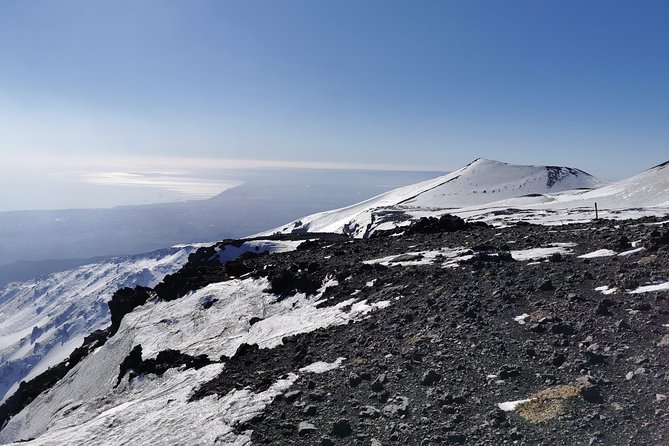
The trek itself is the heart of the experience. You’ll walk long stretches of snow, and your footing will depend on ice conditions and volcanic material under the surface.
I like that the tour is framed for expert hikers, not casual strollers. That doesn’t mean it’s for “race-fit athletes,” but it does mean you should be comfortable hiking in cold weather and handling uneven ground. If you’ve only done easy local walks, this will feel like a level-up.
This part also comes with a built-in safety advantage: a guide is constantly reading the group’s pace and terrain. One review described a reasonable pace with frequent stops to catch breath. Another note was that guides communicate in English (and sometimes across additional languages in mixed groups), which helps when you need clear instructions on where to step.
What you’ll see on the climb and traverse
On this winter route, you’re not just walking for views. You’ll visit major Etna features while staying at safe distances.
Expect stops or viewpoints tied to:
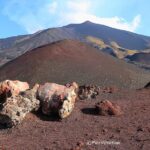
- the cone of the 2001 eruption
- Valle del Bove
- the Barbagallo craters
- and Etna’s summit craters viewed from a distance (so you get the big-picture volcanic story without crowding the danger zone)
These named places matter because they anchor what you’re seeing to something concrete. Winter fog or low visibility can make a volcano feel abstract. A guide helps you connect the shapes, the flow logic, and the crater context to the terrain under your boots.
Valle del Bove and the Barbagallo craters: big volcano views with restraint
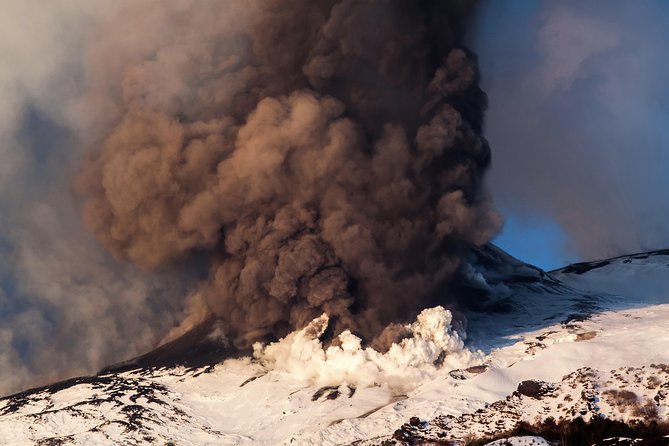
This is where the day turns into “wow” without turning into reckless.
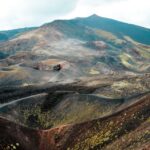
Valle del Bove is a dramatic setting, and in winter it tends to look even more sculpted. You’ll likely spend time pausing for viewpoints while your guide checks the group’s pace and footing. That restraint is part of the safety model.
The Barbagallo craters add variety. Instead of only seeing one “cone,” you move through a more complex volcanic scene. Again, you’re watching from a safe distance, which is important because Etna’s power isn’t just a story; it’s a physical reality.
One thing I appreciate on tours like this is the balance between time moving and time absorbing. You’re out in the cold, so the goal is not to stand still for long. Still, you need those short pauses to breathe, film properly, and actually take in what you’re seeing.
Summit crater views and the possible lava-flow channel detour
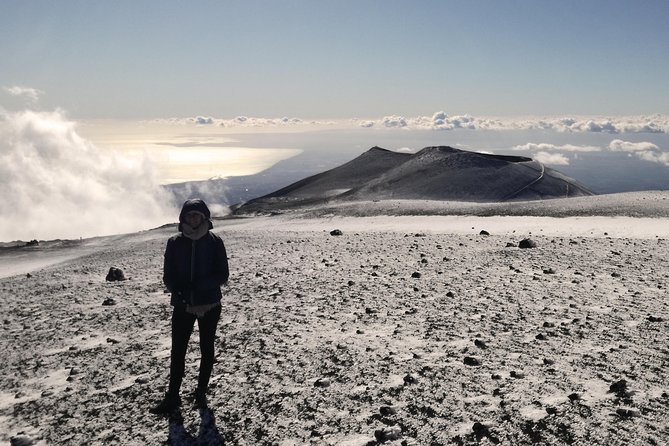
At some point, you’ll admire Etna’s summit craters from a safe distance. It’s the kind of moment that makes winter hiking feel worth it, even if your legs are negotiating with you.
If snow conditions permit, you may also visit a lava flow channel before heading back toward the upper cable car station. That “if conditions allow it” matters. Winter routes are flexible because the snow depth, ice stability, and wind can change what’s safe and what’s feasible.
This is one reason to wear serious traction-ready footwear. Even if the guide picks a safe path, you’ll still be on slick surfaces. Trekking poles aren’t optional vibes here. They help you manage balance and knee strain on uneven slopes.
Return to the cable car: staying warm after you stop moving
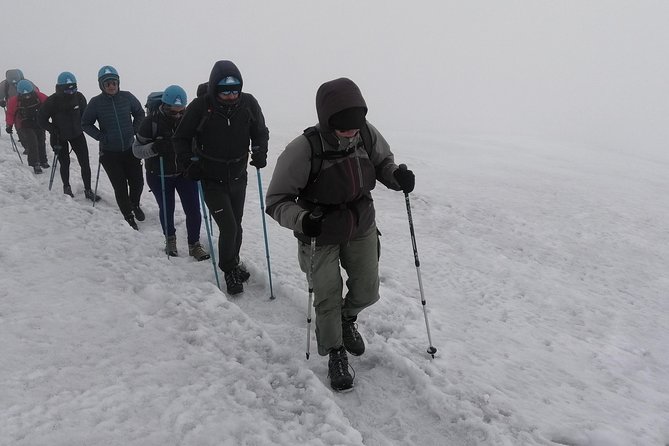
On the way back, the temperature shift can feel dramatic. Once you slow down or stop for crater explanations, wind chill gets into your bones fast.
Since the return cable car ticket is not included, you’ll want to plan for the €52 per person cost in advance. It’s one of those “small surprise” items that can sting if you’re budgeting tightly, so I recommend keeping it top-of-mind from day one.
The tour ends back at the meeting point. That simple finish is nice: no complicated transfers, no guessing where to regroup.
Price and value: what $108.84 buys you (and what costs extra)
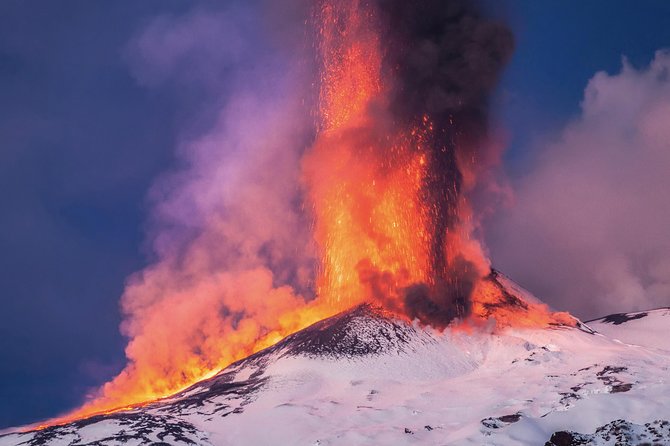
The price is $108.84 per person, and it’s easy to look at the number and stop there. I think the better question is: what portion of the hard stuff is included?
Included basics that actually matter in winter:
- rock helmet rental
- high-neck hiking shoes
- trekking poles
- alpine plus volcanology guide
- insurance
That gear package helps a lot if you’re traveling light or not bringing winter hiking kit from home. Winter hiking on Etna is not where you want to improvise with fashion boots.
Then there’s what’s not included:
- bottled water (at least 1.5 L is on you)
- snacks / packed lunch
- return cable car ticket (€52 per person)
So is it good value? For me, yes, because you’re paying for guidance, safety planning, and high-altitude execution. You’re also avoiding the risk of buying the wrong gear for one Sicilian day. The only “gotcha” is the extra cable car return cost, plus you still have to fuel yourself.
Weather and wind: why your Etna day can change
This excursion depends on good weather. If it’s canceled due to poor conditions, you’ll be offered a different date or a full refund.
Wind is a big deal on Etna in winter. In one communication, the team mentioned expected gusts over 80 km/h as a reason to reschedule rather than push forward. That’s not just bureaucracy. High winds can make snow and footing unsafe and also make it hard to keep everyone together.
My advice: dress as if you’ll hike, but carry the flexibility mindset for rescheduling. With winter conditions, the volcano isn’t predictable like a museum.
Who this tour suits best (and who should pass)
This experience is described as suitable for expert hikers, and you’re advised to have moderate physical fitness. That pairing is common on winter volcanology hikes: you don’t need to be a mountain climber, but you do need comfort with cold, snow, and uneven terrain.
If you:
- hike regularly
- can handle icy footing
- feel confident walking uphill for multiple hours in layers
then you’ll probably enjoy this a lot.
If you don’t like cold wind, or if your hiking experience is limited to flat trails, you may struggle. One family in the group adjusted plans for their kids and took a shorter route with the guide Giuseppe. That suggests flexibility can happen, but it’s not a guarantee for every group and every day.
Group size is capped at 15 travelers, which helps. Smaller groups reduce waiting, keep you safer on tricky terrain, and make it easier for your guide to check how everyone is doing.
Tips to pack and train for winter Etna
Here’s what I’d do to show up ready, using what’s provided and what the day demands.
1) Dress in layers, then add wind protection
Even if you get warm while climbing, wind can swing the temperature fast when you pause.
2) Plan for icy footing
You’re getting poles and proper shoes, but you still need to walk with intention. Take shorter steps on slick sections.
3) Fuel yourself
Bring your own snacks/packed lunch and at least 1.5 L of water. Winter hikes can dehydrate you without you noticing, and you’ll feel it when you’re at altitude.
4) Expect a steady pace, not a sprint
Guides manage the group across different abilities. The pace is often guided by safety and communication, not just speed.
5) Keep your phone batteries warm
At altitude, cold drains batteries. If you rely on navigation or photos, keep devices protected.
Should you book the Etna winter excursion to 3,000m?
Book it if you want winter Etna at its most real: snowy, physical, and guided by people who take safety seriously. I like that you don’t just get a “see the volcano” day. You walk through named volcanic terrain and get summit views from a safe distance. The included gear plus small-group pacing is strong value, especially if you don’t own winter hiking kit.
Skip it if you’re looking for an easy hike, or if you can’t comfortably handle cold wind and uneven snowy ground. Also keep the return cable car cost in mind, and remember the day can shift with weather.
If you fall in the middle, lean toward booking, but be honest about your hiking comfort in winter conditions. This is a day that rewards calm effort, good layering, and listening to your guide.