REVIEW · SARDINIA
Gorropu canyon guided hike
Book on Viator →Operated by Jebel Sardinia · Bookable on Viator
Gorropu Canyon is dramatic in a way you can feel in your legs. This guided trek drops you into the deepest canyon scenery on Sardinia, with real-time help from Sergio, a guide who keeps the route safe and the day interesting.
In This Review
- Two things I really like
- One drawback to plan for
- Key takeaways before you go
- Why Gorropu Canyon feels different than Sardinia’s coast
- Getting to the trailhead: Orosei pickup and the 4×4 dirt road
- Gola di Gorropu start: river wading and Mediterranean scrub
- Entering the canyon: passes, caves, and 400-meter walls
- Green, Yellow, and Red sections you’ll feel in your legs
- What you’ll see in the microclimate (and what your guide points out)
- How the hike really works: boulders, turn-back, and safety lines
- Lunch by cool water pools inside the canyon
- Gear and fitness: what to wear and how to pace yourself
- Price and value: what $78.64 buys you (and what it doesn’t)
- Group size, language, and how it feels on the trail
- Who should book this Gorropu Canyon guided hike
- Should you book? My straight call
- FAQ
- What time does the Gorropu Canyon guided hike start?
- Where is pickup and drop-off provided?
- How long is the guided hike?
- Is the canyon entrance ticket included in the price?
- Is lunch included?
- What kind of fitness level do I need?
Two things I really like
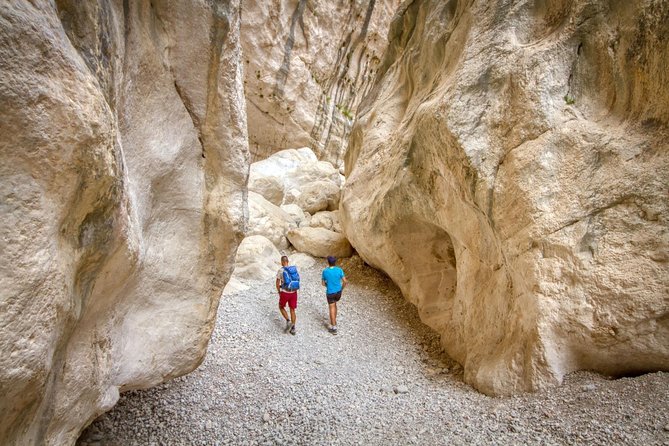
First, you’re not just “walking by views.” You’re moving through real canyon terrain—steep walls rising over 400 meters, rocky steps, and even moments where you may need your hands to get over boulders. Second, the guiding is practical and personal: you get commentary on plants and canyon life, not vague facts.
One drawback to plan for
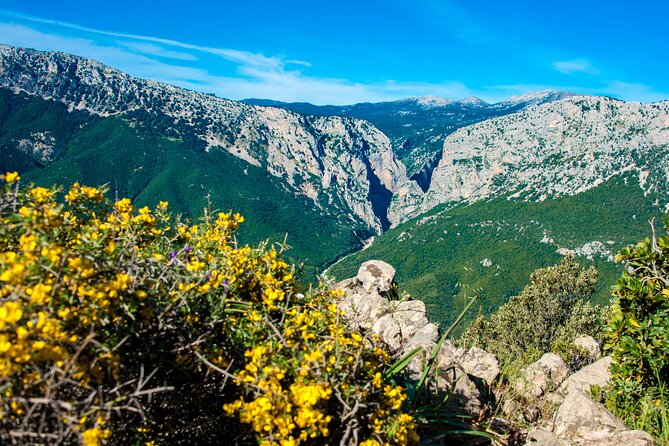
This is not a casual stroll. You’ll want good footwear and a moderate fitness level, plus you should expect it to be more challenging the rougher the path gets.
You can also read our reviews of more tours and experiences in Sardinia.

Key takeaways before you go
- Small group (max 8) means you get closer attention when the trail turns technical.
- Start early for heat and crowd control on the route toward the canyon entrance.
- Bring cash for the canyon ticket (€6 per person) since it’s paid on the day.
- Wear grippy trainers—sandals and flip-flops aren’t a great idea here.
- Lunch is on you: no food sales inside, so pack what you’ll eat.
- Guides handle the tricky lines through boulders so you know the safest way through.
Why Gorropu Canyon feels different than Sardinia’s coast
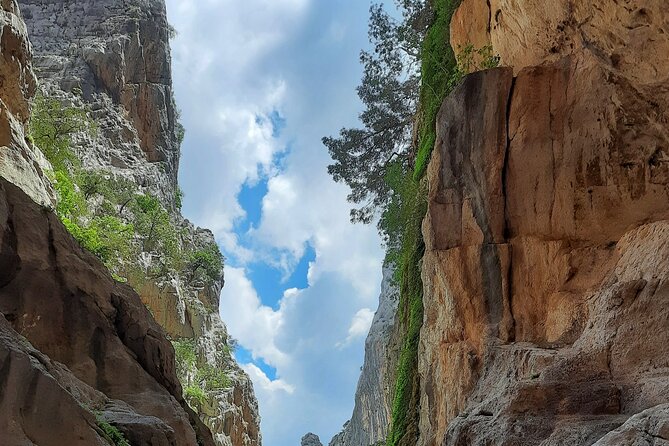
Sardinia can feel like sea, sun, and distance. Gorropu is the opposite. Instead of wide open horizons, you get tight space, cool shade, and tall rock walls that make you slow down and pay attention to where your feet land.
What makes this hike special is the mix of geology and living detail. You don’t just pass scenery—you move through a canyon microclimate where hardy plants hang on, and the guide points out species you likely won’t notice on a normal walk outside the gorge.
Also, the day has a “guided adventure” pace. You’re not thrown in alone; you’re supported by drivers and guides who get you to the trail and help you negotiate the roughest sections when the route gets hands-on.
Getting to the trailhead: Orosei pickup and the 4×4 dirt road
Your day starts in central Orosei with a pickup, typically around the morning start time (the activity starts at 8:30 am). From there, the plan is straightforward: you ride out to the Gorropu area and then transition onto the dirt-road approach.
The drive includes an off-road descent into the valley via 4-wheel drive. One of the neat parts here is that you can feel you’re leaving the ordinary road behind before your hiking even begins. The dirt track approach builds anticipation—then you start the real walking in the valley, where the trail begins in the canyon’s “front room.”
Why this matters for your experience: arriving via vehicle means you spend less energy on getting to the canyon and more energy on the canyon itself. You still work for the views, but you’re not wasting the morning on long transfers.
Gola di Gorropu start: river wading and Mediterranean scrub
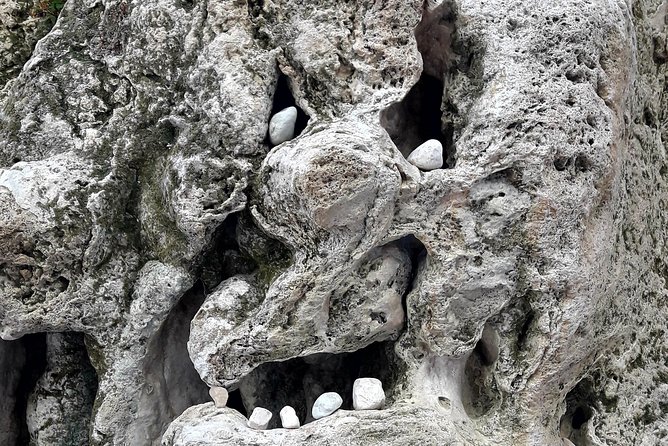
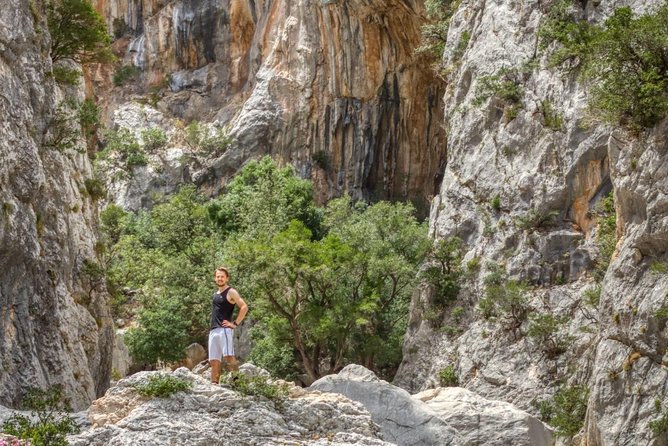
The hike begins with a valley approach that sets the tone. You’ll wade the Flumineddu river to enter the route, then walk through woodland made up of holm oaks and Mediterranean scrub.
This early stretch is useful even if you’re nervous about the technical sections later. It gives you time to settle in: get your balance after the transfer, test your footing, and get a feel for how the guide marks safer lines through uneven ground.
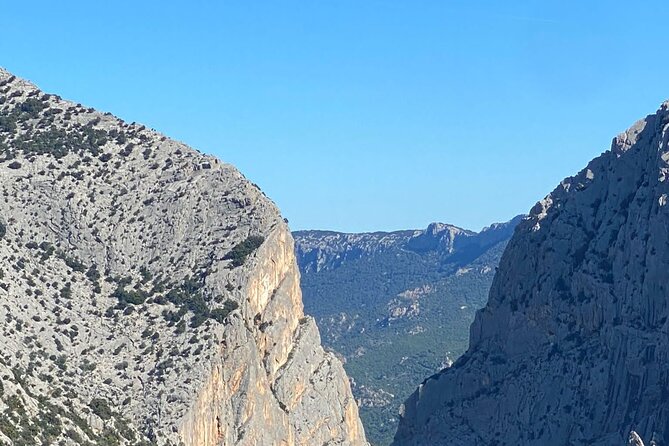
As you continue, you travel along the cliffs of Mount Oddeu and reach the canyon entrance in less than two hours. That’s a big chunk of your day spent “getting there the right way,” with a guided lead-in that makes the canyon walls feel earned, not accidental.

Entering the canyon: passes, caves, and 400-meter walls
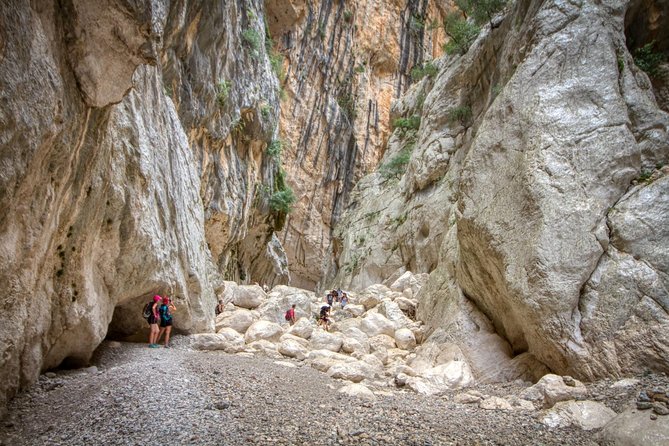
Once inside Gorropu Canyon, the scale becomes the headline. The canyon walls rise more than 400 meters above the river bed, and the tight corridor can make every step feel a little more physical than a trail outside.
This is the part where the description turns into reality: you’ll pass through areas with rocky walls, boulders, and places that feel cave-like due to overhangs and cliff structure. Your guide’s commentary is also strongest here, because they’re able to connect what you’re seeing to why the canyon supports unique plants.
Important note for your planning: the path can become rough, and at points you may need to use your hands to climb or negotiate boulder fields safely. That doesn’t mean it’s reckless—on the contrary, it’s exactly why you want a guided day instead of free-hiking it alone.
Green, Yellow, and Red sections you’ll feel in your legs
The route inside the canyon is often described in sections by difficulty, and you’ll likely notice the pattern as you go.
Think of it like this:
- Green: the easiest lines, where you can move with confidence and keep a steady pace.
- Yellow: harder negotiation over bigger obstacles and more uneven footing.
- Red: the more daring part, where the route gets more demanding and hands-on moments can show up more often.
You don’t need to “race” any of these. The guide’s job is to match what’s happening on the ground with the safest and most suitable route for your group. If you’re concerned about your comfort level, this is also where the small group size helps—your guide can pay attention to who needs extra time or a different line.
And there’s another practical reality: once the route becomes impossible to continue on forward progress, you turn back the way you came. So you get the payoff of entering deep into the canyon, without the stress of “What if we keep going and it gets worse?”
What you’ll see in the microclimate (and what your guide points out)
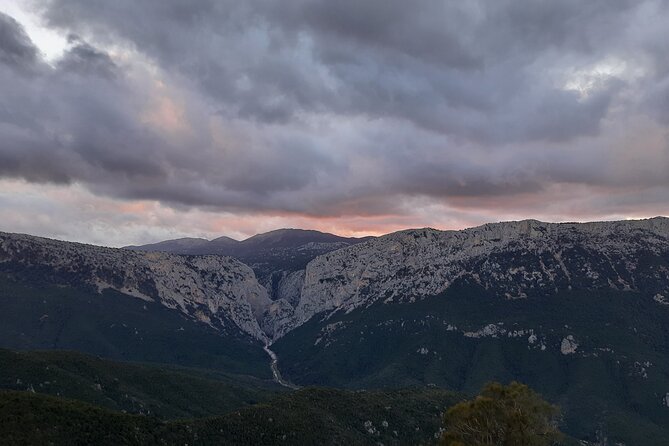
Canyons can act like living museums. In Gorropu, the microclimate supports plant growth that doesn’t thrive everywhere.
As you walk, your guide explains how the canyon’s sheltered conditions allow strong growth of plants like Phyllirea, and you may also spot an old yew tree. There’s also an endemic grass—Acquilegia di Gorropu—found in very few individuals inside the canyon.
Why that matters: it changes your attention. Instead of just tracking where the next foot goes, you also start looking for details that tell the canyon’s story. You’ll notice how the guide turns a physical hike into something like a guided field walk, with practical observations you can carry back to future hikes.
How the hike really works: boulders, turn-back, and safety lines
You’ll hike in and then hike out—no tricks there. The difference is how the canyon floor looks and feels.
At the roughest points, the route may force you over or around large boulders. That’s when the “hands-on” part can happen. It’s not a stunt. It’s balance and grip and following the safest path your guide shows you.
One of the best parts of a guide-led canyon hike is that you’re not guessing:
- You’re shown where footing looks stable.
- You’re guided through safer lines for your group’s abilities.
- You get commentary that keeps you present, not panicked.
Once forward progress isn’t possible on that path, you head back the way you entered. This matters because it makes the day feel controlled. You’re exploring into the canyon, then returning, rather than committing to an unpredictable longer route.
Lunch by cool water pools inside the canyon
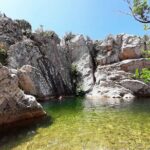
After you exit the canyon, the day gets a calmer beat. There’s a lunch stop in a section where you can reach fresh water pools and dip your feet in cool water.
This is more than a nice break. It’s a practical way to reset after boulder steps and uneven ground. Even a short dip can help your body recover for the return hike and the ride back out.
One logistical detail you’ll want to remember: there’s no food to buy inside the canyon. So if you like choices, pack them. If you’re happy with something simple, that works too—just make sure you have lunch ready.
Gear and fitness: what to wear and how to pace yourself
This tour is built for hikers with a moderate fitness level. You don’t need to be a mountain athlete, but you do need to be comfortable with uneven terrain, steep drops, and the kind of footing where “one slip is one problem.”
Here’s the gear advice I’d take from the experience:
- Wear trainers with grip.
- Skip flip-flops and sandals—they’re not made for boulder negotiation.
Also, remember the route can get physically “hands on.” That means clothing that lets you move freely matters more than style.
Pacing is another big factor. Guides keep a manageable rhythm so the group can negotiate obstacles safely. One family example stood out for me in concept: kids can do it when the guide sets a pace and keeps the experience fun, not stressful. So if you’re planning this for children, focus on whether they can handle a long morning and a rocky trail, not whether they look adventurous.
Price and value: what $78.64 buys you (and what it doesn’t)
At about $78.64 per person, this is priced like a true guided outdoor day, not just a transfer. In your package, you’re getting:
- a driver/guide and local guidance,
- round-trip shared transfer,
- pickup and drop-off from central Orosei (when that option is selected),
- and the canyon hike guidance itself.
Two extra costs matter for your budgeting:
1) Canyon entrance ticket: €6 per person, paid on the spot by cash.
2) Lunch is not included.
So the real value equation looks like this: you pay for local expertise, safe canyon navigation, and logistics that would be annoying to manage alone. The €6 ticket is small compared to the day’s total guided cost, and the fact that guides handle entrance tickets and route safety reduces the hassle factor.
If you’re the type who hates uncertainty, you’ll appreciate that. If you love solo freedom, you might prefer self-guided exploring elsewhere—but this specific canyon experience is exactly where a skilled guide earns their keep.
Group size, language, and how it feels on the trail
The group is small—up to 8 travelers—and that’s a major quality upgrade. You’ll hear your guide’s explanations more clearly, and when the route gets harder, the guide can manage different comfort levels without turning the group into a traffic jam.
The hike is offered in English, and you’ll also have a mobile ticket. The tour description says confirmation is received within 48 hours subject to availability, so you should plan to confirm soon after booking if your schedule is tight.
If weather turns bad, the experience requires good conditions. If it gets canceled for poor weather, you’ll either be offered a different date or a full refund. That’s one of those “outdoor reality” clauses you should be glad is there—canyons are not ideal when conditions aren’t right.
Who should book this Gorropu Canyon guided hike
Book it if you want:
- a guided canyon walk with real route support,
- a small-group day that focuses on safety and learning,
- and a morning start that lets you enjoy the canyon before the heat and crowds rise.
You might skip it if:
- you hate rocky terrain and don’t like uncertainty in your footing,
- you’re expecting a gentle nature walk,
- or you’re not willing to do a longer hiking day (about 8 hours total).
This also works well for mixed groups, including families, when kids can handle the hike length and the rocky sections. The key is matching your expectations to the terrain. Gorropu isn’t “pretty easy.” It’s beautiful and physical.
Should you book? My straight call
If your idea of a great Sardinia day includes steep canyon walls, boulder negotiation, and a guide who explains the living details of the canyon, this is an easy yes. The price feels fair for the logistics and the fact that you get expert handling of the tricky parts, plus the cool-water lunch stop is a smart recovery moment.
The only real reason not to book is if you’re uncomfortable with a moderate fitness trek and you don’t want hands-on scrambling over boulders. If you’re good with wearing the right shoes and bringing a prepared lunch, Gorropu is the kind of experience that gives you a story you’ll keep repeating.
FAQ
What time does the Gorropu Canyon guided hike start?
The start time is 8:30 am, with pickup from central Orosei.
Where is pickup and drop-off provided?
Pickup and drop-off are provided from central Orosei, and hotel pickup and drop-off are included if you select that option.
How long is the guided hike?
The duration is about 8 hours.
Is the canyon entrance ticket included in the price?
No. The entrance ticket to the canyon is €6 per person and must be paid on the spot by cash.
Is lunch included?
Lunch is not included, so you’ll want to bring your own food.
What kind of fitness level do I need?
The hike is suitable for people with a good level of fitness and requires a moderate fitness level. You should be prepared for rocky terrain and possible hands-on sections.