REVIEW · FLORENCE
Museum of illusions Florence Entrance Ticket
Book on Viator →Operated by Museum Of Illusions · Bookable on Viator
There’s something weirdly satisfying about tricking your eyes. This Florence stop is a hands-on museum built around optical illusions and perception puzzles, with staff around to help you try the exhibits the right way and get great photos. I love how quickly you can shift from curious to fully involved, even if you usually skip “interactive” stuff.
My other favorite part is the pacing. You pick from lots of time slots, and the entry window is precise (within about 20 minutes), so you can plan this into a busy day in the city. The experience is also genuinely family-friendly, with staff support that helps kids and adults keep up. If you want a fun brain workout plus silly pictures, this hits that sweet spot.
One consideration: the museum is small and the ticket is not cheap. A couple people felt the price didn’t match the time spent inside, and at busier moments there may not be enough staff to give individual attention at every station. Still, if you’re flexible and enjoy figuring things out together, it works well.
In This Review
- Key things to know before you go
- Museum of Illusions Florence, in plain terms: what you’re paying for
- Tickets and timing: how to keep your visit smooth
- Inside the museum: what the experience feels like
- The illusion stations: the kinds of tricks you can expect
- Guide help: what staff actually do for you
- Photo-friendly details: how to get your best shots
- How long should you plan for, and how to pace it
- Who this ticket suits best (and who might not)
- Price and value: is $25.34 a fair deal?
- Should you book this Museum of Illusions ticket?
- FAQ
- How long does the Museum of Illusions Florence visit take?
- What’s included with the entrance ticket?
- Is the ticket available in English?
- Do I need to print anything?
- When will I get confirmation?
- Is the museum near public transportation?
- Are service animals allowed?
- What is the cancellation policy?
Key things to know before you go
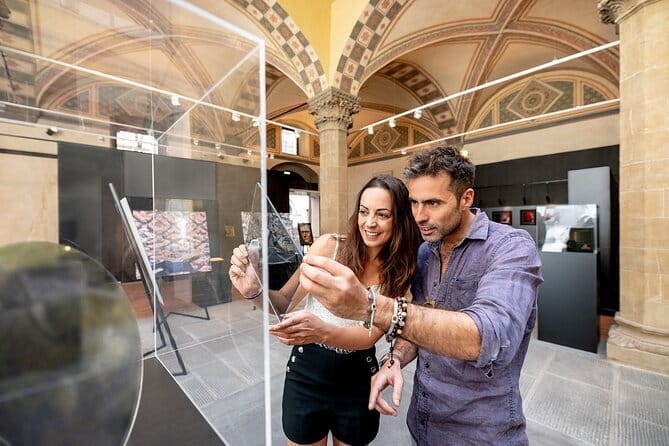
- Mobile entry ticket makes it easy to show up and get in without extra paperwork.
- Lots of timed entry choices help you avoid wasted time and fit the visit into your schedule.
- Guides in the exhibit area focus on helping you interact and improve your results (and your photos).
- Interactive, photo-friendly exhibits lean into mirrors and visual tricks that look great on camera.
- Good for families of mixed ages, including younger kids, because the exhibits are playful and immediate.
- Most people can participate, since the activities are designed for a broad range of ages.
Museum of Illusions Florence, in plain terms: what you’re paying for

The Museum of Illusions Florence (Museo Delle Illusioni Firenze) is exactly what the name promises: a focused museum where the main event is seeing is believing—until you test it. The goal is to mess with your sense of color, shape, size, and perspective, using exhibits that react as you move, pose, or interact.
Think of it less like a traditional museum and more like a set of timed visual experiments. You’ll spend your hour or so learning through doing. If you like science-but-make-it-fun, or if you simply enjoy that moment when something looks one way and behaves another, you’ll get it fast.
The ticket includes entrance and guide service in the area, which matters here. Without help, some optical tricks can feel confusing or slow. With staff around, you get nudged into the correct way to interact so the illusion actually lands.
You can also read our reviews of more tours and experiences in Florence.
- Tuscany Day Trip from Florence: Siena, San Gimignano, Pisa and Lunch at a Winery
★ 5.0 · 21,634 reviews


Tickets and timing: how to keep your visit smooth
This is one of those experiences where timing is part of the value. You’re given exact time slots online, and they’re precise to within about 20 minutes. That’s handy in Florence, where walking, lines, and waiting can eat the best part of your day.
Because the ticket is a mobile ticket, you’ll be able to keep everything in your phone. That’s useful if you’re bouncing between sights and don’t want to track a paper voucher.
The museum is also near public transportation, so you can reach it without committing to a long trek across town. If you’re building a day around multiple stops, that transportation flexibility helps.
Practical tip: plan for a visit length of about 1 to 1.5 hours. If you leave yourself a little buffer before your next activity, you can slow down to read and test more exhibits instead of rushing to match a schedule.
Inside the museum: what the experience feels like
When you arrive, you’ll move through a set of illusion stations. This is not a single grand room. It’s lots of smaller, themed setups where each trick changes how you see something right in front of you.
A key detail: you’re encouraged to take your time with the exhibits, not just walk past. Even though it’s fun, many of the stations are built around short explanations, and reading them helps you understand what your eyes were doing wrong. One of the most common ways people enjoy this place is by slowing down just enough to connect the visual effect to the perception idea behind it.
Many people also note that the museum is not huge, which can be a good thing. You can finish in about an hour, or stretch closer to 90 minutes if you want more photos and more interaction at each station. If your schedule is tight, this is one of those attractions that won’t trap you for half a day.
The illusion stations: the kinds of tricks you can expect

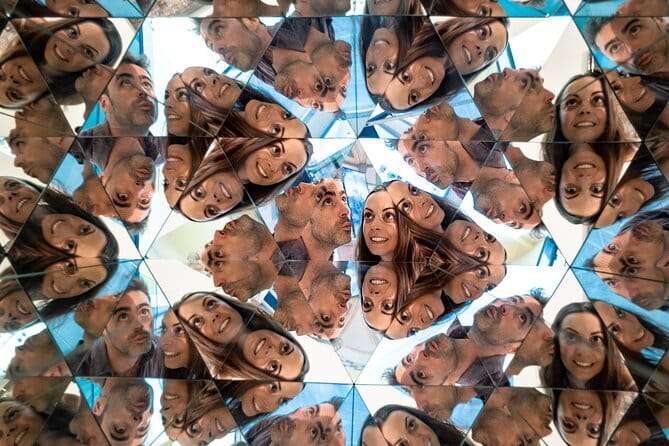
You should expect a mix of optical and perception-style exhibits: things involving mirrors, shifting perspectives, and setups that change based on where you stand or how you view them. Mirrors are a recurring highlight, especially for photos—because the trick often works best when you’re physically in the scene.
There are also hands-on stations that aim at showing how the brain processes visual information, including how colors, shapes, and sizes can be misread. It’s a strong experience for kids because the concepts are made concrete by the exhibit itself, not by long lectures.
One more interesting angle: some activities can be more than purely visual. In at least one case, a guide helped create something like a perfume compound, which suggests the museum sometimes includes playful, sensory additions alongside the optical work. You might find similar interactive elements depending on how the museum presents its stations that day.
Guide help: what staff actually do for you

This ticket includes guide service in the area, and that’s not just a formality. In a museum like this, the difference between fun and frustrating is usually simple: are you interacting the way the exhibit is designed?
The guides are there to help you test the illusion correctly and to show you how to get the best angle for the effect. If you’re into photos, this is huge. A trick that looks cool in theory can look flat in a photo if your position is off, so having someone nearby to steer you saves time and boosts results.
You may run into guides who are especially friendly and encouraging; one guide named Deborah came up in people’s comments for being warm and approachable. That kind of guide energy matters because the museum is interactive, and confidence is contagious—when someone helps you laugh at the illusion, you tend to try more stations.
- The Best tour in Florence: Renaissance & Medici Tales – guided by a STORYTELLER
★ 5.0 · 12,316 reviews






Photo-friendly details: how to get your best shots

This is a museum built for camera moments. The illusions are designed to photograph well, especially the mirror setups and certain environments where you become part of the visual joke.
Here’s how to make your photos look like more than random selfies:
- Slow down before you pose. Step around to find the exact viewing spot where the illusion clicks.
- Use the exhibit itself as a frame. Many rooms make your body part of the effect, so don’t shoot from too far away.
- Try the same pose in two angles. With optical illusions, one tiny shift can change the whole result.
- Expect funny outcomes. Some setups are meant to be silly and creative, not just pretty.
If you care about social media photos, this place delivers quickly. And if you don’t care about photos, you’ll still enjoy it because the interactions keep you mentally engaged.
How long should you plan for, and how to pace it
Plan 1 to 1.5 hours, then decide whether you’re a speed-walker or a “read and test” person.
A smart pacing method:
- Spend the first stretch finding the big illusion highlights (mirrors and perspective rooms).
- Then slow down for stations that come with short explanations.
- Finish with your photo favorites so you’re not rushing at the end.
Because the museum is compact, it’s easy to do the whole thing quickly. But if you want the full effect—where the explanation and the visual outcome connect—you’ll probably want that extra time.
For families, this pacing is especially useful. Kids get bored when they feel like they’re being hurried, and adults tend to miss the best moment if they only glance and move on. This museum works when you treat it like an ongoing series of experiments rather than a race.
Who this ticket suits best (and who might not)

This experience is a great fit if you want something light, interactive, and photo-ready without committing to a full-day museum marathon. It’s also ideal if you’re traveling with kids, including younger children. The activities are playful, and the staff help keeps younger visitors from feeling stuck.
It also works well for adults who want a mental reset. Optical illusions are one of the few “edutainment” types that still feel satisfying even when you’re not chasing a credential or a deep historical subject.
Who might want to think twice? If you strongly dislike paying for short, themed attractions or you expect a large museum with long galleries, the size and price may feel steep. A couple people felt it was overpriced for what you get, especially for families. If budget is tight, compare this to longer attractions in Florence where you can stretch time.
Price and value: is $25.34 a fair deal?
At $25.34 per person, this is not a bargain ticket. But it’s also not just a quick stop—you’re buying guided entrance, interactive exhibits, and a focused set of experiences that typically takes about an hour to an hour and a half.
The value gets better if you:
- Use the timed entry well (so you don’t lose time hunting for the right moment).
- Take advantage of staff guidance to get correct interactions and better photos.
- Go with family or a group who will actually participate.
The value can feel weak if:
- You rush through without reading the key points.
- You’re expecting a larger museum experience that can fill multiple hours.
- You’re highly sensitive to ticket pricing versus time inside.
My rule: treat this as a “high fun per minute” attraction. If you like getting quick wins—especially photo moments and surprises—you’ll likely feel it was worth it.
Should you book this Museum of Illusions ticket?
Book it if you want an easy, time-managed activity in Florence that’s built around doing things, not just looking. The mobile ticket and timed entry help you keep your day on track, and the staff presence improves the experience because you’re not guessing how to trigger every illusion. It’s also a strong choice for mixed-age groups, since the exhibits are approachable and playful.
Skip it or reconsider only if you’re the type who needs long museum hours, deep galleries, or a bigger scope for the money. In that case, you might feel the ticket is too expensive for a compact visit.
If you want a fun, slightly mind-bending hour with plenty of chances for silly, creative photos, this one is a solid bet.
FAQ
How long does the Museum of Illusions Florence visit take?
The experience typically lasts about 1 hour to 1 hour 30 minutes.
What’s included with the entrance ticket?
Your ticket includes entrance to the museum and guide service in the area.
Is the ticket available in English?
Yes. The experience is offered in English.
Do I need to print anything?
No. You’ll use a mobile ticket.
When will I get confirmation?
Confirmation is received at the time of booking.
Is the museum near public transportation?
Yes, it’s listed as being near public transportation.
Are service animals allowed?
Yes, service animals are allowed.
What is the cancellation policy?
You can cancel for a full refund up to 24 hours before the experience’s start time. If you cancel less than 24 hours before, the amount paid is not refunded.
You Might Also Enjoy




More Tour Reviews in Florence
- Tuscany Day Trip from Florence: Siena, San Gimignano, Pisa and Lunch at a Winery
★ 5.0 · 21,634 reviews - The Best tour in Florence: Renaissance & Medici Tales – guided by a STORYTELLER
★ 5.0 · 12,316 reviews