REVIEW · NAPLES
Herculaneum: Skip-the-Line Guided Tour with Archaeologist
Book on GetYourGuide →Operated by Askos Tours · Bookable on GetYourGuide
Herculaneum hits fast, and it stays. This skip-the-line guided visit with an archaeologist lets you step into one of Italy’s best-preserved Roman cities without wasting time in entrances. You’ll walk through homes, temples, and public spaces while your guide explains what daily life looked like right up until 79 AD.
I love the way the best guides turn stone into stories. I’ve seen groups get an archaeologist-style host like Luciano Leone, Yolanta, Diego, or Roberta, and the common thread is clear, funny explanations plus visual aids that make Vesuvius vs Herculaneum easy to grasp. I also love the preservation—ceramics, paintings, and mosaics that survived the eruption in ways you can still stare at for minutes.
One consideration: it’s a 2-hour loop through a big, exposed site, and the headsets aren’t always perfect if you’re far from the guide. If you want to linger quietly, plan to arrive with energy and maybe add extra time after the tour.
In This Review
- Key takeaways before you go
- Herculaneum feels different once you’re inside
- Entering fast: where to meet and how to not miss your group
- The 2-hour structure: what you’ll actually see in sequence
- Casa dei Cervi: learning Roman domestic life without feeling rushed
- House of Neptune and Amphitrite: the standout house you’ll remember
- The House of Skeletons and nearby homes: the shock factor, explained
- The waterfront tragedy: where escape efforts meet hard evidence
- Temple stops: Sacellum of the Augustales and the Forum
- Thermal baths and gymnasium-type spaces: daily routine made visible
- Houses you’ll also pass: Albergo, Salone Nero, and the skeleton-house cluster
- Headsets and admission: why the price can feel fair
- The real practicalities: shoes, sun, and rain-shine walking
- Should you add more time after the tour?
- Who this tour is best for
- Final verdict: should you book this skip-the-line Herculaneum tour?
- FAQ
- How long is the Herculaneum skip-the-line guided tour?
- Does this tour include skip-the-line entrance?
- What is the meeting point for the tour?
- Is admission to Herculaneum included in the price?
- What languages are available for the live tour guide?
- Is the tour wheelchair accessible or suitable for mobility impairments?
Key takeaways before you go
- Skip-the-line access means you spend your 2 hours looking at ruins, not standing in a queue.
- Archaeologist-led storytelling uses site details to explain how Herculaneum differs from Pompeii.
- Signature stops include the House of Neptune and Amphitrite and the Thermal Baths area.
- Human scale moments come from the waterfront where more than 300 people are represented.
- Headsets included help you hear the guide, but try to stay mid-group for best clarity.
Herculaneum feels different once you’re inside

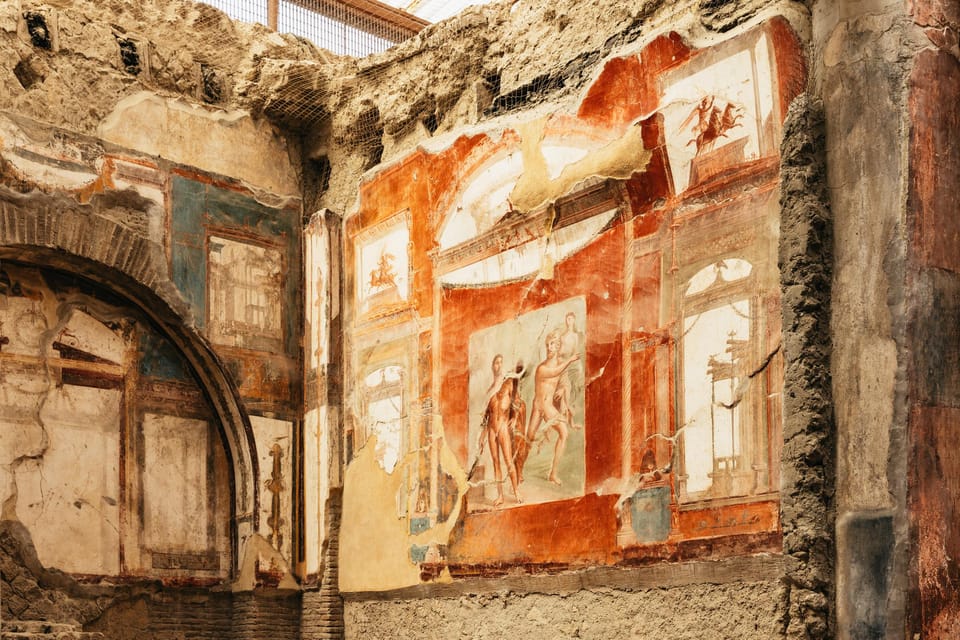
People often compare Herculaneum to Pompeii because both were frozen in time by Vesuvius in 79 AD. The key difference is how well preserved Herculaneum is. You don’t just see ruins—you see a city that still reads like a place where real people cooked, shopped, bathed, and hosted guests.
The tour is built for exactly that. You’re not doing a long, vague walk with random stops. You follow an archaeologist’s route through the spaces that most clearly explain Roman life and the stop-and-start nature of the disaster.
And the skip-the-line part matters more than it sounds. With only 2 hours on-site, every minute spent outside the gate is a minute you can’t get back.
You can also read our reviews of more tours and experiences in Naples.


Entering fast: where to meet and how to not miss your group
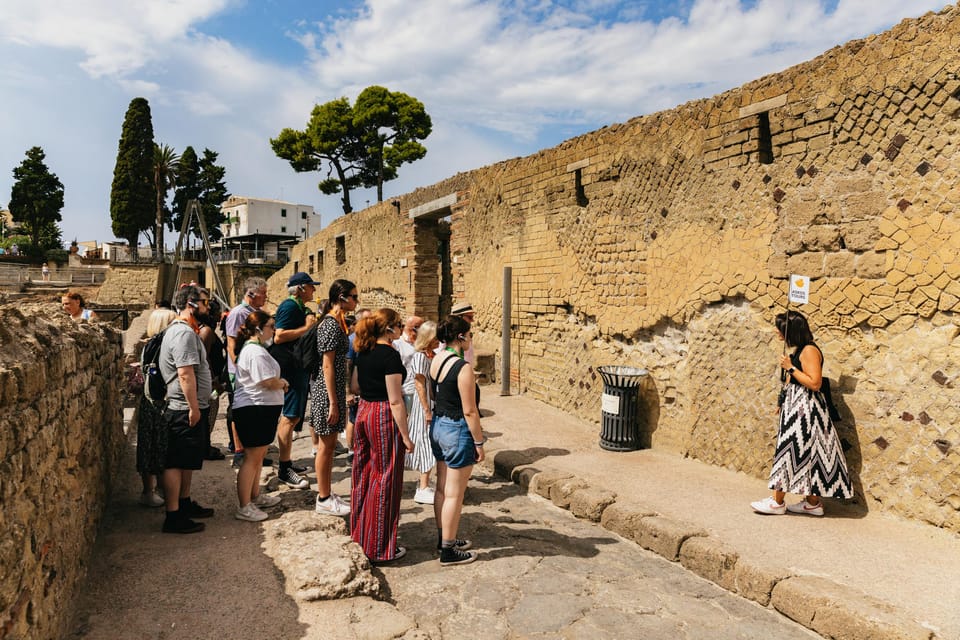
Meet at the ticket office of the Herculaneum Ruins, with your guide holding an Askos Tours sign. The starting location is listed as Via dei Papiri Ercolanesi, so if you’re coming from Naples, give yourself buffer time to get oriented and find the right booth.
You’ll also want to think about what you bring. The tour isn’t designed for bags and bulky items—no luggage or large bags. This isn’t the kind of stroll where you can stash everything and forget it.
If you’re the type who gets to meeting points exactly on time, I’d set a slightly earlier goal. A smooth start means you can settle into the explanation instead of racing to catch up.
The 2-hour structure: what you’ll actually see in sequence
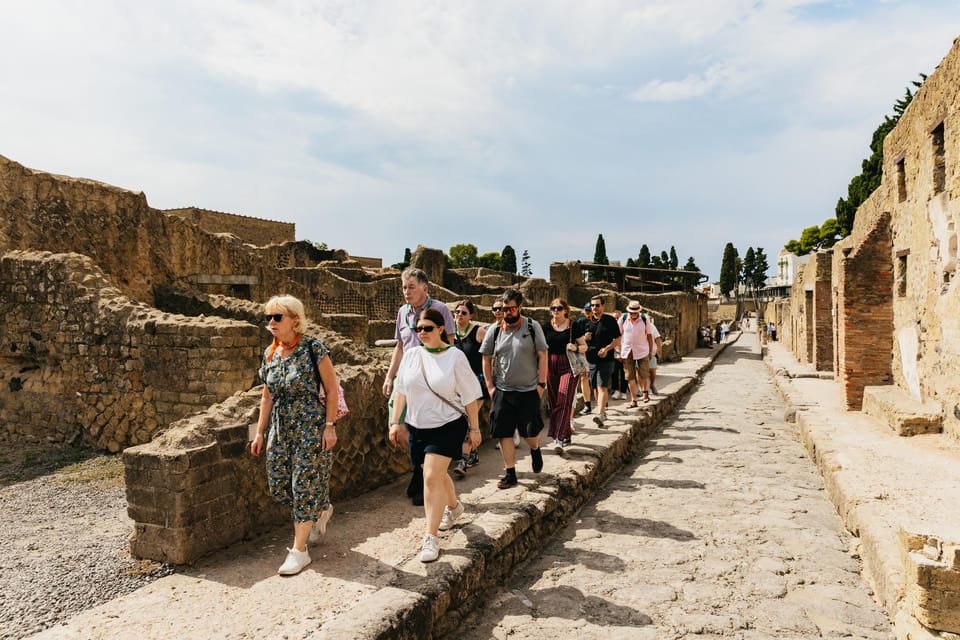
This tour runs for 2 hours at the Archaeological Site of Herculaneum, and it moves through a compact set of highlights. The emphasis is on understanding the city: its status, its economy, its daily routines, and the tragedy that ended it quickly.
The route is also smart for first-timers. You’ll get a sweep of major areas—homes, public/religious spaces, and bath-related zones—so you leave with a “map in your head,” not just photos.
One practical note from experience reports: groups can be around 15–20 people, so audio can be better toward the middle. If you drift to the back, you might miss pieces of the guide’s story.
Casa dei Cervi: learning Roman domestic life without feeling rushed
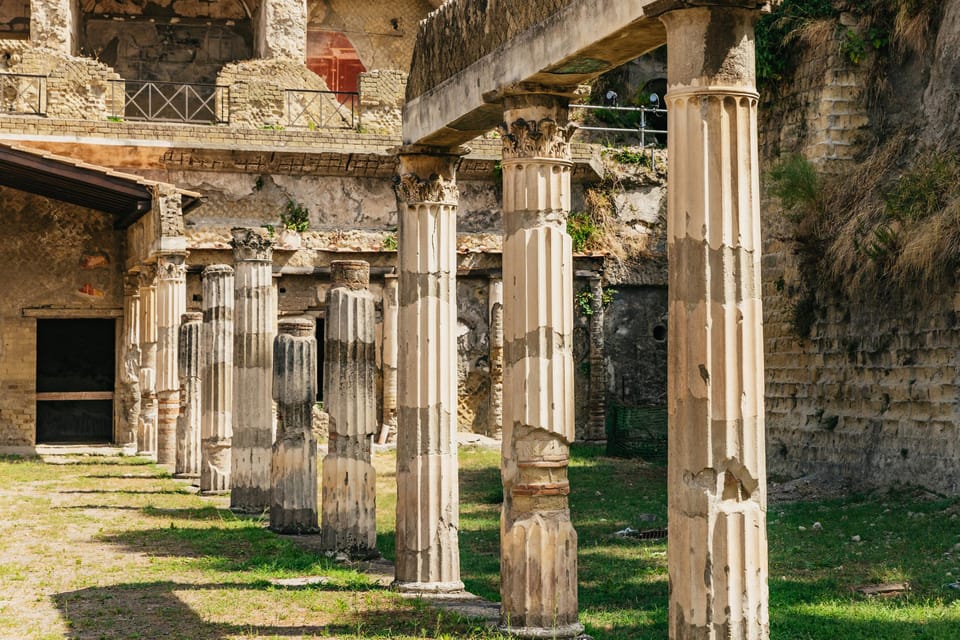
The tour includes Casa dei Cervi (House of the Deer), which is a great early stop because it shows how Roman homes were organized beyond the fancy parts you might imagine. Even when you’re looking at remains, you can usually piece together how rooms connected and what people used them for.
Why it works on this tour: the guide can tie your eye to the layout. Instead of “here’s a wall,” you start seeing patterns—where a household likely welcomed guests, how rooms would have felt, and what decoration choices were signaling.
If you’re into everyday life, this kind of stop is where the city starts to feel human. If you’re mostly focused on art, you’ll still get value here, because the home context helps you understand what those ceramics and murals meant in use.
House of Neptune and Amphitrite: the standout house you’ll remember
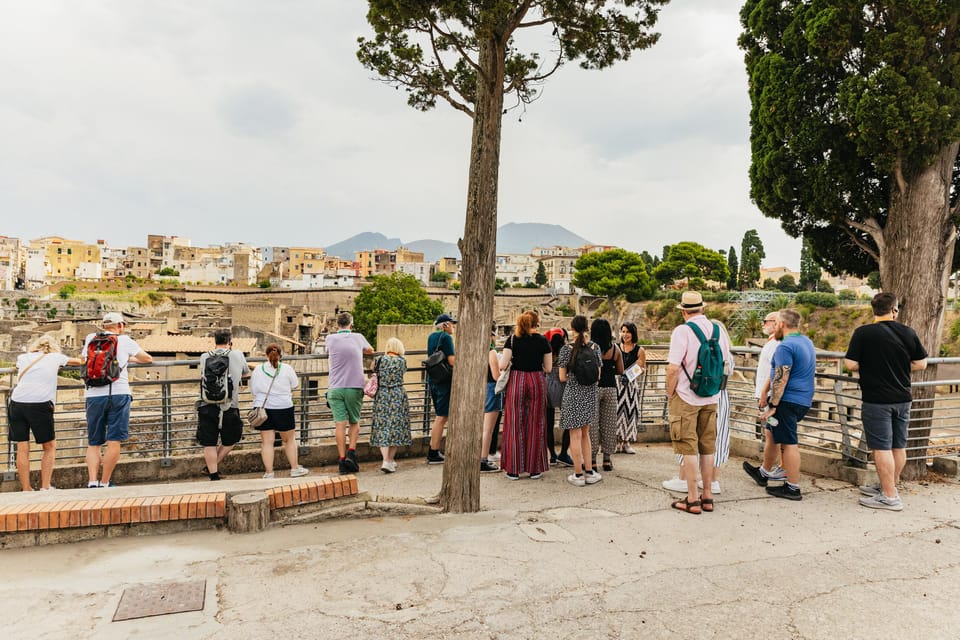
Casa di Nettuno ed Anfitrite (House of Neptune and Amphitrite) is one of the big names on the site, and this tour treats it that way. You’ll spend time in a household space linked to sea-themed mythology—perfect for understanding how wealth and culture showed up in decoration.
This is where the preservation really matters. Herculaneum can show things Pompeii often can’t, in part because of how the eruption affected different materials. You may see evidence of decoration surviving in ways that make you realize you’re not just looking at “old rocks.”
The best guides use these moments to explain status: who lived here, what merchants and nobility had reason to display, and why the house’s theme fits what a prosperous household wanted to project.




The House of Skeletons and nearby homes: the shock factor, explained
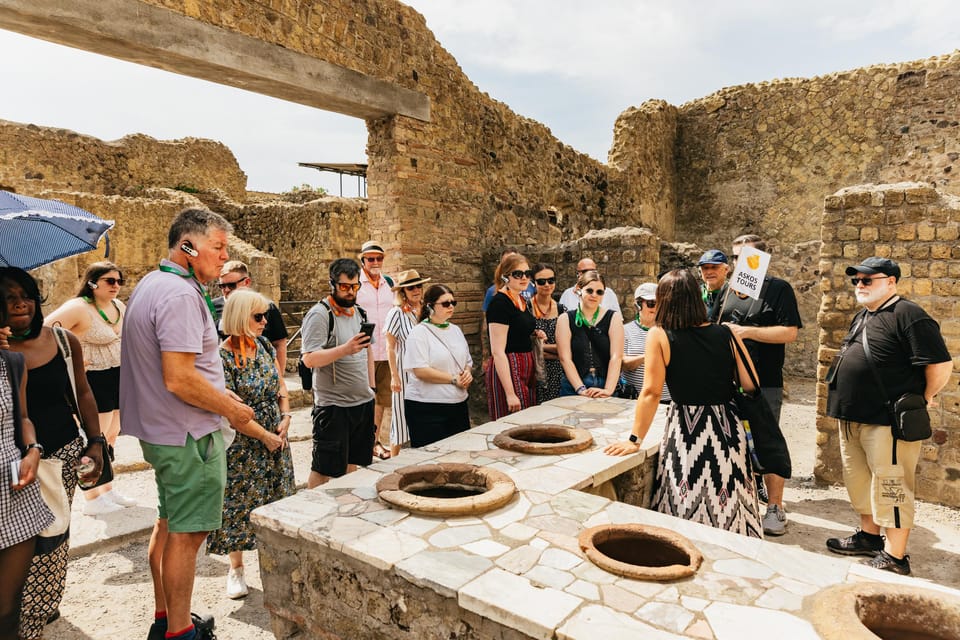
The tour includes the House of Skeletons. It’s an uncomfortable stop, but it’s also one of the most important. This site doesn’t let you keep history at a safe distance.
Your guide’s job here is crucial: they connect what you’re seeing with the “how” and “when” of the eruption. The more you understand the sequence, the less it becomes a generic disaster photo-op.
If you have a strong stomach and you want the story told with context, you’ll like this section. If you prefer a lighter day, this is the moment you’ll feel it most.
The waterfront tragedy: where escape efforts meet hard evidence
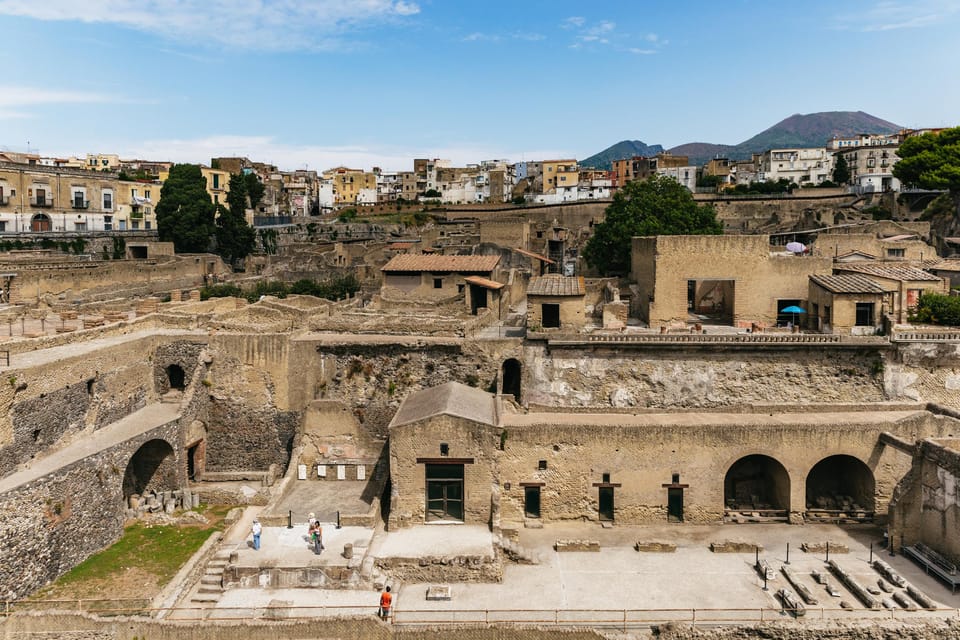
One of the tour’s most gripping elements is the waterfront area, where remains represent more than 300 people who died trying to escape by taking to the ocean.
This part hits because it’s not only about buildings. It’s about people moving fast and making choices under extreme pressure. You’ll likely hear about how the catastrophe played out differently than you might assume from other sites.
It’s also a lesson in the “what got destroyed and what got preserved” puzzle. The same event that ended lives also trapped and protected traces—so you’re learning from both absence and survival.
Temple stops: Sacellum of the Augustales and the Forum
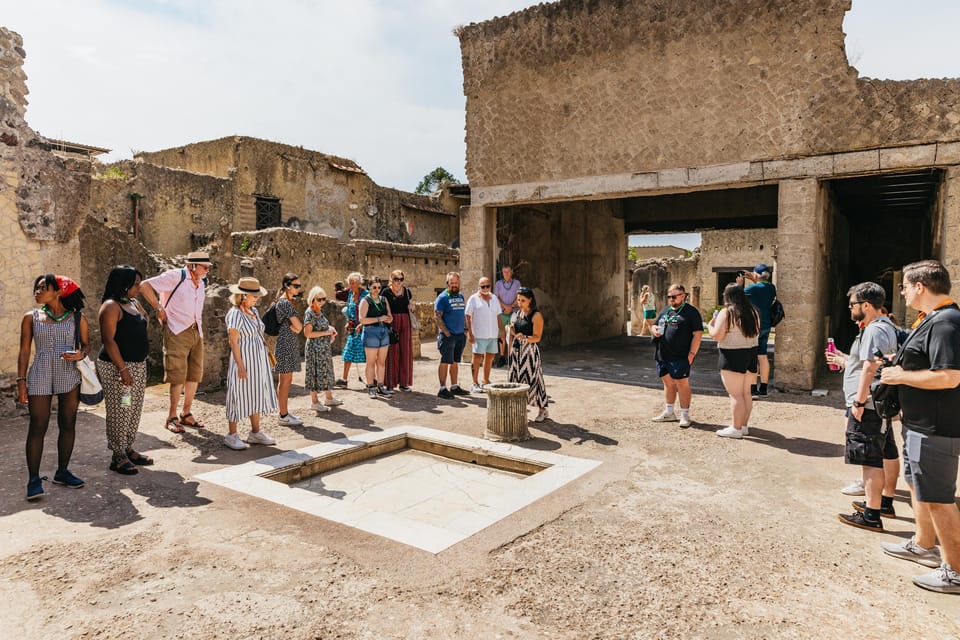
You’ll visit the Sacellum of the Augustales (Temple/chapel connected to the Augustales) and also see the Forum area. This is the value-add that turns Herculaneum from a set of pretty rooms into a functioning city.
In Roman towns, sacred and civic spaces are where communities expressed identity—through worship, status, and public life. In Herculaneum, the preservation helps you read those spaces more clearly because you can still follow how the city organized itself.
If you’re thinking, I came for ruins, not government—good. But the Forum and the Augustales area make the “ruins” make sense. They explain why certain buildings mattered to the people living nearby.
Thermal baths and gymnasium-type spaces: daily routine made visible
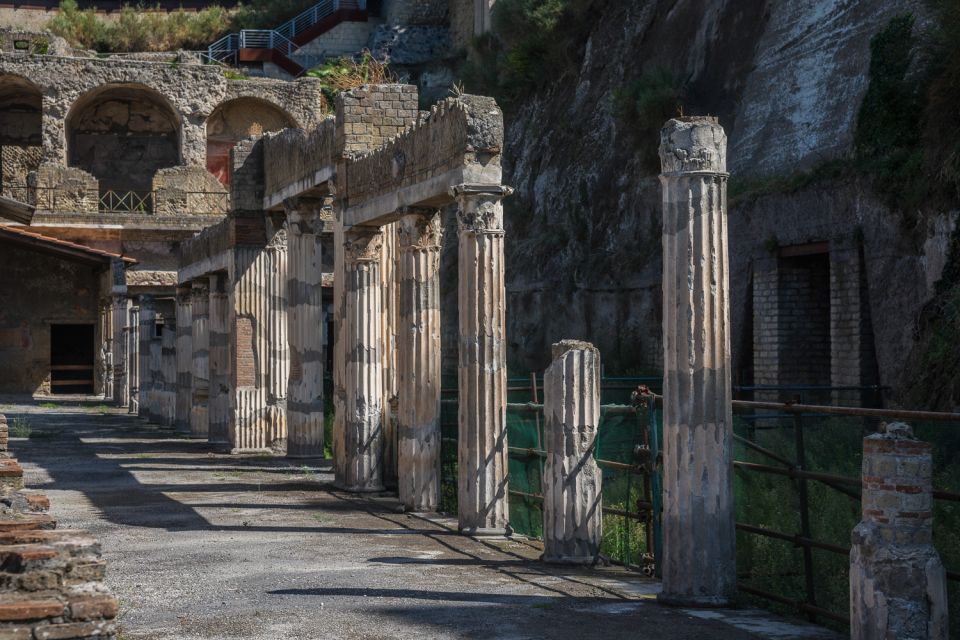
Thermal baths show up in this tour, along with stops connected to the gymnasium area. These are daily-life spaces. Not just “look at columns,” but “imagine the rhythm”: bathing, social time, routine movement through a facility.
What makes this section memorable is how easy it is for a good archaeologist guide to turn stone circulation into human behavior. Even with limited remain in some spots, you can still grasp flow—where people would gather, where transitions likely happened, and how the facility would have supported city life.
If you’re visiting after seeing Pompeii, pay attention to what your guide emphasizes about the differences. That contrast is often where you learn the most.
Houses you’ll also pass: Albergo, Salone Nero, and the skeleton-house cluster
The tour route also includes:
- Casa dell’Albergo
- Casa del Salone Nero
- And the House of Skeletons again in the overall flow (as part of the same domestic cluster)
These stops matter because they show the range of private space in the city. A single house tells part of the story. Several houses, viewed in sequence, help you understand how residents lived across different wealth levels and how design choices reflected that.
From the way guides handle these areas, you can usually pick up a simple pattern: the more you know what you’re looking at (layout, decoration purpose, and public vs private boundaries), the more the ruins stop feeling random.
Headsets and admission: why the price can feel fair
The tour price is $53 per person for a 2-hour experience, and it includes guided touring, admission fees, an archaeologist guide, and headsets.
Site entry alone is listed as 16.00 euros for adults (and a reduced rate for EU citizens 18–25). Since admission fees are included in the tour, you’re mostly paying for the guide expertise, skip-the-line access, and the audio headsets that keep you from playing archaeology charades.
Is it free money? No. But for Herculaneum—where 2 hours can disappear fast if you’re searching around without help—it’s solid value. You get context fast, and you get to see key highlights without losing precious time.
The real practicalities: shoes, sun, and rain-shine walking
Herculaneum is vast and exposed. You’ll want comfortable closed-toe shoes (sandals can be a pain), plus sunscreen and a hat. The tour runs rain or shine, so bring a raincoat if the weather looks sketchy.
Also plan for the site’s physical reality: it’s not set up as an easy stroll. Even if the distances aren’t huge, the ground can be uneven, and you’re moving continuously during the tour.
And about accessibility: the tour is not suitable for people with mobility impairments and wheelchair users. If mobility is a concern, double-check before you book.
Should you add more time after the tour?
You might be tempted to squeeze in extra wandering after the 2-hour guided portion. That can work well, because the tour gives you the framework you need to explore at your own pace.
A couple of guides and experience reports suggest that later slots can leave less time for quiet viewing once the site closes. If you want time to slow down—especially for mosaics, ceramics, and museum-like areas—aim for a morning tour when possible.
Who this tour is best for
Book this if you want:
- An archaeologist-led Herculaneum guided tour that explains what you’re seeing
- A fast route through major highlights like the House of Neptune and Amphitrite and key temple/bath areas
- Skip-the-line convenience so your time goes to ruins, not waiting
You might skip it if you want an unstructured, long self-guided experience with lots of downtime, or if walking exposure and uneven surfaces are an issue for you.
Final verdict: should you book this skip-the-line Herculaneum tour?
I’d book it if you’re visiting Herculaneum for the first time and you care about understanding the story behind the stones. The combination of skip-the-line entry, headsets, and an archaeologist guide turns 2 hours into a high-impact visit, especially compared with trying to figure it out on your own.
If you can handle heat, sun, rain, and steady walking, you’ll get a lot of value here—more than you’d expect from the short duration. And if you’re choosing between Herculaneum and Pompeii, this tour is an especially strong way to appreciate why Herculaneum can feel quieter, closer, and more personal.
FAQ
How long is the Herculaneum skip-the-line guided tour?
The tour lasts 2 hours.
Does this tour include skip-the-line entrance?
Yes. You get convenient skip-the-line access.
What is the meeting point for the tour?
Meet at the ticket office of the Herculaneum Ruins. Your guide will be holding an Askos Tours sign.
Is admission to Herculaneum included in the price?
Yes. Admission fees to Herculaneum are included.
What languages are available for the live tour guide?
English, Italian, German, Spanish, and French.
Is the tour wheelchair accessible or suitable for mobility impairments?
No. It is not suitable for people with mobility impairments or wheelchair users.