Milan is best seen at bicycle speed. This guided ride links classic sights like Teatro La Scala and the Duomo di Milano with contrasty neighborhoods—Brera, modern Porta Nuova, and Roman-era leftovers—while you stop for photos and explanations along the way. I especially like how the route works in one smooth morning loop, and how the guides keep the story clear and practical. One thing to consider: some stretches run through narrow, pedestrian-heavy streets and you’ll feel the texture of cobbles and brick under your tires.
For $47.16, you’re paying for time, focus, and momentum. You get the bike and helmet included, plus a guide to help you read what you’re seeing instead of just snapping pictures and moving on. If you want e-bike support, there’s an extra fee, and the ride still isn’t “motor-thru-anywhere.” It’s more like a well-led city stroll—just faster and on two wheels.
In This Review
- Key things to know before you pedal Milan
- A fast, sensible overview of Milan from the saddle
- Price and what you’re really paying for
- Entering Porta Ticinese: where the ride begins and the mood sets
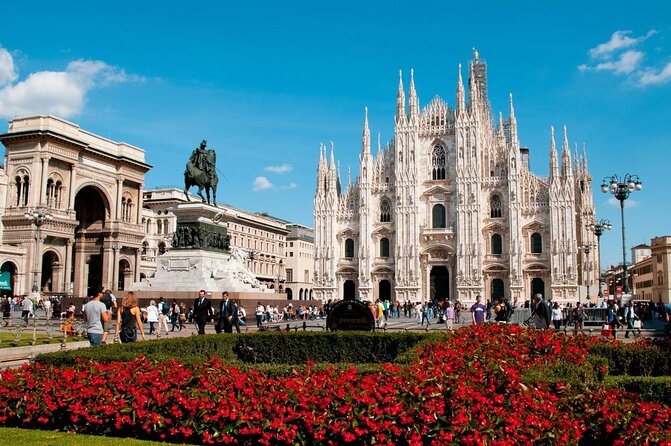
- Duomo di Milano, Vittorio Emanuele II, and the city’s big visual anchor
- Teatro alla Scala: the outside look that actually teaches you something
- Brera: artisan streets, churches, and why walking alone can miss the point
- Porta Nuova’s modern skyline: architecture nerds will grin
- Castello Sforzesco and the Leonardo connection
- Parco Sempione: the green lung break you’ll appreciate
- Roman leftovers at Colonne di San Lorenzo
- Getting to know Milan’s rhythm: how the whole route fits together
- Bike comfort, traffic reality, and safety on real Milan streets
- Who this Milan bike tour is best for (and who should skip it)
- Should you book this Milan bike tour?
- FAQ
- How long is the Milan bike tour?
- Where does the tour start, and when?
- What’s included in the price?
- Are e-bikes available?
- What sights will I see?
- Is there a minimum age?
- Is the tour affected by weather?
Key things to know before you pedal Milan
- A tight loop that covers old power, modern design, and Roman-era traces
- Helmets and bike rental are included in the base price
- Photo stops at major landmarks, not just long straight riding
- One-morning overview that helps you plan the rest of your trip
- Group size can feel busy in the most crowded pedestrian areas
- Cobblestones and narrow streets mean you’ll want decent bike balance
A fast, sensible overview of Milan from the saddle
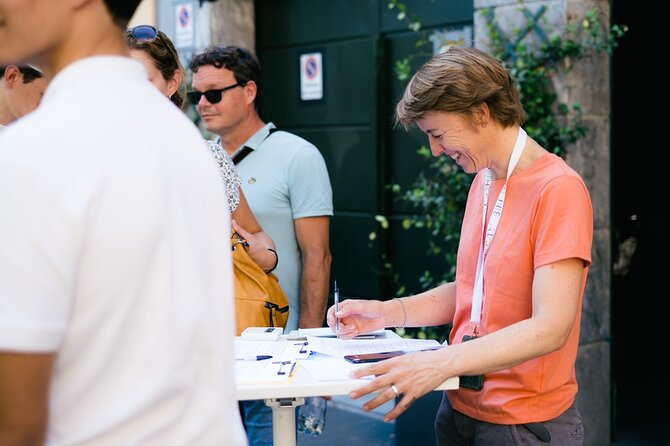
Milan can feel like two cities at once: fashion show windows and heavy history right next to each other. This tour solves that problem by moving you along in a way that’s quick enough to cover a lot, but slow enough that the guide can explain what matters.
You’ll cycle through central Milan’s “glam” zones, then shift gears into districts known for artists, churches, and artisan workshops, and later you’ll hit the modern architecture cluster around Porta Nuova. That mix is the whole point: Milan isn’t one vibe. It’s a layered argument between centuries, staged on the same streets.
And the pace works. It’s long enough to make you feel like you did something real, yet short enough that you’re not wrecked afterward. Several guides on this route (including names like Paulo, Sandra, Marco, Angelo, Simon, and others) are praised for keeping the ride smooth and the history understandable, without turning it into a lecture marathon.
Possible drawback: Milan traffic is a reality, and the “rules of the road” are different from what you might expect if you mostly bike in your home city. The tour is designed to be safe, but it still includes tight streets with lots of people walking.
You can also read our reviews of more tours and experiences in Milan.
Price and what you’re really paying for
At $47.16 per person, you’re not buying a ticket to a museum. You’re buying an efficient, guided transportation package that also functions like a history primer.
Here’s the value math that matters:
- Bike + helmet rental are included. That alone saves you the hassle (and cost) of arranging gear.
- You get a 3 hours 15 minutes guided route, which is long enough to see real differences across neighborhoods without spending your whole day traveling.
- Stops are built around major landmarks—Duomo, Teatro alla Scala, Sforza Castle—so you leave knowing what to target later on foot.
If you’re nervous about effort, note that e-bikes cost an extra €15 per person and are only offered if available. In other words: this tour is “easy ride” friendly, but it’s not a guarantee of zero effort.
Entering Porta Ticinese: where the ride begins and the mood sets
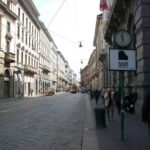
The tour starts at Via Vetere 11 at 10:00 am, then you roll out from Porta Ticinese. This area ties to an ancient city gate and has a more creative, bohemian energy than Milan’s polished postcard zones.
In practical terms, I like starting here because it sets expectations. You’re not immediately thrown into the heaviest landmark traffic. You get a short runway to find your balance, get comfortable with your bike, and settle into the “ride + listen + stop for photos” rhythm.
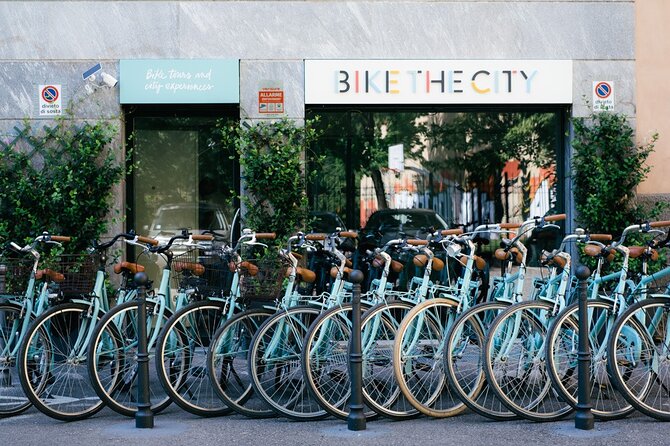
You’ll pass through classic central streets on a classic Dutch-style bike, and that style choice matters. It’s built for stability—good when you’re mixing pedestrians, turning lanes, and uneven pavement.
Duomo di Milano, Vittorio Emanuele II, and the city’s big visual anchor
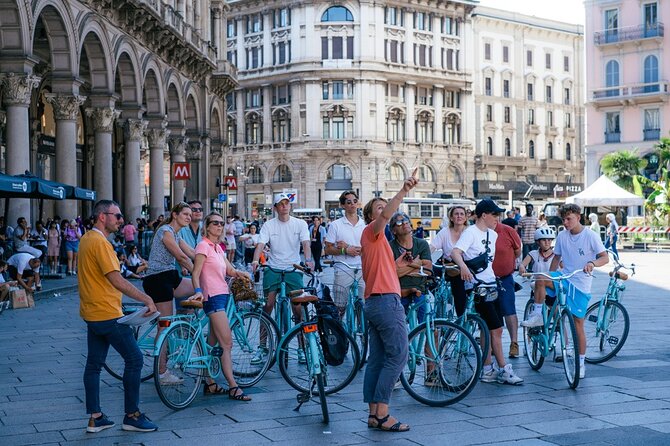
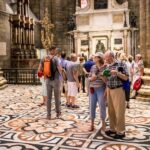
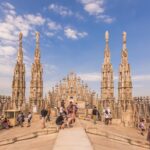
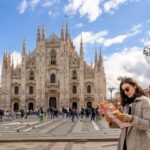
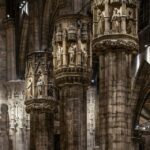
One of the most effective moments on this kind of tour is when the city’s signature building appears and everything clicks. At Duomo di Milano, you’ll get that payoff with time for photos and an explanation of how the Gothic cathedral shaped Milan’s identity.
Right around this area, you’ll also see references that help you connect the dots:
- the Royal Palace (seen from the route)
- the Museo del Novecento (also part of the visual corridor)
- the Galleria Vittorio Emanuele II, which is one of those places you understand even if you just walk through a slice of it.
A note for planning: this tour is focused on sightseeing and orientation. If you want to go inside the Duomo or do a longer, ticketed experience there, you’ll want to plan that separately after the bike ride, while your mental map is fresh.
Teatro alla Scala: the outside look that actually teaches you something
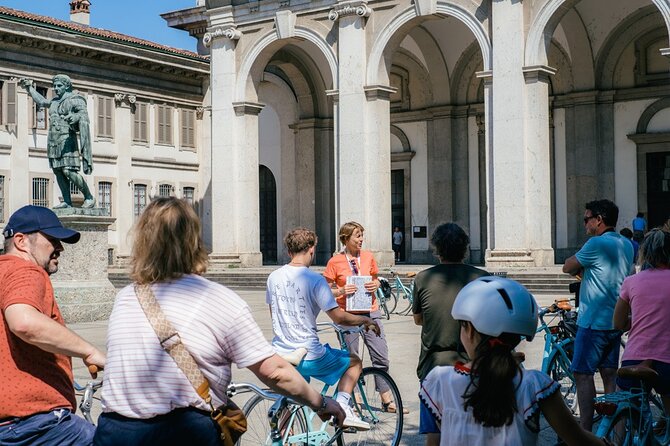
From the Duomo area you head toward Teatro alla Scala. You don’t need an opera ticket to understand why this theatre matters. The guide explains the story and what the place has meant for performers and Milan’s cultural status over time.
This stop is also useful because it shows you how Milan uses architecture as branding. Even when you’re only viewing from the street, you get the scale, the polish, and the sense that this is a place people have celebrated for generations.
Expect a short pause—enough for photos and a few key facts—then you’re back on the bike to keep momentum.
Brera: artisan streets, churches, and why walking alone can miss the point
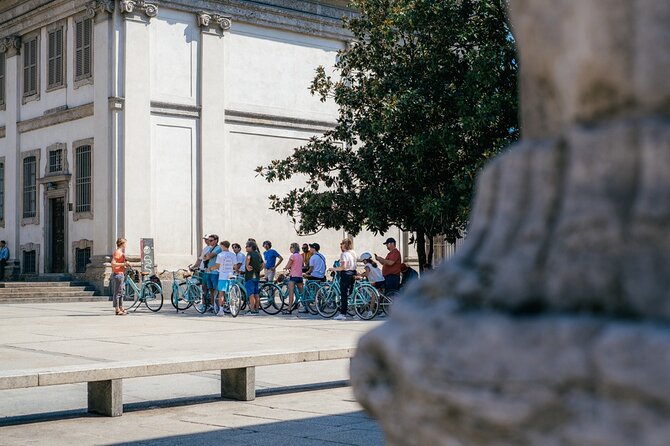
After Scala, the ride shifts to Brera, a neighborhood that feels like it was designed for wandering, with small workshops, historic houses, and churches threading through the street pattern.
This is one of those districts where a car or bus window makes it harder to appreciate the details. On a bike, you move slowly enough that you can notice:
- older building styles tucked between tighter streets
- side lanes that you might never take on your own
- the way the neighborhood’s character changes block by block
The guide may also point out the Pinacoteca area in Brera. Even if you don’t go inside during this tour, you’ll understand why art lovers end up here.
If your group is comfortable with tight turns and crowded sidewalks, this portion is genuinely satisfying. If not, just remember: this is city center cycling, not a countryside bike path.
Porta Nuova’s modern skyline: architecture nerds will grin
Once you leave Brera, you’ll ride into Porta Nuova, where Milan swaps medieval layers for clean lines and big statements. Here you can see and reference:
- Palazzo Lombardia
- Biblioteca degli Alberi
- Unicredit Tower
- Bosco Verticale
This section is a great “contrast stop.” It helps you understand that Milan’s design culture isn’t only about fashion. It shows up in how the city builds its future skyline.
Even if you’re not an architecture person, this part still works because it gives you something tangible to compare later when you visit the same buildings from street level again.
Castello Sforzesco and the Leonardo connection
Then comes Castello Sforzesco, and this is where the tour’s story structure feels strongest. You’re not just seeing a fortress; you’re hearing how it was tied to power and governance, including notes about the first duke of Milan and how the castle took shape starting in the 14th century.
The guide also points to the Leonardo da Vinci angle—Leonardo was called to Milan in 1482, and that connection adds weight to what you’re looking at.
This stop is long enough for you to take in the courtyards and get your bearings. It also gives you a reset before the more human-scale stretch of greenery afterward.
Parco Sempione: the green lung break you’ll appreciate
From the castle area, you ride into Parco Sempione, Milan’s green “breathing space.” You’ll slow down here in a way that’s not just scenic—it’s practical.
Pausing in a park helps riders reset for the final segment. Several guides in this system are noted for thoughtful pacing and break timing, and that matters on a ride that involves pavement textures and turns.
You’ll see the Peace Arch in the park. It’s a small detail, but it’s the kind of thing that turns a “pretty park moment” into an actual stop with context.
Roman leftovers at Colonne di San Lorenzo
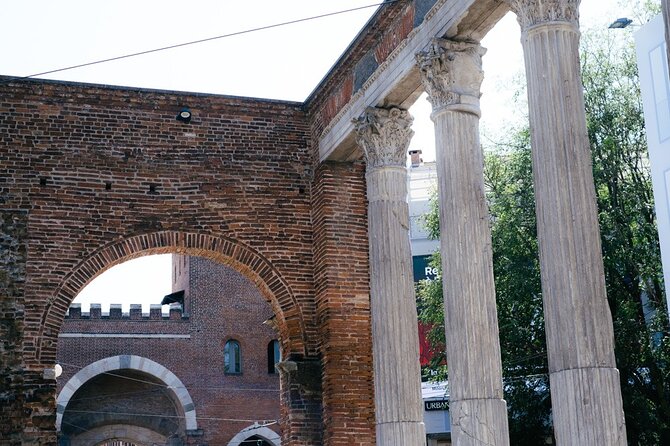
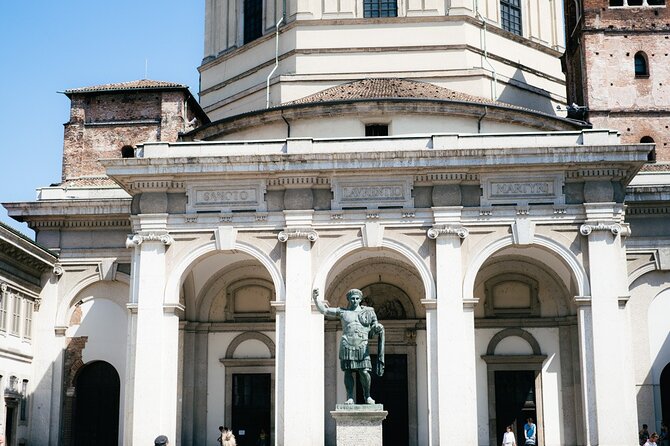
Before the tour ends, you’ll circle back with Colonne di San Lorenzo, tied to the Roman era when Milan was a major capital city.
This is one of the most useful “hidden in plain sight” moments on the route because the Roman traces can feel easy to overlook if you don’t have a guide telling you what you’re seeing. The guide helps connect these columns to what the Roman world included—like the broader entertainment and civic layout from that period.
Even if Roman history isn’t your favorite topic, this stop gives Milan an extra layer. It helps you see the city as a long-running story, not a set of disconnected landmarks.
Getting to know Milan’s rhythm: how the whole route fits together
The best way to think about this tour is as a mental map you build in real time.
- You start at Porta Ticinese, where the city’s gate-and-district history feels personal.
- You hit the Duomo and nearby landmarks, so the city’s most iconic structure becomes your reference point.
- You see Scala, learning why Milan’s cultural prestige isn’t accidental.
- You move through Brera, where the texture of streets and workshops becomes the story.
- You ride up into Porta Nuova, proving Milan keeps evolving.
- You finish with Sforzesco → park → Roman columns → Duomo finale, so the day ends on two big anchors: medieval/Renaissance power and Gothic identity.
That structure is what makes it valuable for first-time visitors. If you do only one big “orientation” activity in Milan, a route like this can save you hours later—because you’ll know where you want to return and what to prioritize.
Bike comfort, traffic reality, and safety on real Milan streets
Let’s talk practicalities, because this is a bike tour in a dense city.
What you’ll likely feel:
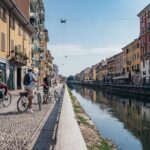
- Cobblestones and brick stretches can rattle the bike a bit. One rider noted dedicated bike paths aren’t always nicely paved, so expect some vibration.
- Streets can be narrow with lots of pedestrians, especially near landmark zones and in districts with tight lanes.
This doesn’t mean the tour is unsafe. The guide keeps the group together, and riders in the feedback often mention safety as a strong point. But if you’re new to biking or you’re sensitive to uneven surfaces, go in with the right mindset: slower, careful turns matter more than speed.
Group size matters too. The tour caps at 30 travelers, and that’s normally fine. Still, one critique pointed out that larger groups can feel crowded, especially in pedestrian-heavy areas. If you’re the type who hates waiting for people to pass, you might want to mentally brace for brief slowdowns.
English is offered, and most riders are satisfied with the explanations. Still, one review noted that English could be harder to follow on occasion depending on the guide. If you’re strict about language clarity, ask if you can request a guide who communicates more clearly for your needs, when possible.
Who this Milan bike tour is best for (and who should skip it)
This is a strong fit if:
- you want a first-day overview and a head start on planning
- you like history that comes with street-level context
- you can ride a bike at city pace without needing constant bike-lane segregation
It’s also a good choice for families with kids who meet the requirements. The minimum age is 9 years, and there’s guidance for shorter riders between 135 and 155 cm where you should email to reserve the right bike since availability can be limited.
You might consider a different option if:
- cobblestones make your hands or back unhappy
- you’re not comfortable riding in narrow city streets with pedestrians
- you’re hoping for mostly off-road cycling (this isn’t that kind of route)
Should you book this Milan bike tour?
If you’re in Milan for a short visit, I’d book it. For $47.16, the combination of included bike + helmet, a guided route across major sights, and a built-in orientation plan is hard to beat. You’ll come away with a clearer mental map than you’d get from wandering alone, and you’ll know where to spend your later time.
Book it especially if this is your first time in the city and you want Duomo, La Scala, and Sforzesco on your radar without spending the whole morning walking. And if you’re unsure about the ride effort, consider the €15 e-bike option if it’s available—just be ready for the same city-street realities either way.
FAQ
How long is the Milan bike tour?
It’s about 3 hours 15 minutes.
Where does the tour start, and when?
The meeting point is Via Vetere, 11, 20123 Milano MI, Italy, and the start time is 10:00 am.
What’s included in the price?
Bike and helmet rental are included.
Are e-bikes available?
E-bikes are available subject to availability for an extra €15.00 per person.
What sights will I see?
You’ll cycle past major landmarks including Duomo di Milano, Teatro alla Scala, Brera District, Castello Sforzesco, Parco Sempione, and Colonne di San Lorenzo, plus other central neighborhoods.
Is there a minimum age?
Yes. The minimum age is 9 years.
Is the tour affected by weather?
Yes. It requires good weather. If it’s canceled due to poor weather, you’ll be offered a different date or a full refund.