REVIEW · MILAN
Milan: Navigli Canal Boat Cruise
Book on GetYourGuide →Operated by Z V SRL · Bookable on GetYourGuide
Milan looks different from the water. This Navigli canal boat cruise glides past classic waterways and nightlife hangouts, with landmark explanations delivered by QR-code audio as you float along. I love how the trip feels relaxed and easy, with a smooth electric boat ride and lots of chances to take photos without rushing.
I also like the historic punch packed into 50 minutes. Vicolo dei Lavandai is one of those places you can’t really understand from the street, and it becomes much clearer once you’re looking at it from the canal. You also pass big-name Milan touchpoints like San Cristoforo sul Naviglio and the Canottieri Olona rowing club.
One thing to plan for: the commentary runs through a QR code on your phone, and a few riders say audio can be harder to catch from outside the boat. If you want the details, bring a way to listen confidently (headphones help a lot) and pick your spot.
In This Review
- Key highlights you’ll remember after the cruise
- Why the Navigli Canal boat cruise feels like a Milan cheat code
- Getting on board at Alzaia Naviglio Grande, 4
- The electric boat ride: smooth water, easy pacing
- QR-code audio: how to get the commentary without losing it
- Naviglio Grande: the canal stretch that sets the tone
- Vicolo dei Lavandai: the “washing alley” you can’t miss once you see it
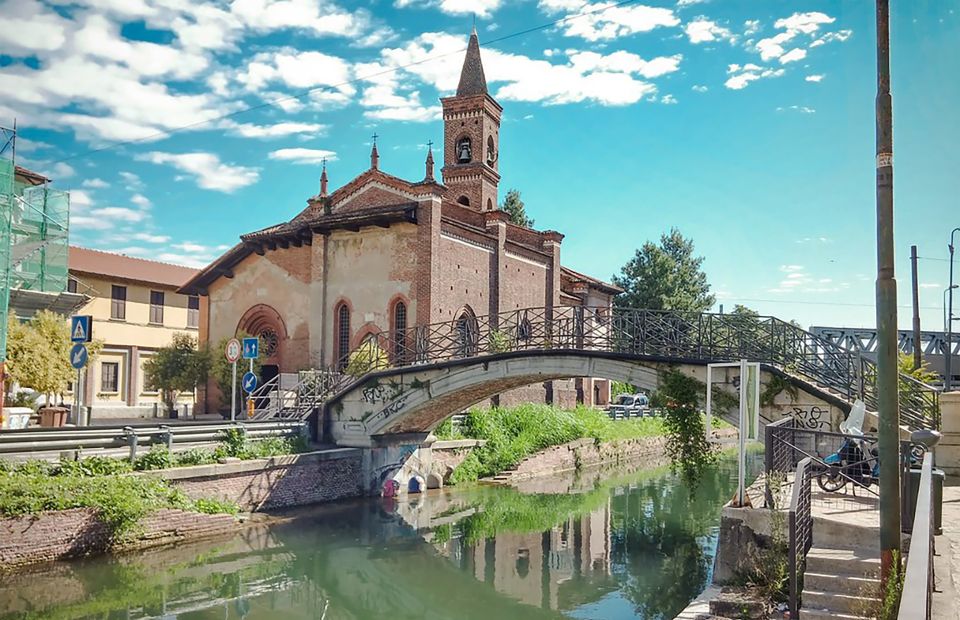
- San Cristoforo sul Naviglio: church beauty from a water-level angle
- Marscarpone, cheesemakers, and the canal as a timeline
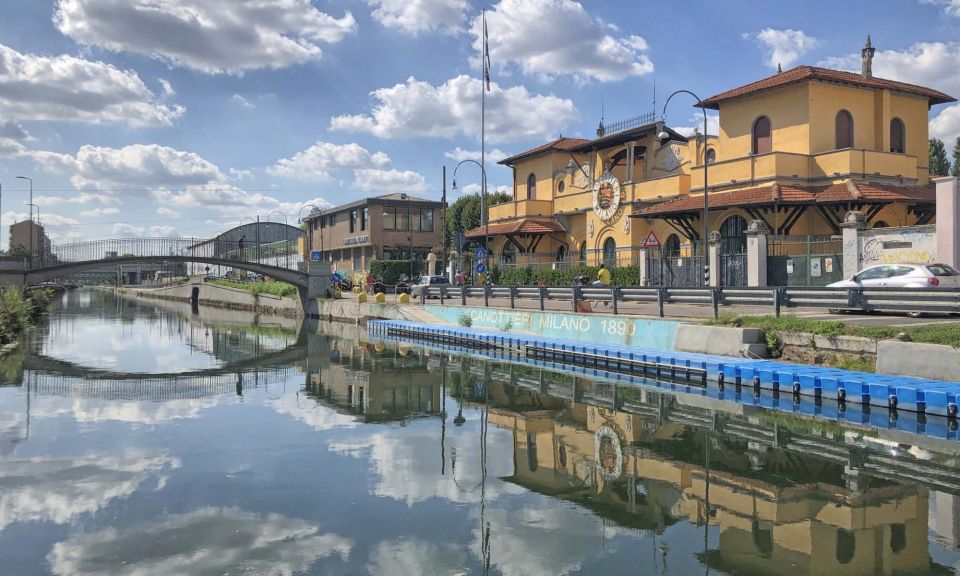
- Canottieri Milano Olona 1894: sports history on the waterline
- Scodellino bridge and the shift toward modern Darsena
- Trophy bridge and the Conchetta: where Leonardo’s engineering takes over
- Sunset timing: why golden hour makes this worth it
- Drinks onboard and the small gotchas
- Value check: is $25 for 50 minutes actually fair?
- Who this cruise suits best
- Practical tips so your ride goes smoothly
- Should you book the Milan Navigli Canal Boat Cruise?
- FAQ
- How long is the Navigli canal boat cruise?
- What languages are available for the audio commentary?
- Do I need an app to use the audio guide?
- Is the boat wheelchair accessible?
- Are luggage or large bags allowed on board?
- Is there a toilet on the boat?
Key highlights you’ll remember after the cruise
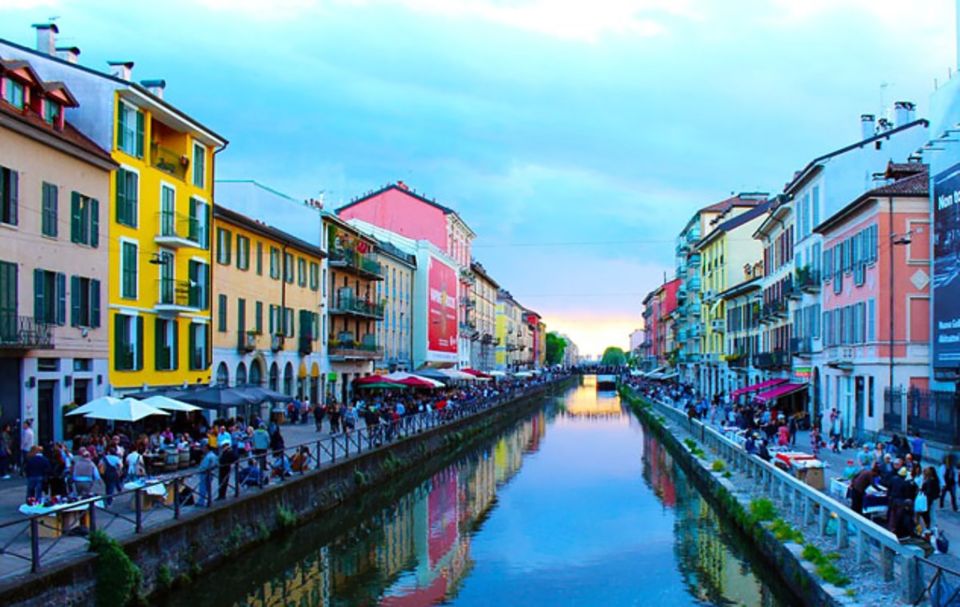
- Electric boat on the Navigli Canal with a calm, modern feel on the water
- QR-code audio guide in multiple languages, no app download
- Vicolo dei Lavandai viewed the way it was meant to be seen
- Darsena di Milano nightlife waterfront, bars and restaurants close to the canal
- Leonardo da Vinci’s Conchetta and its functioning navigation basins
Why the Navigli Canal boat cruise feels like a Milan cheat code
If you only see Milan from the street, you miss a big part of the city’s personality. The Navigli are one of the last places where Milan can still feel like a living, working waterway instead of just a backdrop for museums and fashion. This cruise gives you that angle fast—no ticket-stacking, no long walks, and no complicated route planning.
The timing is also smart. At 50 minutes, you can fit this in before dinner in Navigli or after an afternoon of sightseeing. And because the boat goes out and returns the same way, you’re not “burning” time—your eyes get a second pass at the same canal, but the commentary focuses on different highlights.
You can also read our reviews of more tours and experiences in Milan.

Getting on board at Alzaia Naviglio Grande, 4
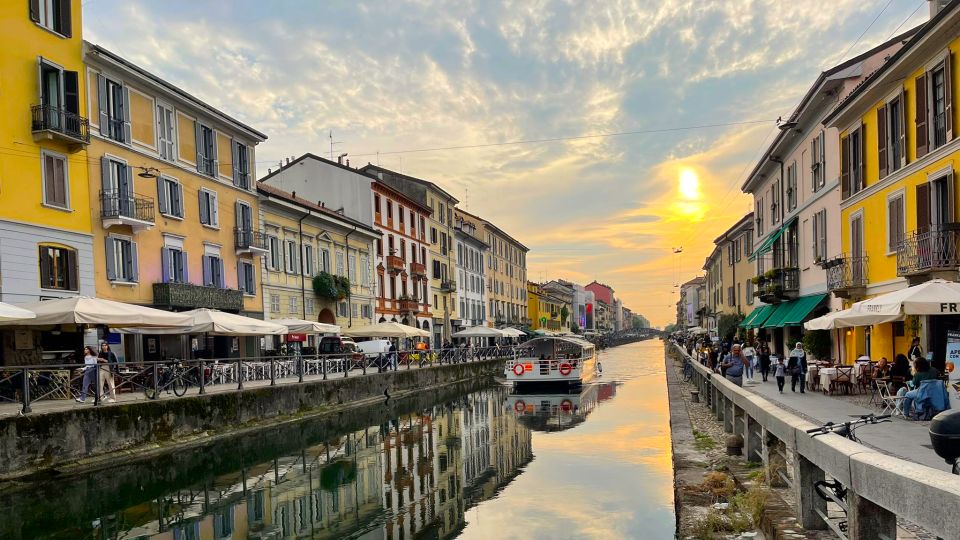
You start at Alzaia Naviglio Grande, 4, a straightforward pickup spot right in the canal area. The cruise is set up as a small group (up to 10 participants), which matters more than it sounds. It means less shoulder-to-shoulder crowding and more freedom to stand or sit where you have the best sightlines.
The boat staff are there to help you board, and there’s an Italian and English-speaking host available. Once you’re underway, the experience becomes self-paced in a good way—you can sit down for comfort or stand up to frame photos. Just keep in mind there’s no allowance for luggage: large bags and luggage aren’t allowed, so travel light.
Also worth noting: some riders mention there’s no toilet on board. If you’re prone to needing a break during hour-long activities, take care of it before you arrive.
The electric boat ride: smooth water, easy pacing
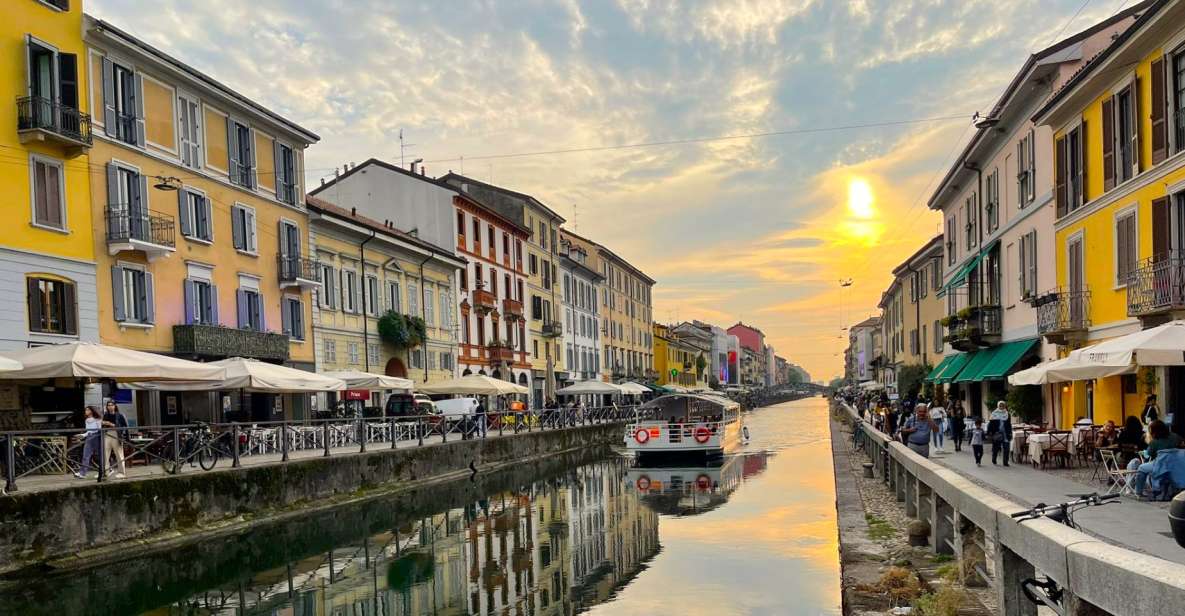
This is a modern cruise on a new electric boat, and that shows in how quiet and stable it feels on the water. You’re moving at a pace that lets you actually watch details. Between bridges, canal walls, and the changing geometry of buildings along the banks, there’s enough to look at without feeling trapped by a tight schedule.
Because the route travels along the Navigli and then back the same way, you don’t get the “hours on a long route” feeling. Instead, you get a curated loop of what makes this canal stretch interesting: architecture, institutions, and the nightlife zone—seen from a perspective pedestrians can’t replicate.
QR-code audio: how to get the commentary without losing it
The big “guide” here isn’t a person talking over the speakers. You scan a QR code and connect through your own mobile device. The host helps you get going, but after that, it’s audio commentary delivered through your phone to your ears.
The best part: the audio is available in English, French, German, Italian, and Portuguese, and you don’t have to download an app. You can use your own headphones, which is where smart planning pays off.
Here’s the practical reality based on the experience: if you sit outside and rely on general boat audio, you might miss parts of the commentary. Some riders reported the sound was hard to hear outdoors or that technical issues showed up. My advice is simple:
- Bring Bluetooth or wired headphones so the landmark notes stay with you.
- If your phone battery is low, charge before you go.
- Pick a seat where your phone signal stays steady.
The commentary is about 45 minutes, while the cruise is listed as 50 minutes. That mismatch is usually fine, but it means you’ll want to keep your headphones on for the whole ride so you don’t miss the ending landmarks.
Naviglio Grande: the canal stretch that sets the tone
The first section is along Naviglio Grande, with about 10 minutes of cruising. Think of this as your orientation phase. This is when the canal feels most “canal-like”: you’ll see the edges of the working-class landscape, plus those classic canal-side buildings that make Navigli look almost theatrical when the light hits.
As you start, you’re introduced to the idea of the canal’s working districts through architecture. One of the named details you’ll hear about is the case di Ringhiera—typical houses with those characteristic external railings. It’s the kind of thing you can’t fully appreciate from street level unless someone points out what you’re looking at.
This opening segment is also a good moment to decide where you want to stand for pictures. If you like wide shots, hang around the middle for the best balance of buildings and canal length. If you like close-up details, move toward angles where you get straight-on lines.



Vicolo dei Lavandai: the “washing alley” you can’t miss once you see it
One of the cruise highlights is Vicolo dei Lavandai—an architectural feature that’s explained in the commentary. The story goes back to the 18th century, when it was in charge of washing linen for wealthy families. That contrast—elite laundering work tucked into a narrow canal corridor—is exactly why this stop is so memorable.
From the boat, the alley becomes more than a name. You get to see how the canal shaped the neighborhood and why this spot mattered to daily life. It’s also naturally photogenic. Narrow canal views tend to look cinematic, and Vicolo dei Lavandai is built for that.
If you care about the “why” behind a place, this is a strong moment. The cruise commentary is designed to give you the context so you aren’t just watching water drift by.
San Cristoforo sul Naviglio: church beauty from a water-level angle
As the boat continues, the route passes the popular 13th-century church of San Cristoforo sul Naviglio. Churches can be hard to “read” when you’re far away on a busy street. From the water, you get a calmer view, and the canal helps frame the building.
This is also where the cruise shifts from atmosphere to landmark details. You’ll hear about what you’re sailing past rather than just relying on your own guesswork. If you enjoy architectural storytelling—dates, function, and location—this section keeps the tour from feeling like a scenic float.
Marscarpone, cheesemakers, and the canal as a timeline
One of the fun bits of lore you may hear is about mascarpone—the commentary describes where it’s said to have been invented as you float down an area connected with cheesemakers. It’s presented as a claim in the storytelling, not a modern lab fact, but that’s also part of the charm.
Why it works on a boat: you’re literally traveling through the canal’s “memory.” Whether you treat the origin story as legend or truth, the point is that Milan’s waterways weren’t just for travel. They were part of food traditions, markets, and neighborhood routines.
Canottieri Milano Olona 1894: sports history on the waterline
Next up is the historic headquarters of Canottieri Milano Olona 1894, one of Milan’s long-running rowing clubs, with history behind it going back over a century. This is a nice change of pace from churches and alleyways.
Seeing a rowing club from the canal makes it feel real. It isn’t just a building you pass; it’s tied to the water itself. The commentary gives you that timeline, so the club doesn’t read like an isolated postcard—it becomes part of how Milan’s canal life evolved.
If you like modern institutions with deep roots, this stop is worth paying attention to.
Scodellino bridge and the shift toward modern Darsena
As you approach the Scodellino bridge, the cruise begins to “recenter” toward the more entertainment-focused canal zone. Bridges are useful moments on this itinerary: they give you a natural pause point where the canal width and building shapes change, so you see the city differently in seconds.
Then you reach Darsena di Milano, a modern entertainment area on the water. The canal here feels more public, more social, and more immediate. Bars, restaurants, and clubs sit nearby, so you’re not just looking at an old district—you’re seeing where people actually hang out.
This is a good spot for timing. If you’re going for that Milan nighttime vibe, the Darsena stretch is where your dinner plans start to make sense.
Trophy bridge and the Conchetta: where Leonardo’s engineering takes over
The end of the cruise is the standout technical landmark: the Conchetta, designed by Leonardo da Vinci. The commentary describes the 14 navigation basins that connect Milan and Pavia, and that it’s still operational five centuries after construction.
From a traveler’s point of view, this is a smart way to finish. Most canal cruises end with scenery. This one adds a dose of engineering and function. You get to see how the system works, not just how it looks.
And since your return trip is along the same canal route, you’ll hear different points on the way back. That’s a big deal for short tours. It prevents the cruise from feeling like you’re repeating the same facts without new payoff.
Sunset timing: why golden hour makes this worth it
If you can pick your departure time, I’d aim for just before sunset. Multiple riders highlight how beautiful the canal looks in that light, especially with the nightlife energy in the background. It’s also a time when the canal’s edges—brick, stone, and metal details—show texture instead of just turning into reflections.
In colder months, some departures are still cozy because part of the boat can be sheltered (and you’ll see people choosing where to sit based on temperature). If you’re sensitive to chill wind, plan your seating accordingly—standing might feel cooler than sitting.
Drinks onboard and the small gotchas
Food and drinks are not included with the cruise price. Some riders say you can buy drinks onboard and that prices can be reasonable, but others mention drink pricing can add up quickly. One person cited prosecco at 10 euros for a small plastic cup.
So if you want an easy, no-surprises cruise, treat onboard drinks as optional add-ons—not a budget assumption.
The other gotcha is sound. Because the guide is audio through QR code, your experience depends on your setup—headphones help, and outdoor seating might reduce clarity. If you want the commentary to be part of the fun, plan for it.
Value check: is $25 for 50 minutes actually fair?
For $25 per person and 50 minutes, this is priced in the “worth it if you time it right” category. It’s not a full afternoon activity, and it’s not a long-distance canal journey. But you are paying for three things:
- A direct canal view you can’t easily recreate
- A short, structured route with landmark narration
- Convenience: small group size and a smooth, electric-boat experience
When it’s at its best, you come away feeling like you learned the canal while also enjoying the scenery. If you go in expecting a deeply guided, step-by-step walking tour with a talkative guide onboard, you might feel it’s lighter than you wanted. If you go in expecting a calm hour plus good landmark context, the value tends to land well.
Who this cruise suits best
This is a great fit if you:
- Want a scenic activity that doubles as Milan orientation
- Like the idea of understanding what you’re seeing through audio commentary
- Are planning dinner or nightlife in Navigli and want something that sets the mood
It’s also a solid choice for couples and small groups because the boat experience is compact and flexible. If you’re traveling with kids, it could work well too, since it’s short and visually interesting—but you’ll want headphones or a quiet plan for listening details.
If you’re the type who needs constant spoken narration with clear guidance over the speakers, the QR audio setup might feel different. It can still work—you just have to manage your listening.
Practical tips so your ride goes smoothly
- Bring headphones and make sure they work with your phone.
- Arrive with time to find the meeting point near Alzaia Naviglio Grande, 4.
- Travel light. Luggage and large bags aren’t allowed.
- If you want the best photos, choose a spot where the boat turns aren’t blocking your line of sight.
- If you’re prone to missing audio when outside, consider staying where you can hear better or using headphones.
- If bathrooms matter, plan ahead. Some riders note no toilet on board.
Should you book the Milan Navigli Canal Boat Cruise?
Yes—if your goal is a quick, low-effort way to understand Milan’s canal side and you like a relaxed pace. At $25 for 50 minutes, it’s a practical add-on to an evening in Navigli, especially around sunset when the water and buildings look their best.
Book it if you’ll use the QR-code audio. It’s the difference between simply watching water and actually learning why places like Vicolo dei Lavandai and the Conchetta matter. Skip it only if you strongly prefer a traditional live guide experience where information is delivered continuously without relying on your device.
FAQ
How long is the Navigli canal boat cruise?
The cruise lasts about 50 minutes, with an audio commentary experience that runs for about 45 minutes.
What languages are available for the audio commentary?
You can listen in English, French, German, Italian, and Portuguese.
Do I need an app to use the audio guide?
No. You scan a QR code and connect through your mobile device, without downloading an app. You can use your own headphones.
Is the boat wheelchair accessible?
Yes, the activity is listed as wheelchair accessible.
Are luggage or large bags allowed on board?
No. Luggage or large bags are not allowed.
Is there a toilet on the boat?
No toilet is available on board, according to riders’ comments.