REVIEW · MANAROLA
Manarola: Cinque Terre Wine Tasting
Book on GetYourGuide →Operated by Arbaspaa Tour Organizer · Bookable on GetYourGuide
You can taste your way through Manarola in an hour. This Cinque Terre wine tasting happens in a restored former wine cellar near the harbor, led by Gabriel, with three local wines and food made to match.
What I like most is the personal touch: Gabriel talks through the wines and the family tradition behind them, not just the labels. You’ll also get snack pairings that actually help you understand why these wines work in the first place. One possible drawback: the space is a lively bar, so it can get noisy and you may need to focus to catch every detail, especially if the host is talking softly.
If you want a low-stress way to learn Cinque Terre wine beyond the usual brochure story, this is a smart pick. You’ll taste a local white, a local red, and the sweet star, Sciacchetrà, while sitting somewhere comfortable (and close enough to the water to make it easy to keep your evening flowing).
In This Review
- Key highlights worth clocking before you go
- Manarola wine tasting in a restored cellar: the setting that makes it easier
- Finding La Cantina Zio Bramante and meeting Gabriel
- The 1-hour flow: white DOC, red IGT, and Sciacchetrà sweet wine
- What you actually taste: why these three wines tell a Cinque Terre story
- Cinque Terre white DOC
- Cinque Terre red IGT
- Sciacchetrà
- Snack pairings that make the hour feel worth it
- Gabriel’s storytelling: the tradition behind the glass
- Value check: does $38 buy enough?
- Timing in Manarola: a great pre-dinner or evening break
- Who this tasting is best for (and when it may not fit)
- Small tips to get more out of the hour
- Should you book Manarola: Cinque Terre Wine Tasting?
- FAQ
- Where is the Manarola Cinque Terre wine tasting located?
- How much does the wine tasting cost?
- How long is the tasting?
- What wines are included in the tasting?
- Are local snacks included?
- Where do I meet the host?
- Is pickup and drop-off included?
- What languages is the tasting offered in?
- Are there cancellation terms?
- Is there a reserve now & pay later option?
Key highlights worth clocking before you go
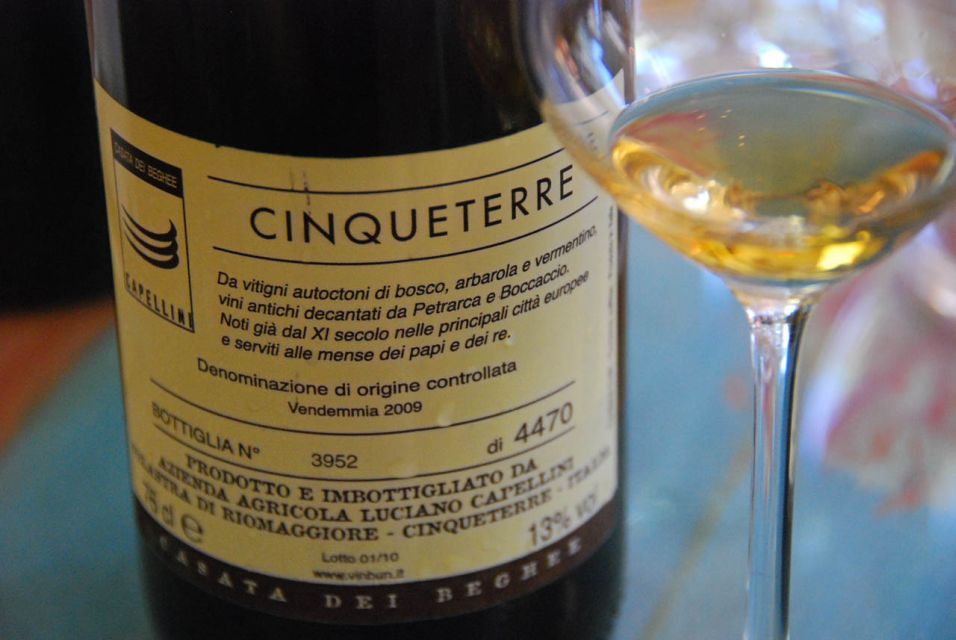
- 3 wines in 1 hour: A Cinque Terre white DOC, a red IGT, and Sciacchetrà sweet wine.
- Gabriel’s family stories: You’ll hear the tradition and philosophy that shape production in the area.
- Food pairing that’s more than decoration: Local snacks are served alongside each pour.
- Former wine cellar, renovated for comfort: A classic setting that feels welcoming, not museum-quiet.
- A Manarola bar vibe: Sometimes there’s music, and you can linger afterward if the mood hits.
Manarola wine tasting in a restored cellar: the setting that makes it easier
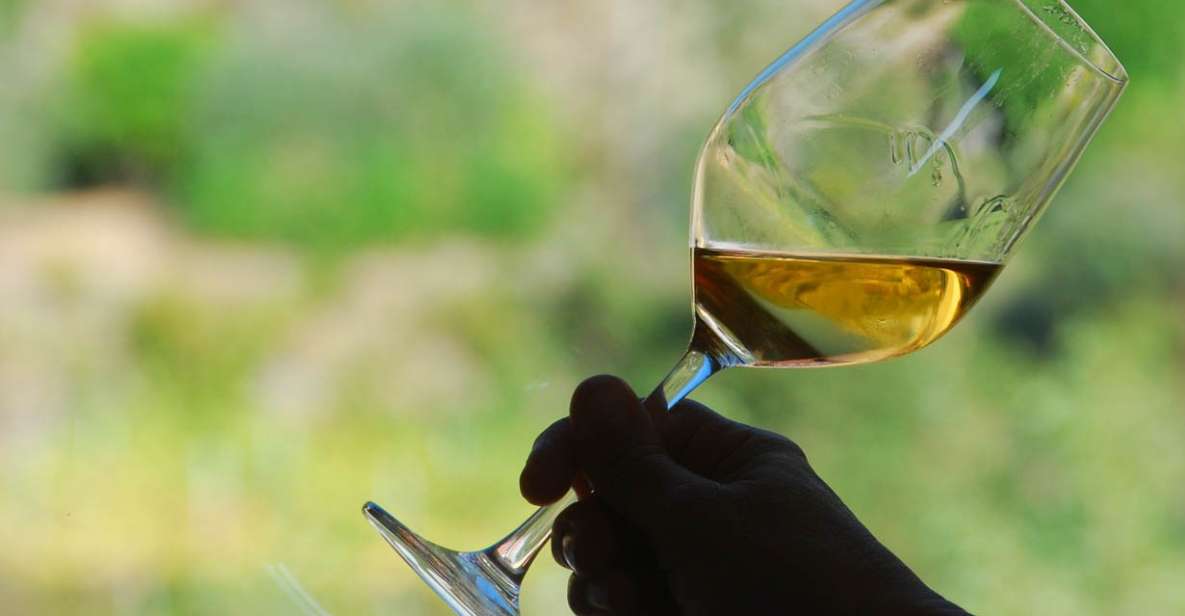
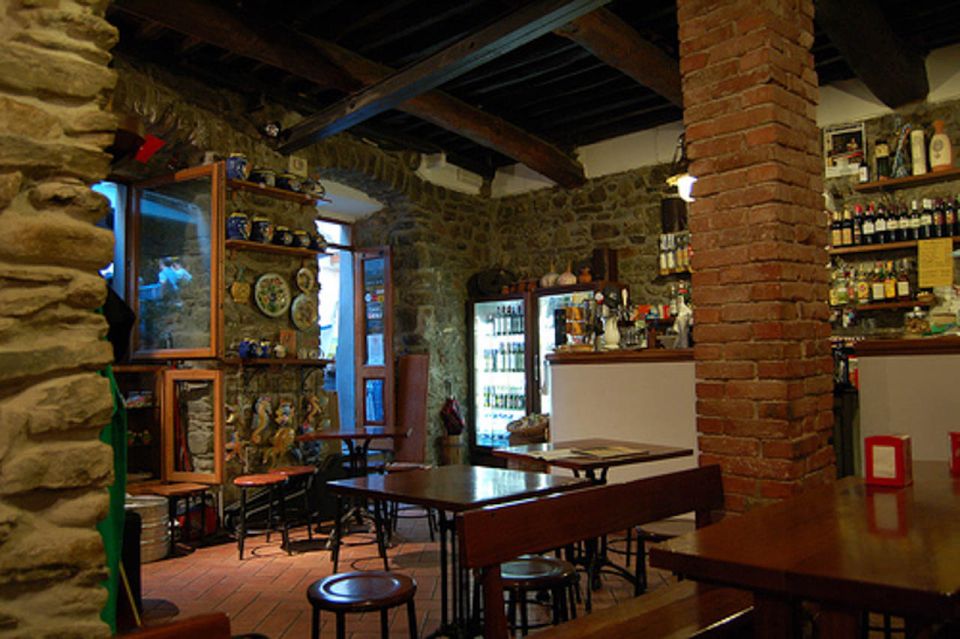
Manarola is small, steep, and scenic in a way that can wear you out if you’re chasing sights nonstop. This wine tasting gives your body a break without turning the night into a bus tour. You’re tucked into a former wine cellar right in the center of Manarola, close to the harbor, and the place has been renovated for comfort so you can actually hear and focus.
I like that it’s not some formal, quiet-only experience. It’s a place where people meet, drink wine, and listen to good music—sometimes live. That matters because it shapes how you enjoy the tasting: you’re not performing “wine appreciation,” you’re just learning in a real-life setting.
The bar location also helps with timing. You can fit this around dinner plans, or treat it as an appetizer experience—one hour, a few glasses, a bit of local food, and you’re ready to wander back out into Manarola’s evening.
You can also read our reviews of more tours and experiences in Manarola.


Finding La Cantina Zio Bramante and meeting Gabriel

Your meeting point is La Cantina Zio Bramante. When you arrive, ask for the host, Gabriel. That’s the whole key—simple, and fast.
If you’ve walked the center of Manarola before, you’ll know how easy it is to get turned around in the lanes. I recommend arriving a few minutes early so you can identify the entrance and settle in before the tasting starts. Once you’re inside, you’ll be seated in the cellar space where the tasting happens.
One more practical note: because this is a bar environment, you might notice movement around you. That’s part of the charm, but it’s also why paying attention right at the start helps.
The 1-hour flow: white DOC, red IGT, and Sciacchetrà sweet wine
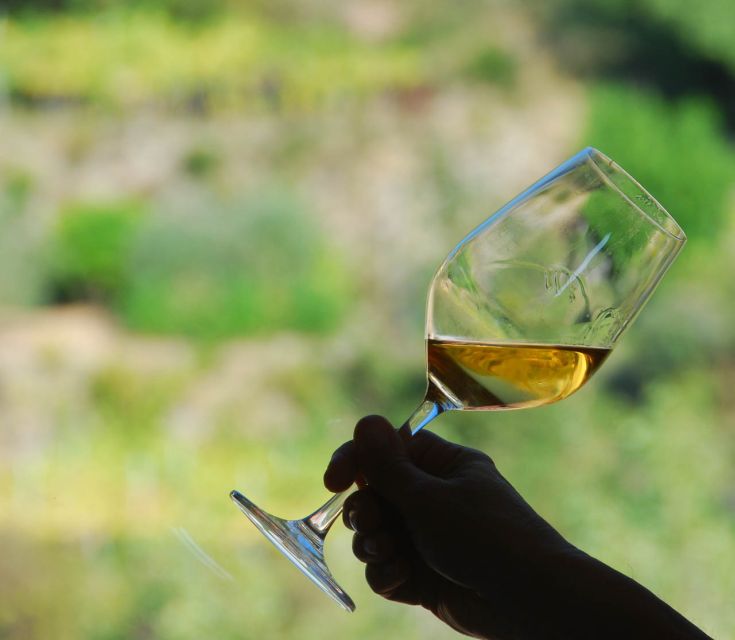
The tasting follows a clear, easy sequence. In about an hour, you’ll try three local wines, each with its own pairing snack.
First up is a Cinque Terre white DOC. This is usually your freshness anchor—something crisp enough to keep your palate awake. Then comes a Cinque Terre red IGT, which shifts the mood from bright to warmer and more structured. Finally, you’ll taste Sciacchetrà, the famous sweet wine that people remember because it’s so closely tied to the region.
Why this order works: it keeps you from starting heavy and feeling stuck at the end. You go light-to-mid, then you finish with the sweet wine so the evening has a satisfying close. The whole format is designed for understanding, not speed-drinking. You get short, focused explanations as you go, so you can connect each wine to the local style.
Also, you don’t have to be a wine expert. If you can tell the difference between dry and sweet, or if you know what you like in food pairings, you can follow along.
What you actually taste: why these three wines tell a Cinque Terre story
Cinque Terre wine has a reputation for a reason, but it can still feel like a list if no one explains it. The value here is that the tasting turns those names into a story you can taste.
Cinque Terre white DOC
This one sets the stage for the region’s character. You’ll get the kind of white that pairs well with local bites—think of it as the wine that keeps the meal-energy going before you get into the sweeter finish.
Cinque Terre red IGT
The red gives you contrast. Cinque Terre isn’t just about one style. The red helps you see that the region’s winemaking tradition includes different grapes, different approaches, and different flavors suited to different moments at the table.
Sciacchetrà
Sciacchetrà is the headline. It’s sweet, famous worldwide, and it’s treated like an event in the tasting. If you’ve only heard about it in passing, this is where you understand what people mean—because you taste it right after you’ve learned how the earlier wines fit into the region’s broader identity.
The best part is that you’re tasting multiple expressions from the same small region. That’s how you avoid the “I drank wine somewhere in Italy” feeling and end up with real understanding of local diversity.
Snack pairings that make the hour feel worth it
The wines are great, but the snacks are a big reason the tasting lands as memorable. You’ll get light bites matched to each pour, and they’re local enough to feel like part of the place rather than a standard cracker plate.
From personal experience reading the vibe of this kind of stop, the best pairings do two things:
1) they show you what the wine is doing flavor-wise
2) they make the tasting feel like an easy meal, not a lecture
Here, the pairing concept shows up repeatedly in the details people talk about—especially the pesto. Several people mention the pesto as extraordinary, and the food includes things like bruschetta-style bites. One standout pairing people specifically rave about is anchovies with the white wine. That’s the kind of combo that sounds bold until you try it, then you get why it works.
You may also encounter cheese and other small local snacks throughout the tasting, including a pairing that lands especially well with the dessert wine. Even with only three wines, the food keeps the experience moving and makes it easier to focus on taste differences.
If you’re the type who likes to learn through eating (most sensible travelers do), this part matters.
Gabriel’s storytelling: the tradition behind the glass
The tasting isn’t just about what’s in the glass. It’s about what shaped it.
Gabriel leads the experience and brings a family angle into the story—he shares history and the philosophy tied to Cinque Terre winemaking. Multiple people mention that he’s passionate and attentive, and that he connects the wines to family history and local culture rather than treating the wines like trivia.
That’s a big part of why this is such a good one-hour activity. Wine tasting can easily turn into either:
- too technical (and you miss half of it), or
- too vague (and you forget it by the next day)
Here, the explanations are paced to the tasting itself. You taste, you listen, you taste again. And because it’s in a cellar bar setting instead of a museum-style room, the storytelling feels more human.
There’s also a cultural vibe beyond wine facts. The experience is designed around a meeting place: people drink, music plays, and the food is part of the evening’s rhythm.
Value check: does $38 buy enough?
At $38 per person for a 1-hour tasting, you’re paying for three things:
- three wine pours from the local area
- local snack pairings
- an actual host-led explanation (Gabriel) that gives context
For this part of Italy, $38 is not a rip-off price. What makes it feel like good value is the structure. In one hour you get variety—white, red, and Sciacchetrà—and you don’t leave thinking you only paid to sit down and sip. The snack pairings help justify the cost, because they turn the tasting into a real experience you’d otherwise need to build yourself with drinks plus something to eat.
Also, you’re not paying extra for pickup and drop-off since it’s not included. That’s normal for a city-center activity, but it does mean you should plan to arrive on your own.
If you’re trying to choose between a pricey formal tasting or a simpler evening, this tends to fit the “worth it without dragging on” category.
Timing in Manarola: a great pre-dinner or evening break
Because it lasts 1 hour, it fits into your Manarola day without forcing a long commitment. I see it as either:
- a pre-dinner stop (wine + bites first, then you eat properly after), or
- an early evening break to cool down before you keep sightseeing and walking
People also note that the bar sometimes has music and that it’s easy to stay longer if you want. Even if you don’t plan to linger, the one-hour time window keeps the day from getting crowded.
If your itinerary is tight, this is one of those activities that helps you avoid decision fatigue: you already know the format, you know what’s included, and you know it won’t swallow the whole evening.
Who this tasting is best for (and when it may not fit)
This experience is best for you if you want:
- local wines explained in plain terms
- a comfortable setting in Manarola near the harbor
- food pairings that make the tasting more fun than purely educational
- an easy, well-paced evening activity (1 hour)
It may not be ideal if:
- you want a silent, classroom-style tasting with zero background noise
- you’re sensitive to loud bar environments, since the room can feel busy
- you need very detailed explanations all the way through—some people find it harder to catch everything when the space gets lively
If you’re flexible and willing to focus on the flavors as much as the words, you’ll likely enjoy it a lot.
Small tips to get more out of the hour
A few practical moves can make the difference between a good tasting and a memorable one:
- Go hungry enough for snacks: It’s light food, but it still helps to have an appetite.
- Ask questions about Sciacchetrà: It’s the standout, and it’s also where the host’s context helps most.
- Pay attention to pairings, not just wine names: The anchovies/white pairing is a reminder that contrast is part of the point.
- Plan your evening to allow a reset: You’ll likely want to head back out after, so keep dinner a little later or plan a stroll.
Also, keep in mind the tasting is hosted in Italian and English, so if you have preferences, don’t be shy about asking for clarity.
Should you book Manarola: Cinque Terre Wine Tasting?
You should book this if you want an easy, high-reward evening in Manarola that combines three classic local wines with real snack pairings and Gabriel’s storytelling. For $38 and 1 hour, it’s structured enough to feel worthwhile and casual enough to feel like part of the town.
Book it especially if you’re interested in Cinque Terre wines beyond the headlines and want a simple way to taste the region’s range—white DOC, red IGT, and Sciacchetrà—without spending a whole afternoon on logistics.
If you need a quiet setting and very detailed explanations in a low-noise room, you might find the bar atmosphere a challenge. But if you can trade a bit of audio comfort for a more authentic, lively experience, this tasting is one of the most efficient ways to enjoy the area.
FAQ
Where is the Manarola Cinque Terre wine tasting located?
It takes place in Manarola, in Liguria, Italy.
How much does the wine tasting cost?
The price is $38 per person.
How long is the tasting?
The experience lasts 1 hour.
What wines are included in the tasting?
You’ll taste three local wines: a Cinque Terre white DOC, a Cinque Terre red IGT, and Sciacchetrà sweet wine.
Are local snacks included?
Yes. Local snacks are included with the wine tasting.
Where do I meet the host?
When you arrive at La Cantina Zio Bramante, ask for your host, Gabriel.
Is pickup and drop-off included?
No. Pickup and drop-off are not included.
What languages is the tasting offered in?
The host/instructor provides the experience in Italian and English.
Are there cancellation terms?
You can cancel up to 24 hours in advance for a full refund.
Is there a reserve now & pay later option?
Yes. You can reserve now and pay later to keep your travel plans flexible.