REVIEW · ROME
Rome: Colosseum & Roman Forum Guided Tour
Book on GetYourGuide →Operated by Emotion club · Bookable on GetYourGuide
Three hours, and Rome feels real fast. This tour uses the express lane for quicker Colosseum entry, so you lose less time in lines and more time learning. I also love that you don’t just peek around—you go up to the top tiers for a bigger sense of scale, with your guide explaining what happened down below.
You also get the Roman Forum’s day-to-day context and Palatine Hill views, plus headsets so you can actually follow the story in the noise. One thing to consider: it’s a long walk over uneven ancient ground, so it isn’t a good fit for wheelchair users or people with mobility impairments.
In This Review
- Key things that make this tour work
- First stop: the meet-up at Largo Agnesi, then straight to the Colosseum
- Colosseum express lane: getting the big wow without the bottleneck
- Roman Forum (and Imperial Forums): where you learn to read the ruins
- Palatine Hill and Farnese Gardens: the origin story with real views
- Inside the Colosseum: gladiators, crowd choices, and the hidden plumbing
- Pace, comfort, and what you should actually prepare
- Price and value: is $89.50 fair for three major sites?
- Who this tour is best for (and who might hate it)
- Should you book this Colosseum, Forum, and Palatine tour?
- FAQ
- How long is the tour?
- Where do I meet the guide?
- What’s the closest metro stop?
- Do I skip the line for the Colosseum?
- Which parts of the Colosseum are included?
- What other sites do we visit besides the Colosseum?
- What language is the tour offered in?
- What should I bring?
- Are pets or large bags allowed?
- Is it suitable for wheelchair users or mobility impairments?
Key things that make this tour work
- Express-lane access to the Colosseum helps you beat the worst lines.
- Two Colosseum levels plus the upper tiers gives you depth, not just a quick stop.
- Headsets keep the guide’s explanations clear in crowded areas.
- Roman Forum + Imperial Forums connects politics, economics, and daily life in one route.
- Palatine Hill legend and viewpoints (including Circus Maximus views) make the “origins of Rome” part feel tangible.
- Guides with strong performance skills (humour, pacing, and frequent Q&A) are a big reason people rate it highly.
First stop: the meet-up at Largo Agnesi, then straight to the Colosseum
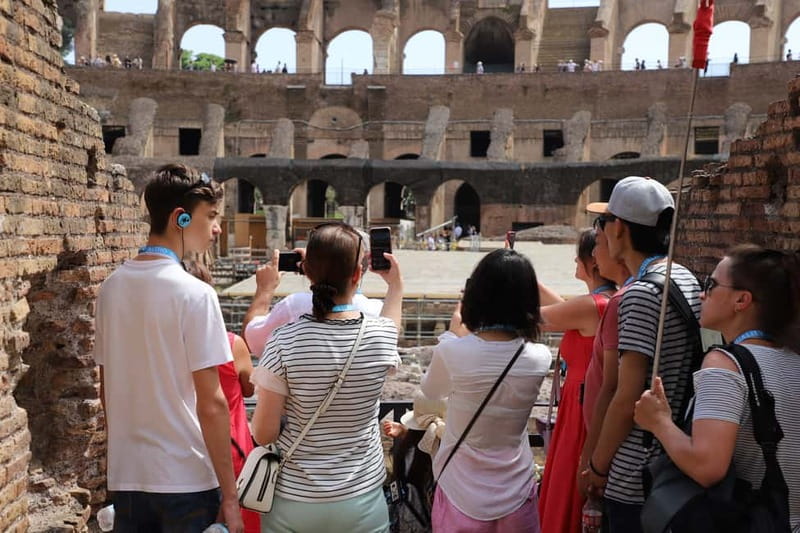
The experience starts in the Colosseum area, at Largo Gaetana Agnesi (meet your guide at the corner of Caffè Roma at Largo Agnesi 1). You’ll spot them holding a rounded Emotion.club logo sign, which is a small but real help when the area is packed.
If you’re using the metro, take Line B to Colosseo. There are two exits; you want the upper one, so the meeting point will be on the right from the exit. Wear shoes you can walk in for a while—this is not a sit-and-smile tour.
One smart detail: you’re not going in blind. This is set up as a guided visit of multiple sites, so the guide can connect the “why” behind what you’re seeing. That matters at the Colosseum and Forum, where the ruins are dramatic—but also easy to confuse if you don’t have a story to hang them on.
You can also read our reviews of more tours and experiences in Rome.
Colosseum express lane: getting the big wow without the bottleneck
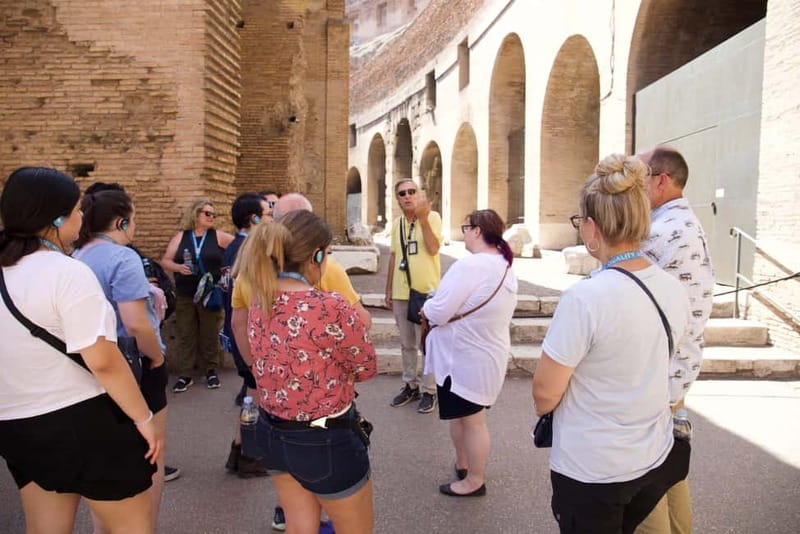
The heart of this tour is the Colosseum, and the layout is designed for efficiency. You’ll use a separate entrance for skip-the-line style access (often called an express lane), which is exactly what you want in Rome’s busiest area.
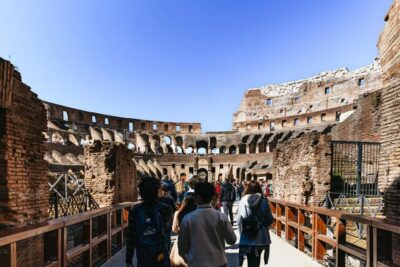
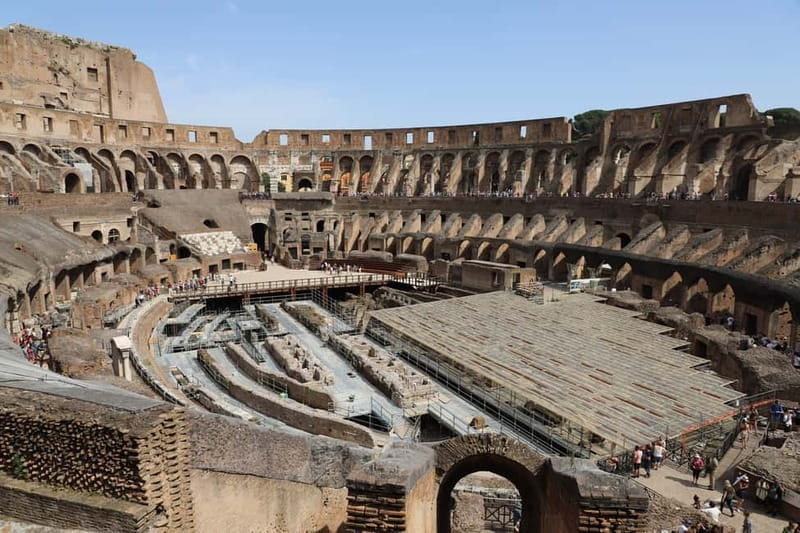
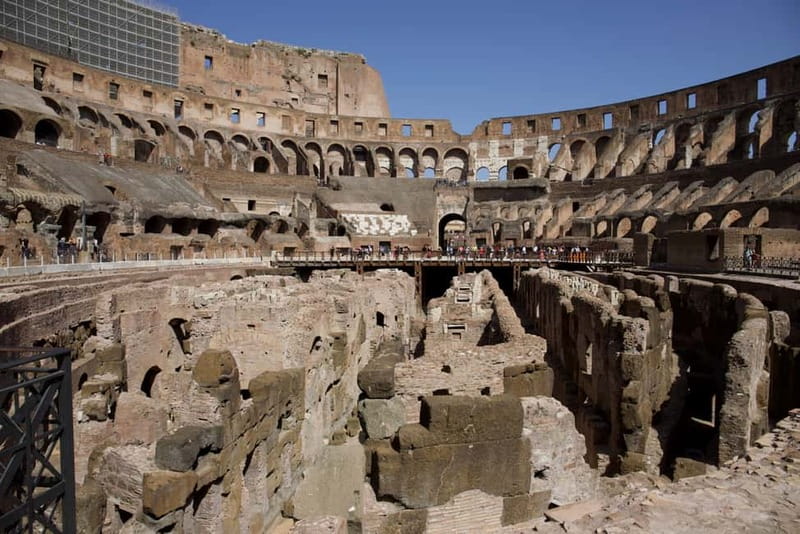
Your visit covers more than the outer walls. The tour includes the Colosseum’s 1st and 2nd levels, then you’ll climb to the top tiers. That vertical route is the difference between seeing the Colosseum as a photo subject versus understanding it as a machine: where people stood, how sightlines worked, and why the spectacle felt so intense.
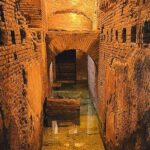
Expect your guide to explain what made those fights happen in the first place—how brutal entertainment was staged, how the crowd voted, what training and living looked like for gladiators, and even how much fighters were paid. It’s also built around the structure itself: how the enormous building went up, how backstage systems worked, and how the underground tunnels tied into what the audience saw.
If you’re the type who likes details, you’ll probably enjoy how the tour turns the ruins into a working story—almost like a behind-the-scenes tour of an ancient event complex.
Roman Forum (and Imperial Forums): where you learn to read the ruins
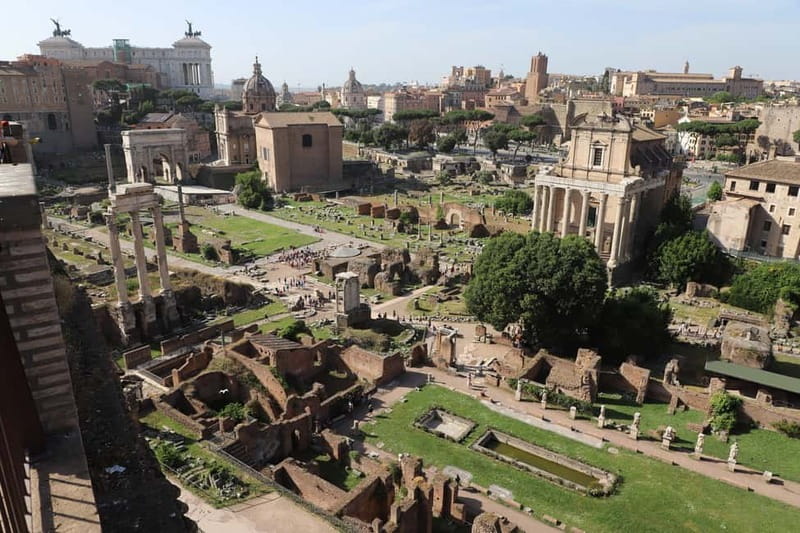
After the main orientation around the Colosseum area, the route moves into the Roman Forum and nearby political spaces—often described as the busy core of ancient Rome. You’ll spend about 1.5 hours here with a guide, which is enough time to stop treating the Forum like a pile of stones and start noticing the patterns.
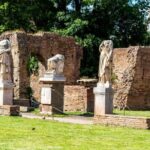
This stop is where the tour does its best work connecting daily life with power. You’ll hear how the Forum functioned as a meeting place for people across the social ladder—rich and poor, locals and visitors from different places. The guide also helps you imagine what day-to-day life could feel like, including the professions that would have been present: doctors, sailors, priests, and even people working in more informal economies.
A standout element is the walk along the Sacred Road, described in the tour as a route in the footsteps of Roman citizens. As you stroll past temples, market-places, villas, and triumphal arches, the goal is simple: help you understand how the city communicated status and authority in public space.
You’ll also cover the Imperial Forums, which were the political and economic heart of Ancient Rome. That’s a key reason this tour feels more complete than a “quick Forum walk.” With a guide telling you what each area represents, you can start to see how Rome’s leadership used architecture as messaging—control the square, control the conversation.
The main drawback of the Forum, even with a good guide, is crowding and noise. Rome’s Forum gets busy. That’s exactly why the included headsets matter here.
Palatine Hill and Farnese Gardens: the origin story with real views
Next comes Palatine Hill, roughly 30 minutes with a guide. This is the spot where the story shifts from politics and spectacle to origins and elite life.
You’ll hear the legend tying Palatine to Romulus and Remus, raised by the she-wolf in Rome’s founding mythology. The tour also frames Palatine Hill as a place where the “foundations” of Ancient Rome began—then it adds an important twist: it’s also associated with the end of Roman Empire domination.
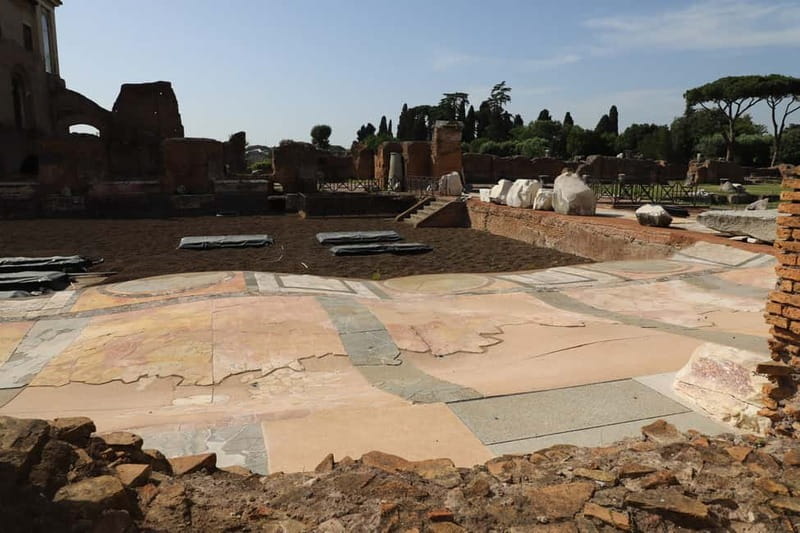
What I like here is that the guide doesn’t treat Palatine as a single viewpoint. The tour focuses on why the rich lived here and what made the area special, including remains of emperors’ villas. If you’ve ever wondered how power looked when it wasn’t in public buildings—this is where you start to see it.
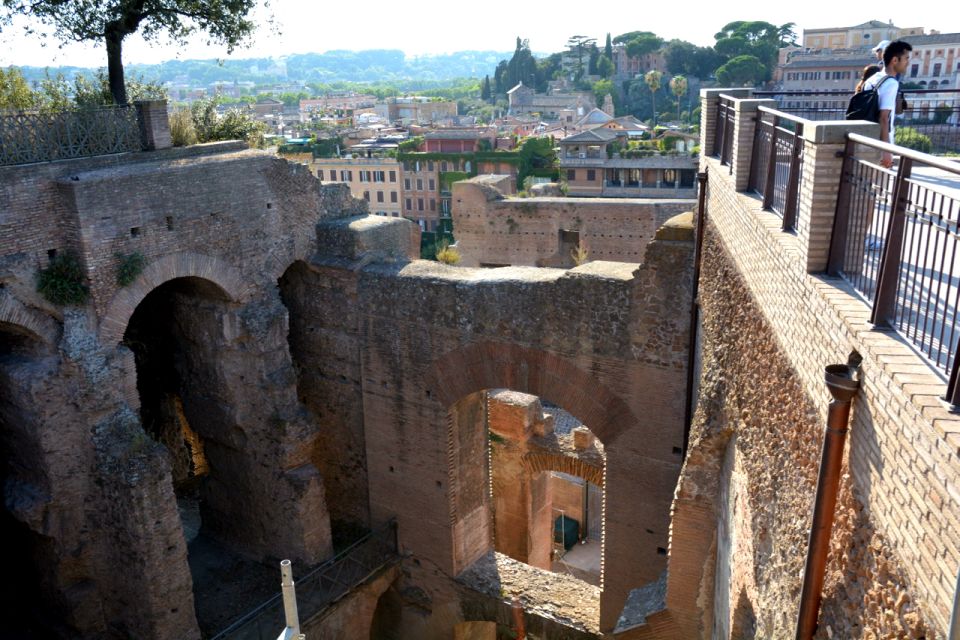
The route also includes the Farnese Gardens area, and you’ll get spectacular views over Circus Maximus and the chariot-racing zone. Even in ruins, you can understand why this location mattered: it let the powerful watch the city’s biggest events from a higher vantage point.
At Palatine, the time is shorter, so listen closely early in the stop. Once you’re into the viewpoints, the best scenes can be quick.
Inside the Colosseum: gladiators, crowd choices, and the hidden plumbing
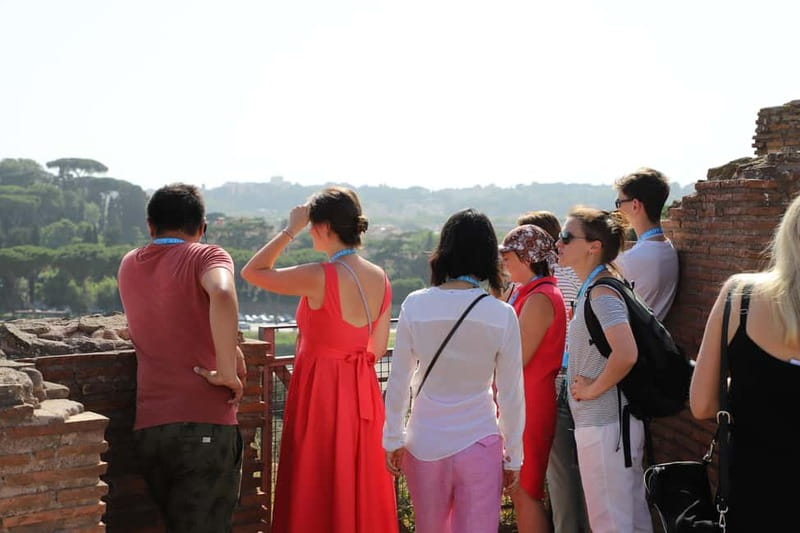
Back at the Colosseum, the tour leans into storytelling plus structure. You’ll move through the Colosseum with explanations that cover both human drama and engineering.
On the human side, expect details about the gladiators: their training routines, what life could be like, and how gladiators were paid. Your guide should also explain why the fights happened—how entertainment worked as politics, and how crowds participated (including the voting element).
On the structure side, the Colosseum becomes a complex event venue. You’ll hear how the building was constructed at such scale and how the back-stage mechanisms supported what happened above ground. The tour also references the underground tunnels, which are the link between the spectacle and the hidden systems that made it possible.
This is where the multi-level approach pays off. Seeing just the floor view can make the Colosseum feel confusing. But with access to the lower levels first, then the upper tiers, you get a sense of how people moved, where they could look, and how the building staged the experience.
One small comfort tip: the Colosseum area can get brutally hot in summer. A strong guide makes a difference. For example, Francesco has been noted for keeping people in the shade and planning regular water breaks when temperatures hit around 36–37°C. No one controls the weather, but good guidance can make a huge difference to your energy level.

Pace, comfort, and what you should actually prepare
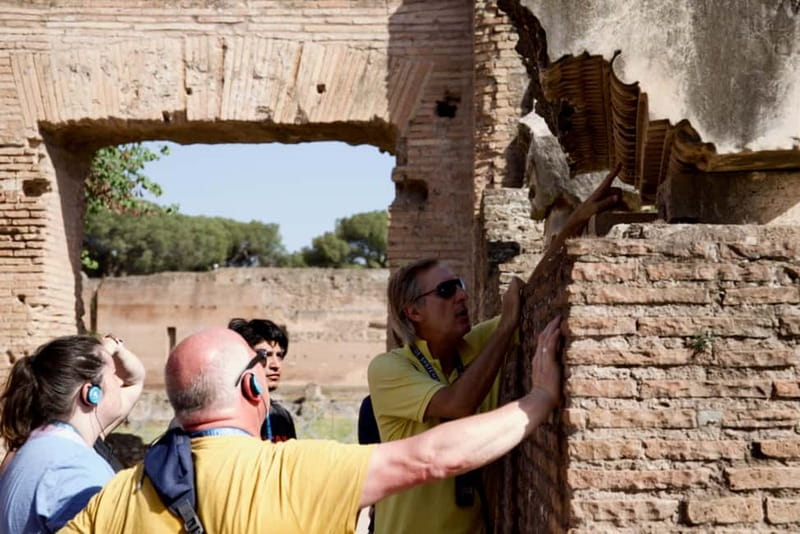
This is a 3-hour guided route with multiple stops, and it involves real walking. The good news: the time is long enough to learn, but not so long that you’re stuck in one place for hours.
Still, your comfort depends on preparation:
- Bring a passport or ID card, since it’s required.
- Wear comfortable shoes that can handle uneven stone and lots of steps.
- Skip the bulky items. Luggage or large bags aren’t allowed, and pets aren’t allowed either.
- Expect limited suitability if you use a wheelchair or have significant mobility limits.
Group energy is another variable. Some people mention small-group intimacy, like a group of four that felt easy to manage and navigate. Small groups can mean more Q&A and less rushing.
Also, don’t underestimate the crowd factor. Even with express access, you’re still in a high-traffic archaeological zone. The included headsets help you catch every detail without constantly yelling over people.
Price and value: is $89.50 fair for three major sites?
At $89.50 per person for about three hours, the value comes from what’s included—not just from the headline price.
You’re paying for:
- A guided tour that connects Colosseum + Roman Forum + Palatine Hill into one storyline
- Colosseum access with express entry
- Forum and Palatine access
- Headsets, which is a practical upgrade you’ll feel the first minute you arrive
- Enough time to see multiple Colosseum zones (not just one photo stop)
If you’ve done single-site tours in Rome before, you’ll recognize the pattern: prices can be similar, but you miss the connections between power (Forum), origins (Palatine), and spectacle (Colosseum). This tour tries to give you that whole picture without making you spend an entire day bouncing between ticket lines.
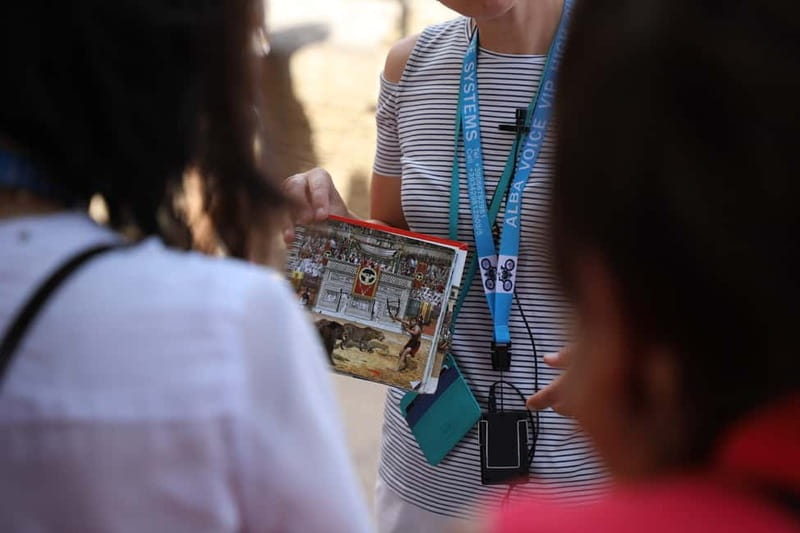
Also, this is one of those “you get what you pay for” scenarios. The guides matter. People praise guides for humour, strong explanations, and even extra helps like related pictures. Guides like Anna are mentioned for humour and extra visual support, while Helena and Ferdinando are noted for archaeological background and hands-on connection to the areas they explain.
That guide quality is a big part of why the tour earns a strong rating.
Who this tour is best for (and who might hate it)
This tour suits you if you:
- Want a fast route that still covers serious ground
- Learn best with a guide telling you what you’re looking at
- Want the Colosseum beyond the basic exterior views
- Like history that includes the human side: gladiators, crowd behaviour, training, and politics in public space
You might want to choose something else if you:
- Need a low-walking option (this one isn’t suitable for wheelchair users)
- Dislike guided groups and prefer to roam slowly on your own
- Want a totally flexible, stop-at-any-time pace—this tour is structured and moves
If you’re traveling with kids, the Colosseum material can be heavy and intense. The tour’s storytelling approach can make it understandable, but it’s still about brutal entertainment. For teens and adults, it’s a good match.
Should you book this Colosseum, Forum, and Palatine tour?
I’d book it if you want the highest-impact trio of ancient Rome—Colosseum, Roman Forum, and Palatine Hill—in one tight, guided package. The express lane access plus headsets plus the multi-level Colosseum route make it feel like a well-built plan rather than a checklist.
Skip it if mobility is an issue or if you’re looking for a slow, self-paced walk. Rome rewards wandering, but this experience is built for momentum and clarity.
If you want ancient Rome to click—this is the kind of tour that helps it make sense fast.
FAQ
How long is the tour?
The tour lasts about 3 hours.
Where do I meet the guide?
Meet your guide at the corner of Caffè Roma at Largo Agnesi 1. The guide holds a rounded Emotion.club logo sign.
What’s the closest metro stop?
The metro stop is Colosseo (Line B). Use the upper exit for the meeting point, which is on the right from the exit.
Do I skip the line for the Colosseum?
Yes. You enter through a separate entrance designed to help you skip the line.
Which parts of the Colosseum are included?
The tour includes the 1st and 2nd levels and also a climb to the top tiers.
What other sites do we visit besides the Colosseum?
You also visit the Roman Forum and Palatine Hill, with access included for these areas.
What language is the tour offered in?
The live tour guide is available in English and Russian.
What should I bring?
Bring a passport or ID card and wear comfortable shoes.
Are pets or large bags allowed?
No. Pets are not allowed, and luggage or large bags are not allowed.
Is it suitable for wheelchair users or mobility impairments?
No. It is not suitable for people with mobility impairments, including wheelchair users.