REVIEW · MONTEPULCIANO
Montepulciano: Artisan Heroic Wine Tasting at the Terrace
Book on GetYourGuide →Operated by Podere della Bruciata · Bookable on GetYourGuide
Great wine starts with the vines. At Podere della Bruciata near Sant’Albino, you get an expert walk through the vineyards and a close look at the traditional Bottaia cellar before tasting three natural crus on a panoramic terrace. I like how the host explains the work from grape growing to what hits your glass, and I especially like the big Tagliere style food spread that turns a sip into a meal. One thing to consider: this is an artisan, small-site visit, so it won’t feel like a large, loud “factory tour.”
Plan on about 1.5 to 2 hours at a relaxed pace. Your guided visit runs in English and Italian, starting from the parking lots in front of the grass terrace at Podere della Bruciata, Via dei Platani snc. If you’re watching mobility, it’s wheelchair accessible, so the day stays easy and focused on the wine.
In This Review
- Key points you’ll care about
- A family terrace tasting in Montepulciano that feels personal
- Where the tour starts at Podere della Bruciata (and how not to miss it)
- Vineyard walk: seeing how the grapes get shaped before the cellar
- The Bottaia cellar tour: where aging becomes a real story
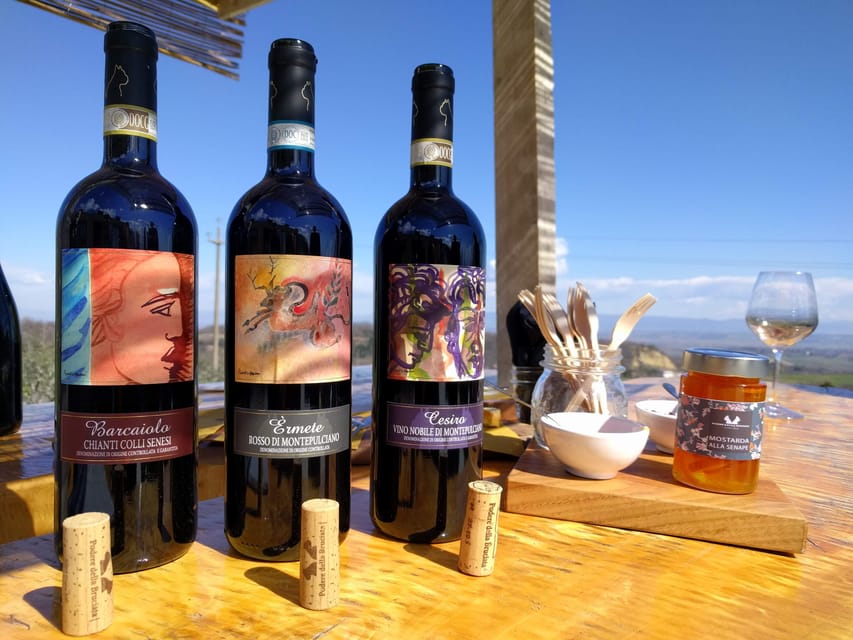
- Tasting 3 natural crus on the panoramic terrace (and pairing that works)
- Timing, sunsets, and why the two-hour plan still feels relaxed
- Price and value: what $59 gets you in the real world
- Who this tour suits best (and who might want a different style)
- Final verdict: should you book Montepulciano terrace tasting at Podere della Bruciata?
- FAQ
- How long is the Montepulciano wine tasting?
- How much does the tour cost?
- What’s included in the tour?
- How many wines will I taste?
- Where do I meet the group?
- Which languages are available?
- Is there free cancellation?
- Can I reserve without paying right away?
- Is the experience wheelchair accessible?
- What should I expect at the tasting?
Key points you’ll care about
- Vineyard walk that explains how the season shows up in the wine
- Cellar tour centered on the traditional Bottaia aging area
- Tasting 3 natural crus, served with real pairing logic
- Big Tagliere of typical local products, not just a few bites
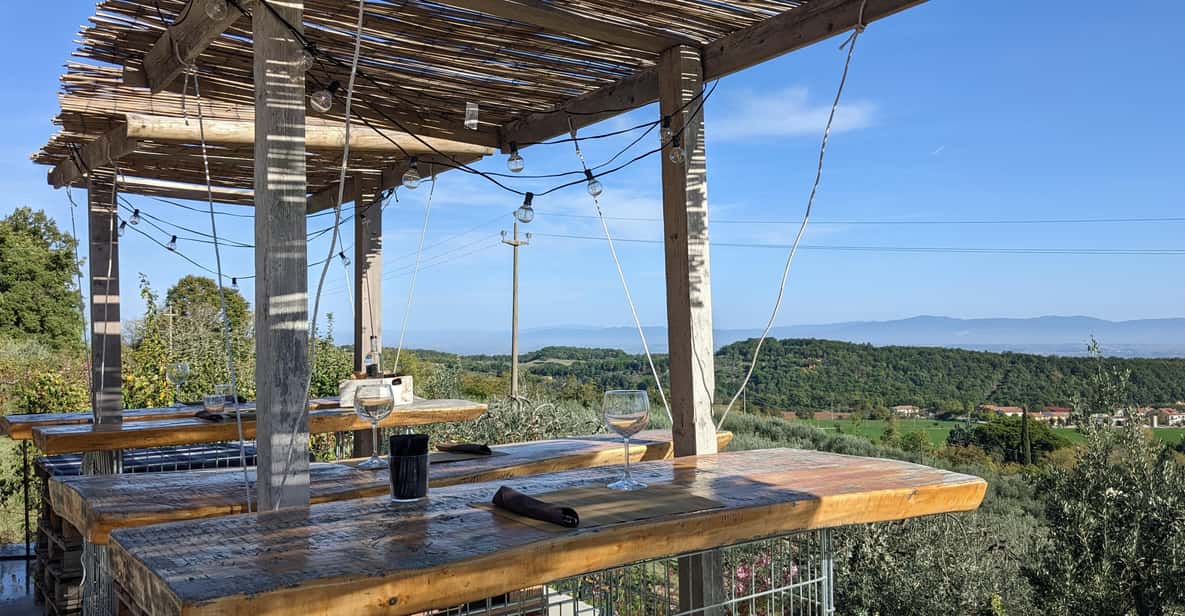
- Panoramic terrace tasting with views that make timing feel special
- Friendly hosting with real family-winery detail (often Andrea or Andre)
A family terrace tasting in Montepulciano that feels personal
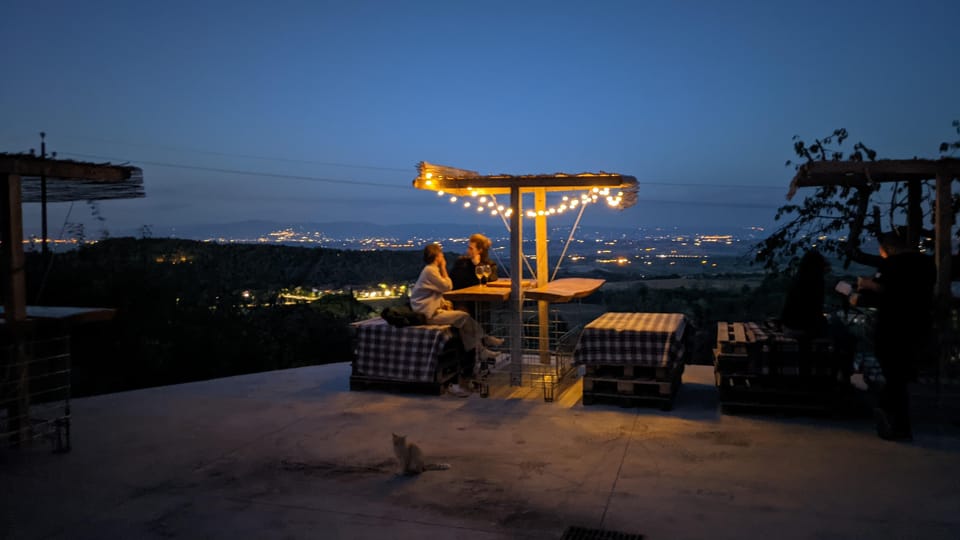
This is the kind of wine stop that makes sense in Tuscany. You don’t just sit down and drink. You walk among the vines first, then you see how the winery stores and ages wine in a traditional aging space, and only then do you taste. The terrace finale matters because it changes the mood: you go from learning mode to savoring mode with a wide view and the pace slowing down.
I like that the experience is built around a few strong elements: vineyard education, cellar context, and then a paired tasting. If you want to understand why Montepulciano’s wines taste the way they do, the order helps your brain connect the dots: soil and growing choices → aging choices → flavors in the glass. And for your appetite, the included Tagliere style spread helps too, especially if you’ve skipped lunch or you’re traveling on an empty stomach.
One small consideration: because it’s an artisan operation, it’s more intimate and calmer than big-brand tours. If you love big-scale spectacle, this might feel quieter. If you love conversation, hands-on explanations, and a relaxed pace, it’s a good match.
You can also read our reviews of more tours and experiences in Montepulciano.
Where the tour starts at Podere della Bruciata (and how not to miss it)
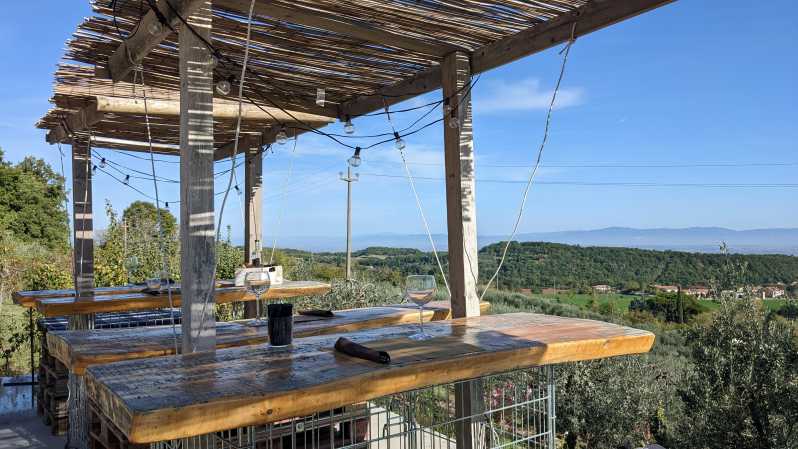
Your meeting point is Podere della Bruciata winery, Via dei Platani snc, Sant’Albino Montepulciano. The parking lots are in front of the grass terrace. That detail is worth noting. Tuscany wineries often use simple signage and informal grounds, so having a clear visual reference helps you arrive without stress.
The duration is listed as 2 hours, and there’s also an included note stating 1.30 hours. In real life, your experience will likely land in that 1.5 to 2 hour window depending on how the guide paces the walk and tasting, and whether you linger to ask questions. I’d plan for around two hours so you’re not tight on your schedule afterward.
The guide speaks English and Italian. Several hosts mentioned in the tour feedback (including Andrea and Andre) are clearly comfortable explaining details and history, and that language coverage makes it easier to keep up even if your Italian is limited.
Vineyard walk: seeing how the grapes get shaped before the cellar
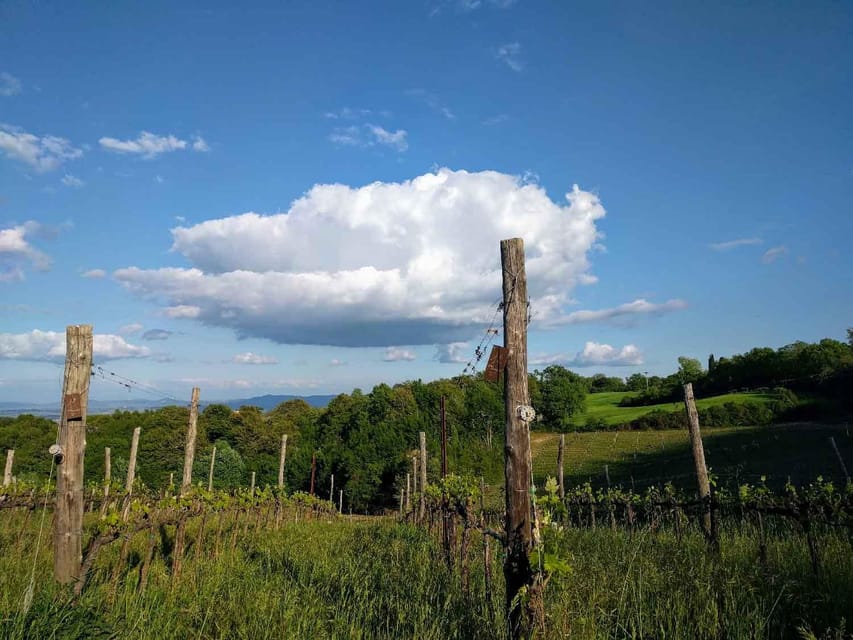
The first part of the experience is the vineyard section: a guided stroll where you get up close to the vines and learn how they’re cared for. This matters more than it sounds. Wine in Montepulciano doesn’t come from a single secret; it comes from repeated choices—timing, plant care, and vineyard management—made again and again throughout the year.
What I like about a vineyard-first format is that it makes the tasting feel grounded. When you later taste the winery’s wines, you’re not guessing. You’re connecting what you saw (how the vines are managed) to what you taste (structure, character, and balance). Even if you don’t memorize technical terms, you’ll understand the “why,” which is what makes wine tastings worth paying for.
Also, this is a good place to ask questions. Hosts can tailor explanations on the spot—how the vineyard works, how the wine gets treated after harvest, and how their process connects to the final style. In the feedback, guides like Andrea and Andre are repeatedly praised for explaining the history of the vineyard and the wine and olive oil making process. That means if you’re interested in the wider food-and-farm culture of the region, you’ll likely get more than just grape jargon.
Practical tip: wear shoes with grip for vineyard paths. You’re on a working property, and the ground can be uneven or dusty.
The Bottaia cellar tour: where aging becomes a real story
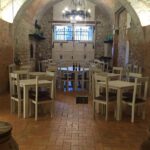
After the vineyard walk, you move into the aging area. The highlight here is the traditional Bottaia, where wines are aged for a long time. Seeing the aging space gives you a different kind of understanding than reading a label ever will.
Why this stop is valuable: aging isn’t just waiting. Storage conditions and time shape the wine’s texture and how aromas mature. Even when you’re not a trained taster, you can still sense what the guide is pointing out—what changes with aging, and how that connects to the flavors you’ll soon taste.
This part also helps answer a practical question: why does the winery feel consistent? When you have a dedicated aging process, with wines held and managed in that system, the end result is steadier year to year. That’s especially helpful if you’re comparing bottles you’ve had in the past. Once you’ve seen where and how aging happens, your tasting turns from a blind comparison into a purposeful check of style.
If you’re short on time, the cellar tour is also efficient. It’s not an endless museum stop. It’s guided and tied directly to the tasting that follows.
Tasting 3 natural crus on the panoramic terrace (and pairing that works)
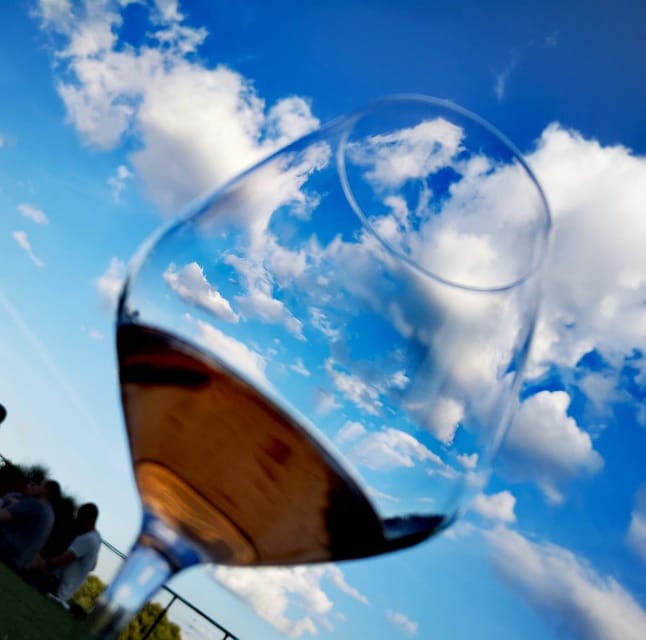
The tasting happens on the panoramic terrace, which is where the experience turns from learning to enjoying. You taste 3 distinct wines, and each is served with local delicacies as part of the pairing.
You’ll notice something important in how this tasting is presented: it’s not just three pours and a quick goodbye. The terrace setting slows things down, and the guide’s explanations make each wine feel separate rather than repetitive. That structure helps you spot differences—acidity, tannin feel, aroma direction, and finish—without needing to be a wine expert.
The food component is a big deal here. You get a big Tagliere made up of high quality typical products. A substantial board changes the tasting in two ways:
- It keeps your palate from getting tired too fast.
- It gives the wines something real to “talk to,” so you taste pairings rather than flavors in a vacuum.
From the feedback, the Tagliere is frequently described as delicious, substantial, and well paired. People also mention the tastings being generous, so this tends to work even for wine lovers who don’t want to feel rushed or underfed.
What to do: taste one wine, pause for a bite, then go back to your glass. Ask the guide what the pairing is aiming for. Even if you only catch half the explanation, your taste will do the rest.
Timing, sunsets, and why the two-hour plan still feels relaxed
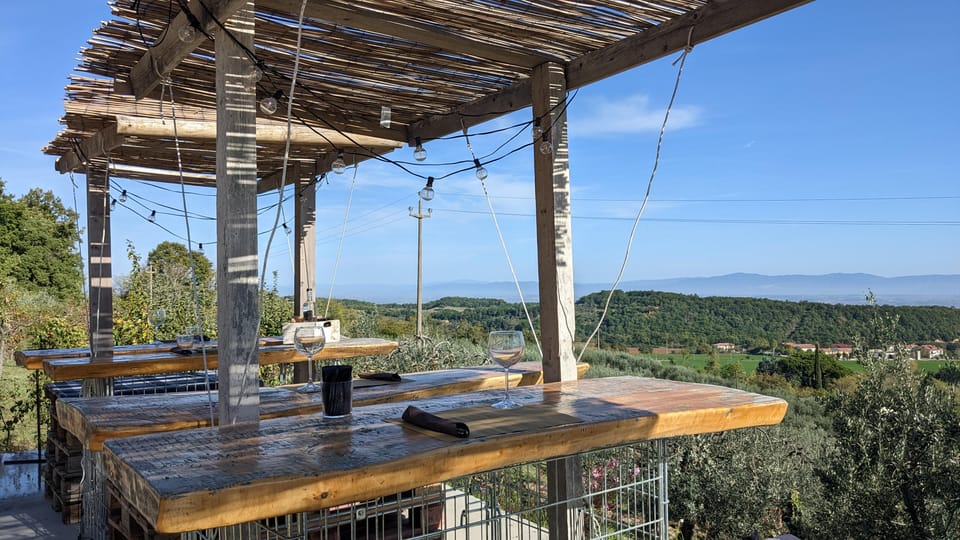
The tour runs about 2 hours, but it’s paced in a way that usually feels unhurried. Vineyard walking plus a cellar visit plus tasting means you’ll stay busy, but the tone is not frantic. The terrace part is the “breather,” and that’s where the view and the sunset-style mood can make the whole visit feel longer in a good way.
If your day is packed, still consider it a solid anchor. You’ll leave with both information and a full tasting experience, not just a quick stop. And if your schedule is flexible, arrive ready to ask questions. Many hosts highlighted a friendly, relaxed atmosphere where conversation flows naturally.
One more practical note: if you’re photographing, do it after the main tasting pour or during the quiet moments. Terrace lighting can be beautiful, but you don’t want to miss the guide’s pairing cues while you’re adjusting your camera.
Price and value: what $59 gets you in the real world
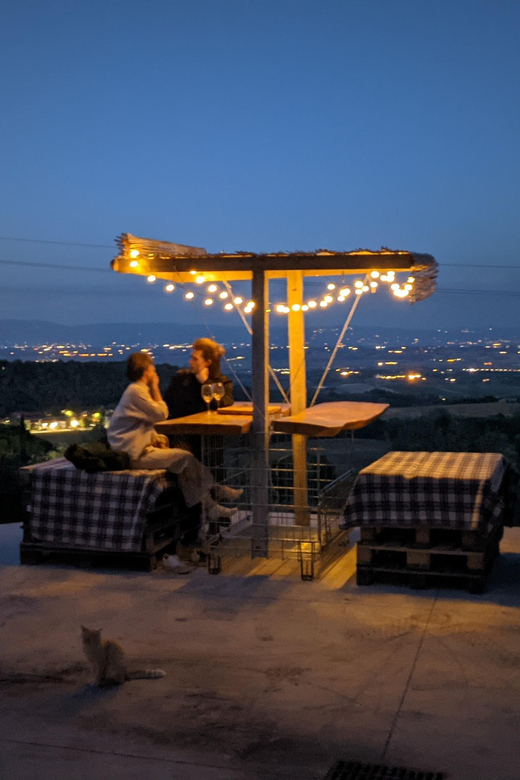
At $59 per person for a roughly 1.5–2 hour experience, you’re paying for a combination that’s harder to find as a bundle: vineyard tour + cellar/aging tour + 3 wine tastings + a large food board.
The value isn’t only the number of wines. It’s the full arc:
- You learn how the winery treats the grapes and how they connect to style.
- You see aging in the Bottaia environment.
- You taste three wines with enough food to keep things comfortable and satisfying.
That’s why it often works for couples and small friend groups. Everyone gets guided context, and nobody gets stuck doing paperwork or standing around waiting for the next step.
If you’re on a tight budget and you want only the cheapest sip, you can find cheaper tastings elsewhere. But if you want the kind of experience that gives you something to remember beyond taste alone, this one is priced like an experience built to last through the whole two hours.
Who this tour suits best (and who might want a different style)
This tasting fits well if you:
- Want a guided explanation of wine production, not just tasting notes
- Like artisan wineries and family-run detail
- Enjoy pairing wine with real food, especially a Tagliere board
- Care about views and atmosphere at the end of the walk
It may be less ideal if you:
- Want a huge, high-energy “everyone in the world is here” style tour
- Prefer very minimal walking and zero time on uneven ground (the itinerary includes a vineyard stroll)
- Are only looking for a quick pour with no teaching component
On the other hand, if you like questions and you enjoy learning at a human pace, you’ll likely feel comfortable. Hosts such as Andrea and Andre come across as passionate and willing to explain everything from vineyard history to wine and even olive oil production.
Final verdict: should you book Montepulciano terrace tasting at Podere della Bruciata?
Yes, I’d book it if your goal is a full, satisfying wine afternoon in Montepulciano—not just three tastings, but a connected story from vines to cellar to terrace. The combination of vineyard walk, Bottaia aging tour, 3 natural crus, and a large Tagliere makes the $59 feel like you’re buying time, context, and food, not just wine.
Book it especially if:
- You’ll enjoy guided conversation in English or Italian
- You want a calm, small-winery atmosphere with strong views
- You’re hungry enough that a proper food board matters
Skip it only if you want a big-deal tourist show or you don’t want to do any vineyard walking at all.
FAQ
How long is the Montepulciano wine tasting?
The activity is listed as lasting about 2 hours, and the additional information also notes a duration of 1.30 hours. Plan for roughly 1.5 to 2 hours in practice.
How much does the tour cost?
The price is $59 per person.
What’s included in the tour?
You get a guided tour of the company and the cellar, a tasting of 3 wines, and a big Tagliere food tasting.
How many wines will I taste?
You’ll taste 3 distinct wines during the terrace tasting session.
Where do I meet the group?
The meeting point is Podere della Bruciata winery, Via dei Platani snc, Sant’Albino Montepulciano. Parking lots are in front of the grass terrace.
Which languages are available?
The live guide offers English and Italian.
Is there free cancellation?
Yes. You can cancel up to 24 hours in advance for a full refund.
Can I reserve without paying right away?
Yes. The option is reserve now & pay later, with no payment due today.
Is the experience wheelchair accessible?
Yes, the tour is wheelchair accessible.
What should I expect at the tasting?
You’ll enjoy tasting on a panoramic terrace with 3 wines and an included big Tagliere of typical local products paired with the wines.