REVIEW · BELPASSO
Mount Etna: Summit Crater Trek with Cable Car
Book on GetYourGuide →Operated by Aitne Med Etna Excursions · Bookable on GetYourGuide
Etna really grabs you fast. I love the way this trek gets you to the Bocca Nuova crater edge for big 360° panoramas, and I also love the hands-on volcanic guidance that turns weird black ground into real stories.
The one drawback to plan for: the base tour price does not cover the cable car and the 4×4 ride up, so your total can change depending on weather and volcanic activity.
In This Review
- Key things that make this tour worth it
- Mount Etna’s summit trek: why this feels so real
- Where you start at Etna South, and how the morning stays organized
- Cable car up, then 4×4 to Torre del Filosofo
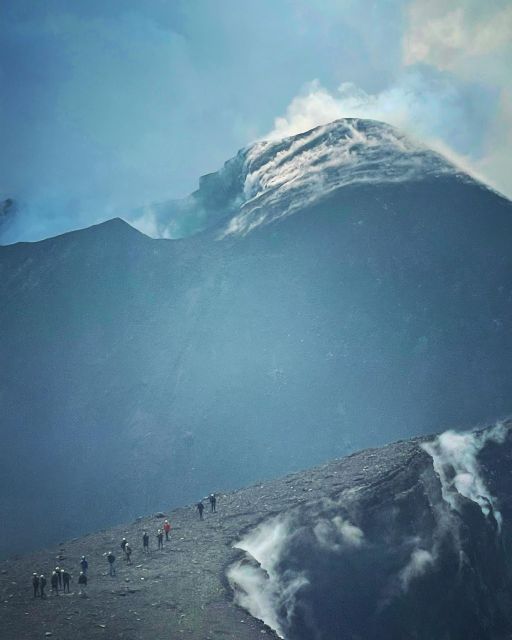
- Bocca Nuova: the crater edge stop that makes the day stick
- Central Crater and Barbagallo: walking among the summit features
- Lava tunnel and the 2002 eruption craters: geology you can walk through
- The descent: volcanic sand, big views, and when boots work overtime
- Cable car back down: the payoff after the hard parts
- What you get included: gear, insurance, and why that lowers the hassle factor
- Price and value: what your $77 covers vs. the Etna add-ons
- Who this is for (and who should skip an active-volcano summit trek)
- Best practical tips to make your summit day easier
- Should you book Mount Etna’s Summit Crater Trek with Cable Car?
- FAQ
- FAQ
- How long is the Mount Etna summit crater trek with cable car?
- Where do I meet the tour guide?
- Is the cable car included in the tour price?
- How much are the cable car and 4×4 add-ons?
- What is included in the tour?
- Are hotel pickup and drop-off included?
- What languages is the live guide available in?
- What is the group size?
- What isn’t allowed during the tour?
- When can I cancel for a full refund?
Key things that make this tour worth it
- Bocca Nuova at about 3300m: the moment the summit opens up and you can scan the whole island if visibility cooperates
- A small group capped at 8: more time for questions, and more attention on footing
- Cable car relief after a serious hike: you get a break without losing the volcano experience
- Craters up close, not just from a viewpoint: you walk past features tied to eruptions, including 2002
- A lava tunnel stop: it’s one of the best ways to understand Etna without needing a textbook
- Top gear provided: boots, sticks, wind jacket, helmet, plus insurance
Mount Etna’s summit trek: why this feels so real
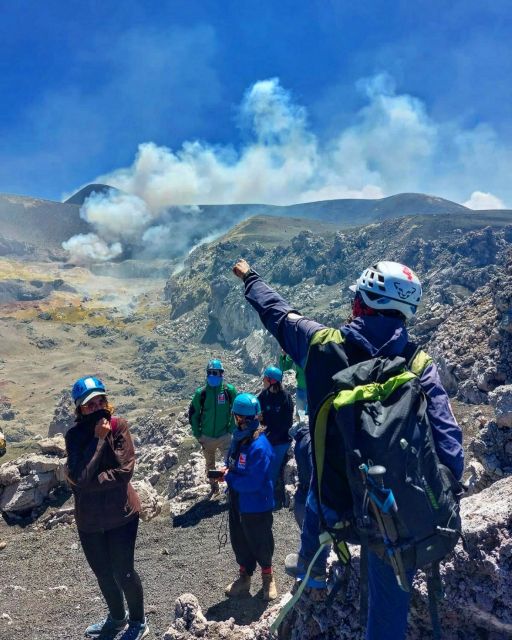
Mount Etna is not a museum volcano. It’s active, it smokes, it steams, and it keeps moving the story forward. This trek is built to put you near the craters with a guide who can explain what you’re seeing while you’re actually standing in it.
What makes this experience click is the mix of “wow views” and “how it works.” You get the dramatic heights, but you also get practical, on-the-ground interpretation of volcanic features like crater edges, eruption scars, and a lava tunnel.
Where you start at Etna South, and how the morning stays organized
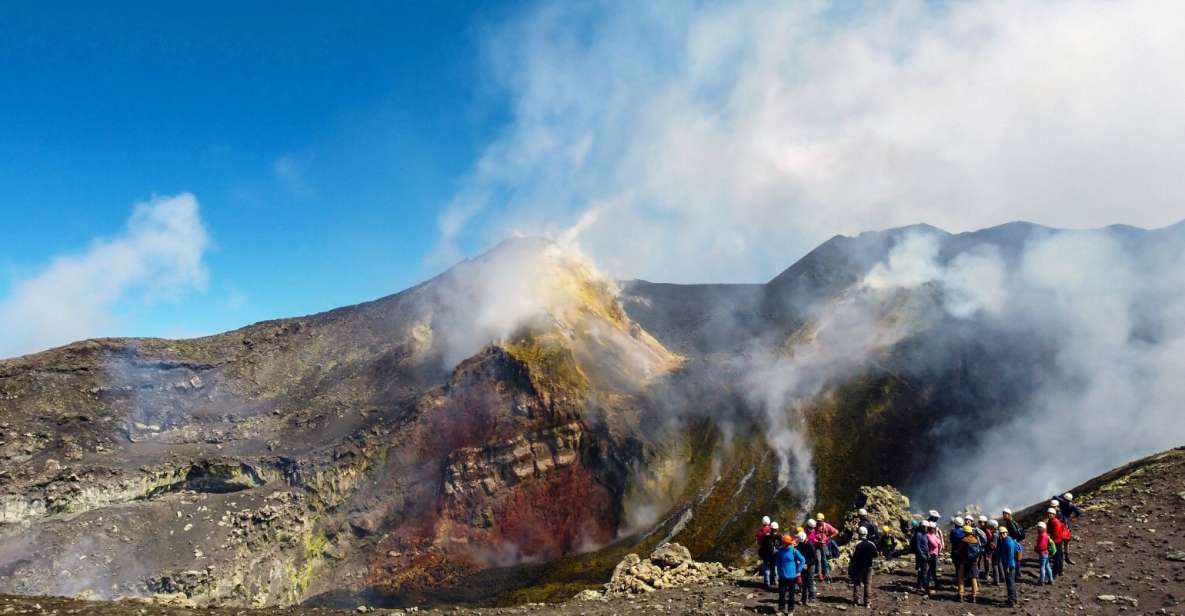
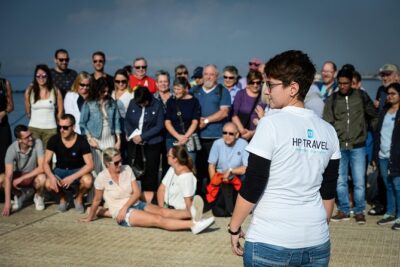
You meet the guide next to the restaurant La Terrazza dell etna, in front of the Etna south cable car station. The tour is set up so the group isn’t wandering around for long. You’ll do a safety briefing early, then get kitted out.
This is also where you’ll feel the tour’s focus: gear first, then the mountain. You’re provided hiking boots, walking sticks, a wind jacket, and a helmet, and there’s insurance included. The guides also check you as you move, which matters on loose volcanic ground.
One practical tip: come ready for sulfur in the air near active areas. People on this type of trek have noted the smell can be strong, and it can irritate the throat if you’re caught off guard. If you have a scarf or face cover, bring it. You may also be able to purchase covering gear at the check-in counter.
Cable car up, then 4×4 to Torre del Filosofo
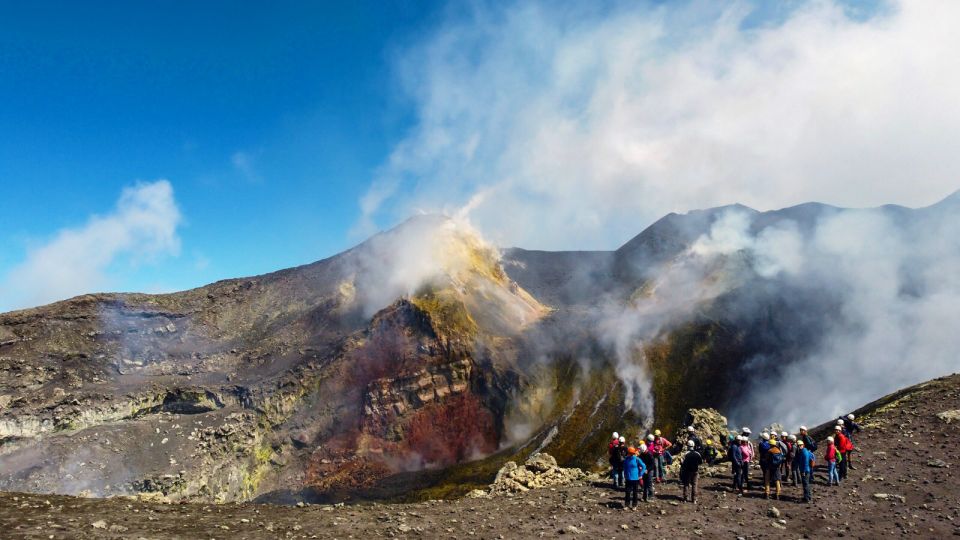
The ride begins with the cable car (about 15 minutes). Then you shift to a 4×4/SUV for another short hop (about 15 minutes). The goal is altitude fast, without spending all your energy on roads.
From the top of the cable car you cross lunar-looking terrain by 4×4 up to around 2850 meters, in the Torre del Filosofo area. That change in transport matters: it saves your legs so the real work happens where it counts, walking among the craters.
If weather or volcanic risk affects access, the route can adjust. The tour can end up shorter than the full summit plan, but the structure stays the same: you’re still aiming for summit-zone craters when it’s allowed.
Bocca Nuova: the crater edge stop that makes the day stick
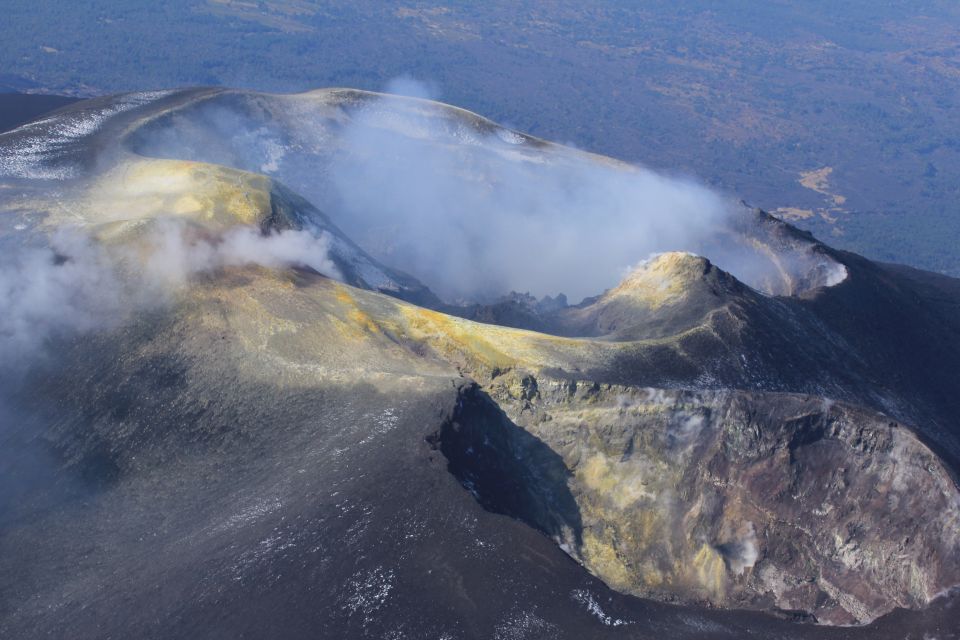
After the transfers, the trek begins toward the edge of Bocca Nuova (around 3300 meters). Bocca Nuova is a crater that opened in 1968, and it’s one of the most impressive points in this area.
This is where the tour becomes more than exercise. You stroll and take in 360° views when the sky is clear enough. On good days, you may even see the Aeolian Islands and a wide sweep across northern Sicily.
Time here is about two hours with guided exploration. That’s enough to catch both the big-picture view and the smaller details your guide will point out—signs of past eruptions and how different volcanic layers and textures form.
Central Crater and Barbagallo: walking among the summit features
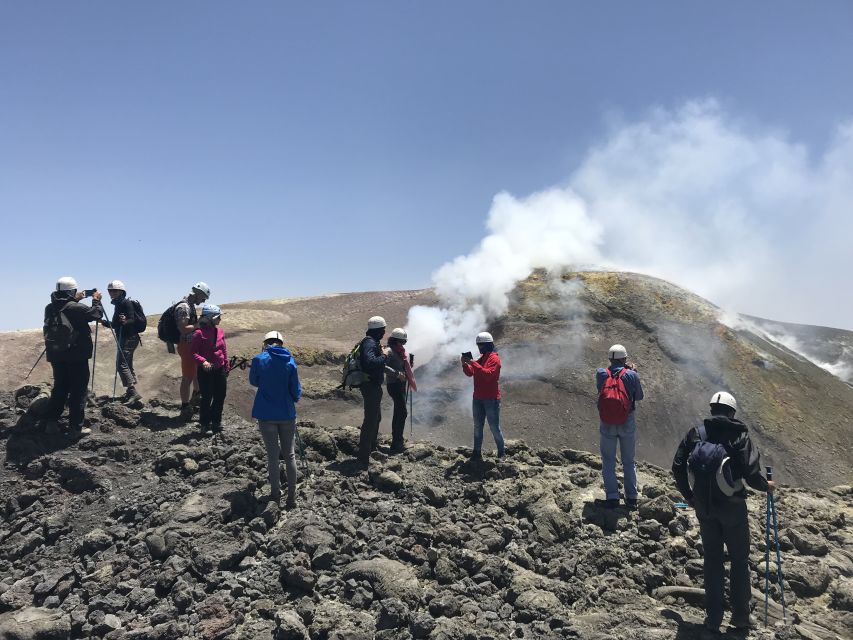
From the Bocca Nuova area, the itinerary continues to other summit craters. You’ll pass through Cratere Centrale dell’Etna with a guided stop and a walk of about 30 minutes. Then you move toward Barbagallo crater for a longer guided walk (about 1 hour).
This part of the trek is where your pace matters. The terrain can be loose—volcanic sand and scree-like surfaces—and the air can feel harsh if it’s cold or windy. Your guide’s job is to manage that: moving the group together, adjusting steps to slower hikers, and making sure you’re safe near active areas.
Guides like Giuseppe, Marco, Simone, and Vincenzo have been praised for pacing people well and keeping the explanations clear. If you’re the type who asks questions, you’ll likely get room to do it.
Also, note the summit can be visually intense even in calm conditions. Some people get a bit anxious around the steam and the constant signs of activity. If you’re worried about stress, I’d treat the summit as a “slow and steady” moment, not a race.
Lava tunnel and the 2002 eruption craters: geology you can walk through
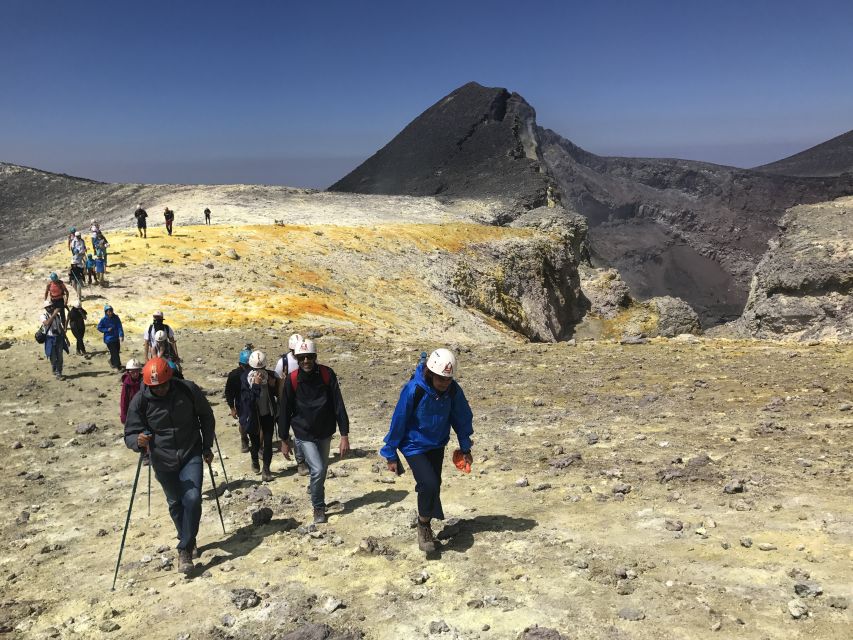
A highlight of this trek is the lava tunnel. Walking inside a formed passage like this helps you understand Etna’s power in a way that photos can’t. You’re not just looking at a crater—you’re seeing how lava moves and leaves structure behind.
After the summit-area walking, you descend and pass through the craters linked to the 2002 eruption. This stop gives the day a strong “timeline” feeling: you see what the volcano looked like after a more recent event, not just ancient ruins.
Then you head toward Valle del Bove, a massive caldera—about 8 km long and 4 km wide. Even when visibility isn’t perfect, it’s the kind of volcanic amphitheater that makes you stop talking for a moment.
The descent: volcanic sand, big views, and when boots work overtime
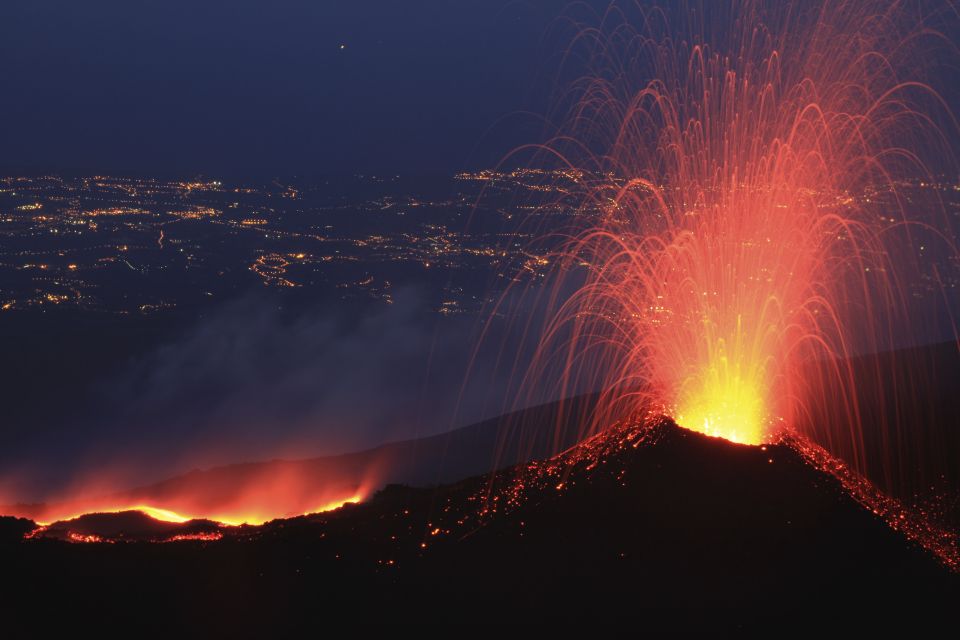
Descending is different from climbing. You’re often stepping on volcanic sand and loose ground, and gravity does a lot of the work for you in a not-so-fun way.
On some days the descent has been challenging enough that people say it feels like the hardest part of the day, especially if you get cold or wind hits you. The good news is the tour plan is built to keep you guided, and your pace should match the slowest hikers in the group.
If conditions force route changes, you might not reach every summit feature, but you still get a meaningful crater-zone experience and a Valle del Bove view. Weather and volcanic activity can absolutely shift what’s possible on the day.
Cable car back down: the payoff after the hard parts
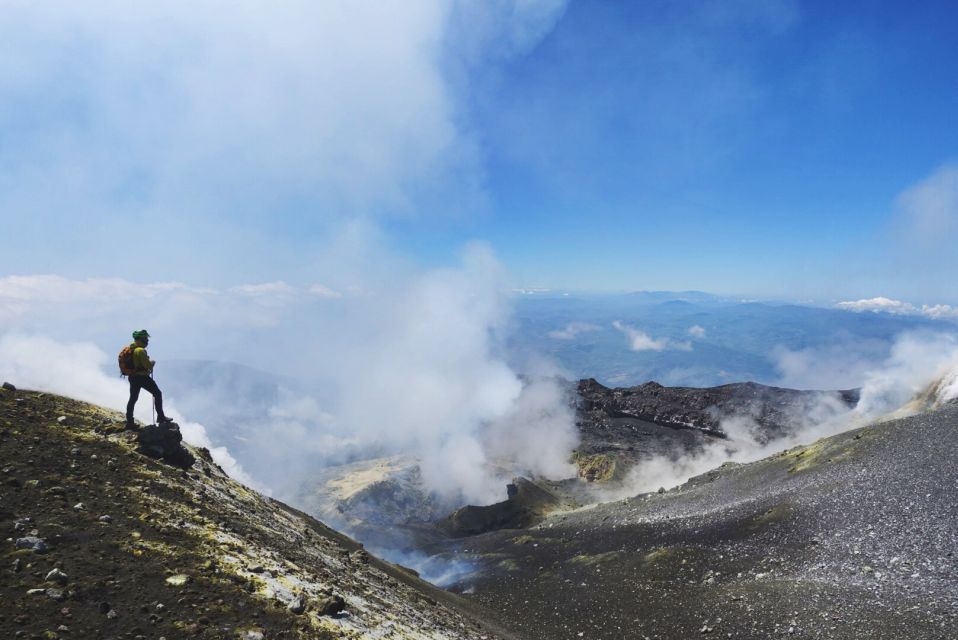
Near the end, you return by cable car to the starting point. The timing is typically short (about 15 minutes), which makes it feel like a reward instead of another transit chore.
That ride matters because it lets you finish the day without dragging the trek out into an all-day grind. You’ll leave Etna tired, but in a good way—the kind that makes you remember small details, like sulfur in the air and the sound of steam when the wind is right.
What you get included: gear, insurance, and why that lowers the hassle factor
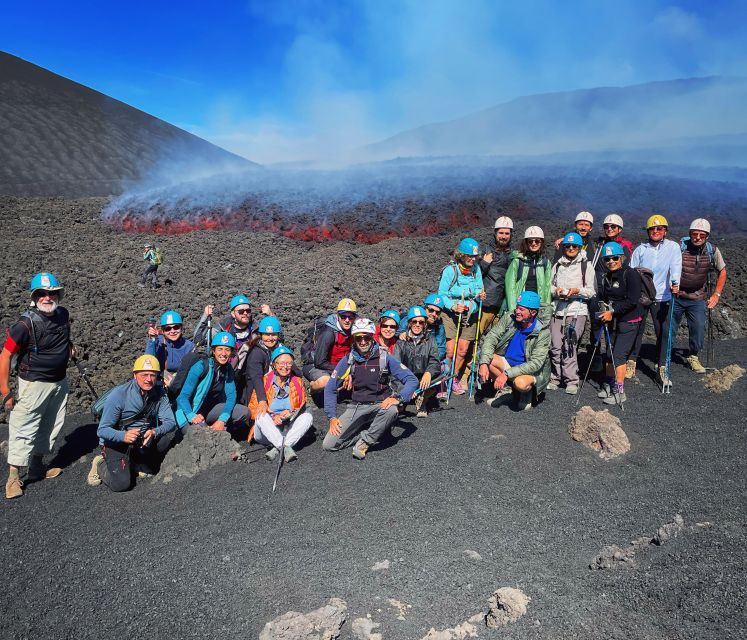
A lot of Etna tours look similar on paper, but the included gear is where value shows up. This tour provides hiking boots, walking sticks, a wind jacket, and a helmet.
You also get volcano guides and hiking support designed for active terrain. Insurance is included, and there’s free parking until supplies run out. The group stays small, which makes the guides more effective at keeping an eye on everyone.
One practical note from real-world experience on this mountain: check your own comfort before you leave the meeting point. Even if you think you’ll be fine, wind and cold near the summit can surprise you. Bringing a snack and water plan helps too, since food options at the base can be a letdown on some days.
Price and value: what your $77 covers vs. the Etna add-ons
The tour lists a base price around $77 per person. But the big thing to understand is that the cable car and 4×4 ride up are paid separately in cash.
The additional cost is:
- €65 per adult for cable car round trip plus the 4×4 one-way
- €50 for children under 11
- If they cannot reach the summit due to volcanic activity or adverse weather, you only take the cable car round trip for €52 per person
So is it worth it? In most cases, yes—because the included gear, the small group size, and the guided crater walks save you from DIY hassles and from losing time on logistics. You’re paying for access to the summit zone with a real guide and for having the tough parts structured.
Just plan your budget so the extra cash requirement doesn’t surprise you. And accept that the volcano can change the plan. This is not the kind of day where you’re in control of the summit.
Who this is for (and who should skip an active-volcano summit trek)
This trek is not for casual walkers, even if the day feels “guided and safe.” It’s still a hike on active volcanic terrain with loose surfaces and altitude near craters.
You should feel confident if you’re reasonably fit and comfortable hiking on uneven ground for hours. Many guides adjust the pace, and people of mixed ages have managed the full day, but you still need solid effort skills.
It’s not suitable for:
- children under 6 (and also under 7 per the general restrictions listed)
- pregnant women
- people with mobility impairments or wheelchair users
- people with heart problems or respiratory issues
- people with recent surgeries
- people with low fitness levels
- people over 95 years
If you’re sensitive to intense environments—steam, sulfur, noise, and the reality of an active volcano—talk to the operator beforehand. The wrong match can turn a dream day into a stress day.
Best practical tips to make your summit day easier
These are the things that tend to matter most on Etna:
- Bring long pants and a jacket, even in warmer months. Wind and cold can show up fast near craters.
- Pack a snack. Even with provided support, you’ll want fuel when you’re working your way through sand and scree.
- Use sunscreen. The summit-zone sun is strong, and the surfaces are bright.
- Consider a mouth/nose cover for sulfur irritation.
- If you get cold, ask at check-in about extra layers and poles if they’re available that day.
Also, keep expectations flexible. If summit access is limited, you’ll still likely get crater views and Valle del Bove, but you might not hit every point.
Should you book Mount Etna’s Summit Crater Trek with Cable Car?
Book this tour if you want the closest, most active-volcano version of Etna—not just a drive-by and photos. The combination of guided summit walking, a lava tunnel, and a real descent to Valle del Bove gives you a full Etna story in one day.
Skip it (or look for an easier option) if you don’t hike much, have breathing or heart limitations, or you hate the idea of changing plans due to volcanic risk and weather. And if your budget is tight, remember you’ll need extra cash for the cable car and 4×4 ride up.
FAQ
FAQ
How long is the Mount Etna summit crater trek with cable car?
The duration is listed as 5 hours.
Where do I meet the tour guide?
Meet next to the restaurant La Terrazza dell etna, in front of the Etna south cable car station.
Is the cable car included in the tour price?
No. The round trip cable car and the 4×4 one-way ticket are not included. You pay them separately in cash at the office.
How much are the cable car and 4×4 add-ons?
€65 per adult, and €50 per child under 11 for the cable car round trip plus the 4×4 one-way. If the summit cannot be reached, you take only the cable car round trip for €52 per person.
What is included in the tour?
Included are volcano guides, the Mount Etna hike, hiking boots, walking sticks, a wind jacket, a helmet, insurance, and free parking until supplies run out.
Are hotel pickup and drop-off included?
No, hotel pickup and drop-off are not included.
What languages is the live guide available in?
The live tour guide is listed as available in French, English, and Italian.
What is the group size?
It’s a small group, limited to 8 participants.
What isn’t allowed during the tour?
Alcohol and drugs are not allowed.
When can I cancel for a full refund?
You can cancel up to 24 hours in advance for a full refund.
If you tell me your travel month and your hiking comfort level, I can help you decide whether the summit-day plan is a good match for you.