REVIEW · NICOLOSI
Mount Etna: Trek to 3000m with cable car and jeep
Book on GetYourGuide →Operated by Etna Guides · Bookable on GetYourGuide
Mount Etna feels like the planet is working in real time. This trek takes you higher than most day trips, with a mix of cable car, 4×4 and a guided walk up to 3,000m.
Two things I especially like: you’re not just sightseeing from a distance—you step into the story with stops at lateral craters, black sand stretches, and even inside a lava channel. Second, the guides (from Giuseppe to Clara to Marco) focus on what you’re seeing—how Etna’s eruptions shape the ground under your boots—so the whole day feels earned, not rushed.
One consideration: the terrain and weather can make the day tougher than it sounds on paper. The hike portion can feel harder on the way down, and strong wind or cold can turn Etna into a very serious workout.
In This Review
- Key highlights that make this Etna trek different
- Why this 3000m Mount Etna trek is a smart alternative to the summit craters
- The morning climb: cable car to 2,500m, then 4×4 to 2,800m
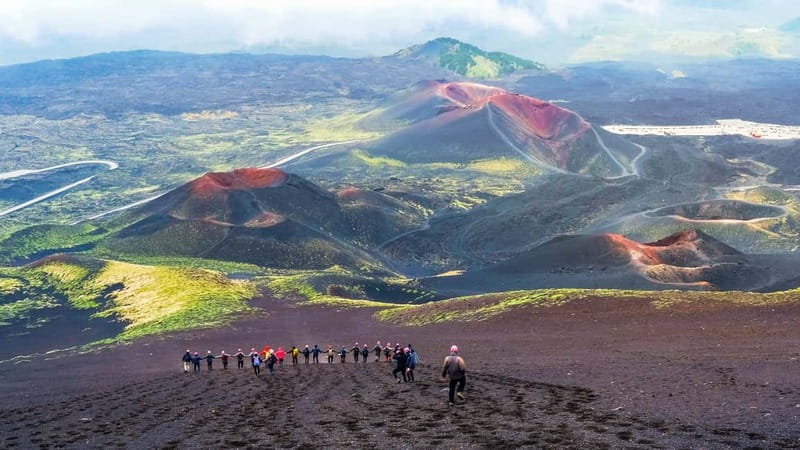
- The hike at 3,000m: summit craters, Barbagallo, black sand and crater stops
- The lava-channel moment: seeing recent flows and walking inside
- Going back down: hike toward the cable car station and Bove Valley views
- Gear, clothing, and safety: what’s provided and what you must bring
- Price and value: what $62.63 covers, and the €45 onsite reality
- Tour pacing and group dynamics: where to set your expectations
- Who should book this Mount Etna trek (and who should skip it)
- Quick tips to make your day smoother
- Should you book the 3000m Mount Etna trek with cable car and jeep?
- FAQ
- How high does this Mount Etna tour go?
- How long is the tour, and how much of it is hiking?
- What is the meeting point for the tour?
- Is the cable car included in the price?
- What trekking gear is included?
- Are children allowed on this excursion?
- What should I bring, and what is not allowed?
Key highlights that make this Etna trek different
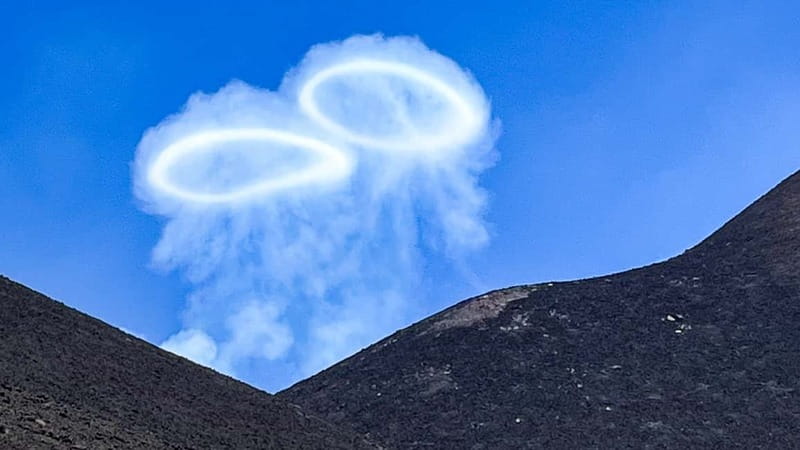
- 3,000m without betting on summit access: you reach Torre del Filosofo area as an alternative to the summit craters.
- Inside a lava channel: not just lava views—this is the real thing, up close and on foot.
- Barbagallo lateral crater stop (~3,000m): you pause at an off-center Etna feature and get context for the activity below.
- Black sand walking and crater views: you’ll cross volcanic ground that looks like it landed from another planet.
- Bove Valley viewpoints: on clear days, you can see from the Ionian side toward inland Sicily.
- Gear is included: boots, thick socks, helmets, poles, warm layers—so you don’t show up underdressed.
Why this 3000m Mount Etna trek is a smart alternative to the summit craters
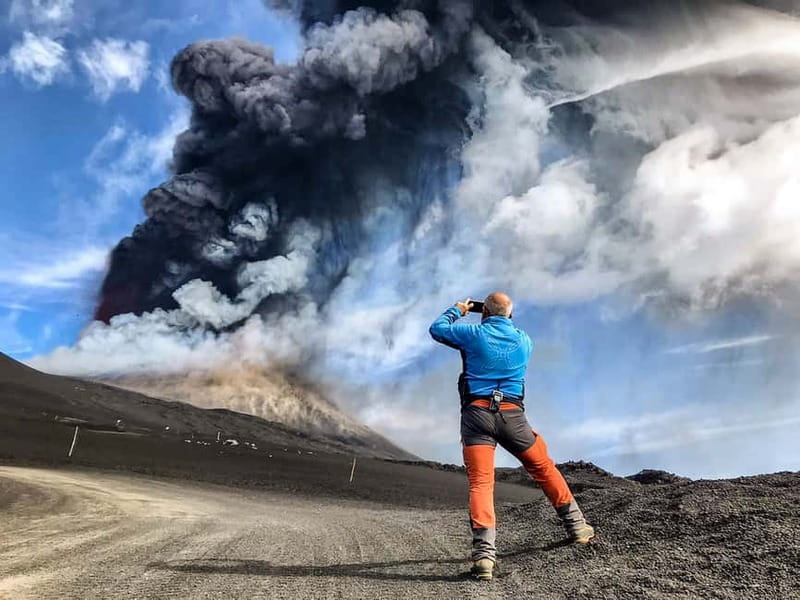
If your goal is to experience Etna, you have two problems: the mountain changes fast, and summit access isn’t always simple. This route solves both. You still go high—up to the 3,000m area (Torre del Filosofo)—but you’re not depending on getting onto the exact summit crater views that may be restricted on the day.
I like that this plan is built around multiple ways to see Etna’s character. You’ll watch summit craters from your vantage point, then shift to lateral craters and volcanic terrain that tells a different story than the top alone. That mix keeps the day interesting and makes the hike feel purposeful.
And there’s a practical win: the day is paced with rides that reduce the “dead time” of climbing from sea level. You’re not just trying to brute-force altitude; you’re moving efficiently to the part of Etna where the volcano looks active and recent.
You can also read our reviews of more tours and experiences in Nicolosi.
The morning climb: cable car to 2,500m, then 4×4 to 2,800m
Your day starts at the Etna Alpine Guides shelter, Etna Sud (next to Rifugio Giovanni Sapienza). Plan to arrive about 45 minutes early. The activity departs at 9:30 or 10:30, and they can wait for people coming in by AST bus from Catania if you let them know.
Then it’s a quick, dramatic shift in altitude:
- Cable car up for about 20 minutes, reaching roughly 2,500m
- Jeep/4×4 transfer for about 20 minutes, pushing you to about 2,800m
Why this matters: at Etna, the experience isn’t only about height—it’s about timing and footing. By getting you close first, the hike time stays focused on the ground-level volcanic features. Also, your cold exposure is managed better than if you had to climb everything from below.
What to watch for in this part:
- Dress like you’ll feel cold even if Catania feels warm. You’re headed into a high-altitude zone where wind can bite.
- Keep your eyes open on the rides. Lava and scoria patterns can look subtle from far away, but once you’re higher, those textures make sense fast.
The hike at 3,000m: summit craters, Barbagallo, black sand and crater stops
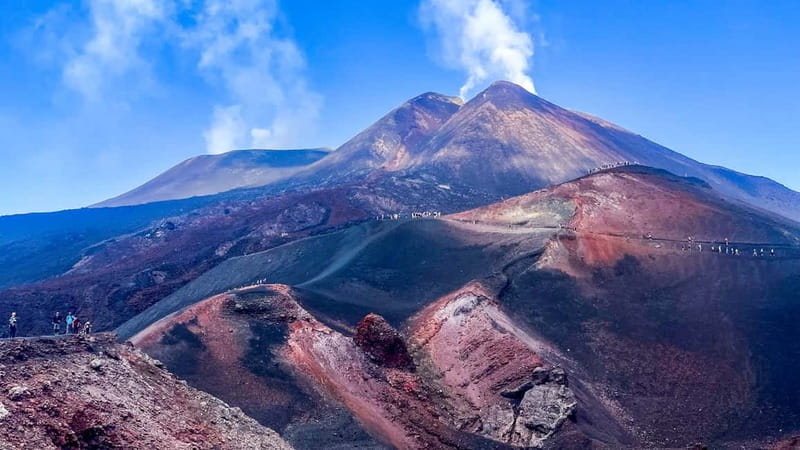
Once you’re near the walking zone, you begin the guided trekking portion to reach around 3,000m. The total tour is about 5 hours, with about 3 hours of walking, so you’re not doing a full-day endurance hike—but you’re doing a real one.
The route typically includes:
- Time to observe summit craters and the high-volcano terrain from your viewpoint
- A stop at a lateral crater (Barbagallo) around 3,000m
- Walking across black sand—volcanic ground that looks simple, but can be draining when it’s loose
This is one of the most valuable parts of the day. Summit craters get the headlines, but lateral craters and flows are where you see how Etna spreads its activity. You start to understand that eruptions aren’t always a single, straight line to the top. They travel, branch, and rebuild the mountain’s surface.
And yes, walking on black sand can feel weirdly slippery. Even with trekking poles and boots, you’ll want to take your time. You’re not racing; you’re learning how volcanic terrain moves underfoot.
The lava-channel moment: seeing recent flows and walking inside
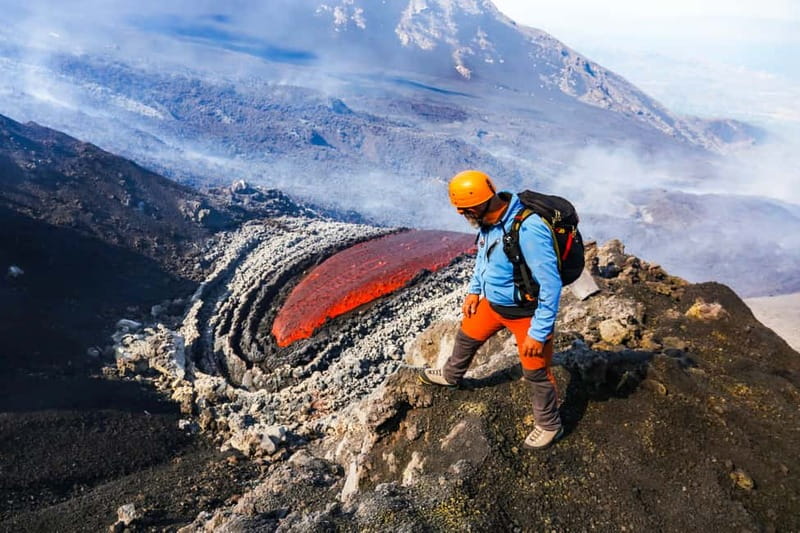
The most memorable wow-factor is how close you’ll get to lava features. You’ll observe recent lava flows (noted as from Dec 1, 2023) and then reach the inside of a lava channel.
That’s a different experience than looking at a flow from a distance. Inside a lava channel, the environment feels more enclosed and more physical. You’re walking through the geometry of what used to be hot rock—an underground-like space where the volcanic process is visible in cross-sections, edges, and channel shape.
You’ll also visit an effusive vent associated with the 2002 eruption. Effusive activity matters because it creates different rock textures than more explosive phases. Etna isn’t one uniform type of eruption. This is your chance to see that variety with your own eyes, at the walking pace.
A quick realism note: if it’s cold or windy, you’ll feel it more here. Move carefully, keep your layers on, and follow your guide’s pace. The goal is to keep footing solid and stay comfortable enough to enjoy what you’re seeing.
Going back down: hike toward the cable car station and Bove Valley views
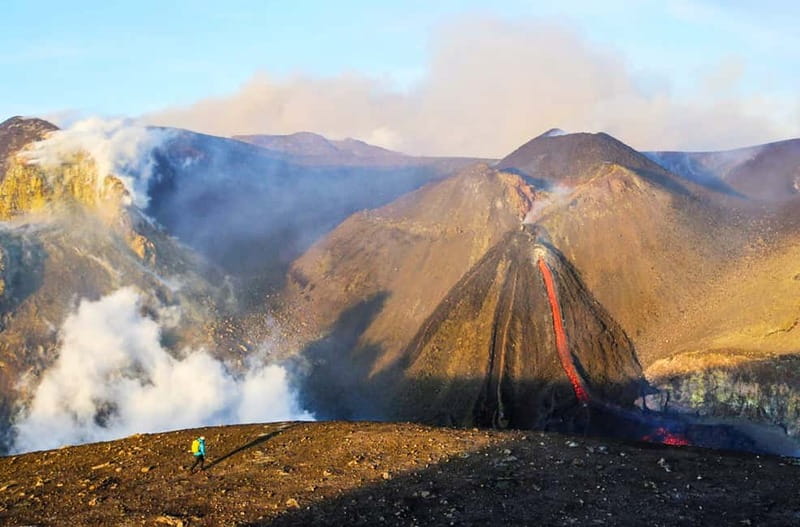
After the lava-channel and crater section, you start descending on foot toward the cable car station. The description also notes that you’ll walk along sandbanks toward a mound area where you can observe the Bove Valley.
On fine days, the view can sweep from the Ionian Riviera toward the interior of Sicily. Even when it’s not crystal clear, Etna’s slopes and valleys still give you scale. Suddenly the mountain stops feeling like a single peak and starts feeling like a whole volcanic system.
Then you take the cable car down (about 20 minutes) back toward the meeting point area.
One thing you should expect: the descent can be harder than you imagine. A few guides keep groups moving smartly, but the ground is still uneven, and going downhill on volcanic textures can strain legs. Wear your boots, trust the poles, and take short steps.
Gear, clothing, and safety: what’s provided and what you must bring
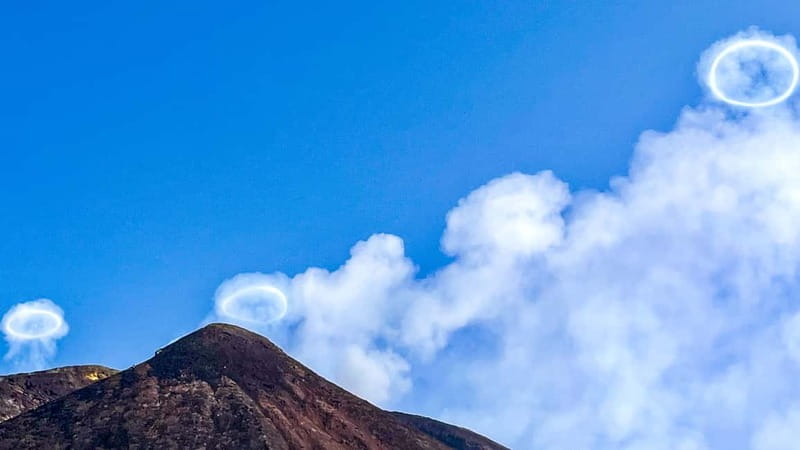
This tour is set up so you don’t need to arrive fully outfitted. Equipment included typically covers:
- Ankle trekking boots and long thick socks
- Helmets
- Disposable under-helmet item
- Backpacks
- Trekking poles
- Warm outer layers (kway jackets, sometimes with fleece inside)
- Gloves if needed
You still need your own essentials. Bring:
- Sunglasses
- Sunscreen
- Rain gear
- Long pants
Shorts are not allowed. That rule is not there to be dramatic. At 3,000m with volcanic ground, you’ll want full leg protection.
Also: you’re not on a sidewalk. This is not suited for people with mobility impairments, wheelchair use, or respiratory issues, and it’s not recommended with heart problems. It’s also not suitable for pregnant women, children under 6, people with motion sickness, or visually impaired participants. If any of those apply, you’ll want to choose a gentler Etna option.
Weather is the wild card. If the mountain is blowing hard, the day can feel icy fast. On some days, conditions have meant added transport measures like a snowcat segment—but you shouldn’t assume that’s always available. The safest plan is to show up ready for cold wind and wet ground.
Price and value: what $62.63 covers, and the €45 onsite reality
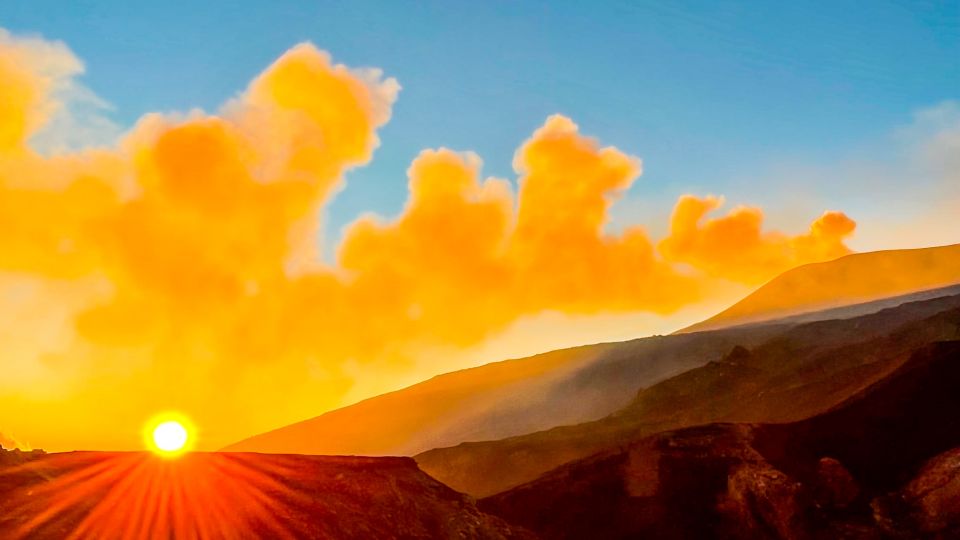
The price you’ll see online is $62.63 per person, but the big budget detail is this: cable car and 4×4 tickets are €45 per person, paid onsite at the meeting point in the morning.
So you should mentally budget roughly $100+ total per person once onsite transport is included (exact currency totals depend on the day and how you pay). That sounds steep until you match it to what you’re getting:
- a guided trek up to 3,000m
- specialized climbing gear (boots, helmets, poles)
- mountain transport that puts you high without wasting hours in slow ascent
- time spent at multiple eruption-related sites (craters, flows, lava channel)
In other words: you’re paying for access, safety equipment, and expert guiding—not just a view.
My advice: bring this up in your planning early. If you like a smooth morning, having that €45 ready saves stress when you arrive.
Tour pacing and group dynamics: where to set your expectations
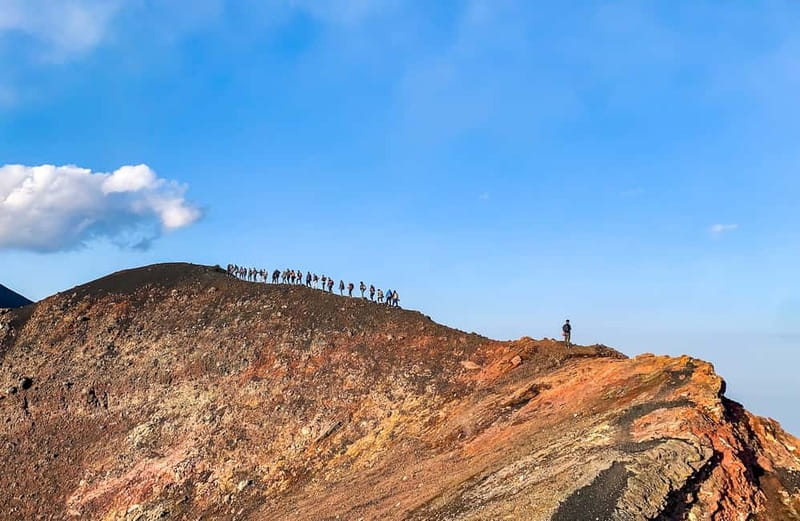
Most guides run a tight program: they group by language and keep stops meaningful. Many people have praised guides like Antonio, Giuseppe, Clara, Michele, Marco, Nino, Luciano, and Gianbattista for explaining what you’re seeing and keeping the day moving well.
But there’s one practical drawback to keep in mind. If the group is large or splits are messy, you may feel like you’re chasing pace rather than walking comfortably. A few people have described situations where they couldn’t keep up and had to improvise their return. That doesn’t mean the tour is unsafe—but it does mean your best experience comes when you’re willing to follow instructions closely and manage your effort.
You’ll also likely feel the wind near exposed areas. In serious conditions, guides may prioritize shelter stops and shorter movement segments. That’s not a detour; it’s how they keep you safe and still give you good views when conditions allow.
Who should book this Mount Etna trek (and who should skip it)
This is a great fit if you want a hands-on Etna day and you can handle rough, high-altitude walking. It’s especially good for people who:
- want a volcano experience that isn’t just bus-and-look
- like guided interpretation—seeing lava features with a plan
- want to reach 3,000m even if summit craters aren’t available
- prefer guided pacing with provided gear
Skip it if you don’t handle altitude well, you have conditions listed as unsuitable (heart, respiratory, mobility, wheelchair, motion sickness), or you’re traveling with very young kids. The tour explicitly isn’t set for those needs.
If you’re a cautious walker, you’ll still probably enjoy it—just go into it with the mindset that downhill may take more out of you than the ascent.
Quick tips to make your day smoother
- Start with long pants and warm layers. Rain gear helps even when rain isn’t guaranteed.
- Bring sunglasses and sunscreen. High altitude means stronger light and faster glare.
- Keep your pace steady. On black sand and volcanic slopes, rushing is the fastest way to feel clumsy.
- Don’t plan anything tight right after the tour. It can take time to settle your legs afterward.
- For clarity, assume you’ll pay the €45 onsite transport ticket when you meet.
Should you book the 3000m Mount Etna trek with cable car and jeep?
If you want the “active volcano” feeling without spending your whole day climbing from the bottom, I think this is a strong choice. The big win is the mix of access and walking: rides put you close, then the guide takes you to the parts of Etna that show how the mountain changes—lateral craters, black sand, recent lava flows, and even an interior lava channel.
Book it if:
- you’re comfortable with a real hike (even if it’s only a few hours)
- you’re ready for wind/cold reality at 3,000m
- you want meaning behind the views, not just photos
Skip or choose differently if:
- you can’t do uneven terrain downhill
- altitude or cold is a deal-breaker for you
- your budget can’t handle the onsite €45 transport add-on
Overall, it’s one of the more practical ways to experience Etna as an actual working volcano—at altitude, on the ground, with a guide keeping the day connected.
FAQ
How high does this Mount Etna tour go?
You go up to about 3,000 meters (Torre del Filosofo area). The day includes a cable car and then a 4×4, followed by a guided walk to the 3,000m area.
How long is the tour, and how much of it is hiking?
The total tour time is about 5 hours, with around 3 hours of walking.
What is the meeting point for the tour?
The meeting point is at the Etna Alpine Guides Etna Sud shelter, next to Rifugio Giovanni Sapienza.
Is the cable car included in the price?
The €45 per person onsite fee covers the cable car and 4×4 tickets, which you pay at the meeting point in the morning.
What trekking gear is included?
The tour includes trekking boots, long thick socks, helmets, disposable under-helmet items, gloves if needed, kway jackets (with or without fleece), backpacks, and trekking poles.
Are children allowed on this excursion?
It is not suitable for children under 6 years.
What should I bring, and what is not allowed?
Bring sunglasses, sunscreen, rain gear, and long pants. Shorts are not allowed. Baby strollers and baby carriages are also not allowed.