REVIEW · NAPLES
Naples: The Bourbon Tunnel Guided Tour with Entrance Ticket
Book on GetYourGuide →Operated by Galleria Borbonica · Bookable on GetYourGuide
Naples goes underground in 60 minutes. I love the way the Bourbon Tunnel turns history into a walk you can follow, starting with Ferdinand II of Bourbon’s 1853 escape idea and ending with later uses beneath the city. It’s one guided hour, but it feels like you’re hopping centuries.
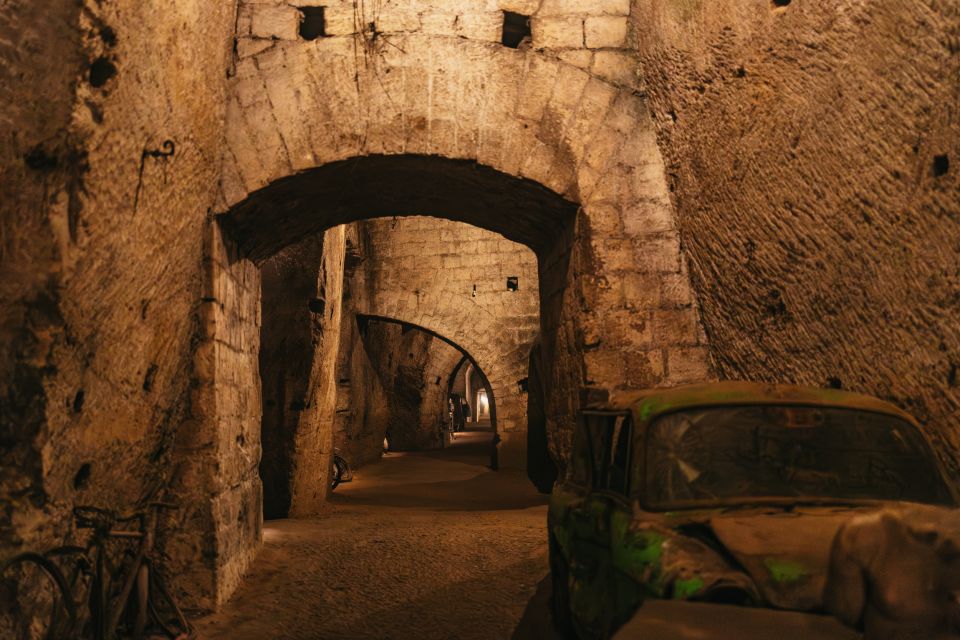
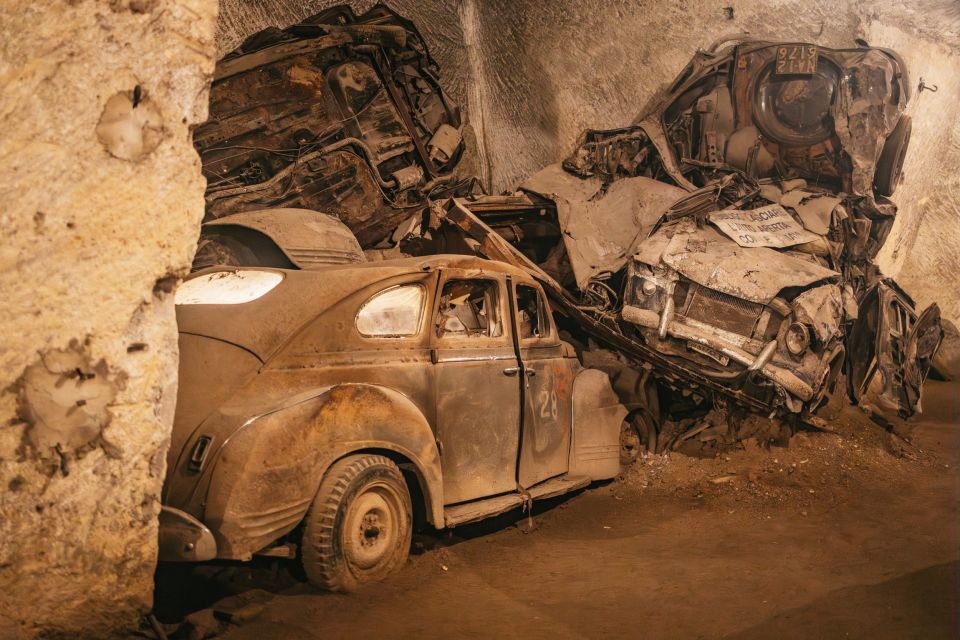
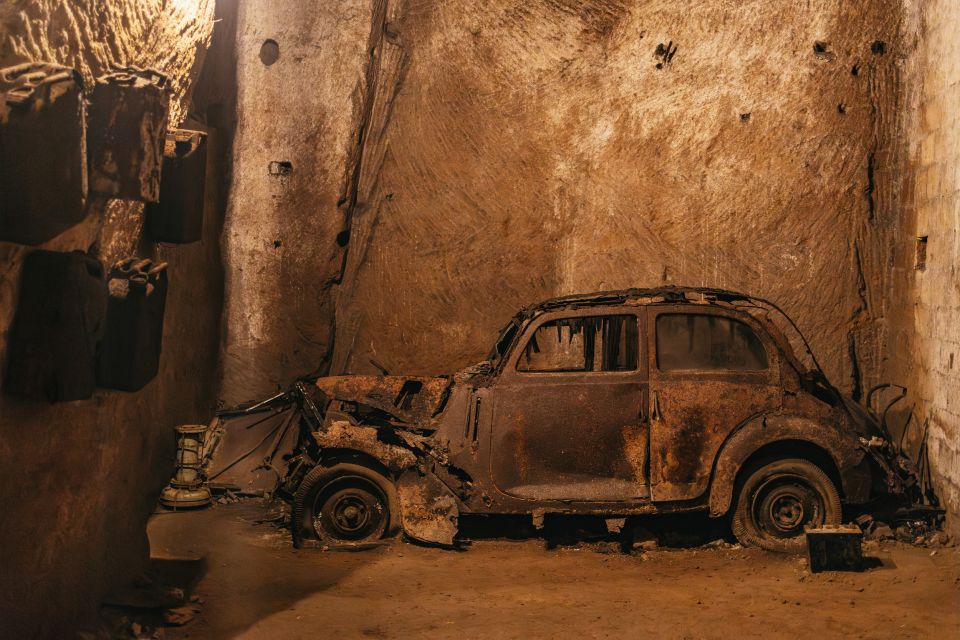
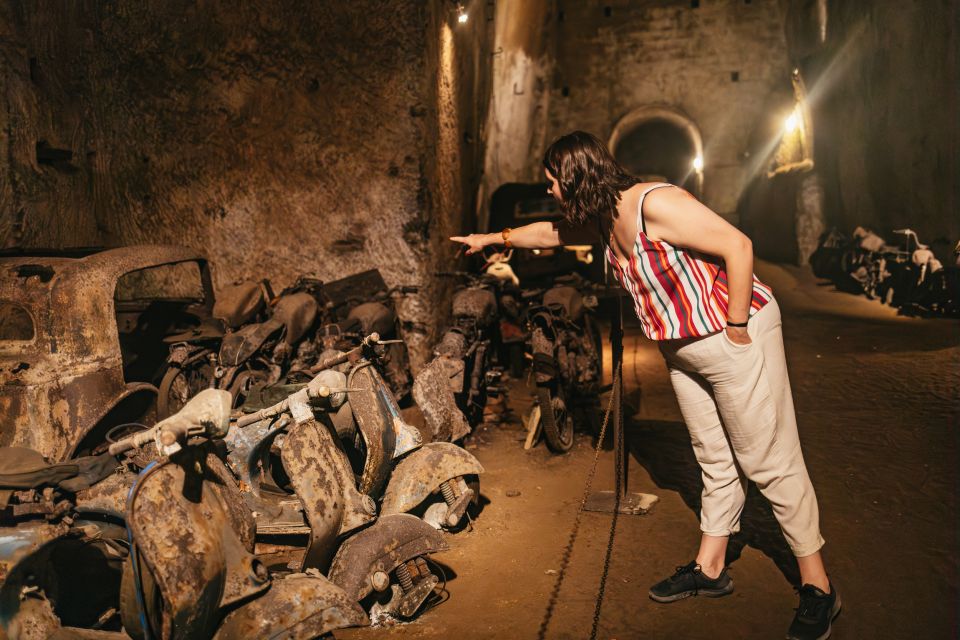
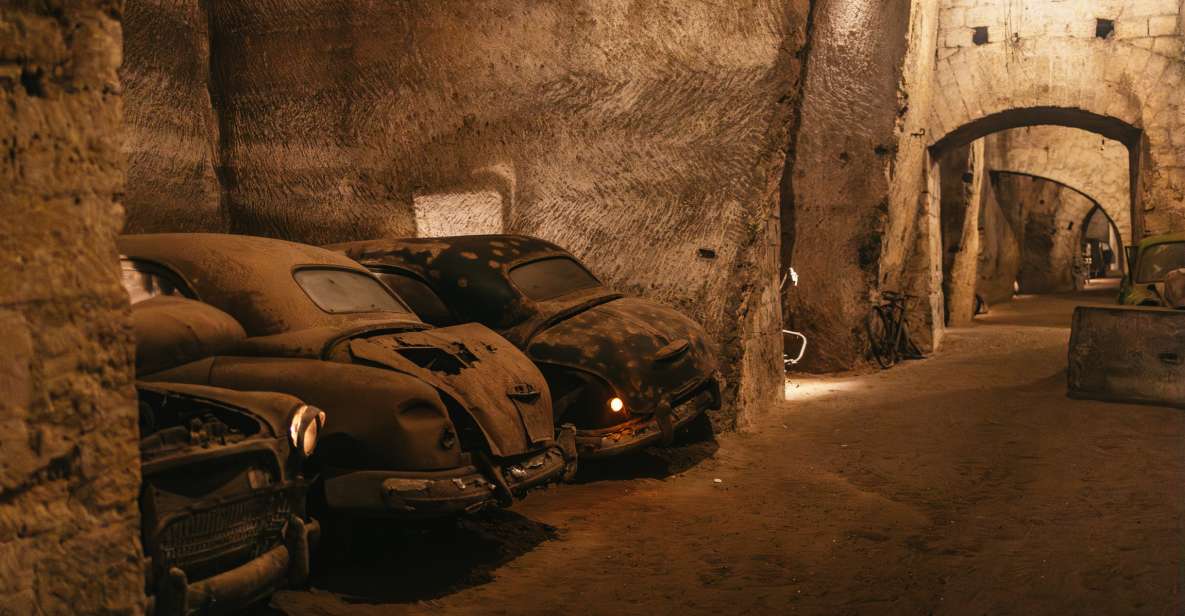
I also like the tangible stuff you get to see: WWII-era traces in the subsoil, plus darker details like handwritten messages, along with statuary from the fascist period and an exhibition of old cars and motorcycles that were left behind and later cleared up.
One real consideration: you’ll face stairs. There are 90 steps at the entrance (or 115 if you choose the Via delle Memorie option), and if you have issues with steps or claustrophobic feelings, plan accordingly.
In This Review
- Key things I’d make sure you notice
- Bourbon Tunnel in Naples: a time machine you walk through
- The 1853 tunnel idea: Ferdinand II’s escape route starts the story
- From palace fears to WWII hospital: what you see in the dark
- WWII finds, 16th-century caves, and a 17th-century tank you’ll recognize
- Fascist-era statues and the cars-and-motorcycles display
- Optional Via delle Memorie: more underground, more steps, more breathing room
- What the 1-hour format feels like in practice
- Guides, language, and how questions work underground
- Price and value: why $12 feels like a bargain
- Practical tips before you go (so the tunnel works for you)
- Who should book the Bourbon Tunnel tour?
- Should you book the Bourbon Tunnel guided tour?
- FAQ
- How long is the Naples Bourbon Tunnel guided tour?
- Where does the tour start?
- Is the tour guided, and what languages are available?
- What was the Bourbon Tunnel originally built for?
- What can I see inside the tunnel?
- How many steps are there?
- Does the tour include the Via delle Memorie route automatically?
- Are children allowed?
- What’s included in the ticket price?
Key things I’d make sure you notice
- Ferdinand II’s 1853 escape plan: built to move people from the Royal Palace toward Via della Pace (now Via Morelli).
- WWII aftershocks underground: traces of how the tunnel was used when it mattered most.
- Fascist-era statues: remnants you can actually stand near and understand in context.
- Cars and motorcycles display: rescued from years of neglect and turned into part of the story.
- Via delle Memorie option: extra walking on an underground route carved into Naples tuff rock.
- Small-group feel: enough room for questions without the chaos.
Bourbon Tunnel in Naples: a time machine you walk through
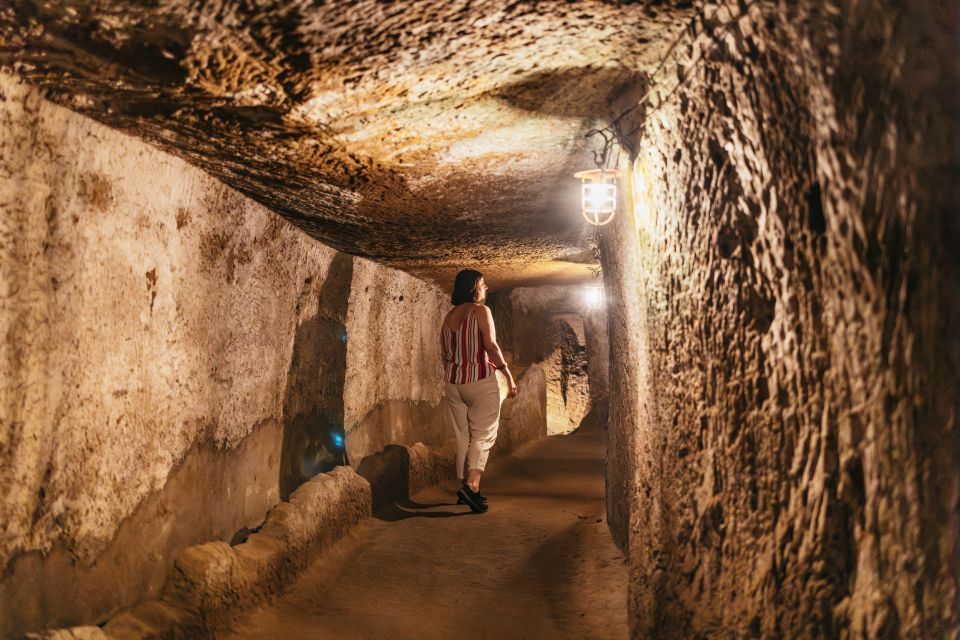
The Galleria Borbonica’s Bourbon Tunnel is one of those Naples experiences that changes your sense of the city. Above ground you get sun, traffic, and the usual swirl. Down here, the air feels cooler and the scale becomes human. You’re not just seeing an old passage—you’re traveling beneath Naples’ layers of survival.
The magic is how the story is built into the place. The tunnel was commissioned in 1853 by Ferdinand II of Bourbon, in the middle of political tension and fear of rebellion. That purpose shapes the vibe. Even before you reach the “big sights,” the tour sets up the tunnel as an escape route that kept evolving.
And because it’s a guided tour, you don’t have to guess what you’re looking at. Your guide ties the physical remains to what happened next—unfinished plans, later military use, and the way war leaves personal marks behind.
You can also read our reviews of more tours and experiences in Naples.


The 1853 tunnel idea: Ferdinand II’s escape route starts the story
Here’s the part you’ll keep thinking about: this wasn’t built as a tourist attraction. It was built as a response.
Ferdinand II of Bourbon asked for a route that would get people away from the Royal Palace to the barracks in Via della Pace (today called Via Morelli). That’s the first storyline the tour frames, and it gives the tunnel a sense of urgency even now.
What makes this especially interesting for you is that the tunnel’s later history becomes more believable. If you already understand it as an emergency plan, then the wartime transformations don’t feel random. They feel like the tunnel was simply repurposed when the city faced another crisis.
And you’ll also hear that the work wasn’t completed as originally intended. That unfinished feel matters in how the tunnel is experienced: it’s not one neat museum corridor. It’s more like a living structure with chapters stacked inside it.
From palace fears to WWII hospital: what you see in the dark
The Bourbon Tunnel’s wartime chapter is one of the strongest reasons to book. During World War II, the tunnel was used as a military hospital, and later it became the Hall Judicial Deposit. That shift from medical shelter to administrative holding tells you something about how the city handled hard times.
On the tour, you’ll see signs and finds connected to the war period. You might come across handwritten messages—wishes and desolation left by people who lived, waited, or suffered in the underground space. It’s the kind of detail that hits differently in person because it’s personal, not just historical.
This is also where the tour earns its emotional weight. The Bourbon Tunnel isn’t polished into a single tone. It’s a space where people tried to cope, and the evidence of that coping lingers.
If you like WWII details, keep your ears open. The guided narration connects the underground system of Naples across eras, including earlier layers you’ll encounter later in the route.
WWII finds, 16th-century caves, and a 17th-century tank you’ll recognize
Your walk isn’t only one era. The tour is structured so you encounter multiple time layers, and that’s part of the value of doing it as a guided experience.
Starting from the Palazzo Serra di Cassano basement, you begin in the area where the story is framed with what’s been found. Along the route, you’ll see historical finds that include:
- WWII-era remnants
- 16th-century caves
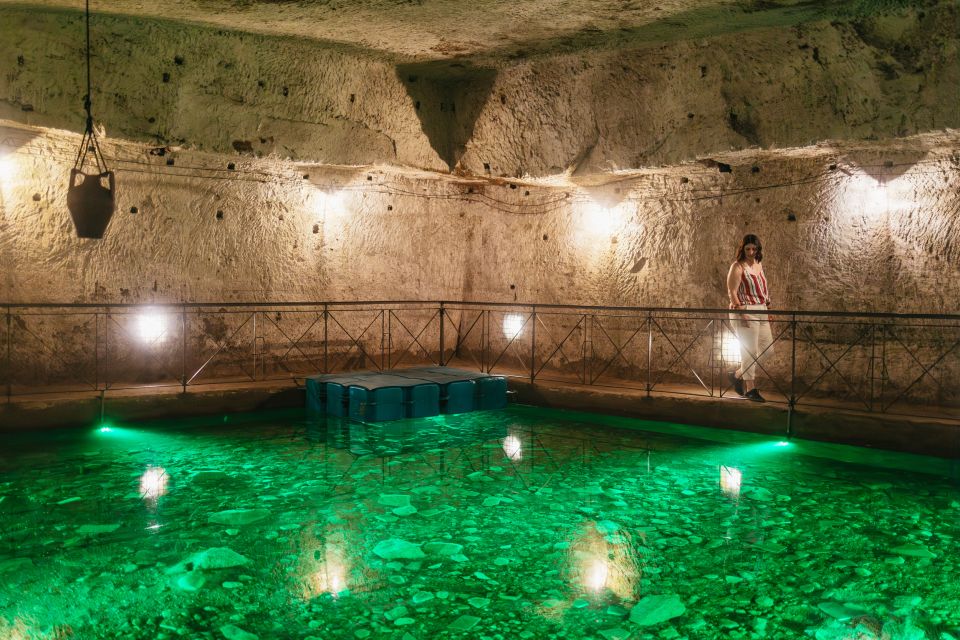
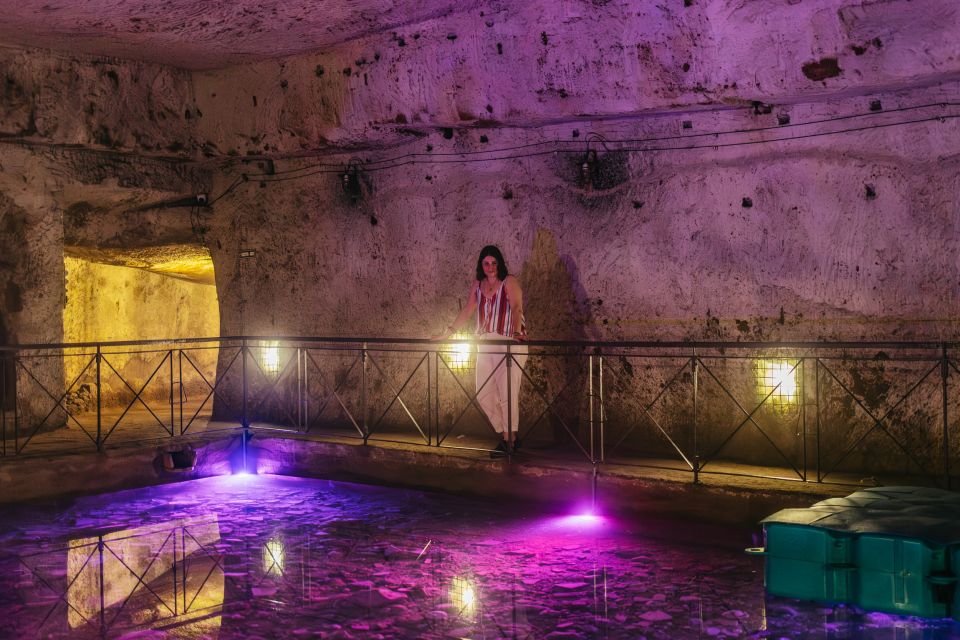
- A water tank from the 17th century, later used as a bomb shelter
That last detail is practical in the best way. Water systems underground are one reason cities could function even when surface life collapsed. Seeing a tank that was reused under threat makes the place feel logical, not just dramatic.
And because it’s a live tour, your guide can point out why those features mattered. You’ll leave with a better sense of how Naples’ underground wasn’t a single thing—it was infrastructure shaped by the needs of each century.
Fascist-era statues and the cars-and-motorcycles display
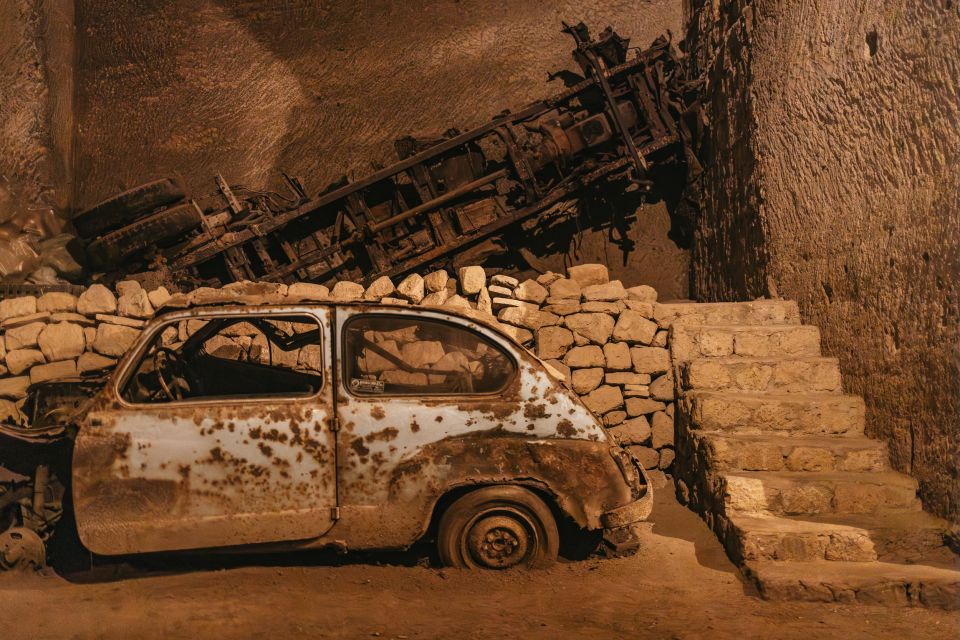
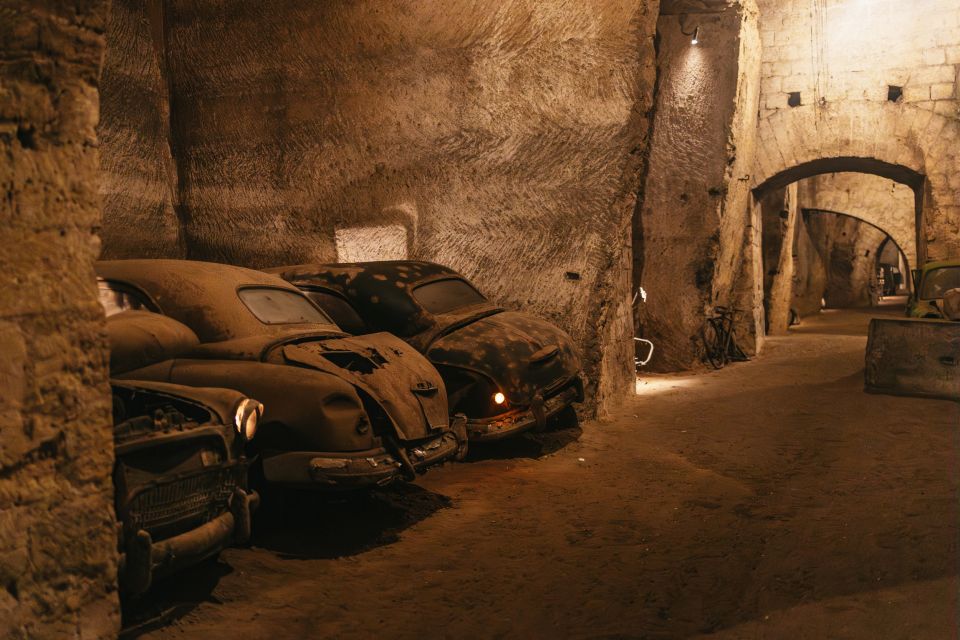
This is the part that surprises people, in a good way. In the tunnels, you’ll find statues dating back to the fascist period. You’ll also see an exhibition of cars and motorcycles.
What’s important here isn’t just that the objects are old. It’s how they got repurposed into the story of the tunnel. The cars and motorcycles were abandoned for years and then freed from rubbish—turned from lost clutter into evidence of what got left behind below ground.
It can be a strange contrast: ceremonial-looking statuary from the fascist era next to everyday vehicles. But that contrast helps you understand the tunnel as a cross-section of life, not a single-purpose bunker. Different regimes and different moments left different traces, and the tunnel preserved them.
If you’re the type who likes tours where you can take photos and still learn something real, this is a strong stop—because the artifacts aren’t just “decor.” They’re part of the narrative.



Optional Via delle Memorie: more underground, more steps, more breathing room
If you can handle extra walking, the Via delle Memorie option adds a distinct flavor. It includes a walk on an underground route carved out of Naples tuff. It’s basically an extension of the tunnel experience, and it can make your hour feel more complete.
Here’s the practical tradeoff. The Via delle Memorie route has 115 steps at the entrance, compared to 90 for the standard tunnel entry. So you’ll want to gauge your comfort with stairs before choosing.
On the upside, this option gives you more chances to see underground space and how it changes as you move. Some people prefer this extension because the route tends to feel more spacious and easier to navigate as you go deeper into the underground network.
If you want the emotional arc to stretch—more time before you end the tour—this is the option I’d point you toward.
What the 1-hour format feels like in practice
This tour is set for about one hour. That matters because it changes how you should approach it. You’re not here for a long wandering session. You’re here for a guided walk where the highlights are chosen and sequenced.
After your introduction in the basement start area, you move through key subterranean sections and end your tour with a walk through the last section of the tunnel. That end stage is useful because it gives closure: you finish having seen both the earlier and later “chapters” that the tour emphasizes.
You’ll likely spend most of your energy managing two things:
- Your pace on the stairs and downward portions
- Your attention for narration in echoing spaces
A note from real-world experience for people who have sensitive hearing: underground chambers can make the sound bounce. If you like to catch every word, don’t be shy about repositioning slightly so you’re facing the guide. Short shifts help more than people think.
Guides, language, and how questions work underground
The tour offers a live guide in Italian and English, and the group size is described as small. That combination matters underground. When you can hear and ask questions, the tunnel’s details stop being a list and start becoming a story.
The guides associated with this experience are often praised for clear explanations and for being willing to answer questions. Names you may see in the mix include David (frequently mentioned for strong English and engaging explanations), Lucia, Sabrina, and Martina. You’ll also hear about a friendly presence connected with the operation—one cofounder named Marco is mentioned in conversation as someone fun to meet.
Even if you don’t get the exact same guide, the pattern is consistent: you’re not left to fend for yourself in the dark.
Price and value: why $12 feels like a bargain
At $12 per person, this is one of the cheaper ways to do a guided Naples underground experience. The value comes from what’s included:
- Entrance ticket
- Guided tour
- Via delle Memorie route if you select that option
For $12, you’re getting more than access. You’re getting context for multiple centuries—1853 planning, WWII hospital use, later administrative function, plus objects like fascist-era statues and the cars and motorcycles display. That’s a lot of interpretation for a short time.
So if you’re weighing this against other Naples attractions, think about your goal. If you want a quick but meaningful shift from surface Naples, the Bourbon Tunnel checks that box. It’s also great when your schedule is tight but you still want something truly different.
Practical tips before you go (so the tunnel works for you)
A few things can make or break the experience.
Stairs are non-negotiable. Plan your pace on the way down. The entrance includes 90 steps, and 115 if you choose Via delle Memorie. If you’re traveling with anyone who tires quickly, schedule this earlier in the day.
Visibility can be challenging. Underground lighting can look dramatic in photos, but it may reduce detail recognition. Don’t expect to read every label like it’s a gallery. Instead, focus on the guide’s pointing and on the big artifacts.
Echo affects listening. Some chambers can make hearing harder. If you’re on the edge of understanding, angle yourself toward the guide and accept that the space is what it is.
Wear comfortable shoes. This is a walking tour inside a tunnel system. You’ll want grip and support.
And if you’re thinking about claustrophobia: after the initial stair descent, many people find it manageable, but it’s still a narrow underground setting. If you’re worried, pick your spot early and keep your breathing calm.
Who should book the Bourbon Tunnel tour?
Book it if you:
- Want a Naples experience that’s genuinely different from churches and street corners
- Enjoy WWII context and human-scale artifacts like handwritten messages
- Prefer guided storytelling over self-guided wandering
- Want a short, high-impact activity that fits into a busy day
Skip or think twice if you:
- Struggle with lots of stairs
- Have strong claustrophobic feelings
- Need near-perfect audio clarity in enclosed spaces
Should you book the Bourbon Tunnel guided tour?
Yes—if your legs are okay with stairs and you’re curious about what Naples looks like from underneath the surface. For $12, you get a guided walk through multiple eras, including WWII hospital traces, fascist-era statues, and a cars-and-motorcycles exhibition that would be easy to miss if you only looked online.
If you want the most complete version, choose the Via delle Memorie option. Just respect the extra steps.
This is the kind of tour that rewards attention. Give it that, and Naples will feel like a different city by the time you walk back up.
FAQ
How long is the Naples Bourbon Tunnel guided tour?
The tour lasts about 1 hour.
Where does the tour start?
The starting point is in the Palazzo Serra di Cassano basement. The meeting point may vary depending on the option you book, but the tour begins there.
Is the tour guided, and what languages are available?
Yes, it includes a live guide. The tour is available in Italian and English.
What was the Bourbon Tunnel originally built for?
It was built in 1853 by Ferdinand II of Bourbon, who requested an escape route from the Royal Palace toward the barracks in Via della Pace (now Via Morelli).
What can I see inside the tunnel?
You can see WWII-related historical finds, 16th-century caves, and a 17th-century water tank later used as a bomb shelter. The tunnels also include fascist-period statues and an exhibition of cars and motorcycles.
How many steps are there?
There are 90 steps at the entrance for the standard tunnel tour. If you choose the Via delle Memorie option, there are 115 steps at the entrance.
Does the tour include the Via delle Memorie route automatically?
No. It’s included only if you select the Via delle Memorie tour option.
Are children allowed?
Yes. Children under 10 can enter for free.
What’s included in the ticket price?
The ticket includes the entry ticket and the guided tour. If you choose the Via delle Memorie option, the Via delle Memorie route is included too.