REVIEW · SORRENTO
Pompeii & Mount Vesuvius Tour with Guided Visit, Tickets & Lunch
Book on Viator →Operated by Buyourtour di Amo Italy Travel · Bookable on Viator
Pompeii and Vesuvius is a full-day gut-punch in the best way. I love how this tour gives you a guided path through Pompeii’s key sights and then caps it with lunch at a Vesuvius-slope winery and a hike to crater views. The main drawback is simple: it’s a long day with lots of walking, and Vesuvius is steep enough to test your legs.
This is built for travelers who want structure without micromanaging. You’ll spend about 2 hours in the Archaeological Park, then hit smaller Forum and street stops, break for lunch, and finish with roughly an hour at Vesuvius National Park. The group size is capped at 100, it’s in English, and you’ll get a mobile ticket—helpful when you’re trying to keep your day moving.
One more thing to plan around: weather is part of the deal here. The tour runs only in favorable conditions, and if Vesuvius closes due to bad weather, you’ll get a partial refund and an alternative option.
In This Review
- Key things that make this tour work
- A 9-hour rhythm from Sorrento that keeps Pompeii and Vesuvius connected
- Pompeii’s route: Forum, streets, market, baths, theatre, and the brothel
- The Forum stops that explain power and everyday business
- Via dell’Abbondanza: the main street that links everything
- The Macellum: Pompeii’s market world
- The Lupanar: the brothel and what ruins can teach
- Stabian Baths and Teatro Grande: public leisure and performance
- Winery lunch on Vesuvius slopes: included, but set expectations
- Mount Vesuvius National Park: the hike is the main event
- Price, comfort, and value: where $187.53 actually lands
- Should you book this Pompeii and Vesuvius tour?
- FAQ
- How long is the tour?
- Is lunch included, and what does it include?
- Are admission tickets included for Pompeii and Vesuvius?
- What language is the tour offered in?
- Does this tour include wine tasting?
- How much walking should I expect on Mount Vesuvius?
- What should I wear for the day?
- What happens if Mount Vesuvius is closed due to bad weather?
- What happens if the whole tour is canceled because of weather?
Key things that make this tour work
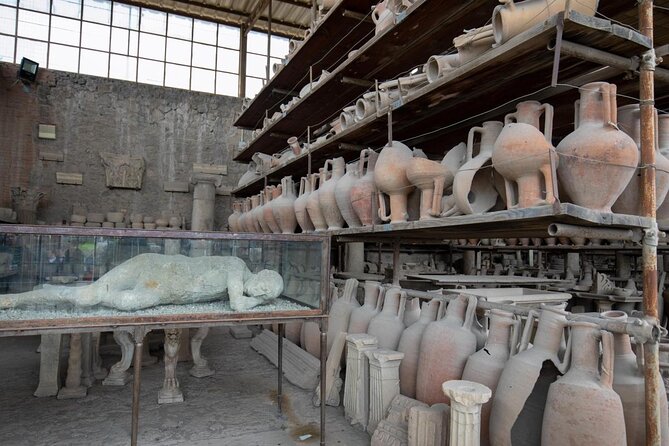
- Guided Pompeii route that points out what matters, not just what’s big
- Forum and “daily life” stops like the market (Macellum) and baths (Stabian Baths)
- Winery lunch + wine tasting on the slopes of Vesuvius, included in the price
- A real climb to the volcano with time for crater-area views
- Small-group feel for a large site, with headsets used for listening on the go (when available)
A 9-hour rhythm from Sorrento that keeps Pompeii and Vesuvius connected
The day starts in Sorrento and runs about 9 hours total, which is about right for packing Pompeii and a Vesuvius climb into one ticket. You’re not just dropping into Pompeii and hoping for the best. Instead, the pacing is designed around Pompeii’s scale: you get a guided introduction, then a sequence of specific stops that create a storyline of Roman life.
I like that the tour includes the big pieces up front: Pompeii entry and guidance, plus tickets for the Pompeii stops and the Vesuvius National Park time. That removes a lot of guesswork. You’ll also avoid the chaos of figuring out transport and timing between the coast and the volcano on your own.
That said, you should go in expecting a day built around movement. Even when stops are short (many are about 10 minutes), it’s time spent standing, walking between points, and listening. If you’re the type who wants to wander slowly and linger in every doorway, this itinerary may feel a bit like a curated sprint.
You can also read our reviews of more tours and experiences in Sorrento.
- Sorrento Farm and Food Experience including Olive Oil, Limoncello, Wine tasting
★ 5.0 · 2,524 reviews

Pompeii’s route: Forum, streets, market, baths, theatre, and the brothel
Pompeii can feel overwhelming because it’s not one monument—it’s a whole city. The Archaeological Park stop is the foundation: about 2 hours, with admission included, and the freedom to explore streets and houses at your own pace while the guide helps you interpret what you’re seeing.
The Forum stops that explain power and everyday business
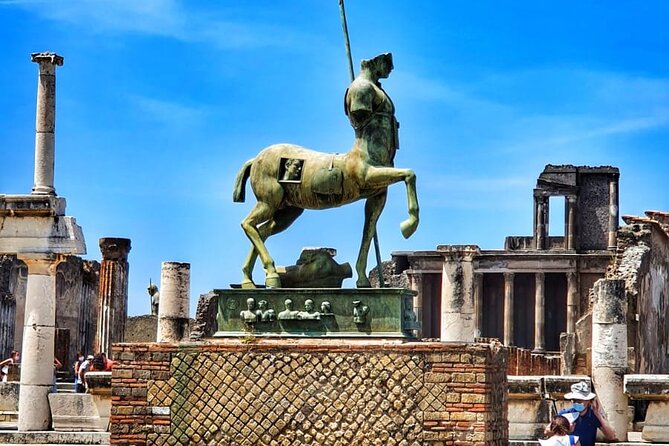
The tour then targets the civil center with the Foro de Pompeya. Even a short visit works here because the Forum anchors the rest of the city. You’ll see how public buildings, justice, administration, and commercial life orbit around the same space. That context helps when you later stand in a market or a bath and realize these places weren’t “side attractions”—they were part of the city’s daily rhythm.
Next comes Tempio di Giove Capitolino, the Temple of Jupiter, which dominates the northern side of the Forum. This is one of those stops that pays off if you like reading ruins like a map. The elevated base and the cult statues of Jupiter, Juno, and Minerva make the area feel intentionally staged for people walking through the Forum square.
Via dell’Abbondanza: the main street that links everything
Via dell’Abbondanza is one of Pompeii’s main streets, and the logic is simple: it connects the Forum to the Amphitheatre. When you walk this kind of artery, Pompeii starts to click as a place where crowds moved for ceremonies, news, commerce, and entertainment.
A short street stop also helps you avoid the trap of spending all your time only in the most photogenic corners. Here, you’re getting the “how people moved” part of the story.
The Macellum: Pompeii’s market world
The Macellum is described as the city market, set within a tuff quadri-porticus with a hall for worship on the eastern side. Even in brief time, this stop is valuable because it shows Pompeii wasn’t frozen in time for “tourists.” It was actively trading food, showing status, and mixing the practical with the sacred.
If you like historical realism, you’ll appreciate this. The market setting makes the ruins feel like a living place rather than a museum.


The Lupanar: the brothel and what ruins can teach
Yes, the Lupanar (the brothel) is part of the route. It’s known for erotic paintings, and the tour description notes that many prostitutes were Greek and Oriental slaves. For some people, this is the most uncomfortable stop; for others, it’s the most honest one. Pompeii shows real human life, not only emperors and temples.
If this subject makes you squirm, you can prepare yourself for it mentally, then focus on how the artwork and room layout reveal social attitudes of the time.
Stabian Baths and Teatro Grande: public leisure and performance
Stabian Baths (Terme Stabiane) are one of the oldest and largest bath complexes in Pompeii. Baths matter because they were social hubs—conversation, cleanliness rituals, and relaxation all in one.
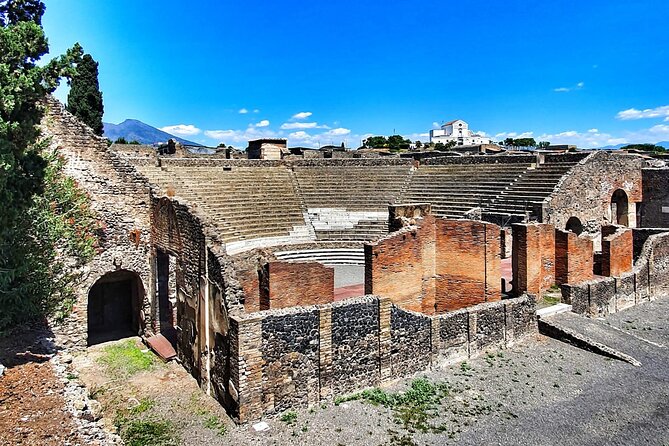
Then Teatro Grande rounds out the day’s “public life” theme. You’ll hear about comedies and tragedies of Greek-Roman tradition, and the theatre’s survival is noted as part of why it’s such a memorable stop. Even if you don’t read every detail on-site, the combination of baths and theatre makes Pompeii feel like a city built for public gatherings.
Winery lunch on Vesuvius slopes: included, but set expectations
Lunch happens at a Sorrentino Winery on the slopes of Vesuvius, and it’s a full hour. It includes wine tasting, and the sample menu lists:
- Starter: bruschetta, salumi, cheeses, and seasonal vegetables
- Pasta main: pasta with Pomodorini del Piennolo, a local specialty
- Dessert: homemade traditional cake
You’ll also get a tasting described as three wines: Prosecco, Rosso, and Bianco.
I like that lunch isn’t treated like a rushed checkpoint. It’s long enough to eat without staring at your watch every bite. It also gives you a break before the climb, which matters because Vesuvius can be steeper and hotter than your brain expects.
Now the balanced reality: some people found lunch quality “ok” while others described it as tasty and filling. Wine tasting can be hit-or-miss depending on what you get that day, and a few comments point out the service and portion sizing can feel basic given the price. If you’re the sort of wine lover who expects a serious cellar tour, you may feel it’s more of a taste than a deep tasting experience.
Also, there can be limited room to cool down on hot days. Bring sunglasses and sunscreen, and plan to drink water between sections of the day.
Mount Vesuvius National Park: the hike is the main event
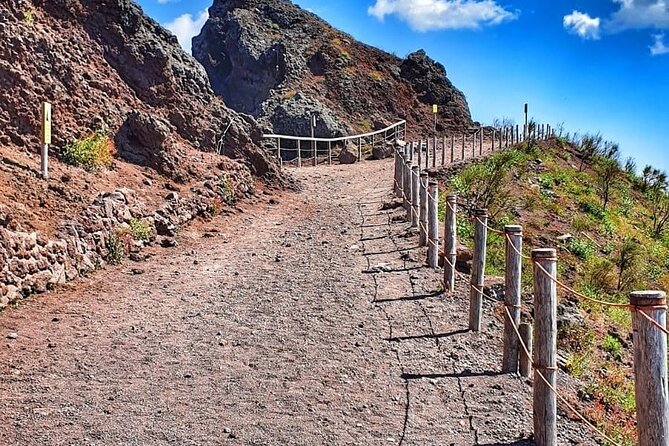
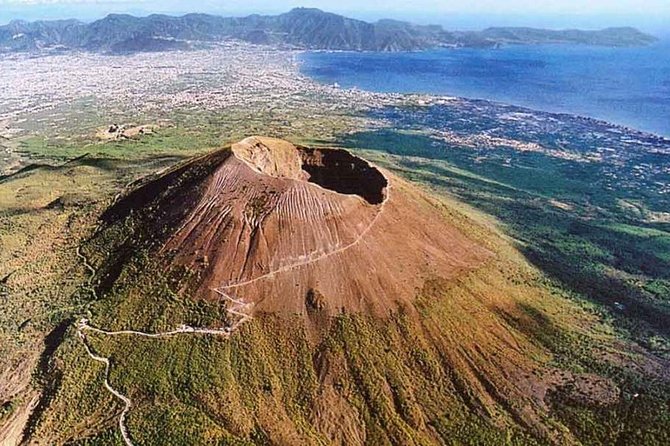
After lunch, you’ll head to Vesuvius National Park for about an hour. The description is clear: the path to the top may be uneven and challenging, and the reward is panoramic views across the Gulf of Naples.
Here’s what you should take seriously before you go: the climb. A couple of details stand out from real-world experiences. People mention steep switchbacks and a steady walk that can take around 30–35 minutes to reach the top area. Even if you don’t rush, you’re still working. On a warm day, shade is limited, and that can turn a “doable hike” into a sweaty test.
One practical tip: decide early if you’re going all the way. Views from the crater-area direction are the point, and if you’re short on stamina, you can end up feeling stressed trying to “keep up” or meet a timing expectation. Wear comfortable shoes you trust on uneven ground and don’t try it in fashion sneakers.
Also, the crater itself may not feel like a Hollywood wow moment to everyone. What consistently lands is the view of Naples Bay and the volcano caldera area. So if you’re picturing a single perfect viewpoint photo, keep your expectations tied to the broader panorama.
Price, comfort, and value: where $187.53 actually lands
At $187.53 per person for a roughly 9-hour experience, you’re paying for three things that are usually expensive or annoying to combine yourself:
1) Guided Pompeii access and guidance,
2) tickets included for the Pompeii sites and Vesuvius National Park, and
3) lunch at the winery with wine tasting.
That’s why this can feel like good value. You’re not just buying transport. You’re buying interpretation and time management in two places that are both major and time-sensitive.
That said, comfort isn’t the selling point. One recurring theme is bus tightness and limited A/C on smaller vehicles. If you’re sensitive to cramped seating or long rides, it may be worth planning how you’ll manage that—bring a water bottle, keep a light layer handy, and don’t assume plenty of breathing room.
Bathrooms also aren’t guaranteed to be convenient throughout the whole day. A few comments mention limited facilities, so the best strategy is simple: use restrooms when you see them, not when you’re already desperate.
Finally, guides make a huge difference. Most experiences praise the guides for making Pompeii come alive and helping manage crowds. Some people experienced a handoff during Pompeii or felt guidance ended earlier than expected. That doesn’t mean the tour is bad—it means you should pay attention on the day and ask where to meet if your group splits.
Should you book this Pompeii and Vesuvius tour?

I’d book it if you want the easiest path to two of Campania’s biggest hits with tickets and lunch handled, and you like history that’s explained in context. It’s a smart choice for first-timers in the Naples area because Pompeii can’t really be “solved” on your own in a day without missing the point.
Skip it or consider a different style if you:
- need lots of downtime in the middle of the day,
- hate steep hikes and don’t want the Vesuvius climb as a requirement,
- care deeply about high-end dining (some lunches are described as only average by certain diners),
- or are very uncomfortable with the Lupanar subject matter.
If you’re flexible, wear good shoes, hydrate, and bring a patient mindset for a very active day, this tour can deliver exactly what you came for: Pompeii’s street-level Roman life, plus the unforgettable experience of standing on one of the world’s most famous volcanoes.
FAQ

How long is the tour?
The tour runs about 9 hours (approx.). The Pompeii portion includes about 2 hours at the Archaeological Park, followed by shorter guided stops, then lunch and a visit to Vesuvius.
Is lunch included, and what does it include?
Yes. Lunch at the winery is included and lasts about 1 hour. The sample menu includes bruschetta and salumi/cheeses/seasonal vegetables, pasta with Pomodorini del Piennolo, and homemade traditional dessert, plus a wine tasting.
Are admission tickets included for Pompeii and Vesuvius?
Yes. Admission tickets are included for the Archaeological Park of Pompeii and for the listed Pompeii stops, and admission is included for Vesuvius National Park.
What language is the tour offered in?
The tour is offered in English.
Does this tour include wine tasting?
Yes. Wine tasting is included with lunch at the winery, and the tasting described includes three wines (Prosecco, Rosso, and Bianco).
How much walking should I expect on Mount Vesuvius?
Expect a hike. The route to the top can be uneven and challenging, and some experiences note steep switchbacks and about 30–35 minutes of steady walking to reach the top area.
What should I wear for the day?
Wear comfortable shoes. In summer, bring sunglasses and sunscreen as well.
What happens if Mount Vesuvius is closed due to bad weather?
If Vesuvius is closed due to bad weather, you’ll receive a partial refund for the tour as an alternative option.
What happens if the whole tour is canceled because of weather?
If the tour is canceled due to bad weather, you can choose another date or receive a full refund.
You Might Also Enjoy




More Tour Reviews in Sorrento
- Sorrento Farm and Food Experience including Olive Oil, Limoncello, Wine tasting
★ 5.0 · 2,524 reviews