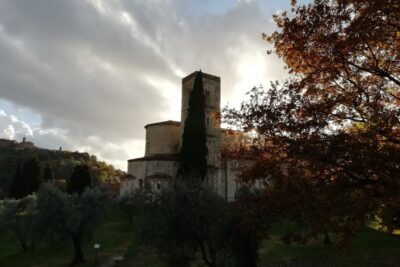
REVIEW · CATACOMBS OF ROME
Rome: Catacomb of St. Callixtus and Appian Way Guided Tour
Book on GetYourGuide →Operated by Enjoy Rome · Bookable on GetYourGuide
Rome’s underworld isn’t museum-dark, it’s story-dark. This guided outing takes you outside the city walls to the catacombs of St. Callixtus and then back into daylight along the Appian Way and aqueducts. I like the way the tour mixes solemn burial spaces with big-picture Roman engineering, and I love that it’s designed as a peaceful break from Rome’s usual crush. A main consideration: the catacomb sections are tight and not wheelchair accessible, so you’ll want to think carefully if you’re claustrophobic.
In the catacombs, you’re not just looking at ancient walls—you’re seeing burial niches, mosaics, sarcophagi, and early Christian drawings. The stop at San Callisto, including the Crypt of the Popes, adds real weight to the story of how early Christians handled death in a city where many couldn’t afford elaborate tombs. The other potential drawback is less dramatic but practical: photography isn’t permitted inside the catacombs, and the day includes some walking and stairs.
Finally, this is one of those tours where the guide matters. Reviews repeatedly call out standout leaders such as Catia, Katya, Francesca, and Marije, and the transport support (with drivers like Mario mentioned often) is usually praised as well. If you want something different from the Colosseum-Vatican loop, this is a strong pick.
In This Review
- Key things to know before you go
- From Via Cavour to the ancient road: how the tour starts
- Catacombs of St. Callixtus: burial niches and early Christian art
- San Callisto and the Crypt of the Popes: where the story gets personal
- Mausoleum of Cecilia Metella exterior: quick stop, big context
- Walking the Appian Way and aqueduct arches: a breather from the crowds
- Parco degli Acquedotti: technical Rome, seen up close
- Price and value: is $80 worth a 3-hour Rome detour?
- Who this tour suits best (and who should skip it)
- What to wear and bring for a smooth visit
- The guide experience: why the storytelling seems to be the secret sauce
- Should you book the Rome: Catacomb of St. Callixtus and Appian Way guided tour?
- FAQ
- How long is the Rome: Catacomb of St. Callixtus and Appian Way guided tour?
- What does the tour include?
- Is lunch included?
- Where is the meeting point?
- Can I take photos inside the catacombs?
- Is this tour wheelchair accessible or suitable for claustrophobia?
- What’s the dress code for the places of worship?
Key things to know before you go
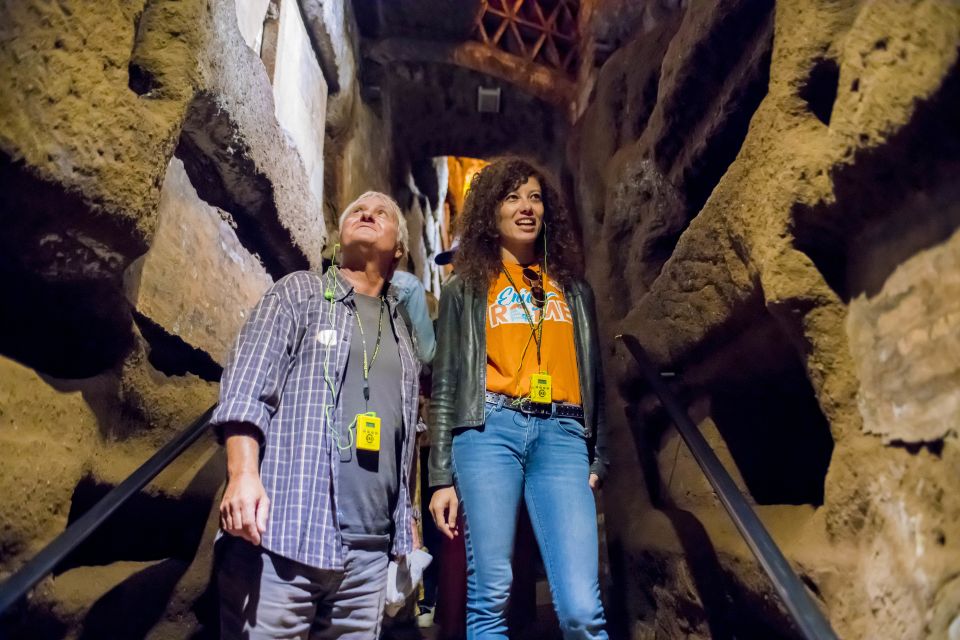
- St. Callixtus catacombs: burial niches, mosaics, sarcophagi, and some of the earliest Christian art
- San Callisto and the Crypt of the Popes: a moving stop that explains early-Christian burial needs
- Appian Way walking: a quiet, meaningful stretch on rustic Roman paving
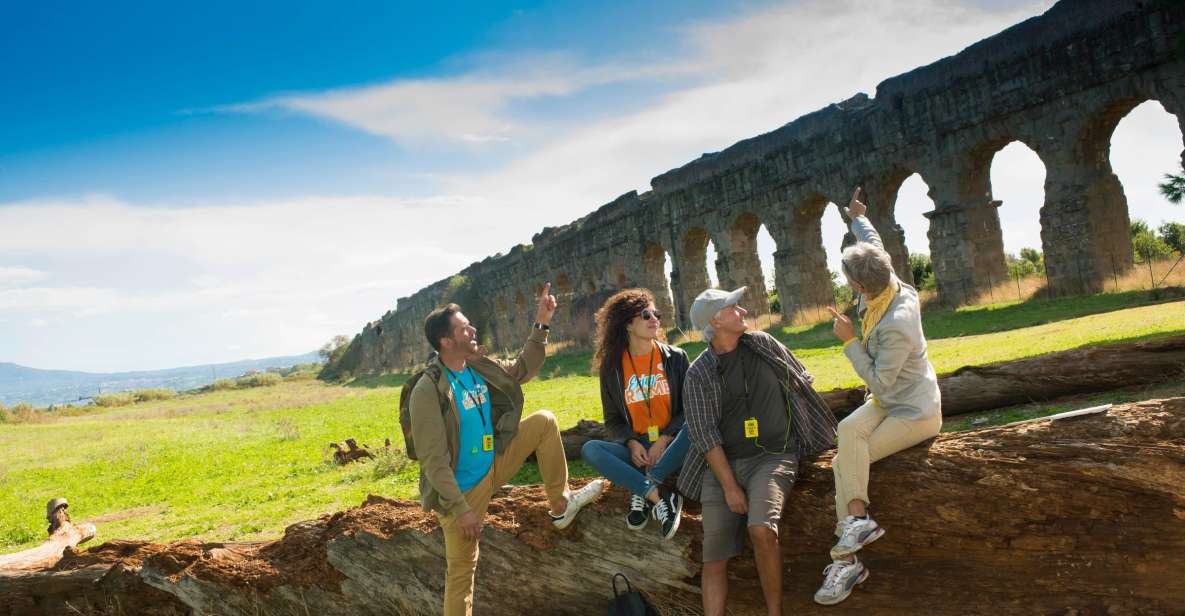
- Parco degli Acquedotti: walk for architecture views under the aqueduct arches
- Headsets included: helps you hear the guide clearly in larger areas
From Via Cavour to the ancient road: how the tour starts
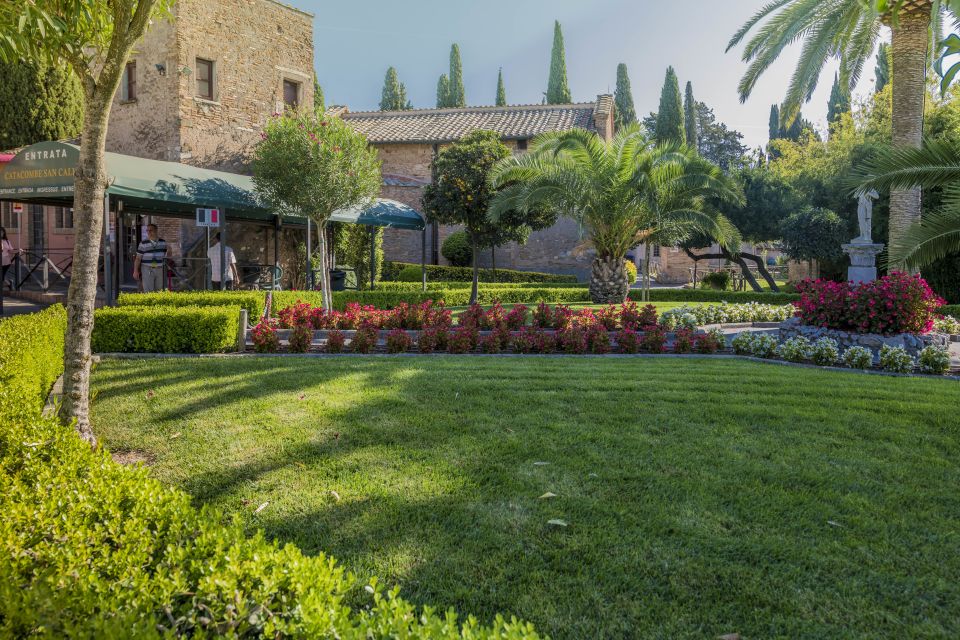
This tour meets at the bus stop on Via Cavour 224. The closest metro stop is Cavour on Line B, and you’ll want to arrive about 25 minutes early so check-in doesn’t turn into a race. Once you’re on board, the day shifts from modern Rome to the edge of Roman countryside—fast.
You travel by bus and then move on foot for the site sections. Those short switchovers matter. In real life, they let you absorb each place without spending your whole day navigating public transport or timing tickets.
Also pay attention to the group pace. Reviews describe the experience as organized and not overly rushed, with some tours running with small groups (sometimes around 6 people, other times closer to 14). Smaller groups usually mean fewer bottlenecks, especially when you’re trying to hear the guide and move through tight areas.
Catacombs of St. Callixtus: burial niches and early Christian art
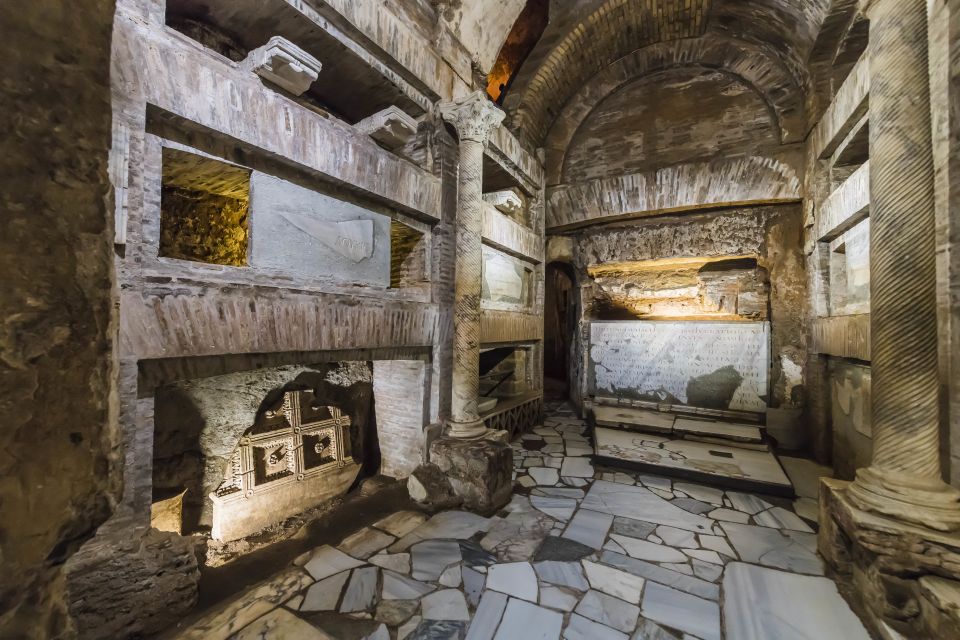
The main event is the catacomb visit. Here, you’ll explore ancient underground burial chambers connected to early Christian life in Rome. The big idea is simple but powerful: catacombs were created because the demand for burial grew and many people didn’t have money for grand tombs and mausoleums.
What you actually see helps the story make sense. Expect burial niches cut into the rock, plus items and surfaces tied to the burial tradition—along with mosaics, sarcophagi, and ancient religious drawings. You’ll also get to see some of the earliest Christian art, which is the part many people remember most once they’re back above ground.
Practical note: the environment is underground and not photography-friendly. Taking photos is not permitted in the catacombs, so plan to rely on your guide’s explanation and your memory. If you love visual details, consider bringing a notebook or planning a quick sketch later from what you’ve seen.
And yes, it’s cool to think about how extensive this system became. From the 2nd through the 5th centuries, around 60 catacomb complexes were dug in layers, with two designated for Jews. Out of that large network, only five Christian complexes regularly open to the public—so this is one of the few chances to experience an authentic cross-section rather than a generic overview.
San Callisto and the Crypt of the Popes: where the story gets personal
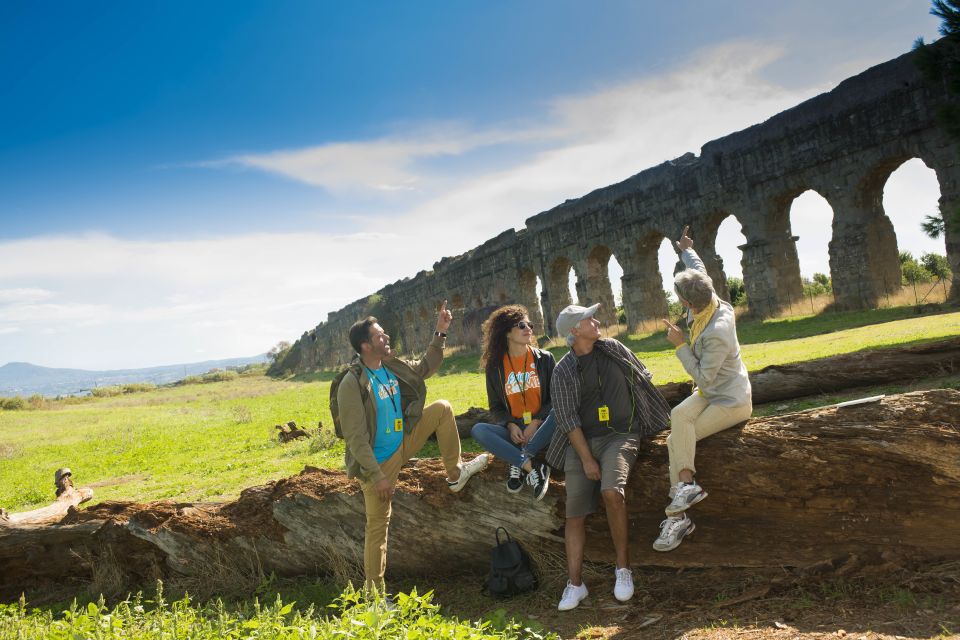
Your time at San Callisto is where the tour leans more emotional and more specific. You’ll explore the Crypt of the Popes, which adds a focused chapter to the wider catacomb story. This stop helps connect the early-Christian burial system to a tangible place tied to leadership and remembrance.
What I like about this structure is that it prevents the catacombs from feeling like a single long tunnel. Instead, the tour uses a clear sequence: explore the burial spaces, then highlight a major symbolic site within that world. It’s easier to follow, and it lands better than if you only get a broad history talk.
One more point for your planning: because catacombs are underground and narrow in places, this tour is not recommended if you suffer from severe claustrophobia. If that’s you, don’t “tough it out.” Choose a different Rome tour day instead.
Mausoleum of Cecilia Metella exterior: quick stop, big context
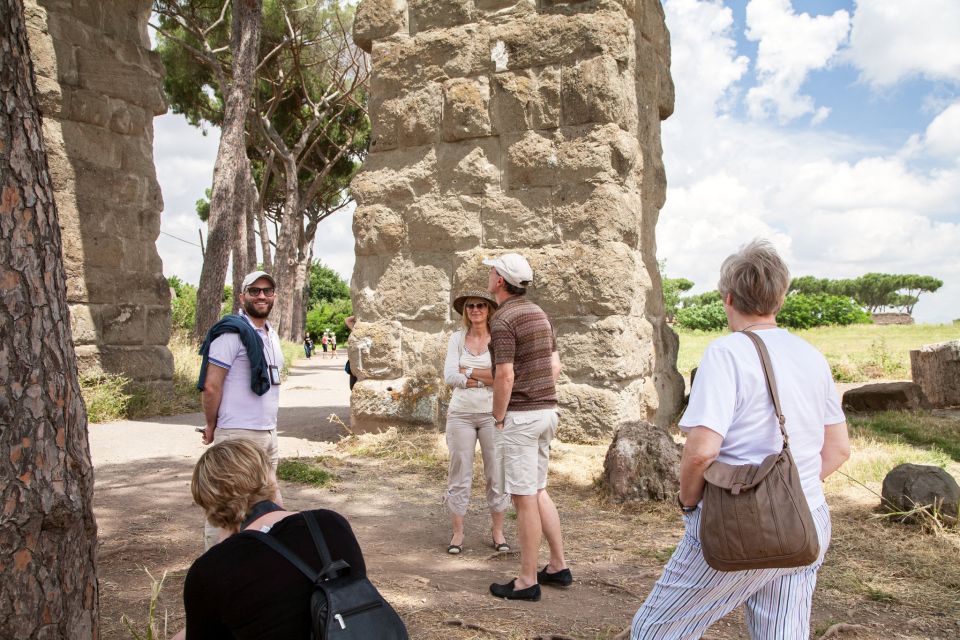
After the underground section, you’ll see the Mausoleum of Cecilia Metella from the outside. This is a shorter stop compared with the catacombs, but it matters because it contrasts burial styles.
The catacombs are practical and repeating—built into the rock to accommodate many people. The mausoleum stands for status, stone permanence, and a very different approach to death in Roman society. Even if you only view it externally, it frames what you just learned: early Christians needed systems for large numbers of burials, not just individual showpieces.
If you’re the kind of person who likes pattern-spotting in history, this stop is useful. It’s a visual reminder that Rome handled death in multiple ways depending on wealth, community, and period.
Walking the Appian Way and aqueduct arches: a breather from the crowds
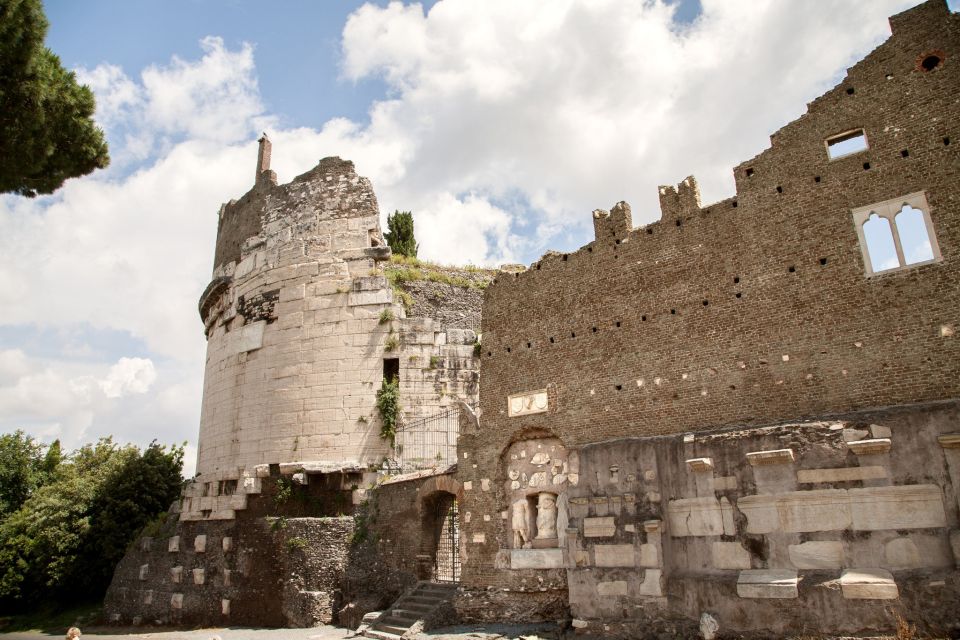
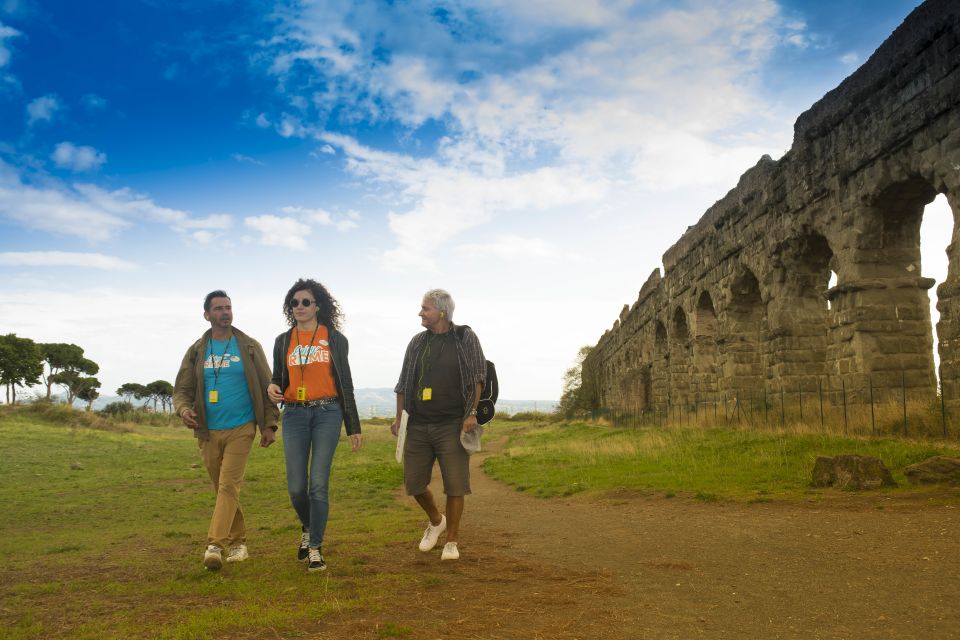
Then comes the change of pace. You’ll walk a portion of the old Appian Way, the famous Roman road that still feels like a road rather than a theme park. This part of the tour is often described as peaceful—an actual break from the crowds you get in the core sights.
What makes the Appian Way especially rewarding is the feel of being out in the open with ancient engineering around you. You’re walking on old paving stones, and you get context for how movement worked in Roman times: roads weren’t just for getting somewhere fast. They were for connecting the empire’s systems—people, goods, and ideas.
If the weather is nasty, the pacing can change. One review mentioned a cold, rainy day where part of the Appian Way walk couldn’t happen normally. So if you’re traveling in cooler months, dress smartly and plan for the possibility that you’ll walk less than the ideal version.
Parco degli Acquedotti: technical Rome, seen up close
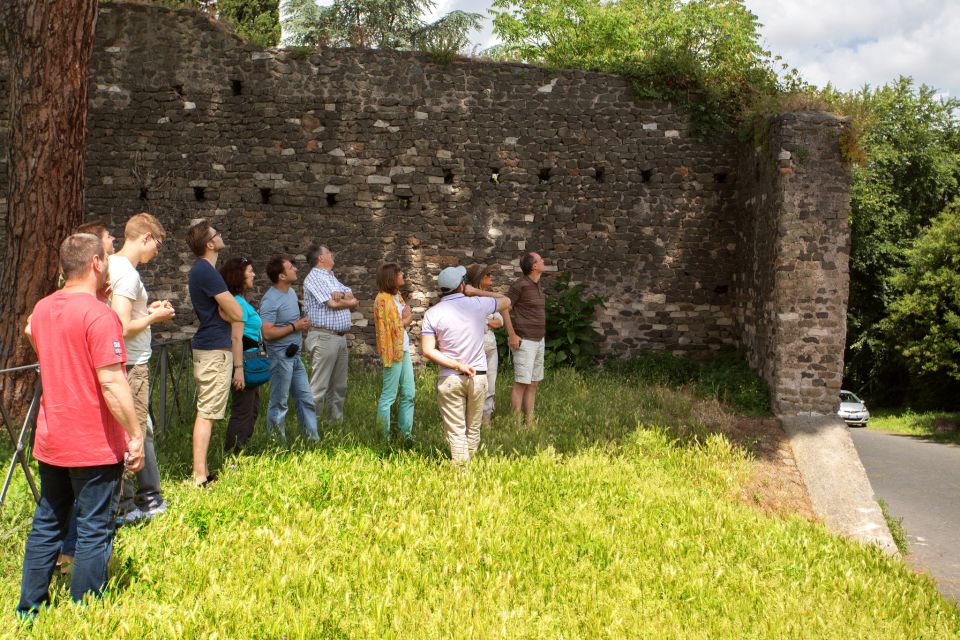
The tour finishes with time in the aqueduct area, walking along a path in the Roman Aqueduct park (Parco degli Acquedotti). This is where Roman engineering stops being abstract. You’ll admire the aqueducts’ structure under their arches, and the views help you understand how massive infrastructure supported daily life.
What I like here is the tone shift. After the solemn catacombs, the aqueduct portion feels calmer and more open. It’s also an opportunity to notice details in the structure rather than only hearing explanations.
Some transport notes from reviews are worth knowing. A few people mentioned the vans they used between venues can be hard to see out of, and one person suggested a larger, higher bus would help. That’s not a dealbreaker—just set expectations. The day’s value comes from the stops, not from scenic bus windows.
Price and value: is $80 worth a 3-hour Rome detour?
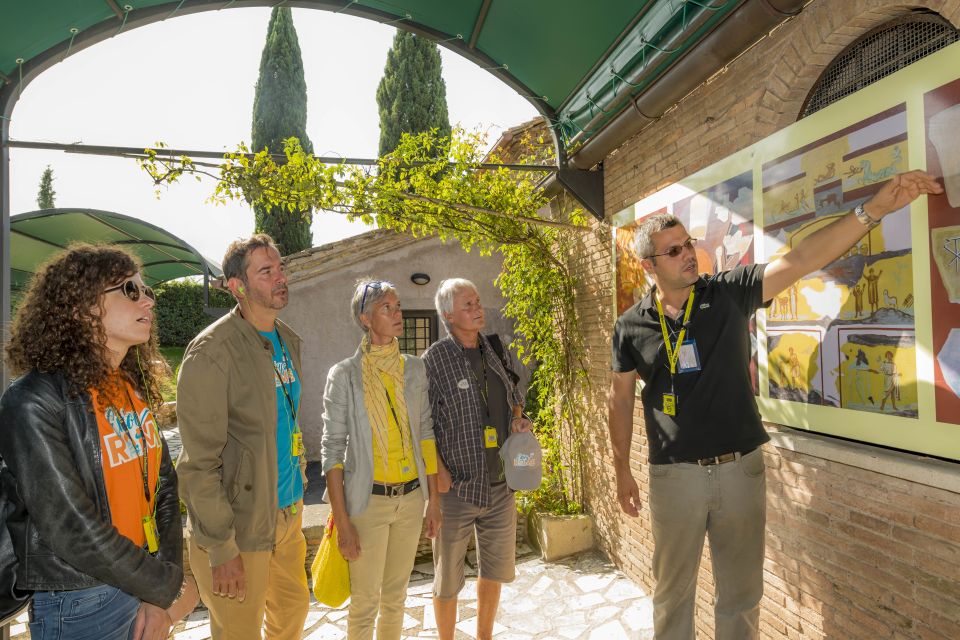
At about $80 per person for roughly 3 hours, this tour isn’t a bargain-style add-on. But it also isn’t trying to be. You’re paying for guided time in places most visitors can’t reach as easily, plus entrance and booking fees, transport from and back to the meeting point, and headsets to hear the guide clearly.
For the money, you’re getting a stacked experience: catacombs with early Christian art, a major crypt stop at San Callisto, an Appian Way walk, and aqueduct views. That combination is hard to replicate on your own in a way that feels smooth—especially if you’re trying to manage timing, tickets, and transit beyond central Rome.
The best value is for people who want context, not just photos. If you like being told what you’re looking at—why it was built, who it served, and how it fits into Rome’s larger story—this price starts to feel fair quickly.
Who this tour suits best (and who should skip it)
This works well if you want a meaningful change of scenery. If you’ve already done a lot of walking in central Rome, the day can feel like a controlled reset: bus time between sites, then short focused walks.
It’s also ideal if you care about Christian origins and early art. The catacomb stop highlights some of the earliest Christian artwork, plus the burial system that grew from the 2nd to 5th centuries. And if you like engineering, the aqueduct section balances the religious side with Roman technical achievement.
Skip or reconsider if any of the following apply:
- severe claustrophobia (catacombs are not recommended)
- wheelchair accessibility needs (this tour is not wheelchair accessible)
- you’re not comfortable following the dress rules (more below)
And one more thing that helps your decision: the guides. Reviews repeatedly praise guide performance, with names like Catia, Katya, Francesca, and Marije standing out. If you’re someone who gets more out of a great storyteller than a self-guided stroll, you’ll likely appreciate the format.
What to wear and bring for a smooth visit
This is one of those tours where clothing rules matter. Shorts, short skirts, and sleeveless shirts are not allowed. For women, shoulders must be covered and skirts or trousers must be below knee level. For men, no sleeveless tops, and they should avoid shorts.
You’ll also want comfortable walking shoes. The day includes steps and walking on uneven, historic surfaces. Reviews mention that walking is manageable for many people, but it’s still real walking—especially in catacomb conditions.
One more item: leave your camera expectations at home. Photos aren’t permitted in the catacombs. Your best “souvenir” will be what you remember after the guide’s explanation lands.
Headsets are included, which is a plus if you’re sensitive to noise or if the group moves through tighter areas where you’d otherwise miss key points.
The guide experience: why the storytelling seems to be the secret sauce
This tour lives or dies on communication. And the reviews are consistent about that: the guides are repeatedly described as engaging, with guides such as Catia, Katya, Francesca, Marije, and others named in firsthand accounts. The pattern is clear—good guiding turns catacombs from a dark tunnel into a readable, human story.
You’ll also benefit from the headset system. Multiple reviews mention the sound quality and clarity, and at least one person specifically noted the one-ear style delivery method didn’t feel intrusive. Translation: you’re not stuck shouting over a crowd or playing guessing games when you’re underground.
Finally, many guides offer extra direction after the tour. People mention recommendations and help on what to do next in Rome. That’s not the catacomb part itself, but it increases the day’s practical value—one tour can make the rest of your itinerary smoother.
Should you book the Rome: Catacomb of St. Callixtus and Appian Way guided tour?
Book it if you want Rome beyond the postcard zone. This is a strong choice for the person who thinks the best days are the ones that change your angle—underground burial spaces, early Christian art, then back out to open air on the Appian Way and aqueduct arches.
Don’t book it if you can’t handle tight spaces. Severe claustrophobia is an explicit mismatch, and wheelchair access isn’t supported. Also consider skipping if you hate dress rules or you’re counting on photos inside the catacombs. You’ll get great images elsewhere in Rome—just not down there.
FAQ
How long is the Rome: Catacomb of St. Callixtus and Appian Way guided tour?
The tour lasts about 3 hours.
What does the tour include?
It includes transport from and to the meeting point, a 3-hour guided tour, the guided catacomb tour at St. Callixtus, entrance and booking fees, and headsets.
Is lunch included?
No. Lunch is not included.
Where is the meeting point?
The meeting point is at the bus stop at Via Cavour 224. The nearest metro station is Cavour (Line B). Arrive about 25 minutes before departure.
Can I take photos inside the catacombs?
No. Photography is not permitted in the catacombs.
Is this tour wheelchair accessible or suitable for claustrophobia?
It is not wheelchair accessible. It is also not recommended if you suffer from severe claustrophobia.
What’s the dress code for the places of worship?
Shorts, short skirts, and sleeveless shirts are not allowed. For women, shoulders must be covered and skirts or trousers must be below knee level.