REVIEW · COLOSSEUM
Rome: Colosseum Access and Self-Guided Virtual Reality Tour
Book on GetYourGuide →Operated by Ancient and Recent · Bookable on GetYourGuide
First impressions matter, and this one uses VR to set the scene fast. You start at the Arch of Constantine, put on an Oculus headset, and step into a 3D reconstruction of the Colosseum in 72 AD. I especially like the skip-the-ticket-line flow and the way the experience stays self-guided right after the headset portion.
Two things I really value here: the VR tour is structured into three memorable stops (Square, Arena Floor, and Undergrounds), and the audio commentary comes in multiple languages so you do not lose the story. One practical consideration: the VR part is held outside the monument for security, so your first contact with the actual site is after the headset session.
If you want a quick, story-forward start without committing to a long live-guide group pace, this is a strong pick. Just plan for possible VR motion sensitivity, and wear comfortable shoes because you’ll still walk the Colosseum and surrounding ruins afterward.
In This Review
- Key highlights worth planning around
- VR first: the clean 2-hour flow
- Where you meet and how you get set up
- What the VR actually shows: Square, Arena Floor, Undergrounds
- Audio guide you can actually follow
- The self-guided Colosseum visit after the headset
- Skip the lines, but keep expectations realistic
- Who this tour suits best
- Price and value: what you’re really paying for
- Small practical tips that make the day smoother
- Quick notes on what is not included (so you are not surprised)
- Should you book this Colosseum VR tour?
- FAQ
- Where do I meet for the Colosseum VR experience?
- How long is the experience?
- Is the VR experience inside the Colosseum?
- Does this include a live guide?
- What entry sites are included after the VR session?
- What languages are available for the audio commentary?
- Is it wheelchair accessible?
Key highlights worth planning around
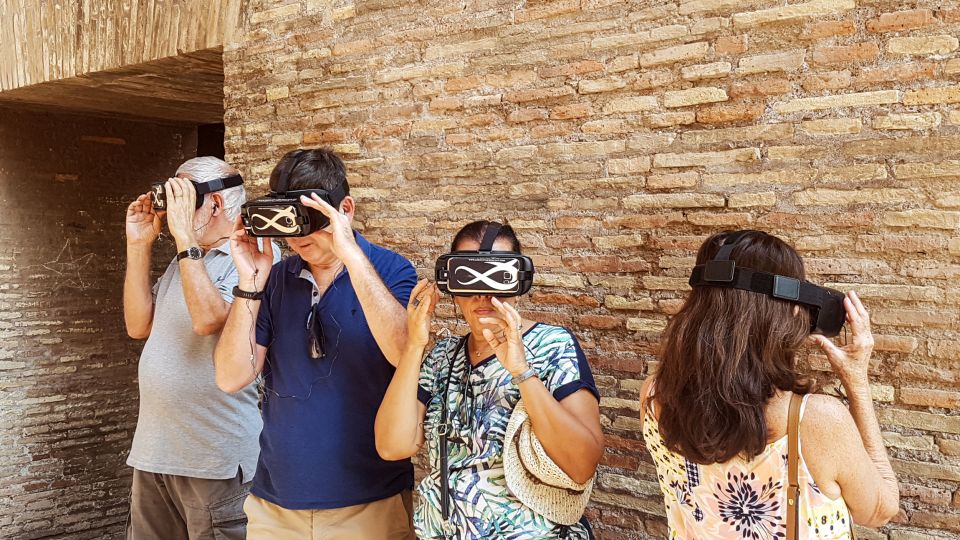
- VR reconstructions of life in 72 AD, split into Square, Arena Floor, and Undergrounds (for visuals, not physical entry)
- Priority entry to the Colosseum plus entry to the Roman Forum and Palatine Hill
- Audio in multiple languages through the headset, plus an English-speaking VR assistant
- Helpful staffing at the meeting point, with people praised for clear headset setup (names that come up: Sara, Rebekah, Cristina, Ruben, Kristina, Valerie)
- Wheelchair accessible, with the VR experience staged outside the monument for security reasons
VR first: the clean 2-hour flow
This experience is built like a simple sequence: headset on, story happens, then tickets in hand. The scheduled time is about 2 hours, but the key is how that time gets divided in a way that helps you beat the worst of the busy-ness.
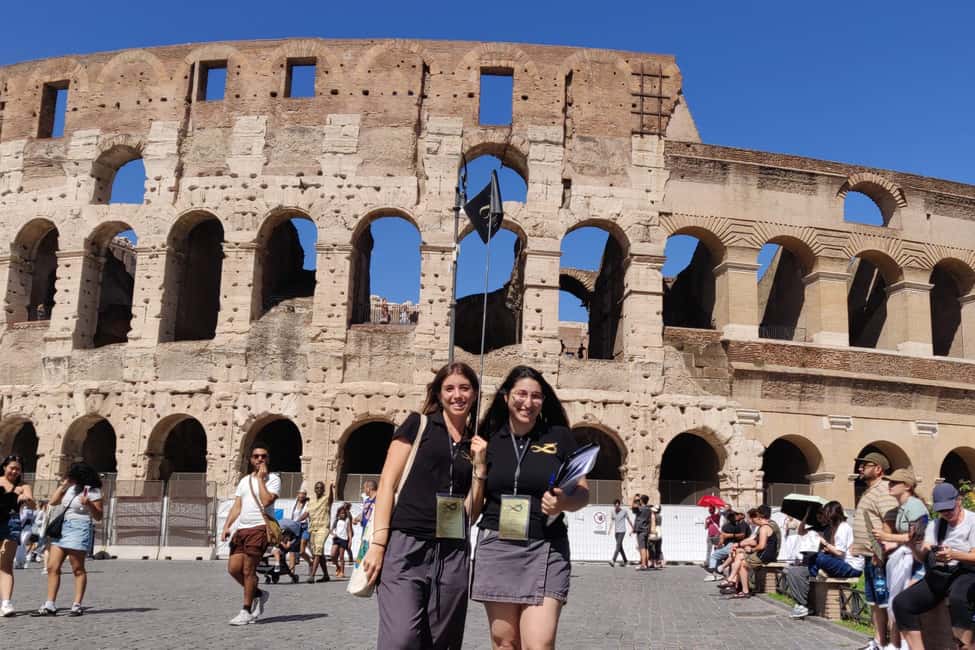
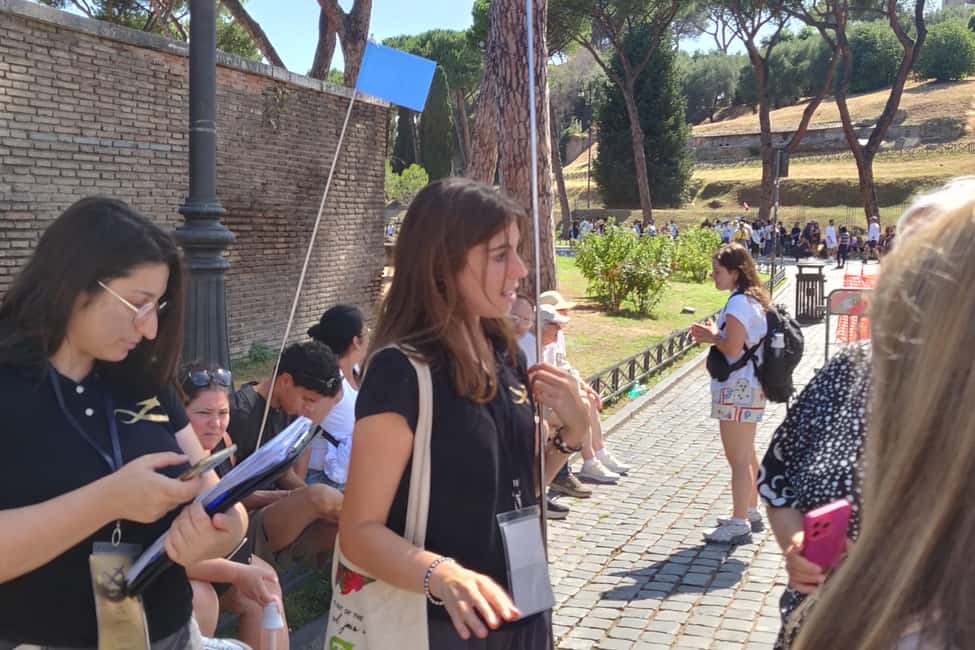
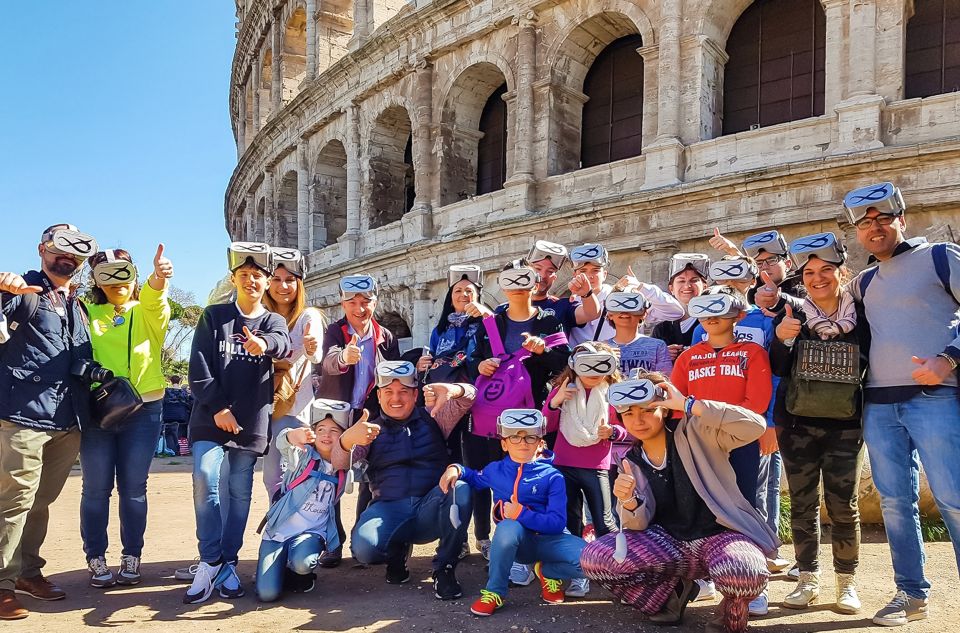
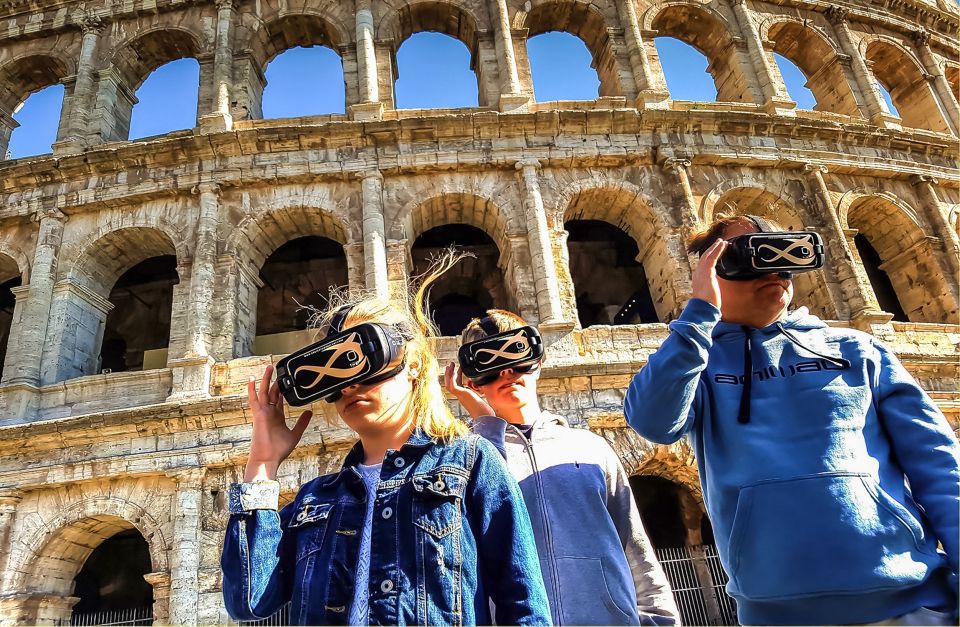
You meet at the Arch of Constantine side of the Colosseum, look for staff holding a black flag that says Ancient and Recent, and you get a next-generation VR headset (an Oculus system) plus audio commentary. The VR portion is the “movie you can stand inside.” After that, you collect your physical ticket entry from the staff and head into the monument area to explore.
I like this because you get orientation before you hit the stones. The Colosseum can feel like a big empty shell when you arrive. Here, the story arrives first, so when you step inside afterward, you can mentally map what you’re seeing.
One more value point: you’re not stuck in a long sit-down briefing. You do the VR session, then you walk the Colosseum and the surrounding sites at your own pace.
You can also read our reviews of more tours and experiences in Colosseum.


Where you meet and how you get set up
The meeting point is specific: at the Arch of Constantine, on the side of the Colosseum. Staff are easy to spot in concept, because you’re looking for the black flag with Ancient and Recent printed on it.
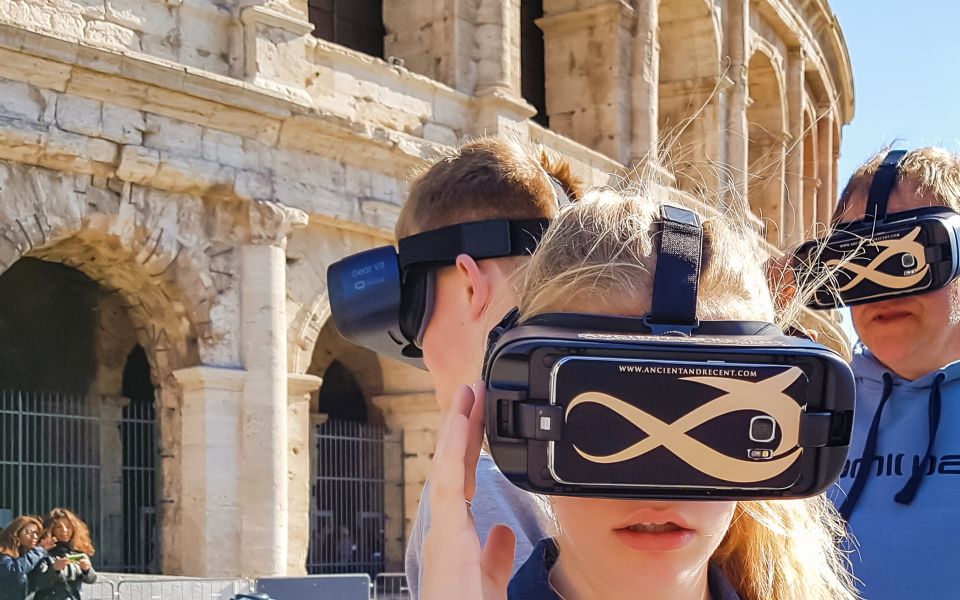
Once you find your group, the main job is quick: you get the headset, learn how to use it, and get started. The VR assistant support matters here because some people are nervous about the tech part. Several guide names show up repeatedly in positive notes, including Rebekah, Sara, Cristina, and Ruben, with guests praising them for headset setup and calm help for families.
If you travel with kids or you’re bringing a stroller, this matters even more. The experience is designed to be family-friendly, and you may appreciate that staff can guide you to a more comfortable spot when the group has to wait.
Practical tip: wear comfortable shoes. Even though the VR part is where the wow happens, your legs will do the real work afterward.
What the VR actually shows: Square, Arena Floor, Undergrounds
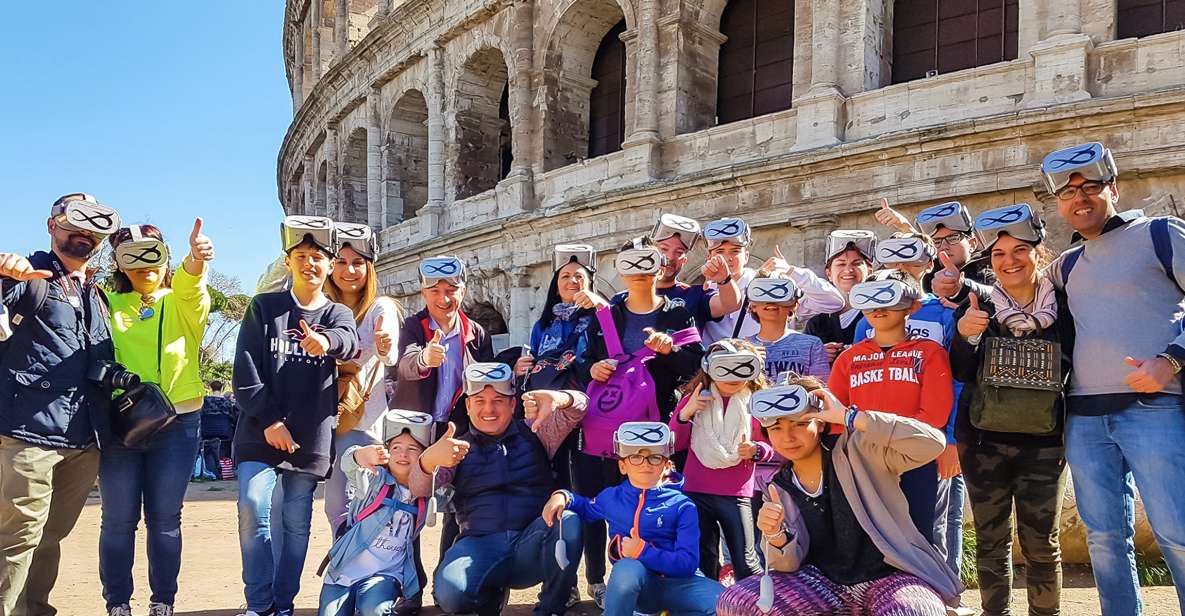
The VR tour takes you back to 72 AD and uses three detailed reconstructions to make the space understandable. The three sections are:
- Colosseum Square: you see the pre-fight atmosphere—merchants, citizens, and gladiators preparing.
- Arena Floor: you stand in the center of the action, where combats once played to Roman crowds.
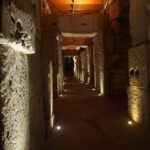
- The Undergrounds: you get a view of the hidden world beneath the arena, where animals and fighters waited.
Here’s the smart way to interpret this: the VR is not just “cool visuals.” It’s a way to help your brain place the Colosseum in context. When you later look up at the tiers and arches, you can connect the physical structure to what it was built to do.
Also, there’s an important distinction that you should keep in mind. The VR experience includes reconstructions of the Arena Floor and Undergrounds, but the physical tour does not include access to those areas. So you’re getting the story and viewpoint through VR, then you still do a self-guided visit of the Colosseum with the standard allowed areas.
Audio guide you can actually follow
In your headset, you get audio commentary in English, plus options in Italian, Spanish, German, Portuguese, and French. That’s not just a nice-to-have. The Colosseum is not an obvious place if you arrive cold. The narration gives you the who/what/why while your eyes are busy.
You also get an English-speaking VR assistant, which helps if you run into basic questions while setting up or using the headset. In real life, tech hiccups are what kill momentum—here, the support is part of the deal.
One more practical note: if you’re traveling as a group, pick the language before you start. It saves time and keeps the whole session aligned.
The self-guided Colosseum visit after the headset
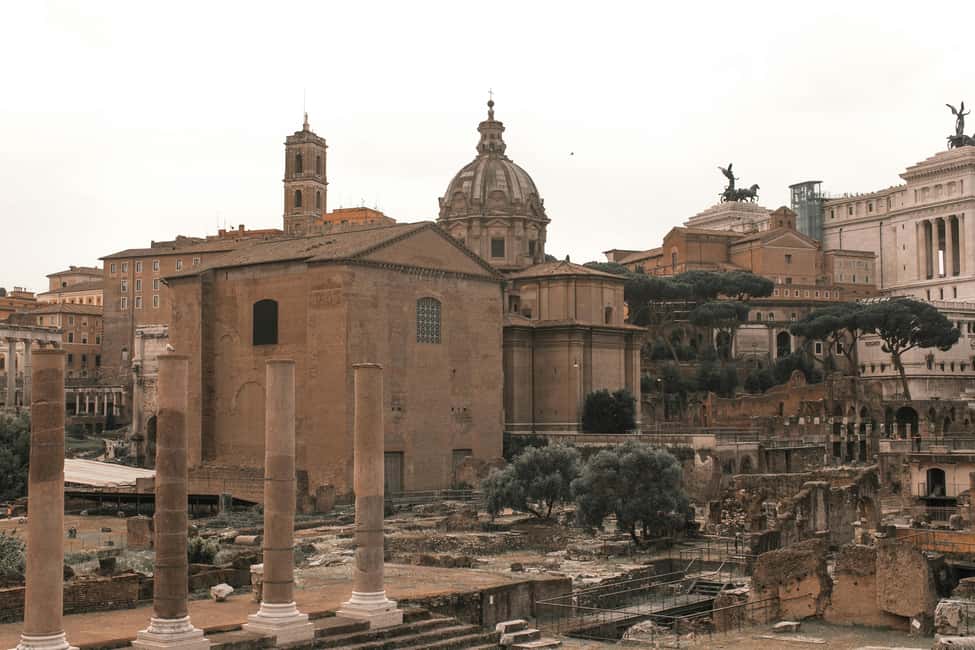
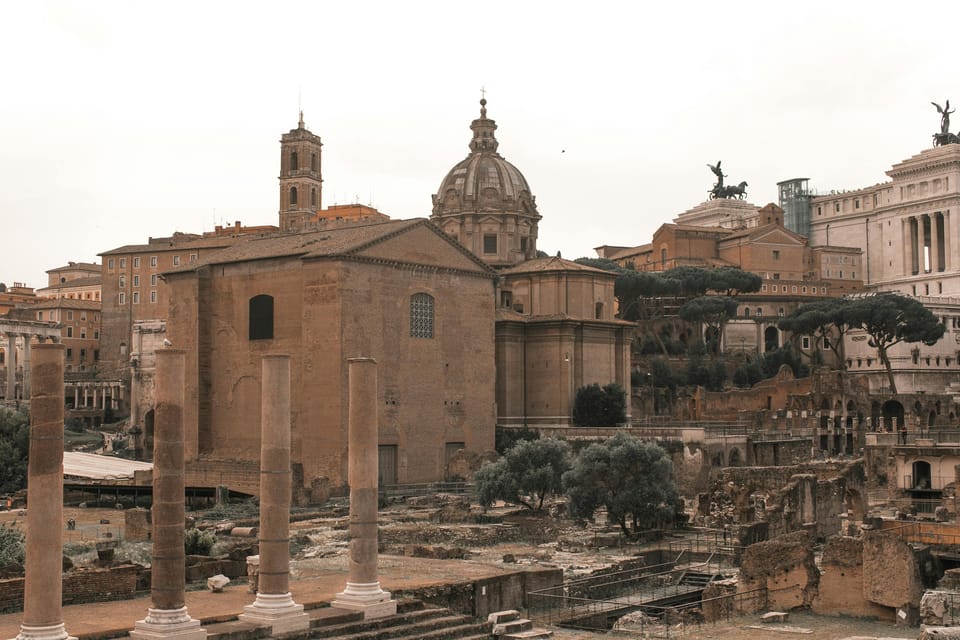
After the VR portion, you collect your physical ticket entry from staff. Then you use that to visit the Colosseum, the Roman Forum, and Palatine Hill at your own pace.
This is where the experience becomes flexible. Instead of being pulled along by a live guide’s timing, you can:
- linger where the photos and sightlines work for your group
- move faster through areas that feel less interesting to you
- stop when the kids need a breather or when you want a longer look at details
I like self-guided time here because the Colosseum is only partly about what you can read on a sign. A lot of the payoff comes from standing in the right spot and absorbing scale—your pace helps you do that.
One caution: you’re still walking in Rome. You won’t be on a bus. Plan breaks, and keep your water and snack situation reasonable.



Skip the lines, but keep expectations realistic
The main logistics win is skipping the ticket line (priority entry). That matters because the Colosseum area can be a mess of queues and last-minute stress. Being able to move through faster means you spend more of your limited time actually seeing things.
That said, this is still a timed, popular monument. Even with priority entry, you should expect crowds inside the wider Colosseum area. Use the VR portion to get your emotional stake in the story early, so you do not feel like you’re just moving through bottlenecks.
If you want a simple mindset: VR is for understanding. Walking is for experiencing.
Who this tour suits best
This experience fits travelers who want a strong start and then freedom.
Great fit if you:
- are visiting with kids or teens who do better with interactive visuals
- want something different from the usual live-guide script
- like learning before you see the actual site
- prefer to control your pace after a structured opener
It also tends to work well for families because staff support is highlighted in many accounts, including people helping with headset setup and managing distractions like strollers and late arrivals.
Possible mismatch if you:
- get queasy with VR motion or you know headsets do not feel comfortable for you
- strongly prefer a fully live guided tour with continuous human storytelling (this one does not include a live guide)
Price and value: what you’re really paying for
At $66.07 per person, you’re not just paying for entry. Your cost covers a mix of:
- Colosseum ticketing that includes the 18 euro ticket cost
- the VR headset experience with audio commentary
- on-site assistance from an English-speaking VR support person
- a physical ticket and related service/fee elements
The value logic is simple: if you’re paying standard monument entry anyway, this adds a meaningful learning layer without requiring you to join a long guided group. And because the VR portion happens first, it makes your subsequent self-guided time more rewarding.
That makes this a good “bang for your brain” option. If you love the idea of visualizing how the Colosseum looked and worked, the price feels easier to justify.
Small practical tips that make the day smoother
A few things can help your experience feel effortless:
- Bring comfortable shoes. You’re walking Rome afterward.
- Keep bags minimal. Luggage or large bags are not allowed, so travel light.
- Bring passport or ID for children.
- If you’re sensitive to VR, consider taking it slow. Put the headset on for the full session only if you feel okay.
And one more tip from the real-world vibe of this tour: some groups appreciate having a clear plan for where to pause inside afterward. Since the visit is self-guided, having a goal helps you avoid wandering when you’re tired.
Quick notes on what is not included (so you are not surprised)
It’s important to know what you do not get:
- No live guide during the VR or the self-guided portion
- No physical access to the Underground, Arena Floor, or Third Ring
- No transportation is included
Remember: VR shows those areas visually through reconstruction, but your physical visit stays within the regular access.
Should you book this Colosseum VR tour?
I’d book it if you want a fast, high-impact way to understand the Colosseum before you walk it. The priority entry plus VR reconstructions of Square, Arena Floor, and Undergrounds is a smart combination for adults and families, especially if you’d rather learn through visuals than only through signs or a long group lecture.
I’d think twice if VR makes you motion-sick or if you strongly want a continuous human guide from start to finish. In that case, you might prefer a traditional guided tour.
If you do book, go in with one mindset: let VR handle the storytelling, then let your legs handle the exploring.
FAQ
Where do I meet for the Colosseum VR experience?
You meet at the Arch of Constantine at the side of the Colosseum. Look for staff holding a black flag with Ancient and Recent on it.
How long is the experience?
The duration is about 2 hours. Exact starting times depend on availability.
Is the VR experience inside the Colosseum?
No. The Virtual Reality Experience is held outside the monument for security reasons.
Does this include a live guide?
No. The experience includes a VR assistant, but it does not include a live guide.
What entry sites are included after the VR session?
Your ticket includes entry to the Colosseum, Roman Forum, and Palatine Hill for a self-guided visit.
What languages are available for the audio commentary?
Audio commentary is available in English, Italian, Spanish, German, Portuguese, and French (depending on your booking choice).
Is it wheelchair accessible?
Yes, the experience is wheelchair accessible.