REVIEW · LE DOMUS ROMANE DI PALAZZO VALENTINI
Rome: Palazzo Valentini Roman Domus Multimedia Experience
Book on GetYourGuide →Operated by TOURISTATION · Bookable on GetYourGuide
VR makes Roman floors feel touchable. This 2-hour Rome stop uses a VR headset plus a multimedia video to reconstruct the Imperial-era Domus (Roman home) remains you can’t easily picture just by looking at stone. You start at the Touristation office, then you move into a virtual walkthrough where rooms, walls, mosaics, baths, and even kitchens come back to life in your view.
I love the way the multimedia video sets the timeline, jumping across major landmarks like the Colosseum, Roman Forum, St. Peter’s Basilica, Castel St. Angel, Circus Maximus, and Ara Pacis before you ever reach the Domus. I also like that the VR portion isn’t vague: you see decorated surfaces—like polychrome floors and mosaics—paired with virtual reconstructions of peristyles, furnishings, and everyday spaces.
One consideration: it is not suitable for people with claustrophobia, since you’ll use a VR headset during the experience. If you already know tight, enclosed situations make you uneasy, this may not be the right choice for you.
In This Review
- Key things to know before you go
- Rome’s Palazzo Valentini Domus: what you’re really buying
- Starting at Touristation Aracoeli: set your bearings fast
- The 25-minute multimedia video: Rome in layers
- Palazzo Valentini Domus VR: mosaics, peristyles, baths, and everyday life
- How VR connects ancient, medieval, and modern Rome
- Trajan’s Column in VR: bas-reliefs and the Dacia story
- Optional FOROF add-on: archaeology meets contemporary art
- Price and value: is $35 worth it for Rome?
- Who should book this (and who should skip it)
- Practical tips to make your visit smoother
- Should you book Palazzo Valentini Roman Domus?
- FAQ
- Where is the meeting point for the Palazzo Valentini Roman Domus experience?
- How long does the experience take?
- What’s included in the ticket price?
- What languages are available?
- Is this experience suitable for wheelchair users or claustrophobia?
- Are pets and large bags allowed?
Key things to know before you go
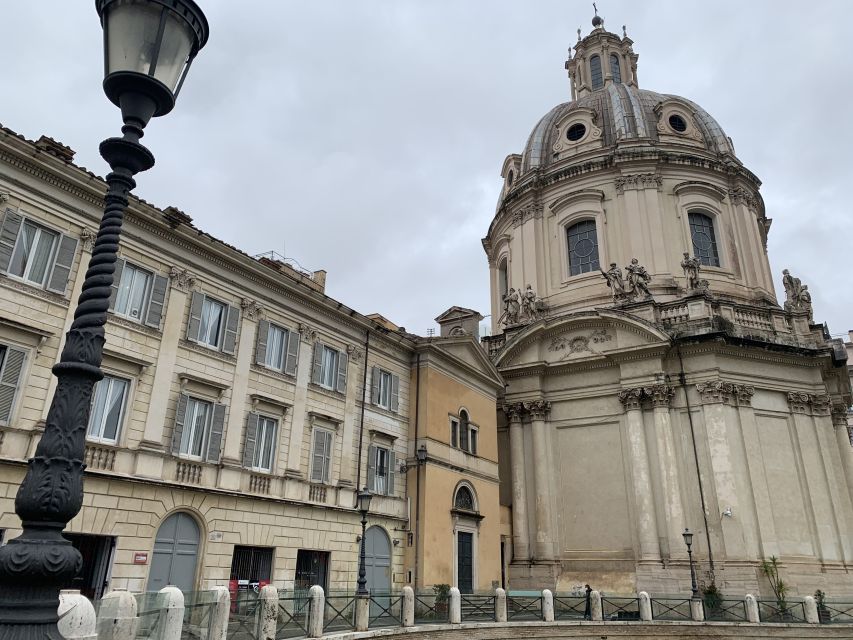
- Touristation Aracoeli is your starting point at Piazza D’Ara Coeli, 16, with a fountain and orange flags outside.
- A 25-minute multimedia video starts first, showing Rome’s past and present through major monuments.
- The VR session focuses on the Domus itself, including peristyles, mosaics, baths, kitchens, and wall decoration.
- Trajan’s Column gets a virtual close-up, including bas-reliefs and the campaign in Dacia (modern-day Romania).
- FOROF is an optional add-on if you select it, mixing contemporary art with archaeology near Trajan’s Column at the Imperial Fora.
- You’ll use an audio guide headset and a smartphone app, so you can follow the story two ways.
Rome’s Palazzo Valentini Domus: what you’re really buying
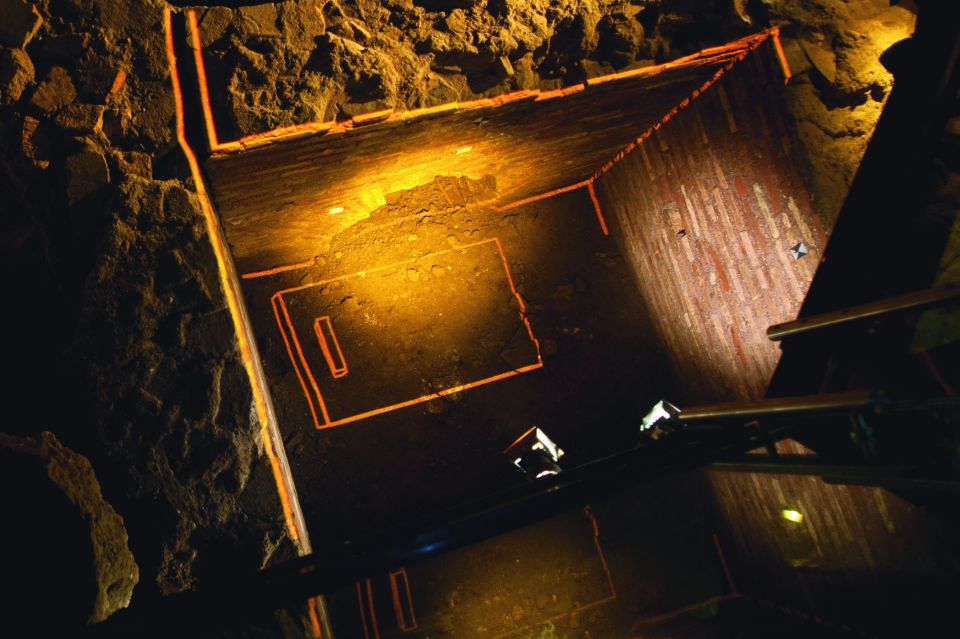
This experience at Palazzo Valentini is basically a translation service—from messy ruins to lived-in spaces. You’re visiting remains of an Imperial Roman Domus (a wealthy Roman home), but the attraction’s main value is that your VR view fills in what time erased.
Instead of just pointing at walls and hoping your brain reconstructs the rest, the system builds the rooms for you. That matters in Rome because a lot of archaeology is fragmentary. Here, you get help visualizing the scale and purpose: how these spaces worked together, how decoration would have looked, and how the area fits into Rome’s bigger story across ancient, medieval, and modern layers.
The pace is also practical. You’ll have a multimedia introduction first, then you’ll enter the Domus VR portion and follow the reconstructions step by step. The whole thing is designed to fit into a tight Rome schedule without turning into a long lecture.
Starting at Touristation Aracoeli: set your bearings fast
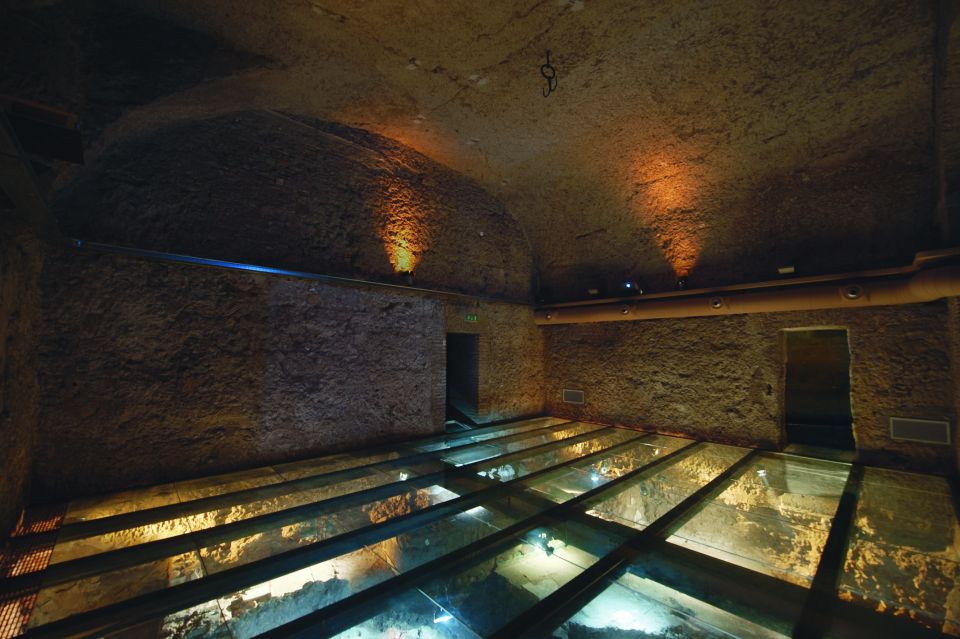
Your meeting point is TOURISTATION ARACOELI, Piazza D’Ara Coeli, 16. Look for the fountain and orange flags in front of the office entrance.
This is one of those smart logistics choices. Aracoeli is a convenient area to orient yourself, and the pre-visit video uses the office time well. You’re not just waiting for your slot—you’re getting context that makes the Domus portion easier to follow.
Also, plan like you’re going to do museum walking afterward. You’ll want comfortable shoes, and you should expect you won’t bring big bags or luggage inside. Pets aren’t allowed either. If you’re carrying a daypack only, you’ll likely be fine.
The 25-minute multimedia video: Rome in layers
Before the VR, you watch a 25-minute Ancient Rome multimedia video. It’s shown inside the Touristation office, and it’s built to show past and present together, using some of Rome’s most famous sites as reference points.
The landmarks included are not random. The video name-checks the Colosseum, Roman Forum, St. Peter’s Basilica, Castel St. Angel, Circus Maximus, and Ara Pacis. You’re essentially getting a guided mental map: where these monuments sit today, and how the story of the city keeps shifting.
This part is helpful even if you already think you know Rome well. It puts you in the right mindset for what comes next: the Domus won’t feel like isolated ruins. You’ll be primed to notice how the ancient fabric influenced what came later, and how the present city sits on top of older Rome.
A small note for your planning: if you’re short on time or you’d rather jump straight to the main attraction, don’t worry. The VR session is the heart of the experience, and the video is more of a primer than the main event.
Palazzo Valentini Domus VR: mosaics, peristyles, baths, and everyday life
Your Domus visit starts one hour later after the multimedia video. Once you’re in, you put on the VR headset and the space turns animated. The goal is to show what you can’t easily imagine from stone fragments alone.
Here’s what the VR reconstruction includes:
- Rooms and wall decoration
- Mosaics and polychrome floors
- Peristyles (the open courtyards that organized the home)
- Kitchens and baths
- Furnishings and interior details
This is the part I’d treat as the reason to book. A lot of Rome archaeology is about surfaces—textures, patterns, fragments. In the Domus VR, those surfaces become functional again. Instead of seeing a decorative element and moving on, you can connect it to the room it belonged in and the life that would have happened around it.
It also helps that the VR doesn’t only reconstruct one room. It shows the Domus as a connected layout. You’re effectively piecing together an environment: how peristyles relate to surrounding rooms, how certain spaces would have been used, and how different zones belonged to the same household.
One practical tip: keep your focus during the headset time. If you spend the first few minutes adjusting or distracted, you can miss the “aha” moment where the whole area clicks into place.
How VR connects ancient, medieval, and modern Rome
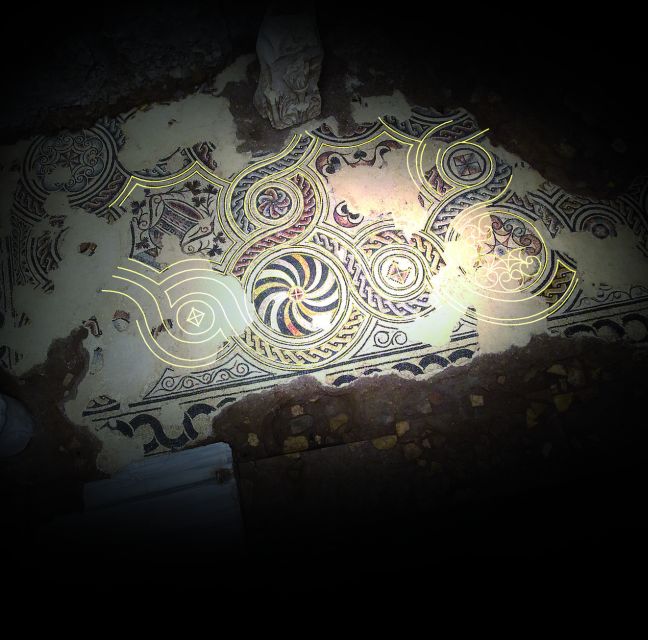
One underrated value of this experience is what it tries to do beyond decoration. The reconstructions are framed as a way to piece together the ancient area and how it links with later periods and modern Rome.
That matters because the Domus site isn’t floating in a vacuum. Rome’s layers overlap. Buildings reused locations, streets shifted, and later residents lived with ancient structures nearby—sometimes visible, sometimes buried, sometimes reinterpreted.
In other words, the VR isn’t just about Roman interior design. It’s about understanding why the site matters in the larger geography of Rome. When you finish, you should feel like you’ve learned something spatial: where this part of the city fits and how long-term change affected what you can see today.
Trajan’s Column in VR: bas-reliefs and the Dacia story
The experience also includes a virtual reconstruction of Trajan’s Column as it looked in older times. You get a close-up view of the bas-reliefs and the story they tell—specifically Trajan’s military campaign and the conquest of Dacia (in present-day Romania).
This section is useful for two reasons. First, it explains what you’re looking at when you see Roman imperial imagery in other places. Second, it gives you a narrative hook. Instead of decorative scrolling stonework, the column becomes a storytelling system tied to real political and military events.
For your expectations, think of this as a “story mode” change from the Domus. The Domus is about daily space—homes and decoration. Trajan’s Column is about empire and message-making. Both are Roman. Both help you understand what Rome looked like when it wanted people to remember something.
Optional FOROF add-on: archaeology meets contemporary art
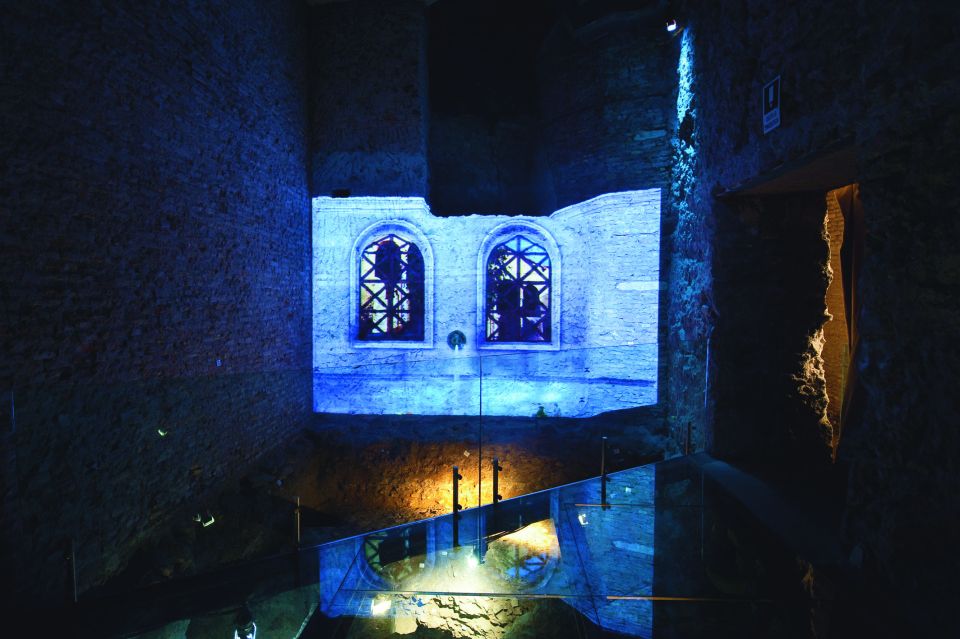
If you select the FOROF option, you’ll add another layer to the outing. FOROF combines contemporary art with archaeology in a process described as regeneration, inspired by the cultural café atmosphere of 20th-century avant-garde spaces.
The big practical detail is location. FOROF is in the heart of Rome at Palazzo Roccagiovine, opposite Trajan’s Column at the Imperial Fora. So if you’re already interested in the column section from the Domus experience, this add-on can feel like a natural extension.
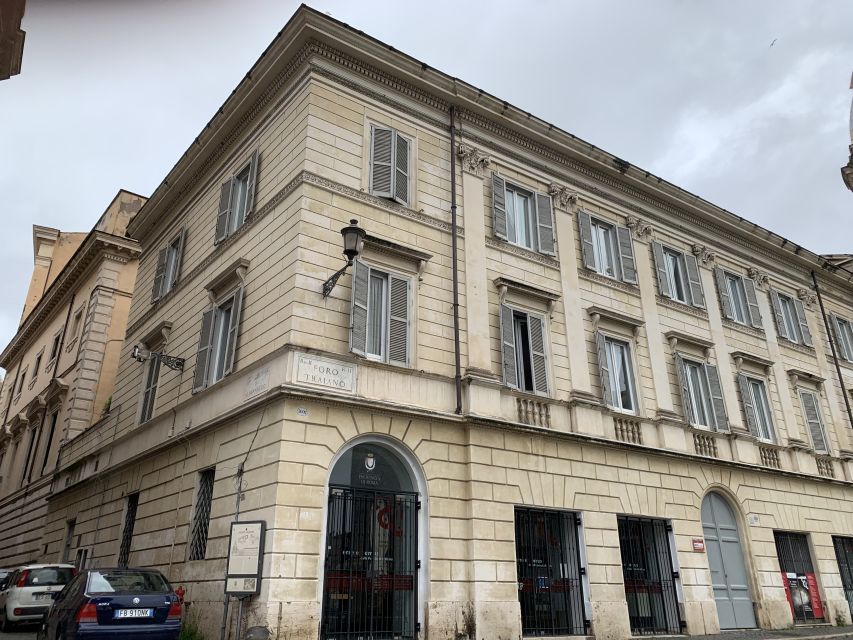
FOROF is described as the first permanent and continuous reality in Rome proposing the binomial between contemporary art and archaeology. It also preserves colored marble from the pavement of Basilica Ulpia and remains of the eastern apse (2nd Century A.C.) in hypogeum (underground) environments, in agreement with the Archaeological Superintendence of Rome.
There’s also an artistic element beyond visuals:
- There’s mention of an exhibition project called Nimbus Limbus Omnibus by Bartolomeo Pietromarchi, designed as site-specific and in dialogue with Basilica Ulpia.
- You can also experience an olfactory (smell) component through FOROF ESSENZA. It’s developed by Laura Bosetti Tonatto, described as a professional nose known worldwide. The idea is to return the spirit of a place with a cultural and social tale centered on freedom.
If you’re deciding whether to add it: choose FOROF if you like archaeology that interacts with modern creativity and you don’t mind shifting gears from VR to an art/atmosphere experience.
Price and value: is $35 worth it for Rome?
At $35 per person, you’re paying for more than a ticket to a room. You’re paying for (1) admission to the Domus museum, (2) a 25-minute multimedia video, (3) an audio guide headset, and (4) access to a VR reconstruction experience. You also get a city app audio guide download for your smartphone.
That package makes sense if you value interpretation tools. Rome’s best ruins can be hard to “read” without context. This experience basically supplies that context on purpose.
Is it worth it if you dislike VR? Probably not. But if you’re okay wearing a headset and following a multimedia narrative, the technology is the point. You’re not just walking through what remains. You’re seeing how it likely looked in its functional, decorated form.
Also, one small planning reality: the multimedia video and the phone app can feel like extras if you mainly care about the VR. Still, they can help you settle into the story before the headset time begins.
Bottom line: for many visitors, the value is that you get a coherent, guided-feeling reconstruction in a short window, without needing a live guide following your group.
Who should book this (and who should skip it)
This works best if you:
- Want a structured Rome experience in about two hours
- Like visuals and story-based explanations, not only signage
- Enjoy mosaics, decorated floors, and Roman domestic architecture
- Are curious about Roman imperial power as well (Trajan’s Column section)
It may not be the best fit if you:
- Have claustrophobia or strong discomfort with enclosed VR headsets
- Use a wheelchair (it is noted as not suitable for wheelchair users)
- Hate tech-based experiences and prefer only traditional museum viewing
If you fall in the middle—curious but cautious—then focus on your comfort level with VR. Everything else is pretty straightforward: you’ll have an audio headset, multiple language options, and a clear sequence from video to reconstructed space.
Practical tips to make your visit smoother
A few small choices can make the experience feel more rewarding.
First, dress for walking and then for museum conditions. The meeting point is easy, but you’ll still want comfort under your feet.
Second, travel light. Large bags and luggage aren’t allowed, and pets aren’t permitted. If you’re bringing a daypack, keep it easy.
Third, plan language ahead. The Palazzo Valentini experience is available in English, Italian, Spanish, French, and German. The audio guide headset offers additional language support too (including Russian and Japanese), and the FOROF guided tours—if you select that option—are in English and Italian.
Finally, give yourself a moment to settle in before the VR begins. The best part of the experience is when everything locks into place in your mind: the rooms as a layout, the decorations as surfaces in real spaces, and the column as a narrative artifact.
Should you book Palazzo Valentini Roman Domus?
Book this if you want Rome in a form you can actually picture. The Domus VR reconstruction is the main attraction, and it does a strong job translating scattered remains into a coherent Roman household setting, down to mosaics, baths, and peristyles.
Skip it if VR headsets make you uneasy, or if you’re looking for a purely traditional museum walk. For the right kind of traveler—someone who likes interpretation tech and doesn’t mind a short, scripted flow—this is a smart way to experience Imperial Rome without spending the whole day piecing together fragments on your own.
FAQ
Where is the meeting point for the Palazzo Valentini Roman Domus experience?
You meet at TOURISTATION ARACOELI, Piazza D’Ara Coeli, 16. There is a fountain and orange flags in front of the office entrance.
How long does the experience take?
The experience duration is listed as 2 hours. Check availability for starting times.
What’s included in the ticket price?
Included are admission to the Ancient Roman Domus museum, a 25-minute Ancient Rome multimedia video, an audioguide headset for the Domus, and a smartphone city app audio guide download. If you select it, the FOROF experience is also included.
What languages are available?
For the Palazzo Valentini Experience, the languages available are English, Italian, Spanish, French, and German. The audioguide headset includes English, French, German, Italian, Spanish, Russian, and Japanese. Guided tours at FOROF are in English and Italian.
Is this experience suitable for wheelchair users or claustrophobia?
No. It is not suitable for wheelchair users and people with claustrophobia.
Are pets and large bags allowed?
Pets are not allowed, and luggage or large bags are not allowed.