REVIEW · SICILY
SALT TOUR-all inclusive: salt tour: Trapani, Paceco, Nubia
Book on Viator →Operated by Trapani Emotions · Bookable on Viator
Salt in Sicily is a living workshop. This tour is interesting because small-group access lets you ask questions while you move through working salt pans with guide Alessio, and you end with real fleur de sel tastings that make the whole process click. One drawback to weigh: most of the value is in the guided storytelling—if you only want the quickest museum view, you may feel this costs more than a do-it-yourself taxi plan.
I like how the route is built around a clear transformation story, from early mill structures to active tanks and then into a museum setting. It runs about 2 hours 30 minutes with air-conditioned van transport, free entry items, and an English-guided experience with a mobile ticket.
In This Review
- Key highlights worth your time
- Why Trapani’s salt pans feel different than a typical museum stop
- Getting going: the port fire station meet-up and short transfer
- Stop 1 at the first salt pan: Maria Stella and that old mill feel
- Stop 2: Salina Calcara and birdlife in the transformation tanks
- Stop 3 at Culcasi: the 600-year-old mill museum and salt tasting
- The saltman’s path walk: hands-on but not strenuous
- Air-conditioned transport, free inclusions, and what you’re really paying for
- Best timing: weather matters, and sunset can change the mood
- Who this tour is best for (and who might prefer something else)
- Small details that make the tour smoother
- Should you book SALT TOUR – Trapani, Paceco, Nubia?
- FAQ
- How long is the SALT TOUR in Trapani, Paceco, and Nubia?
- Where does the tour start and end?
- What language is the tour offered in?
- How many people are on the tour?
- What’s included in the price?
- What should I expect to taste?
- Is good weather required?
Key highlights worth your time
- Max 8-person feel inside a group capped at 16 so the experience stays personal and question-friendly
- Alessio’s salt history + practical explanations, including quirky details like the divisor system of 12
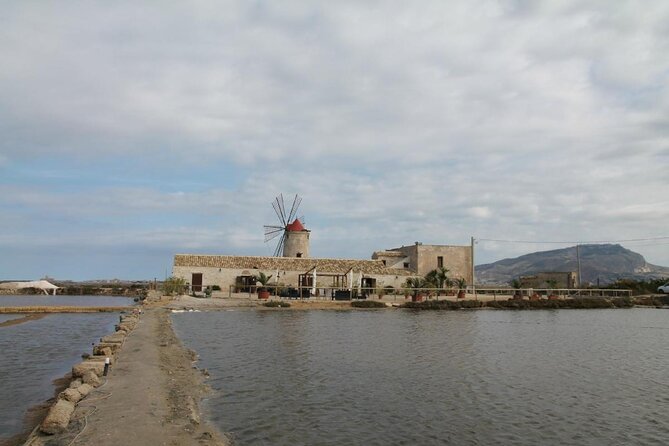
- Three salt pans in one outing, including the Maria Stella and Culcasi areas
- Tastings that go beyond salt, including aromatized salt flower options like orange, lemon, rosemary, and oregano
- A walk inside the salt tanks called the path of the saltman, for a hands-on feel
- Bird spotting time at Salina Calcara, with flamingos and herons among the possible sightings
Why Trapani’s salt pans feel different than a typical museum stop
This tour doesn’t treat salt like a souvenir. It treats salt like a craft. You move through places tied to how sea water became salt—stage by stage—then you end in a museum that explains tools, roles, and how the mill ecosystem worked over centuries.
For me, the best part is that the guide’s explanations match what you’re seeing. The salt pans aren’t just pretty geometry; they’re an operating system. And when tasting time arrives, you understand why people get serious about texture and crystal shapes, not just saltiness.
The group size matters here. Even with a maximum of 16, the experience is designed to feel intimate (limited to 8 people). That makes it easier to hear what’s happening in the pans and to ask follow-ups without waiting your turn.
You can also read our reviews of more tours and experiences in Sicily.


Getting going: the port fire station meet-up and short transfer
You start at Vigili Del Fuoco Distaccamento Portuale Trapani, Via Ammiraglio Staiti 101, right by the port. The tour begins at the fire station meeting point, and you head out by vehicle—air-conditioned and sanitized in line with COVID-19 rules.
There’s also a small practical benefit to meeting at this point: it’s easy to orient yourself, and the tour wraps back at the same place. If you’re timing dinner in Trapani, it helps to know you’re not trying to get back across town from a random rural drop-off.
Most of your time is outdoors, but you also get a comfortable break in between stops thanks to the vehicle. That’s not just convenience—it’s how you stay focused during a tour that’s teaching you a process.
Stop 1 at the first salt pan: Maria Stella and that old mill feel
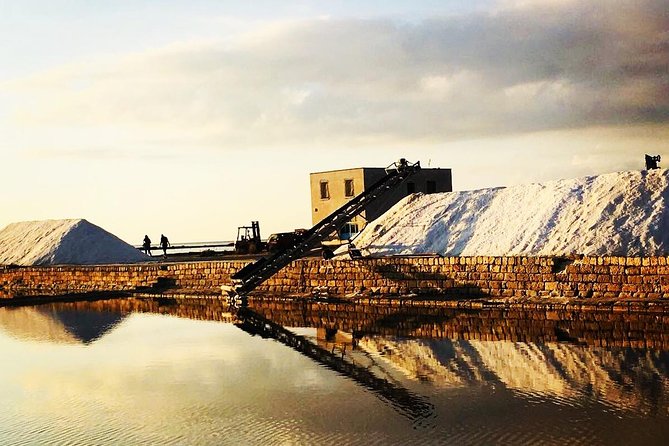
After about 10 minutes, you reach the first salt pan: Maria Stella. Here you’re introduced to the earliest mill details in the Trapani area, including a mill built at the end of the 15th century. It’s the kind of historical detail that becomes easier to picture because you’re standing in the same working environment the process depended on.
This stop works well for two reasons:
- It sets the mental map. You start seeing the pan system as a sequence rather than a single flat expanse.
- It gives context early, so later stops don’t feel like separate attractions.
What to watch for here: pay attention to the way water management connects to salt-making stages. Even if you’re not a chemistry person, the guide’s explanations make the transformation understandable.
Stop 2: Salina Calcara and birdlife in the transformation tanks
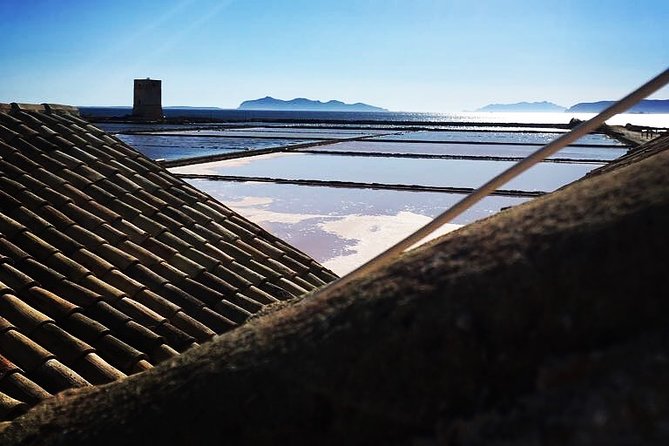
Next is Salina Calcara (also described as Salina Chiusicella). This is where the tour shifts from the early mill story to the working transformation stages.
You’ll see the description of the four orders of salt tanks, which is basically the route sea water follows as it changes. And this stop is often where the wildlife shows up: flamingos, herons, egrets, and other birds mentioned for the area (including the phrase horsemen of Italy).
This stop is about two things—process and patience. The tanks do their work quietly, and the birds are part of why people connect to this place. Even when sightings aren’t constant, you’ll at least get the sense that salt pans create habitat.
Possible drawback to consider: wildlife spotting is never guaranteed. If your main goal is photos of birds, go in with flexible expectations and don’t treat every stop as a wildlife safari.
Stop 3 at Culcasi: the 600-year-old mill museum and salt tasting
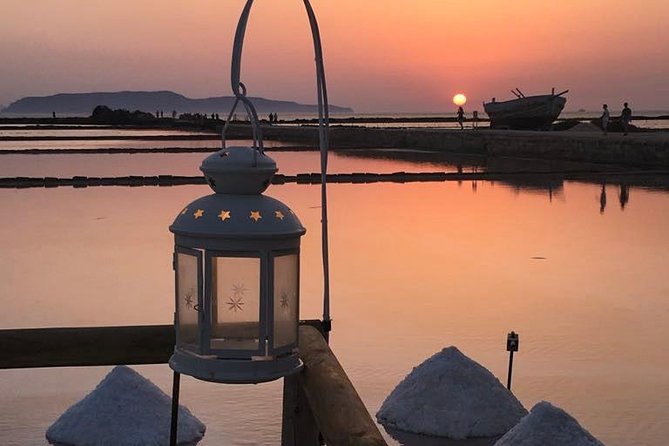
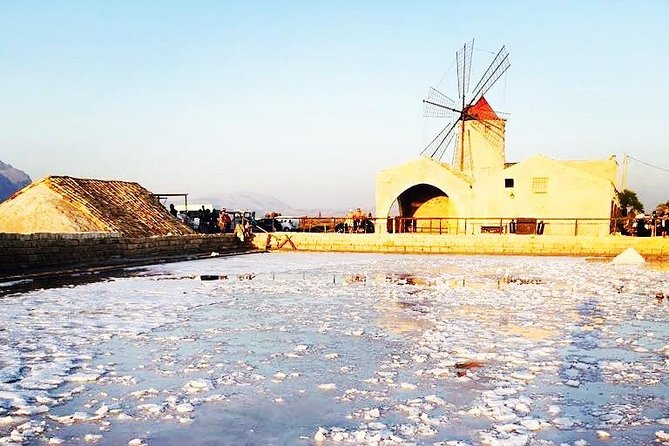
The heart of the tour is Saline Culcasi, where you enter an ancient mill over 600 years old. It’s now a museum, and it’s focused on how salt was collected and how the mill operated.
This stop is where the tour stops being only visual. You learn about:
- the tools used
- the hierarchy (how work was organized)
- how salt shaped daily life in this place
- differences between then and now
Then comes the part that makes it memorable: you taste different salt crystals and the most precious item called the salt flower. You don’t just get one flavor either. The salt flower is offered in natural form and in flavored versions like orange, lemon, rosemary, and oregano (plus others mentioned in the tasting lineup).
For food lovers, this is the payoff. You’ll start noticing how people use integrale salt and how salt character changes cooking results. One review line that stuck with me is how it shifted someone away from generic supermarket salts and even away from the idea that only trendy salts are worth using.
Also, this is where guide Alessio tends to shine. He’s described as able to explain details in a way that feels both practical and surprising—like the system of 12 instead of decimal 10, and even the way artisan roof-tile sizing was shaped by craft methods (including mention of roof tiles shaped to match an artisan’s thigh). Those are the kinds of specifics you can’t get from a placard alone.


The saltman’s path walk: hands-on but not strenuous
After the museum time and tastings, you do “the path of the saltman,” described as a walk inside the salt tanks. This is a “feel the place” moment. You’re not just looking at salt pans; you’re walking through the environment that shaped the work.
What I like about this sequence is pacing:
- history and tools first (so you understand what you’re walking through)
- tasting next (so you care about the output)
- then a walk inside the tanks (so the process feels real in your body)
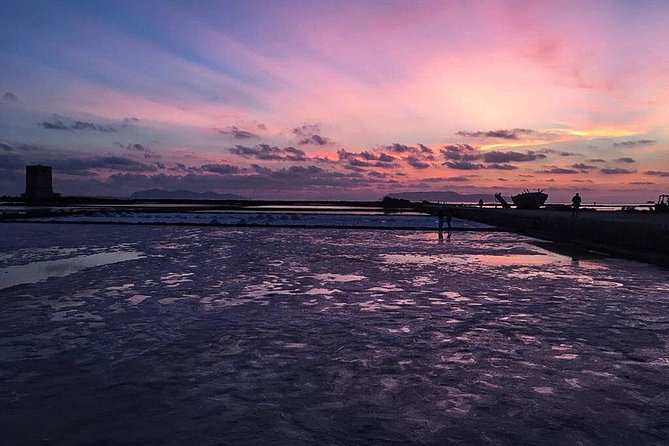
This is also the part that pairs well with sunset timing if your tour schedule happens to line up with evening light. Several comments mention beautiful sunset views over the flats. If you can choose dates, consider going when sunset time lines up well and when the weather is clear.
Air-conditioned transport, free inclusions, and what you’re really paying for
At $60.46 per person, the big question is value. Here’s how I’d judge it:
You’re not just paying for access to salt pans. The included package covers:
- air-conditioned vehicle
- guide
- admission connected to the salt museum
- three different salt pans
- salt crystal tasting plus aromatized salt flower
- the path of the saltman walk
- all fees and taxes
In other words, you’re paying for instruction plus experiences that would be harder to assemble on your own in one tight block of time. If you try to cobble together a museum visit and a salt-pan experience solo, you’d still need local knowledge and time to coordinate locations.
That said, there is a legitimate consideration. A small number of comments point out that if you mainly want the museum and a simple look around, the guided tour can feel pricey compared with taking a taxi and doing the stops more independently. So choose based on your style:
- If you enjoy explanations and want the tasting plus guided context, this is strong value.
- If you just want a quick look, you might want to price-check alternatives.
Best timing: weather matters, and sunset can change the mood

This experience requires good weather. Since salt pans are outdoors and the walking portion is part of the experience, poor conditions can ruin the day.
I’d also plan for light. Even though sunset isn’t explicitly promised as part of every schedule, the setting is well known for evening views. If your tour timing gives you that golden-hour light, the salt flats can look dramatic, and birdlife tends to feel more active too.
If you’re thinking about photos, one comment suggests July to September as a time when you might get the best salt-panoramic visuals, especially during harvesting season. That’s a practical tip if your travel dates are flexible.
Who this tour is best for (and who might prefer something else)

This is a great match if you:
- like food with a connection to place
- enjoy history that comes with real-world explanation
- want a short, structured outing that still feels personal
- want a tasting that’s actually tied to what you’re seeing
It also fits families. One comment explicitly mentions it working for kids and adults, largely because the guide explains the process in a straightforward way.
You might prefer something else if you:
- want a self-guided visit only (no tasting, no deep context)
- don’t care much about food tasting components
- are sensitive to walking on uneven surfaces, since the path of the saltman is part of the included time and you’ll be outdoors
Small details that make the tour smoother
A few practical touches are worth noting:
- You get a mobile ticket.
- The guide is offered in English.
- Service animals are allowed.
- The minivan is sanitized as part of COVID-19 guidelines.
- The meeting point is near public transportation, which helps if you’re not driving.
And timing adjustments can happen. One comment says Alessio was flexible when traffic affected timing. That matters because a salt-pan schedule depends on daylight and weather.
Should you book SALT TOUR – Trapani, Paceco, Nubia?
I’d book it if you want the real salt experience: working pans, museum tools, and a guide who can turn craft into something you understand and remember. The tasting of fleur de sel and the salt flower flavors are a strong reason on their own, and the small-group format makes it easier to get answers while you’re out in the tanks.
I’d hesitate only if your goal is strictly minimalist sightseeing. If you just want photos and a quick museum browse with no guided process, the price may feel steep compared with a simpler taxi-and-go plan.
If you’re the type who reads a menu and then wants to know how the ingredients came to be, this tour lines up perfectly with that mindset.
FAQ
How long is the SALT TOUR in Trapani, Paceco, and Nubia?
The tour duration is approximately 2 hours and 30 minutes.
Where does the tour start and end?
It starts at Vigili Del Fuoco Distaccamento Portuale Trapani, Via Ammiraglio Staiti 101, Trapani, and it ends back at the same meeting point.
What language is the tour offered in?
The tour is offered in English.
How many people are on the tour?
It is limited to 8 people for an intimate experience, and the maximum group size is 16.
What’s included in the price?
The price includes the air-conditioned vehicle, guide, access to three salt pans, the salt museum ticket, the path of the saltman, and tastings of salt crystals and aromatized salt flower. All fees and taxes are included.
What should I expect to taste?
You’ll taste different types of salt crystals and the salt flower, including natural salt flower and flavored versions such as orange, lemon, rosemary, and oregano.
Is good weather required?
Yes, the tour requires good weather. If it’s canceled due to poor weather, you’ll be offered a different date or a full refund. You can also cancel for a full refund up to 24 hours in advance.