Skip the misery. Then hit the masterpieces fast. This private, skip-the-line Vatican experience is interesting because it trades hours of queue time for a tight, guided route through the Museums and the religious heart of Vatican City. I love the professional art historian guide element, and I especially love how guides like Francisco and Romina make the Vatican feel navigable instead of chaotic. One consideration: last-minute closures can sometimes limit access to the Sistine Chapel and/or St. Peter’s Basilica, with an alternative reroute offered inside the Museums.
You’ll also feel the benefit of going private: your guide can pace you, answer your questions, and keep the focus on the details that matter. I like that you’re still seeing the big hitters—Michelangelo’s ceiling scenes and the Pietà—without turning the visit into a sprint you can’t control. The main drawback to keep in mind is that the 3-hour window can feel a bit fast, especially if you want extra time lingering in each room.
In This Review
- Key points to know before you go
- Skip-the-line Private Entry: what you really gain
- Vatican Museums route: from pinecone courtyard to maps and tapestries
- Sistine Chapel: short stop, big impact (and a silence requirement)
- St. Peter’s Basilica: Pietà, side chapels, and Bernini’s story
- St. Peter’s Square finale: the big view at the end
- Private guide quality: why names like Francisco and Tommaso matter
- Price and value: is $429.49 a good deal?
- Dress code and preparation: the quick checklist that prevents refusals
- Timing strategy: why early often beats dramatic
- Meeting point clarity: don’t gamble on a street name
- Should you book this Vatican skip-the-line private tour?
- FAQ
- How long is the Vatican Museums, Sistine Chapel, and St. Peter’s Basilica private tour?
- What’s included in the tour price?
- Is this tour private?
- What language is the tour offered in?
- Do I need to follow a dress code?
- What if the Sistine Chapel or St. Peter’s Basilica closes due to Vatican events?
- Can I get a refund or change my booking?
Key points to know before you go
- Guaranteed skip-the-line admission means you start with momentum instead of waiting outside.
- Two-hour museum run gives you enough time to hit major collections before the chapel moment.
- Raphael rooms and Michelangelo highlights are handled with smart prep so you understand what you’re seeing when silence hits.
- St. Peter’s Basilica storytelling includes specific art moments like the signed Pietà and how Bernini’s altar artwork works.
- Last-minute Vatican closures happen, so have a flexible expectation and trust the alternate plan inside the Museums.
- Dress code is strict—plan ahead or you risk being refused entry.
Skip-the-line Private Entry: what you really gain
In the Vatican, time is everything. The crowds are not subtle, and the queue system can eat a huge chunk of your day. What makes this tour worth a look is the guaranteed skip-the-line admission, which lets your guide start the Museums route quickly and keep you moving through the highlights without losing your patience.
This is also a smarter way to experience the Vatican than simply buying entry tickets and trying to “figure it out.” Even if you love art, the Vatican Museums can feel like a visual maze. A guide helps you pick the right corridors, understand what each gallery is for, and notice details you’d probably miss on your own—especially in rooms packed with symbolism.
That said, private doesn’t mean instant or effortless. You still walk. You still deal with crowds in public spaces. And the schedule is built for coverage: about 3 hours total, including chapel and basilica visits. If you’re the kind of traveler who wants 60 uninterrupted minutes in one room, you may need to mentally switch to highlight mode.
You can also read our reviews of more tours and experiences in Vatican City.
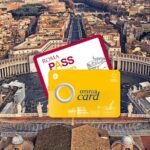
Vatican Museums route: from pinecone courtyard to maps and tapestries
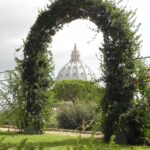
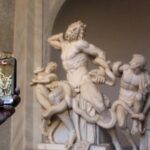
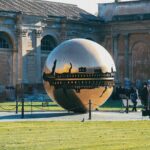
The tour begins at the Vatican Museums entrance, where you bypass the long line and start inside with energy rather than stress. After entry, you move toward Belvedere courtyard—yes, the famous bronze pinecone—before heading deeper into collections where the Vatican’s “art world” shows off its range.
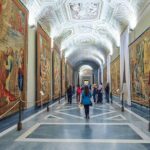
From there, you’ll see a sequence of galleries and rooms that matter because they connect themes. You’re not just collecting landmarks; you’re moving through categories like:
- ancient Roman sculpture spaces
- rooms featuring muses and animals
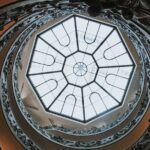
- the Rotunda area
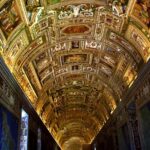
- geographic maps
- tapestry galleries
- Sobiesky Hall
Why this part works so well on a guided, time-boxed tour: the Vatican Museums aren’t one building of “random art.” They’re a curated display of taste, power, and collecting across centuries. A guide can explain why the Vatican collects what it collects and how that collection shapes the way you interpret everything you see afterward.
If you’ve ever walked into a museum and felt your brain go into overload, this is the fix. You get a rhythm: one room, one theme, one set of takeaways—then the route pushes you toward the next big visual payoff.
A quick practical note: the Museums can feel tiring because of how much you’re asked to look at. Comfortable shoes help more than you think. Also, if you’re prone to sensory overload, ask your guide for short pauses—most will know where to step for a moment of breathing room without losing your place.
Sistine Chapel: short stop, big impact (and a silence requirement)
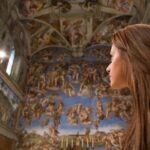
After the museum route, you reach the chapel rooms—this is the moment most people wait for. You’ll pass through rooms associated with Raphael for Pope Julius II, then head to the Sistine Chapel itself.
The time is brief—about 15 minutes for the Sistine Chapel portion—but that’s exactly why skip-the-line with a guide matters. When you’re not stuck in a queue, you can spend your limited window inside the space that demands attention.
You’ll be seeing Michelangelo’s major works, including the Creation of Adam and the Last Judgment. The strongest value here is how your guide sets you up before you enter. One thing I’d emphasize from the way guides describe the chapel experience: in the Sistine Chapel, you’re expected to stay quiet, so you can’t rely on a running explanation once you’re inside. Good guides use the moment before entry to help you understand what you’re about to see—so you can actually look instead of trying to read context while surrounded by silence.
Also, don’t underestimate the emotional effect. Even if you’re not “into” religious art, the scale and the craft hit you immediately. The chapel is one of those places where a guide’s framing can turn a famous image into a lived experience.
St. Peter’s Basilica: Pietà, side chapels, and Bernini’s story
Next comes St. Peter’s Basilica—about 30 minutes in the basilica itself, plus time for key areas you can’t fully “self-navigate” in a short visit. This stop is valuable not because it’s only famous, but because it’s packed with side chapels and small spaces where the details land harder than they do from a distance.
Your guide will help you explore the side chapels and mention hidden crypts (where applicable in the route you’re given). This matters because the basilica isn’t just one grand room. It’s a stack of artistic decisions layered across time, and your ability to “get” it quickly improves when you’re pointed toward the right corners.
A highlight here is Michelangelo’s Pietà. You’ll be shown this work and learn why it’s the only Michelangelo piece signed. That kind of context changes the way you look—suddenly the artwork is not just a subject, but a statement.
You’ll also get the Bernini angle. Your guide will explain the mastery behind Bernini’s altarpiece and how Michelangelo’s dome was seen as a victory over his contemporaries. Those are the stories that connect art history to the way the basilica holds attention and directs your eye.
One consideration: if Vatican authorities close access areas last minute (this happens with major mass events), the basilica may not be accessible. When that occurs, your guide provides an alternative that focuses inside the Vatican Museums. It’s not what anyone hopes for, but it’s an important safety valve—and it keeps your day productive instead of stalled.
St. Peter’s Square finale: the big view at the end
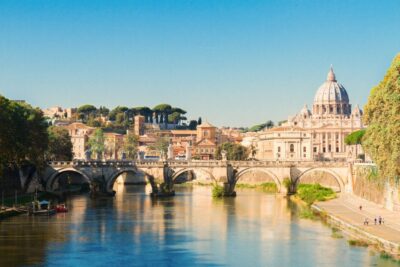
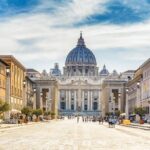
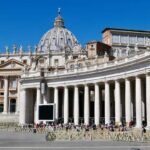
The tour ends in St. Peter’s Square, with about 15 minutes in the area around Piazza San Pietro. This is a smart finish because it gives your brain a breather after indoor concentration.
St. Peter’s Square also acts like a visual exhale. Inside, you’re focused on details and stories in chapels and galleries. Outside, you see the overall stage: the scale of the space, the way the basilica dominates the geometry, and the sense of why this place is the religious center of Vatican City.
If you want a couple of quick photos, this is the time. Don’t wait until the end “just in case” your guide needs to keep you on schedule. Plan to step out, look around, and grab your shots while you still have time to do it calmly.
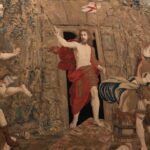
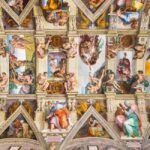
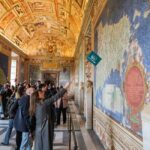
Private guide quality: why names like Francisco and Tommaso matter
In practice, what makes a Vatican tour feel worth it is rarely the route—it’s the person guiding you through it. The most praised element in this kind of tour package is the guide’s ability to explain art in a way you can actually use.
You’ll see different guide styles, but the strong ones share a few traits:
- patience with questions
- the ability to keep the pace without rushing you
- comfort managing crowds
- smart story choices that match what you’re seeing
From guide names linked to great experiences—Francisco, Sara, Romina, Claudia, Tommaso, Maximilian, Massimiliano, and Fabio—there’s a clear pattern: people remember how the guide made the Vatican feel real, not like a checklist.
In a private setting, you also get a bit of flexibility. One of the best practical perks is that if your family has different attention spans (or different interests), your guide can steer the conversation and keep everyone engaged. That’s not “extra fluff.” In the Vatican, it’s the difference between a meaningful visit and a painful blur.
If you’re booking for a special moment—solo travel, celebrating a milestone, or just making your one-day Vatican plan count—this is the kind of tour where guide fit pays off fast.
Price and value: is $429.49 a good deal?
At $429.49 per person for about 3 hours, this isn’t a budget tour. But it’s also not priced like a fancy museum cruise either. You’re paying for three things that add up in the real world:
- Guaranteed skip-the-line entry (time saved is stress saved)
- Private guide attention (and guide-led navigation through crowded zones)
- Admissions included for the Museums route, the chapel stop, and the basilica stop
Think of it this way: the Vatican isn’t hard to “access,” but it is hard to do well under time pressure. If you try to do everything without guidance, you’ll lose hours and still miss context.
Also, this is built for a first-time Vatican strategy: Museums highlights first, then the Sistine Chapel, then the basilica and a square finish. For many people, that coverage is exactly what they need—especially if you’re only in Rome for a short stay.
Where value can feel weaker is when expectations are unclear about timing. A 3-hour private tour is designed for top highlights, not for long stays in every chapel. If you want maximum lingering, consider extending your Vatican day with slower, self-paced time after the tour.
Dress code and preparation: the quick checklist that prevents refusals
You do need to plan for the dress code. No shorts or sleeveless tops. Knees and shoulders must be covered for both men and women. If you don’t comply, you could be refused entry to places of worship and selected museums.
That’s the kind of issue that can ruin an otherwise great schedule. Fix it before you go:
- Wear layers you can adjust (your body will thank you in the indoor-to-outdoor shifts)
- Bring something that covers shoulders if your shirt is sleeveless
Also, because you’re doing a guided walking route, plan footwear for marble floors and lots of indoor space. Comfortable shoes are a bigger deal than people admit.
Timing strategy: why early often beats dramatic
There’s one practical timing tip that comes up again and again for the Vatican: choose the early slot if you can. The later you go, the more the queues and crowd movement can feel like a struggle.
Even with skip-the-line entry, the Vatican environment gets more intense as the day goes on—especially around the Sistine Chapel transition and the bustle leading into St. Peter’s. Starting earlier generally makes the whole day feel smoother, and it gives you more room for photos and attention.
So if your schedule allows, pick an early morning time. If it doesn’t, just set expectations: your guide will likely focus more on efficient navigation and less on lingering.
Meeting point clarity: don’t gamble on a street name
The meeting point is listed in Viale Vaticano in Rome and the tour ends at St. Peter’s Square in Piazza San Pietro. One recurring frustration people run into is that “street name only” directions can be confusing—especially if you’re new to navigating the area.
My advice is simple: confirm the exact meeting instructions provided by the operator and save them on your phone. Aim to arrive a bit early. In a schedule like this, being ten minutes late doesn’t just waste time—it can disrupt the whole timing for entrance.
Should you book this Vatican skip-the-line private tour?
Book it if you want:
- skip-the-line access without turning your day into a queue battle
- a guide-led route through the Vatican Museums, Sistine Chapel, and St. Peter’s Basilica within about 3 hours
- expert context for famous works like Michelangelo’s Pietà and the Sistine ceiling
Skip it or consider alternatives if:
- you want a long, slow Vatican day with lots of independent wandering
- you’re extremely sensitive to the possibility of last-minute area closures (though an alternative inside the Museums is provided)
- you’re not prepared for the dress code rules
If you’re a first-time visitor and your goal is to see the big monuments with strong context, this tour is built for that. The best version of your day will happen when you pick a time slot that avoids peak crush, wear proper clothing, and trust your guide to manage the flow.
FAQ
How long is the Vatican Museums, Sistine Chapel, and St. Peter’s Basilica private tour?
It’s approximately 3 hours.
What’s included in the tour price?
A professional art historian guide, local taxes, guaranteed skip-the-line admission, and tickets for the Vatican Museums, Sistine Chapel, and St. Peter’s Basilica. St. Peter’s Square is included as part of the tour with free entry.
Is this tour private?
Yes. It’s a private tour/activity, and only your group participates.
What language is the tour offered in?
The tour is offered in English.
Do I need to follow a dress code?
Yes. Knees and shoulders must be covered. No shorts or sleeveless tops are allowed, and you may be refused entry if you don’t meet the dress requirements.
What if the Sistine Chapel or St. Peter’s Basilica closes due to Vatican events?
Some areas might close last minute. If that happens, your guide will provide an alternative focusing on the tour inside the Vatican Museums.
Can I get a refund or change my booking?
No. The experience is non-refundable and can’t be changed for any reason.