REVIEW · BARI
Tour di Alberobello e Matera in bus privato da Bari
Book on GetYourGuide →Operated by Apulia Smart Tour · Bookable on GetYourGuide
Two UNESCO towns in one packed day.
This trip works because you get included private transport plus a self-guided setup that helps you move fast and still linger where you want. I especially like the contrast between Alberobello’s trulli streets and Matera’s cave-city feel, and you’re not stuck waiting for a rigid group line the whole time. The main drawback is the early start and the amount of walking involved once you arrive.
You’ll split your time smartly: 3 hours in Alberobello and 4 hours in Matera, with travel in between. You’ll be dropped off, given a brochure, and then you explore using provided route ideas instead of needing a guide to enjoy the big sights.
In This Review
- Key highlights that make this day trip worth it
- Why Alberobello and Matera fit together so well
- Getting to the bus in Bari without stress (and why the details matter)
- The private bus ride: comfort, routing, and what you’ll do en route
- Alberobello trulli: the streets, the style, and what to look for in 3 hours
- A practical tip: use your free time like a photographer
- The possible downside: Alberobello can feel like walking in a maze
- Alberobello churches and the rock detail that makes it real
- Heading to Matera: going from conical roofs to stone-cut neighborhoods
- Matera sassi: how to enjoy four hours without getting lost
- The Sant’Antonio Abate rock church stop
- What your route guidance does for you
- If you add a guide in Matera, choose it wisely
- What’s included (and what you should plan to do on your own)
- Price and value: is $67.19 per person a good deal?
- Who this day trip suits best (and who should skip it)
- Should you book this Alberobello and Matera day trip?
- FAQ
- How long is the trip?
- What time does check-in open and when does the bus leave?
- Where is the meeting point in Bari?
- Is transportation included?
- Is a tour guide included?
- How much time do I get in Alberobello and Matera?
- What languages are available?
- How do the brochure and route guidance work?
- Can I cancel for a full refund?
Key highlights that make this day trip worth it
- Private bus from Bari saves you the hassle of figuring out trains and transfers.
- Self-guided freedom: you get time to wander trulli lanes and Matera’s sassi without constant regrouping.
- UNESCO pair in one shot: Alberobello (UNESCO 1996) and Matera (UNESCO World Heritage).
- Siamese Trulli and signature Matera rock churches are real, concrete stops—not just a bus photo stop.
- Brochure + QR maps: scan and follow walking routes so you don’t waste time guessing.
- Human-scale pacing: enough time to see the highlights, not so much that you feel trapped all day.
Why Alberobello and Matera fit together so well
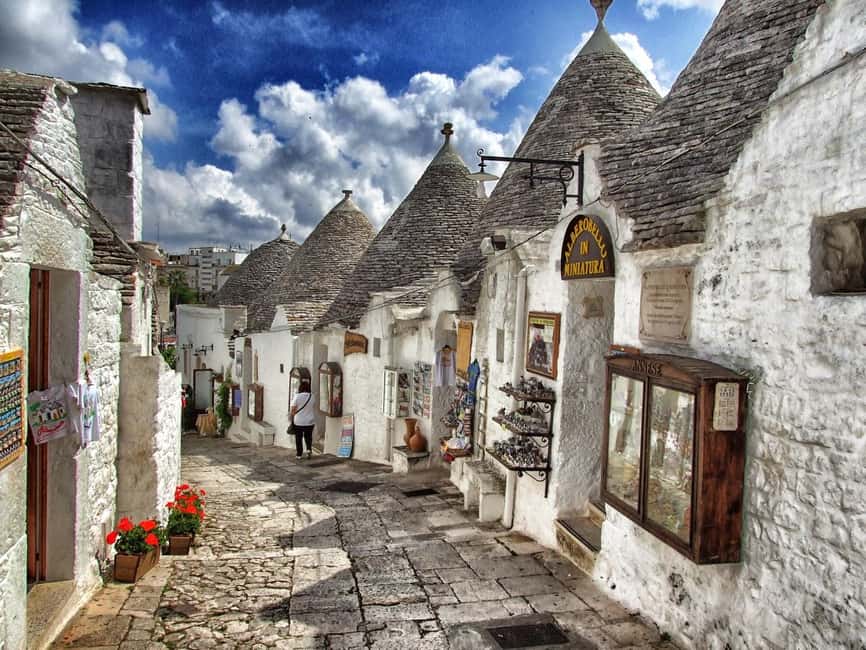
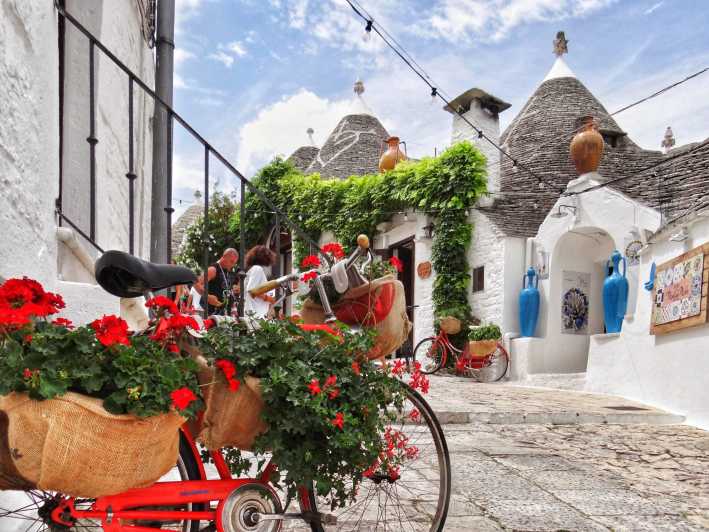
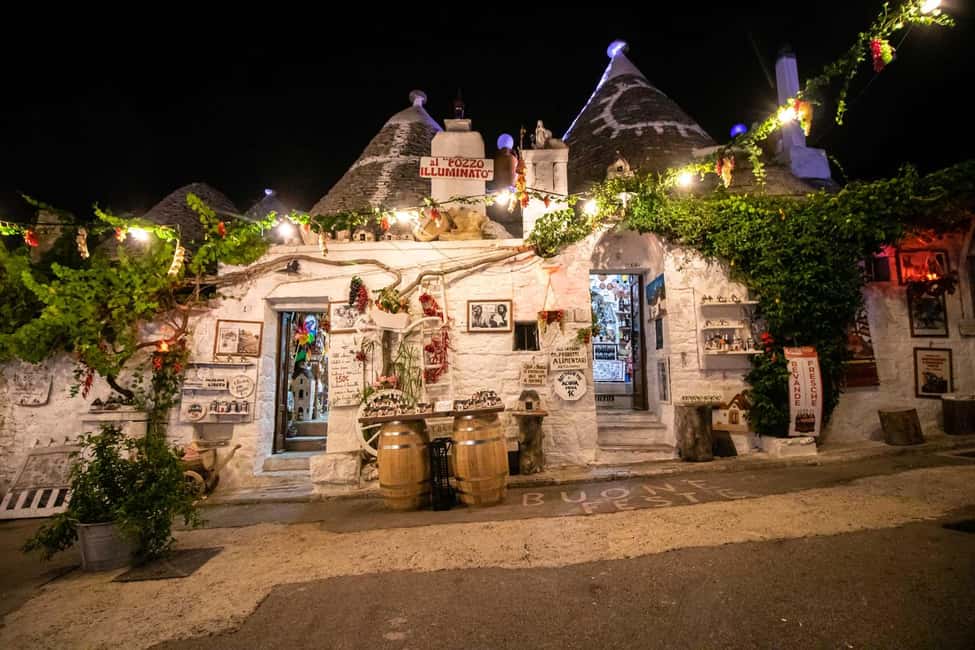
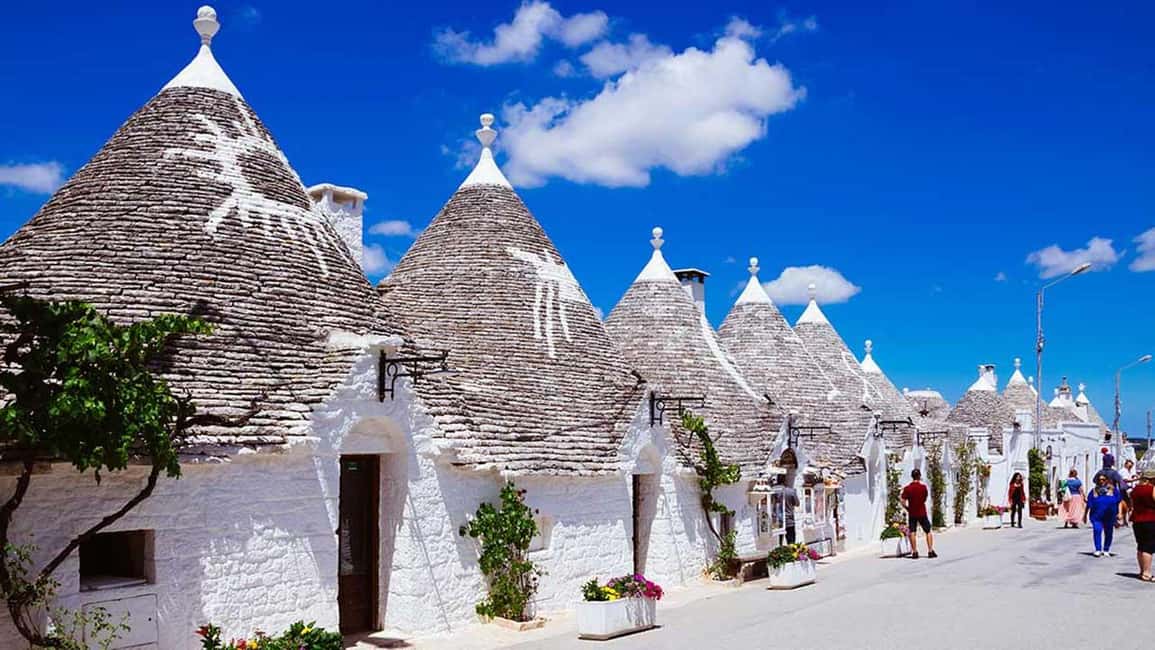
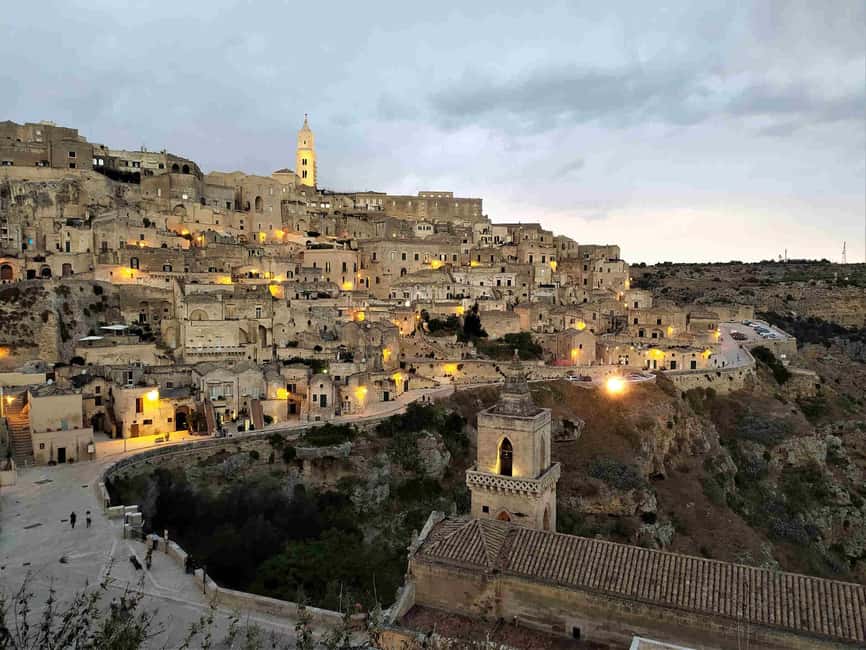
Alberobello and Matera look like they belong to different planets. Alberobello is all sharp white limestone shapes and conical roofs—trulli everywhere, like somebody drew a village from a dream. Matera is heavier and more dramatic: the sassi are cave neighborhoods carved into limestone along a ravine, a real labyrinth of steps and passageways.
Putting them on the same day is the point. If you’re based in Bari and you don’t want to rent a car, this kind of pairing is one of the most efficient ways to see two UNESCO sites without spending half your vacation stuck in logistics.
The trip’s format is also friendly. You’re not paying for constant commentary. Instead, you’re getting a transport plan plus a brochure and route guidance, which lets you control how long you linger at the places that pull you in.
You can also read our reviews of more tours and experiences in Bari.


Getting to the bus in Bari without stress (and why the details matter)
This only works if you show up to the right spot. Your meeting point is Ex Capolinea 1.4, Largo Eroi del Mare, Bari. One note that matters: if you search on Google, enter Ex Capolinea 1.4, Largo Eroi del Mare, Bari. Don’t search for Piazza Eroi del Mare, Bari.
Check-in opens at 8:00 AM and departure is scheduled for 8:30 AM. Once you arrive, look for a bus with a sign for Ceglie Eurobus or Apulia Smart Tour.
Why I think this matters: you’re on a timed schedule, and the day is long. If you’re late, you can miss the whole rhythm of the day. Plan to arrive early, and if you’re traveling with kids or older family members, build in a buffer.
The private bus ride: comfort, routing, and what you’ll do en route
You’re traveling as part of a group, but the experience is set up around the bus moving you between towns efficiently. You’ll have drive time blocks (about one hour to reach Alberobello, then another travel segment toward Matera, and finally the return).
What I like here is that the day doesn’t feel like dead time. The setup includes a brochure and route tools, and the bus environment is designed to help you prepare before each stop. Some passengers also mention multimedia in the bus and the general sense that the company runs a well-timed operation.
Drivers can vary by date. In the feedback, I saw names like Daniel, Daniele, Francesco, and Rocco tied to excellent punctuality and friendly energy. That’s a good sign for a long day, because being on time really is the difference between a relaxed visit and a rushed one.
Alberobello trulli: the streets, the style, and what to look for in 3 hours
Alberobello is UNESCO for a reason: the town is an exceptional example of building using prehistoric techniques that survived intact and still function today. The trullo itself is the key idea. It’s a small limestone house built with dry-stone walls, topped by a conical roof. The stones are collected from nearby fields and stacked without mortar.
When you arrive, your goal in three hours is not to memorize every doorway. It’s to orient yourself to the trulli layout so the place stops feeling random.
Here are the specific highlights built into the experience:
- The Siamese Trulli: two trulli joined together, one of the instantly recognizable Alberobello images.
- Basilica sanctuary of Saints Cosma and Damiano: a major church stop that gives you a strong anchor point in the town.
- Church of San Francesco d’Assisi: another iconic religious landmark, useful as a landmark when you’re looping through neighborhoods.
- Casa Noha: an important stop that helps you understand the area’s domestic architecture beyond just the postcard exteriors.
A practical tip: use your free time like a photographer
When you have limited hours, don’t aim to see everything. Aim to see the town in layers:
1) Find the signature trulli areas quickly.
2) Wander without a checklist for 30–40 minutes.
3) Then return to the places that caught your eye for photos and a closer look.
One thing people notice right away is the light. The limestone reflects daylight hard, giving the streets a fairy-tale look. That effect is part of why people fall for Alberobello fast.


The possible downside: Alberobello can feel like walking in a maze
Trulli lanes intersect and loop. It’s charming, but it also means you can lose time if you don’t have a plan. The brochure’s QR map guidance helps here. If you’re older, not great with phone navigation, or you’re traveling with someone who struggles with QR codes, I’d suggest you agree on a meeting point inside the town before you split up.
Alberobello churches and the rock detail that makes it real
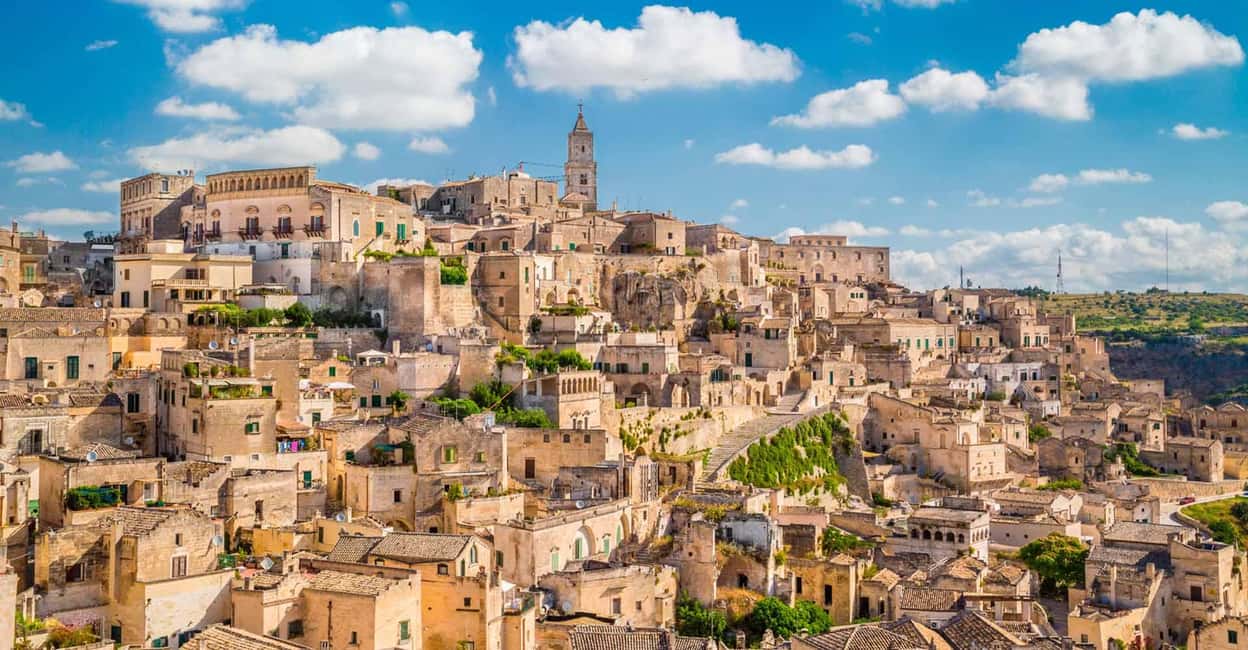
It’s easy to think Alberobello is only about roofs and photos. The church stops add context and keep your visit from turning into a single-note experience.
You’ll also want to pay attention to the materials and the way stone surfaces look up close. The whole town is built around limestone, and you can feel that shift when you step inside or approach a sanctuary and look at how structure meets function.
If you choose the option for more guided interpretation in Alberobello, it can help you connect what you see with why it exists. Some passengers mention guides such as Michela in Alberobello when they added guided tours, and that kind of local explanation tends to make the trulli story click.
Heading to Matera: going from conical roofs to stone-cut neighborhoods
Once you leave Alberobello, the vibe changes immediately. Matera’s sassi sit on the edge of a ravine, with neighborhoods carved into limestone. The physical setting makes the town feel sculpted, not simply built.
Here’s the reality check that makes Matera hit harder: less than 70 years ago, around 15,000 people (mostly farmers) still lived in caves without natural light, ventilation, running water, or electricity. It’s hard to take in until you’re there.
Today, it’s UNESCO World Heritage and was named the European Capital of Culture for 2019. Those titles are nice, but the real point is how the place has survived and transformed.
Matera sassi: how to enjoy four hours without getting lost
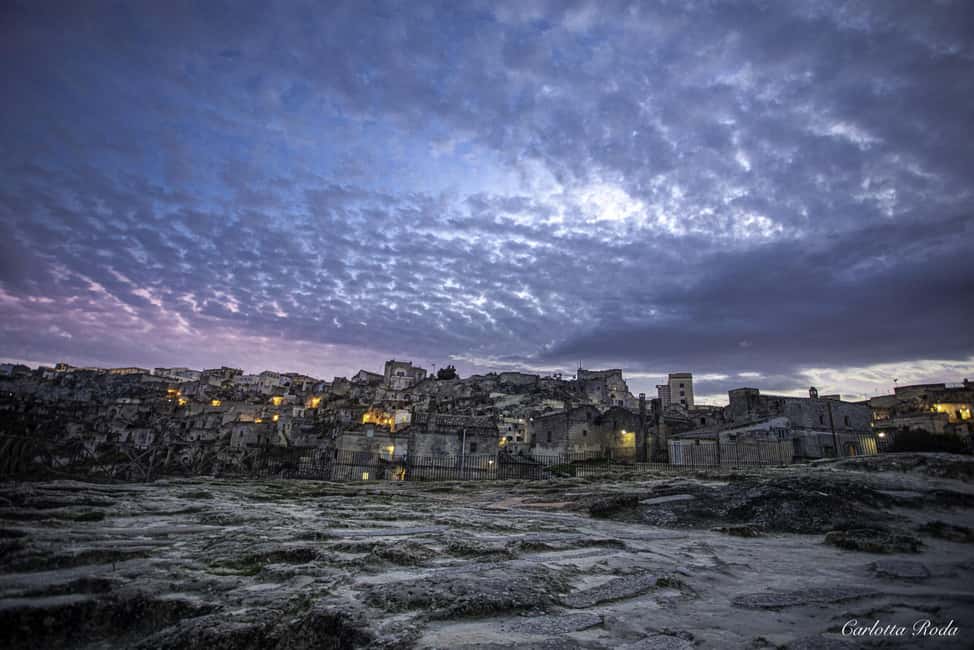
Matera’s sassi are a complex labyrinth of stone walkways and staircases. That means you should expect stairs. You should also expect the route you choose to be one of several possible routes through the same area.
Your included Matera visit is 4 hours, which is enough to see the essentials if you use the route guidance and avoid aimless wandering for too long.
Key highlights during your Matera time include:
- Casa Noha (you’ll already have seen it as an Alberobello highlight, but it’s the kind of stop used to connect domestic architecture themes)
- The rock church of Sant’Antonio Abate
- Other signature sassi-era landmarks connected to the experience
The Sant’Antonio Abate rock church stop
Rock churches are one of Matera’s most distinctive things. The carved-in look and the way the structure fits into the limestone setting helps you understand why this place worked as a settlement long before modern infrastructure existed.
What your route guidance does for you
Some passengers specifically note audio guidance and QR-based walking routes you can follow with Google Maps directions. That’s what you want in a place like Matera. You’ll still wander, but the route tools reduce the risk of spiraling into the wrong quarter at the wrong time.
If you add a guide in Matera, choose it wisely
A guide isn’t included, but some passengers do pay extra for guided time. When that happens, guides mentioned include Pasquale in Matera. If you can add it, I’d do it in Matera, not Alberobello. The sassi are easier to get lost in, and context makes the stone carvings and cave architecture more meaningful.
The flip side: a more guided pace can run slower than you expect. If you prefer your own timing, use a guide for the first chunk and then break free for the remaining time.
What’s included (and what you should plan to do on your own)
Included:
- Transportation (private bus)
- Brochure (with information and route guidance)
Not included:
- Tour guide (unless you choose an add-on option separately)
In practice, that means your “touring” is mostly self-guided. You’re using the brochure to structure your day, then exploring independently.
If you’re the type who loves structure, you’ll still feel supported because you’re not guessing where to go from scratch. If you’re the type who hates structure, you’ll still enjoy it, but you’ll want to scan the QR codes early so you don’t spend your first hour just trying to get your bearings.
Price and value: is $67.19 per person a good deal?
For a day trip that includes private bus transport from Bari to two far-flung UNESCO towns, $67.19 per person is the kind of price that makes sense for most people—especially if you don’t want to rent a car.
Here’s the value logic I use:
- You’re paying for time saved. Getting to Alberobello and Matera on your own without a car can mean transfers and more planning. Here, you buy a single round-trip plan.
- You’re paying for the “how to explore” part. The brochure, route guidance, and QR maps reduce confusion. This matters a lot in Matera.
- You’re not paying for constant live narration. That can be good value if you’d rather explore at your own speed.
So yes, it’s good value if you’re okay with self-guided touring and a full day schedule.
Who this day trip suits best (and who should skip it)
This works best for:
- People staying in Bari who want a practical way to visit both UNESCO sites
- Anyone who likes short stops plus free time rather than long guided lectures
- Groups of mixed ages, as long as everyone can handle stairs and uneven stone lanes
I’d think twice if:
- You hate early mornings. Departure is 8:30 AM, and the day is long.
- You expect a low-walking day. Matera sassi are staircase-heavy.
- You need a fully guided experience. A tour guide isn’t included in the base offering.
Also, a small practical note from the field: one passenger mentioned wanting working seat belts for all seats on the bus. That’s not something you can confirm in advance, so when you board, just check that your seat belt works properly and clicks in.
Should you book this Alberobello and Matera day trip?
If you want an efficient UNESCO fix from Bari, I’d book it. The combination of private transport, brochure-based self-guiding, and enough time in each town makes it one of the more sensible ways to see Alberobello and Matera in a single day.
I’d especially recommend it if you plan to use the QR route guidance seriously, and if you’re comfortable walking through old stone neighborhoods where you’ll naturally take a few wrong turns before you find your rhythm.
FAQ
How long is the trip?
The total duration is listed as 10 hours.
What time does check-in open and when does the bus leave?
Check-in opens at 8:00 AM, and departure is scheduled for 8:30 AM.
Where is the meeting point in Bari?
The meeting point is Ex Capolinea 1.4, Largo Eroi del Mare, Bari. The correct search phrase matters.
Is transportation included?
Yes. Transportation is included in the price.
Is a tour guide included?
A tour guide is not included. The experience is self-guided with a brochure.
How much time do I get in Alberobello and Matera?
You get about 3 hours in Alberobello and about 4 hours in Matera.
What languages are available?
The instructor languages are English and Italian.
How do the brochure and route guidance work?
You’re provided a brochure, and route guidance uses QR codes so you can follow walking routes during your free time.
Can I cancel for a full refund?
Yes, free cancellation is offered up to 24 hours in advance for a full refund.