REVIEW · TRIESTE
Trieste Bus Tour with Audio Guide
Book on GetYourGuide →Operated by HopTour - Yestour srl · Bookable on GetYourGuide
Trieste looks different from the waterline. This Trieste bus tour with audio guide gets you a quick, high-impact overview of the waterfront and hill landmarks, with commentary timed to what you’re passing. I love how clear the audio guide is and how it keeps the city organized as you ride, but do plan for one hiccup: getting to Miramare Castle can involve a walk from the stop.
In a short trip, I also like the hop-on hop-off setup with a ticket that stays valid for 24 hours. You can get off to look closer, then return on a later bus when there’s space, which makes it easier to handle crowds or heat.
One thing to keep in mind: you get a seat guarantee only for the specific course you booked, so if you hop off for a long time and the buses are full, you might wait for the next one.
In This Review
- Key highlights you’ll actually feel on this tour
- Molo Audace start: setting yourself up to see Trieste fast
- Price and timing: is $19 worth 1.5 hours?
- How hop-on hop-off and the 24-hour ticket really play out
- What’s included (and what you must pay for separately)
- Audio guide quality: how it keeps the route coherent
- The route stop-by-stop: what to expect at each sight
- Piazza Unità d’Italia (starting point)
- Molo Audace (pier)
- Salone degli Incanti (Pass by)
- Via Ottaviano Augusto (Pass by)
- Lighthouse and La Lanterna Baths, Campo Marzio area (Pass by)
- Sea Museum / Campo Marzio Street (Pass by)
- Grumula Shore – Venezia Square (Pass by)
- Roman Theatre of Trieste (Pass by) + Santa Maria Maggiore Church
- Serbian Orthodox Church of Saint Spyridon (Pass by)
- Saint Spiridione Street / Maria Teresia (Pass by)
- Piazza Vittorio Veneto (Pass by)
- Grande Canal / Ponterosso Square (Pass by)
- Piazza della Borsa (Pass by)
- Castle of San Giusto / San Giusto Hill (Pass by)
- Piazza Carlo Goldoni (Pass by)
- Via Giosuè Carducci (Pass by)
- Piazza Guglielmo Oberdan (Pass by) + Tram station
- Piazza della Libertà (Pass by) + Train station
- Central Hydrodynamics of the Old Port of Trieste (Pass by)
- Pinewood of Barcola (Pass by)
- Barcola Beach (Pass by)
- Miramare Castle (Pass by) + Miramare Boulevard corridor
- Greek Orthodox Church of Saint Nicholas (Pass by)
- Tre Novembre Shore – Greek Orthodox Church of Saint Nicolò (Pass by)
- Return to Molo Audace + Piazza Unità d’Italia
- Where this tour shines (and where it won’t replace your walking)
- Small logistics tips that make the difference
- Who should book this Trieste bus tour?
- Should you book it? My take on deciding
- FAQ
- Where does the Trieste bus tour start and end?
- How long is the tour?
- Does the audio guide include multiple languages?
- Can I hop off the bus and get back on?
- Are pets allowed?
- What is included in the ticket price?
- Are entrance tickets to attractions included?
Key highlights you’ll actually feel on this tour

- Audio guide in four languages that matches the route, so you’re not just staring out the window
- Comfort-first ride on an air-conditioned bus with USB charging and on-board help
- 24-hour validity paired with hop-on hop-off stops across Trieste’s main sights
- Maritime and city views in one circuit, from Molo Audace to Barcola and Miramare
- Pet policy is specific: pets are allowed only with a muzzle
- A good first-day orientation when you want a fast map in your head
Molo Audace start: setting yourself up to see Trieste fast
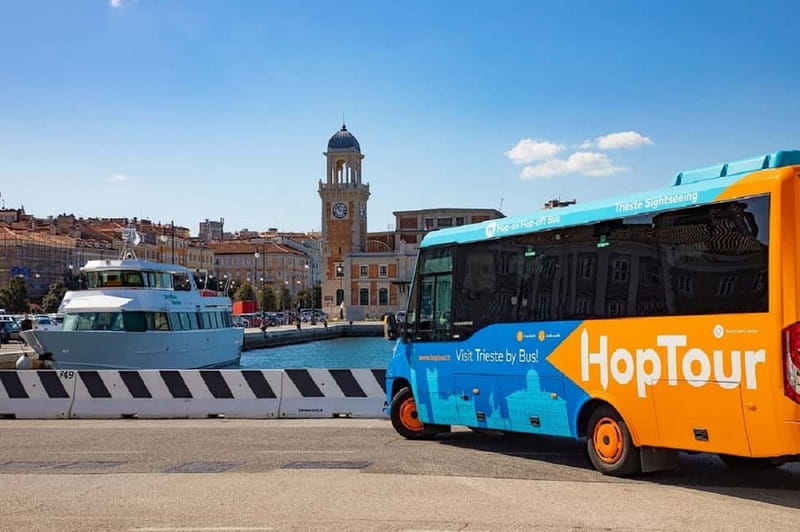
The tour begins at Molo Audace, right by Piazza Unità d’Italia. I like starts like this because you’re thrown into the right place immediately: the waterfront. Trieste’s identity is tied to water, and being near the pier means the first impressions aren’t just buildings—they’re the harbor feel, the coastline shape, and that sense of a city built for looking outward.
One of the first details you’ll hear (and it’s a great one) is about Molo Audace pier, built on the wreck of an older ship. It’s the kind of fact that makes a landmark feel real, not just scenic. And once you’re oriented to that, the rest of the route lands more easily.
You can also read our reviews of more tours and experiences in Trieste.
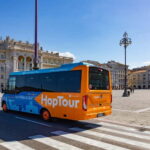

Price and timing: is $19 worth 1.5 hours?
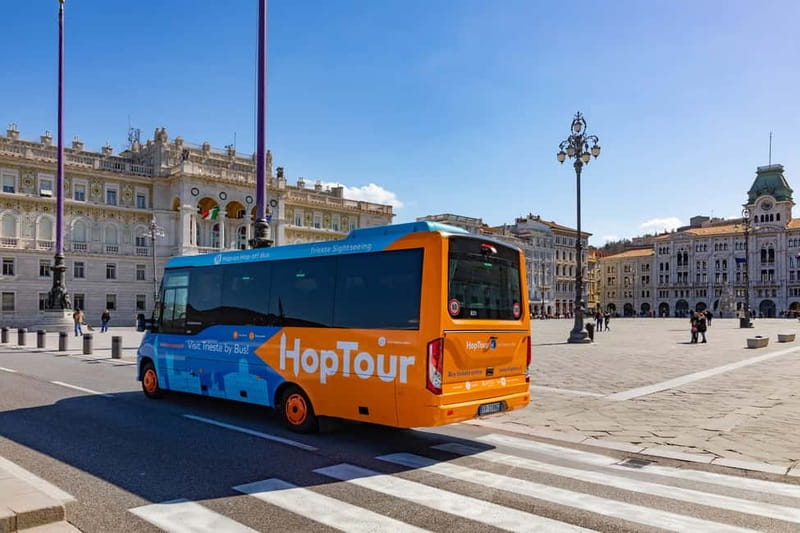
At $19 per person, this is priced like an overview tool, not like a museum day. That matters, because this tour does the “big picture” job: it loops through major viewpoints, religious buildings, squares, and the hill area, then drops you back where you started.
The 1.5-hour ride also means you’re not stuck on a bus all day. On hot days, that’s a real advantage. In plain terms: you get air conditioning while you’re learning where everything is, and then you can choose what you want to revisit with your own pace.
The main timing trade-off is that you only have so much time from stop to stop. The hop-on hop-off option helps, but it still rewards planning. If you want long visits at multiple places, you’ll likely spend more time in town than just the 1.5 hours on the bus.
How hop-on hop-off and the 24-hour ticket really play out
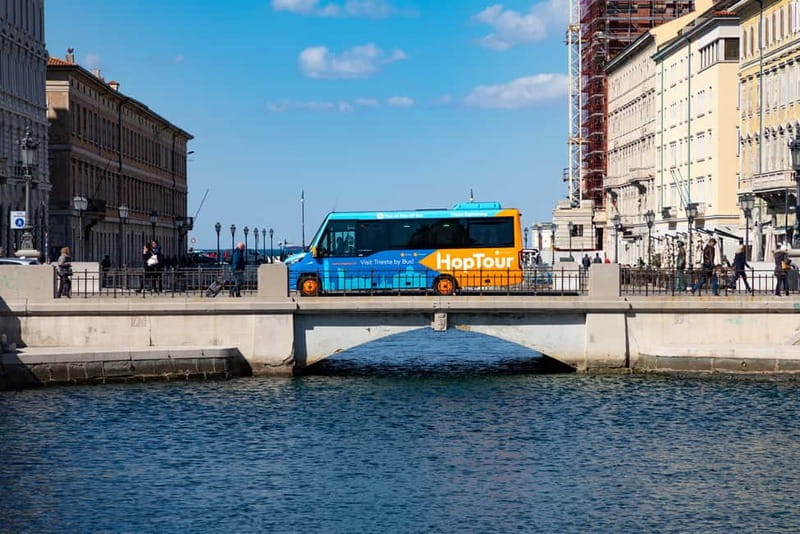
This is not a single rigid guided walk-through. You ride the circuit, and you can hop off at any stop to explore, then get back on at a later bus if there’s a seat.
Two practical points you should plan around:
- The ticket is valid for 24 hours, but seat guarantee applies only to the course you booked. So if you’re far from the stop when the bus arrives again, you might not be able to immediately return.
- When you re-board, be ready to check in with the guide/staff so you don’t get stuck figuring out where you fit in.
Also, hop-on hop-off works best if you start early. If you join late, you can end up with long gaps between buses, which cuts down your sightseeing time.
A nice bonus is that the bus experience isn’t just “ride and forget.” It’s set up so you can use it like a moving map—ride, get off when something catches your eye, then ride again to reset your bearings.
What’s included (and what you must pay for separately)
Included:
- Bus ticket
- Audio guide in Italian, English, German, and Spanish
- USB charger
- On-board assistance
Not included:
- Entrance tickets to attractions and monuments
So you should treat the tour as a guided orientation plus viewing time from the street. When you want an interior visit—churches, museums, castles—plan on paying separately.
One more practical detail: the bus ride tends to feel efficient. It moves along a route that links waterfront, central squares, and up the hill area, so you spend your time looking rather than transferring between multiple transit lines.
Audio guide quality: how it keeps the route coherent
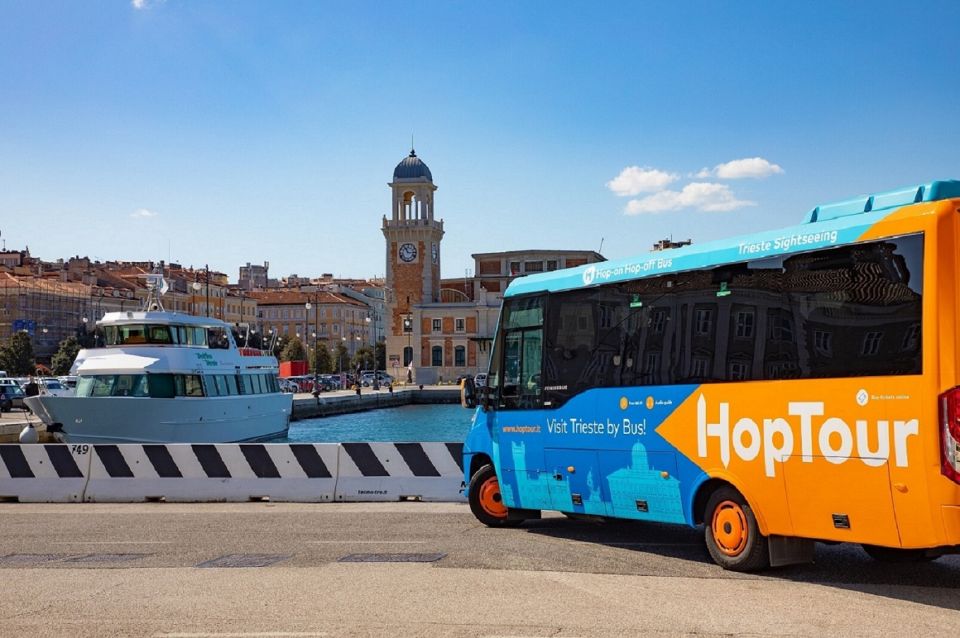
The big win here is that the audio guide is synchronized with the route. That means you’re not hearing random history while staring at something unrelated. Instead, the commentary tracks the sequence of what you’re passing—pier, shoreline areas, squares, then the hill sights.
You’ll hear enough context to understand what you’re seeing (and why it matters), without turning the trip into a lecture. The commentary also helps you decide what’s worth your feet later. For example, once you’ve heard about the waterfront pier history, you’ll likely want to linger near the harbor area with your own eyes.
If you’re the type who likes to understand the layout, this is a strong format. You get a mental map built in real time.

The route stop-by-stop: what to expect at each sight
Below is what you’ll encounter as the bus makes its circuit, in the order it reaches them.
Piazza Unità d’Italia (starting point)
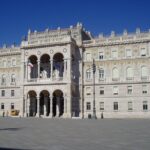
You’ll begin at Piazza Unità d’Italia, which is a helpful reference point for the rest of your day. It’s the anchor for where you can return to regroup.
Molo Audace (pier)
The pier is your “Trieste, at the water” moment. You’ll pass Molo Audace, with the standout historical note that it was built on the wreck of an older ship.
Salone degli Incanti (Pass by)
This stop is known on the route by name—Salone degli Incanti—and it’s linked with Eataly on the route description you’ll see. From the bus, you’ll get the immediate sense of this being a central public space rather than something hidden.
Via Ottaviano Augusto (Pass by)
Via Ottaviano Augusto is a view corridor. You’ll pass by major landmarks in this stretch, including the next sight group tied to the lighthouse and baths.
Lighthouse and La Lanterna Baths, Campo Marzio area (Pass by)
Here you’ll see the lighthouse area and La Lanterna Baths, tied into the Campo Marzio Station area on the route. If you’re the type who likes coastal structures, this is a good section to pay attention to the coastline line.
Sea Museum / Campo Marzio Street (Pass by)
Next up is the Sea Museum area, shown as part of Campo Marzio Street. Even if you don’t go in, this is where the route makes its maritime theme explicit.
Grumula Shore – Venezia Square (Pass by)
Grumula Shore and Venezia Square come together as a shoreline-to-square transition. It’s the kind of stop that helps you picture Trieste as a city that moves from water to streets without losing its harbor identity.
Roman Theatre of Trieste (Pass by) + Santa Maria Maggiore Church
You’ll pass by the Roman Theatre of Trieste and Santa Maria Maggiore Church. This is where the city’s layers start to feel clearer—Trieste isn’t only sea and waterfront; it has deeper older-city anchors too.
Serbian Orthodox Church of Saint Spyridon (Pass by)
You’ll pass the Orthodox Serbian Temple of Saint Spyridione. This is one of the route’s religion-and-identity moments: a distinct building tied to community history and architecture.
Saint Spiridione Street / Maria Teresia (Pass by)
This stretch ties the street name with the Maria Teresia reference. From the bus, you mainly get the location and visual context, which is still useful for later walking if you want to take closer photos.
Piazza Vittorio Veneto (Pass by)
Piazza Vittorio Veneto is a central square stop. From a sightseeing viewpoint, squares are where you can reset—look around, orient yourself, then continue.
Grande Canal / Ponterosso Square (Pass by)
You’ll pass by the Grande Canal area and reach Ponterosso Square. If canals or canal-like spaces help you connect to a city’s shape, this part will do that work quickly.
Piazza della Borsa (Pass by)
Piazza della Borsa is on the route as a clear named stop. It’s useful because it ties you into the city’s center rather than keeping you only on the waterfront.
Castle of San Giusto / San Giusto Hill (Pass by)
Now you climb into the hill zone: San Giusto Hill, with San Giusto Castle and Church. Even from the bus, this is one of those moments where you can feel the city’s elevation and old-town structure.
Piazza Carlo Goldoni (Pass by)
Piazza Carlo Goldoni is another central-square checkpoint. It’s a good place to step back and decide whether you want to explore on foot after the bus ride.
Via Giosuè Carducci (Pass by)
Via Giosuè Carducci is a corridor stop. It’s the kind of stretch that helps stitch the stops into a mental map of neighborhoods.
Piazza Guglielmo Oberdan (Pass by) + Tram station
You’ll pass Piazza Guglielmo Oberdan near the tram station area. This can be handy if you plan to come back by public transport, since it signals transit connectivity.
Piazza della Libertà (Pass by) + Train station
Piazza della Libertà and the train station area show up on the route. If you’re using trains during your Trieste stay, this stop makes it easier to understand where the station fits into the sightseeing grid.
Central Hydrodynamics of the Old Port of Trieste (Pass by)
Central Hydrodynamics of the Old Port of Trieste is a very specific stop name, and that specificity helps you visualize what kind of landmark this is. Even if you don’t enter, it gives structure to the “old port” area of the city.
Pinewood of Barcola (Pass by)
Pinewood of Barcola is a change of pace. After historic center and hill sights, this reads as a greener coastal stretch—great if you want the city’s seaside edge.
Barcola Beach (Pass by)
Barcola Beach is where you see the long coastline vibe. This can be a good “walk-off-the-bus” stop if you want to stretch your legs and take in the waterline views.
Miramare Castle (Pass by) + Miramare Boulevard corridor
Miramare Castle is the headline sight on the route description. You’ll also pass Miramare Boulevard and areas tied to the seafront, then reach the castle viewpoint.
Here’s the main practical consideration: the stop can still leave you with a walk of about 700 meters to the castle area. On a hot day or if you have mobility limits, that distance can cut into your time at the grounds. Plan your expectations around that.
Greek Orthodox Church of Saint Nicholas (Pass by)
Next is the Greek Orthodox Church of Saint Nicholas. It’s another distinct religious landmark that adds variety to the city’s architecture as you round the route.
Tre Novembre Shore – Greek Orthodox Church of Saint Nicolò (Pass by)
You’ll pass the Greek Orthodox Church of Saint Nicolò on Tre Novembre Shore. This stop reinforces the neighborhood identity you’re seeing along the route’s return toward the starting waterfront area.
Return to Molo Audace + Piazza Unità d’Italia
The bus brings you back to Piazza Unità d’Italia at the end. I like this finish because it leaves you back at a place that’s easy to navigate from, especially if you’re deciding what to do next.
Where this tour shines (and where it won’t replace your walking)
This bus tour shines as a primer. You’ll see the big landmarks fast: waterfront pier areas, Roman-era stops, major churches, central squares, and the hill zone with San Giusto plus the Miramare area.
It’s also a comfort win. Air-conditioning plus a guided narrative means you’re not melting while trying to understand the city layout.
But it won’t replace hands-on time at key sights. Since entrance tickets aren’t included, you’ll need to decide what you want to pay to see inside. Also, because hop-on hop-off depends on seat availability for later courses, you can’t fully assume you’ll get back on instantly after a long stop.
Small logistics tips that make the difference
A few practical things can improve your day:
- Start earlier if you want to use the hop-on hop-off option for more than one longer stop.
- If you’re returning to the bus after getting off, tell the guide/staff when you re-board so you’re slotted correctly.
- If you’re arriving with luggage (for example after a cruise), you may be able to store large bags underneath the bus—this can save you from dragging them around on foot.
- For anyone traveling with a pet: pets are allowed only if wearing the muzzle, so bring it ready.
Who should book this Trieste bus tour?
This tour is a great fit if:
- You have a short stay and want a fast orientation
- You want to see a lot of Trieste without constant transfers
- You like history explained as you pass landmarks, in your preferred language
- The idea of walking uphill or across multiple areas makes you nervous
It may be less ideal if:
- You want deep time inside major attractions during the bus window
- You strongly prefer to avoid any walking from a stop, especially around the Miramare Castle area
Should you book it? My take on deciding
If you want a first-day Trieste route—with audio guide clarity, comfort, and an easy way to choose where to go next—this is a solid bet for the $19 price. The big value is not just the sights; it’s the way the audio helps you understand where everything sits, so your later self-guided time feels simpler.
I’d book it if you’re flexible about timing between buses and you’re okay with planning around the walk from the Miramare area. If that walk would be a problem, you might still book the tour for the overview, but treat Miramare as a “look from afar” option unless you’re sure you can manage the distance comfortably.
FAQ
Where does the Trieste bus tour start and end?
It starts at Molo Audace in front of Piazza Unità d’Italia and ends back at the same meeting point.
How long is the tour?
The duration is about 1.5 hours. Starting times vary, so you’ll need to check availability.
Does the audio guide include multiple languages?
Yes. The audio guide is available in English, German, Italian, and Spanish.
Can I hop off the bus and get back on?
Yes. You can hop on and off at any stop and take the next bus if there is a seat. Your ticket is valid for 24 hours.
Are pets allowed?
Pets are allowed only if wearing the muzzle.
What is included in the ticket price?
Included are the bus ticket, audio guide, USB charger, and on-board assistance.
Are entrance tickets to attractions included?
No. Entrance tickets to monuments and attractions are not included.