REVIEW · VENICE
Venice: Sightseeing Tour with a Local expert
Book on GetYourGuide →Operated by Raphael Tours & Events · Bookable on GetYourGuide
Venice makes sense faster with a local guide. In two hours, this English-only walking tour threads together Rialto, San Marco, and quieter lanes so the city’s big monuments feel connected, not random. You’ll also get a local’s way of explaining why certain places matter, from old trade power to what you see at the end in St Mark’s Square.
I love the practical route: you cross the Rialto Bridge and walk canal-side streets in a way that helps you orient fast, even if it’s your first day. I also love the heavyweight stops—Titian at the Frari and the burial legacy inside San Giovanni e Paolo—so you’re not just looking at pretty buildings, you’re learning what Venice chose to remember.
One consideration: it’s an outdoor walking tour with no entrances included, and it’s not suitable for wheelchair users. If you want long interior visits (or very slow sightseeing), this format may feel a bit too brisk and exterior-focused.
In This Review
- Key Highlights You’ll Feel Immediately
- Why This 2-Hour Venice Walk Works on Your First Day
- Meeting at Campiello dei Squelini Near Ca’ Foscari (and What to Do First)
- Campo San Pantalon to Campo San Rocco: Get a Local Rhythm, Not a Checklist
- San Polo Streets to Basilica dei Frari: Titian’s Tomb in Plain View
- Crossing the Grand Canal on the Rialto Bridge (and What You Learn While You’re There)
- San Giovanni e Paolo: Doge Tombs and Venice’s Political Afterlife
- Ending in St Mark’s Square: You’ll Recognize the Bigger Picture
- Outdoor Walking Reality Check: Pace, Footwear, and Weather
- Who This Tour Fits Best (and Who Should Skip It)
- Price and Value: Getting More Than a Sightseeing Photo Walk
- Should I Book This English-Language Venice Sightseeing Tour?
- FAQ
- How long is the Venice sightseeing tour?
- Is the tour offered in English only?
- Where is the meeting point?
- Is hotel pick-up included?
- Are entrances to monuments included?
- What should I bring for the walking tour?
Key Highlights You’ll Feel Immediately
- Small-group pacing that’s designed for learning, not just photo stops
- Rialto Bridge crossing over the Grand Canal, framed by the city’s trade history
- Basilica dei Frari stop with Titian’s burial site as a main story anchor
- San Giovanni e Paolo and its doges burial legacy, including 25 doges
- St Mark’s Square finale so you know what you’re seeing before you go in on your own
- English language only, led by local experts who keep the walk moving
Why This 2-Hour Venice Walk Works on Your First Day
Venice is famous for its landmarks, but it can also be confusing fast. Streets fold into canals, canals connect into different neighborhoods, and suddenly you’re trying to remember which direction St Mark’s is from the exact moment you get turned around.
This tour helps you build a mental map quickly. It’s only 2 hours, and it’s set up as a guided “spine” through key areas: Rialto, San Marco, and Cannaregio-adjacent Venice. That makes it a great first-day move because you’ll return later with better questions and more context.
The price, at $41 per person, is also a good sign for value. You’re not paying for a bus ride or for museum tickets. You’re paying for a local expert to point out what you’d normally miss and explain the city’s choices—where power sat, how the trade worked, and why certain sites mattered enough to keep for centuries.
You can also read our reviews of more tours and experiences in Venice.
Meeting at Campiello dei Squelini Near Ca’ Foscari (and What to Do First)
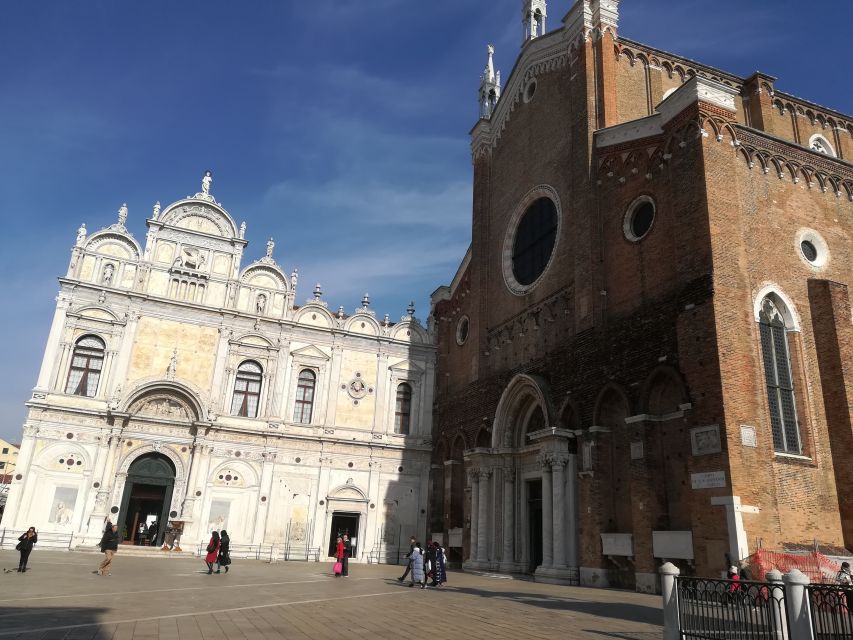
You’ll start at Campiello dei Squelini, near Ca’ Foscari University in the Dorsoduro district. The meeting point is by a colored wall, so look for that landmark rather than trying to interpret Venice from memory.
Plan to arrive 10 minutes early. The tour cannot wait more than 5 minutes, and joining after the start won’t be possible. In Venice, this matters more than you’d think, because a wrong turn inside narrow lanes can cost time fast.
Bring comfortable shoes. The tour is entirely outdoors, walking across small bridges and along narrow streets. Also, bring a bottle of water, because there’s no mention of stops to refill, and there’s limited ability to pause during the schedule.
Campo San Pantalon to Campo San Rocco: Get a Local Rhythm, Not a Checklist
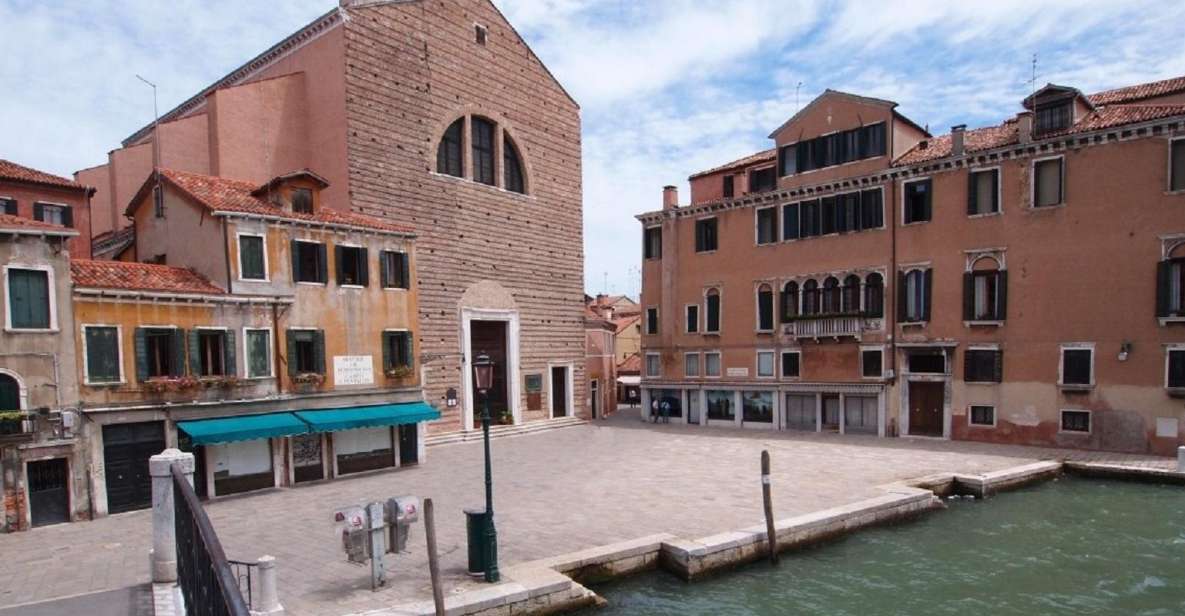
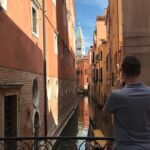
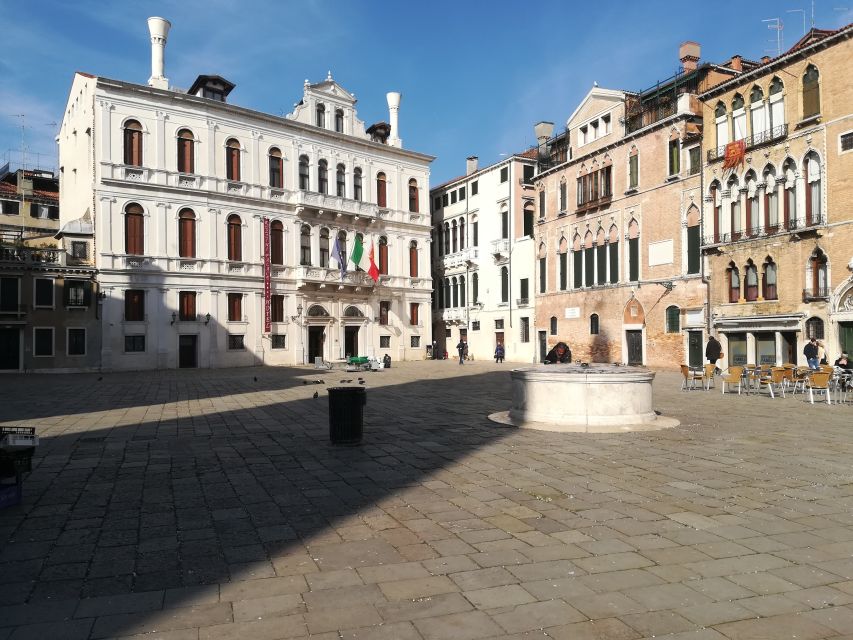
After meeting in Dorsoduro, the walk begins with short guided stops that help you understand daily Venice. Campo San Pantalon and Campo San Rocco are small squares that feel more like living neighborhoods than stage sets. This matters because Venice isn’t just a museum of monuments. It’s people, routines, and water-level architecture shaped over time.
At this point in the tour, don’t expect a big “wow” monument. Expect orientation: where you are, how the streets channel you, and what kind of neighborhood structure you’re walking through. It’s the same idea as learning a few chords before you play a song.
This is also a smart early moment to ask questions. Guides can explain how districts relate to each other and how the canal network creates your walking route. Even if you’ve seen photos of Venice, you’ll likely be surprised by how different the city feels when you’re on foot, close to doorways and canal edges.
San Polo Streets to Basilica dei Frari: Titian’s Tomb in Plain View
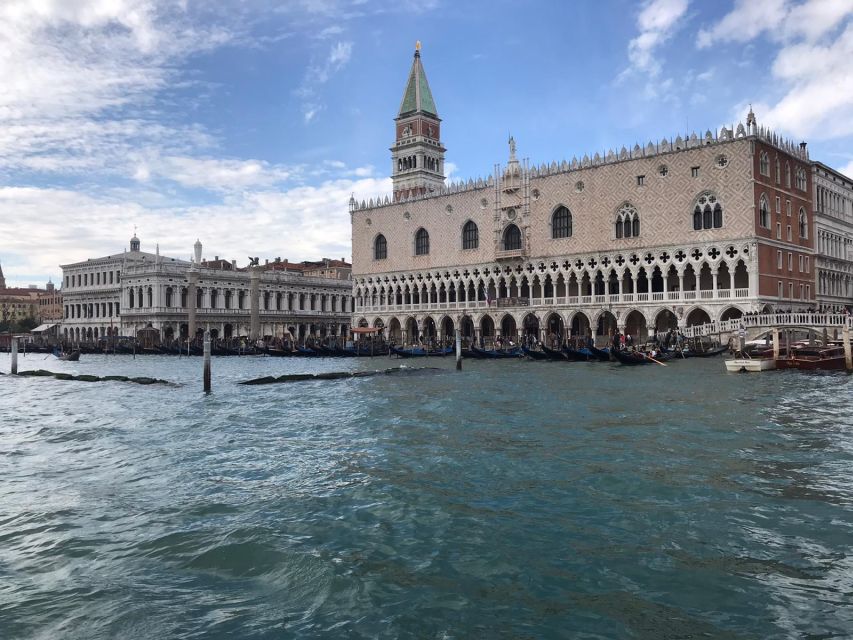
Next comes San Polo, followed by the stop at Basilica dei Frari. This is one of the tour’s best “history with a physical anchor” moments. You’re not floating in generalities. You’re standing near a major site where Venetian art and power intersect.
The key point here is Titian. This basilica is where Titian is buried, and that simple detail is a doorway into understanding Venice’s relationship with art. Venice didn’t just commission work to decorate palaces. It used culture to signal status, identity, and influence.
A practical note: the tour is an outdoor walking tour, and no entrances are included. So you’ll focus on what you can see from outside, and on the guide’s storytelling while you’re in the area. If you want to step inside to linger over altarpieces or tomb details, you’ll likely come back later on your own with a specific plan.
Why this stop is worth it, even without entry time: it gives you a name and a context you can carry into later museum and church visits. You’ll know which artists and institutions mattered most and why.
Crossing the Grand Canal on the Rialto Bridge (and What You Learn While You’re There)
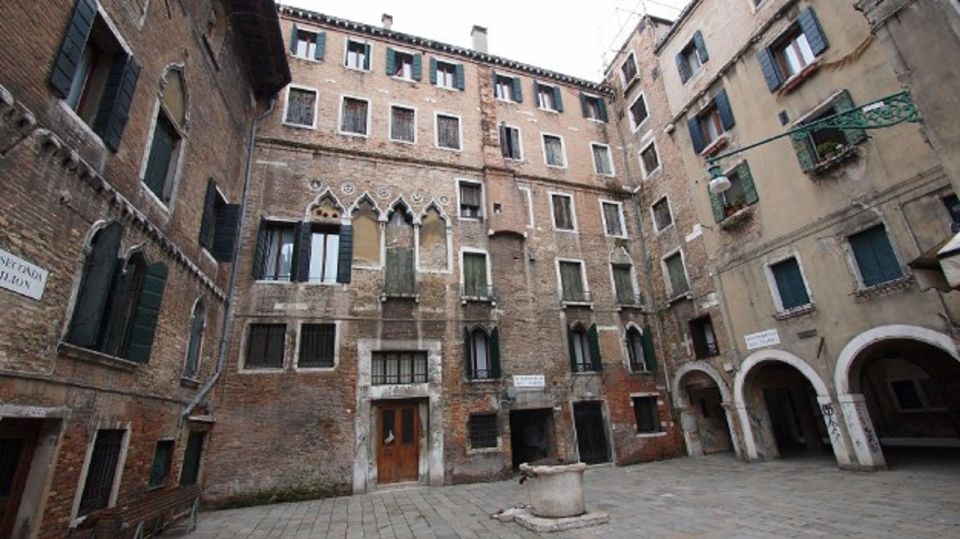
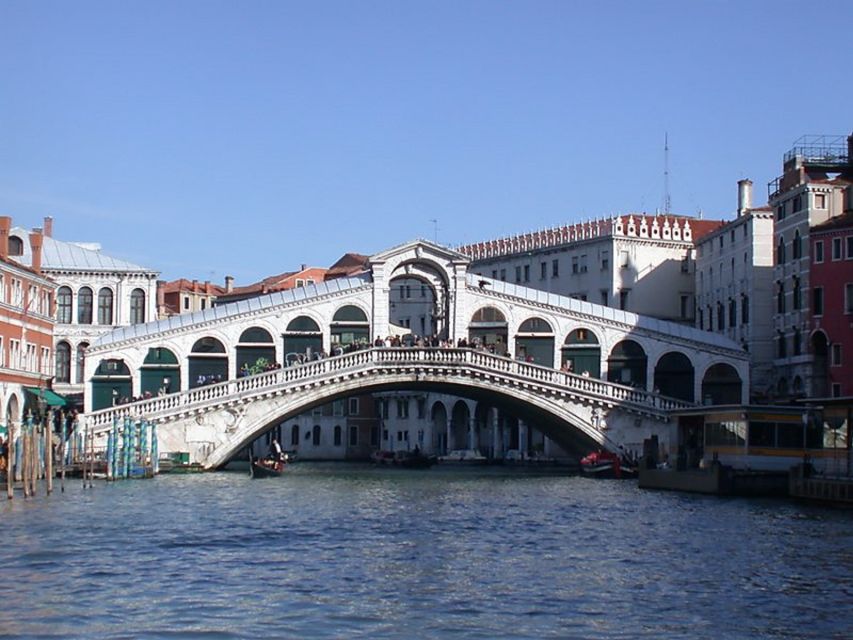
Then you reach one of the most iconic views in the city: the Rialto Bridge, where you cross the Grand Canal. From a distance, the bridge is famous. On foot, it becomes more than a photo platform. It turns into a reference point for understanding Venice’s old commercial life.
This tour frames Rialto as the site of the old trade center during the Venetian Empire era. Even if you’ve never studied Venetian economics, the guide’s job is to connect the dots: what kind of goods moved through the city, why this area mattered, and how the canal geography supported trade.
As you cross, you’ll also get used to Venice’s scale. The canal isn’t a narrow strip—it’s a major space. Walking the bridge helps you gauge distances and directions, which pays off later when you navigate on your own.
Drawback-wise, keep your expectations realistic. This is still a short guided walk, so you won’t have time to treat Rialto like a full-day shopping detour. The value is in the explanation and the orientation, not in extended wandering.




San Giovanni e Paolo: Doge Tombs and Venice’s Political Afterlife
From Rialto and the Grand Canal crossing, the route continues through the area around Campo San Polo and into Basilica di San Giovanni e Paolo. This stop is all about political legacy.
Here, 25 doges are buried. That detail changes the way you read the church and its role in Venetian life. The doge wasn’t just a figurehead. He represented the state, and this burial legacy signals how Venice wanted its power remembered.
Again, no entrance tickets are included, so your time is focused on what you can see externally and on the guide’s context. Still, the story lands. When you later pass churches and monuments across Venice, you’ll start noticing the difference between sites that served everyday life and sites that served governance, wealth, and memory.
This part of the tour is especially good if you like learning how architecture mirrors politics. Venice was a republic in its public identity, and its monuments often reflect that. San Giovanni e Paolo is a strong place to connect the political label to something tangible.
Ending in St Mark’s Square: You’ll Recognize the Bigger Picture
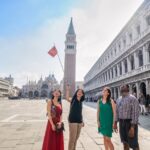
The tour ends in Piazza San Marco, with the guided finale focused on St Mark’s Basilica and the Doge’s Palace area. Even if you’ve seen these buildings in photos, the difference after the walk is that you’ll understand what they represent.
At this point, you’re not just looking at landmark facades. You’re seeing the end of the city’s story: power, religion, and the republic’s public stage. The tour’s earlier stops help you get there faster, so St Mark’s feels like a conclusion rather than a random destination.
Practical benefit: your St Mark’s Square time after the tour will be easier. You’ll likely know where to go first, what to look for, and what questions to ask yourself while you’re there.
If you’re planning a second day in Venice, this is also where you can decide your next move. Want more religious art context? Stay near the basilica longer. Want politics and state symbolism? Focus on the palace side of the square and nearby streets.
Outdoor Walking Reality Check: Pace, Footwear, and Weather
This is a 2-hour outdoor walking tour, meaning you’re exposed to the street environment the whole time. Bring comfortable shoes and plan for mixed surfaces, narrow lanes, and small bridge crossings. There’s no mention of a slow, sit-down experience, so treat it like an active orientation walk.
Water helps. The guidance recommends bringing a bottle since you can’t rely on added stops. If it’s a hot day, you’ll be glad you packed it. If it’s raining, expect the tour to still continue, just with wet pavement and a slower “don’t slip” mindset.
Not suitable for wheelchair users is clearly stated. If mobility is limited, you’ll want to consider alternative options that allow for more accessible routes or fewer physical constraints.
Who This Tour Fits Best (and Who Should Skip It)
This tour is a great match if you:
- Are visiting Venice for the first time and want an orientation route
- Prefer walking with a local expert over self-guided wandering
- Want key monument context without committing to long interior museum or church time
- Travel in a group that values English-only explanation and Q&A
It may not be the best fit if you:
- Need frequent seating breaks or step-free navigation
- Want entrances included and long, quiet interior viewing
- Are hoping to spend most of the day in museums rather than in the city’s streets and squares
Price and Value: Getting More Than a Sightseeing Photo Walk
At $41 per person for 2 hours, the value here comes from what’s included. You get:
- An English-speaking local expert
- A small-group tour
- Pickup and drop-off from the designated meeting point
- An outdoor walking tour focused on key sights
What’s not included is just as important. No entrances are included, so you’re not buying ticket time. You’re buying context—why these places matter, what to look for, and how the neighborhoods connect.
Also, there’s no mention of hotel pick-up. That means you should plan to get to the meeting area near Ca’ Foscari on your own. If you’d rather have someone bring you from your exact hotel front door, you might want a tour with true hotel pickup instead.
Bottom line: pay attention to what you want from Venice. If your goal is a short “what matters and why” tour, this is good value. If your goal is a ticketed monument crawl, you may feel like this is only the warm-up.
Should I Book This English-Language Venice Sightseeing Tour?
I’d book it if you’re short on time and want to understand Venice beyond landmarks. The route covers major reference points—Rialto Bridge, Basilica dei Frari, San Giovanni e Paolo, and the finish in Piazza San Marco—and the English-only local guidance helps you connect the city’s political and artistic themes in a way that sticks.
I would skip it if you need wheelchair-friendly access, if you strongly prefer interior visits, or if you’d rather keep your pace slow and flexible for independent exploring. For me, this is the kind of tour that makes your later wandering smarter.
If you can, book early and choose a day with decent walking conditions. Then show up on time at Campiello dei Squelini, wear good shoes, and bring water. You’ll come away with a clearer sense of where Venice’s power and art shaped the city you’re seeing.
FAQ
How long is the Venice sightseeing tour?
The tour lasts 2 hours.
Is the tour offered in English only?
Yes. The tour will be done only in English language.
Where is the meeting point?
You meet at Campiello dei Squelini, near Ca’ Foscari University in the Dorsoduro district, by the colored wall.
Is hotel pick-up included?
No. Hotel pick-up and drop-off are not included. The tour includes pickup and drop-off from the designated meeting point.
Are entrances to monuments included?
No. This is an outdoor walking tour, and no entrances are included.
What should I bring for the walking tour?
Wear comfortable shoes and it’s recommended to bring a bottle of water, since it is not possible to add stops during the tour.