Verona changes when someone reads the stones. This 2-hour walk with licensed local guide Fabio Massimo Rapanà turns the obvious sights into a linked story, from Roman walls to Medieval Verona, with quick detours into quieter corners. You’ll see the big names (Arena, Piazza delle Erbe), but you’ll also get pointed to smaller details that make the city feel like it has layers.
I love how the tour is built around storytelling route logic, so each stop explains what came before and what mattered next. I also like the over-ear headsets—even in lively squares, you can hear the guide clearly and stay focused on what’s in front of you.
One drawback to consider: this is mostly an exterior sightseeing route, and entries aren’t included, so if you want inside access everywhere, you’ll still need to plan separate ticket stops. Also, it’s rain or shine, so comfy shoes and a quick rain plan matter.
In This Review
- Key takeaways: what makes this Verona tour work
- From Piazza Bra to the Arena: getting your Verona bearings fast
- Verona Arena: more than photos in Piazza Bra
- Old walls, ancient gates, and the Corso’s Roman leftovers
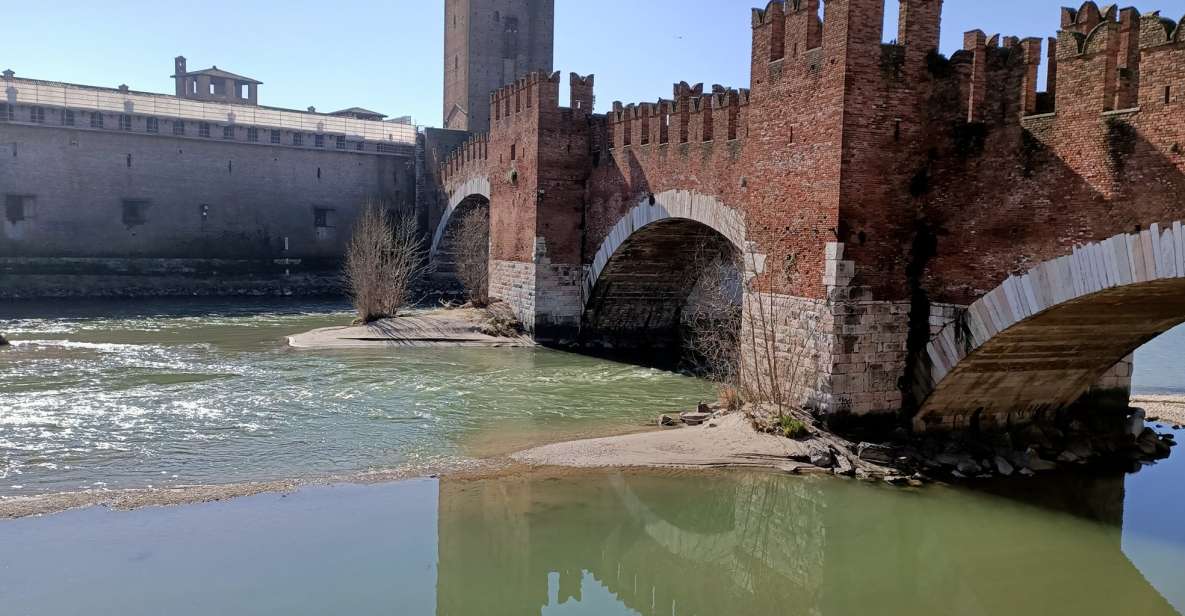
- The Adige river walk: Ponte Scaligero views that change the mood
- Piazza delle Erbe: Verona’s market heart in one square
- Piazza dei Signori and medieval civic power
- Santa Anastasia: the church stop that anchors the medieval thread
- Romeo, Juliet, and the Scaliger tombs: Shakespeare meets ruling families
- Jewish Verona and the quieter religious corners
- Courtyard of the Old Market and the side-street rhythm
- Price and value: why $41 can feel like a bargain in Verona
- Who this tour is best for (and who might skip it)
- Should you book this Verona walking tour?
- FAQ
- Where is the meeting point for the tour?
- How long is the walking tour?
- What languages does the guide speak?
- Does the tour run in bad weather?
- Are entrance tickets included?
- Is the tour wheelchair accessible?
- What should I bring?
Key takeaways: what makes this Verona tour work
- Starts in Piazza Bra under the Town Hall flag, so you get oriented fast
- Small group (up to 10) keeps the pace conversational and question-friendly
- Arena di Verona first gives you the Roman frame before the rest of the city
- Adige river + Ponte Scaligero views add a real sense of place, not just sightseeing
- Market and civic squares (Piazza delle Erbe, Piazza dei Signori) show how Verona lived
- Lots of short photo/stop moments mean you’ll see more, but you’ll move a bit
From Piazza Bra to the Arena: getting your Verona bearings fast
Most first-time Verona visits start with a checklist. This tour starts with orientation—where you need to stand, what to look for, and how the city’s power shifted over centuries. Meeting at Palazzo Barbieri (Comune di Verona) in Piazza Bra, you begin right in the setting that makes Verona feel instantly theatrical: the open square, the stone mass of the Arena, and the walking lanes that fan outward.
From the first minutes, the guide sets expectations clearly. You’re not doing a slow museum shuffle. You’re doing a tight, story-led walk where each stop has a purpose: history, architecture cues, or a view you’ll remember later when you’re back on your own.
You can also read our reviews of more tours and experiences in Verona.
Verona Arena: more than photos in Piazza Bra
You’ll head straight to the Verona Arena for a photo stop and explanation, and that timing is smart. If you come to the Arena first, the rest of the day makes more sense: why Roman architecture shows up in Verona’s later identity, and why the city kept building on old foundations.
What I like here is the way the guide connects the Arena to Verona’s Roman era—especially how gladiator battles turned the site into a cultural magnet. Even if you’re not a Roman-history superfan, the context helps you read the building instead of just snapping it. You stop, you look, and suddenly the Arena is more than a famous landmark.
Because entries aren’t part of this tour, you won’t be touring inside the Arena. Still, you’ll get enough background to decide whether it’s worth adding a ticket later—on your schedule.
Old walls, ancient gates, and the Corso’s Roman leftovers
After the Arena, the tour leans into Verona’s older bones. You follow lines that relate to early medieval city walls and end up on Corso, described as one of the oldest streets in the city. It’s one of those moments where walking feels like moving through time: you’re not only seeing sights, you’re seeing how the city organized itself.
Then comes Porta Jovia, a Roman-era monument. Even with only a quick stop, the key value is interpretation. The guide points out why gates like this were more than entrances—they were control points, identity markers, and boundary lines between inside and outside life.
You’ll also pass by Porta Borsari for a photo stop. This is the kind of stop that pays off later when you notice Roman masonry details during your independent wandering.
The Adige river walk: Ponte Scaligero views that change the mood
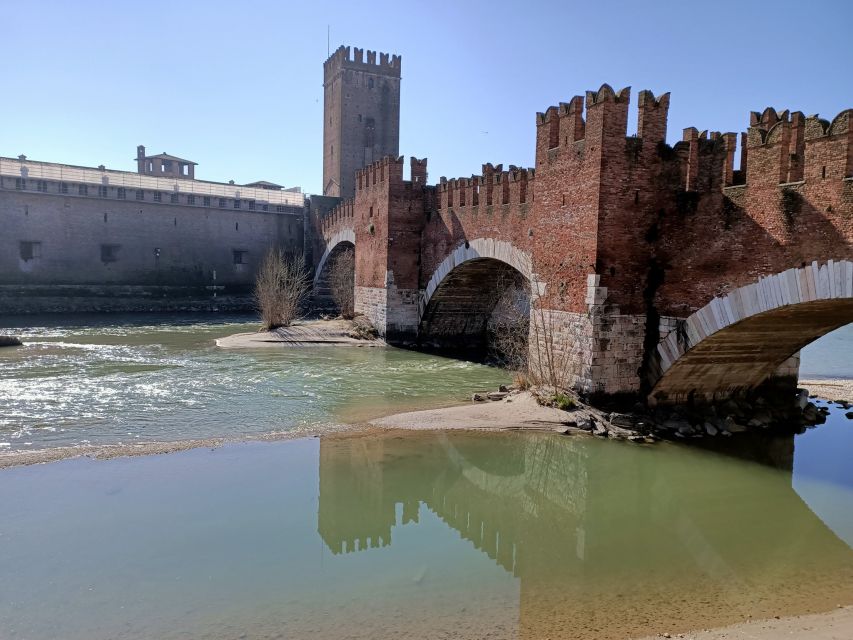
One of the smartest parts of the route is that it makes you step away from the densest sightseeing blocks and look at the Adige River. On the way, you’ll get scenic viewpoints, including the area around Ponte Scaligero and the sight lines toward Castelvecchio.
This is where Verona feels like Verona, not just like a list of attractions. The river gives you scale. The bridges and fortifications show you why this city cared about movement and defense. And when you come back to the plazas afterward, they feel connected to the wider geography instead of floating in the middle of nowhere.
On a hot day, this river-and-bridge section also tends to help you recharge, since it breaks up the constant dense-stone pressure of the old center.
Piazza delle Erbe: Verona’s market heart in one square
You’ll reach Piazza delle Erbe with time for photos and to slow down a touch. This square is one of the best places in Verona to understand how public life worked. You’re in the area of the local market, and the guide shares the story of that marketplace—what it means historically and how the buildings around it shaped daily life.
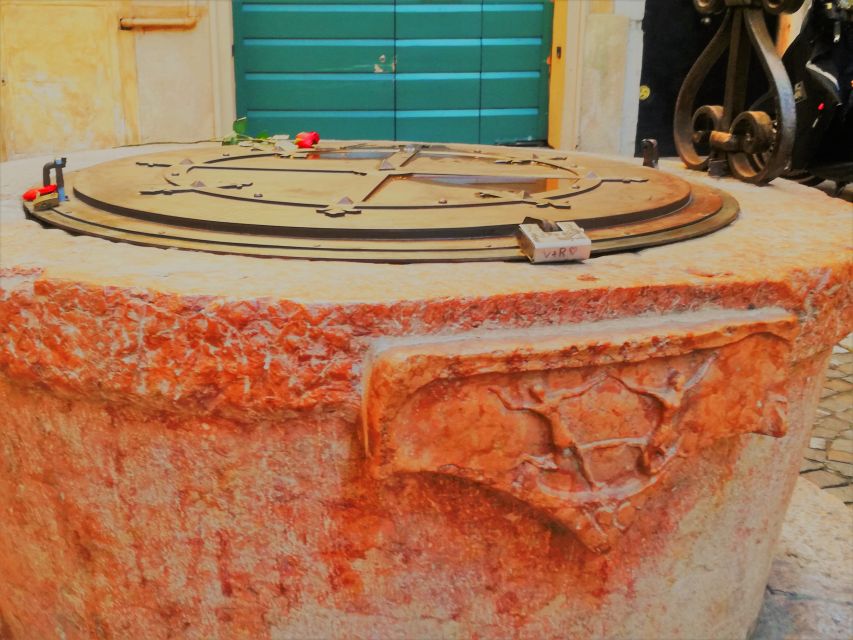
You’ll also see the oldest fountain in Verona, plus historic townhouse façades that make the square feel lived-in even centuries later. The best way to use this stop is to keep your eyes moving: rooftops to arches to façades to doorways. The guide helps you “read” those surfaces, instead of treating them like wallpaper.
If you’re planning a return visit after this tour, Piazza delle Erbe is exactly where you’ll want to go back. You’ll know what you’re looking at.

Piazza dei Signori and medieval civic power
From the market square, the route turns toward Piazza dei Signori, where the mood shifts from everyday commerce to civic authority. You’ll see a cluster of major public buildings—Palazzo della Ragione, Palazzo Della Scala, and Palazzo del Capitano—and you’ll learn how the city’s medieval story shows up in stone and planning.
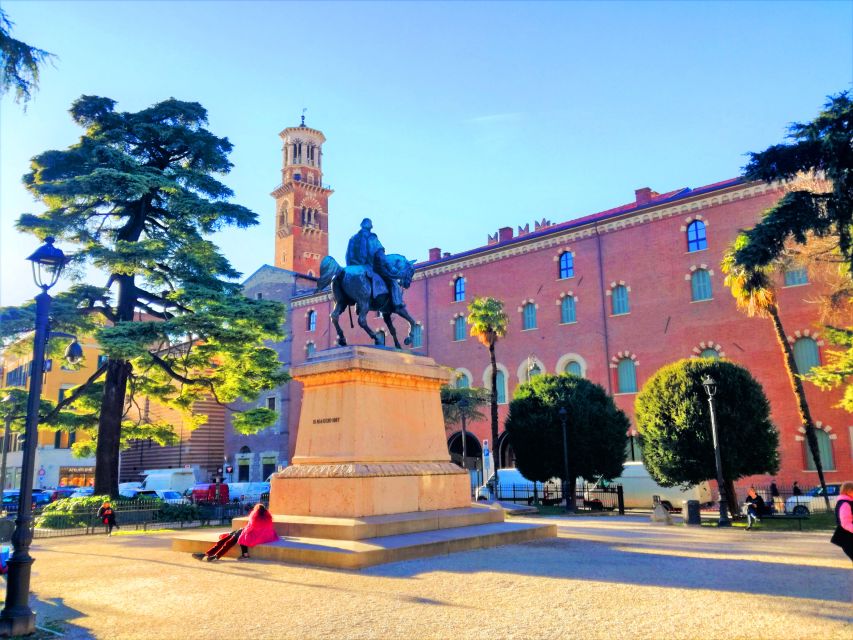
You’ll also get a view of the highest tower in the city and learn how the guide frames this within the Medieval era. Even if you don’t go up (tickets and entries aren’t included here), understanding the tower’s place helps you understand why people built vertically and why power often wanted height.
A practical tip: this section includes short photo and pass-by moments. If you have mobility limits, you’ll want to pace yourself and use those headsets so you’re not constantly stopping and starting for explanations.
Santa Anastasia: the church stop that anchors the medieval thread
Next up, you’ll reach Basilica di Santa Anastasia for a photo stop. Since entries aren’t included, you won’t be in the interior spaces as part of this walk. But the reason it still belongs on a history-focused route is that it helps “lock in” the Medieval frame you’ve been building toward.
If you’re the type who likes to connect a neighborhood’s identity with its institutions, this pause works well. You’re not just collecting landmarks—you’re building a Verona story that makes later visits feel more coherent.
Romeo, Juliet, and the Scaliger tombs: Shakespeare meets ruling families
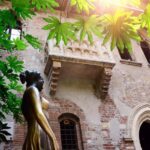
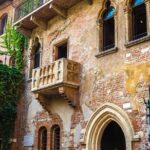
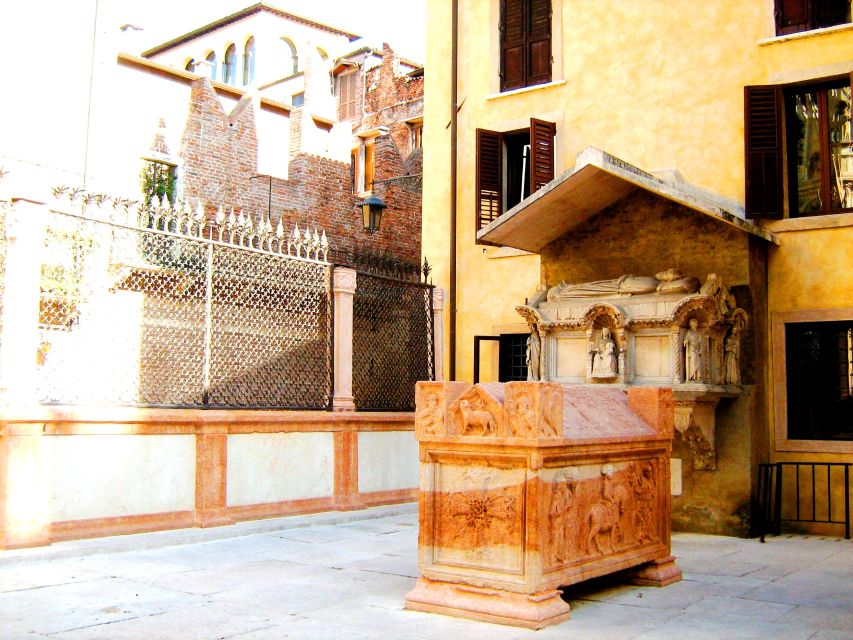
The tour then brings you to the Verona people think of first: Casa di Romeo and Juliet’s House. But the key is that it doesn’t treat Shakespeare as a standalone attraction. Before you reach those points, you pass the Arche Scaligere mausoleums, which are tied to the ruling families behind much of Verona’s Medieval identity.
This order matters. If you start with Juliet and Romeo without context, you get one kind of Verona. If you see the Scaliger tombs and then arrive at the Shakespeare sites, you start to understand why the city’s later cultural myth sits on top of political power.
It’s also a good reminder that the famous stories are part of a real place—one shaped by people who ruled, traded, fought, and built.
Jewish Verona and the quieter religious corners
As the walk continues, you’ll make space for a couple of religious and cultural sites that many visitors skip. One of the named stops is the Sinagoga di Verona, where you’ll have a photo stop. Later, you’ll also pass the Convent of Saint Mary ’della Scala’ of the Servants of Mary for another photo stop.
Even with brief stops, these moments add balance. Verona isn’t only Roman and Medieval power. It’s also a patchwork of communities and spiritual lives that shaped everyday culture. If your goal is a well-rounded first visit, these are the stops that make the tour feel more “complete” than a standard central-sights circuit.
Courtyard of the Old Market and the side-street rhythm
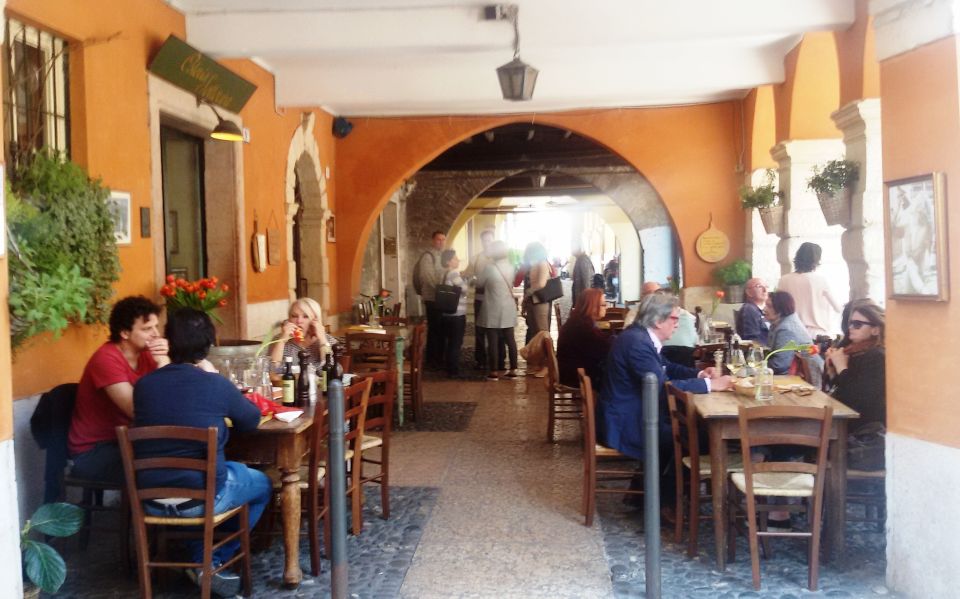
You’ll end up at the Courtyard of the Old Market for a photo stop. This is the kind of place where the guide’s interpretation matters: it’s not just a courtyard, it’s a historical slice of how the city moved people through work and exchange.
And throughout the walk, you’ll get short pauses in places labeled as smaller stops—fast photo moments at corners where you’d normally keep walking. Those quick interruptions are useful because they train your eyes. By the end, you start noticing details without needing someone to point them out.
The route also includes short pass-bys at places like Piazzetta Monte and Piazzetta Bra Molinari, which are less about a single monument and more about sight lines and neighborhood feel.
Price and value: why $41 can feel like a bargain in Verona
At $41 per person for a 2-hour guided walking tour, you’re paying for a few specific things that add real value in a dense city like Verona:
- A licensed guide born and raised in Verona (so you’re not hearing textbook facts only)
- Small group size (up to 10), which keeps the pace from feeling chaotic
- Route optimization for storytelling, meaning you’re not just bouncing between random highlights
- Headsets, which improves comprehension in noisy squares
What you’re not paying for: entries and food/drinks. That’s normal for a walking orientation tour, and it can be a good thing. You can choose which sites to enter later without getting “locked” into a fixed ticket plan.
In practical terms, if you only have a short window in Verona, this tour is a high-return start. It gives you context, then you use that context to guide where you go next on your own.
Who this tour is best for (and who might skip it)
This tour is ideal if you:
- Want a structured first-day orientation in Verona
- Like history and architecture, but don’t want to spend the whole day reading plaques
- Appreciate a guide who explains how different eras connect (Roman → Medieval → modern cultural fame)
- Prefer small groups and clear audio via headsets
You might think twice if you:
- Only want strictly inside visits and museum-style time (since entries aren’t included)
- Can’t comfortably handle a guided route with repeated short photo stops and light walking
Should you book this Verona walking tour?
If you’re trying to understand Verona quickly without turning your trip into a stamp-collecting exercise, I’d book it. The biggest win is that the tour doesn’t just point at famous places—it teaches you how to see them, starting at Piazza Bra and building toward the city’s Roman roots, Medieval civic power, and Shakespearean landmarks.
Book it early in your Verona stay if you can. Then go back on your own with sharper eyes—and you’ll notice more than you expected, even on your “free time” walks.
FAQ
Where is the meeting point for the tour?
Meet your guide standing below the Italian flag at the Town Hall in Piazza Bra (Palazzo Barbieri – Comune di Verona).
How long is the walking tour?
The tour lasts 2 hours.
What languages does the guide speak?
The live guide is available in English, German, Italian, and Spanish.
Does the tour run in bad weather?
Yes. The tour takes place rain or shine.
Are entrance tickets included?
No. Entries are not included, and the tour focuses on what you can see during the walking route.
Is the tour wheelchair accessible?
Yes, the tour is listed as wheelchair accessible.
What should I bring?
Bring comfortable shoes and water.