REVIEW · VERONA
Verona: Hop-on Hop-off Tour 24 or 48-Hour Ticket
Book on GetYourGuide →Operated by Sightseeing Experience · Bookable on GetYourGuide
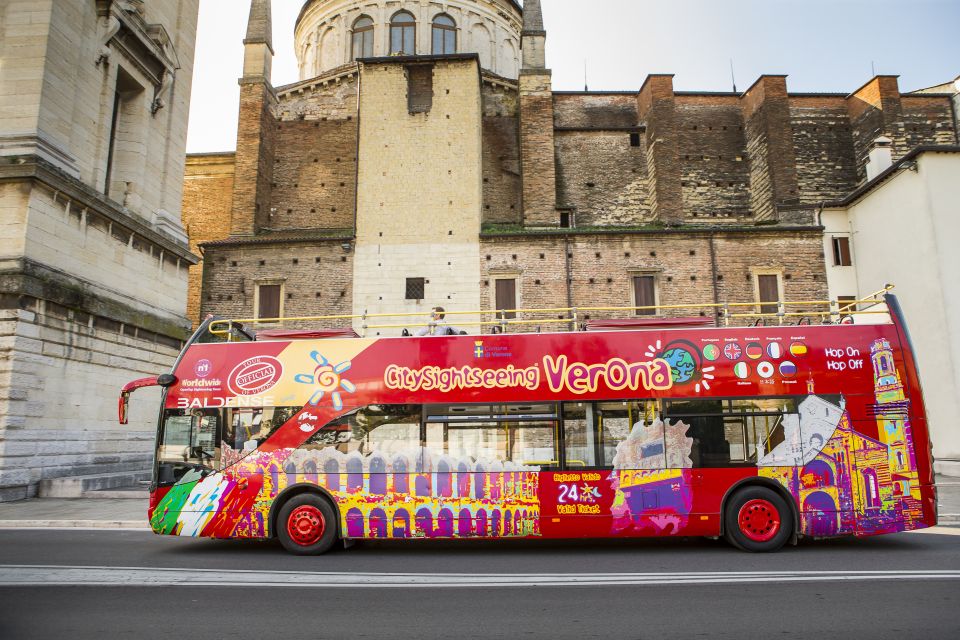
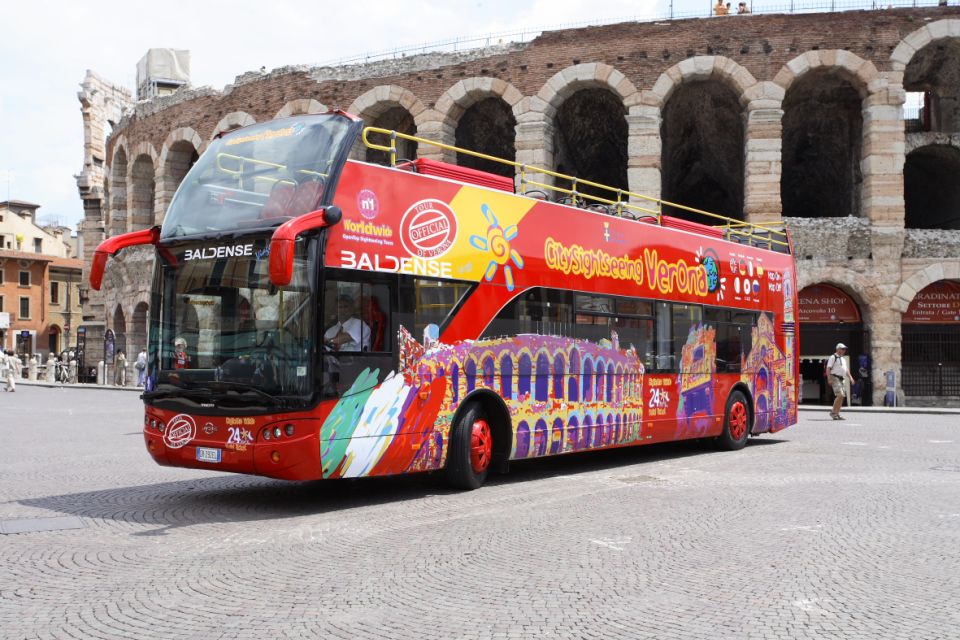
Verona looks different from a bus seat. I love the open-top panoramas over the city and I also like how the audio commentary turns the stops into a clear story, from Roman Verona to the Romeo and Juliet connection. One thing to plan around: the buses run about every hour, so a super-quick hop-off for a photo can feel a bit rushed.
Both routes start at Piazza Bra, right by the Arena, which makes it easy to orient yourself. With a 24 or 48-hour ticket, you can ride as much as you want, hop off to explore, then re-board later—ideal when you want freedom without a map marathon.
For me, the best part is choosing between the big red loop and the smaller blue one. The blue route tends to handle tighter streets better and adds viewpoints, while the red route covers more of the classic central sights plus a stop near the train station for easy back-and-forth.
In This Review
- Key things I’d focus on before you ride
- Piazza Bra makes the whole day easier than you expect
- Red Route vs Blue Route: the real choice you’re making
- Red route: classic sights plus Via Diaz and the train-station stop
- Blue route: smaller streets, more viewpoints, and the Duomo area
- Turning stops into a plan: what each route feels like in real time
- Piazza Bra: your launch pad (and your reboarding safety net)
- Red route stop-by-stop: San Zeno, Via Diaz, and Teatro Romano
- Blue route stop-by-stop: Juliet zones, Duomo, and hilltop views
- Audio commentary: useful, multilingual, and sometimes repetitive
- Using a 24 vs 48-hour ticket without wasting money
- If you have 24 hours
- If you have 48 hours
- Practical logistics: timing, crowds, and the one thing to watch
- The buses run every hour
- Expect some crowding on the smaller route
- Check the route rhythm early in the day
- Service suspension detail
- Value beyond transport: rest time in heat or rain
- Should you book this Verona hop-on hop-off?
- FAQ
- Where do the red and blue buses start?
- How long is a 24 or 48-hour ticket valid?
- How often do the buses run?
- Which main attractions are covered by the routes?
- Do I need tickets for attractions?
- What languages is the audio commentary available in?
- Are headphones provided?
- Is there free cancellation?
- Is there any service disruption to know about?
Key things I’d focus on before you ride
- Start at Piazza Bra (Arena Square) for the simplest first move in Verona
- Red route hits spots like Via Diaz shopping and the San Zeno area with Cathedral
- Blue route uses a smaller vehicle and climbs toward hilltop photo moments
- Each route is about an hour, so you can mix sightseeing with rest time
- Audio is multilingual across many languages, but quality can vary by route
- 48-hour pass is smartest if you want to do both routes and revisit favorites
Piazza Bra makes the whole day easier than you expect
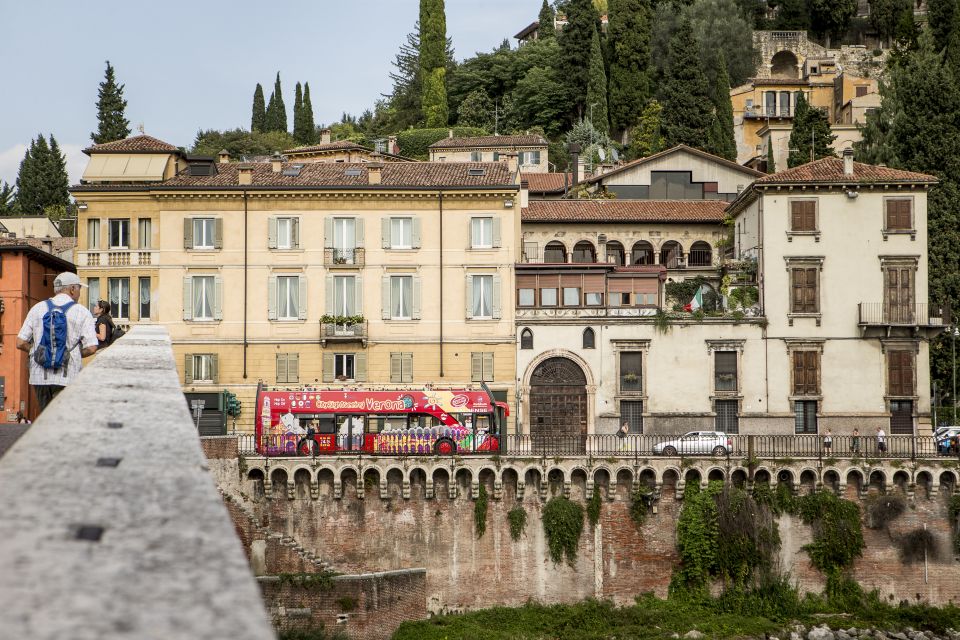
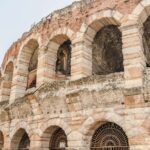
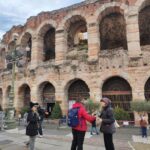
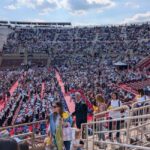
Piazza Bra is the practical center of Verona sightseeing, because it’s where you can board both routes and where the Arena di Verona sits. If you land in Verona with limited time, this matters. You spend less effort figuring out transportation and more time actually looking at the city.
I also like that you can treat this like orientation. Get on early, ride the loop, and you’ll quickly understand how the different neighborhoods relate—especially the way the medieval core sits above and around the Roman-era remains. Then, when you hop off, you’re not wandering blindly. You’re picking.
And since the buses run every hour, you can build a relaxed rhythm: ride, hop off for 30 to 90 minutes, hop back on when the next bus arrives, repeat.
You can also read our reviews of more tours and experiences in Verona.
Red Route vs Blue Route: the real choice you’re making
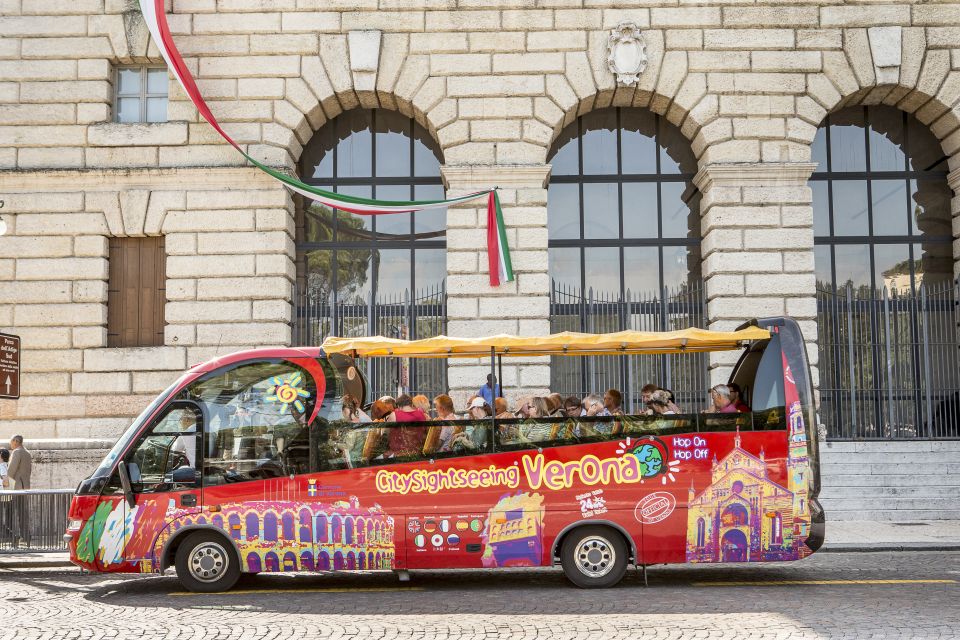
Think of the red and blue lines as two ways to experience Verona’s highlights, not “one tour plus an extra loop.”
Red route: classic sights plus Via Diaz and the train-station stop
The red route stops include:
- Piazza Bra
- Corso Porta Nuova (Giardini Pradaval)
- Stazione FS Porta Nuova
- Piazza Pozza
- Basilica S. Zeno (Castelvecchio)
- Via Diaz / Porta Borsari
- Teatro Romano
- Porta Leoni
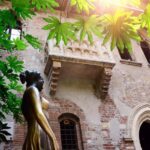
- Piazza Leoni (Juliet’s House)
What this means for you: the red line is a good fit if you want a straightforward tour of the old city walls and a strong mix of medieval and Roman Verona. You’ll also get practical coverage—like the stop at Porta Nuova—so getting back to the Arena area doesn’t require a complicated plan.
I’m especially interested in the Via Diaz stop. It’s a shopping stretch, and it’s the kind of place where you can browse for an hour without it turning into a full-on detour.
Blue route: smaller streets, more viewpoints, and the Duomo area
The blue route stops include:
- Piazza Bra
- Via Pallone (Tomba Giulietta)
- Via G. Giusti
- S. Stefano (Teatro Romano)
- Castel S Pietro
- Duomo
- Piazza Erbe (Casa Giulietta)
- Porta Leoni
- Piazza Leoni (Juliet’s House)
This one is better if you care about photo angles and want to see how Verona looks from higher ground. Several riders point out that the blue line offers a great view from the hilltop area, with time to take pictures before moving on. The blue route also goes through tighter areas, which can make the ride feel more like moving through neighborhoods rather than just circling major roads.
One more detail that can influence your choice: some people found audio on one route clearer than the other, so if you’re sensitive to sound quality, you might mix routes rather than committing to only one.
Turning stops into a plan: what each route feels like in real time
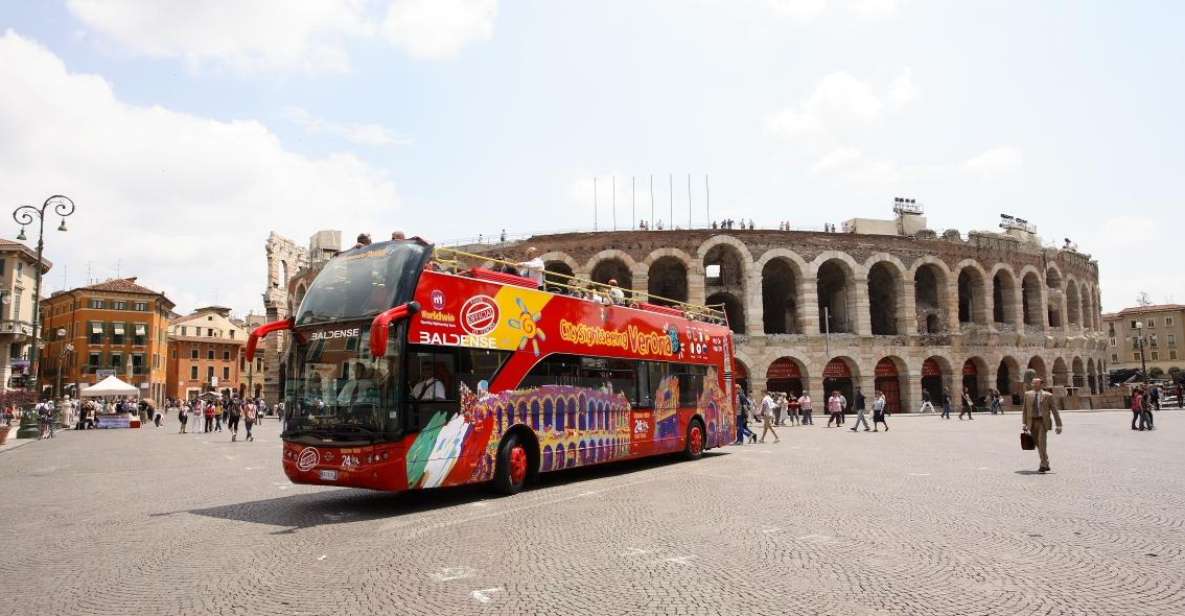
Here’s how I’d use the stops so they don’t blur together.

Piazza Bra: your launch pad (and your reboarding safety net)
Both routes start at Piazza Bra, so it’s your anchor point. If you want flexibility, you can hop off at one stop for a long visit, then return later without worrying you missed the only chance to board.
Red route stop-by-stop: San Zeno, Via Diaz, and Teatro Romano
Corso Porta Nuova / Giardini Pradaval
This area helps break up the ride with a more residential edge before you shift back toward the historic core.
Stazione FS Porta Nuova
If your hotel is closer to the train station, this is a big quality-of-life stop. You can use the bus to reconnect with the main sights without timing a taxi or walking an extra stretch.
Piazza Pozza
A central square feel—perfect for stretching your legs and resetting before the Roman/medieval cluster.
Basilica S. Zeno / Castelvecchio area
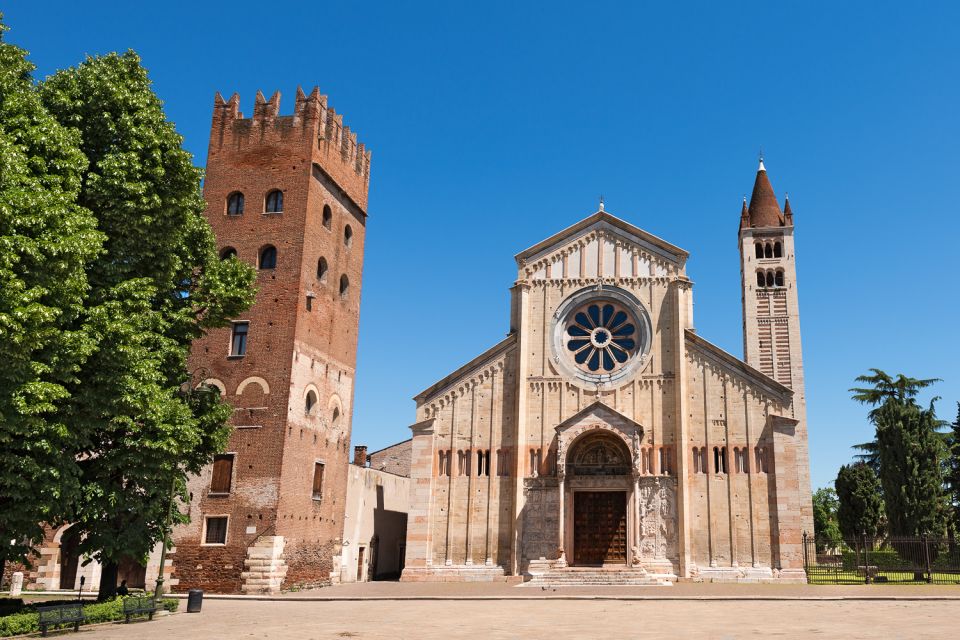
This is a top medieval anchor in the route. You’re in the quarter of San Zeno, with the famous Cathedral area mentioned as a highlight. Expect stone, scale, and that distinct Verona look that feels lived-in rather than staged.
Via Diaz / Porta Borsari
This is where the bus doubles as a shopping-and-stroll connector. You can browse, pick up snacks, and still stay in easy walking distance of other key areas.
Teatro Romano
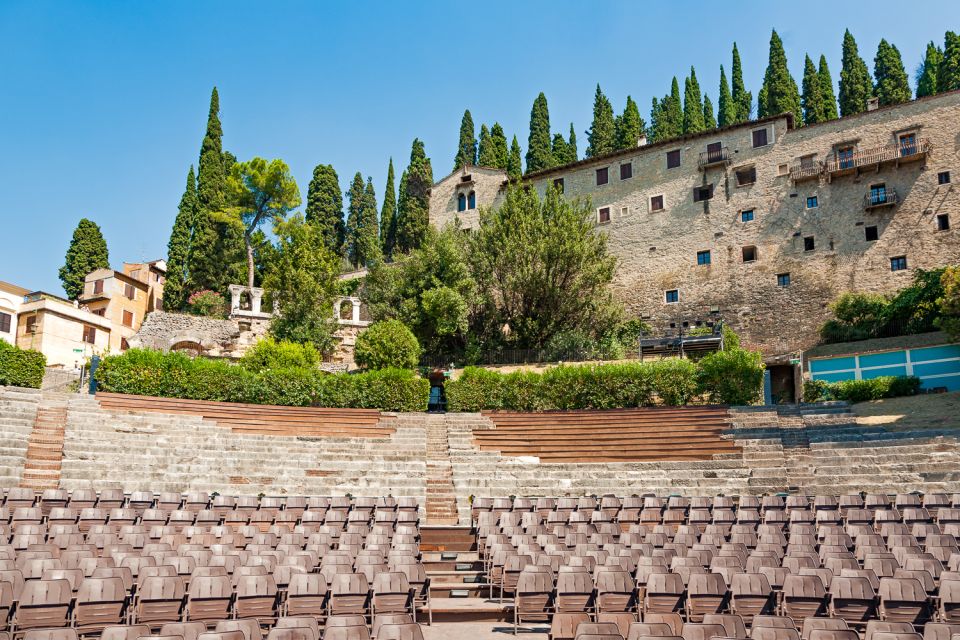
This is one of the Roman-era musts on the route. If you’re trying to understand why Verona mattered in Roman times, this stop gives you a tangible reference point.
Porta Leoni and Piazza Leoni (Juliet’s House area)
These bring you into the Romeo and Juliet orbit. Even if you’re not a Shakespeare superfan, the area works well as a final stop because it’s built for wandering.
One extra tip: a rider recommended hopping off at Piazza Elba for a good moment to look around. If your route map shows that stop, it’s worth considering as a photo-friendly break.
Blue route stop-by-stop: Juliet zones, Duomo, and hilltop views
Via Pallone (Tomba Giulietta) and Via G. Giusti
This side of the route leans into the Juliet story and the character of smaller streets. You’ll get more “walkable feel” even while riding.
S. Stefano (Teatro Romano)
Again, you’re connecting to the Roman story, but with a different approach. This can be useful if you want to revisit the Roman theatre area from a different side or simply prefer the blue route’s route pacing.
Castel S Pietro
This is the hilltop viewpoint stop. If your priority is photos, don’t treat it as a quick pass-through. Plan to spend a little time there.
Duomo
The Duomo area is a classic center-of-town stop. Even if you don’t go inside (tickets aren’t included), being near it helps you understand Verona’s layout.
Piazza Erbe (Casa Giulietta area) and Piazza Leoni (Juliet’s House area)
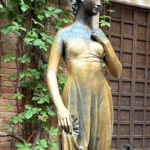
This is the “Juliet concentration” zone. It’s lively in a tourist way, but it’s also a practical place to end a route because you’re surrounded by places to pause.
Audio commentary: useful, multilingual, and sometimes repetitive
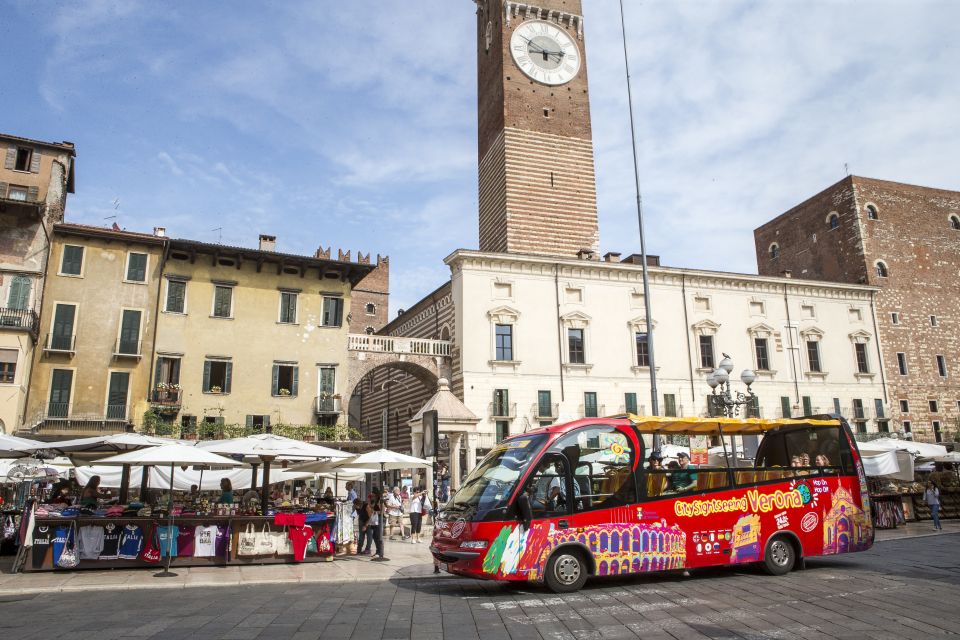
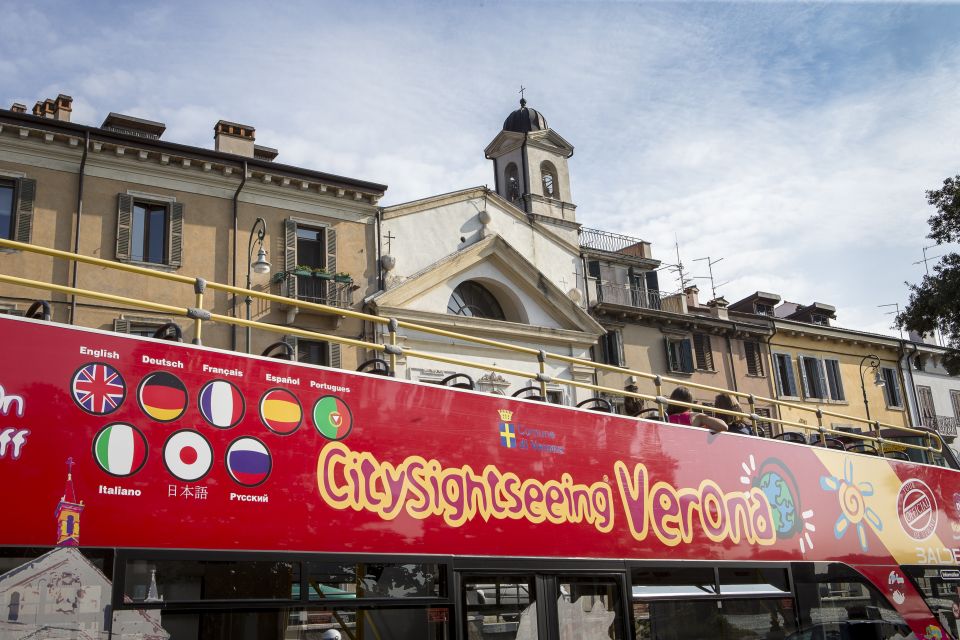
The audio commentary is a big part of what you’re paying for. It’s available in English, Italian, Spanish, French, German, Portuguese, Japanese, Russian, Arabic, Chinese, Danish, and Dutch. That’s a wide range, and it means you won’t be stuck listening to one language you don’t want.
A few practical notes from the experience itself:
- The commentary helps you connect what you’re seeing to Roman-era Verona and the Shakespeare story line, which is especially helpful if you’re not planning to read a guidebook cover-to-cover.
- Some riders noted that routes can overlap in the facts they cover, so you may hear similar themes when you do both.
- Audio quality can vary by line. One rider said the audio on line B was not as good as line A.
- If you’re picky about sound, bring your own headphones. One person said the complimentary headphones were not great, and that’s exactly the kind of annoyance that can ruin a relaxing ride.
The good news: even with small quirks, the audio makes the ride feel purposeful rather than just a bus crawl.
Using a 24 vs 48-hour ticket without wasting money
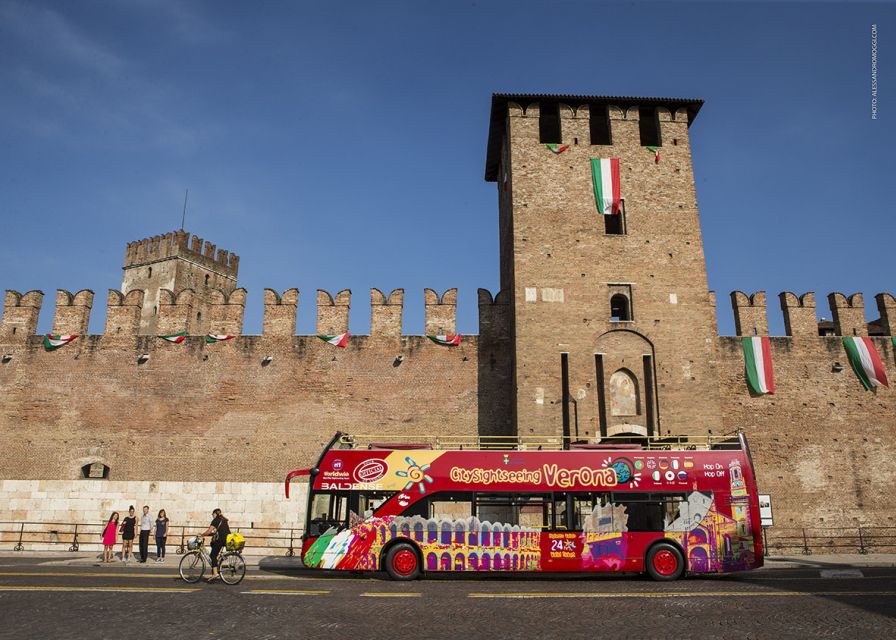
Let’s talk value in plain terms. You’re paying around $29 per person for unlimited hop-on hop-off across 24 or 48 hours, with audio included. Attraction entry tickets are not included, so you’re not buying access to the Arena or museums—you’re buying transport plus interpretation.
That makes the ticket worth it when you’ll actually use the hop-on/off part.
If you have 24 hours
Pick one route and do it well, then add a few strategic hops. This is enough if:
- You want an overview and then you’ll return on your feet to the 1 to 3 places you love.
- You’re traveling with a child or you just don’t want to burn energy on long walks.
- You’re doing Verona in a tight schedule and want the bus to act like a moving orientation tool.
One rider used a 24-hour pass while staying just long enough to see what they came for, and that’s the perfect match for this ticket type.
If you have 48 hours
This is where it gets smarter. With two days, you can:
- Do the red line one day, the blue line the other.
- Revisit the hilltop viewpoint from Castel S Pietro when the light is better.
- Return to the Roman theatre area in a calmer way instead of trying to rush everything in one go.
One review suggested getting the 48-hour pass because the two routes are different enough to justify both, and because it can be handy for getting back to the Arena if you’re near the station.
If your Verona trip is longer than a weekend or you hate missing things, 48 hours gives breathing room.
Practical logistics: timing, crowds, and the one thing to watch
A few real-world issues can affect your comfort more than you’d expect.
The buses run every hour
That’s helpful because it’s predictable. It also means if you hop off for a two-minute photo, you might find yourself waiting. A rider specifically pointed out that the big bus coming only once an hour can make quick stops a little impractical. My advice: when you hop off, plan for a half-hour minimum unless the stop is truly quick to enjoy.
Expect some crowding on the smaller route
One review mentioned that the B-line bus can get crowded and not everyone could get on. That means on peak times, you might want to board a little earlier or be flexible with which stop you start from.
Check the route rhythm early in the day
One rider said the first bus left at 10 am instead of 9 am. The takeaway isn’t to panic—it’s to be ready to check the actual timetable posted at the stop or in the booking details, especially if you’re trying to beat the heat.
Service suspension detail
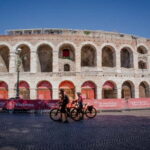
On Wednesday 15 October, service will be suspended due to a cycling race. If your dates fall around then, confirm before you go.
Value beyond transport: rest time in heat or rain
This is the part people don’t always say out loud. The bus isn’t just a way to get from A to B—it’s also a break.
In hot August weather, riding the loop instead of walking can make the city enjoyable rather than exhausting. In rainy weather, you get covered movement between outdoor sights. You may still want to step out for photos, but you won’t feel like the whole day is ruined if the weather turns.
Should you book this Verona hop-on hop-off?
Book it if:
- You’re short on time and want a fast overview with a clear route structure.
- You like the idea of choosing your own pace at each stop.
- You want panoramic views and a low-effort way to learn what you’re looking at.
- You’ll likely do both routes, especially with a 48-hour ticket.
Skip it or consider a smaller plan if:
- You’re the type who wants to concentrate deeply on one site and doesn’t care about riding around for context.
- You’re not interested in audio narration and you’d rather do everything on foot or by taxi.
- You’re expecting attraction tickets to be included. They aren’t.
For most first-time visitors, this is a smart, practical add-on: it helps you get your bearings fast, then you can spend your energy where it matters most.
FAQ
Where do the red and blue buses start?
Both lines A and B start from Piazza Bra (Arena Square).
How long is a 24 or 48-hour ticket valid?
Your ticket is valid for 1 to 2 days, depending on whether you choose the 24-hour or 48-hour option.
How often do the buses run?
The buses run on each route every hour.
Which main attractions are covered by the routes?
The stops include highlights such as San Zeno Cathedral area, Arena di Verona area (Piazza Bra), Teatro Romano, Duomo, and the Juliet’s House area (Piazza Leoni).
Do I need tickets for attractions?
No. Attraction tickets are not included, so you’ll need separate entry tickets if you want to go inside.
What languages is the audio commentary available in?
Audio commentary is available in English, Italian, Spanish, French, German, Portuguese, Japanese, Russian, Arabic, Chinese, Danish, and Dutch.
Are headphones provided?
The tour includes audio commentary, and at least some riders mention complimentary headphones, but one review said the headphones quality was poor, so bringing your own can help.
Is there free cancellation?
Yes. You can cancel up to 24 hours in advance for a full refund.
Is there any service disruption to know about?
Yes. On Wednesday 15 October, the service will be suspended due to a cycling race.