REVIEW · ALBEROBELLO
Alberobello: History Walking Tour
Book on GetYourGuide →Operated by TURISTI IN PUGLIA INCOMING · Bookable on GetYourGuide
Trulli make Alberobello feel otherworldly. I love how the tour starts at the Belvedere terrace for quick context, then moves into step-inside trulli so the architecture stops being a photo and turns into something you understand. With guides like Francesco and Dominicio, the stories come with real local detail, not just dates.
The big downside to plan around is logistics: transfers aren’t included, and the meeting point can vary by option. So you’ll want to be ready to get yourself there a few minutes early.
In This Review
- Key highlights you’ll notice fast
- Entering Alberobello with a view that makes sense
- Rione Monti and Aia Piccola: your walk through two trulli worlds
- Stepping inside a traditional trullo (not just photos)
- The trullo-shaped Church of San Antonio stop
- Finishing at a local’s home: seeing how a trullo is composed
- Guides make the difference: what you can expect from the storytelling
- Price and value: is $40 worth 1.5 to 2 hours?
- Logistics that matter: meeting point, transfers, and timing
- Who should book this tour, and who might skip it
- Should you book this Alberobello History Walking Tour?
- FAQ
- FAQ
- How long is the Alberobello History Walking Tour?
- What does the price include?
- Are transfers included?
- Where does the tour take you?
- Can I step inside a trullo?
- What languages are available for the guide?
- Is the tour free for children?
- Is there a minimum number of participants?
- Is free cancellation available, and can I reserve without paying today?
Key highlights you’ll notice fast
- Belvedere terrace start: you get the UNESCO site context before you walk into the trulli maze
- Rione Monti + Aia Piccola: two districts with distinct vibes, both centered on conical houses
- You can enter a trullo: the tour doesn’t just point from the sidewalk
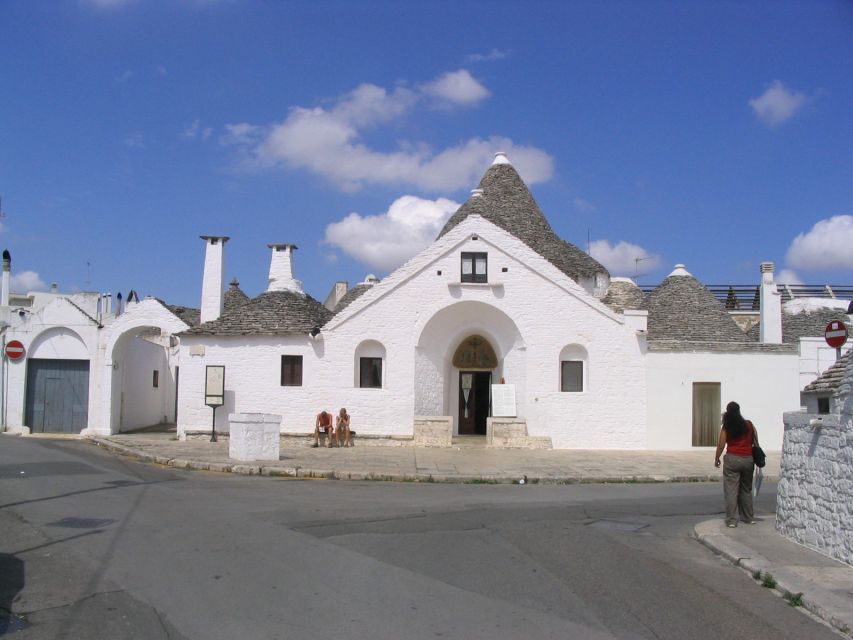
- Trullo-shaped Church of San Antonio: a standout stop along the alleys and walkways
- A local trullo home visit: you see how a trullo is composed, from the inside
- Guides with strong storytelling: names like Francesco, Mario, Sylvia, Roberta, and Floriana are repeatedly praised for making it click
Entering Alberobello with a view that makes sense
Alberobello’s trulli can look like a theme park until someone explains what you’re actually seeing. That’s why I like this tour’s first move: it begins with a view from the Belvedere terrace, then uses that outlook to set the scene.
You learn the basics of why this place was recognized as a UNESCO World Heritage Site. And you get an early mental map for what comes next—so when the buildings turn into a street-sized pattern of cones and white stone, you already know where you are and what to look for.
You can also read our reviews of more tours and experiences in Alberobello.



Rione Monti and Aia Piccola: your walk through two trulli worlds
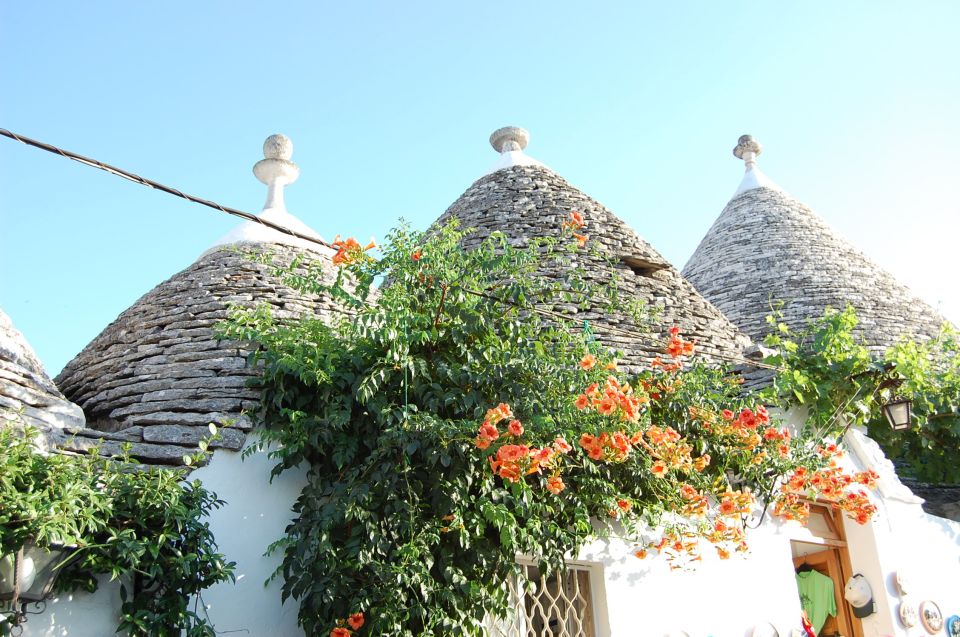
After the terrace intro, the tour focuses on two classic districts: Rione Monti and Aia Piccola. This matters because Alberobello isn’t one uniform postcard. Each area has its own density, alley layout, and rhythm as you move through the trulli streets.
You’ll spend time walking between the conical houses and small lanes, which is where the experience becomes practical. Instead of seeing trulli as isolated buildings, you start noticing how they cluster, how the alleys connect, and how the architecture shapes daily movement through town.
Aia Piccola and Rione Monti also give you a better chance of spotting different trullo features. Depending on where you end up, you may also catch details you would likely miss if you only wander on your own for an hour.
Stepping inside a traditional trullo (not just photos)
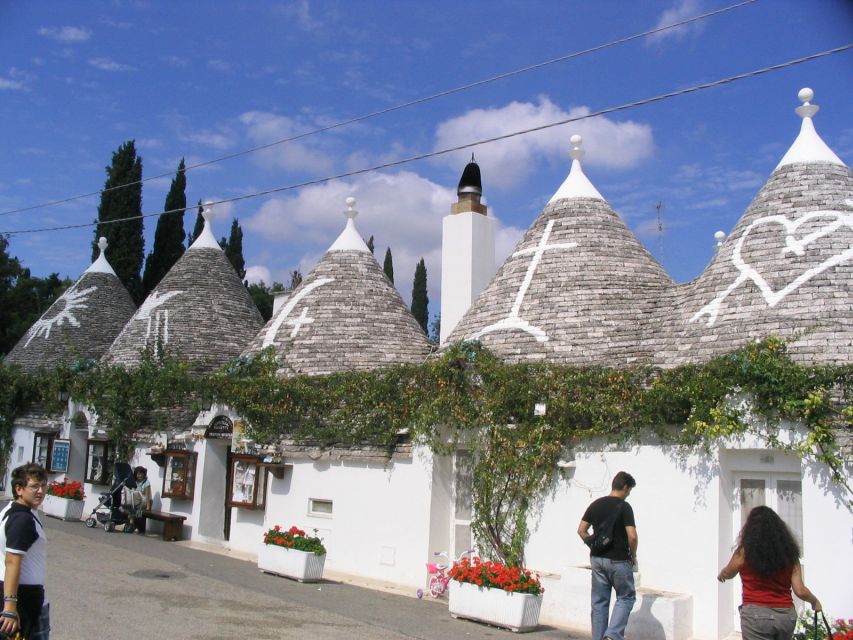
One of the most satisfying parts of this tour is that it goes beyond outside viewing. You’ll have the chance to step inside a traditional trullo, which instantly turns the shapes and stonework from theory into something physical.
Inside, the tour helps you connect structure to function. You start to understand how the trullo form works as shelter, not just decoration. And because you’re guided, you don’t need to guess what you’re seeing—you get quick explanations as you go.
This is also where the guide style really shows. Guides such as Mario are noted for making the walk feel fun and clear, while Floriana is praised for history with a good sense of humor. That combination matters because trulli architecture can feel technical unless someone makes it easy.
The trullo-shaped Church of San Antonio stop
As you keep walking, you reach the trullo-shaped Church of San Antonio. It’s one of those places that gives the whole town a new meaning: the trullo concept isn’t limited to private homes.
For many people, this is where the tour shifts from sightseeing to understanding. If you’ve been thinking of trulli as quirky dwellings, the church reminder reframes them as a local building tradition that even found its way into public life.
The route to the church also matters. You’re moving through little alleys among trulli, so it feels like you’re inside the town’s pattern rather than watching it from a main street.
Finishing at a local’s home: seeing how a trullo is composed
The tour ends on a high note: a visit to a local’s home, where you can see how a trullo is composed. This final stop is the payoff for the whole walk, because it turns what you’ve learned into a real, lived-in example.
You’ll get to view the build approach in a way that sticks. One detail that comes up in the tour’s explanations is how trulli were built using rocks without cement, and why that method mattered in the region. That kind of explanation helps you understand why the architecture looks the way it does.
In my view, this is also the best part for value. A guided walk that only takes you to big monuments can feel like a long lecture. But when you’re inside a traditional structure—especially one that’s tied to everyday life—the time feels earned.



Guides make the difference: what you can expect from the storytelling
This is the kind of tour where the guide can make or break the experience. The good news is that the tour’s guide lineup includes people who do a lot more than recite information.
You’ll see names like Francesco, praised for excellent English and for taking people inside historical houses while explaining details. Dominicio is described as a great storyteller, bringing history to life rather than reading it. Sylvia is noted for warmth and being engaging while covering both older and newer parts of Alberobello, plus local product tastings.
Other guides—Alessandro, Roberta, and Floriana—are also highlighted for strong explanations and for an attentive, accommodating approach. And in some cases, guides provided practical extras like lunch suggestions, which is genuinely useful if you’re building the rest of your day in Apulia.
If you care about how the story is told, not just what you see, this tour is set up to deliver.
Price and value: is $40 worth 1.5 to 2 hours?
At $40 per person, this isn’t the cheapest thing you can book in Alberobello—but it also isn’t aiming to be. You’re paying for a licensed guide, a focused walking route through two districts, entry into a traditional trullo, a church stop, and a local home visit that explains construction.
Here’s how I think about the value: on a self-guided wander, you can see plenty of trulli from outside. But you’d have to work to replicate the structure teaching—especially the inside access and the end-of-tour explanation of how a trullo is put together. Those are the parts that raise the value for me.
The duration—1.5 to 2 hours—also fits reality. You get enough time for a meaningful route without turning the trip into a half-day commitment. And because starting times depend on availability, you can usually match it to when you’re already in town.
One extra value note: the tour is free for children under 18, so families can get a strong deal if everyone wants to go together.
Logistics that matter: meeting point, transfers, and timing
The one practical catch is that transfers aren’t included. So you’ll want to plan how you’ll reach the meeting area on your own. Since the meeting point can vary depending on the option booked, the best move is to confirm the exact location after you book.
The tour start time also depends on what’s available, and the length is 1.5 to 2 hours. If you’re juggling other tickets or dinner plans, give yourself a buffer. Also, since the route involves alleys and walking between districts, you’ll be happier with comfortable shoes.
Finally, the activity ends back at the meeting point. That’s helpful: you don’t end up stranded on the other side of town with no plan.
Who should book this tour, and who might skip it
I’d recommend this tour if you want more than a quick photo stop. It’s ideal if you like guided context—how people built these homes, what makes the trulli design work, and why the town became internationally recognized.
It’s also a good choice if you value inside access. The combination of stepping into a trullo and then visiting a local home is a big part of why this tour earns strong ratings.
You might skip it if you’re the type who enjoys wandering alone for a few hours without structure. But even then, the inside stops are tough to recreate on your own without extra effort.
Should you book this Alberobello History Walking Tour?
If you’re coming to Alberobello for the trulli and you want the story behind them—not just the view—this is a solid booking. The tour gives you a smart intro from the Belvedere terrace, walks you through both Rione Monti and Aia Piccola, takes you to the Church of San Antonio, and ends with a local trullo home visit that explains construction.
My advice is simple: book it if you want inside access and a guide who can turn architecture into something you understand while you walk.
FAQ
FAQ
How long is the Alberobello History Walking Tour?
The tour lasts about 1.5 to 2 hours. Starting times depend on availability.
What does the price include?
The price includes a walking tour and a licensed guide.
Are transfers included?
No. Transfers are not included in the tour price.
Where does the tour take you?
The route includes the two districts Rione Monti and Aia Piccola, time walking among trulli and small alleys, the trullo-shaped Church of San Antonio, and a visit to a local’s home.
Can I step inside a trullo?
Yes. The tour includes stepping inside a traditional trullo and also visiting a local’s home to see how a trullo is composed.
What languages are available for the guide?
The live tour guide is available in English, French, Spanish, and Italian.
Is the tour free for children?
The tour is free for children under 18.
Is there a minimum number of participants?
Yes. A minimum of 2 participants is required for the tour to run.
Is free cancellation available, and can I reserve without paying today?
Yes. You can cancel up to 24 hours in advance for a full refund, and you can reserve now and pay later (pay nothing today).