REVIEW · NAPLES
Authentic Pizza Making Class in Naples with Appetizers and Drink
Book on Viator →Operated by Naples bay tour · Bookable on Viator
Pizza starts with your hands.
In this Naples class, you get a hands-on lesson in real Neapolitan dough and the small choices that make Margherita taste like it should. I also love the built-in food warm-up: you start with a typical fior di latte and cherry-tomato appetizer before you stretch and top your own pie. One small catch: there’s no pickup, so you’ll want to arrive on time at Via delle Zite, which can feel a bit tricky to spot at first.
You’ll meet at Via delle Zite, grab your apron, tools, and chef hat, and spend about two hours working with an expert chef. Many instructors in this setup (like Andrea, Luca, Mauro, and Maurizio) are praised for being patient and clear, and you also get a short history and ingredients explanation in multiple languages. Just plan for a compact, active session—this is cooking work, not a sit-and-watch show.
In This Review
- Key Points You’ll Actually Care About
- Naples Pizza Class, Straight to the Dough
- Where to Meet (and How to Avoid the First-Minute Stress)
- Starter Time: Fior di Latte, Bruschetta, and Olive Oil Clues
- Dough Tools, Apron, and the Chef’s Step-by-Step Rhythm
- Stretching Your Pizza Dough: The Skill Behind Neapolitan Texture
- Margherita vs Marinara: Picking What Fits Your Needs
- Eating Your Pizza: The Payoff (and What to Notice)
- Price and Value: Is $59.26 Worth It?
- Best Fit: Who This Naples Class Is For
- Should You Book This Pizza Making Class in Naples?
- FAQ
- FAQ
- How long is the Naples pizza making class?
- Where does the class meet in Naples?
- What’s included in the class?
- What drinks are included?
- Can I choose something other than Pizza Margherita?
- Is pickup included?
- Can I cancel for a full refund?
Key Points You’ll Actually Care About
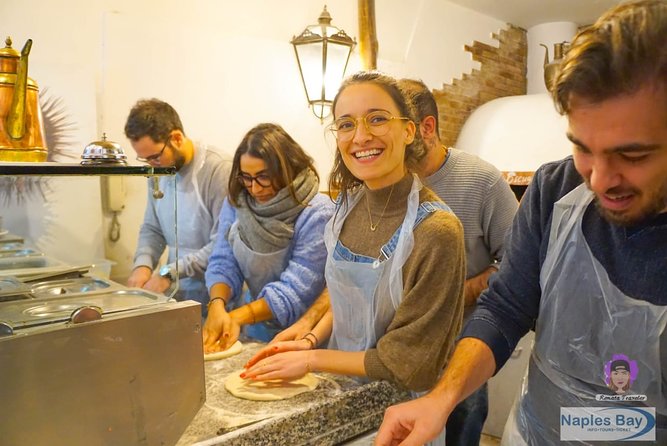
- Two-hour hands-on format: you make dough, stretch it, top it, and eat what you made.
- Starter tasting with local staples: fresh fior di latte, bruschetta with cherry tomatoes, and olive oil.
- Chef-led dough secrets: you learn the steps that turn flour + water into pizza dough that behaves.
- Margherita or Marinara choice: Marinara is available if you’re lactose intolerant.
- Drinks included: water, soft drinks, wine, or beer.
- A pizza-diploma souvenir: a personalized certificate to take home.
Naples Pizza Class, Straight to the Dough
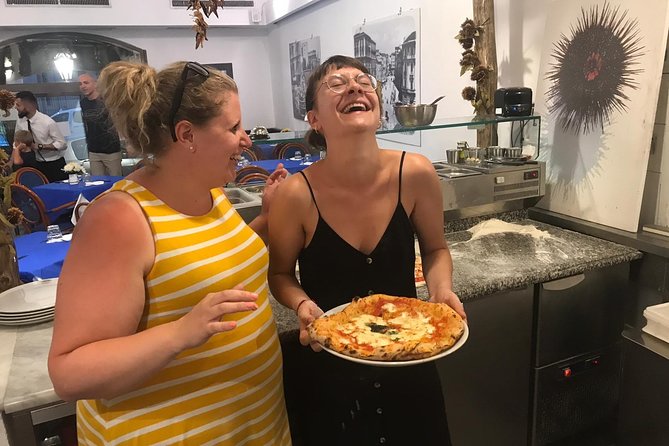
This is the kind of class that feels like Naples food culture in miniature. You don’t just learn words like “authentic.” You learn what to do—knead, stretch, top, and then eat while everything is still at its best. The format stays focused: dough first, then starter, then your pizza, then the payoff.
At the center is the Neapolitan approach. The class emphasizes what goes into a classic pie, including the ingredients people talk about for a reason: San Marzano tomatoes, buffalo mozzarella, extra virgin olive oil, and fresh basil. You’ll also get the background behind pizza dough and food products, which helps you understand why some ingredients matter more than others.
If you’re the type who normally orders pizza and moves on, this class gives you a reason to slow down. If you already love cooking, it gives you a practical method you can repeat later.
You can also read our reviews of more tours and experiences in Naples.

Where to Meet (and How to Avoid the First-Minute Stress)
You’ll start at Via delle Zite, 30, 80139 Napoli NA, Italy, and the activity ends back at the same meeting point. There’s no pickup or drop-off, so treat this like a real appointment.
This matters more than it sounds, because a Neapolitan pizza class depends on timing. Dough needs to rest and handle at the right moment. If you’re late, you may miss the flow of the lesson, and that’s where the value is.
If you’re arriving by public transport, that’s a plus—this meeting point is near it. Still, do yourself a favor: show up a little early, especially if you’re unfamiliar with the area. One lesson I’d keep: in Naples, small streets can look similar, so give yourself a buffer.
Starter Time: Fior di Latte, Bruschetta, and Olive Oil Clues
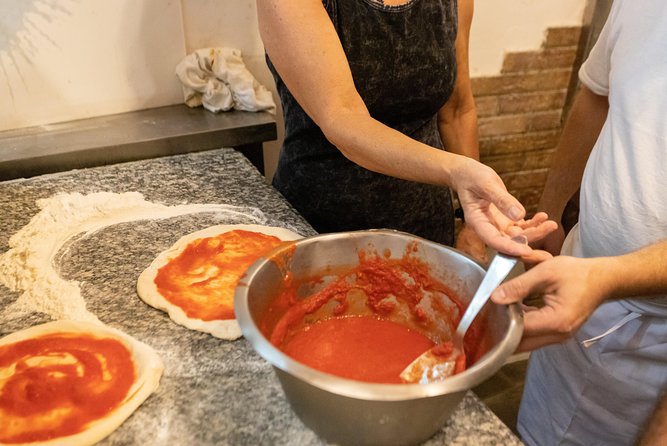
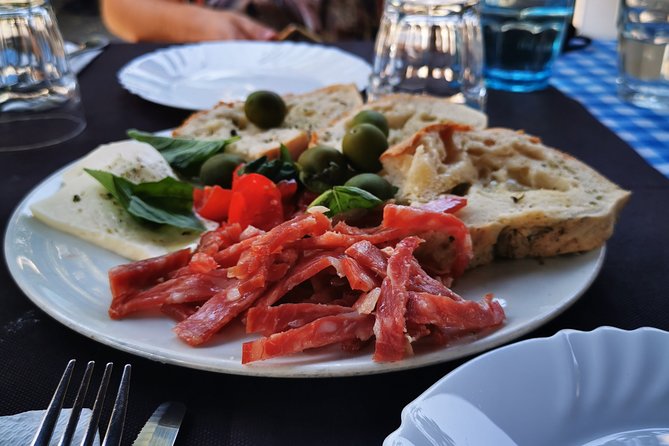
Before you start making dough, you’ll eat. The starter is built from typical Neapolitan products, and that’s not filler—it’s part of the lesson.
You’ll get a tasting that includes:
- Fresh fior di latte
- Bruschetta with cherry tomatoes
- Extra virgin olive oil used where it matters
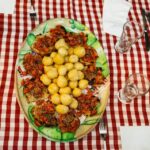
You’ll also have snacks that include homemade bread topped with Vesuvius cherry tomatoes and olive oil. That bread-and-tomato pairing is a great warm-up. It’s simple, but it teaches your palate what “good” tastes like here: bright tomatoes, clean olive oil, and dairy that tastes fresh rather than rubbery.
This is one of the most-liked parts of the class vibe, because it turns the whole experience from instruction into food you can react to in the moment. You’ll be able to say, Oh, that’s the flavor they’re chasing when you later taste your own pizza.
Dough Tools, Apron, and the Chef’s Step-by-Step Rhythm
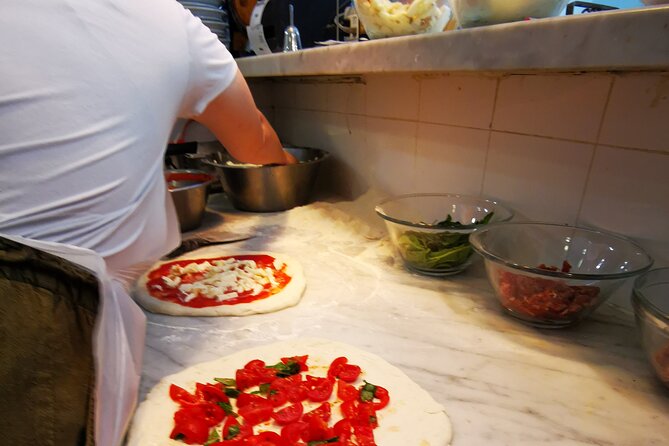
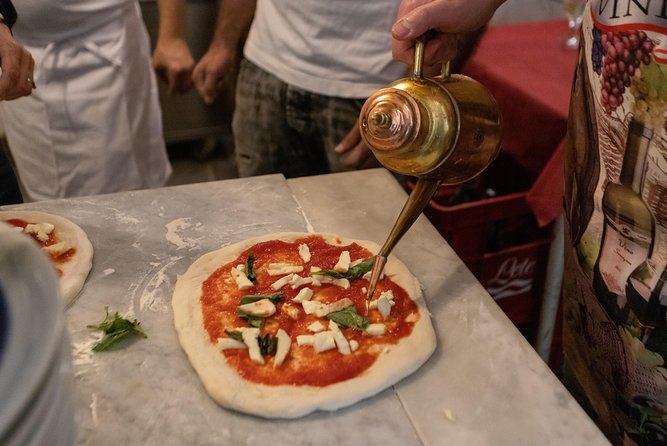
Once you’re set up, you get the gear: an apron, dough tools, and a chef hat. It sounds cute, but it also changes how you work. When you’re not worrying about your clothes, you can focus on technique.
The chef guides you through the dough process step by step. The class also includes an explanation of the history of pizza, dough, and food products, with support in English (and other languages: ENG- ESP- FRA- ITA). So even if your cooking vocabulary is rusty, the teaching should land.
From what you’re likely to experience in this kind of class setup, the chef’s goal is not just getting you to make a pizza once. It’s teaching you how dough should feel and behave. That means you’re learning more than a recipe:
- how the dough is handled
- when it’s stretched
- how toppings go without ruining the base
In the reviews, instructors like Andrea, Luca, Mauro, and Maurizio get praise for patience and humor. That’s a big deal when you’re learning something physical. Kneading and stretching dough can feel awkward at first. A good teacher keeps it fun and keeps you moving.
Stretching Your Pizza Dough: The Skill Behind Neapolitan Texture
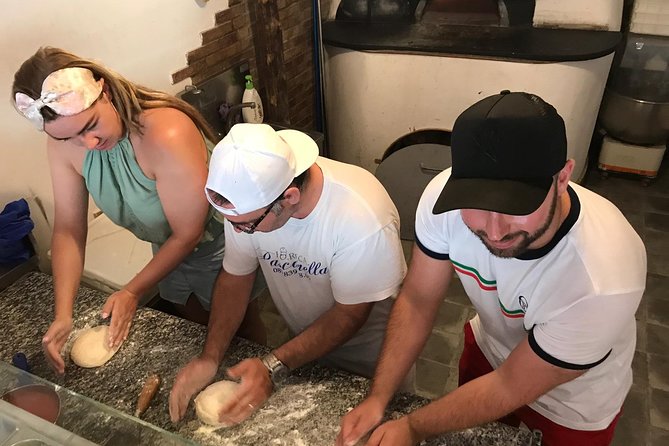
Here’s the heart of the class: you’ll make the dough and then stretch your pizza dough. That stretch step is where Neapolitan pizza lives or dies.
It’s not about brute force. It’s about control. You learn how to handle dough so it expands without tearing. You also learn the logic of why the dough acts the way it does—why the texture matters for the final bite.
This part is especially valuable if you’ve tried making pizza at home and ended up with a thick, chewy base or a crust that doesn’t fold the way you expected. The class is built to show you the subtle differences.
Also, stretching is the moment where you go from reading about pizza online to actually understanding why locals care about technique. Even if you don’t become a pizza professional, you’ll walk away with better instincts.


Margherita vs Marinara: Picking What Fits Your Needs
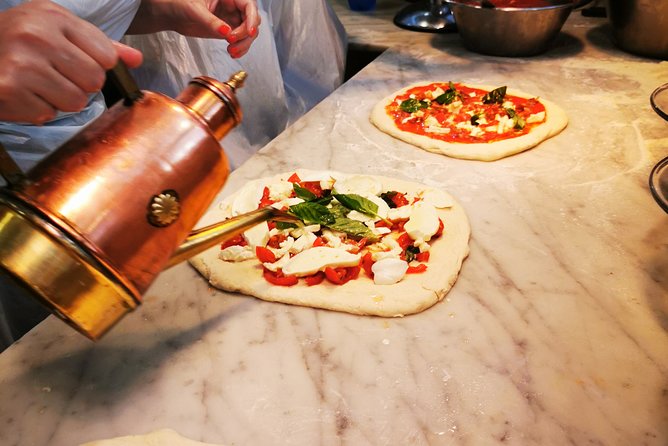
After the dough comes topping and choice. Your class pizza is Pizza Margherita, with an option to choose Pizza Marinara if you’re lactose intolerant.
That’s a smart feature for a food class in Italy, where “no cheese” can sometimes be treated like a special request. Here, you’re given a clear alternative menu pathway. So you don’t have to guess how your diet will be handled.
What you’re making stays classic:
- Margherita typically leans on the mozzarella/basil/tomato profile.
- Marinara keeps it traditional without that lactose-heavy component.
If you’re sensitive rather than strictly allergic, you’ll still appreciate having a proper option. And if you’re not lactose intolerant, Margherita is the easiest way to taste what makes Neapolitan-style pizza so beloved in the first place.
Eating Your Pizza: The Payoff (and What to Notice)
Then comes the best part: you eat the pizza you make. That matters because pizza is time-sensitive. The dough texture, the tomato impact, and the basil freshness all depend on when you eat.
As you take your first bite, notice the big three:
- crust texture (stretch and handling show up here)
- tomato freshness (the taste of San Marzano-style flavor cues the balance)
- olive oil and basil placement (how “alive” the flavors feel)
The included drinks are also part of the experience: you can choose water, soft drinks, wine, or beer. It’s a nice touch because you can relax right after cooking instead of rushing to find a bar.
And the diploma is a fun final touch. It’s a small paper certificate, but it turns a meal into a memory you can keep. It’s also a reminder you learned steps, not just ate dinner.
Price and Value: Is $59.26 Worth It?
At $59.26 per person for about two hours, this isn’t a “cheap snacks and vibes” activity. But it also isn’t overpriced for what you get.
Here’s why the value holds up:
- You’re paying for an expert chef teaching dough technique.
- You get ingredients and a structured meal: starter + pizza + drinks.
- You take home a souvenir diploma.
- You’re learning a process you can reuse, not just tasting food.
Where the price feels most fair is if you care about technique. If you just want pizza, you can always buy pizza in Naples for less. But if your goal is to understand how Neapolitan pizza is built—dough first, then stretching, then topping—this class is a practical way to buy that skill.
Also, the class runs in English, and the history/ingredients explanation is available in multiple languages. That broad language support helps if your group spans different comfort levels.
One more value signal: this is commonly booked around a month in advance (about 35 days on average). Popular classes like this tend to be well-organized because they’re full. It’s a decent sign you’re not signing up for a slow, chaotic experience.
Best Fit: Who This Naples Class Is For
This works especially well for:
- Couples who want a shared activity and a real meal at the end
- Families who want kids to do something hands-on (lots of instructors get credit for being patient with children)
- Food lovers who want more than a restaurant meal and prefer learning by doing
- Anyone curious about Neapolitan technique, especially dough and stretching
It’s less ideal if:
- You want a mostly passive experience with minimal standing and mixing
- You’re relying on pickup/drop-off (there isn’t any)
- You’re extremely rushed and hate arriving on time for structured activities
In the feedback style for this class, the instructors often get highlighted for humor and patience. That’s a good indicator that the class aims to keep you engaged, even if your cooking skills are zero.
Should You Book This Pizza Making Class in Naples?
Yes, if you want a genuinely practical Naples food experience—hands-on dough work, a proper starter, and a classic pizza you get to eat right after. The price makes more sense when you compare it to paying for a similar guided cooking lesson plus a full meal.
Book it sooner rather than later if you like having choices for timing. And if you’re lactose intolerant, this is one of those rare setups that gives you a clear alternative with Pizza Marinara.
I’d say skip it only if you’re not interested in technique at all and just want to snack and wander. For everyone else, this is a strong way to connect with Naples pizza beyond the usual order-and-serve loop.
FAQ
FAQ
How long is the Naples pizza making class?
It’s approximately 2 hours.
Where does the class meet in Naples?
The meeting point is Via delle Zite, 30, 80139 Napoli NA, Italy. It ends back at the same meeting point.
What’s included in the class?
You’ll make pizza dough, stretch the dough, learn about pizza/dough/ingredients, enjoy a typical Neapolitan appetizer, and eat the pizza you make. You also get an apron, dough tools, chef hat, and a pizza chef diploma.
What drinks are included?
You can choose between water, soft drinks, wine, or beer.
Can I choose something other than Pizza Margherita?
Yes. You can choose between Pizza Margherita and Pizza Marinara if you are lactose intolerant.
Is pickup included?
No. Pickup and drop-off are not included.
Can I cancel for a full refund?
You can cancel up to 24 hours in advance for a full refund. If you cancel less than 24 hours before the start time, the amount paid isn’t refunded.