REVIEW · CATANIA
Catania: Street Food Guided Walking Tour
Book on GetYourGuide →Operated by Do Eat Better Experience · Bookable on GetYourGuide
First time in Catania can feel loud and chaotic. This street food walk turns that noise into a map, with you tasting your way through the historic center. The food story is tied to the sea and Mount Etna, plus centuries of Greek, Arab, Spanish, and Jewish influence that still shows up in what people eat and how they eat it.
I especially like the five food-stop format: it stays focused, and you’re not stuck eating one snack over and over. Second, I like the guides you can get for this tour, since names like Allegra, Kate, Luca, and Giuseppe pop up often, and the common thread is a friendly pace with real explanations, not a rushed script.
One thing to consider: this is a walking tour with a lot of food, and portions can be generous. If you show up after a full meal, you may feel stuffed before you reach the best sweet finish.
In This Review
- Key Highlights You’ll Care About
- Catania Street Food Walk: what you’re paying for
- Meeting at the Fountain of the Elephant
- Cathedral stop: where the food story starts
- Roman Theater to the next bites: how arancini fits the route
- Piazza dell’Università: caponata and pastry snacks that travel well
- Roman Amphitheater and the sweet finish: cannoli, granita, and the fish cone
- Come hungry, then pace: the stomach math that matters
- Alcohol, guide style, and why the narration matters
- Dietary options and who this tour fits best
- Price and logistics: a quick reality check
- Should you book this Catania street food walking tour?
- FAQ
- How long is the Catania street food guided walking tour?
- How much does it cost?
- Where does the tour start?
- What’s included in the price?
- Are dietary options available?
- What language is the guide?
- What should I bring?
- Is there hotel pickup or drop-off?
Key Highlights You’ll Care About
- Five street-food stops over about 3 hours, with tastings that add up fast
- Real Catania focus: Roman sites by day, classic Sicilian bites in hand
- Standout classics included, from arancini to cannoli and granita
- A drink plus water are part of the package, so you can keep tasting without fuss
- Dietary support is available (vegetarian and other diets), if you tell the operator ahead of time
Catania Street Food Walk: what you’re paying for
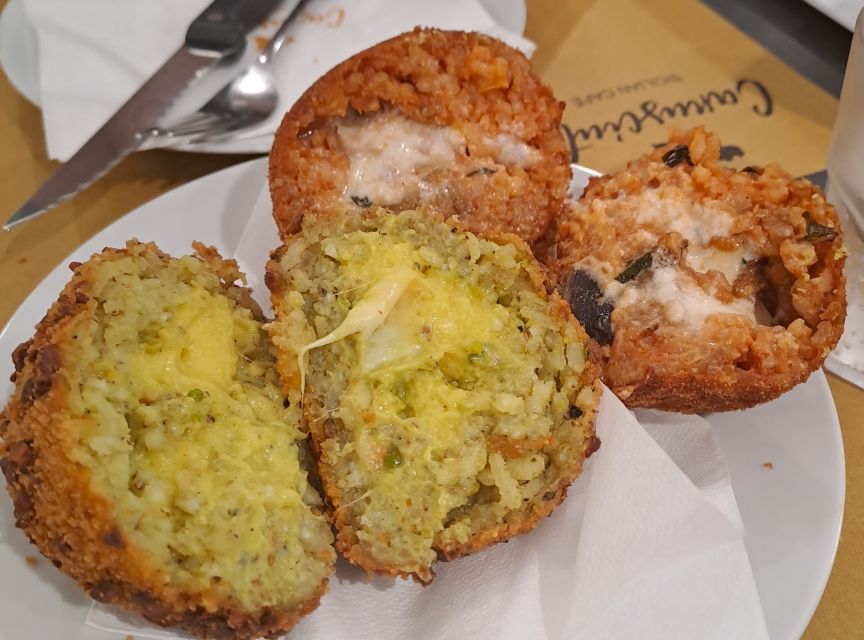
At $56 per person for roughly 3 hours, this tour isn’t just about samples. You’re paying for a guided route through the center, a local food expert to explain what you’re eating, and enough tastings to feel like you got a mini Catania food course.
Here’s what’s included: food tastings, one alcoholic beverage, gelato or granita, and water. That’s a solid value in a city where street snacks are easy to buy, but the real trick is finding the right spots and knowing what to order.
And the tour is designed for practical sightseeing. You’ll walk between big landmarks, then stop long enough to eat and ask questions. Many people like that it’s not rushed, which matters in a place where streets can be crowded and food choices can look identical at first glance.
You can also read our reviews of more tours and experiences in Catania.



Meeting at the Fountain of the Elephant
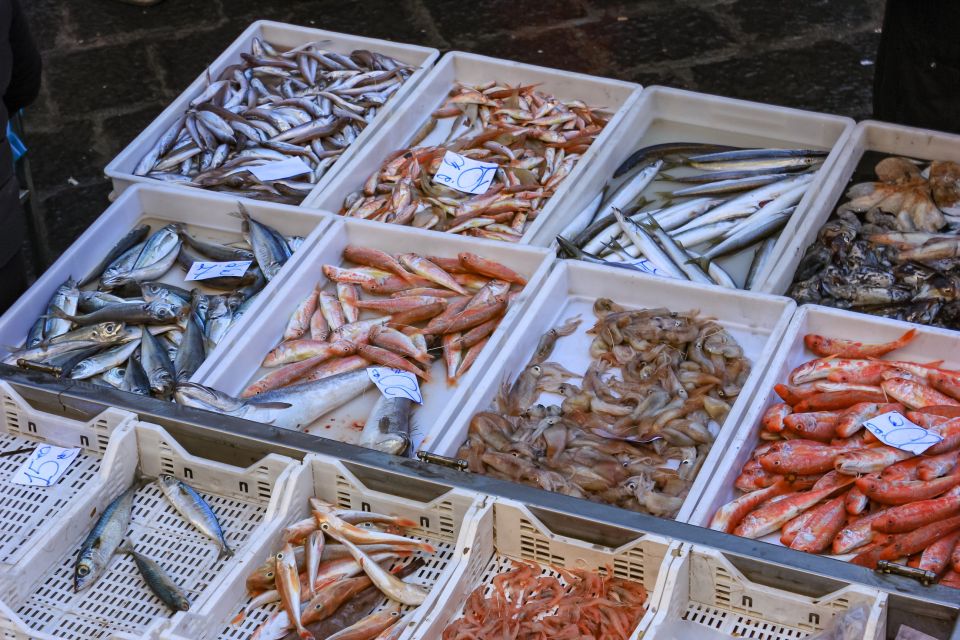
You start at the Fountain of the Elephant. It’s an easy anchor point, and it helps you get oriented before you move into the historic core.
Plan to walk with comfortable shoes. This matters more than you’d think, because you’ll likely cover a fair amount of distance in a short time. The tour also notes no luggage or large bags, which keeps the group moving smoothly through tighter streets. If you’re traveling with a bulky backpack, you’ll want to stash it before you go.
One more small but important detail: the guide may switch between English and Italian during the walk. In real life, that’s usually helpful, not distracting, because it keeps the explanations flowing while you’re eating.
Cathedral stop: where the food story starts
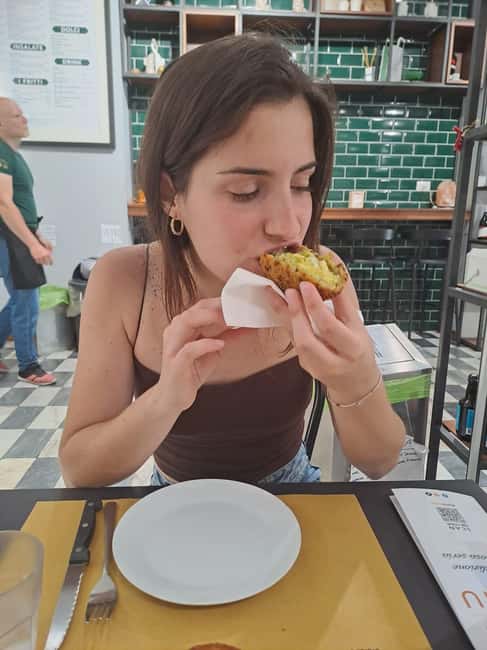
Right after the start, you’ll spend time around Catania Cathedral. This is a good opening stop because it sets the tone: you’re in the center, you’re surrounded by history, and the tour ties the food to the place instead of treating snacks like an accessory.
The tour’s explanation centers on two forces that shape Sicilian eating:
- the Mediterranean sea, which supports seafood culture and bright flavors
- Mount Etna, which influences local produce and the island’s seasonal rhythm
You also get a sense of why take-away street food became normal here. The idea isn’t that one culture invented everything. It’s that different peoples shaped the same pantry over time—Greeks, Latins, Spanish, Jews, and Arabs among them—and those cooking habits kept evolving in public, often prepared right in front of you.
What you’ll do at this stage: you’ll eat one of the savory classics early in the walk. It’s a smart start because it gets your stomach working while your brain is fresh for the history and the route.
Roman Theater to the next bites: how arancini fits the route
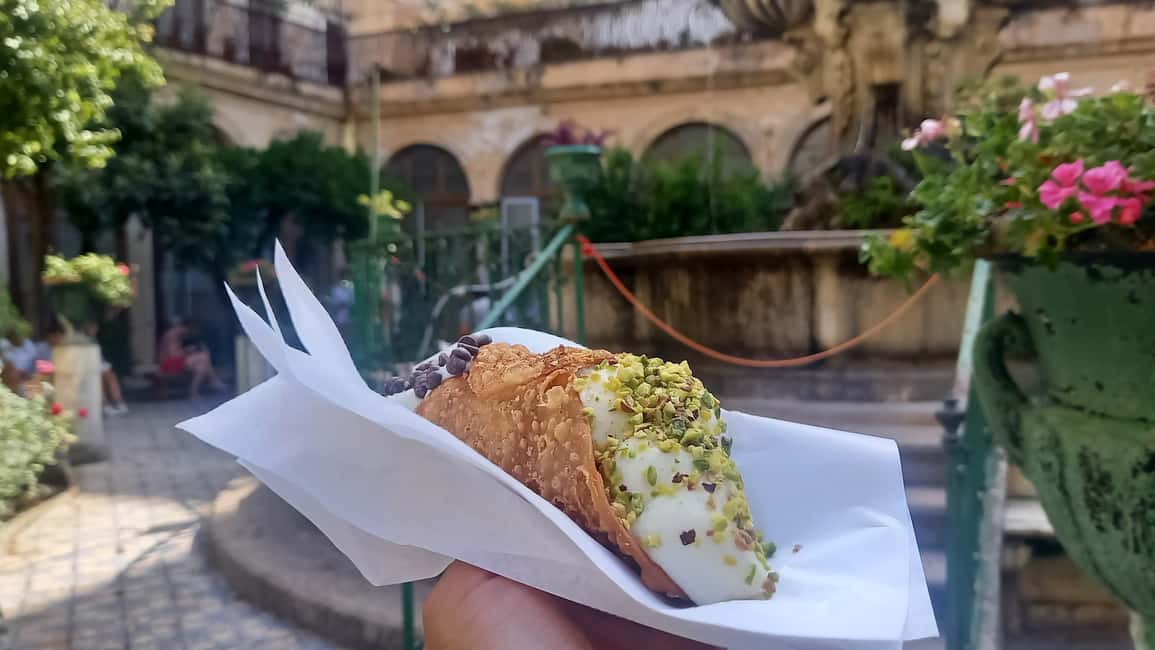
Next up is the Roman Theater of Catania. The big Roman bones here give the walk a clean structure: landmark, explanation, then hands-on eating.
This is where arancini make sense as an early highlight. These are the world-famous rice balls—stuffed, fried, and built for street eating. Think of them as edible architecture: crisp outside, hot filling inside, and designed for one-bite rhythm while you keep walking.
What I like about arancini on a tour like this is timing. You typically get it when you’ve worked up a bit of appetite from walking, but before you’ve reached the heavy-fried overload stage later.
Practical tip: arancini can be messy if you rush. Take your time for the first bite, then you’ll be able to handle the rest more cleanly. Also, because the tour includes water, you can pace without feeling like you’re constantly buying extra drinks.
Piazza dell’Università: caponata and pastry snacks that travel well
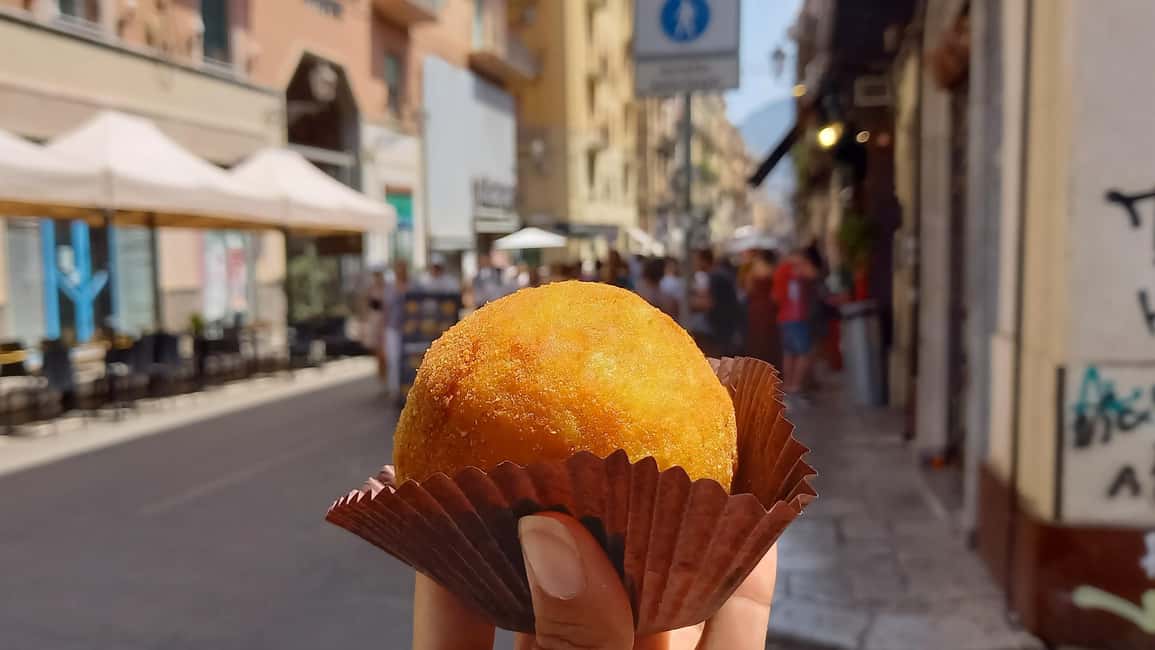
From the Roman Theater area, you move to Piazza dell’Università. This is one of those central spaces where the city energy ramps up, and the tour leans into that street-food feel—short waits, quick explanations, and tastings you can keep up with.
This is a strong spot for flavors like caponata. It’s made with fried vegetables (often aubergines), seasoned with tomato sauce and accented with celery, onion, olives, capers, sugar, and vinegar. What makes it interesting isn’t just the ingredients—it’s the contrast. Sweet against tangy. Soft vegetables against a crisp fry. It works as a side, but on a food tour it becomes a star because you taste the balance in one sitting.
You’ll also likely encounter pastries that are built for the street, such as Catanese cipollina and cartocciata.
- Cipollina is a rustic puff pastry filled with fried onions, cooked ham, and stringy cheese. It’s described as crisp outside with a warm, sweet-leaning interior.
- Cartocciata is another Catanian rotisserie favorite, similar to a small baked calzone, but with a higher, softer dough.
If you’re trying to decide what to do with these, here’s the good news: they’re made to be eaten while walking. You’ll need a bit of napkin attention, but the food itself is designed for movement.






Roman Amphitheater and the sweet finish: cannoli, granita, and the fish cone
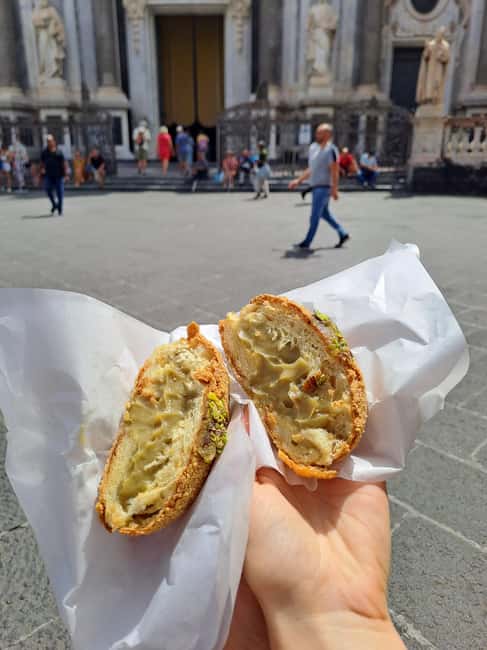
Later you reach the Roman Amphitheater of Catania. At this point in a tour, your brain starts filing bites into categories—fried, sweet, fruity, cheesy—and the guide’s job becomes connecting those tastes back to the island.
This is where you should expect some of the tour’s biggest “Sicily in one bite” moments. The menu list for the tour includes:
- Fried fish cone: a cone filled with fried fish caught that day (so it’s street food with freshness baked into the idea)
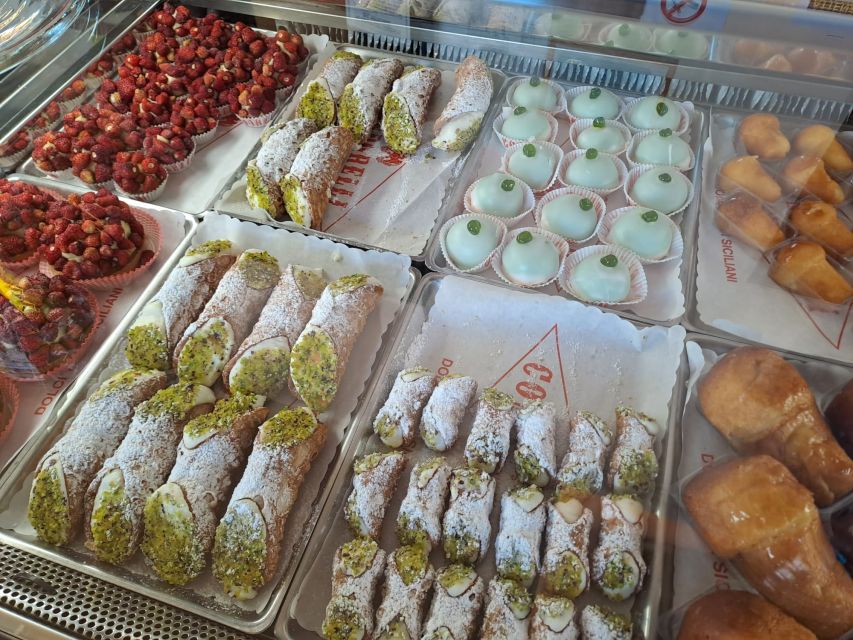
- Cannoli: a sweet ricotta-filled classic inside a wafer typically made around a hot metal bar
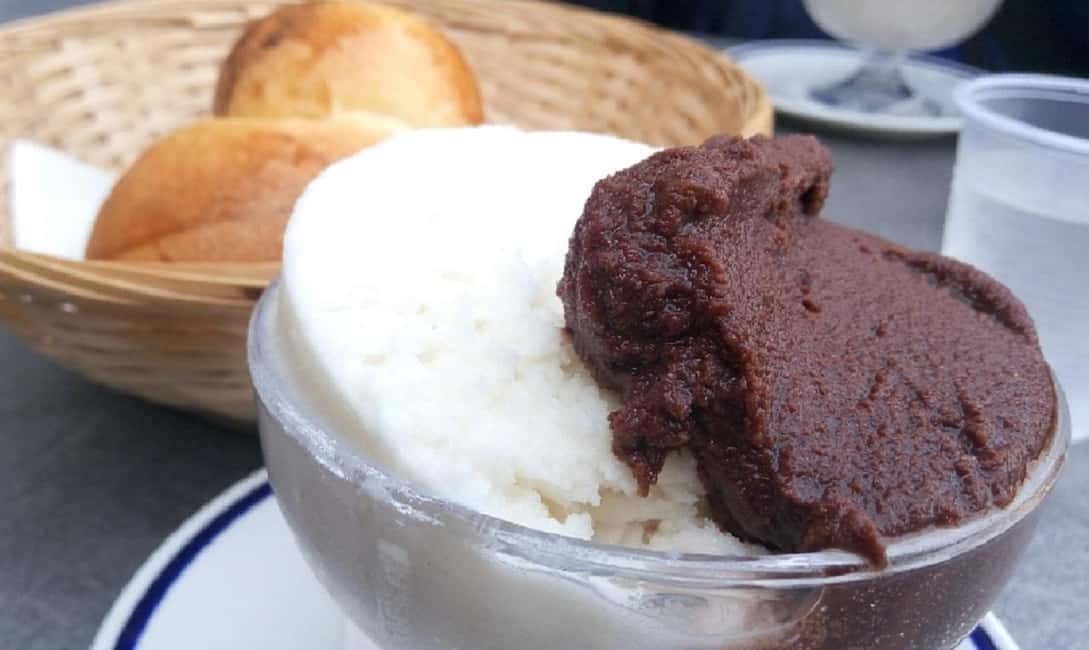
- Granita: an ice-and-sugar dessert served chilled, perfect for cooling down
I love cannoli as a tour capstone because it’s instantly recognizable, but you still get variation in texture—crisp shell, creamy filling, and toppings like candied fruit, crunchy pistachios, or dark chocolate chips.
And granita (or gelato, since gelato is included too) is the practical reset you need after multiple savory stops. Granita is served in a glass, which makes it easier to manage while you’re finishing the walk.
If you’re sensitive to very sweet desserts, you’ll still enjoy it. You can take a slow bite and let the flavor work instead of trying to power through.
Come hungry, then pace: the stomach math that matters
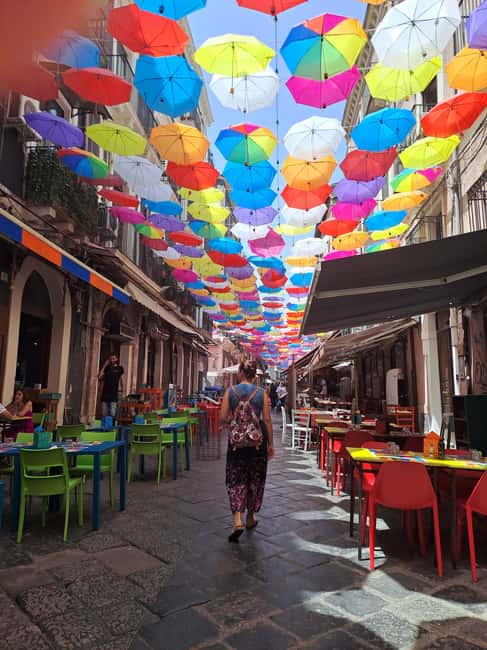
This tour is sold as a street food tasting adventure, but the real value is how much food you get in a short window. Many people highlight that it’s not rushed and that there’s time to eat, learn, and actually enjoy the stops. The downside is simple: you need to handle the volume.
A few “do this, not that” rules from the vibe of the experience:
- Don’t eat a full meal first. If you do, you’ll probably want to stop early or you’ll miss the point.
- Use the included water. It’s there for a reason.
- Expect some portions to be big. One of the most useful tips you can take is to pace yourself through the walk instead of chasing every bite with the same speed.
- Keep an eye on your pace during fried items. Fried foods hit hardest when you stack them back-to-back.
Also, you’ll likely have moments where you’re eating one thing while listening, and then switching to the next. That’s normal for this format. If you tend to get impatient when you’re hungry, you’ll have an easier time going in with an empty-ish stomach.
Alcohol, guide style, and why the narration matters
The tour includes one alcoholic beverage. That’s part of the tasting rhythm. It’s also a signal that you’re meant to sit with the food, not just grab-and-go.
The best part, though, is the guide layer. Across different guide names—Allegra, Kate, Luca, and Giuseppe—the consistent praise is that the guide makes the experience feel welcoming and informative. People also note that guides are warm, friendly, and willing to answer questions, and that the tour doesn’t treat you like a checklist.
If this is your first day in Catania, this kind of narration is especially helpful. You’ll learn how the city’s food culture connects to the places you walk past: cathedral streets, Roman sites, and central squares. By the end, you usually have enough context to order with confidence on your own.
Dietary options and who this tour fits best
This tour supports vegetarian and other diets, as long as you inform the provider of dietary needs when booking. That’s the key phrase. If you have allergies or very specific restrictions, don’t wait until the morning of the tour to ask.
Who it suits best:
- First-timers who want a fast orientation to central Catania
- People who like eating while sightseeing, instead of doing them separately
- Anyone who wants a structured way to try classic Sicilian street food without guessing which stall is worth it
Who might find it tough:
- Anyone who can’t handle walking and frequent stops
- Anyone who gets overwhelmed by lots of fried and sweet items in a row
- People traveling with large bags, since the tour doesn’t allow them
Price and logistics: a quick reality check
Duration: about 3 hours.
Meet-up: Fountain of the Elephant.
No hotel pickup/drop-off is included, so you’ll want to plan your arrival and timing accordingly.
For timing, treat the tour as your food anchor for the day. If you try to squeeze it between long museum visits or a big lunch, you’ll pay for it later in your stomach. The experience works best when you can show up ready to taste, then keep walking afterward without rushing to find your next meal.
Should you book this Catania street food walking tour?
I’d book it if you want a simple, high-value way to understand Catania through food—without spending your time hunting for the right places. The package makes the math easy: five street-food stops, plus water, plus one drink, plus gelato or granita in three hours. That’s exactly the kind of deal that turns a good trip into a great one.
I’d think twice if you dislike eating fried foods, don’t like walking, or you already ate a big meal before the start time. In that case, you’ll still get the sights and the route, but you may not enjoy the food portion as much.
If you do book, aim to arrive hungry, wear comfy shoes, and come ready to let the guide steer. This tour is at its best when you treat it like a fun guided route through Catania, not just a snack run.
FAQ
How long is the Catania street food guided walking tour?
The tour lasts 3 hours.
How much does it cost?
It costs $56 per person.
Where does the tour start?
The meeting point is the Fountain of the Elephant.
What’s included in the price?
The tour includes food tastings, one alcoholic beverage, gelato/granita, and water.
Are dietary options available?
Yes. The tour offers vegetarian options and supports other diets, but you should inform the provider of dietary needs when booking.
What language is the guide?
The live guide speaks English and Italian.
What should I bring?
Bring comfortable shoes.
Is there hotel pickup or drop-off?
No. Hotel pickup and drop-off are not included.