REVIEW · CATANIA
From Catania: Neapolis of Syracuse, Ortygia, and Noto Tour
Book on GetYourGuide →Operated by Kemedia · Bookable on GetYourGuide
Syracuse feels like three eras at once. I love how this day trip combines the Greek Theatre and Roman remains of Neapolis with the lived-in streets of Ortygia, where you can actually pause at landmarks like the Arethusa fountain. Then you finish with Noto’s famous Sicilian Baroque “Stone Garden” look, so the beauty isn’t only ancient.
The catch is time. This is an 8–9 hour outing with mostly walking, and the Neapolis monuments are self-guided, so you’ll want to use the time well instead of drifting.
In This Review
- Key highlights you should care about
- From Catania to Syracuse and Noto: how the day really flows
- Neapolis Archaeological Park: Greek Theatre, latomie, and the Ear of Dionysius
- A practical way to enjoy a self-guided hour
- Ortygia Island: Arethusa fountain and the many-life city core
- Lunch timing tip (since food isn’t included)
- Noto’s Sicilian Baroque Stone Garden: palaces, churches, and Corso Vittorio Emanuele
- Self-guided Neapolis vs guided city blocks: how to get value from both
- Small-group touring from Catania: why 8 people can feel better than 30
- Price and value: is $130.28 per person fair for what you get?
- Practical tips for a smoother Syracuse and Noto day
- Should you book this Catania tour?
- FAQ
- FAQ
- How long is the tour?
- Where is pickup provided?
- What’s included in the price?
- What isn’t included?
- Do I get a guided tour inside Neapolis Archaeological Park?
- What languages does the tour leader speak?
- Is the tour suitable for people with mobility impairments?
Key highlights you should care about
- Neapolis Archaeological Park entry included so you don’t waste time hunting tickets
- The scale of the Greek Theatre cavea is a real jaw-drop moment
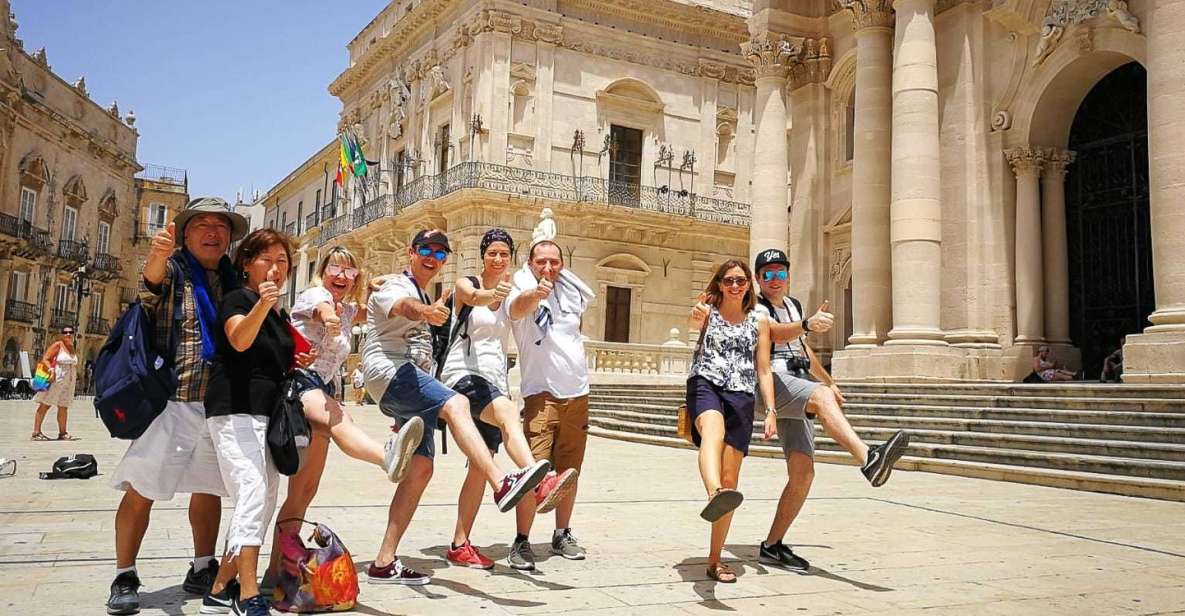
- Ortygia’s mix of Greek, Christian, and Arabian street layers in a compact walk
- Arethusa fountain and Piazza del Duomo as easy-to-find anchor points
- Sicilian Baroque in Noto with guided context for palaces and churches
- Small group capped at 8 for a more relaxed pace across uneven ground
From Catania to Syracuse and Noto: how the day really flows
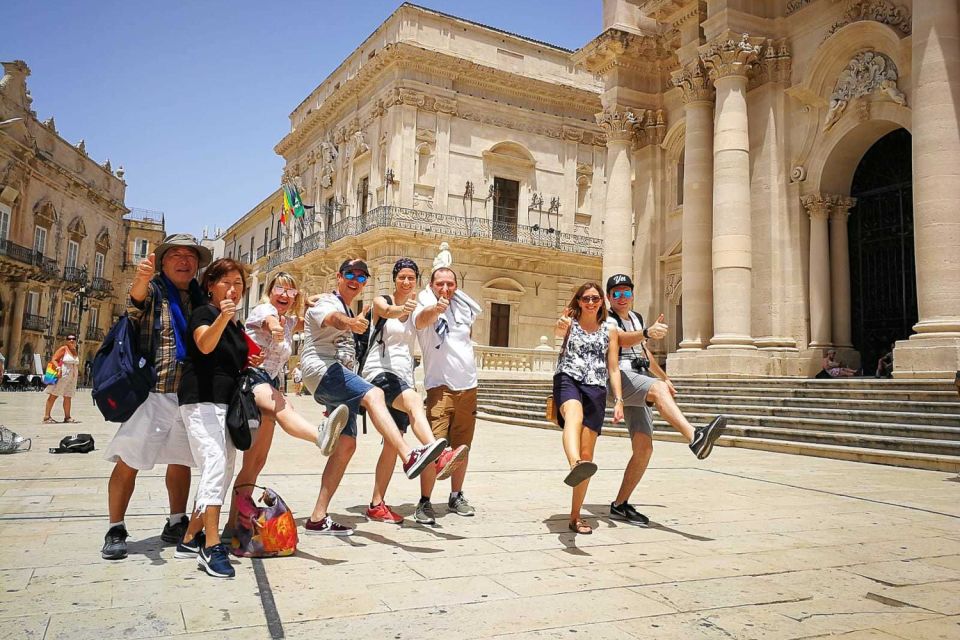
This tour is built for people who want big hits of southeast Sicily without the hassle of transfers, parking, or coordinating schedules. You’re picked up in Catania at hotels and B&Bs, then you ride in a shuttle to the UNESCO sites around Syracuse and the inland town of Noto.
The overall rhythm is simple: you get one guided block in Noto, guided interpretation with a multilingual leader as you move between areas, and then you spend time on your own inside the Neapolis Archaeological Park. Ortygia is the other major walking segment, with time to roam the historic core.
Because it’s a full day, it helps to think of the experience as three “chapters” rather than one long stroll. Neapolis is about seeing how the ancient city was laid out. Ortygia is about atmospheres and street-level landmarks. Noto is about architecture—powdery stone facades, ornate churches, and that signature Baroque geometry.
You can also read our reviews of more tours and experiences in Catania.



Neapolis Archaeological Park: Greek Theatre, latomie, and the Ear of Dionysius
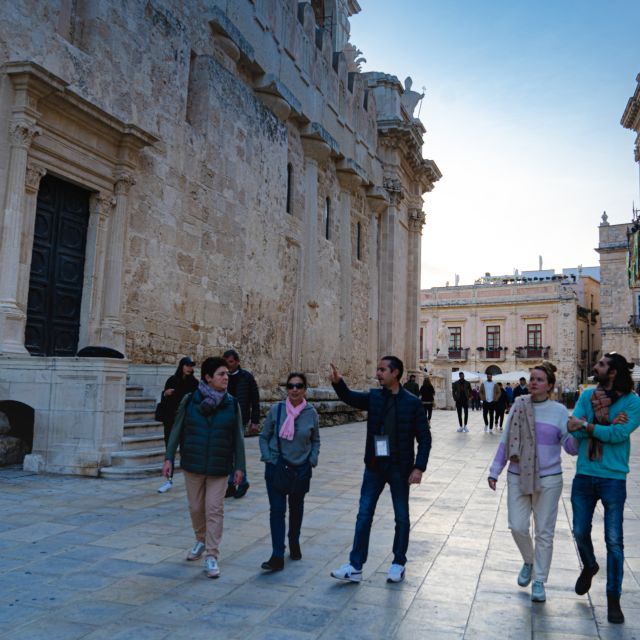
Neapolis is where Syracuse’s ancient story becomes physical. It’s an archaeological park setting you can explore at your own pace, and that one-hour window is long enough to grasp the layout if you don’t get lost in every side path.
Here’s what makes the park so worth the ticket:
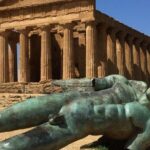
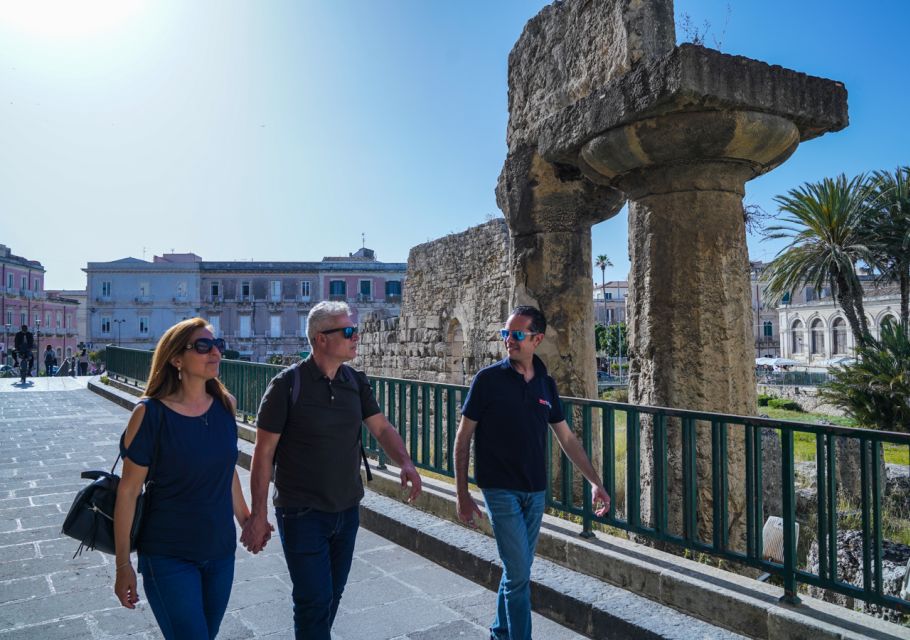
- The Greek Theatre and its enormous cavea: the seating bowl is among the largest ever built by the ancient Greeks. Even if you don’t know every Greek term, you’ll feel the scale. This is the kind of structure that makes you picture crowds without needing a lecture.
- Latomie, including the limestone cave known as the Ear of Dionysius: this is one of those sites that feels part history, part geology. The “ear” name points you toward the site’s acoustic lore, and the rugged limestone setting helps you understand why people used caves in the first place.
- San Nicolò ai Cordari, a Christian church tucked into the ancient landscape: it’s a reminder that the story didn’t end with Greece and Rome. Religious layers continued to shape the space.
You’ll also see Roman remains, including the Roman imperial-age amphitheatre area. That amphitheatre is often the kind of stop people rush through, but it’s worth pausing because it gives you a visual bridge between Greek civic space (theatre) and Roman spectacle (amphitheatre). If you arrive and something is temporarily closed, don’t panic—focus on the parts that are open and still usable for photos and orientation.
A practical way to enjoy a self-guided hour
Since Neapolis is self-paced, I’d treat your time like this:
- Walk straight to the Greek Theatre first so the scale hits early.
- Then angle toward the latomie area and look for the Ear of Dionysius zone.
- Save your wandering for the final minutes, when you can connect the dots between the main monuments.
You’ll get more from your visit if you aim for “anchor sights” rather than trying to see everything.
Ortygia Island: Arethusa fountain and the many-life city core
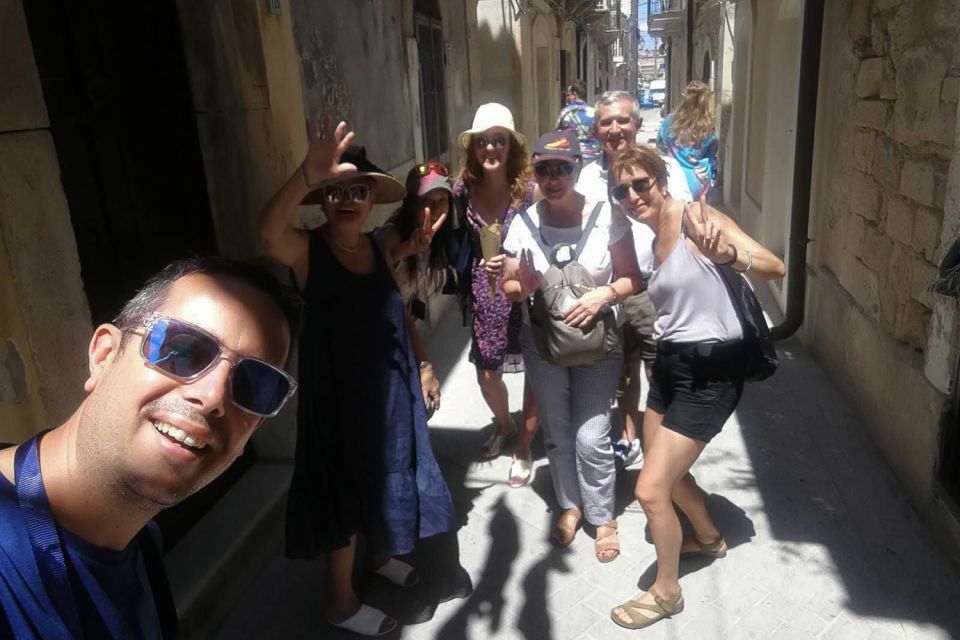
After Neapolis, you move to Ortygia, the island at the heart of Syracuse. It’s separated from the mainland by a narrow channel, and you feel the change quickly: the pace slows, the streets tighten, and the architecture starts acting like a timeline.
Ortygia is especially good because it’s not just ruins. It’s an actual neighborhood, with a mix that includes:
- Greek temples
- Christian churches
- Arabian-influenced streets
Two landmarks make a big difference for planning your walk:
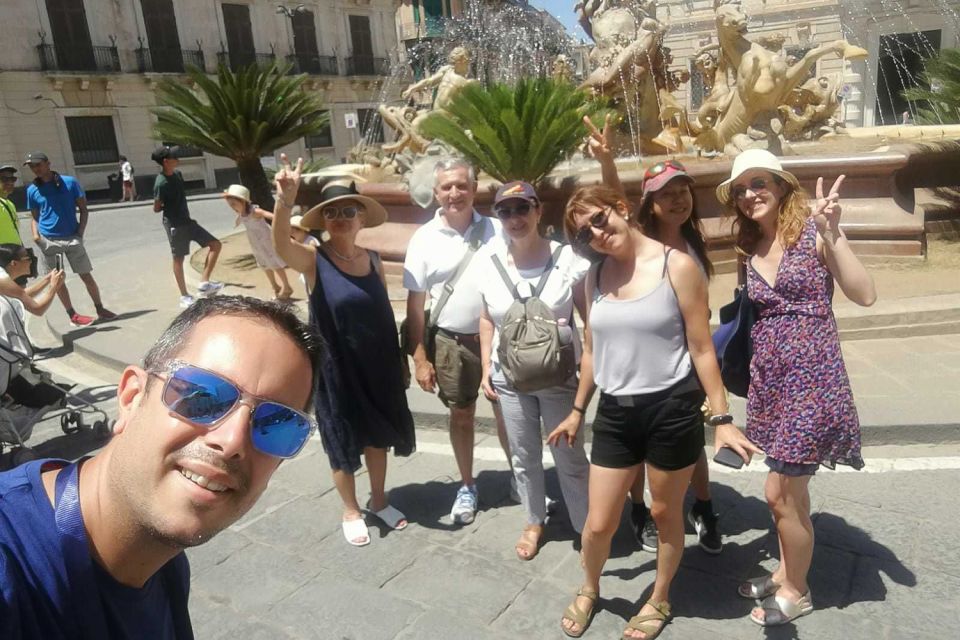
- Arethusa fountain: a natural focal point. It’s easy to find, easy to enjoy, and it gives your day a satisfying “I’m here” moment.
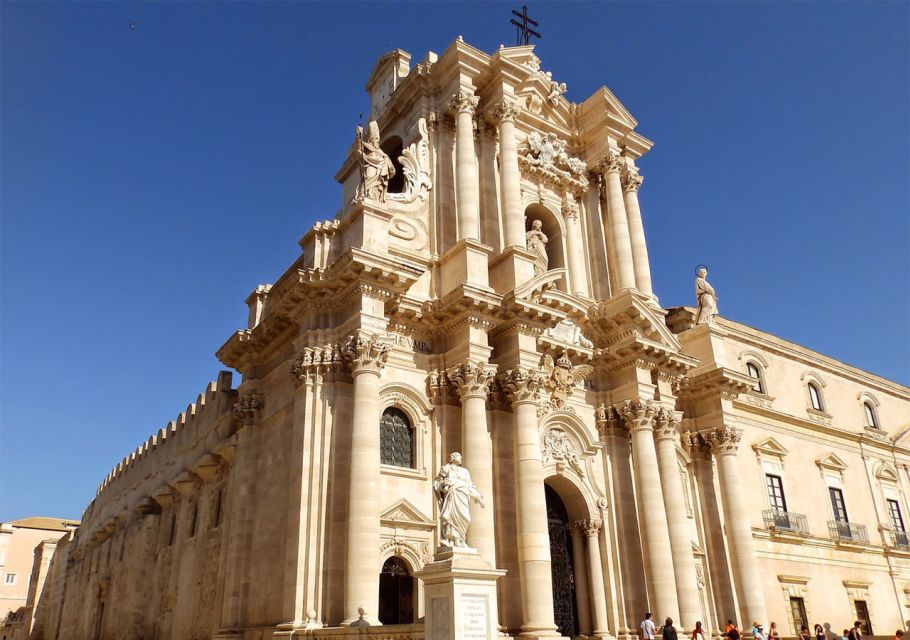
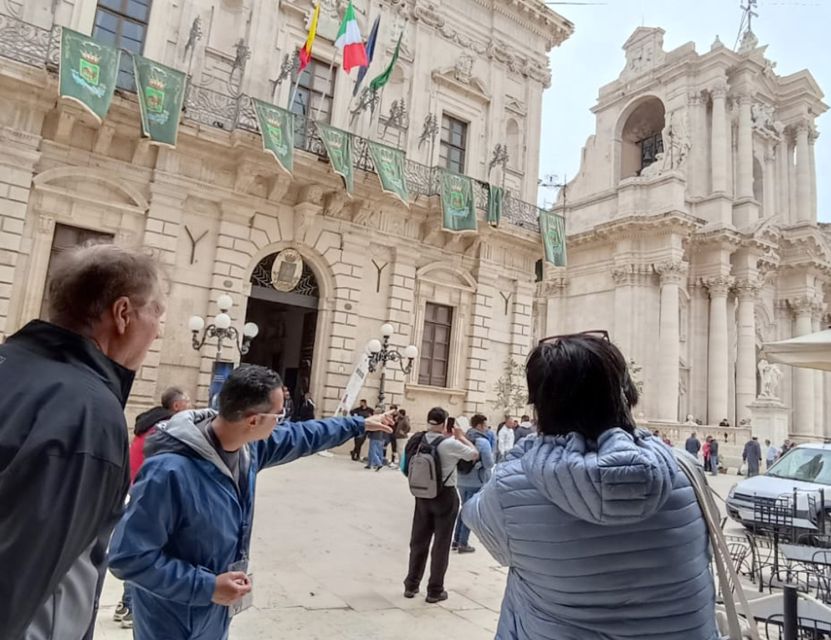
- Piazza del Duomo: the main square area where the Baroque city shows off. You can look for the Beneventano del Bosco Palace and the Senate Palace among the impressive buildings.
This part of the day is where your eyes start doing the real work. Ortygia’s charm comes from contrast: you’re shifting from monumental ancient stone to street-level details you can’t fully appreciate from a distance. If you like cities where you can wander without feeling totally unstructured, Ortygia hits the sweet spot.
Lunch timing tip (since food isn’t included)
Meals aren’t part of the package. That’s normal for Sicily city days, but it changes how you plan. You’ll want to keep a little flexibility for lunch near the Ortygia walking area, then come back to the schedule with energy for Noto afterward.






Noto’s Sicilian Baroque Stone Garden: palaces, churches, and Corso Vittorio Emanuele
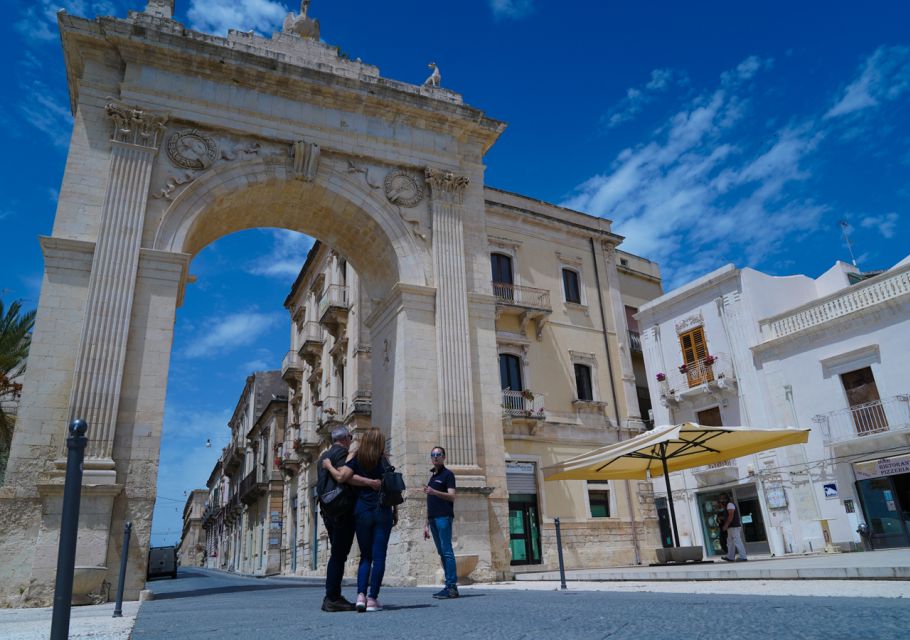
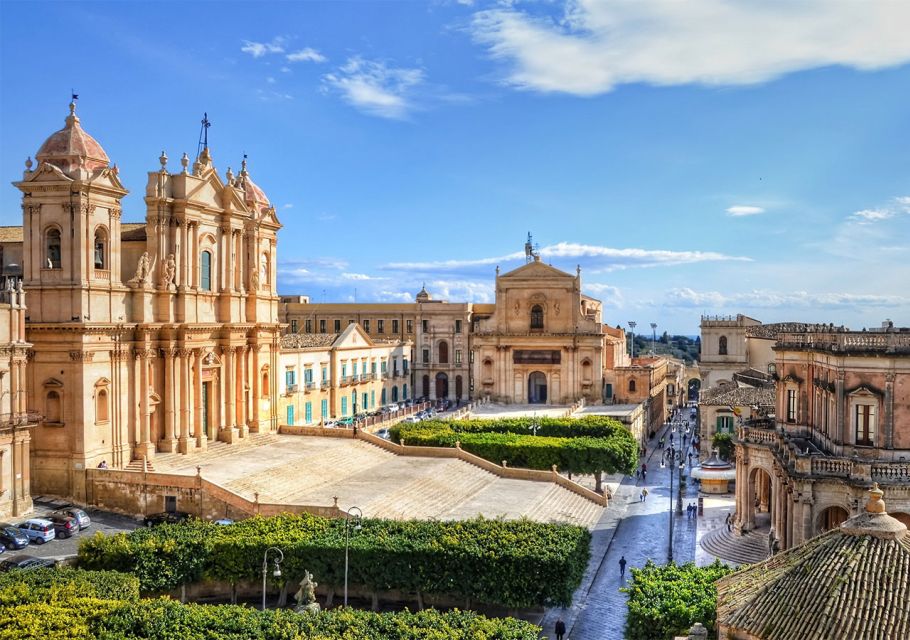
Noto is the second UNESCO-style highlight of the day, known for its Sicilian Baroque architecture and declared a UNESCO World Heritage Site in 2002. Where Syracuse gives you ancient layers, Noto gives you style—tons of it—built from carefully arranged stone facades and church fronts.
What I like most here is that the architecture feels like an outdoor museum. Even when you’re just walking the main street, you can see why people call it the Stone Garden: buildings seem to rise out of the same visual world, with grouped palaces and churches creating an overall effect.
The time you get is guided, so you’re not staring at Baroque details with no context. A good portion of the experience centers on:
- Wandering through Noto’s open-air museum feel
- Walking Corso Vittorio Emanuele, where you can spot the best cluster views
- Seeing the palaces and churches that make the town feel like one big designed composition
If the day is hot, you’ll appreciate that you can pace your walking and duck into shaded spots when you need to reset.
Self-guided Neapolis vs guided city blocks: how to get value from both
Not every part is guided the same way, and that matters for your enjoyment.
- Neapolis: self-guided, with entry included. You control the pace, but you also control what you miss.
- Noto: guided for a set stretch, which helps you understand what you’re looking at instead of only seeing shapes.
- Ortygia: time on foot in a historic core, where the leader’s explanation helps you connect street sights to what the ancient city was doing.
This mix is a practical balance. Pure guided tours can feel rushed or too scripted. Pure self-guided tours can leave you asking, so what am I actually seeing? This format gives you a little of both—just remember that Neapolis requires you to be a bit active in how you plan your one-hour loop.
Small-group touring from Catania: why 8 people can feel better than 30
The shuttle bus carries a small group limited to 8 participants. That changes the feel of the day in a few helpful ways:
- Less waiting at parking and pick-up points
- Easier regrouping after a short walk
- More time for questions in the moment, especially when you stop outside major landmarks
The tour leader is multilingual (Italian, English, Spanish), and the guide’s personality can make the pacing smoother. Names that have led tours for this experience include Nando, Lorena, Andrea, Salvo, Francesco, Franco, and Floriana. Seeing that range of names matters because it signals you’ll likely be in good hands for interpretation, timing, and on-the-ground problem solving.
One thing to keep in mind: some days involve crowds, uneven pavement, and long walking periods. Reviews for this kind of route often point out how much is packed into one day. Your best strategy is to keep your expectations honest: you’re collecting key moments, not doing a slow archaeological seminar.
Price and value: is $130.28 per person fair for what you get?
At $130.28 per person, this is not a budget-only option. But you’re paying for a combo that’s hard to replicate cheaply without extra work: round-trip transport from Catania plus a guide plus Neapolis entry ticket plus the added value of time in Ortygia and a guided introduction in Noto.
To judge value fairly, I’d compare it to the cost of doing it yourself:
- Transportation between multiple towns and sites
- A guided leader who can interpret what you’re seeing
- A planned schedule that keeps you from burning hours figuring out logistics
- Entrance covered for Neapolis
The part that can make it feel pricey is also the part that keeps it realistic: you don’t get a full guided walkthrough inside Neapolis, and lunch is on your own. If you’re the type who needs a guide at every stop, you might feel the cost more sharply. If you’re comfortable using a self-guided hour well, the price starts making sense.
Practical tips for a smoother Syracuse and Noto day
Sicily can swing fast on comfort, so pack smart.
- Bring weather-appropriate clothing and plan for sun and wind. Neapolis areas can feel exposed.
- Wear shoes with grip. You’ll be on museum ground, historic streets, and uneven edges.
- Expect a long day. With pickup, transfers, and multiple walking blocks, it’s not a sit-and-watch kind of tour.
- If something looks shut or under maintenance, don’t let it ruin the day. Focus on the open anchor sights like the Greek Theatre cavea, Ear of Dionysius, Arethusa fountain, and Piazza del Duomo.
- Pets aren’t allowed, so keep the focus on people who can do the walking.
- If you have mobility limitations, this is not suitable. The walking and terrain are the core of the experience.
Should you book this Catania tour?
I’d book it if you want a single, efficient day that covers three major “wow” stops: Neapolis, Ortygia, and Noto. It’s especially good for first-time visitors to southeast Sicily who don’t want to plan transportation and don’t mind a self-guided archaeological hour.
I’d think twice if you hate long walking days or if you want every monument explained inside the park. Also, if Baroque architecture is your only obsession, you might still enjoy Syracuse, but you may find yourself wanting more time in Noto.
FAQ
FAQ
How long is the tour?
The duration is listed as 8 to 9 hours, depending on the starting time.
Where is pickup provided?
Hotel and B&B pickup is included in Catania only.
What’s included in the price?
Included are hotel pickup and drop-off in Catania, transportation by shuttle bus, a multilingual tour leader, and the entry ticket to the Neapolis Archaeological Park.
What isn’t included?
Food and drinks are not included, and a guided tour inside the Neapolis Archaeological Park is not included.
Do I get a guided tour inside Neapolis Archaeological Park?
No. You explore the Neapolis area on a self-guided basis during your visit, while the overall tour is led by a multilingual guide.
What languages does the tour leader speak?
The guide speaks Italian, English, and Spanish.
Is the tour suitable for people with mobility impairments?
No. The activity is not suitable for people with mobility impairments.