REVIEW · NAPLES
From Naples: Ruins of Pompeii
Book on GetYourGuide →Operated by NapoliCityVision · Bookable on GetYourGuide
Pompeii packs centuries into one walk. This guided trip from Naples focuses on what you can actually see fast: Pompeii’s preserved streets and Roman daily life laid out in real, walkable ruins. I like that you get a short ride, clear structure, and a real Pompeii highlights path instead of wandering.
Two things I really love: first, the emphasis on Roman scenes you can visualize right away, from the ancient theater to the shopping streets with bakeries and pizzerias. Second, the visit doesn’t stop at the obvious walls; it also points you toward bigger “how did they live” spaces like the forum, necropolis, and bath houses.
One drawback to consider is time. You’ll spend about 2 hours inside Pompeii, so it’s not the tour for a slow, academic beat-down of every corner. Add in Naples traffic, and the full day can feel tighter than you expect.
In This Review
- Key highlights and practical takeaways
- Pompeii Still Hits Hard, Even on a Short Visit
- Naples Pickup to Coach Ride: What Your Morning Looks Like
- Entering Pompeii: How the 2-Hour Walk Feels on the Ground
- Roman Streets, Bakeries, and Pizzerias: Daily Life You Can Point To
- The Ancient Theater: A Scene of Performance and Social Life
- The House of the Richest Man in Pompeii: Wealth You Can Feel
- Forum, Necropolis, and Bath Houses: How the City Organized Itself
- Optional Cameos and Coral Craft Stop: A Smart Time-Filler
- Languages, Guides, and Group Size: Getting the Most From Your Money
- Price at Around $59: What You’re Really Paying For
- What to Bring (and What to Skip) So the Day Stays Fun
- Who This Pompeii Tour From Naples Is Best For
- Should You Book This Pompeii Tour or Skip It?
- FAQ
- How long is the Pompeii portion of the tour?
- What’s the total duration from Naples?
- Is pickup in Naples included?
- Which languages are available for the tour?
- Is Pompeii entry ticket included?
- Is lunch included?
- Is this tour suitable for wheelchair users or mobility impairments?
- Can I bring luggage or large bags?
Key highlights and practical takeaways
- Roman theater and everyday streets: see performance space plus places food and trade likely happened.
- A focused “life in Pompeii” route: forum, baths, and necropolis help you connect scenes.
- House visit for social contrast: you’ll see the house of the richest man to frame wealth versus ordinary life.
- Small-group feel: fewer people often means easier listening and less gridlock.
- Optional cameo/coral craft stop: if time permits, you get a local jewelry-making glimpse.
Pompeii Still Hits Hard, Even on a Short Visit
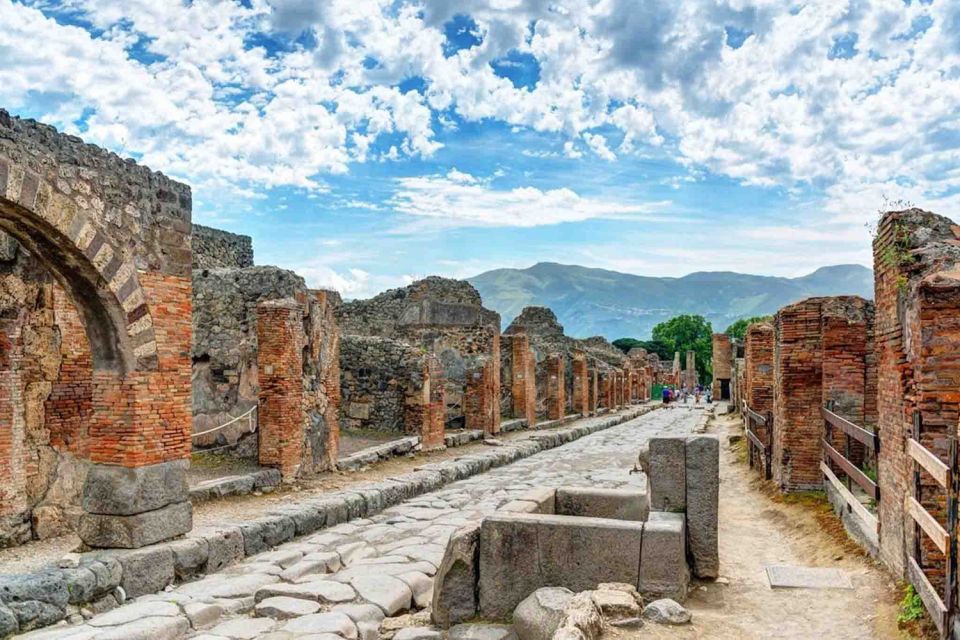
Pompeii is one of those places where the facts don’t feel abstract. The city was buried after Vesuvius erupted in 79 A.D., and what survived gives you a rare snapshot of an ancient town frozen in time. When you walk those streets, you’re not just looking at walls—you’re seeing the “layout of life”: where people shopped, ate, gathered, and bathed.
This tour works because it’s built around visibility. You get a structured walk through key areas, plus context from a guide or audio. You’re not expected to know Roman history before you arrive. You just need comfortable shoes and the willingness to look up from the ground and picture how the place functioned.
You can also read our reviews of more tours and experiences in Naples.



Naples Pickup to Coach Ride: What Your Morning Looks Like
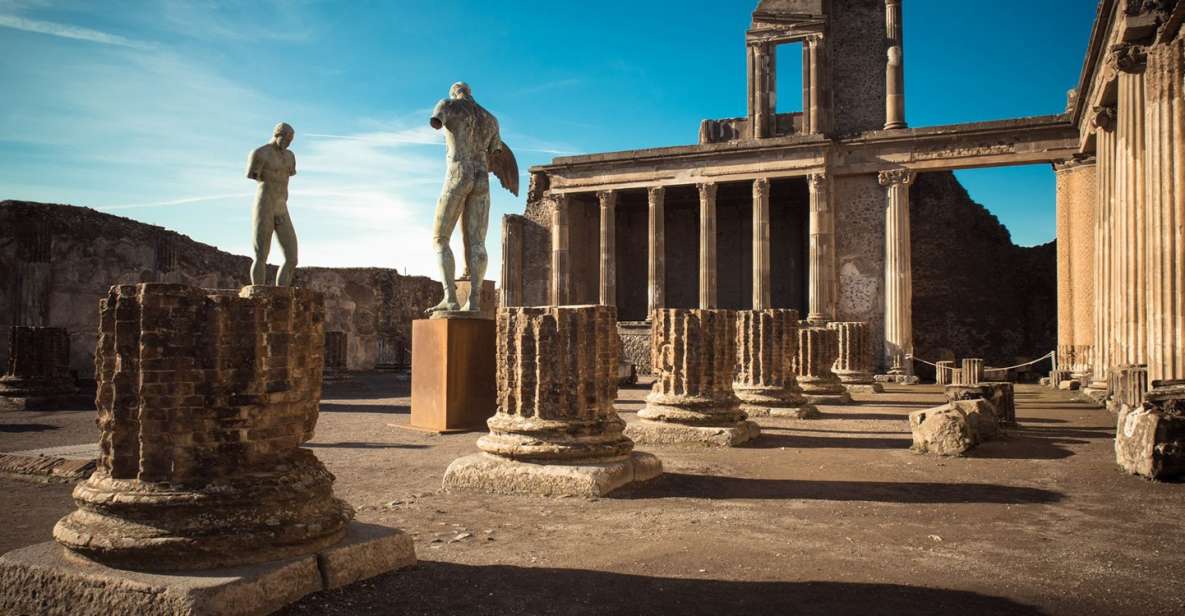
The trip starts with round-trip transportation from Naples, which is a big deal. Driving yourself means stress: parking, traffic, and the timing scramble. Here, you show up at a pickup point, join the group, and let the day run on schedule.
Pickup options are spread around central Naples, including major hotels and the waterfront area (for example, Lungomare Caracciolo and Molo Beverello-Ontano show up as listed meeting points). Expect an early departure feel; the tour includes pickup windows around the morning (starting times include 08:00, 08:10, 08:20, 08:30, 08:40, and 08:45 depending on your stop).
Once you’re onboard, there’s multilingual commentary during the ride. That helps you get your bearings before you step into the ruins. The transfer time is listed at about 20 minutes by bus/coach, but Naples traffic can stretch things in real life. The good news: the company builds in a driver who’s used to the local chaos, and multiple guests noted safe returns even with hectic road conditions.
Two practical notes you should take seriously:
- The driver waits for you up to 5 minutes if you’re late.
- Luggage or large bags aren’t allowed, so travel light.
Entering Pompeii: How the 2-Hour Walk Feels on the Ground
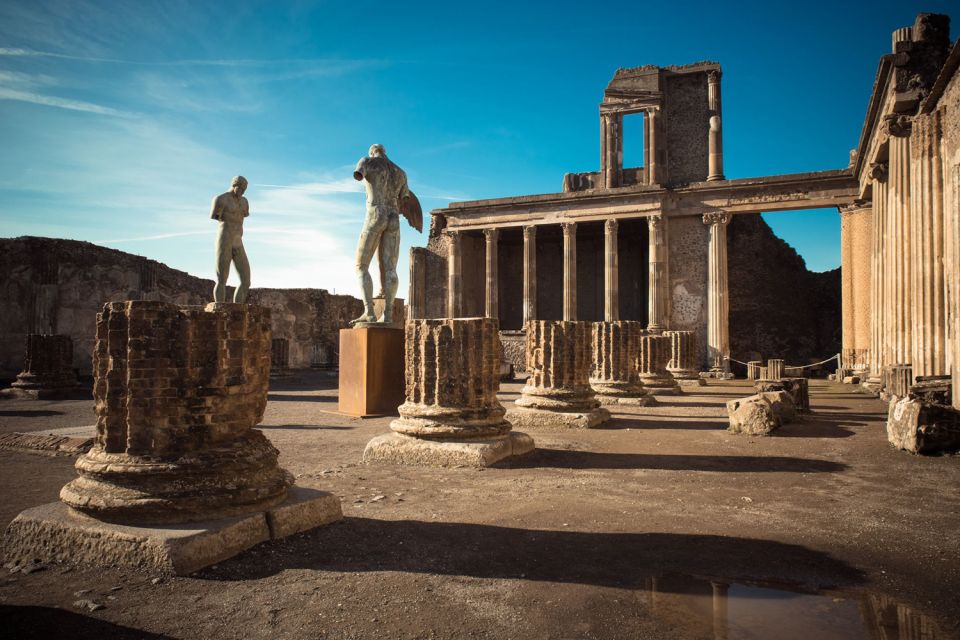
Inside Pompeii, the tour portion is about a 2-hour guided walking route. That’s short enough to keep you moving, but long enough to hit the highlights that most first-timers want. Your guide (or audio, depending on group size and season) is there to translate what you’re looking at into daily life in the 1st century A.D.
Because it’s a highlights format, you’ll likely see a mix of:
- Street-level spaces (where commerce and food would’ve happened)
- Public gathering areas (forum and civic spaces)
- Cultural and leisure structures (including the theater)
- Residential wealth contrast (the richest-man house)
- A broader view of the city’s systems (necropolis and baths)
What you should watch for is pacing. Pompeii is open-air and sun hits hard in Campania. Multiple guests specifically praised guides who kept the group moving while finding shade when possible. You’ll still want your own basics: sun hat and sunscreen.
Also, if you’re tempted to treat the tour like a free-for-all wander session, don’t. The whole point is that someone is helping you avoid the common mistake: spending too long at one spot and missing the rest of what makes Pompeii so memorable.
Roman Streets, Bakeries, and Pizzerias: Daily Life You Can Point To
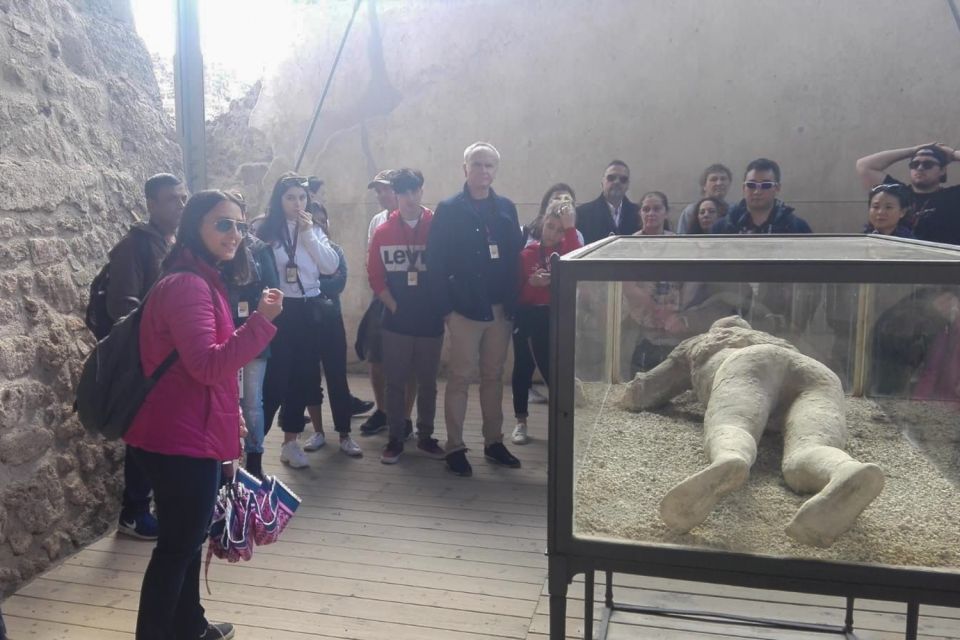
One of the best parts of this tour is how it treats Pompeii as a real town, not a museum display. You’ll walk through the kinds of preserved spaces that make Roman life feel ordinary—in other words, the places where people ate and bought food.
You’re guided to an ancient shopping street with preserved bakeries and pizzerias. Even if you don’t know the technical vocabulary of Roman food production, you can still grasp the rhythm: quick stops, daily necessities, and commerce right at street level. It’s the opposite of the “big monuments only” approach, and that’s why it works for me.
This segment also gives you a useful mental anchor. Once you’ve seen the food-and-shop side, you can better understand what comes next: the civic spaces, leisure areas, and the contrast with wealthier homes. Pompeii starts to read like a social map rather than a list of ruins.
The Ancient Theater: A Scene of Performance and Social Life
You’ll also walk through an ancient Roman theater, one of the tour’s standout highlights. A theater isn’t just architecture. It’s a community engine. In Pompeii, it likely functioned as a place where people gathered for entertainment and public events.
A theater visit is especially valuable on a short tour because it helps you imagine the sound and movement of crowds. You can connect the dots: citizens and visitors showed up, sat in sections, watched performances, and turned the building into a social hotspot.
If you’re someone who likes your history with a bit of human scale, this stop is your friend. You won’t need to “study” to get it. You just stand where they stood and let your brain do the work.






The House of the Richest Man in Pompeii: Wealth You Can Feel
Not every Pompeii stop is about public life. The tour also takes you to the house of the richest man in Pompeii. That visit matters because it reframes what ruins can show you. Yes, you’re seeing buildings. You’re also seeing economic inequality—how daily life changes when you move from public streets to elite residence.
This is a great checkpoint in the tour. After walking through shops and civic areas, you’re now confronted with how wealth shaped space. The “richest man” label is exactly the kind of story you want on a short timeline because it gives you a clear contrast.
Practical tip: look for differences in layout and how the space “works” (private rooms versus communal flow). Even without getting technical, you’ll come away with a stronger sense of social structure in Pompeii.
Forum, Necropolis, and Bath Houses: How the City Organized Itself
The route doesn’t stop at theater and shopping. You also get guided time at several major anchors:
- Forum (politics, public gatherings, and the city’s social center)
- Necropolis (the burial area outside everyday life)
- Bath houses (social routines tied to water and public services)
This trio is powerful because it covers three different “when and why” settings. The forum answers the question of where people met for civic life. The bath houses show how leisure and routine got built into infrastructure. The necropolis adds an emotional angle: Pompeii wasn’t only about the living day-to-day; it was also a place that prepared for death and memory.
You may not spend long at each component, but the guided interpretation helps you avoid a common problem: seeing them as isolated spots. When they’re explained in sequence, you understand Pompeii as a functioning system.
Optional Cameos and Coral Craft Stop: A Smart Time-Filler
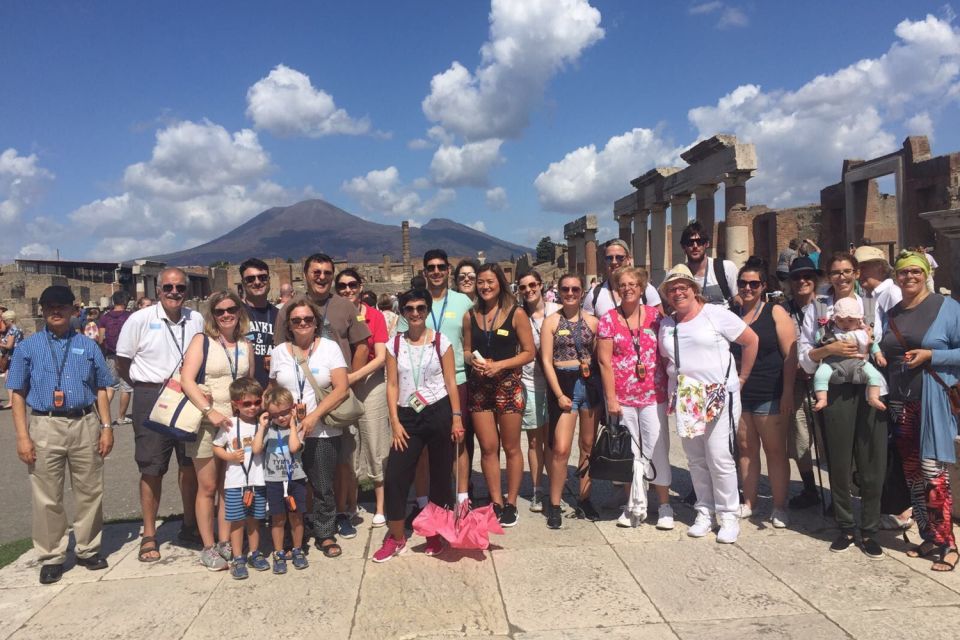
Depending on timing, the tour may stop at a local factory to learn about the process of cameos and corals craft—jewels made out of coral and seashells. This isn’t Pompeii, but it pairs well with the archaeological theme.
Why it helps: it gives you a “Campania craft” moment that connects to the same idea of hands-on production you see in ancient street life. If you’ve got time and the route allows it, this stop can be a pleasant add-on instead of dead time.
If you’re short on interest for jewelry-making, consider it a bonus rather than a must. The core value is still Pompeii itself.
Languages, Guides, and Group Size: Getting the Most From Your Money
The tour runs with live guide language options that include English, Italian, and Spanish. There’s also an optional audio guide available in multiple languages such as French, Chinese, German, Japanese, Russian, and Portuguese.
The format depends on season and group size:
- A guide is provided if a minimum of 6 participants is reached.
- Otherwise, you’ll receive an audio guide.
I like this structure because it keeps the experience workable even when the group changes. What you should do, though, is pick based on your listening style. If you prefer Q&A energy and real-time pacing, aim for the live guide option. If you’re comfortable following an audio script and walking at a steady pace, audio can be totally fine.
Also, you’ll likely hear about how guides handle heat and crowding. Several praised guides for finding shade and keeping everyone together. If you’re traveling in warm months, that kind of practical guidance matters more than fancy storytelling.
Price at Around $59: What You’re Really Paying For
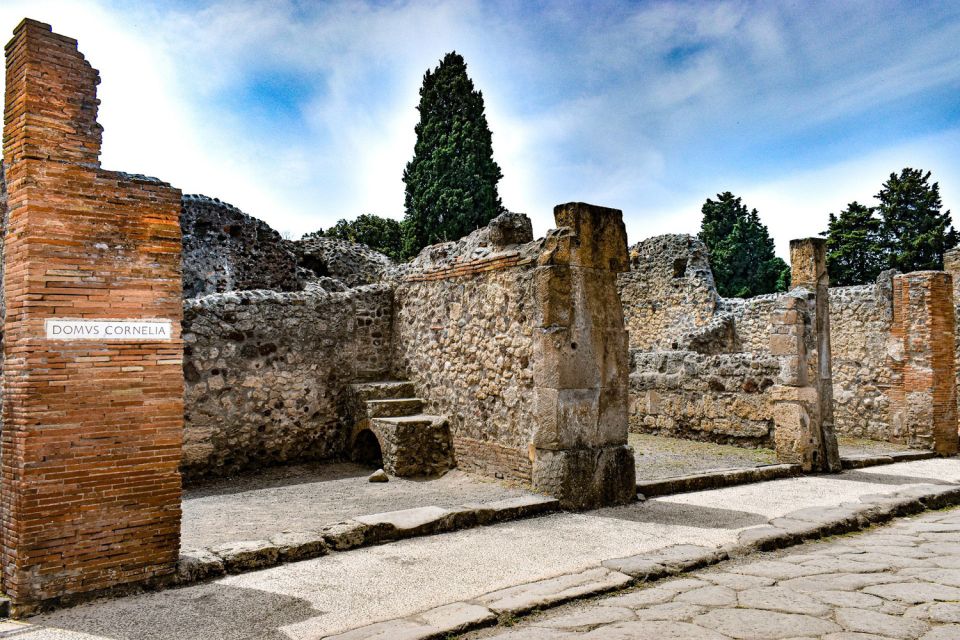
At about $59 per person, you’re not just paying to enter Pompeii. You’re paying for the convenience and for the “translation layer” that turns ruins into a coherent story.
Here’s what’s typically included:
- Round-trip transportation from Naples
- Multilingual commentary on board
- Pompeii entry ticket if you select that option
- A 2-hour walking tour in Pompeii
- A guide or audio guide, depending on circumstances
Lunch isn’t included, so plan on a meal on your schedule, not theirs. But even with lunch excluded, the value is strong if you want a structured highlights route without spending hours planning transit and timing.
One more angle on value: Pompeii can be overwhelming. The real cost isn’t just money; it’s lost time. A guided, time-bound route helps you avoid the “I saw a few streets and now it’s over” trap.
What to Bring (and What to Skip) So the Day Stays Fun
This tour is short, but it’s still work on your feet. Pack for comfort and for sun:
- Comfortable shoes
- Sun hat
- Sunscreen
Keep your bag situation simple. Large bags and luggage aren’t allowed, so plan for what fits and what you truly need. If you’re used to carrying everything “just in case,” Pompeii will cure you of that habit fast.
And if you’re hoping for slow, lingering photography time, build in your expectations. The route is set up for movement, not marathon exploring.
Who This Pompeii Tour From Naples Is Best For
This is a great fit if you:
- Are staying in Naples and want an easy day trip without driving
- Have limited time and want key highlights in a structured walk
- Like practical explanations of what spaces were for (not just dates)
- Prefer a small-group feel over big-coach chaos
It’s not a fit if you:
- Need wheelchair access or have mobility limitations. The tour notes it’s not suitable for people with mobility impairments or wheelchair users.
- Want to bring large luggage or bulky bags.
Should You Book This Pompeii Tour or Skip It?
Book it if you want a guided highlights route that respects your time. The combo of round-trip Naples transport, a 2-hour Pompeii walk, and focus on places like the theater, shopping streets, and forum/baths/necropolis gives you a lot for a single morning-to-afternoon block.
Skip it if you want a slow, deep, “every street and every inscription” experience. With only about two hours on-site, you’ll have to trade breadth for speed.
FAQ
How long is the Pompeii portion of the tour?
The Pompeii visit is a guided walking tour of about 2 hours.
What’s the total duration from Naples?
The full tour runs about 3 to 4 hours, including round-trip transportation.
Is pickup in Naples included?
Yes. Pickup is included from selected meeting points. You’ll need to contact the provider after booking to confirm your pickup time and location.
Which languages are available for the tour?
The live tour guide is available in English, Italian, and Spanish. There is also an optional audio guide in French, Chinese, German, Japanese, Russian, and Portuguese.
Is Pompeii entry ticket included?
It depends on the option you choose. The entry ticket is included if you select that option.
Is lunch included?
No. Lunch is not included.
Is this tour suitable for wheelchair users or mobility impairments?
No. The tour is not suitable for people with mobility impairments or wheelchair users.
Can I bring luggage or large bags?
No. Luggage or large bags aren’t allowed.