REVIEW · HERAKLION
Full-Day Private Adventure: Knossos-Zeus’ Territory-Old Villages
Book on Viator →Operated by Crete Wanderer · Bookable on Viator
Crete can feel like it has two lives: myth and everyday life. This private route strings them together with Knossos, Zeus territory, and small village stops you can actually slow down in.
I love how the day balances big ancient names with practical, sensory moments like olive oil tastings at a real factory. I also like that you’re not stuck in a bus crowd—your host keeps the pace human on a long 7 to 8 hour outing. One thing to keep in mind: Knossos and some archaeological areas typically require you to explore on your own, since the person in your vehicle may not be able to act as an on-site licensed guide.
In This Review
- Quick hits before you go
- A long Crete day that actually makes sense
- Price and what you’re really paying for
- Stop 1: Aposelemis Dam and the village that goes under water
- Stop 2: Avdou olive oil factory tour and tastings
- Zeus’ Cave: what to expect and how to be ready
- Stop 3: Lasithi Plateau windmills for old-school power
- Stop 4: Vidiani Monastery and the natural history museum
- Stop 5: Lassithi Plateau time, villages, and choices
- Stop 6: Krasi’s 2,400-year-old Platanus tree
- Stop 7: Mochos village lanes and Byzantine art
- Stop 8: Knossos Palace visit (and why timing matters)
- Who this private day suits best
- How to get the most out of it (without turning it into homework)
- Final call: should you book this private Crete adventure?
- FAQ
- How long is the private tour?
- Is pickup included from Heraklion?
- Do I need to buy Knossos tickets?
- Are the other stops included or free?
- What should I wear for Zeus’ Cave?
- Is this really private for my group?
Quick hits before you go
- Private format for up to 4 with pickup and a comfy, air-conditioned vehicle
- Olive oil tastings in Avdou with a hands-on, step-by-step look at production
- Windmills and highland villages on the Lassithi Plateau for scenery and slower village time
- Vidiani Monastery with two churches, plus a small natural history museum and roaming farm animals
- Knossos visit is the only paid ticket you’ll definitely budget (20€ per person)
- Zeus’ Cave needs real shoes since you climb up to the entrance and then go down into the cave
A long Crete day that actually makes sense
This is the kind of day that works if you want to see a lot without feeling rushed every second. You start with engineering and rural history at Aposelemis Dam, then you shift into food culture, mountain villages, and religious sites, and you close with Knossos. It’s a smooth story arc: how Crete makes a living today, and how it mythologized everything long ago.
The private format matters more than you might think. You get pickup and drop-off, bottled water, USB charging, and the freedom to ask questions while you travel. Reviews also point to hosts like Leonidas and George who keep conversations going in the car, which is great when you’re spending hours on the road.
One practical note: because this is a private day with a driver-host, the level of on-site explanation can vary by location. You’ll get plenty of context en route, and for the archaeological site itself (especially Knossos), you may want to consider hiring an official on-site guide if you want deeper detail.
You can also read our reviews of more tours and experiences in Heraklion.

Price and what you’re really paying for
The price is $464.43 per group for up to 4 people. That’s not cheap on paper, but it’s a strong value when you total up what the day includes: private transportation, air conditioning, bottled water, pickup timing adjusted to you, and liability insurance and local taxes.
Your only clear extra budget item is Knossos entrance, listed as 20€ per person. Everything else in the plan is either free or included in the activity blocks (like the olive oil factory tour and tastings). If you’re a family or a small group, this can work out better than piecing together separate day trips plus paid transfers.
If you’re deciding between this and a public tour, ask yourself what you want most: more comfort and control, or more guidance inside each site. This day tends to win on comfort and variety, then leaves you to enjoy Knossos at your own pace.
Stop 1: Aposelemis Dam and the village that goes under water
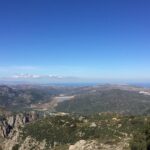
Aposelemis Dam is a short stop, but it’s the kind of place that gives you a photo plus a story. You get scenic views of Crete’s largest water reservoir, and the interesting detail is the partially submerged village of Sfendyli—visible when water levels are low.
Why I like this stop for the first stretch of the day: it breaks up the early driving. It’s also a reminder that Crete isn’t only ruins. You’re seeing modern infrastructure tied to local life, and the “sometimes you can see it” village detail makes it feel less generic.
Time on the ground is only about 15 minutes, so think of it as a quick reset and a sharp viewpoint, not a long wander.
Stop 2: Avdou olive oil factory tour and tastings
Next you head to a working olive oil operation in Avdou: Assargiotakis Yannis Olive Oil S.M.P.C. This is one of those stops that’s equal parts education and pleasure. You’ll watch how olives move from harvesting and pressing through to bottling, and you’ll get guided tastings of multiple oils.
This is the kind of cultural stop that pays off later. Once you’ve tasted different olive oils, you start noticing flavors and quality differences when you eat at a taverna. The tastings are included, and the tour is about 45 minutes, so it’s not a time sink.
If you’re picky about food, this is a great place to slow down. If you’re not into food stuff, you’ll still likely enjoy it because it’s practical, visual, and easy to ask questions about.
Zeus’ Cave: what to expect and how to be ready
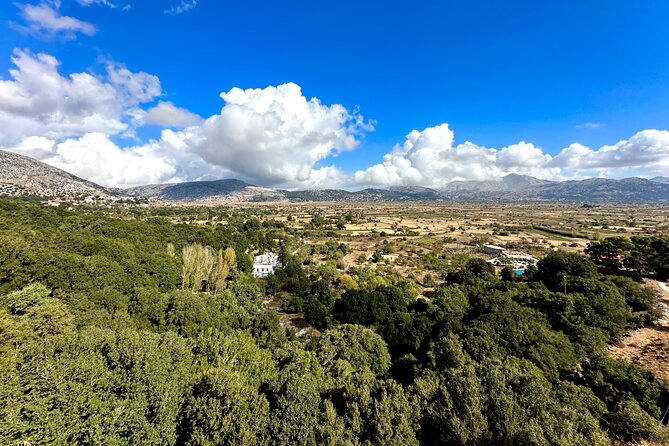
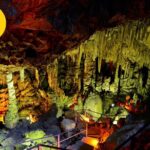
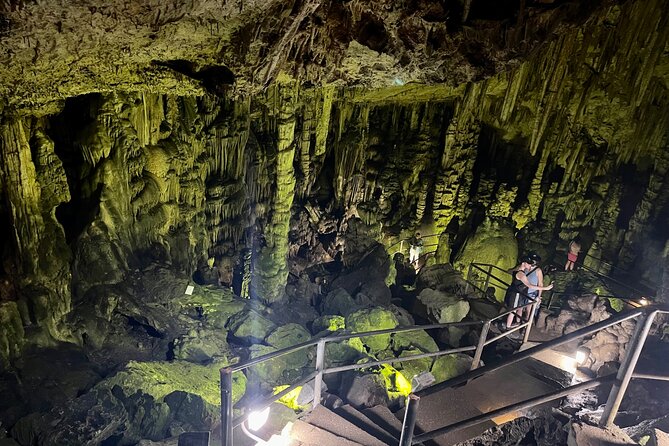
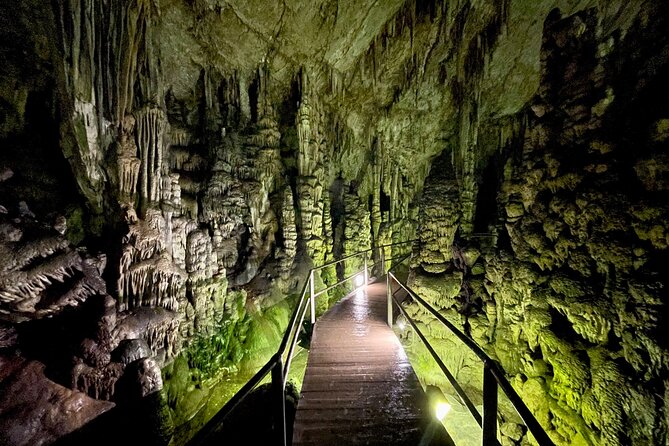
This tour’s theme includes Zeus’ territory, and Zeus’ Cave is highlighted as a key ancient experience. The details you need are comfort and footwear. Reviews mention you climb up to the entrance and then go down into the cave, so good shoes are a must.
Once you’re inside, you should expect a cooler environment and a real sense of going underground. Even if you’re not a hardcore spelunker, it’s the kind of stop that feels memorable because it’s active, not just a viewpoint.
One more thing: caves can be subject to day-to-day conditions. If you’re going during a busy season, you’ll be smart to ask your host what to do if access is affected, so you can adjust plans without stress.


Stop 3: Lasithi Plateau windmills for old-school power
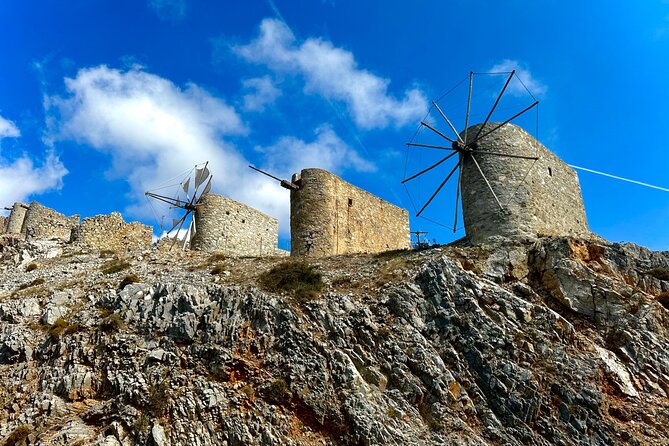
On the Lasithi Plateau, you’ll spend time at the Windmills of Lassithi Plateau—19th-century windmills with cylindrical shapes and wooden sails. Historically, they were used for grinding grain, which connects directly to the plateau’s farming life.
Time here is around 20 minutes, so it’s not about hiking to every corner. It’s about getting a clear look at these structures, then soaking in plateau views. I’d treat it like a quick “set the scene” stop before you go deeper into the highlands.
If you’re a photographer, this stop is an easy win because windmills give you strong shapes against wide sky and fields.
Stop 4: Vidiani Monastery and the natural history museum
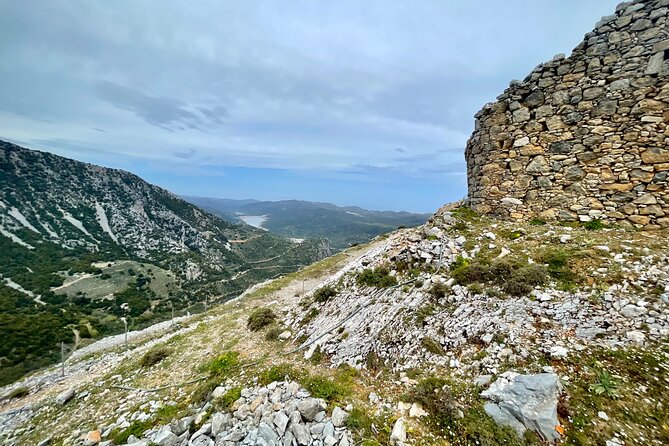
Vidiani Monastery is a peaceful change of pace in the middle of a very full day. You’ll see two churches: one dedicated to Saint Charalambos, and another older church with historic significance. It’s the kind of place where you can slow your head down and reset your pace.
The visit also includes a small Museum of Natural History. It has a collection of local stuffed animals native to the plateau, which is unexpectedly interesting if you like biodiversity or just want something different from the usual “big-ticket” sites. And around the grounds, chickens and ducks roam freely, which gives the monastery a warm, rural feel.
The stop is about 30 minutes, so you can take it in calmly without feeling dragged. It’s also a nice break if your knees and feet are already thinking about tomorrow.
Stop 5: Lassithi Plateau time, villages, and choices
After the windmills and monastery, you get about 2 hours on the Lassithi Plateau itself. This is where the day shifts from fixed “look here” stops into slower exploration.
You’ll have options like visiting traditional villages with stone architecture, tasting local food, or choosing between a cave visit or a scenic path hike with mountain and valley views. You don’t have to be a serious hiker to enjoy it, but you should be ready for some uneven ground and stairs depending on the village streets.
This is also where the day earns its title Old Villages. The plateau isn’t just a backdrop. It’s where you see how people live and farm in a highland setting.
Stop 6: Krasi’s 2,400-year-old Platanus tree
In Krasi, you’ll meet the famous Platanus tree, estimated to be around 2,400 years old. It’s considered the oldest of its kind on the island, and it matters because it’s more than a landmark—it’s part of village rhythm. The big canopy provides shade, and the tree functions like a natural meeting point.
This stop is short (about 10 minutes), but it’s the kind that makes you feel time differently. It’s one of those moments when you see something living that’s been there for generations, not just “preserved for tourists.”
It’s also an easy stop for families because you can see it without committing to long walking.
Stop 7: Mochos village lanes and Byzantine art
Then you’ll head to Mochos, a village in the Lasithi region backed by the Dikti Mountains. Mochos is known for narrow, winding streets and traditional stone houses, which makes it enjoyable to simply walk at a slow pace.
Cultural highlights include Byzantine churches decorated with frescoes, plus a lively village square. Festivals celebrate Cretan music and cuisine, though that’s more seasonal. Either way, the village atmosphere tends to be warm and human-scale.
This stop is about 30 minutes. It’s enough time to pick a couple streets, see the churches from the outside, and enjoy the views over olive groves and vineyards.
Stop 8: Knossos Palace visit (and why timing matters)
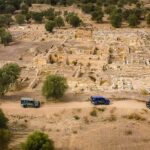
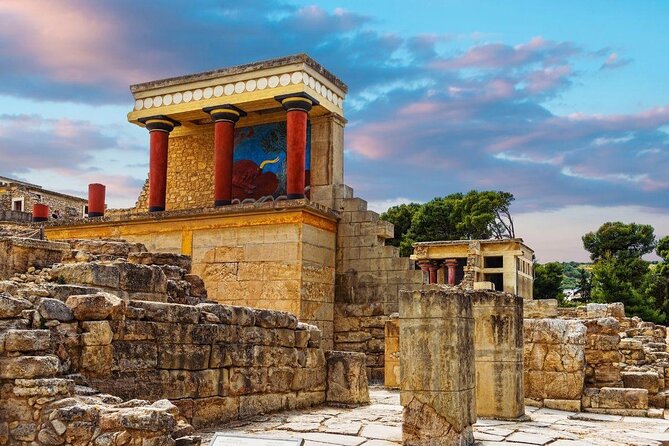
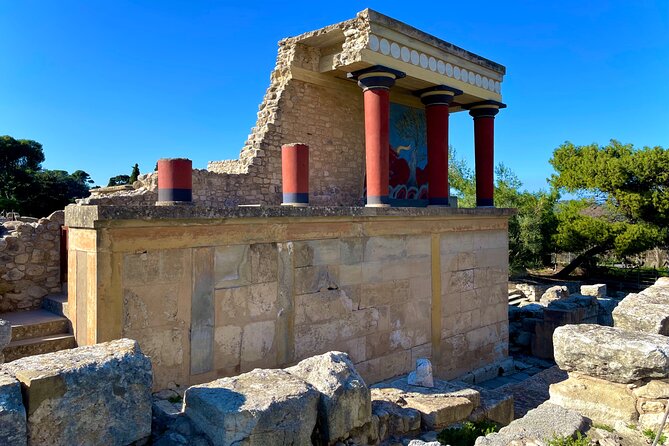
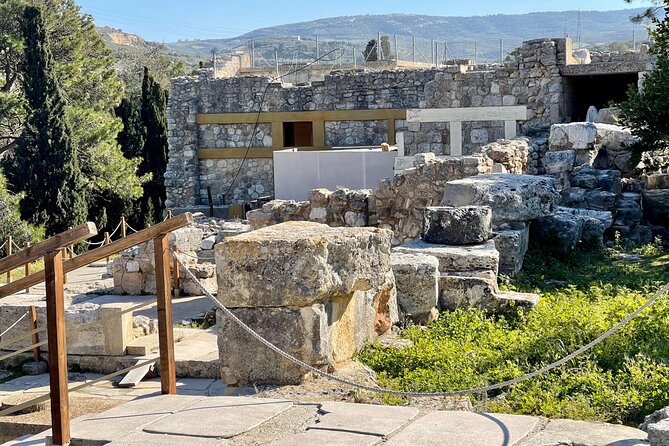
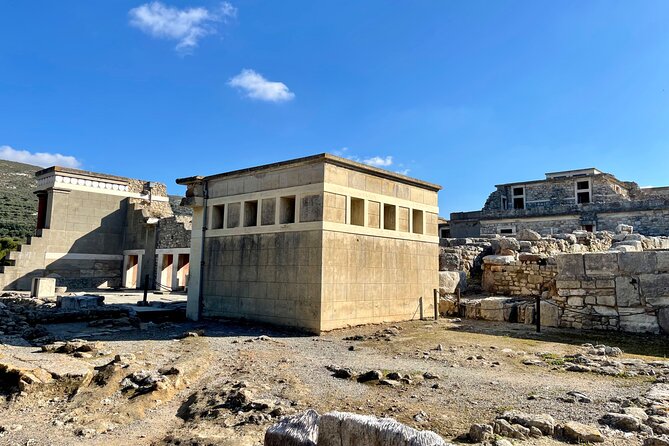
The day ends at the Palace of Knossos, one of the most important sites of Minoan antiquity. You’ll have about 1 hour 15 minutes inside, and it’s the portion most people mean when they picture Crete’s ancient story.
Knossos is famous for its labyrinth layout, architecture, and frescoes. If you want the best experience with limited time, I’d suggest scanning the plan quickly on arrival, then choosing a few key areas to focus on rather than trying to “see everything.”
Here’s the practical caution: since this tour’s driver-host isn’t described as an on-site licensed archaeological guide, you might not get a deep, site-by-site narration once you’re inside. Some people handle that by hiring an official guide onsite. If you care a lot about the myths, politics, and daily life behind the ruins, this is the one place where spending extra for a specialist guide can be worth it.
Who this private day suits best
This tour is a great fit if you want a one-day overview of Crete’s variety: water history at Aposelemis Dam, food culture through olive oil tastings, highland life on the Lasithi Plateau, and two major ancient anchors with Zeus’ Cave and Knossos.
It’s also ideal for families and mixed ages, mainly because you’re not committing to long hikes across multiple locations. Most stops are time-boxed. Add good shoes for Zeus’ Cave, and you should be set.
If you’re the type who loves long explanations at every site and expects a licensed archaeologist walking you through Knossos room by room, you’ll likely want to plan for an onsite guide at Knossos. If you’re happy with stories and context on the drive plus a self-guided ruin visit, this day is a strong choice.
How to get the most out of it (without turning it into homework)
A day this packed runs best when you decide your priorities early. If Knossos is your main goal, spend your energy there: take your time with the layout, and don’t rush photos. If Zeus’ Cave is your top pick, treat footwear and pacing as your win—slow down on the way up and let your body adjust before you head down.
For the middle of the day, embrace the “treat your senses” stops. Olive oil tastings and village streets are where you’ll remember the day as Crete, not just as a checklist.
And if your host offers suggestions for where to eat, take them. One review highlights a restaurant recommendation: Paradosiaki Taverna Xylouris. Even if you choose a different place, that’s the mindset to use—eat local, simple, and timed to your energy.
Final call: should you book this private Crete adventure?
Yes, if you want a comfortable, private, high-variety day that connects myth, farming, food, and village life, and you’re happy to enjoy Knossos with a bit of self-guided curiosity. The value is strongest when you’re traveling with up to 4 people, since the group price spreads out.
I’d think twice if your top priority is maximum on-site interpretation inside archaeological ruins, because the day leans more toward driver-host context than licensed site guiding. In that case, either budget for an official Knossos guide or pick a different tour format.
If you want a single “first Crete day” that feels like you’re getting the island’s real rhythms in one go, this one is worth considering.
FAQ
How long is the private tour?
It runs about 7 to 8 hours.
Is pickup included from Heraklion?
Yes. Personal pick-up and drop-off are included, with time adjusted flexibly.
Do I need to buy Knossos tickets?
Yes. Knossos entrance is not included and is listed at 20€ per person.
Are the other stops included or free?
Aposelemis Dam, the windmills, Lassithi Plateau, the Platanus tree, and Mochos are listed as free stops. The olive oil factory tour includes tastings, and Vidiani Monastery is listed as included.
What should I wear for Zeus’ Cave?
Bring good shoes. You’ll climb up to the entrance and then go down into the cave.
Is this really private for my group?
Yes. It’s described as a private tour/activity with only your group participating, up to 4 people.