REVIEW · NAPLES
Herculaneum Private Tour with an Archaeologist
Book on Viator →Operated by Askos Tours · Bookable on Viator
Streets of Herculaneum still feel lived-in. This private, archaeologist-led walk in Ercolano focuses you fast on what matters, with your guide meeting you outside the red ticket office building and leading you through major stops inside the ruins. I love the personal guide setup, which makes it easier to ask questions and actually connect the buildings to real daily life.
I also like the structured, family-friendly pace: about 10 minutes at each highlight, so you cover a lot of ground in roughly two hours without turning it into a marathon. One thing to consider: you’ll need to budget for the Herculaneum entrance ticket (16 euros adult; 2 euros for EU citizens age 18–25), and there’s an important reality check—one review flagged that the advertised archaeologist role wasn’t always met, so it’s smart to confirm credentials when you book.
In This Review
- Key Highlights to Know Before You Go
- Herculaneum’s “Lost City” Feeling—And Why This Tour Works
- Price and Tickets: What $178.38 Really Includes
- Where the Tour Starts (Via dei Papiri Ercolanesi) and How to Get Ready
- The Itinerary: 11 Stops in About Two Hours
- Stop 1: College of the Augustales
- Stop 2: House of the Skeleton
- Stop 3: Casa del Rilievo di Telefo (Relief of Telephus)
- Stop 4: Partem Domus lignea – Casa del Tramezzo di Legno (Wooden Partition)
- Stop 5: La Terrazza di M. Nonio Balbo
- Stop 6: House of the Black Salon (of Nero)
- Stop 7: Casa Sannitica (Samnitic House)
- Stop 8: Central Thermae
- Stop 9: Casa del Bel Cortile (Fine Courtyard)
- Stop 10: House of the Grand Portal
- Stop 11: House of the Deer
- What Makes the Right Guide Matter Here (Mena, Lucio, Michele, Antonella…)
- Timing Tips: Heat, Comfort, and Getting the Most from 2 Hours
- Who This Private Tour Fits Best
- Should You Book This Herculaneum Private Tour with an Archaeologist?
- FAQ
- How long is the Herculaneum private tour with an archaeologist?
- How much does the tour cost?
- Is the Herculaneum entrance ticket included?
- Where do we meet the guide?
- Is this tour private?
- Is the tour offered in English?
- Is there luggage storage at the meeting point?
- What is the cancellation policy?
Key Highlights to Know Before You Go
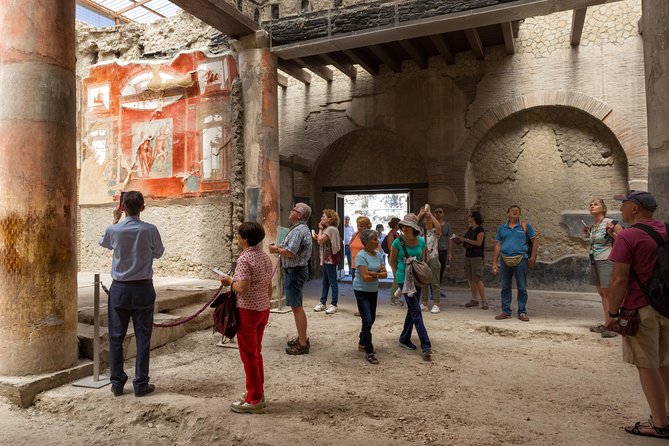
- Private guide flow: You get a one-group experience, so your questions don’t get lost in the crowd.
- Top sights in a tight loop: You’ll hit recognizable buildings like the Central Thermae and House of the Deer.
- Short stops, clear focus: Each stop is timed to keep the tour moving and manageable.
- English guidance: The experience runs in English, which matters for deeper explanations.
- Free luggage storage on-site: A free storage option at the meeting point helps you travel lighter.
- Often a best-of-Herculaneum pick: Many people rate it highly, especially when the guide’s archaeology background is strong.
Herculaneum’s “Lost City” Feeling—And Why This Tour Works
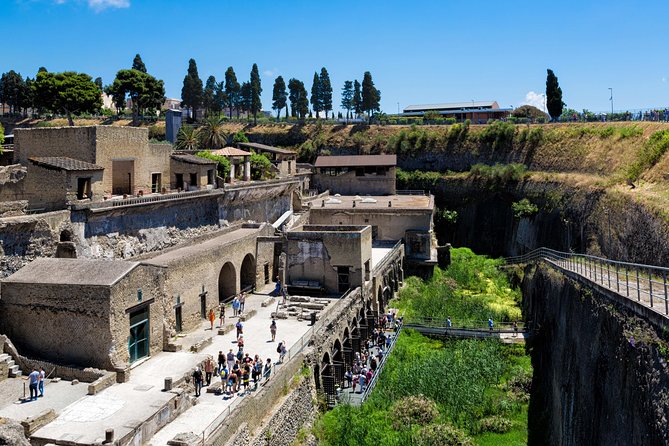
Herculaneum is special because you’re not just looking at ruins. You’re walking through a whole slice of first-century city life that survived better than many other sites. That means the guide’s job is crucial: with the right context, plastered walls, carved scenes, and bath layouts become stories instead of just stone and names.
This tour is built for that kind of storytelling. It’s private, so you can move at a pace that fits your group, and the guide can point out details that most people miss when they’re left to their own devices. If you’ve ever walked through a museum and felt like you needed captions to connect everything, this is the fix.
Price-wise, it’s not a budget activity. At $178.38 per person for around two hours, you’re paying mostly for the guide and the private format. You’re also not paying for the site ticket inside that price—so your real total will include entry.
You can also read our reviews of more tours and experiences in Naples.


Price and Tickets: What $178.38 Really Includes
The tour cost is listed at $178.38 per person for an approximately 2-hour experience. It’s a private tour with guidance and assistance by an archaeologist guide, and it’s offered in English. What’s not included is just as important: Herculaneum entrance tickets, transportation, and food and drinks.
Here’s how to think about value. If you already know you want a guide to explain what you’re seeing—especially if you care about Roman domestic life and public spaces—then paying for a private archaeologist format can be worth it because it changes how you see the site. If you’re happy reading guide signs and doing a slower self-guided wander, you may decide it’s cheaper to go solo and spend that money elsewhere.
Also note the specific ticket pricing listed for the ruins:
- 16 euros for adult admission
- 2 euros for EU citizens age 18–25
So do the math early. If your group includes EU citizens in that range, the total can come down fast.
Where the Tour Starts (Via dei Papiri Ercolanesi) and How to Get Ready
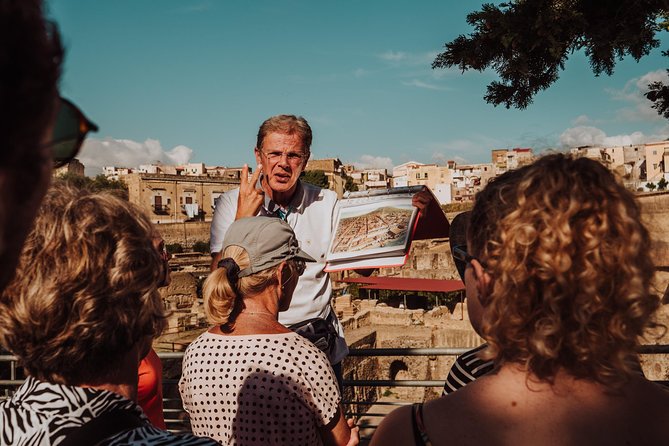
You meet your guide at Via dei Papiri Ercolanesi, 80056 Ercolano NA, Italy. The key detail is where exactly: you’ll meet the guide outside the ticket office of the archaeological site, in the red building.
That location matters because Herculaneum can feel easy to “almost find”—until you’re standing in the wrong spot and the clock starts ticking. Coming with a clear visual target (the red ticket office) helps a lot.
Two practical bonuses are included with your day:
- Free luggage storage is available at the meeting point.
- Service animals are allowed, and the site is near public transportation.
If you’re traveling light, luggage storage may not matter much. If you’re juggling a day bag, camera kit, or shopping stops before/after, it’s a nice relief.
The Itinerary: 11 Stops in About Two Hours
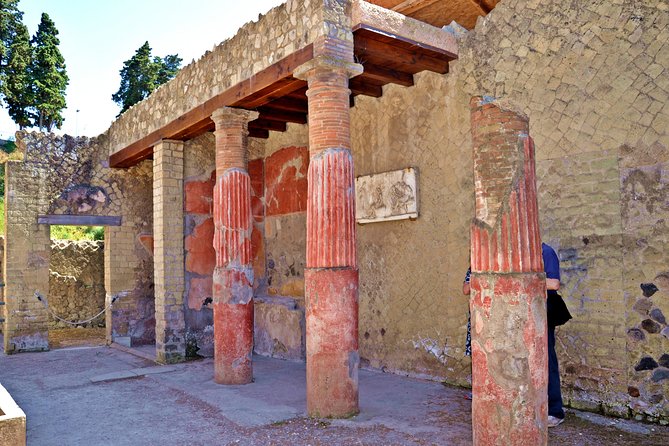
This tour runs through 11 different stops, with each one designed as a short, focused visit. The total time is about 2 hours, so think of it as a “best-sections” pass—excellent for first-timers and anyone who likes structure.
One small caution: because the stops are around 10 minutes each, people who want to stare at wall paintings for long stretches may feel a little rushed. The upside is that a good guide will use the time to point out the best things to look for, so you’re not just moving quickly—you’re moving with purpose.
Stop 1: College of the Augustales
Your first stop is the College of the Augustales. Even if you don’t come in with deep background, this is a smart starting point because it sets the public-social tone of Roman life. A guide can connect what you’re seeing to how religious and civic roles sat inside the city’s daily rhythm.
The visit is short (about 10 minutes), so your goal here is to get oriented. Once you understand the role of this space, the later domestic and bath stops land more clearly.


Stop 2: House of the Skeleton
Next up is the House of the Skeleton. The name alone tells you what you should watch for: the imagery and motifs that give this place its identity. Places like this tend to be memorable precisely because they don’t feel generic—there’s personality in the details.
This is a good moment to ask questions about Roman symbolism. If your guide has archaeology training, you’ll typically get answers that go beyond the obvious “it’s named after a feature” explanation.
Stop 3: Casa del Rilievo di Telefo (Relief of Telephus)
You’ll then visit the Casa del Rilievo di Telefo, tied to the Relief of Telephus. This stop is about seeing how Roman homes communicated with art and story. Even in a short visit, a guide can help you recognize what kind of scene it is and why it mattered to the people living there.
If you like mythology or want to see how stories showed up in everyday spaces, this stop often becomes a highlight.
Stop 4: Partem Domus lignea – Casa del Tramezzo di Legno (Wooden Partition)
At Partem Domus lignea – Casa del Tramezzo di Legno, you’re looking at a space known for a wooden partition feature. This is the kind of stop that helps you visualize Roman interior layouts—how rooms and zones may have been used and separated.
Because it’s quick, you’ll get the best results if you keep your eyes on how the space is described and why the architecture matters to daily movement through the home.
Stop 5: La Terrazza di M. Nonio Balbo
Then comes the terrace of M. Nonio Balbo. Terraces are often the “wait, that’s what they did with outdoor space?” moment in Herculaneum tours. It’s a reminder that these homes weren’t only indoor boxes—they were built for light, air, and social life when weather allowed.
If you’re visiting in warmer months, you’ll appreciate the pacing here. A short terrace stop can give your brain a break from constantly scanning walls.
Stop 6: House of the Black Salon (of Nero)
Next is the House of the Black Salon (of Nero). Darkly named rooms tend to attract attention fast, but the value of having an archaeologist guide is the interpretation: what makes this room notable, and how it fits into the larger household story.
This is one of those stops where photos can’t fully explain what you’re seeing. The guide’s job is to tell you what you should focus on while you’re standing there.
Stop 7: Casa Sannitica (Samnitic House)
You’ll visit the Casa Sannitica. Houses like this often bring out how regional identities and local traditions could show up in architecture. In a short timeframe, the guide can help connect the name to what you’re observing in the space and design language.
If your group enjoys comparisons—like how Herculaneum differs from Pompeii—this is a good place for that kind of context.
Stop 8: Central Thermae
Then it’s the Central Thermae, Herculaneum’s bath complex. Baths were social centers in Roman life, so this stop is great for “human” context: where people gathered, cleaned, talked, and spent time.
A good guide will help you read the space like a system—what parts connect to what, and how the layout supports different uses. Reviews for this overall style of tour often mention how guides make the site feel like real day-to-day routine, and the thermae are usually where that comes alive.
Stop 9: Casa del Bel Cortile (Fine Courtyard)
You’ll see the Casa del Bel Cortile, the fine courtyard. Courtyards are where Roman homes often feel most “alive” because they’re the light-and-space center. Even if you only get a brief look, your guide can explain what the courtyard meant for circulation and household life.
If you like architectural relationships—how doors, rooms, and open spaces relate—this stop pays off quickly.
Stop 10: House of the Grand Portal
Next: the House of the Grand Portal. Portals are one of those Roman design features that signal status, welcome, and the household’s public-facing mood. A guide can point out how the entry experience could shape first impressions.
Because this stop is short, you’ll get more out of it if you approach it like a “spot the design choices” exercise.
Stop 11: House of the Deer
Finally, you’ll visit the House of the Deer. Like the skeleton house, the name points you to the feature that made the home memorable. This closing stop is a strong way to end because you leave with a clear image in your head.
If your guide is especially good, you’ll finish the loop with a sense of how all the spaces connect—home life, art, architecture, and public activity—rather than a pile of unrelated highlights.
What Makes the Right Guide Matter Here (Mena, Lucio, Michele, Antonella…)
The best praise in the reviews isn’t about a fancy script. It’s about guide skill. People frequently single out archaeologists who can explain what you’re seeing and why it mattered, and who point out details you wouldn’t naturally notice.
Names that came up again and again include:
- Mena, praised for entertaining, human explanations and strong on-site detail
- Michele Lamberti, described as making the excavated city come alive
- Lucio / Dr. Luciano Leone, mentioned for passion, humor, and clear storytelling
- Antonella, highlighted as answering questions and explaining with expert depth
- Sara and Daniela, noted for strong historical grounding and making the site coherent
- Giuseppe and Luca, credited with seeing the best parts and handling the visit thoughtfully
- Jasmine, recognized for enthusiasm and clear structure
Here’s the practical takeaway for your booking decision: don’t just hope you get a great guide—verify the credential matches the title. One review specifically warned about being misled when the guide wasn’t actually a practicing archaeologist. If that matters to you, message or ask during booking so you know what you’re paying for.
Timing Tips: Heat, Comfort, and Getting the Most from 2 Hours
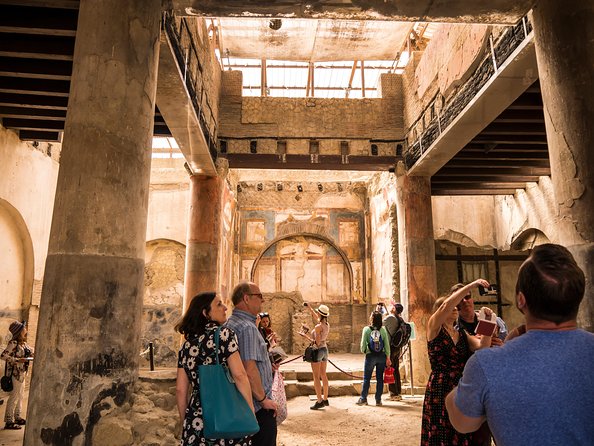
This tour lasts about two hours, and each stop is brief. That makes timing more important than you might think. In summer, midday can get brutally hot, and one review flat-out recommended taking an early tour to avoid the worst heat.
If you’re visiting in warmer months, I’d aim for the earliest time slot available. You’ll walk more comfortably and you’ll have an easier time staying focused through every stop.
Also bring a basic layer of common sense: water, sun protection, and comfortable shoes. Herculaneum is a ruin site, which means uneven ground and lots of time on your feet—even in a structured tour.
Who This Private Tour Fits Best
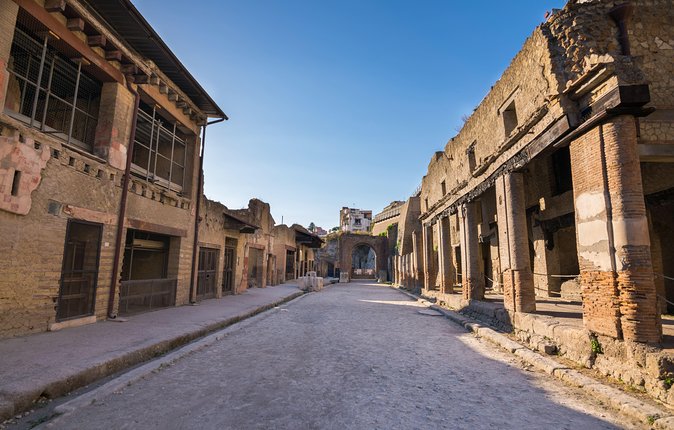
This is a strong match if you:
- Want a private experience rather than joining a busload
- Prefer guided meaning over sign-reading
- Are visiting Herculaneum for the first time and want a fast, complete overview
- Travel with kids or want a family-friendly pace (each stop is short)
- Like when a guide compares Herculaneum to Pompeii to sharpen the differences
It’s also a good fit if mobility is a concern, because one review mentioned a guide being considerate for limited mobility. That doesn’t replace checking your own needs, but it suggests the operator can handle real-life variation better than a rigid group schedule.
Should You Book This Herculaneum Private Tour with an Archaeologist?
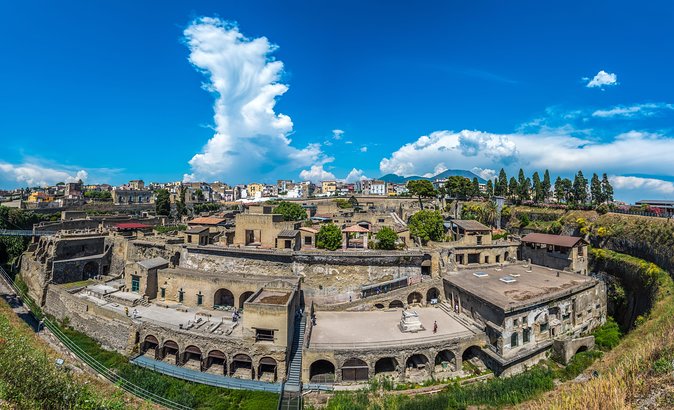
Yes—if you want to understand Herculaneum, not just photograph it. At $178.38 per person for a private, archaeologist-guided loop through major highlights, you’re paying for interpretation, pacing, and the ability to ask questions in real time.
Book it especially confidently if you care about archaeology-led explanations and if you’re the type who enjoys turning ruins into everyday stories—bath life, household design, and art with purpose.
I’d hesitate only if:
- You’re trying to minimize total cost because the entrance ticket isn’t included, or
- You specifically want a practicing archaeologist and want extra reassurance that the guide credential matches the advertised title.
If you fit the first group, this tour is one of the most efficient ways to see Herculaneum’s best sections with real context in a short window.
FAQ
How long is the Herculaneum private tour with an archaeologist?
It’s approximately 2 hours.
How much does the tour cost?
The price is listed as $178.38 per person.
Is the Herculaneum entrance ticket included?
No. Herculaneum entrance tickets are not included. Adult admission is 16 euros, and EU citizens age 18–25 admission is 2 euros.
Where do we meet the guide?
Meet outside the ticket office of the archaeological site, in the red building.
Is this tour private?
Yes. It’s a private tour/activity, and only your group participates.
Is the tour offered in English?
Yes, it’s offered in English.
Is there luggage storage at the meeting point?
Yes. There is free luggage storage at the meeting point.
What is the cancellation policy?
Free cancellation is available up to 24 hours in advance of the experience start time for a full refund.
If you tell me your travel month and group type (adults, family ages, early/late plans), I can suggest the best time slot strategy for weather and comfort.