REVIEW · ARCHAEOLOGICAL SITE OF HERCULANEUM
Herculaneum: Tickets & Tour with a Local Archaeologist
Book on GetYourGuide →Operated by Grand Tour Experience · Bookable on GetYourGuide
Herculaneum hits different because it’s so well preserved. On this 2-hour tour, you get skip-the-line access and a licensed archaeologist guide who helps you read the site like a real city, not a pile of stones. I love that the focus stays on what you can actually see here: villas, frescoes, mosaics, baths, and the eerie reality of human remains preserved in volcanic ash.
Two things I like a lot. First, the tour is guided by a licensed expert archaeologist, and you’ll get details most people miss—like the skeletons and what their locations suggest. Second, the preserved interiors and street-level layout make Herculaneum feel intimate, so your time doesn’t turn into a mad dash of quick stops.
One possible drawback: it’s a walking visit on an ancient site, so comfy shoes and water matter, and it’s not suitable for wheelchair users. Also, if your group is loud or your guide’s accent is thick, you may rely more on the provided headsets (they’re included when groups exceed 11).
In This Review
- Key points to know before you go
- Herculaneum vs. Pompeii: why this site feels more human
- Getting in smoothly at Biglietteria Ercolano
- What an archaeologist guide actually adds (and why your eyes follow better)
- Casa dei Cervi: walking into an ancient neighborhood home
- Casa di Nettuno ed Anfitrite: myth, art, and the house as a statement
- Sacellum of the Augustales: why small spaces deserve attention
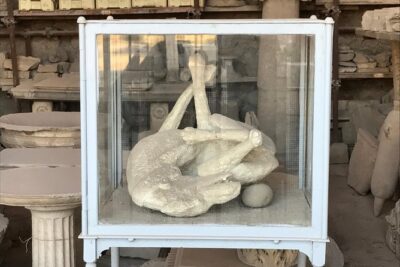
- House of Skeletons: the preserved human side of the eruption
- Casa dell’Albergo and the feel of everyday Herculaneum
- How long is 2 hours really, and who this suits best?
- Price and value: what $58 buys you here
- Should you book? My practical take
- FAQ
- Where does the tour start?
- How much time do I get on site?
- What is included in the ticket price?
- What languages are available for the live guide?
- Do I need to bring anything?
- Is the tour wheelchair accessible?
- How much does it cost?
Key points to know before you go
- Skip-the-line entry so you lose less time waiting and more time looking carefully
- Licensed archaeologist guide who explains what you’re seeing and why it matters
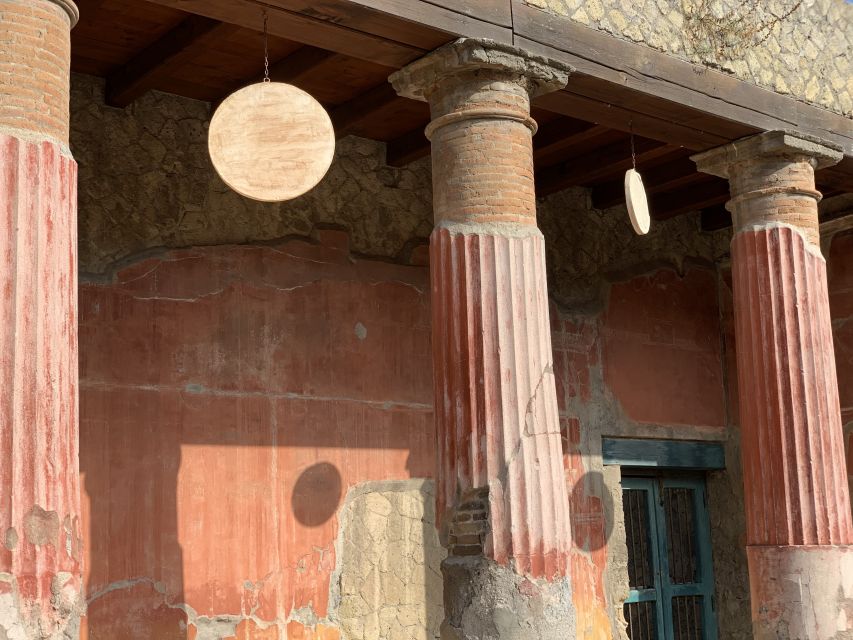
- Exceptional preservation of villas, frescoes, mosaics, and even objects in the overall story of the eruption
- House of Skeletons with preserved remains that add emotional weight to the history
- Headsets included if the group is larger than 11, which helps you catch every detail
- Biglietteria Ercolano meeting point with a simple 2-hour structure that fits well into a Pompeii day
Herculaneum vs. Pompeii: why this site feels more human
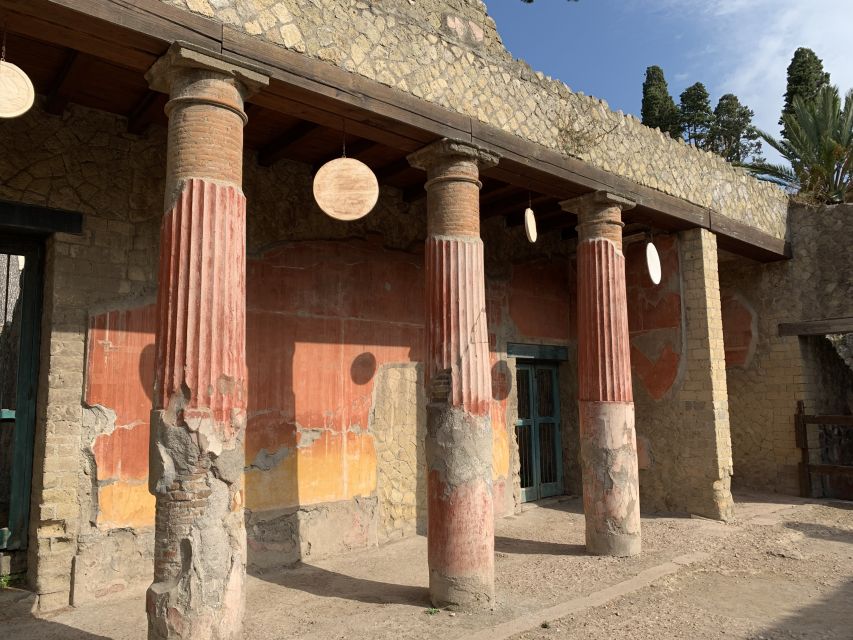
If Pompeii is loud and sprawling, Herculaneum is smaller and closer. Here, the volcanic conditions helped preserve more than just walls. The result is that you’re often looking at buildings and rooms with enough intact structure that you can picture daily routines—stairs, doorways, and household spaces—without needing a graphic designer.
What I find especially powerful is how personal the site feels. You’re not just seeing “ruins”; you’re seeing a town frozen in the middle of life. The tour leans into that by guiding you through houses, public baths, and the spaces where people actually worked, shopped, bathed, and lived.
And yes, there’s a reason your guide spends time on the harder moments. The preservation includes skeletons still resting where they fell, and that changes the tone in a way no photo caption can manage.
You can also read our reviews of more tours and experiences in Archaeological Site Of Herculaneum.
Getting in smoothly at Biglietteria Ercolano
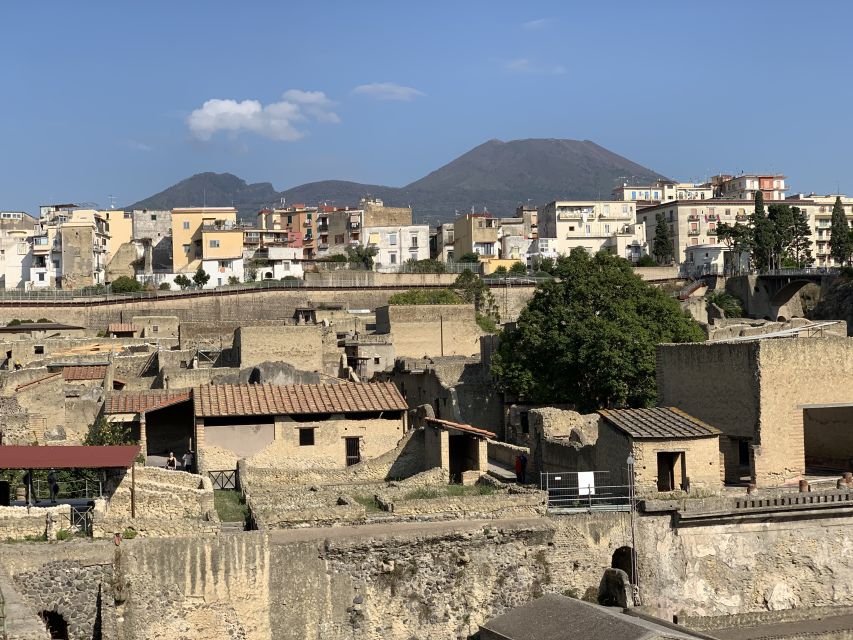
Your tour starts at Biglietteria Ercolano. Plan to arrive about 10 minutes early so you can check in without stress and get with your group before you enter.
This matters because skip-the-line access can be wasted if you show up late and your group has to wait. Once you’re inside, the pace is built for a real guided walk, not a quick museum-style scan.
Bring simple essentials. You’ll want water, and bring your passport or ID card since it’s required. If you’re doing this on the same day as other sites around Naples, treat this as your “quality time” slot, not a sprint.
What an archaeologist guide actually adds (and why your eyes follow better)
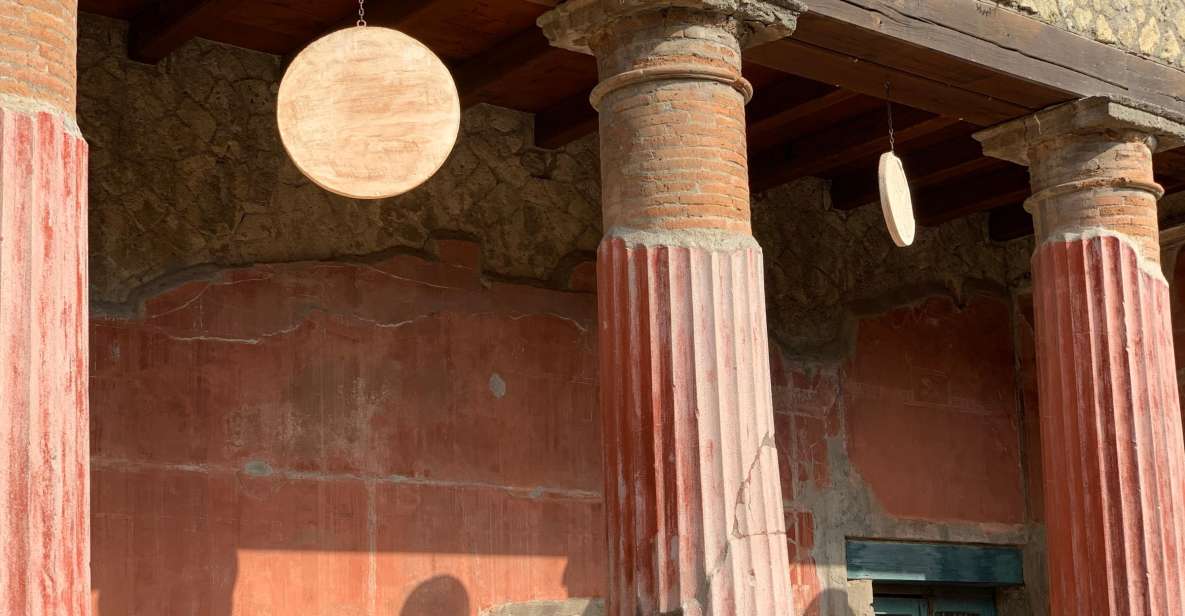
A licensed expert archaeologist guide does more than talk. They point. They connect. They help you understand what you’re looking at in the moment, so you leave with more than pretty walls.
You’ll likely be with guides such as Raffaele (noted as PhD-trained in archaeology in past tours), Dr Rafaelle Romano, Carlo, Riccardo, Giovanni, Livio, Enrica/Erica, or Mio—all names that have shown up in past experiences. Regardless of who leads your group, the best pattern is the same: clear explanations, fast answers to questions, and a strong sense of what matters in each room and corner.
Even the delivery style seems to be a big part of why people rate this tour so highly. In some groups, guides have used visual aids like a book showing what structures looked like before the eruption. That kind of context can be the difference between seeing a damaged wall and understanding the whole idea of the space.
One practical note: headsets are included if your group exceeds 11 people. That’s a smart add-on here because the site can be noisy at times, and you don’t want to miss the small observations your guide is making.
Casa dei Cervi: walking into an ancient neighborhood home
One of your stops is Casa dei Cervi (House of the Deer). This is where the tour really shows you what makes Herculaneum different: the interiors and decoration are often readable at human scale. You’re not just looking at a façade; you’re trying to understand how rooms worked together in everyday life.
Guided visits here tend to focus on “reading” details: how the layout supports movement through the house, how decoration signals status, and what frescoes and mosaics reveal about taste and wealth. Even if you don’t know Latin or Roman art history, the guide helps you see patterns and purpose.
Possible drawback? Houses can be visually intense. If you rush, you’ll miss the way the guide links the artwork to daily life. Keep your pace calm, and let the guide direct your attention—this is one of those tours where listening matters as much as looking.
Casa di Nettuno ed Anfitrite: myth, art, and the house as a statement
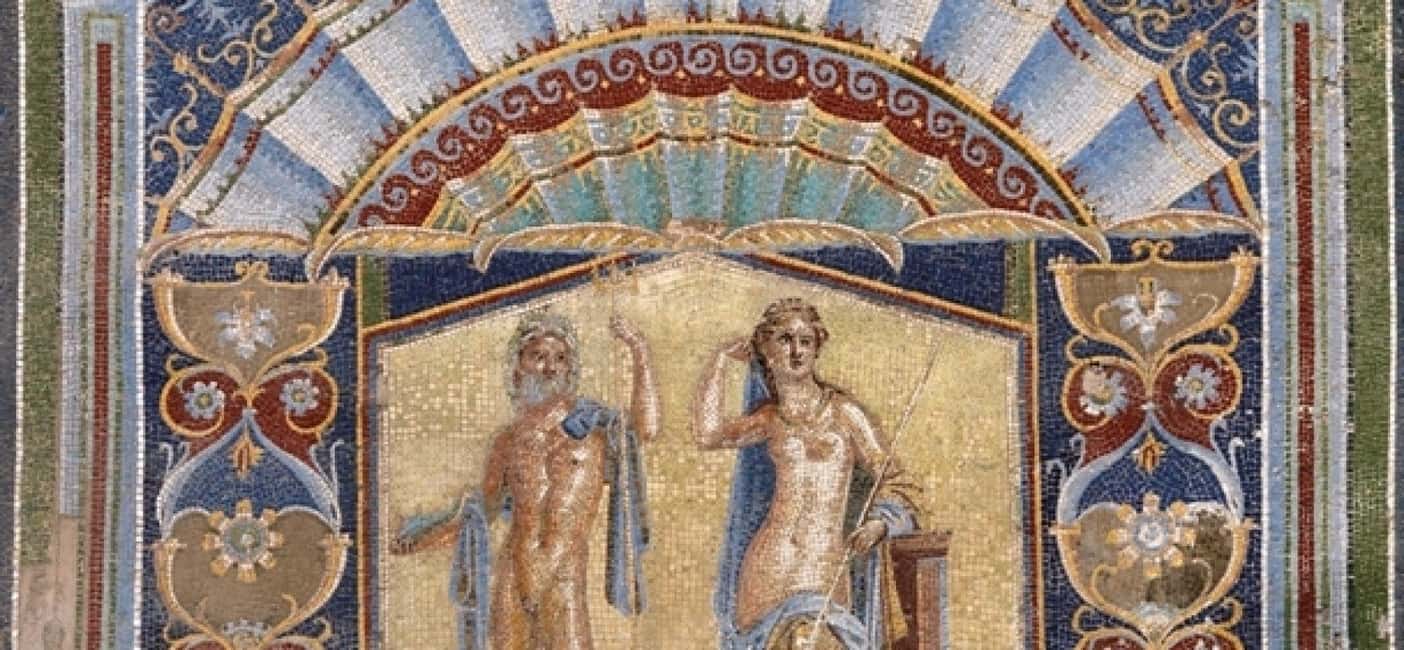
Next you’ll visit Casa di Nettuno ed Anfitrite. The name alone signals the tone: this is a home with mythological themes, and the tour approach is about helping you connect the subject matter to what it meant to the people inside the house.
This is also one of the places where you’ll feel the value of an expert guide. Frescoes and mosaics can look “nice” in a passing glance. With a licensed archaeologist guiding you, you start noticing things like composition choices, placement in relation to rooms, and how the artwork functions as part of the home’s identity.
If you’re the type who likes to ask questions—How would someone move through here? What would guests notice first?—this is a strong stop for that. The tour structure gives time to answer, not just rush on.
Sacellum of the Augustales: why small spaces deserve attention
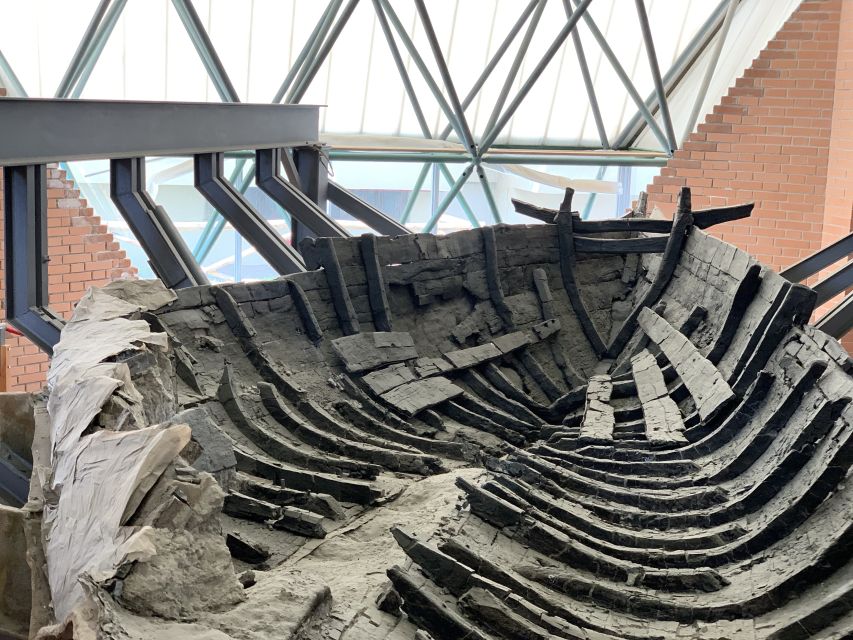
You’ll also step into the Sacellum of the Augustales. Even though this kind of site is smaller than a villa complex, it often carries big meaning because religious and civic spaces reflect how communities organized themselves.
In practice, the guide’s job here is to slow you down and make you look. You’ll learn to notice how architecture supports ritual use: where people would stand, how the space is arranged, and what the setting tells you about local life.
This stop is a good reminder that Herculaneum isn’t only about rich homes. It’s also about the town’s shared structures. If you’re hoping for a tour that covers more than “pretty rooms,” this is the kind of stop that earns its place.
House of Skeletons: the preserved human side of the eruption
The emotional center of the tour is the House of Skeletons. This is where the site stops being abstract history and becomes a human story. You’re guided to see the remains where they were preserved, and the guide’s explanation helps you understand what the burial conditions mean.
You’ll hear about the eruption of 79 AD and why Herculaneum’s burial was different from what happened in other Roman sites. The preservation here is part of the reason the remains feel so immediate. The guide also helps you handle the moment with respect—something many visitors remember as a contrast to the more casual photo culture that can show up elsewhere.
If you’re traveling with teens or kids, this can be a tough but meaningful stop. The tour format is built to support that with clear explanations rather than shock-value storytelling.
On the practical side, linger without blocking. If you’re in a larger group, this is exactly where headsets help you keep up even when the area gets busy.
Casa dell’Albergo and the feel of everyday Herculaneum
Later you’ll visit Casa dell’Albergo, Herculaneum. From there, the tour continues through the Archaeological Site of Herculaneum, including time for a photo stop and guided exploration.
This is where the “daily life” angle becomes real. In the more communal parts of the town—like the public baths—you’ll start thinking about routines: how water worked, how people gathered, and how engineering supported city life. The tour highlights ancient water systems and the logic behind the baths.
You may also be asked to imagine the soundscape of the past: conversation in shops, movement through public spaces, and the rhythm of a seaside Roman town. It’s not fantasy. The guide anchors the story to what remains in front of you.
One more advantage of Herculaneum’s layout is that it feels easier to navigate than you might expect. People doing this at a range of ages have described it as manageable in the time window, as long as you’re prepared for stone surfaces and some uneven walking.
How long is 2 hours really, and who this suits best?
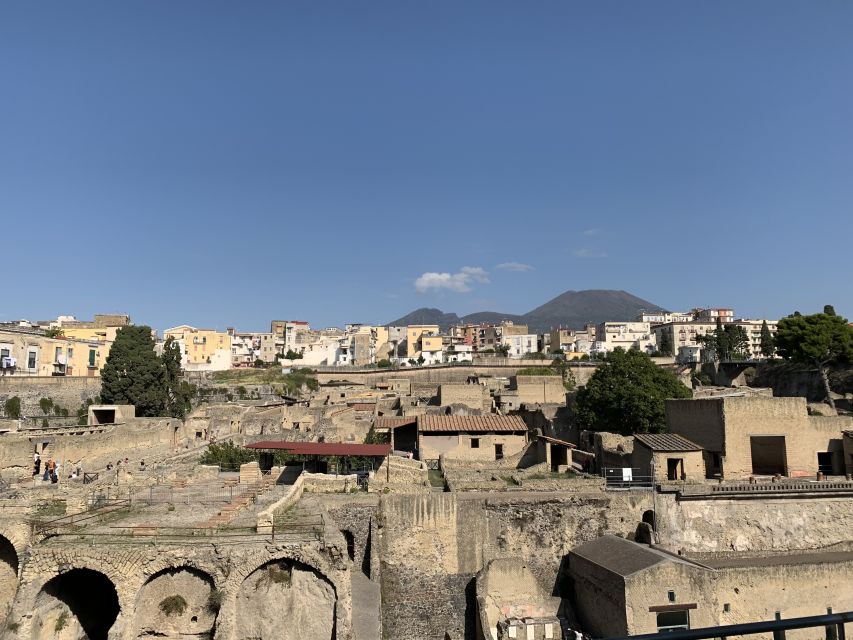
Two hours sounds short until you’re standing in places like preserved villas and bath complexes. In this tour, two hours is built to be realistic: you get a guided route with multiple key stops, and you’re not stuck trying to self-navigate while also reading signage in an unfamiliar language.
This works well if you’re:
- doing a Pompeii day and want a different feel without doubling the walking time
- history lovers who want more than a general audio guide
- families who need structure and explanations that connect objects to life
It may be less ideal if you want a slow, sit-down style museum pace. The tour is a walking experience, and the time is used for guided stops. Reviews also hint that pacing can vary a bit depending on group size, so if you’re expecting maximum “speed viewing,” keep a flexible mindset.
Price and value: what $58 buys you here
At $58 per person for a 2-hour guided visit, the value is strongest when you consider what’s included:
- Skip-the-line entrance tickets
- a guided tour with a licensed guide
- headsets if the group is larger than 11
Skip-the-line matters here. Herculaneum isn’t just another roadside stop; the experience depends on your ability to get in and start looking right away. And the licensed archaeologist angle is the real differentiator. Without that guidance, you may notice the beauty of frescoes and mosaics, but you’ll likely miss what they mean and how the city functioned.
What’s not included is also clear: food and drinks, and there’s no hotel pickup or drop-off. So factor in how you’ll handle hydration and meals around your Pompeii or Naples schedule. If you’re budgeting for a smooth day, plan a snack break before or after rather than expecting it during the tour.
Should you book? My practical take
I’d book this if you want Herculaneum to feel like a lived-in place, not just a photoshoot stop. The combination of licensed archaeologist guidance plus the House of Skeletons and preserved rooms makes it a standout way to understand why Herculaneum is so famous.
I’d think twice if you:
- need a visit that’s very low-walking, since it’s not suitable for wheelchair users and electric wheelchairs aren’t allowed
- get easily frustrated by loud group environments, since headsets help but you should still expect an active walking pace
- are sensitive to language differences, because guides work in multiple languages and accents can affect comprehension
If you’re already planning Pompeii, this is a strong pairing. Herculaneum gives you a more intimate, more intact picture of Roman life—especially once your guide starts pointing out details you’d otherwise overlook.
FAQ
Where does the tour start?
The meeting point is Biglietteria Ercolano. Arrive about 10 minutes before the tour start time.
How much time do I get on site?
The tour duration is 2 hours.
What is included in the ticket price?
You get skip-the-line entrance tickets, a guided tour with a licensed guide, and headsets if the group exceeds 11 people.
What languages are available for the live guide?
The live guide is available in Spanish, English, Italian, and French.
Do I need to bring anything?
Bring passport or ID and water.
Is the tour wheelchair accessible?
No. It is not suitable for wheelchair users, and electric wheelchairs are not allowed.
How much does it cost?
The price is $58 per person.