REVIEW · POMPEII
Ancient Pompei in the afternoon
Book on Viator →Operated by Glauco Messina · Bookable on Viator
Pompeii hits differently when the day cools down. This afternoon tour lets you walk the excavated streets when crowds thin and the ruins feel easier to take in, with a guide who ties the big picture to what you’re seeing. I like that you get a small-group experience with a real focus on explaining what happened to Pompeii, not just pointing at stones.
Two things I’d call out fast: the timing (cooler, less packed) and the way your guide, Glauco Messina, keeps the story moving while still adjusting to the people in front of him. One consideration: tickets aren’t included, so you’ll want to plan for admission before you meet.
In This Review
- Key Highlights You’ll Feel on This Afternoon Route
- Why Pompeii Feels Better After the Morning Rush
- Meeting at Piazza Immacolata and Walking Out from Piazza Porta Marina
- Tickets and the Best Value Math (What You Pay vs. What You Get)
- The Pompeii Archaeological Park Route: What You’ll Actually See
- Gymnasium: The Athletic and Social Life
- Amphitheater: Power, Entertainment, and Scale
- Abundance Road: Streets That Make the City Feel Real
- Tavern and Thermopolium: Eating, Drinking, and Street Commerce
- Public Spa: Hygiene, Status, and Relaxation
- The Forum: Where Everything Converged
- The Guide Factor: Glauco Messina and Keeping People Engaged
- Group Size That Actually Improves Your Experience
- When This Afternoon Tour Makes the Most Sense
- Quick Practical Notes So Your Afternoon Goes Smooth
- Should You Book This Afternoon Pompeii Tour?
- FAQ
- What time does the tour start?
- How long does the Ancient Pompeii afternoon experience take?
- Where do I meet the guide?
- Where does the tour end?
- Are admission tickets included in the price?
- What group size should I expect?
- Is the tour in English, and is it accessible for most people?
Key Highlights You’ll Feel on This Afternoon Route
- Fewer people to compete with for views, photos, and guide attention
- Small-group size (maximum 10), so questions actually get answered
- A focused walking circuit through major Pompeii zones like the Forum and amphitheater
- Daily-life stops such as a thermopolium, tavern area, and public spa themes
- A guide who adapts the explanation to kids and adults, including named guide Glauco
Why Pompeii Feels Better After the Morning Rush
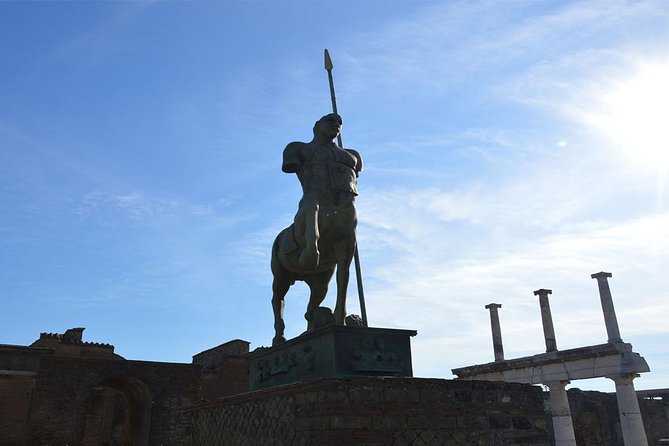
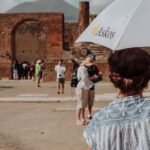
Pompeii can be overwhelming if you arrive when tour buses are still exhaling. Doing it in the afternoon helps in a practical way: the site tends to be less crowded, so you spend less time shuffling and more time looking closely. And if you’re sensitive to heat, an afternoon slot is often the difference between enjoying details and just trying to survive the day.
This tour is designed around that “cooler and calmer” rhythm. You’re not stuck staring at crowds in your peripheral vision, and your guide gets space to explain the ruins clearly without sounding like he’s competing with the whole park.
You can also read our reviews of more tours and experiences in Pompeii.

Meeting at Piazza Immacolata and Walking Out from Piazza Porta Marina
Your start point is Piazza Immacolata (80045 Pompei NA), and the experience ends at Piazza Porta Marina (80045 Pompei NA). That’s a helpful detail because it means you’re not walking in circles. You get a guided route through important areas, then your afternoon walk naturally finishes at another location.
The tour starts at 3:30 pm. If you’re flexible and you care about crowd levels and comfort, later afternoons tend to feel better—one of the recurring themes from the experience is that the later you go, the easier Pompeii can feel.
Also, it’s near public transportation, which matters in this part of Italy. Pompeii isn’t always simple to reach on your own, so choosing a tour with a straightforward meeting spot saves you time and stress.
Tickets and the Best Value Math (What You Pay vs. What You Get)
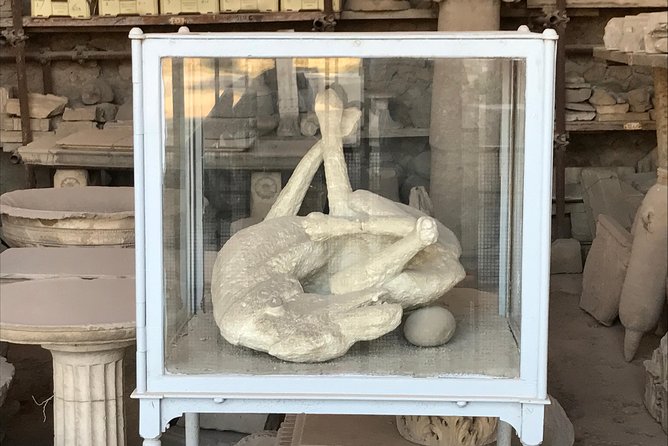
The guided portion is included, but admission tickets are not included. That affects value more than you might think.
Here’s the honest way to look at it: you’re paying for a guide-led, small-group interpretation of major ruins. If you were planning to buy tickets anyway, the cost starts to make sense because you’re getting someone to translate the site into a story—Gymnasium, amphitheater, roadways, and public spaces all connected into daily life. If you were hoping for a self-guided wander, this price may feel steep because the main “premium” is the guidance.
One more practical detail: the price is listed per group (up to 8), while the experience cap is a maximum of 10 travelers. Translation: it’s built for a smaller group experience, where you’re more likely to stay together and hear the explanation without constant turnover.
The Pompeii Archaeological Park Route: What You’ll Actually See
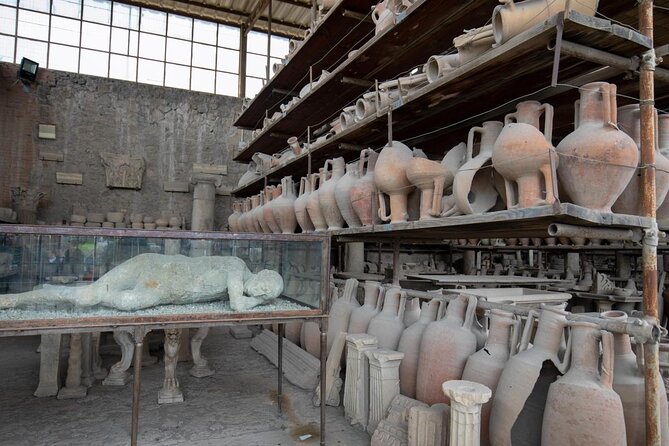
This is a guided walk through Pompeii’s Archaeological Park with stops that cover both public grandeur and street-level everyday life. The route includes the Gymnasium, Amphitheater, Abundance Road, Tavern, Thermopolium, Public Spa, and the Forum.
You’re not doing “every single corner” of Pompeii in one afternoon. Instead, the value is the way those stops work together—so you leave with a mental map of what kinds of places Pompeii had and how people used them.
Gymnasium: The Athletic and Social Life
The Gymnasium area helps you picture Pompeii as a lived-in Roman city, not just a disaster site. Even if you don’t know the Roman world well, this stop gives you an anchor: you’re looking at space designed for training and social routines.
The key benefit here is context. A guide can help you connect building purpose to daily behavior—who would visit, what it meant culturally, and how that routine fits into a broader city plan.


Amphitheater: Power, Entertainment, and Scale
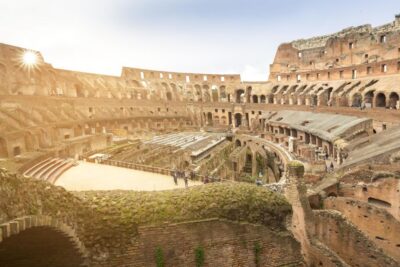
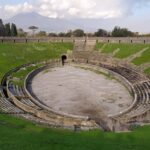
From the Gymnasium, you shift toward the Amphitheater—another place where the city showed off. This stop is often where people start to feel Pompeii’s emotional weight: entertainment, crowds, and public life all in one sightline.
The practical reason to include the amphitheater on this tour is that it’s a strong “anchor” feature. Once you understand what you’re looking at, the rest of the ruins feel less random. You’re not just looking at walls; you’re tracking functions.
Abundance Road: Streets That Make the City Feel Real
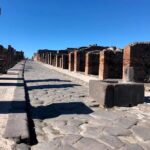
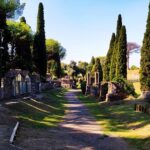
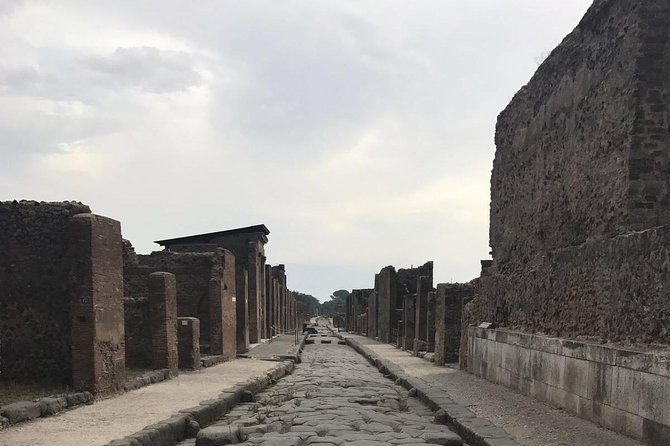
Abundance Road is the kind of stop that can be easy to skip if you’re rushing. It’s also exactly where a guided explanation pays off. Streets are how the city breathes. A good guide helps you understand why a road matters, how people moved, and what kinds of buildings lined it.
This is also the moment where timing helps. Afternoon light can make street-level ruins feel more legible than in the harsh midday glare, and fewer people means you can actually look down the road instead of stepping aside every minute.
Tavern and Thermopolium: Eating, Drinking, and Street Commerce
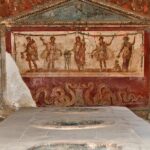
Tavern and thermopolium are the “daily life” core of this route. A thermopolium is essentially a street-side hot-food spot, and it’s the kind of detail that turns Pompeii from abstract into human-scale.
What I like about this stop in an afternoon tour is the pacing. After big public spaces like the amphitheater, you get a shift to something more relatable: quick meals, casual transactions, and routines that would have been part of a regular day.
And because the tour is guided, you’re less likely to miss the significance of these smaller areas.
Public Spa: Hygiene, Status, and Relaxation
Pompeii’s public spa themes bring you into a social zone where people gathered for routine comfort and conversation. Even if your interest is more modern than Roman, you can still grasp what a spa represents: everyday wellbeing and a reason to spend time with others.
This is also where the guide’s storytelling style matters. When the explanation is clear, you’ll see how public spaces reflected Roman values and how citizens used those spaces as part of city life.
The Forum: Where Everything Converged
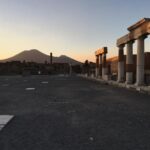
The Forum is the big finish. This is where civic power, everyday business, and public gathering overlap. If you remember just one section of the route, make it the Forum—because it ties together what you saw earlier.
The guide’s job here is to connect dots: how the entertainment and sports spaces relate to public authority, and how street life connects back to civic life. A small-group setting also helps; you get enough time to let the Forum land, rather than being dragged through while everyone else squeezes past.
The Guide Factor: Glauco Messina and Keeping People Engaged
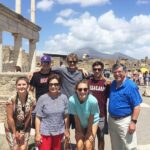
One of the standout themes from this experience is the guide, Glauco Messina. The big win isn’t just being “friendly.” It’s that the explanation stays understandable and engaging, including for kids.
If you’re traveling with teenagers—or you’ve got a younger crew who might otherwise tune out—this matters. A good Pompeii guide doesn’t just repeat facts. He connects what you see to why it mattered, and he can adjust the tone depending on the group.
I’d consider this a major part of the value of the tour. Pompeii ruins can feel like a lot of stone unless you have someone translating them into a story you can actually follow.
Group Size That Actually Improves Your Experience
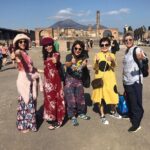
With a maximum of 10 travelers, the group size is small enough to feel personal. You’re not competing for attention in a crowd of hundreds, and you’re more likely to hear instructions clearly at each stop.
That intimate size also tends to help with flow. You can pause and look without the whole line being forced along immediately. And because the tour works as a route from Piazza Immacolata to Piazza Porta Marina, the group can keep moving without chaotic backtracking.
When This Afternoon Tour Makes the Most Sense
This tour fits best if you want:
- A guided overview that helps you understand Pompeii quickly
- An afternoon timing that typically feels less stressful than morning
- A small group experience that works for families, including kids
It may be less ideal if you’re the type who wants to wander fully on your own, linger for hours in one exact area, or plan to cover every remaining corner of the park. This tour is about an interpretive route, not a full “complete Pompeii” marathon.
Quick Practical Notes So Your Afternoon Goes Smooth
- Start time: 3:30 pm
- Duration: about 2 hours (the route focuses on key zones rather than the whole park)
- Language: English
- What’s included: guided tour
- What’s not included: tickets
- Meeting/end points: Piazza Immacolata to Piazza Porta Marina
- Getting there: near public transportation
- Service animals: allowed
- Participation: most travelers can participate
If you tend to run out of energy in the heat, still bring water and wear comfortable shoes. Afternoon can be cooler, but Pompeii involves steady walking on uneven surfaces.
Also, give yourself time to handle tickets. Since they’re not included, it’s smart to confirm how you’ll get admission so the tour start doesn’t become a scramble.
Should You Book This Afternoon Pompeii Tour?
Yes—if you want Pompeii with less stress and more meaning. The strongest reason to book is the afternoon timing combined with a small-group guided format and the guide’s ability to keep people engaged (including kids) without turning the tour into a lecture.
I’d book it especially if:
- You’re visiting during a busy period and you want to avoid peak crowd crush
- You’d rather understand what you’re seeing than just walk around
- You want a practical route through major areas like the Forum, amphitheater, and everyday-life stops
I’d hesitate if:
- You’re determined to explore the entire site on your own for maximum freedom
- You don’t want to deal with separate admission tickets
If your priority is a smart afternoon tour that helps you leave Pompeii with a clear mental picture, this one is a very solid choice.
FAQ
What time does the tour start?
The tour starts at 3:30 pm.
How long does the Ancient Pompeii afternoon experience take?
It runs for about 2 hours (approx.).
Where do I meet the guide?
You meet at Piazza Immacolata, 80045 Pompei NA, Italy.
Where does the tour end?
The experience ends at Piazza Porta Marina, 80045 Pompei NA, Italy.
Are admission tickets included in the price?
No. Tickets are not included, and you’ll need to arrange admission separately.
What group size should I expect?
It’s a small group experience with a maximum of 10 travelers.
Is the tour in English, and is it accessible for most people?
The tour is offered in English. Most travelers can participate, and it’s near public transportation; service animals are allowed.