REVIEW · VENICE
Learn to Row in the Venice Canals
Book on Viator →Operated by Venice On Board · Bookable on Viator
Rowing Venice is how you beat the sidewalk crowds. This hands-on lesson mixes traditional boat know-how with a calm canal route, taught by locals who actually keep the craft alive. You’ll be out on the water for about 90 minutes, then back to where you started.
I love that you’re not just riding—you’re learning. I also like the local, water-first perspective: you pass major spots like the Ghetto Ebraico and the Campo dei Mori from the canal, plus you practice real rowing technique instead of sitting still like a passenger.
The main thing to consider is that you’re learning outdoors on the water, so weather matters. If conditions are too poor, the experience can be moved or refunded, and you’ll want to dress for splashy, breezy canal air.
In This Review
- Key highlights worth booking for
- Why learning to row feels more Venetian than a gondola ride
- The boat-craft intro: what you learn before you start rowing
- Where you meet and how to plan your timing in Venice
- Your route through Venice’s quieter waterways: what each stop adds
- Chiesa della Madonna dell’Orto: the warm-up zone for canal rhythm
- Ghetto Ebraico: seeing history from the canal, not the sidewalk
- Fondamenta Dei Ormesini: the peaceful stretch where technique clicks
- Campo dei Mori: learning to handle the canal around real activity
- Casa del Tintoretto: closing with art history in the background
- The instructor makes or breaks it: local teachers and real technique
- Is it hard? What the rowing actually feels like for most people
- Price and value: why $95-ish can be a better deal than a gondola
- What to bring, how to dress, and weather reality
- Who this tour suits best (and who might want a different option)
- Should you book it?
- FAQ
- How long is the learn to row experience?
- Where does the activity start?
- Is the tour offered in English?
- How many people are on the tour?
- Do I need good weather for this activity?
- What are the cancellation rules?
- Is there any extra fee for entering Venice?
Key highlights worth booking for
- Hands-on rowing lesson with technique practice, not a passive gondola ride
- Small group (max 6 travelers) for more attention and quicker confidence
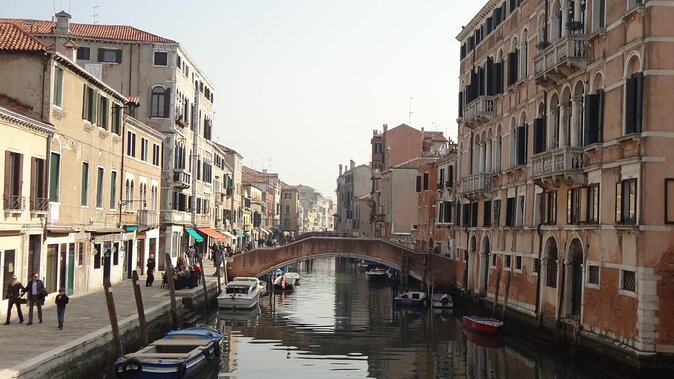
- Quiet canals in Cannaregio so you see Venice from a calmer angle
- Stops with real neighborhood context (Madonna dell’Orto, Ghetto Ebraico, Fondamenta Dei Ormesini, Campo dei Mori, Casa del Tintoretto)
- Local instructors who grew up with Venetian boats and explain how things work
- Value vs gondolas: more time on the water and active participation for a much lower price point
Why learning to row feels more Venetian than a gondola ride
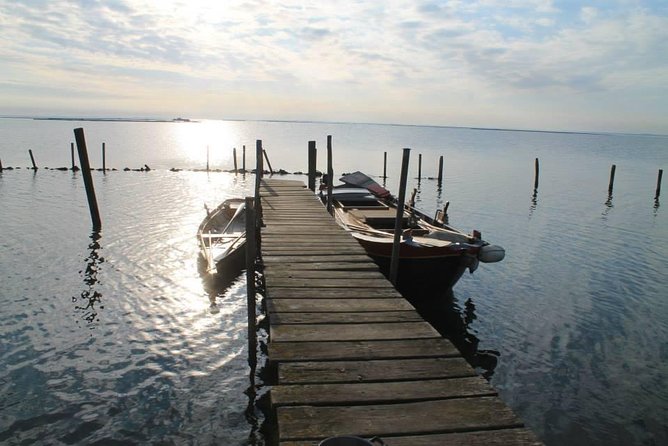
If you want a Venice memory that isn’t just a photo from a crowded queue, this is a smart swap. Gondola rides are romantic, sure, but they’re mostly seated time. Here, you get instruction and you physically control the boat—so the canals feel personal in a way sightseeing never does.
I like the lesson because it’s practical. You’re taught how rowing actually works: posture, leverage, how to coordinate your strokes, and how to handle the boat around other canal traffic. That’s the kind of skill you can’t really “fake,” and it turns the whole experience into a mini training session on the water.
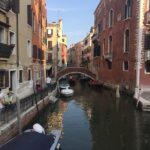
And the setting matters. This route is aimed at more residential Venice, especially around Cannaregio. That means fewer sidewalk bottlenecks and more slow gliding past real buildings, small waterways, and everyday canal life.
You can also read our reviews of more tours and experiences in Venice.
The boat-craft intro: what you learn before you start rowing
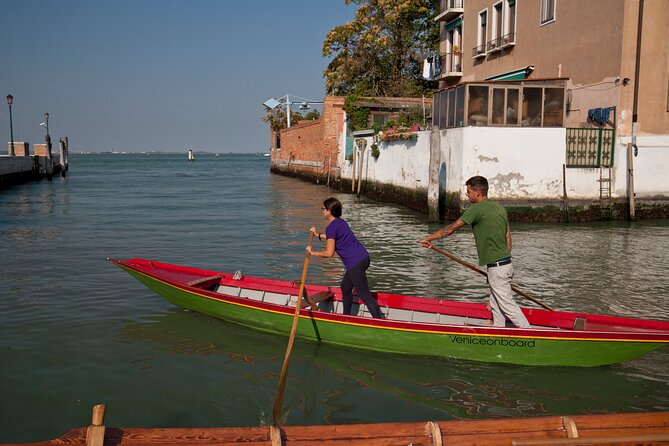
Before you push off, there’s a short introduction that ties rowing to Venetian boat culture. You’ll hear about traditional boats and the practical side of “why things are built the way they are,” including how modern speeds changed what people use on the canals.
This matters because it changes how you look at what you’re doing. Once you understand the purpose of the equipment and the basic logic behind steering and propulsion, the rowing stops feeling random. You’re not just repeating movements—you’re building a working rhythm.
Then you move straight into instruction. In guides’ words and actions, the emphasis stays on basics: how to take your turn, how to correct what you’re doing, and how to keep the boat moving smoothly without wasting effort.
Where you meet and how to plan your timing in Venice
You’ll start at Cantiere Nautico Navale Casaril S.r.l., address: 3009/H, C. del Magazzen, 30121 Venezia VE, Italy. The activity ends back at the meeting point, so you’re not left figuring out the last mile in an unfamiliar part of town.
Timing is usually straightforward—this is roughly 1 hour 30 minutes total. Still, I recommend building in a little buffer. Venice schedules can be sneaky, and canal-areas have their own walking rhythms once you’re near the water.
It also helps to know the group size. With a maximum of 6 travelers, the lesson tends to flow without feeling like a cattle call. That smaller scale is one reason people rate this so highly.
Your route through Venice’s quieter waterways: what each stop adds
You’ll follow a set canal route with stops that help anchor the lesson in place. Even when you’re not “stopping” for long, the landmarks give context, and they break the experience into manageable sections so you stay focused on technique.
Chiesa della Madonna dell’Orto: the warm-up zone for canal rhythm
The first stop is near Chiesa della Madonna dell’Orto. Think of this as your settling-in moment. Before you get too carried away, you’re given a chance to get comfortable with how the boat responds, how your body fits the stance, and how the canal space feels under your control.
This is also where you can start noticing how Venice looks when you’re at water level—front doors, steps, and walls that don’t show the same way from a street viewpoint. It’s an important shift. Your eyes recalibrate fast once you’re gliding.



Ghetto Ebraico: seeing history from the canal, not the sidewalk
Next comes Ghetto Ebraico. From the water, you get a different kind of perspective: you’re not pushing through crowds or craning for views. You’re moving along the canal line, taking in the neighborhood the way locals historically experienced it.
This stop also fits the lesson theme. Traditional Venetian transport wasn’t built for walking tourists—it was built for water movement. When you pass places like the Ghetto Ebraico area by boat, the canal system feels like the real “street grid.”
Fondamenta Dei Ormesini: the peaceful stretch where technique clicks
Then you row along Fondamenta Dei Ormesini. This kind of stretch is where most people start feeling the payoff of the instruction. If you’ve been thinking, Okay, so… how do I make the boat go smoothly? this is where that answer tends to show up.
You also get more of the calm canal vibe people come for: slower-moving water paths, quieter corners, and that sense that Venice is still functioning beyond the main tourist strips.
Campo dei Mori: learning to handle the canal around real activity
At Campo dei Mori, the lesson turns practical in a slightly more “hands-on” way. Even if the area isn’t busy like a major square, you still need to understand how to coordinate your boat movement with surroundings.
Guides focus on safe, basic navigation—how to keep control, how to avoid awkward contact situations, and how to keep your rowing steady while you adjust direction. It’s one thing to row in a straight line; it’s another to row while you’re also responding to the canal environment.
Casa del Tintoretto: closing with art history in the background
Finally, you reach Casa del Tintoretto. This stop helps round out the trip by linking the boat craft to the broader Venice you’re living inside for the day. You’re seeing the city’s landmarks in a way that feels less like ticking boxes and more like understanding how the water connects everything.
By the end of the route, you’re usually more relaxed. Many people finish thinking they could keep rowing longer—partly because the canals look different when you have control, and partly because the instructor has already corrected the biggest technique mistakes.
The instructor makes or breaks it: local teachers and real technique
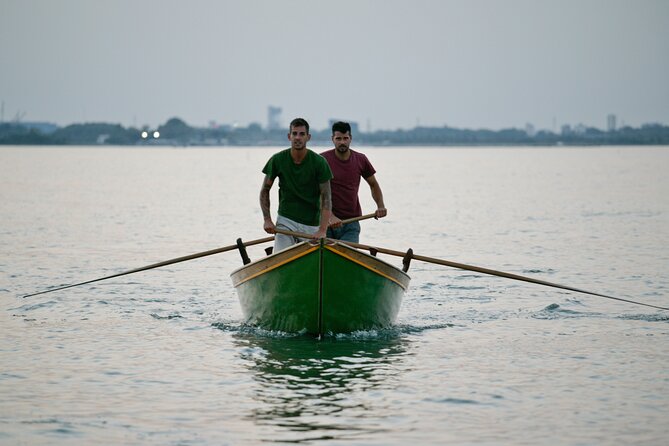
This experience leans hard on instruction from Venetian locals. You’ll likely spend your lesson with an instructor like Stefano, Nicola, Emiliano, or Frederico—names that show up again and again in the guide style people describe. They’re not just reciting facts. They teach the craft like it matters, because for them it does.
One standout teaching detail mentioned in the experience is learning about how gondolier-style handling uses the forcola—a key part of how traditional boats are managed. Even if your trip isn’t about becoming a gondolier, that kind of specific explanation turns the lesson from generic to real.
Also, the guides are usually relaxed in a good way: they correct you without making you feel clumsy. That’s important because rowing in a canal needs patience. You don’t need to be athletic; you do need to be willing to try, adjust, and try again.
Is it hard? What the rowing actually feels like for most people
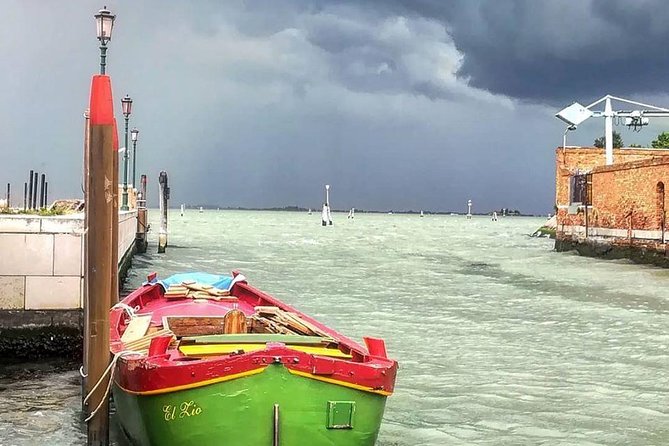
Most people should be able to participate, and the lesson is designed so it’s learnable, not punishing. The rowing effort is often described as minimal—especially once you get the rhythm and don’t fight the boat.
Expect to take turns and practice basic strokes. You’ll also be taught how to navigate with other boats in the canal system. That part is easy to overlook before you go, but once you’re out there, it’s a big part of why the experience feels authentic rather than like “just sit and row.”
One nice bonus: you usually end up with excellent photos. Being on the front of the boat while you row gives a different angle than most gondola setups.
Price and value: why $95-ish can be a better deal than a gondola
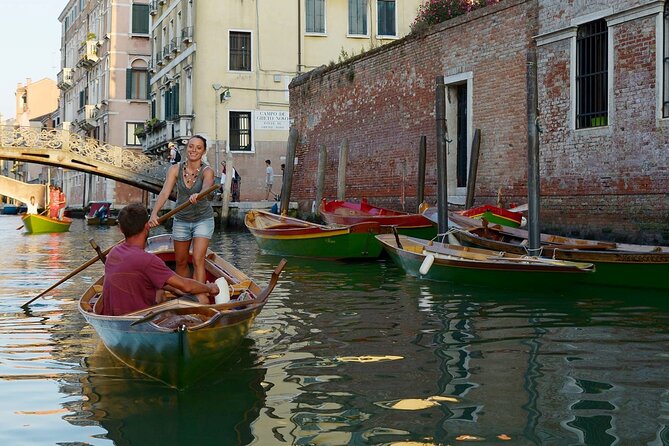
At $95.54 per person, you’re paying for instruction, boat time, and a small-group setting. The value becomes clearer when you compare what you actually get: more active learning, more time on the water, and a calmer route that skips some of the most crowded canal viewing zones.
Gondolas can be pricey, and many of them are mostly a short ride with limited participation. Here, the lesson is the point. You’re building a skill and getting a perspective that sticks—plus your boat time is longer than the typical “quick photo moment.”
So if your goal is to experience Venice as a canal-based city (not just as a skyline), this is strong value.
What to bring, how to dress, and weather reality
This is an outdoor activity, and it requires good weather. If it’s canceled due to poor conditions, you’ll be offered another date or a full refund.
Even when the forecast looks uncertain, the better guides handle it thoughtfully. Some instructors have checked the weather and offered options when rain appeared. Still, don’t count on it. Dress like you’ll be in breezy, wet canal air, not like you’re going to lunch.
A few practical moves:
- Wear shoes you’re comfortable stepping around in near boats
- Bring a light layer for wind off the water
- Plan for a bit of splash—Venice can be damp even when it looks bright
Who this tour suits best (and who might want a different option)
You’ll love this most if you want one of these things:
- A hands-on Venice experience instead of a seated one
- A quieter canal route that feels more local, especially around Cannaregio
- A family-friendly activity that still feels meaningful for adults
It also works well for different ages. People describe it as fun for kids through adults, because the learning is interactive and not overly strenuous.
If you only want to drift and gaze with zero physical effort, a gondola might be more your style. But if you’re even mildly curious about how the craft works, learning to row is the better match.
Should you book it?
Yes—if you want to trade tourist congestion for canal calm and you’re happy to learn a real skill. The small group size, the focus on instruction, and the chance to row through Venice’s more residential waterways make this feel worth your time.
Book it especially if:
- You’re tired of the gondola line vibe
- You want a Venice memory that isn’t just “we rode a boat”
- You like learning from locals who care about preserving boat culture
FAQ
How long is the learn to row experience?
It runs for about 1 hour 30 minutes.
Where does the activity start?
You meet at Cantiere Nautico Navale Casaril S.r.l., 3009/H, C. del Magazzen, 30121 Venezia VE, Italy.
Is the tour offered in English?
Yes, it’s offered in English.
How many people are on the tour?
There’s a maximum of 6 travelers.
Do I need good weather for this activity?
Yes. It requires good weather, and if it’s canceled due to poor weather, you’ll be offered a different date or a full refund.
What are the cancellation rules?
You can cancel for a full refund up to 24 hours in advance. If you cancel less than 24 hours before the start time, the amount paid is not refunded.
Is there any extra fee for entering Venice?
On certain dates, day visitors staying outside of Venice may be required to pay a €5 access fee. You can check which days apply and whether there are exemptions at https://cda.ve.it.